Social change made leisure gardens accessible to all – not just kings and aristocrats – at the same time as ‘the great horticultural movement’.
社会变迁使得休闲园林不再是国王和贵族专属,而是普及给所有人——这与“盛大的园艺运动”同步发生。
Dahlias thrust their colours skywards; hollyhocks frame a child at play; peasants tend cabbages; water lilies dot the surface of a pond. The “impressionist garden” captures all of these moments and more.
大丽花将色彩向上方伸展;绣球花勾勒出玩耍的孩子身影;农夫们照料着包菜;睡莲点缀在池塘的水面上。“印象派花园”捕捉了所有这些瞬间,甚至更多。
But why were Monet, Renoir, Morisot, Pissarro and their colleagues so attracted to gardens? It’s a subject I sought to answer in my book In the Gardens of Impressionism.
但为什么莫奈、雷诺阿、莫里索和毕沙罗等艺术家如此迷恋花园?这是我在我的著作《印象派的花园》中试图解答的主题。
One answer lies in the sheer ubiquity and sensory intensity of gardens by the second half of the 19th century, when impressionism came into being. Social change that made leisure gardens accessible to all (no longer just kings and aristocrats) combined with “the great horticultural movement” – the introduction of new and exotic plants, trees and flowers as a result of imperial expansion, international trade and developments in technology.
一个答案在于,当印象派诞生于19世纪下半叶时,花园的普遍存在感和感官强度达到了前所未有的高度。社会变革使得休闲花园不再仅仅是国王和贵族的专属,而是对所有人开放;这与“伟大的园艺运动”相结合——随着帝国扩张、国际贸易和技术发展,新的异国植物、树木和花卉被引入。
“Ward cases”, named after their British inventor, botanist Nathaniel Bagshaw Ward, facilitated the transportation of live plants across the world. Glass and iron construction gave rise to greenhouses that allowed exotic and tender plants to be overwintered. New understanding of hybridisation, fuelled by Charles Darwin’s discoveries, made flowers ever bigger, more scented or overtly decorative, while also boosting commercial vegetable growing.
“沃德箱”(Ward cases)以其英国发明家、植物学家纳撒尼尔·巴格肖·沃德(Nathaniel Bagshaw Ward)命名,促进了活体植物在全球范围内的运输。玻璃和铁结构的建造催生了温室,使得异国和娇嫩的植物得以越冬。对杂交的新理解,得益于查尔斯·达尔文的发现,使花朵变得越来越大、香味更浓或装饰性更强,同时也促进了商业蔬菜种植的发展。
Gardens, in short, were central to the “modern life” that the impressionists radically pursued – answering powerfully their desire to capture the sensations of the present moment in spontaneous brushwork and vibrant palette.
简而言之,花园是印象派艺术家们极力追求的“现代生活”的核心——这有力地回应了他们想要用自发的笔触和鲜艳的调色板捕捉当下瞬间感知的渴望。
Green lungs
绿色肺叶
In Paris, the new parks introduced by Napoleon III from the 1850s were essential to public hygiene: green lungs above ground complementing the new sewer-arteries below ground, as part of France’s fight against cholera.
在巴黎,拿破仑三世于 19 世纪 50 年代引入的新公园对于公共卫生至关重要:地面上的“绿肺”补充了地下的新下水道动脉,这是法国抗击霍乱的一部分。
The city’s trees and lavish corbeilles (floral display beds) were also undeniably alluring. Yet the impressionists’ response was highly selective and often trod a delicate balance between the old and new.
这座城市的树木和华丽的花坛(花卉展示床)也无疑具有巨大的吸引力。然而,印象派的反应是高度选择性的,并且经常在旧与新之间走着微妙的平衡线。
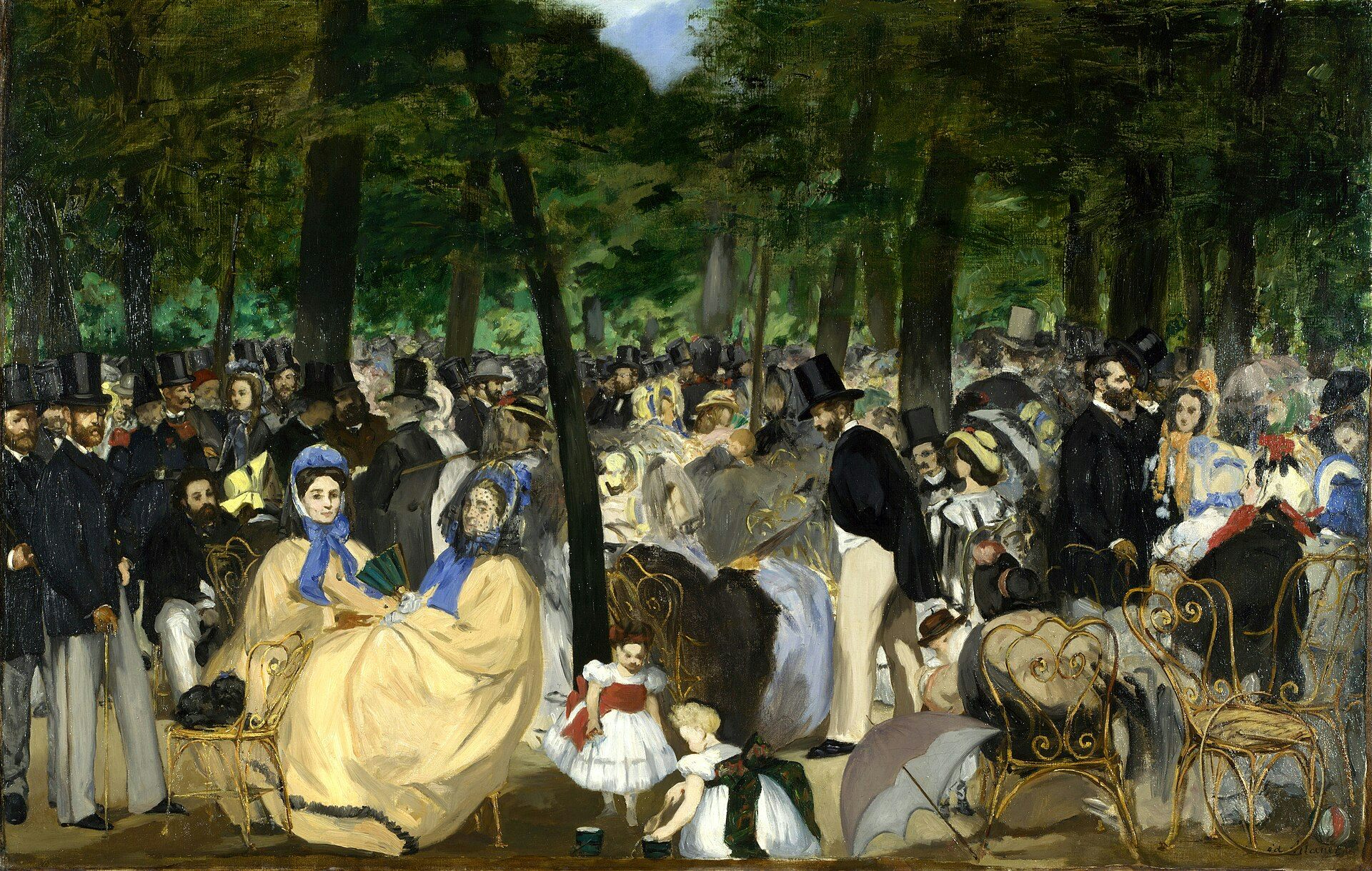
Édouard Manet subversively chose an old park, the Tuileries Gardens, for his pioneering depiction of modern life in 1863. Its fashionable figures listening to an off-scene band recede into a mass of trees that seems more like primal forest than cultivated green space.
爱德华·马奈在 1863 年为描绘现代生活开创性作品时,颠覆性地选择了一个古老的公园——图伊列里花园。画中听着舞台外乐队演奏的时尚人物们,逐渐退入一片树木组成的群体,那片群落看起来更像是原始森林,而非人工修饰的绿地。
And Pierre-Auguste Renoir recalled in old age how, before the modern tree-lined boulevards, manicured squares and English-style parks, there was “behind every house … a garden … Plenty of people still knew the pleasure of eating freshly-picked lettuce.”
皮埃尔-奥古斯特·雷诺阿在年迈时回忆说,在现代林荫大道、精心修剪的广场和英式公园出现之前,每个房子后面都曾有“一片花园……很多人仍然知道吃新鲜采摘的生菜的乐趣。”
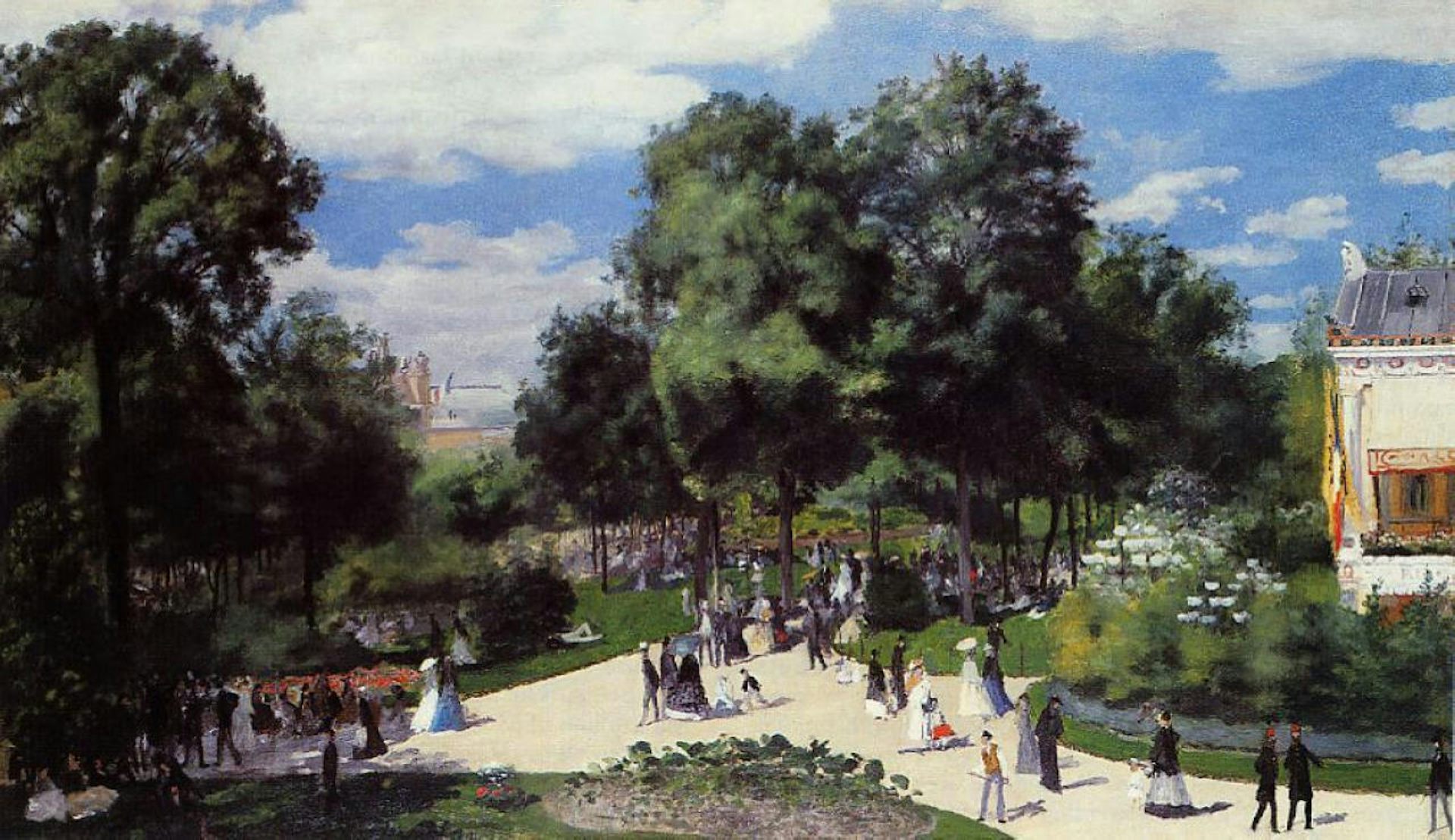
Evicted in childhood to make way for the “new Paris”, Renoir had reason for his regret. Already in 1867, he had naughtily plonked a not-yet-in-bloom corbeille in the foreground of his painting of the Champs-Élysées. Napoleon’s prefect Baron Haussmann’s famous “bedding out” regime, intended to ensure continuous floral colour, here experiences an embarrassing glitch.
为了给“新巴黎”让路而被拆除的经历,雷诺阿对这一切感到遗憾。早在 1867 年,他就在《香榭丽舍大道》这幅画的前景处顽皮地放置了一个尚未盛开的花坛。拿破仑的知县奥斯曼男爵著名的“种植布置”制度,旨在确保持续的花卉色彩,在这里却出现了一个令人尴尬的瑕疵。
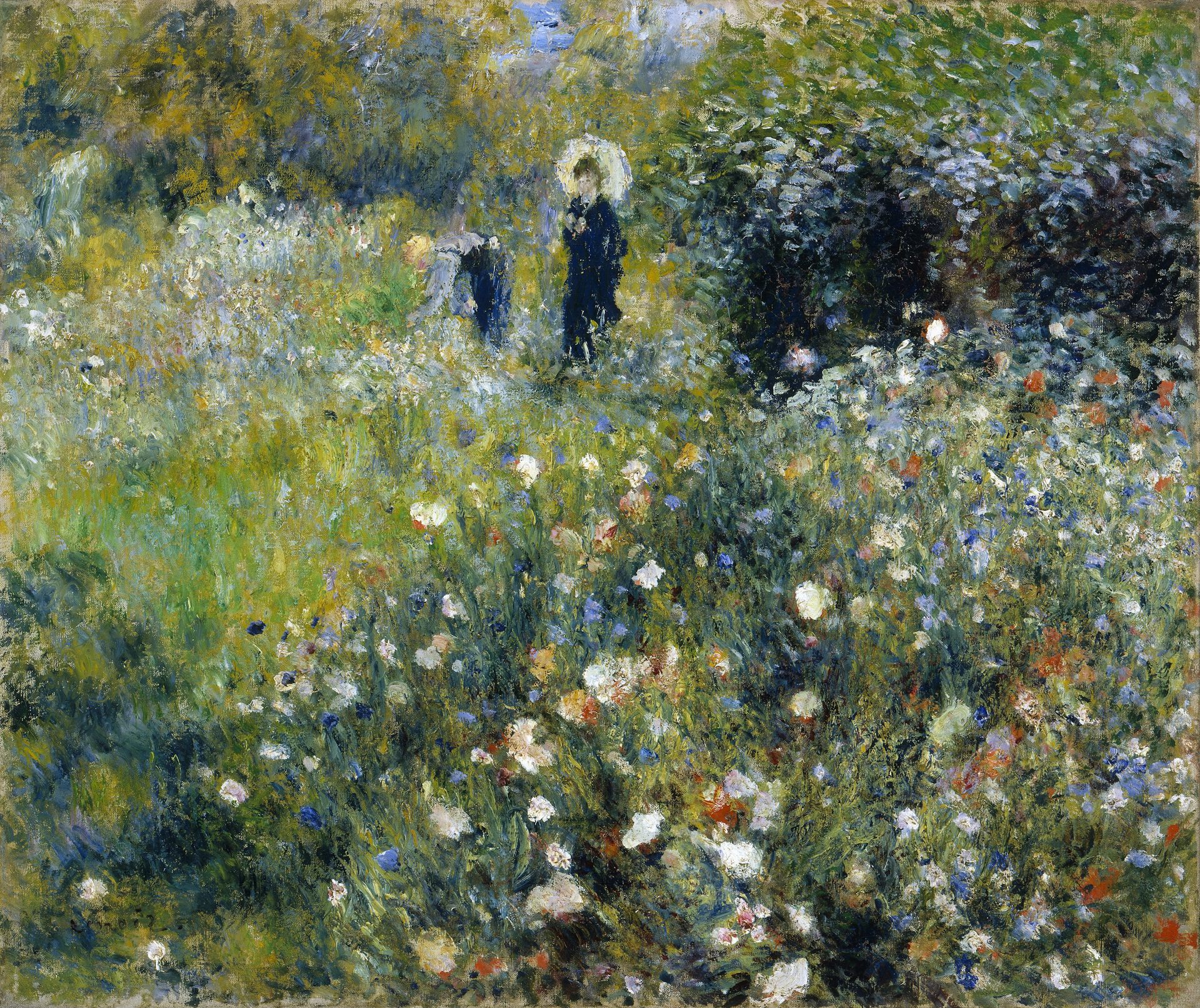
In 1875, Renoir made an old, overgrown garden in Montmartre, full of “poppies, convolvulus and daisies”, the subject of Woman with a Parasol in a Garden, in which nature seems to return to its original, uncultivated state.
到了 1875 年,雷诺阿在蒙马特描绘了一座老旧、杂草丛生的花园,里面充满了“虞美人、牵牛和雏菊”,这是《带阳伞的女人在花园中》的主题,在这幅画中,自然似乎回归了其原始、未经人工修饰的状态。
Claude Monet likewise eschewed the arterial path newly driven through the Parc Monceau, capturing instead the play of light and shade on figures chatting under tall trees in a secluded corner of the former aristocratic garden appropriated by Haussmann for public use and speculative building.
克劳德·莫奈也避开了穿过蒙索公园的新主要通道,而是捕捉了光影在身着衣衫交谈的人们身上的变化,他们位于前贵族花园的一个僻静角落,该花园曾被奥斯曼征用用于公共用途和投机建筑。
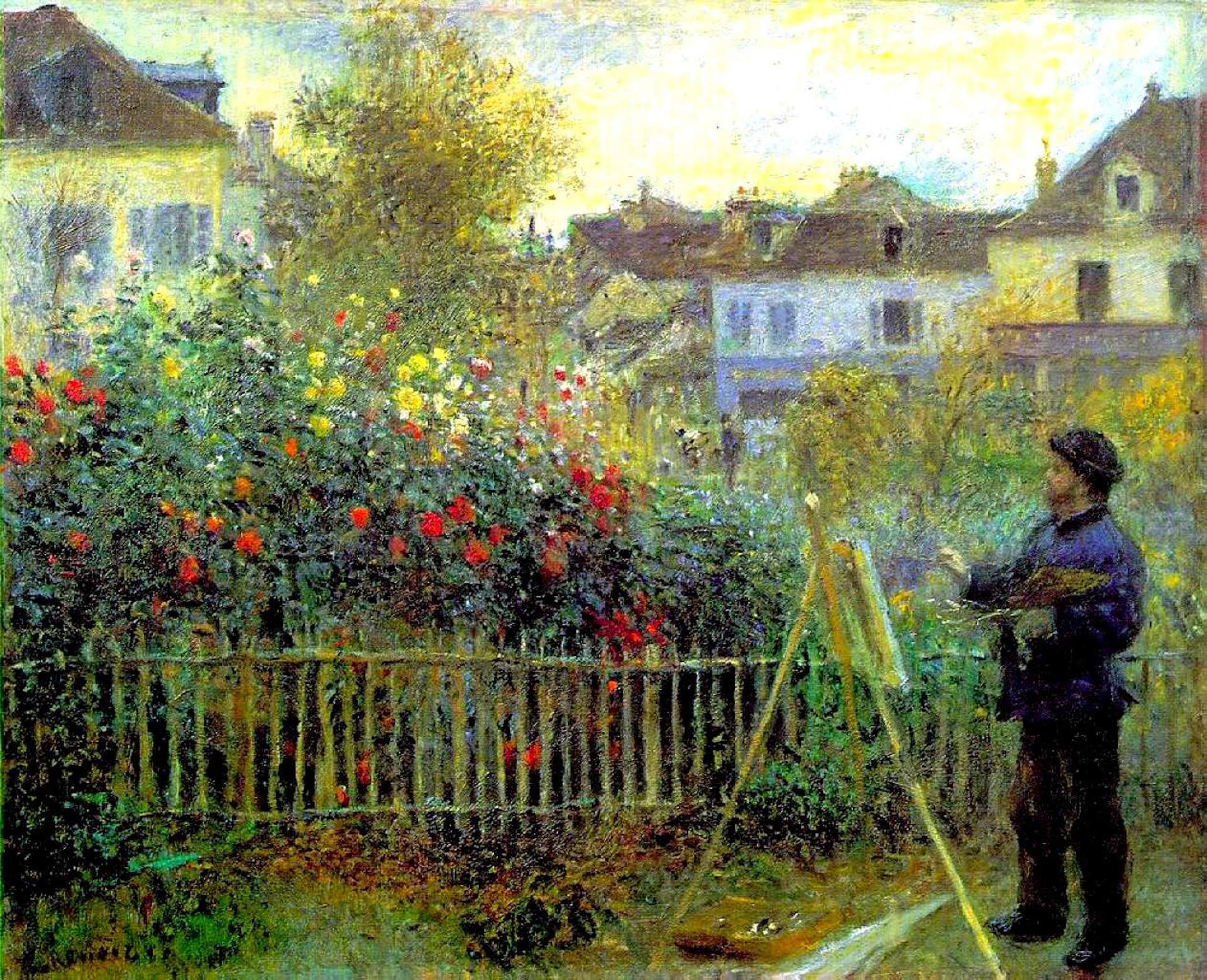
It was, rather, in his private gardens at Argenteuil in the 1870s that Monet seemed – at least to some extent – to have echoed Haussmannian horticulture, by cultivating display beds and trying out new flowers. But even here, in the 1873 painting The Artist’s Garden in Argenteuil, his novelty giant dahlias surge across the picture surface like some colourful, organic riptide.
相反,直到 1870 年代他在阿让蒂伊的私人花园里,莫奈似乎——至少在某种程度上——呼应了奥斯曼的园艺风格,通过种植展示花床和尝试新花卉。但即使在这里,在他的 1873 年画作《阿让蒂伊的艺术家的花园》中,他那些新奇的巨型大丽花也像一股色彩斑斓、有机的退潮水流般涌过画面表面。
The private garden
私人花园
If the impressionist garden was both outdoor studio and motif, what strikes the viewer in images like this is the evocation of what art experts nowadays call an attachment environment – a place imbued with personal significance, because it was cultivated by the artist himself.
如果说印象派花园既是户外工作室也是创作母题,那么在这样的图像中,令观者震撼的是一种艺术专家如今所称的“依恋环境”的营造——一个充满个人意义的空间,因为它是由艺术家本人精心培育而成。
Monet often inscribed his wife and young son within his Argenteuil artist’s garden. These paintings project familial pride and even hope for national renewal.
莫奈经常在他的阿尔让泰园画作中描绘他的妻子和年幼的儿子。这些画作展现了家庭的骄傲,甚至还有对国家复兴的希望。
After the horror of the Franco-Prussian war and Paris Commune of 1870-1, when Monet and Camille Pissarro had taken refuge with their young families in London, the very act of growing a garden was inherently symbolic. It was a celebration of French soil following the loss of Alsace-Lorraine to Germany.
在法普战争和1870年巴黎公社的恐怖之后,当莫奈和卡米耶·毕沙罗带着年轻的家人在伦敦避难时,种植花园这个行为本身就具有内在的象征意义。它是在法国失去阿尔萨斯-洛林给德国后,对法国土地的一种庆祝。
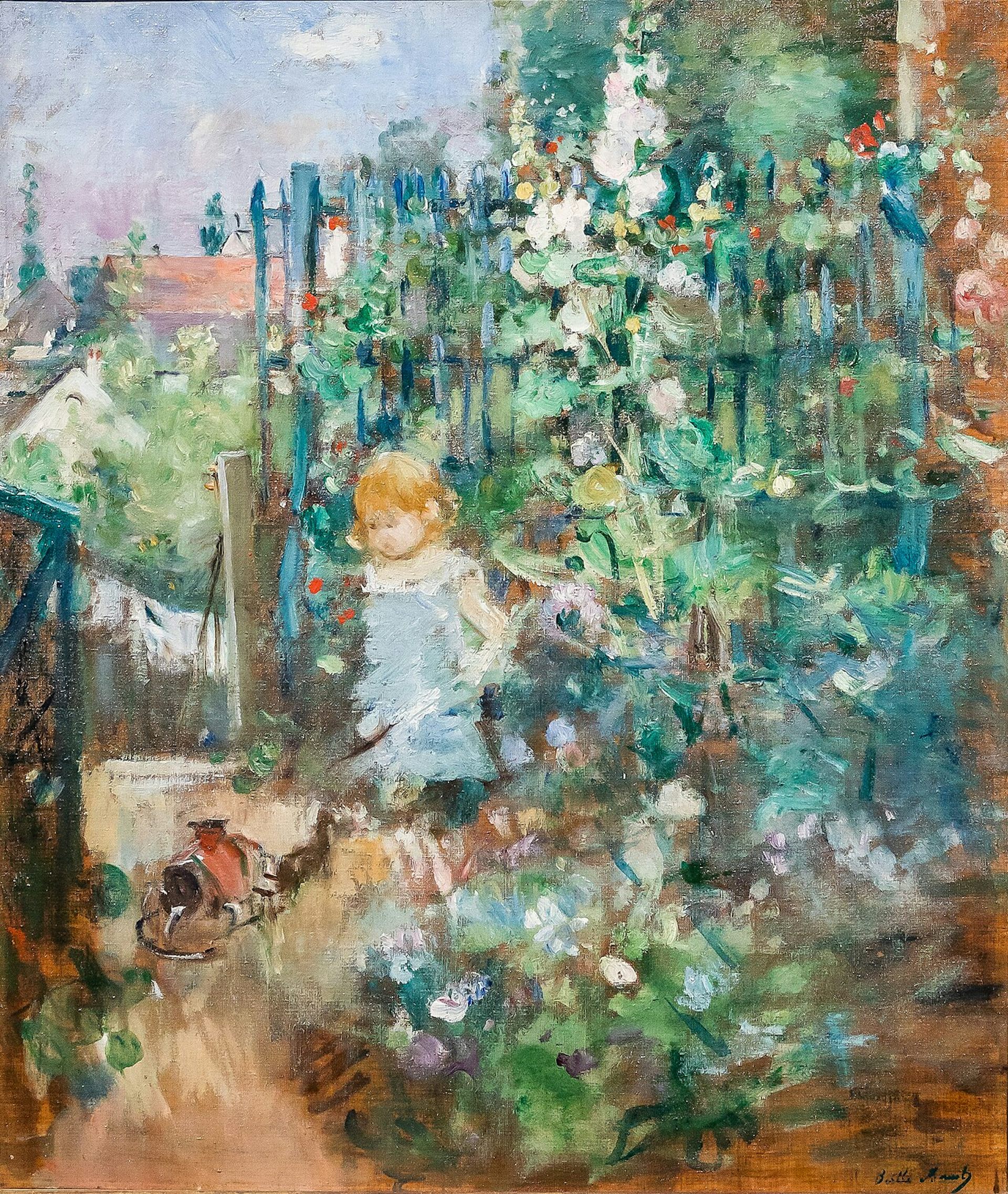
Pissarro’s multiple depictions of kitchen gardens near his home at Pontoise, meanwhile, asserted his utopian socialist vision of a better future based on working off the land – just as Berthe Morisot’s airily brushed images conflate the growth of her young child with that of cultivated nature.
皮沙罗多次描绘他在蓬托瓦兹家附近的菜园,宣扬了他基于耕作土地的乌托邦社会主义愿景——这就像莫里索轻盈笔触的作品将她年幼孩子的成长与人工培育的自然生长混为一体一样。
Such images suggest that, for all their modernity, the impressionists shared the nostalgia for rural existence that accompanied urban expansion and industrialisation.
这样的图像表明,尽管印象派作品具有高度的现代性,但他们仍然流露出伴随城市扩张和工业化而来的对乡村生活的乡愁。
At rural Vétheuil, where he lived from 1879-81, Monet planted sunflowers almost obsessively in his steep, terraced garden overlooking the Seine. Their late-summer gold and yellow seems almost elegiac after Monet’s wife Camille’s tragic death in 187.
在乡村的韦图伊(Vétheuil),莫奈曾在那里生活过1879年至1881年间,他几乎近乎痴迷地在他的俯瞰塞纳河的陡峭梯田花园里种植了向日葵。在莫奈的妻子卡米耶于187年不幸去世后,它们晚夏的金黄色看起来几乎带着挽歌般的哀伤。
Monet’s most ambitious garden was in turn at Giverny in Normandy, his near-sole painting motif for the last third of his life.
莫奈最宏伟的花园位于诺曼底的吉维尼,也是他生命最后三分之一时间里几乎唯一的绘画主题。
The new, scented and coloured hybrid water lilies he grew there were showpieces of modern horticultural invention – yet his serial paintings of his pond, capturing successive effects of light and atmosphere, construct a profoundly poetic vision of nature as a perpetually unfolding harmony. Coordinates disappear leaving only water, flowers and the reflected sky; the garden now embraces the cosmic.
他培育的那些新型、有香气和色彩的杂交睡莲,是现代园艺创新的展示品——然而,他描绘池塘的系列画作,捕捉了光线和氛围的连续变化,构建了一种关于自然作为永恒展开的和声的、极富诗意的愿景。坐标消失,只留下水、花和倒映的天空;花园现在拥抱了宇宙。
It was only logical that Monet used this motif for his Paris Orangerie murals, which he gave to France as a first world war memorial. Water lilies open to the light, defeating darkness.
莫奈使用这一主题用于其巴黎橘园美术馆壁画是理所当然的,这些壁画曾作为第一次世界大战的纪念品赠予法国。 水莲向光开放,战胜了黑暗。
Though often called precursors of abstraction, the Orangerie’s Water Lilies offer the ultimate logic of the garden as attachment environment – encircling the viewer, placing us physically within the impressionist garden’s better world.
尽管常被称为抽象艺术的先驱,《橘园的水莲》展现了花园作为依恋环境的终极逻辑——它环绕着观者,将我们物理上置于印象派花园更美好的世界之中。
Do you have a favourite impressionist garden painting? Let us know in the comments below.
你有没有最喜欢的印象派花园画作?请在下方评论区告诉我们。
This article features references to books that have been included for editorial reasons, and may contain links to bookshop.org. If you click on one of the links and go on to buy something, The Conversation UK may earn a commission.
本文包含出于编辑原因引用的书籍,并可能含有指向 bookshop.org 的链接。如果您点击其中一个链接并购买了商品,The Conversation UK 可能会获得佣金。
Clare Willsdon does not work for, consult, own shares in or receive funding from any company or organisation that would benefit from this article, and has disclosed no relevant affiliations beyond their academic appointment.
克莱尔·威尔斯顿不为任何受益于本文的公司或组织工作、提供咨询服务、持有股份或获得资金,并且除了其学术任命之外,未披露任何相关任职关系。