प्रभाववादियों को बगीचों को चित्रित करना क्यों पसंद था
Why impressionists loved to paint gardens
Social change made leisure gardens accessible to all – not just kings and aristocrats – at the same time as ‘the great horticultural movement’.
सामाजिक परिवर्तन ने अवकाश के बगीचों को सभी के लिए सुलभ बना दिया – केवल राजाओं और कुलीन वर्ग तक ही नहीं – ठीक उसी समय जब ‘महान बागवानी आंदोलन’ चल रहा था।
Dahlias thrust their colours skywards; hollyhocks frame a child at play; peasants tend cabbages; water lilies dot the surface of a pond. The “impressionist garden” captures all of these moments and more.
डहलिया अपने रंग आकाश की ओर फैलाते हैं; हॉलीहॉक्स खेल रहे बच्चे को फ्रेम करते हैं; किसान पत्तागोभी उगाते हैं; जल लिली तालाब की सतह पर बिखरी होती हैं। “प्रभाववादी बगीचा” इन सभी पलों और उससे भी अधिक को कैद करता है।
But why were Monet, Renoir, Morisot, Pissarro and their colleagues so attracted to gardens? It’s a subject I sought to answer in my book In the Gardens of Impressionism.
लेकिन मोनेट, रेनुआ, मोरिसो और पिसारो अपने सहयोगियों के साथ इतने बगीचों की ओर क्यों आकर्षित थे? यह एक ऐसा विषय था जिसका उत्तर मैं अपनी पुस्तक ‘इन द गार्डन्स ऑफ इंप्रेशनिज्म’ में खोजना चाहती थी।
One answer lies in the sheer ubiquity and sensory intensity of gardens by the second half of the 19th century, when impressionism came into being. Social change that made leisure gardens accessible to all (no longer just kings and aristocrats) combined with “the great horticultural movement” – the introduction of new and exotic plants, trees and flowers as a result of imperial expansion, international trade and developments in technology.
एक जवाब 19वीं शताब्दी के दूसरे भाग तक बगीचों की सर्वव्यापकता और संवेदी तीव्रता में निहित है, जब प्रभाववाद अस्तित्व में आया। सामाजिक परिवर्तन ने अवकाश के बगीचों को सभी के लिए सुलभ बना दिया (अब केवल राजाओं और अभिजात वर्ग के लिए नहीं) , जो “महान बागवानी आंदोलन” के साथ संयुक्त हुआ – साम्राज्य विस्तार, अंतर्राष्ट्रीय व्यापार और प्रौद्योगिकी में विकास के परिणामस्वरूप नए और विदेशी पौधों, पेड़ों और फूलों का परिचय।
“Ward cases”, named after their British inventor, botanist Nathaniel Bagshaw Ward, facilitated the transportation of live plants across the world. Glass and iron construction gave rise to greenhouses that allowed exotic and tender plants to be overwintered. New understanding of hybridisation, fuelled by Charles Darwin’s discoveries, made flowers ever bigger, more scented or overtly decorative, while also boosting commercial vegetable growing.
“वर्ड केस”, जो उनके ब्रिटिश आविष्कारक, वनस्पतिशास्त्री नथानिएल बैगशॉ वार्ड के नाम पर रखा गया था, ने दुनिया भर में जीवित पौधों के परिवहन को सुगम बनाया। कांच और लोहे की संरचना से ग्रीनहाउस का उदय हुआ जिसने विदेशी और नाजुक पौधों को सर्दियों में भी जीवित रहने दिया। चार्ल्स डार्विन की खोजों से प्रेरित संकरण की नई समझ ने फूलों को लगातार बड़ा, अधिक सुगंधित या स्पष्ट रूप से सजावटी बना दिया, साथ ही व्यावसायिक सब्जी उत्पादन को भी बढ़ावा दिया।
Gardens, in short, were central to the “modern life” that the impressionists radically pursued – answering powerfully their desire to capture the sensations of the present moment in spontaneous brushwork and vibrant palette.
संक्षेप में, बगीचे उस “आधुनिक जीवन” के केंद्र में थे जिसका प्रभाववादियों ने जबरदस्त ढंग से अनुसरण किया – जो सहज ब्रशवर्क और जीवंत रंग पैलेट में वर्तमान क्षण की संवेदनाओं को कैद करने की अपनी इच्छा का शक्तिशाली जवाब था।
Green lungs
हरित फेफड़े
In Paris, the new parks introduced by Napoleon III from the 1850s were essential to public hygiene: green lungs above ground complementing the new sewer-arteries below ground, as part of France’s fight against cholera.
पेरिस में, 1850 के दशक में नेपोलियन III द्वारा शुरू किए गए नए पार्क सार्वजनिक स्वच्छता के लिए आवश्यक थे: ये ज़मीन के ऊपर हरित फेफड़ों की तरह थे जो नीचे नई सीवर-धमनियों को पूरक करते थे, जो फ्रांस के हैजा से लड़ने के संघर्ष का हिस्सा था।
The city’s trees and lavish corbeilles (floral display beds) were also undeniably alluring. Yet the impressionists’ response was highly selective and often trod a delicate balance between the old and new.
शहर के पेड़ और शानदार कॉर्बेल (फूलों की सजावटी क्यारियाँ) भी निस्संदेह मनमोहक थे। फिर भी, इम्प्रेशनिस्ट्स की प्रतिक्रिया अत्यधिक चयनात्मक थी और अक्सर पुराने तथा नए के बीच एक नाजुक संतुलन साधती थी।
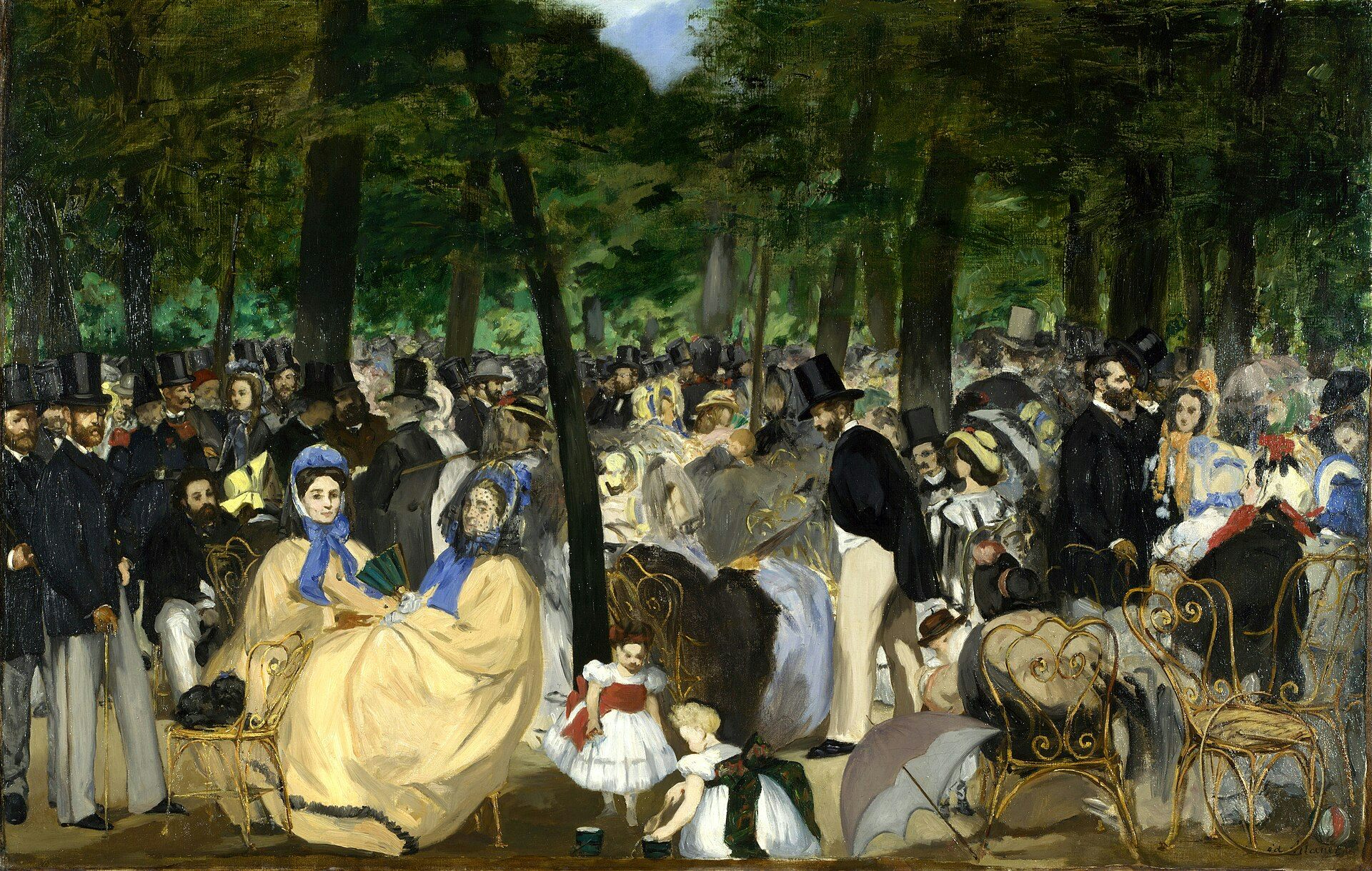
Édouard Manet subversively chose an old park, the Tuileries Gardens, for his pioneering depiction of modern life in 1863. Its fashionable figures listening to an off-scene band recede into a mass of trees that seems more like primal forest than cultivated green space.
एडौर्ड माने ने 1863 में आधुनिक जीवन के अपने अग्रणी चित्रण के लिए जानबूझकर एक पुराना पार्क, ट्यूइलेरी गार्डन को चुना। इसके फैशनेबल पात्र जो ऑफ-सीन बैंड को सुन रहे हैं, पेड़ों के एक समूह में विलीन होते दिखाई देते हैं, जो खेती की गई हरित जगह से अधिक आदिम जंगल जैसा लगता है।
And Pierre-Auguste Renoir recalled in old age how, before the modern tree-lined boulevards, manicured squares and English-style parks, there was “behind every house … a garden … Plenty of people still knew the pleasure of eating freshly-picked lettuce.”
और पियरे-अगस्टे रेनवार ने बुढ़ापे में याद किया कि आधुनिक पेड़ वाली बुलेवार्डों, सजी हुई चौराहों और इंग्लिश शैली के पार्कों से पहले, “हर घर के पीछे… एक बगीचा होता था… बहुत से लोग अभी भी ताज़े तोड़े गए सलाद खाने का आनंद जानते थे।”
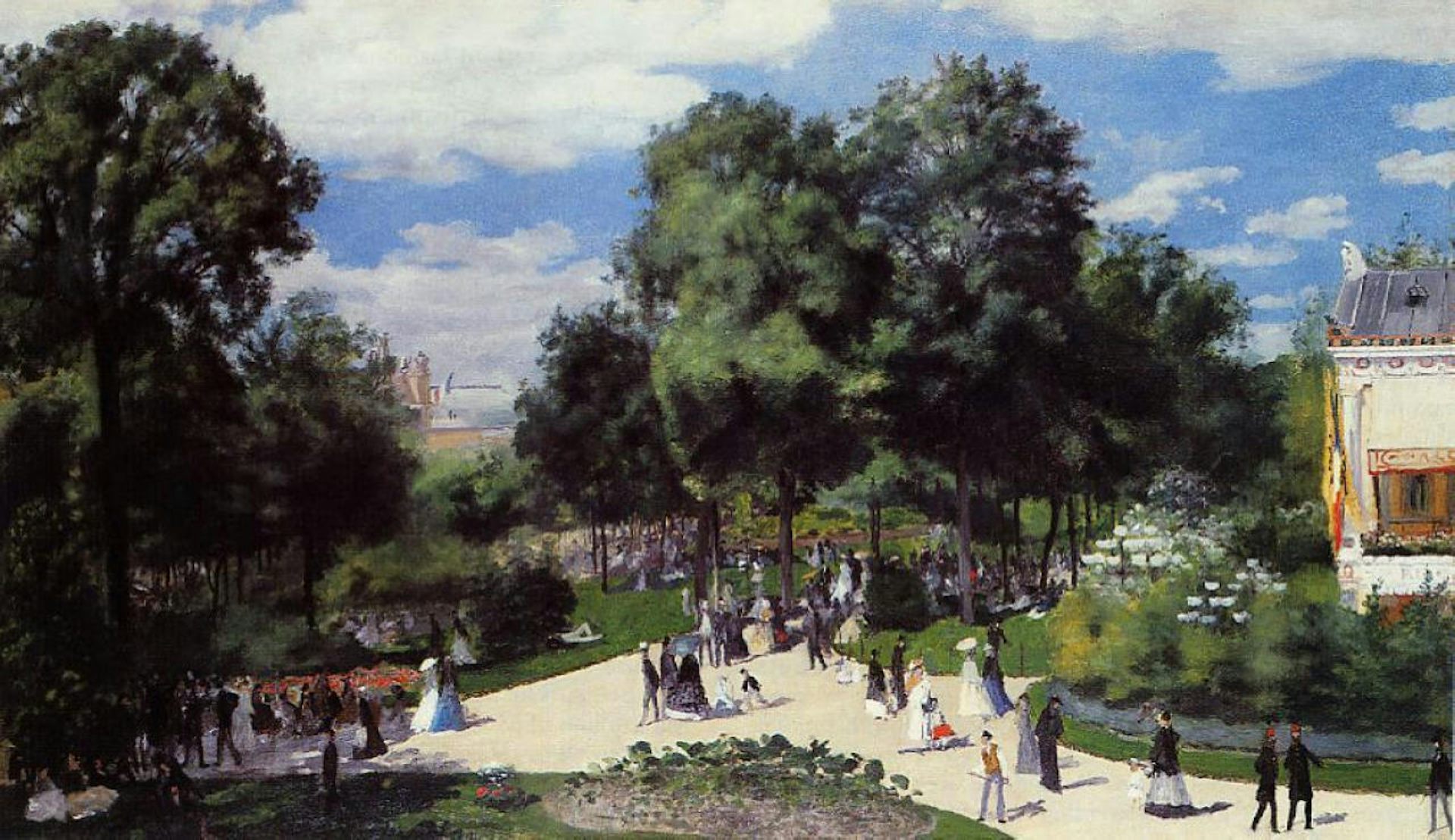
Evicted in childhood to make way for the “new Paris”, Renoir had reason for his regret. Already in 1867, he had naughtily plonked a not-yet-in-bloom corbeille in the foreground of his painting of the Champs-Élysées. Napoleon’s prefect Baron Haussmann’s famous “bedding out” regime, intended to ensure continuous floral colour, here experiences an embarrassing glitch.
“नए पेरिस” के रास्ते बनाने के लिए बचपन में बेदखल होने के कारण रेनवार को अपने पछतावे का कारण मिला। 1867 में ही, उन्होंने चैंप्स-एलिसीज़ की अपनी पेंटिंग के अग्रभूमि में एक ऐसा कॉर्बेल रखा जो अभी पूरी तरह खिला नहीं था। नेपोलियन के प्रीफेक्ट बैरन हॉसमैन का प्रसिद्ध “बिछाने” वाला शासन, जिसका उद्देश्य निरंतर फूलों का रंग सुनिश्चित करना था, यहाँ एक शर्मनाक गड़बड़ी का अनुभव करता है।
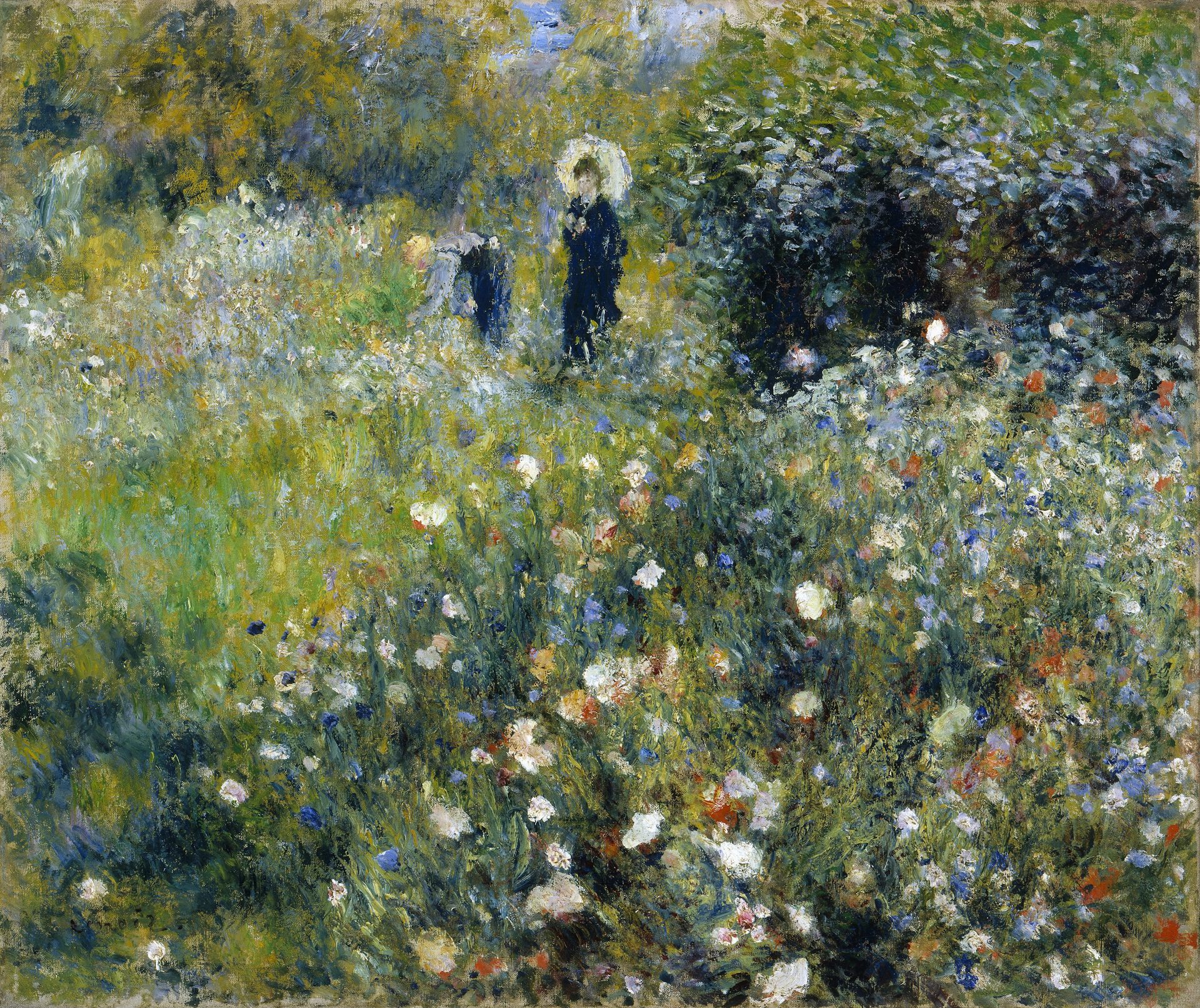
In 1875, Renoir made an old, overgrown garden in Montmartre, full of “poppies, convolvulus and daisies”, the subject of Woman with a Parasol in a Garden, in which nature seems to return to its original, uncultivated state.
1875 में, रेनवार ने मॉन्टमार्ट्रे में एक पुराना, उपजाऊ बगीचा बनाया, जो “डहेलिया, कॉन्वोलुवस और डेज़ी” से भरा था, जो ‘वومن विथ अ पैरासोल इन ए गार्डन’ का विषय है, जिसमें प्रकृति को अपनी मूल, अनगढ़ अवस्था में लौटता हुआ प्रतीत होता है।
Claude Monet likewise eschewed the arterial path newly driven through the Parc Monceau, capturing instead the play of light and shade on figures chatting under tall trees in a secluded corner of the former aristocratic garden appropriated by Haussmann for public use and speculative building.
क्लॉड मोनेट ने भी पार्क मोंसो के माध्यम से नए बने धमनी मार्ग से परहेज किया, और इसके बजाय हॉसमैन द्वारा सार्वजनिक उपयोग और सट्टा निर्माण के लिए अधिग्रहित पूर्व अभिजात उद्यान के एक एकांत कोने में ऊँचे पेड़ों के नीचे बातचीत करते पात्रों पर प्रकाश और छाया का खेल कैद किया।
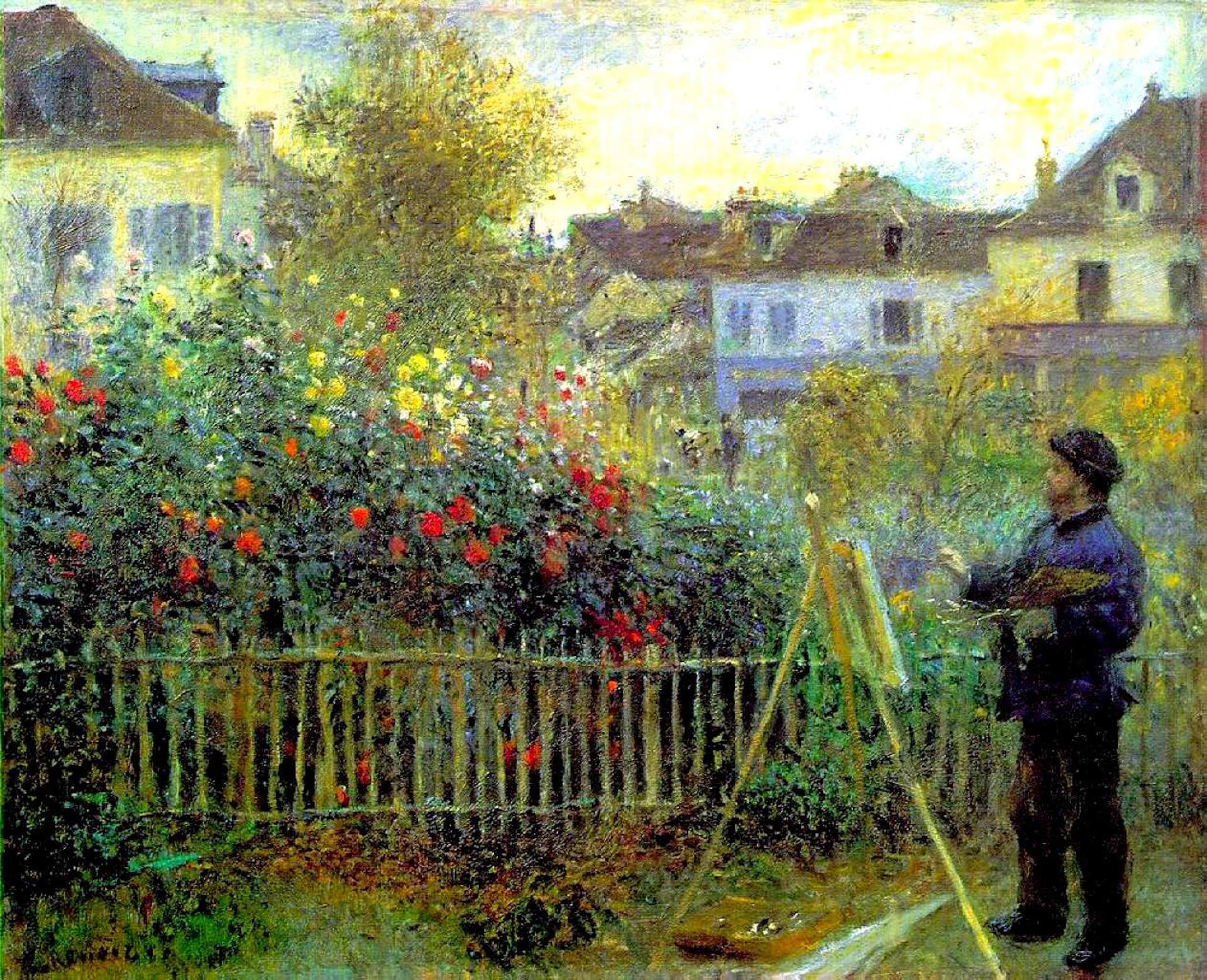
It was, rather, in his private gardens at Argenteuil in the 1870s that Monet seemed – at least to some extent – to have echoed Haussmannian horticulture, by cultivating display beds and trying out new flowers. But even here, in the 1873 painting The Artist’s Garden in Argenteuil, his novelty giant dahlias surge across the picture surface like some colourful, organic riptide.
यह बल्कि 1870 के दशक में आर्गेंथुइल में उनके निजी बगीचों में था कि मोनेट ने – कम से कम कुछ हद तक – हॉसमैन की बागवानी को प्रतिध्वनित किया, सजावटी क्यारियाँ उगाकर और नए फूल आज़माकर। लेकिन यहाँ भी, 1873 की पेंटिंग ‘द आर्टिस्ट्स गार्डन इन आर्गेंथुइल’ में, उनके नवीन विशाल डहलिया चित्र सतह पर किसी रंगीन, जैविक ज्वार की तरह उमड़ते हैं।
The private garden
निजी बगीचा
If the impressionist garden was both outdoor studio and motif, what strikes the viewer in images like this is the evocation of what art experts nowadays call an attachment environment – a place imbued with personal significance, because it was cultivated by the artist himself.
अगर प्रभाववादी बगीचा बाहरी स्टूडियो और विषय-वस्तु दोनों था, तो इस तरह की तस्वीरों में दर्शक को जो बात आकर्षित करती है, वह है उस चीज़ का आह्वान—जिसे कला विशेषज्ञ आजकल ‘जुड़ाव वाला वातावरण’ कहते हैं। यह एक ऐसा स्थान है जिसमें व्यक्तिगत महत्व समाया हुआ है, क्योंकि इसे कलाकार ने स्वयं विकसित किया था।
Monet often inscribed his wife and young son within his Argenteuil artist’s garden. These paintings project familial pride and even hope for national renewal.
मोनेट अक्सर अपनी पत्नी और छोटे बेटे को अपने आर्जेंट्यूइल के कलाकार के बगीचे में चित्रित करते थे। ये पेंटिंग पारिवारिक गर्व और यहाँ तक कि राष्ट्रीय पुनरुत्थान की आशा भी दर्शाती हैं।
After the horror of the Franco-Prussian war and Paris Commune of 1870-1, when Monet and Camille Pissarro had taken refuge with their young families in London, the very act of growing a garden was inherently symbolic. It was a celebration of French soil following the loss of Alsace-Lorraine to Germany.
फ्रांको-प्रशियाई युद्ध और १८७०-१ के पेरिस कम्यून की भयावहता के बाद, जब मोनेट और कैमिल पिसारो अपने छोटे परिवारों के साथ लंदन में शरण लिए हुए थे, तब बाग़-बगीचा उगाने का कार्य स्वयं ही प्रतीकात्मक था। यह जर्मनी को अल्सास-लोरेन खोने के बाद फ्रांसीसी मिट्टी का एक उत्सव था।
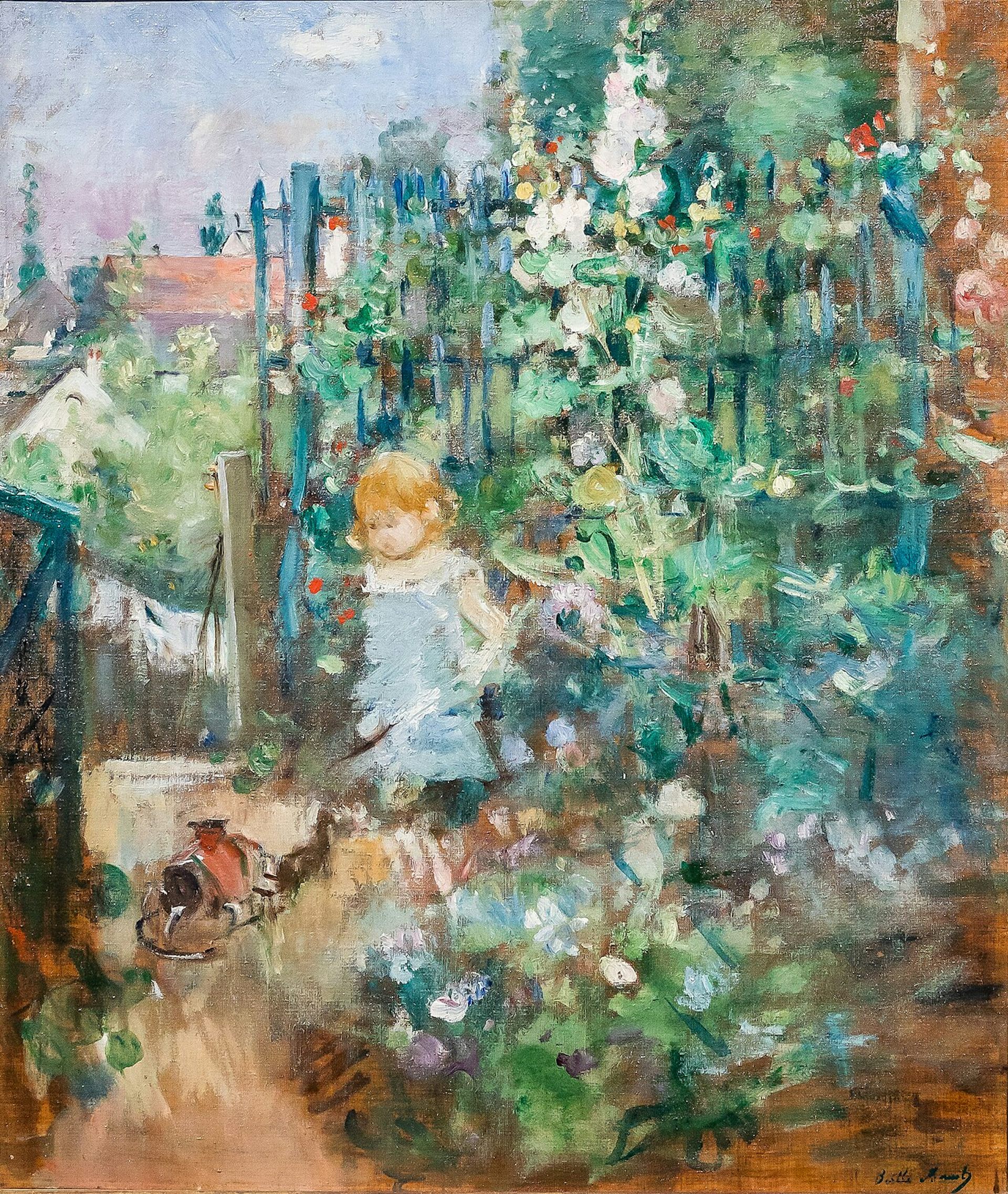
Pissarro’s multiple depictions of kitchen gardens near his home at Pontoise, meanwhile, asserted his utopian socialist vision of a better future based on working off the land – just as Berthe Morisot’s airily brushed images conflate the growth of her young child with that of cultivated nature.
पिसारो द्वारा पोंटुआइस में अपने घर के पास रसोई के बगीचों के कई चित्रण ने, दूसरी ओर, भूमि पर काम करने पर आधारित एक बेहतर भविष्य के अपने यूटोपियन समाजवादी दृष्टिकोण को स्थापित किया – ठीक वैसे ही जैसे बार्थ मोरिज़ोट की हवादार ब्रश वाली छवियाँ अपनी छोटी बच्ची के विकास को खेती की गई प्रकृति के साथ मिलाती हैं।
Such images suggest that, for all their modernity, the impressionists shared the nostalgia for rural existence that accompanied urban expansion and industrialisation.
ऐसे चित्र यह सुझाव देते हैं कि, अपनी आधुनिकता के बावजूद, प्रभाववादियों ने ग्रामीण जीवन की एक लालसा साझा की थी जो शहरी विस्तार और औद्योगीकरण के साथ आई थी।
At rural Vétheuil, where he lived from 1879-81, Monet planted sunflowers almost obsessively in his steep, terraced garden overlooking the Seine. Their late-summer gold and yellow seems almost elegiac after Monet’s wife Camille’s tragic death in 187.
ग्रामीण वेथ्यूइल में, जहाँ वह 1879-81 तक रहते थे, मोनेट ने सीन नदी के ऊपर बने अपने खड़ी ढलान वाले सीढ़ीदार बगीचे में लगभग जुनूनी ढंग से सूरजमुखी लगाए। उनका देर से गर्मी का सुनहरा और पीला रंग, मोनेट की पत्नी कैमिल की 187 में दुखद मृत्यु के बाद, लगभग शोकगीत जैसा लगता है।
Monet’s most ambitious garden was in turn at Giverny in Normandy, his near-sole painting motif for the last third of his life.
मोनेट का सबसे महत्वाकांक्षी बगीचा नॉरमैंडी के गिवरनी में था, जो उनके जीवन के अंतिम तीसरे हिस्से के लिए उनका लगभग एकमात्र चित्रकला विषय बन गया।
The new, scented and coloured hybrid water lilies he grew there were showpieces of modern horticultural invention – yet his serial paintings of his pond, capturing successive effects of light and atmosphere, construct a profoundly poetic vision of nature as a perpetually unfolding harmony. Coordinates disappear leaving only water, flowers and the reflected sky; the garden now embraces the cosmic.
वहाँ उगाए गए नए, सुगंधित और रंगीन संकर जल लिली आधुनिक बागवानी आविष्कार के नमूने थे – फिर भी, अपने तालाब के उनके शृंखला चित्र, जो प्रकाश और वातावरण के क्रमिक प्रभावों को कैद करते हैं, प्रकृति का एक स्थायी रूप से खुलता हुआ सामंजस्य दिखाते हुए, एक गहन काव्यात्मक दृष्टि का निर्माण करते हैं। विवरण गायब हो जाते हैं, केवल पानी, फूल और प्रतिबिंबित आकाश शेष रह जाता है; अब बगीचा ब्रह्मांडीय को समाहित करता है।
It was only logical that Monet used this motif for his Paris Orangerie murals, which he gave to France as a first world war memorial. Water lilies open to the light, defeating darkness.
यह तार्किक था कि मोनेट ने इस रूपांकन का उपयोग अपने पेरिस ओरेंजरी भित्तिचित्रों के लिए किया, जिन्हें उन्होंने प्रथम विश्व युद्ध की स्मृति में फ्रांस को दिया था। जल लिली रोशनी की ओर खुलते हैं, अंधकार पर विजय प्राप्त करते हुए।
Though often called precursors of abstraction, the Orangerie’s Water Lilies offer the ultimate logic of the garden as attachment environment – encircling the viewer, placing us physically within the impressionist garden’s better world.
हालांकि ओरेंजरी के जल लिली को अक्सर अमूर्तता का अग्रदूत कहा जाता है, वे बगीचे के जुड़ाव वातावरण के रूप में अंतिम तर्क प्रस्तुत करती हैं – दर्शक को घेरते हुए, हमें भौतिक रूप से प्रभाववादी बगीचे की बेहतर दुनिया में स्थापित करती हैं।
Do you have a favourite impressionist garden painting? Let us know in the comments below.
क्या आपके पास कोई पसंदीदा प्रभाववादी बगीचे का चित्र है? हमें नीचे टिप्पणी (कमेंट्स) में बताएं।
This article features references to books that have been included for editorial reasons, and may contain links to bookshop.org. If you click on one of the links and go on to buy something, The Conversation UK may earn a commission.
यह लेख उन किताबों के संदर्भों को प्रस्तुत करता है जिन्हें संपादकीय कारणों से शामिल किया गया है, और इसमें bookshop.org के लिंक हो सकते हैं। यदि आप इनमें से किसी एक लिंक पर क्लिक करते हैं और कुछ खरीदने जाते हैं, तो The Conversation UK को कमीशन मिल सकता है।
Clare Willsdon does not work for, consult, own shares in or receive funding from any company or organisation that would benefit from this article, and has disclosed no relevant affiliations beyond their academic appointment.
क्लैर विल्स्डन किसी भी कंपनी या संगठन के लिए काम नहीं करती हैं, उनसे परामर्श नहीं लेती हैं, उनमें हिस्सेदारी नहीं रखती हैं और न ही उनसे कोई फंडिंग प्राप्त करती हैं जिससे इस लेख को लाभ होगा; उन्होंने अपने शैक्षणिक पद से परे कोई प्रासंगिक जुड़ाव प्रकट नहीं किया है।
Read more
-

ट्रम्प की लैटिन अमेरिका में दबाव वाली नीतियां जहाज-बल कूटनीति के युग की याद दिलाती हैं – और इसने अधिनायकवाद विरोधी आंदोलन के उदय को तेज करने में मदद की।
Trump’s coercive tactics in Latin America evoke era of gunboat diplomacy – and the rise of anti-imperialism it helped spur
-
संयुक्त राष्ट्र के वैश्विक वन लक्ष्यों को प्राप्त करने के लिए अधिक अंतर्राष्ट्रीय सहयोग की आवश्यकता है।
Greater international co-operation is needed to achieve the UN’s global forest goals