为什么雄性黑猩猩会连续十多年向同一棵树扔石头?我们前往偏远的几内亚比绍去探究真相。
Why do male chimpanzees throw rocks at the same trees f…
To study accumulative stone throwing among wild chimpanzees, researchers hike deep into the savanna-woodland of Boé — a habitat increasingly threatened by industrial mining.
为了研究野生黑猩猩的累积投石行为,研究人员深入到博埃(Boé)的稀树草原森林地带——这是一个日益受到工业采矿威胁的栖息地。
Walking through the savanna-woodland landscape of Boé National Park, Guinea-Bissau, you might encounter a tree covered in gnarled scars, with an accumulation of rocks surrounding its base.
漫步在几内比绍博埃国家公园的稀树草原景观中,你可能会遇到一棵覆盖着嶙峋伤疤、基部堆积着岩石的树。
The chimpanzees may have left the area, but you are lucky nonetheless, because you have stumbled upon evidence of a rare — and potentially cultural — chimpanzee behaviour: accumulative stone throwing.
黑猩猩可能已经离开了这个区域,但无论如何你都很幸运,因为你偶然发现了一种罕见——且可能具有文化意义——的黑猩猩行为证据:累积投掷石块。
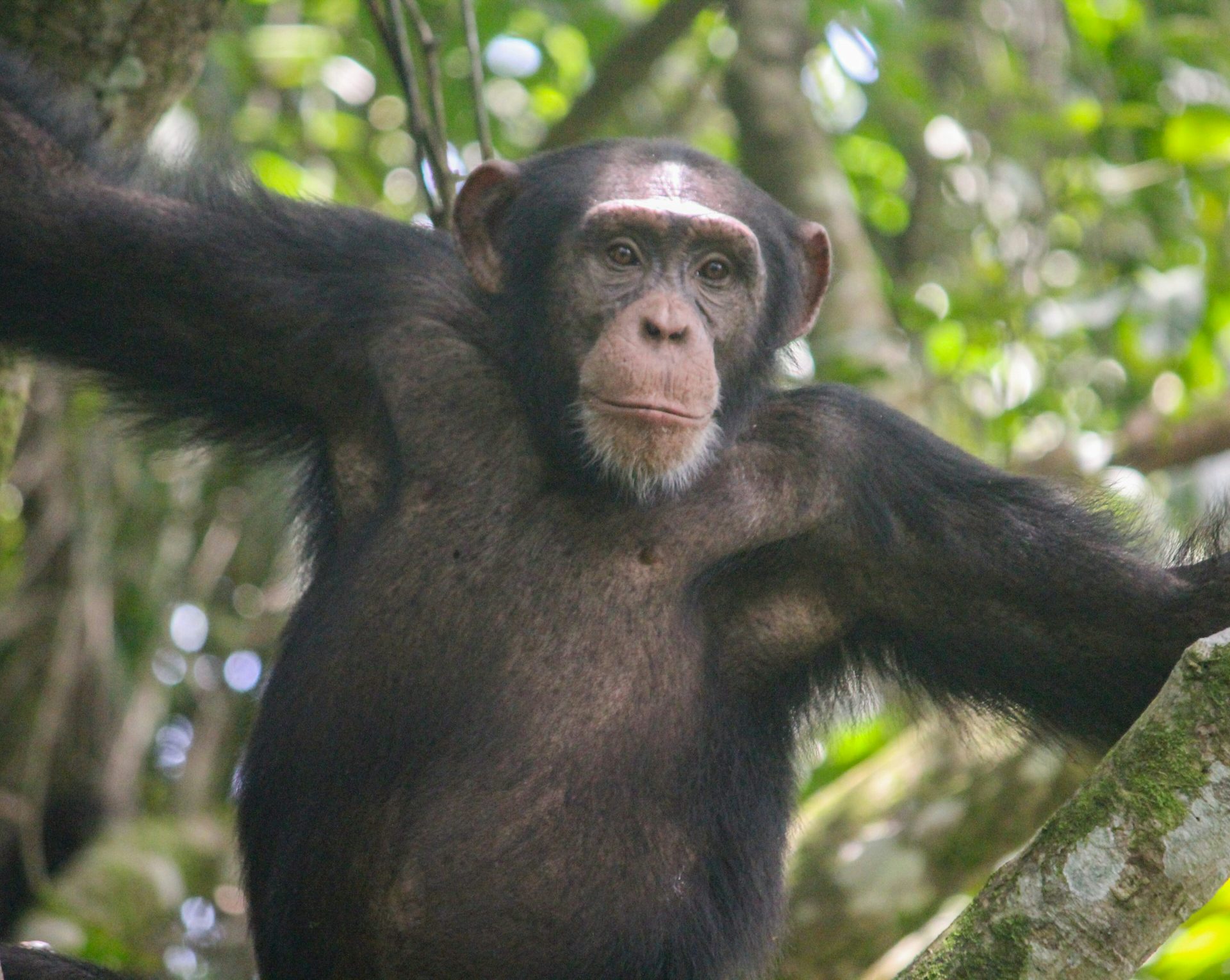
Video recordings show wild western chimpanzees, usually adult males, throwing rocks at specific trees and repeatedly returning to these trees to perform the behaviour.
视频录像显示了野生西部黑猩猩,通常是成年雄性,向特定的树木投掷岩石,并反复回到这些树木进行这种行为。
While throwing, the chimpanzees pant hoot — a loud, long-distance communicative signal — and sometimes repeatedly hit their hands and feet on the tree in a behaviour called buttress drumming.
在投掷的过程中,黑猩猩会发出“呼哧”声——这是一种响亮、长距离的交流信号——有时还会重复地用手和脚敲击树干,这种行为被称为支撑鼓点(buttress drumming)。
We have just returned from a field site in Guinea-Bissau where we collected data to help us investigate the social and ecological context of accumulative stone throwing to determine what these chimpanzees are trying to communicate.
我们刚刚从几内比绍的一个野外考察地点返回,在那里我们收集了数据,以帮助我们调查累积投掷石块的社会和生态背景,从而确定这些黑猩猩试图传达的是什么信息。
Given our evolutionary relatedness to chimpanzees, we hope accumulative stone throwing can help us understand the emergence of complex communication and stone tool use over the course of human evolution.
鉴于我们在进化上与黑猩猩的亲缘关系,我们希望累积投掷石块能帮助我们理解复杂交流和石器使用在人类进化过程中是如何出现的。
A cultural behaviour
一种文化行为
Pant hooting and buttress drumming are both part of the male chimpanzee display, suggesting that accumulative stone throwing might represent a modification of this common behaviour. It is likely a cultural behaviour due to its limited distribution, and because the availability of rocks and trees does not guarantee the presence of an accumulative stone throwing site.
喘鸣和臀部鼓点都是雄性黑猩猩的行为展示的一部分,这表明累积投石可能是对这种常见行为的一种修饰。由于其分布有限,并且岩石和树木的可用性不能保证存在一个累积投石地点,因此它很可能是一种文化行为。
Previous research suggests that accumulative stone throwing is likely communicative or may even have a symbolic purpose, with sites marking important locations within the chimpanzees’ territory.
先前研究表明,累积投石可能具有交际功能,甚至可能有象征意义,这些地点标志着黑猩猩领地内重要的区域。
However, we still don’t know what accumulative stone throwing sites might mean to the chimpanzees themselves nor why they do it. While some primates use stone tools to access food, for instance to crack open nuts, accumulative stone throwing is a rare example of stone tool use in a social context. It has been observed in only four chimpanzee groups in West Africa to date.
然而,我们仍然不知道累积投石地点对黑猩猩本身意味着什么,也不知道它们为什么这样做。虽然一些灵长类动物使用石器获取食物(例如砸开坚果),但累积投石是在社会背景下使用石器的罕见例子。迄今为止,它仅在西非的四个黑猩猩群体中被观察到。
Setting up camp
搭建营地
We travelled to the remote Boé chimpanzee territory in Guinea-Bissau and based ourselves in Béli, a small village where, in collaboration with local people, the Dutch non-governmental organization Chimbo maintains a compound. Visiting researchers and tourists can stay here and use a workspace with solar-generated electricity.
我们前往了位于几内比绍的偏远博埃黑猩猩栖息地,并在贝利(Béli)定居下来。这是一个小村庄,荷兰非政府组织“奇姆博”(Chimbo)与当地人合作在这里维护着一个营地。来访的研究人员和游客可以在这里住宿,并使用配备太阳能电力的工作空间。
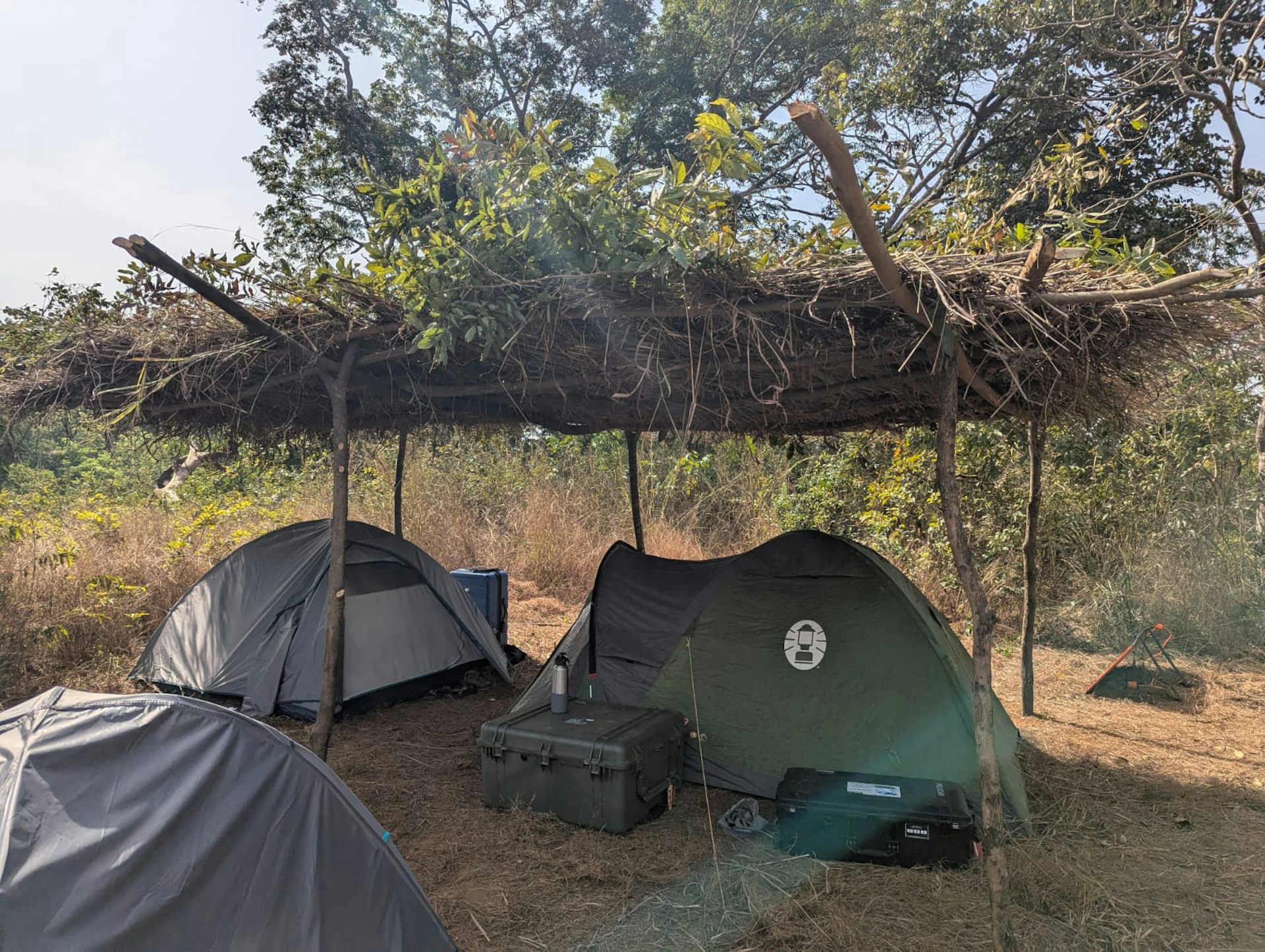
From Béli, we cycled and hiked 22 kilometres into the savanna-woodland to establish a bush camp with our two field assistants, Djei Baldé and Balu Séra, and a master’s student from the Great Ape Behaviour Lab, Taylor Tippett.
从贝利出发,我们骑行徒步了22公里进入稀树草原森林,与我们的两名田野助理杰伊·巴尔德(Djei Baldé)和巴鲁·塞拉(Balu Séra),以及来自大猿行为实验室的一名硕士生泰勒·蒂佩特(Taylor Tippett)一起建立了野外营地。
The Boé chimpanzees performing the behaviour are unhabituated; they are not used to humans, meaning that we cannot observe individual chimpanzees on foot because they will run away. Instead, we collected behavioural data using camera traps and recording devices.
正在进行该行为的博埃黑猩猩尚未习惯人类;它们不熟悉人类,这意味着我们无法徒步观察单个黑猩猩,因为它们会逃跑。因此,我们使用相机陷阱和录音设备收集了行为数据。
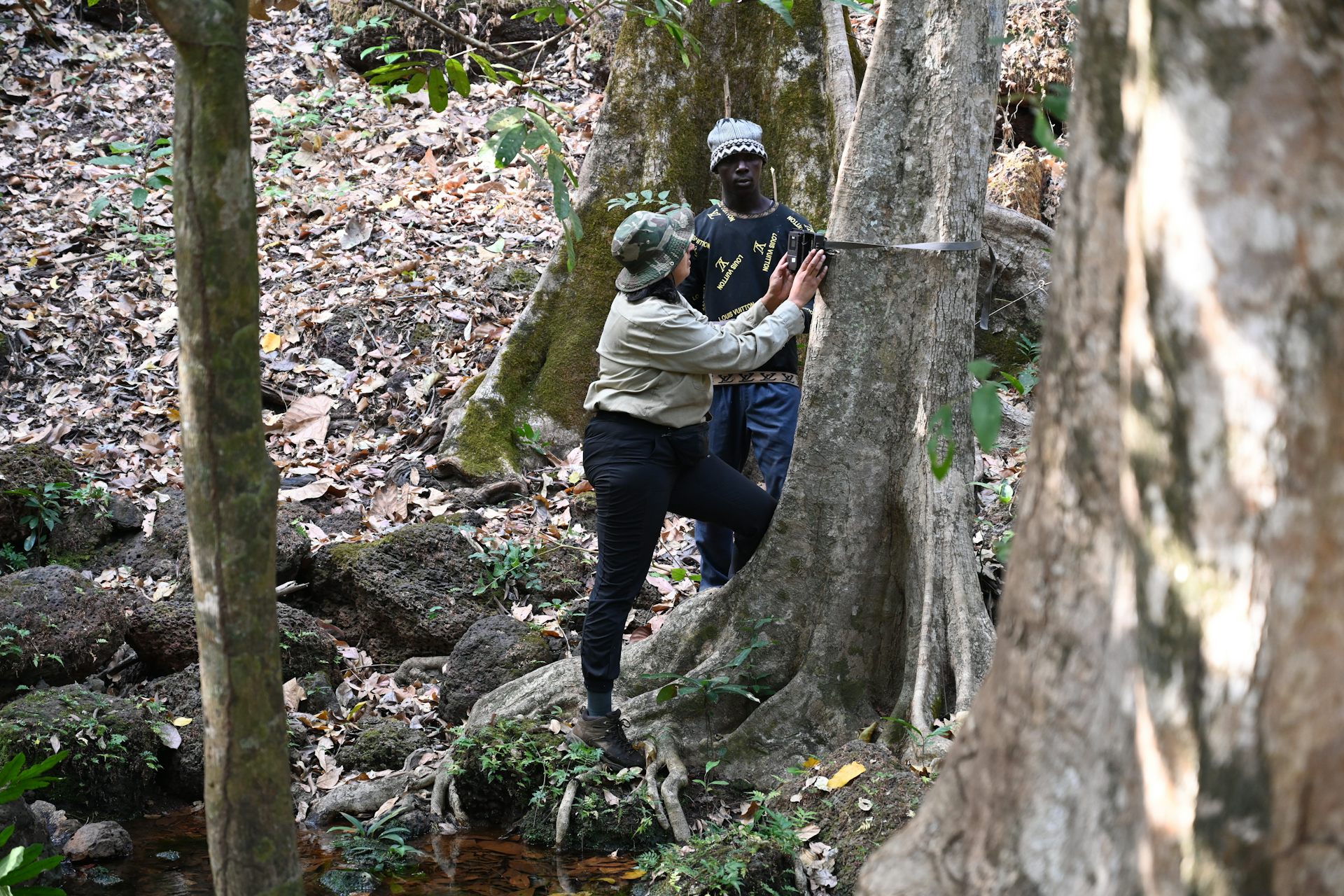
We set up two video cameras at each accumulative stone throwing site and placed the recording devices strategically to capture audio data from the areas around these sites.
我们在每个堆积的投石点都设置了两台摄像机,并有策略地放置了录音设备,以捕捉这些区域的声音数据。
Our campsite bordered the Fefine, a large river that flows even in the dry season. In a landscape like the savanna-woodland where water sources are scarce, rivers like the Fefine are important for wildlife and humans alike. We captured several of our neighbours on cameras set up near the riverbank.
我们的营地临着费菲内河(Fefine),这是一条即使在旱季也会流淌的大河。在一个水资源稀缺的稀树草原森林景观中,像费菲内河这样的河流对野生动物和人类都至关重要。我们在靠近河岸设置的相机上捕捉到了一些“邻居”。
Chimpanzee nests
黑猩猩巢穴
On an average day, we woke up around 6:30 a.m. and ate a small breakfast before heading to a set of two to five sites. There, we replaced the SD cards and batteries on the cameras, made sure the devices were working well and collected any additional data needed, including measurements of the tree and 3D scans of rocks thrown at the tree for later analysis.
在一个普通的日子里,我们大约在早上6:30醒来,吃完简单的早餐后,前往两到五个监测点。在那里,我们更换了摄像机的SD卡和电池,确保设备运行良好,并收集任何需要的额外数据,包括对树木的测量以及投向树木的岩石的3D扫描,以供后续分析。
Along the way, we recorded observations of chimpanzee nests, feeding signs, vocalizations and sightings.
沿途,我们记录了黑猩猩巢穴、觅食迹象、发声和目击记录。
The video and audio data we collected will allow us to investigate the social traits of accumulative stone throwing, including the age and sex of the stone thrower and the audience (other chimpanzees nearby who might react to the throw) . This information can help us determine what chimpanzees are trying to communicate.
我们收集的视频和音频数据将使我们能够研究累积性投石的社会特征,包括投石者和观众(附近可能对抛掷做出反应的其他黑猩猩)的年龄和性别。这些信息有助于我们确定黑猩猩试图传达什么。
We found that most of the sites first identified by the Pan African Programme, and revisited by our team in 2017, were still in use during our recent trip to the field, meaning that chimpanzees can use these sites for over a decade.
我们发现,大多数最初由泛非洲项目(Pan African Programme)识别的、并于2017年由我们团队重新考察的地点,在我们最近的实地考察期间仍然在使用中,这意味着黑猩猩可以使用这些地点超过十年。
The threat of bauxite mining
赤铝土开采的威胁
As many primate species face threats from human activities, cultural behaviours and the maintenance of rich cultural repertoires can help them adapt to environmental changes and provide support for conservation.
由于许多灵长类物种面临人类活动带来的威胁,文化行为和维护丰富的文化知识体系可以帮助它们适应环境变化,并为保护提供支持。
On top of its potential communicative importance and intrinsic value as a cultural behaviour, accumulative stone throwing involves durable primate material culture, the loss of which would constitute the erasure of primate heritage.
除了其潜在的交流重要性和作为一种文化行为的内在价值外,累积投石行为还涉及持久的灵长类物质文化,失去这种文化将构成对灵长类遗产的抹除。
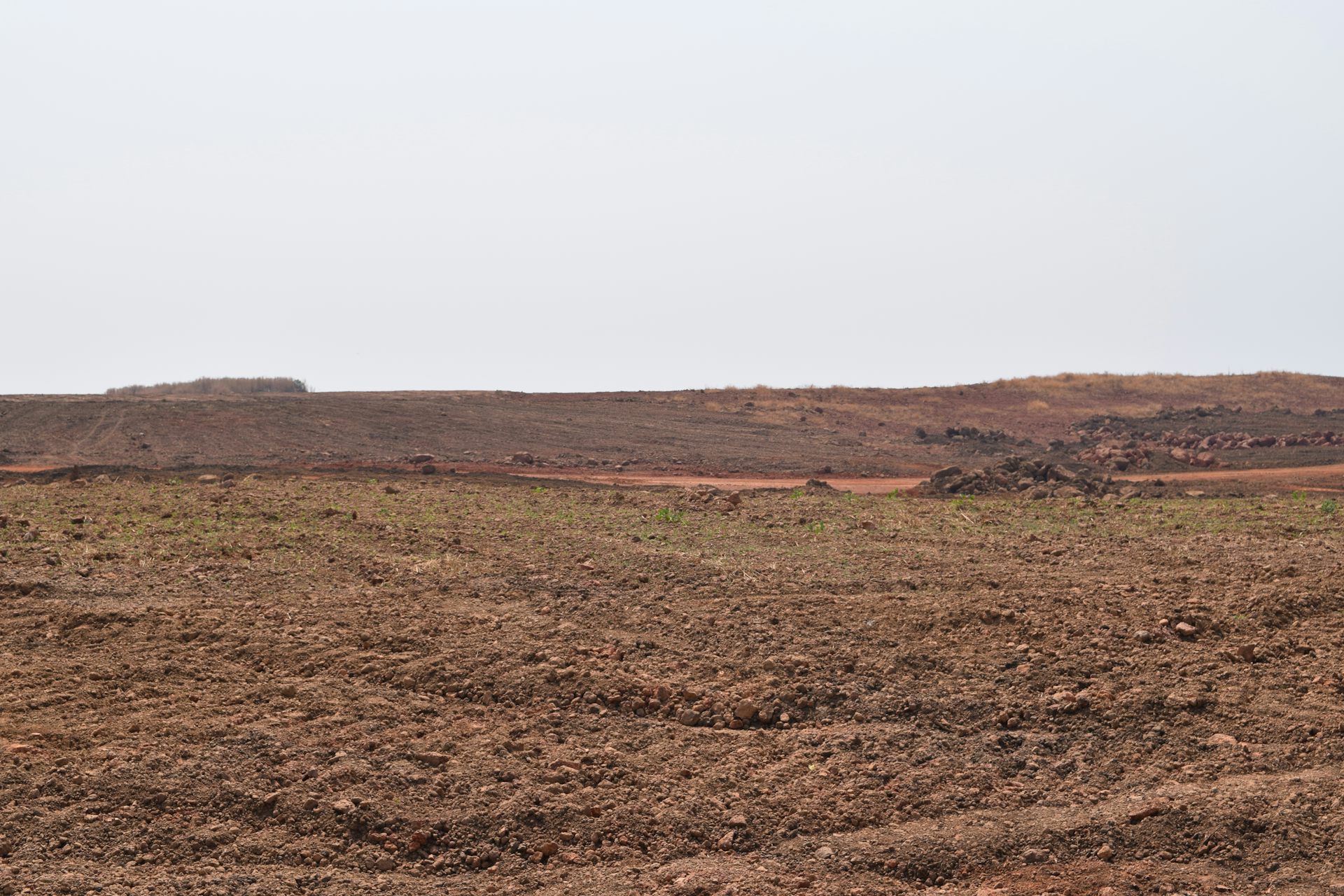
Unfortunately, chimpanzee habitat in Guinea-Bissau is threatened by extractive industries, particularly industrial mining. While in the field, we encountered bore holes from bauxite mining exploration.
不幸的是,几内比绍的黑猩猩栖息地受到开采型产业的威胁,尤其是工业采矿业。在野外考察时,我们遇到了赤铝土开采勘探留下的钻孔。
Bauxite mining represents a significant opportunity for economic growth and development in Guinea-Bissau. It can also cause habitat destruction and pollution with severe detrimental effects for chimpanzees, other wildlife and the local people — as it already has in neighbouring Guinea.
赤铝土开采代表了几内比绍经济增长和发展的重大机遇。但它也可能造成栖息地破坏和污染,对黑猩猩、其他野生动物和当地居民产生严重的不利影响——正如它已经在邻国几内亚所做的那样。
Environmental oversight and regulations are much needed, especially given the added challenges of unstable governance in Guinea-Bissau.
特别考虑到几内比绍不稳定的治理挑战,迫切需要环境监督和法规的完善。
By studying and bringing attention to chimpanzee cultural behaviours like accumulative stone throwing, we hope to support chimpanzee conservation and the maintenance of biodiversity more broadly, as well as the preservation of primate cultural materials for future research and education.
通过研究并引起对黑猩猩文化行为(如累积投石)的关注,我们希望支持黑猩猩的保护和更广泛的生物多样性维护,以及为未来的研究和教育保存灵长类文化材料。
Robyn Nakano is supported in part by funding from the Social Sciences and Humanities Research Council of Canada.
Robyn Nakano 的研究部分得到了加拿大社会科学和人文研究理事会的资助。
Ammie Kalan receives funding from the Social Sciences and Humanities Research Council of Canada in the form of an Insight Development Grant which supported the research mentioned in this article. Previous research on AST was also funded by a National Geographic Explorers Grant and supported by the Max Planck Society.
Ammie Kalan 获得了加拿大社会科学和人文研究理事会提供的“洞察发展基金”(Insight Development Grant)资助,该资金支持了本文提及的研究。关于AST的先前研究也得到了国家地理探险家基金(National Geographic Explorers Grant)的资助以及马克斯·普朗克学会的支持。