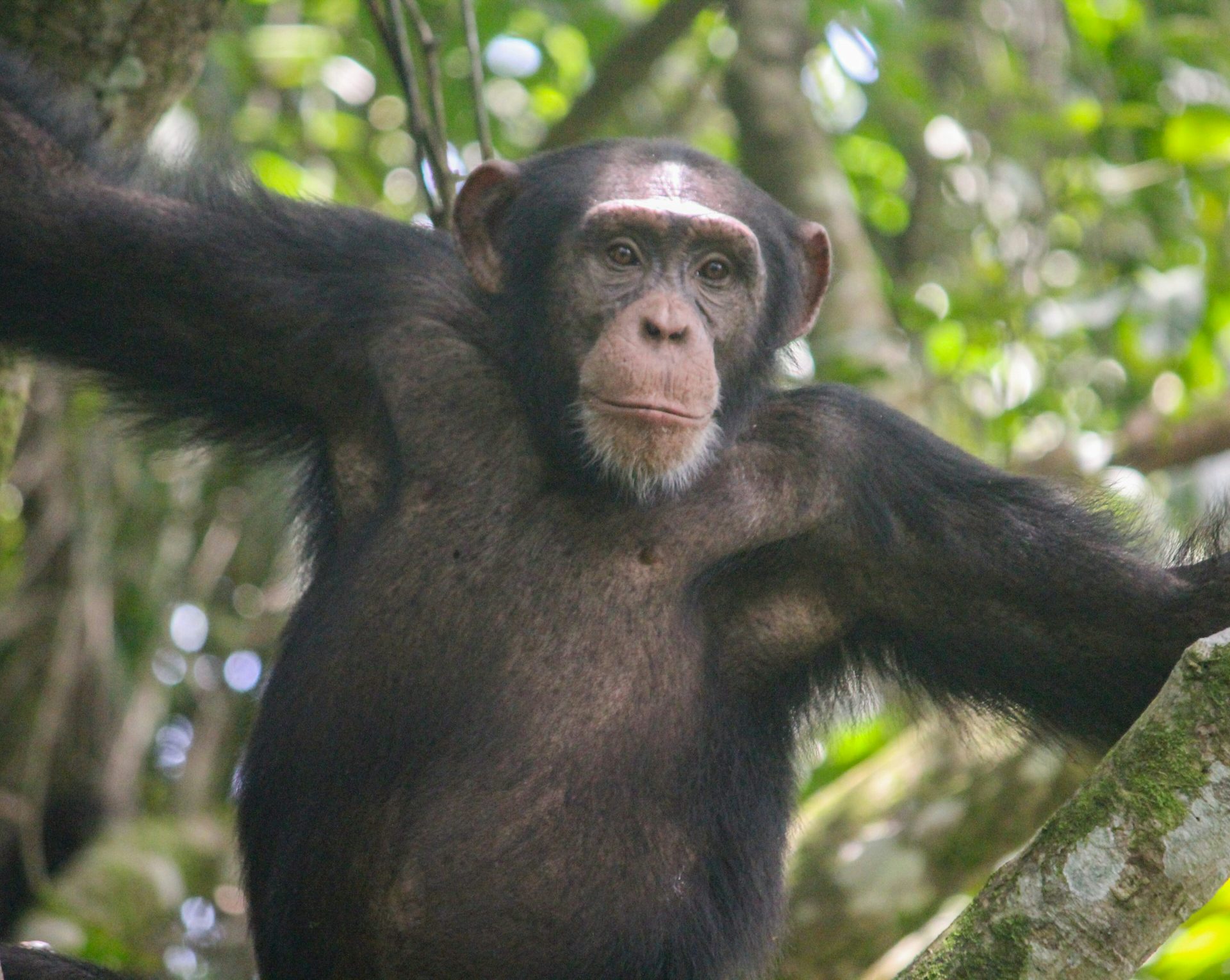
لماذا يرمي الشمبانزي الذكور الحجارة على نفس الأشجار لأكثر من عقد من الزمان؟ سافرنا إلى غينيا بيساو النائية لمعرفة السبب.
Why do male chimpanzees throw rocks at the same trees for more than a decade? We travelled to remote Guinea-Bissau to find out
To study accumulative stone throwing among wild chimpanzees, researchers hike deep into the savanna-woodland of Boé — a habitat increasingly threatened by industrial mining.
لدراسة رمي الحجارة التراكمي بين الشمبانزي البرية، سار الباحثون عميقاً في غابات السافانا الخشبية في بويه – وهي بيئة مهددة بشكل متزايد بالتعدين الصناعي.
Walking through the savanna-woodland landscape of Boé National Park, Guinea-Bissau, you might encounter a tree covered in gnarled scars, with an accumulation of rocks surrounding its base.
عند التجول عبر المناظر الطبيعية شبه السافانا الحرجية في حديقة بويه الوطنية بغينيا بيساو، قد تصادف شجرة مغطاة بندوب معقودة، ومحاطة بتراكم من الصخور عند قاعدتها.
The chimpanzees may have left the area, but you are lucky nonetheless, because you have stumbled upon evidence of a rare — and potentially cultural — chimpanzee behaviour: accumulative stone throwing.
ربما تكون الشمبانزي قد غادرت المنطقة، ولكنك محظوظ على أي حال، لأنك عثرت على دليل على سلوك نادر — وربما ثقافي — للشمبانزي: رمي الحجارة التراكمي.
Video recordings show wild western chimpanzees, usually adult males, throwing rocks at specific trees and repeatedly returning to these trees to perform the behaviour.
تُظهر التسجيلات المرئية شمبانزي غربيين برّيين، عادةً الذكور البالغون، وهم يلقون الحجارة على أشجار معينة ويعودون مراراً وتكراراً إلى هذه الأشجار لأداء هذا السلوك.
While throwing, the chimpanzees pant hoot — a loud, long-distance communicative signal — and sometimes repeatedly hit their hands and feet on the tree in a behaviour called buttress drumming.
أثناء الرمي، تلهث الشمبانزي وتطلق نداء “هوت” (hoot) — وهو إشارة اتصال عالية ومسافات طويلة — وأحياناً تضرب أيديها وقدميها على الشجرة في سلوك يسمى الطبلة الداعمة (buttress drumming) .
We have just returned from a field site in Guinea-Bissau where we collected data to help us investigate the social and ecological context of accumulative stone throwing to determine what these chimpanzees are trying to communicate.
لقد عدنا للتو من موقع ميداني في غينيا بيساو حيث جمعنا بيانات لمساعدتنا في التحقيق في السياق الاجتماعي والبيئي لرمي الحجارة التراكمي لتحديد ما تحاول هذه الشمبانزي إيصاله.
Given our evolutionary relatedness to chimpanzees, we hope accumulative stone throwing can help us understand the emergence of complex communication and stone tool use over the course of human evolution.
نظراً لقرب صلتنا التطورية بالشمبانزي، نأمل أن يساعدنا رمي الحجارة التراكمي في فهم ظهور التواصل المعقد واستخدام الأدوات الحجرية على مدى تطور الإنسان.
A cultural behaviour
السلوك الثقافي
Pant hooting and buttress drumming are both part of the male chimpanzee display, suggesting that accumulative stone throwing might represent a modification of this common behaviour. It is likely a cultural behaviour due to its limited distribution, and because the availability of rocks and trees does not guarantee the presence of an accumulative stone throwing site.
تُعدّ أنين الـ “بانت هوت” (Pant hooting) وطرقات المؤخرة جزءًا من عرض الشمبانزي الذكر، مما يشير إلى أن رمي الحجارة التراكمي قد يمثل تعديلًا لهذا السلوك الشائع. ومن المرجح أن يكون سلوكًا ثقافيًا نظرًا لتوزيعه المحدود، ولأن توافر الصخور والأشجار لا يضمن وجود موقع لرمي الحجارة التراكمي.
Previous research suggests that accumulative stone throwing is likely communicative or may even have a symbolic purpose, with sites marking important locations within the chimpanzees’ territory.
تشير الأبحاث السابقة إلى أن رمي الحجارة التراكمي من المحتمل أن يكون سلوكًا تواصليًا أو قد يحمل حتى هدفًا رمزيًا، حيث تُعلّم المواقع أماكن مهمة ضمن نطاق إقليم الشمبانزي.
However, we still don’t know what accumulative stone throwing sites might mean to the chimpanzees themselves nor why they do it. While some primates use stone tools to access food, for instance to crack open nuts, accumulative stone throwing is a rare example of stone tool use in a social context. It has been observed in only four chimpanzee groups in West Africa to date.
ومع ذلك، ما زلنا لا نعرف ماذا تعني مواقع رمي الحجارة التراكمي للشمبانزي أنفسهم ولا لماذا يقومون بذلك. فبينما تستخدم بعض الرئيسيات الأدوات الحجرية للوصول إلى الطعام، مثل تكسير المكسرات، يمثل رمي الحجارة التراكمي مثالًا نادرًا لاستخدام الأدوات الحجرية في سياق اجتماعي. وقد لوحظ هذا السلوك حتى الآن في أربع مجموعات شمبانزي فقط في غرب أفريقيا.
Setting up camp
إقامة المخيم
We travelled to the remote Boé chimpanzee territory in Guinea-Bissau and based ourselves in Béli, a small village where, in collaboration with local people, the Dutch non-governmental organization Chimbo maintains a compound. Visiting researchers and tourists can stay here and use a workspace with solar-generated electricity.
سافرنا إلى منطقة قردة الشمبانزي بويه النائية في غينيا بيساو وأقمنا أنفسنا في بيلّي، وهي قرية صغيرة تحتفظ فيها منظمة “تشيمبو” الهولندية غير الحكومية بحرم، بالتعاون مع السكان المحليين. يمكن للباحثين والسياح الزائرين الإقامة هنا واستخدام مساحة عمل مزودة بالطاقة الكهربائية المولدة بالطاقة الشمسية.
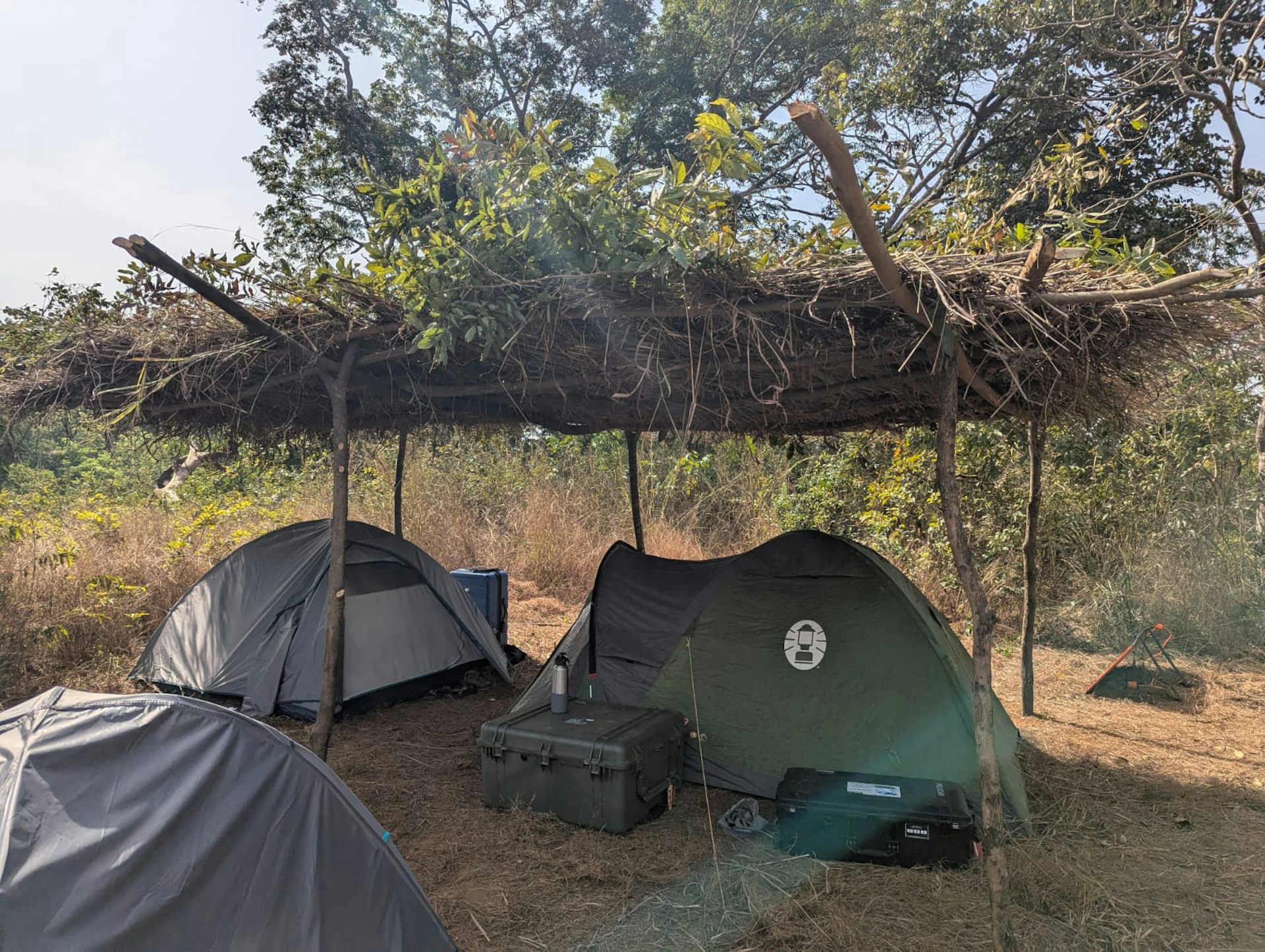
From Béli, we cycled and hiked 22 kilometres into the savanna-woodland to establish a bush camp with our two field assistants, Djei Baldé and Balu Séra, and a master’s student from the Great Ape Behaviour Lab, Taylor Tippett.
من بيلّي، قمنا بركوب الدراجات والمشي لمسافة 22 كيلومتراً إلى السافانا الحرجية لتأسيس مخيم في الأدغال مع مساعدينا الميدانيين، جي بالدي وبالو سيرا، وطالب ماجستير من مختبر سلوك القردة الكبيرة، تايلور تيبيت.
The Boé chimpanzees performing the behaviour are unhabituated; they are not used to humans, meaning that we cannot observe individual chimpanzees on foot because they will run away. Instead, we collected behavioural data using camera traps and recording devices.
قردة الشمبانزي بويه التي تؤدي السلوك غير معتادة على البشر؛ فهي ليست معتادة على الإنسان، مما يعني أنه لا يمكننا مراقبة الشمبانزي بشكل فردي سيراً على الأقدام لأنها ستهرب. بدلاً من ذلك، قمنا بجمع البيانات السلوكية باستخدام مصائد الكاميرات وأجهزة التسجيل.
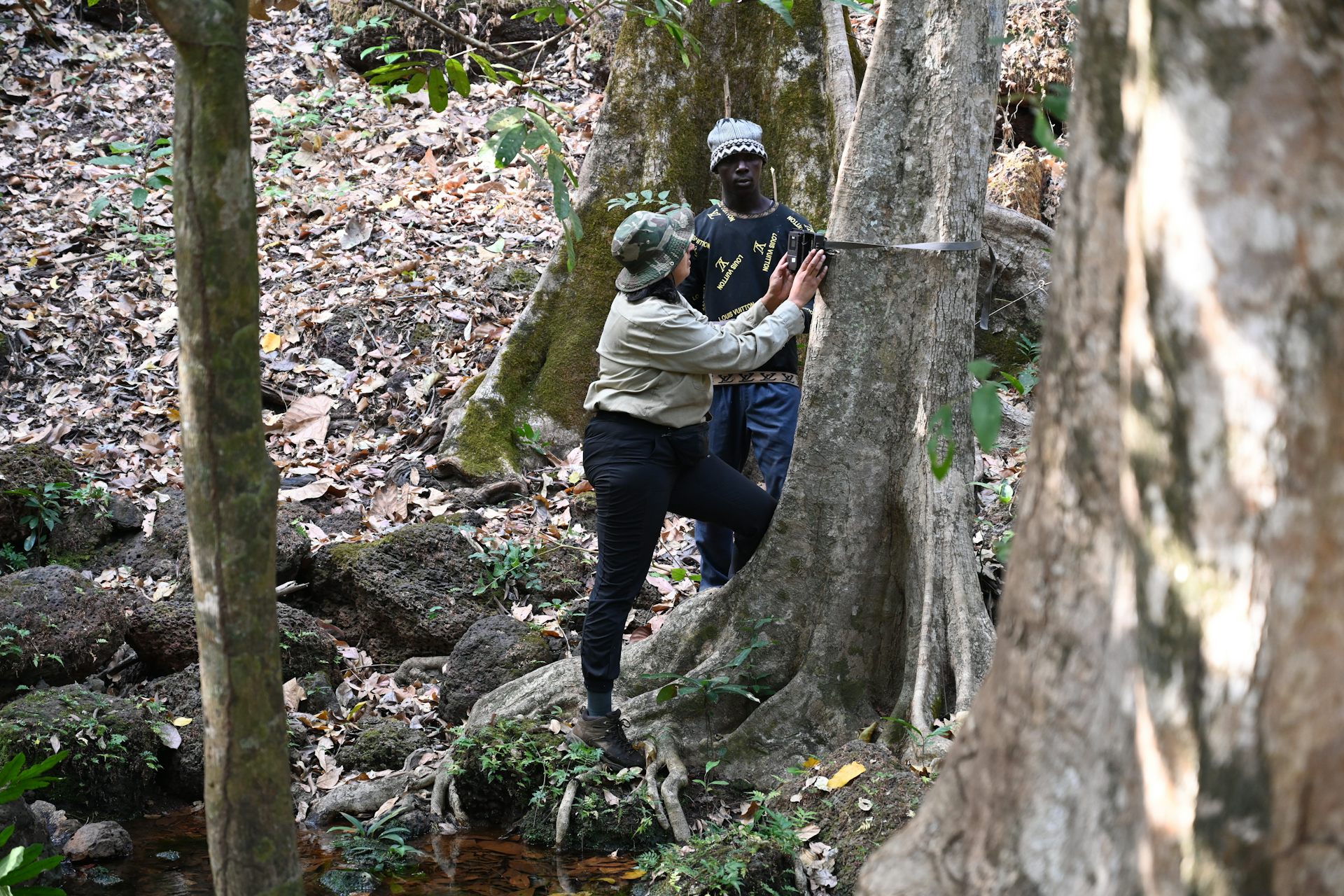
We set up two video cameras at each accumulative stone throwing site and placed the recording devices strategically to capture audio data from the areas around these sites.
قمنا بتركيب كاميرتين فيديو في كل موقع لرمي الحجارة التراكمي ووضعنا أجهزة التسجيل بشكل استراتيجي لالتقاط البيانات الصوتية من المناطق المحيطة بهذه المواقع.
Our campsite bordered the Fefine, a large river that flows even in the dry season. In a landscape like the savanna-woodland where water sources are scarce, rivers like the Fefine are important for wildlife and humans alike. We captured several of our neighbours on cameras set up near the riverbank.
كان مخيمنا يطل على نهر الفيفين، وهو نهر كبير يجري حتى في موسم الجفاف. في بيئة مثل السافانا الحرجية حيث ندر مصادر المياه، تعد الأنهار مثل الفيفين مهمة للحياة البرية والبشر على حد سواء. التقطنا العديد من جيراننا بالكاميرات الموضوعة بالقرب من ضفة النهر.
Chimpanzee nests
أعشاش الشمبانزي
On an average day, we woke up around 6:30 a.m. and ate a small breakfast before heading to a set of two to five sites. There, we replaced the SD cards and batteries on the cameras, made sure the devices were working well and collected any additional data needed, including measurements of the tree and 3D scans of rocks thrown at the tree for later analysis.
في يوم عادي، كنا نستيقظ حوالي الساعة 6:30 صباحاً ونتناول فطوراً خفيفاً قبل التوجه إلى مجموعة من المواقع تتراوح بين اثنين وخمسة. هناك، قمنا باستبدال بطاقات الذاكرة والبطاريات في الكاميرات، وتأكدنا من أن الأجهزة تعمل بشكل جيد، وجمعنا أي بيانات إضافية مطلوبة، بما في ذلك قياسات الشجرة ومسح ثلاثي الأبعاد للصخور التي أُلقيت على الشجرة لإجراء تحليل لاحق.
Along the way, we recorded observations of chimpanzee nests, feeding signs, vocalizations and sightings.
على طول الطريق، سجلنا ملاحظات حول أعشاش الشمبانزي، وعلامات التغذية، والتنغيمات الصوتية، والمشاهدات.
The video and audio data we collected will allow us to investigate the social traits of accumulative stone throwing, including the age and sex of the stone thrower and the audience (other chimpanzees nearby who might react to the throw) . This information can help us determine what chimpanzees are trying to communicate.
ستسمح لنا البيانات المرئية والمسموعة التي جمعناها بالتحقيق في السمات الاجتماعية لرمي الحجارة التراكمي، بما في ذلك عمر وجنس رامِ الحجر والجمهور (الشمبانزيون الآخرون القريبون الذين قد يتفاعلون مع الرمي) . يمكن أن تساعدنا هذه المعلومات في تحديد ما يحاول الشمبانزيون توصيله.
We found that most of the sites first identified by the Pan African Programme, and revisited by our team in 2017, were still in use during our recent trip to the field, meaning that chimpanzees can use these sites for over a decade.
وجدنا أن معظم المواقع التي حددها البرنامج الأفريقي الشامل لأول مرة، وأعاد فريقنا زيارتها في عام 2017، لا تزال قيد الاستخدام خلال رحلتنا الأخيرة إلى الميدان، مما يعني أن الشمبانزي يمكنه استخدام هذه المواقع لأكثر من عقد من الزمان.
The threat of bauxite mining
تهديد تعدين البوكسيت
As many primate species face threats from human activities, cultural behaviours and the maintenance of rich cultural repertoires can help them adapt to environmental changes and provide support for conservation.
بما أن العديد من أنواع الرئيسيات تواجه تهديدات ناتجة عن الأنشطة البشرية، فإن السلوكيات الثقافية والحفاظ على ذخائر ثقافية غنية يمكن أن تساعدها على التكيف مع التغيرات البيئية وتوفير الدعم للحفظ.
On top of its potential communicative importance and intrinsic value as a cultural behaviour, accumulative stone throwing involves durable primate material culture, the loss of which would constitute the erasure of primate heritage.
بالإضافة إلى أهميته التواصلية المحتملة وقيمته الجوهرية كسلوك ثقافي، يتضمن رمي الحجارة المتراكم (accumulative stone throwing) ثقافة مادية رئيسية متينة، وفقدانها سيشكل محوًا للتراث الرئيسياتي.
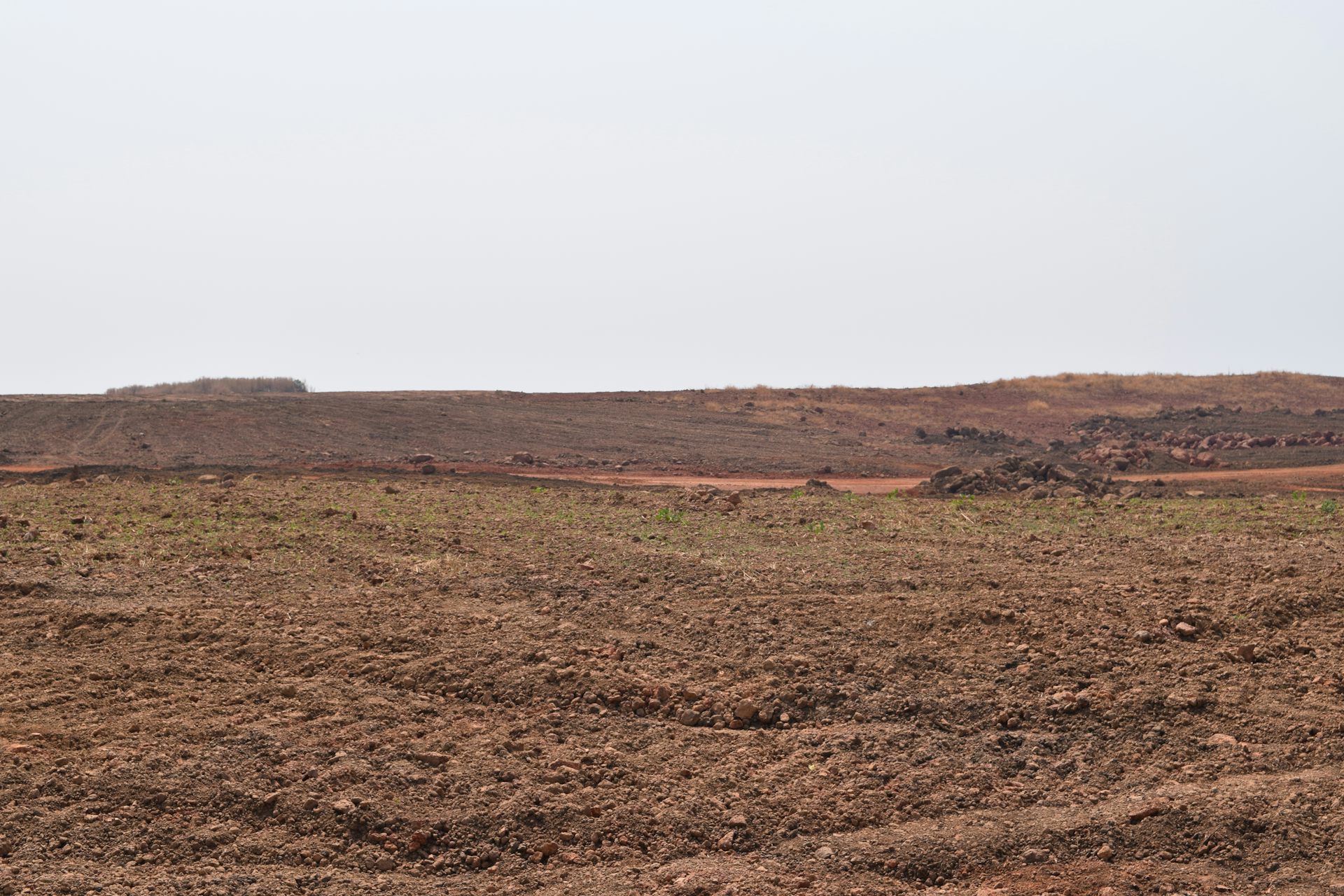
Unfortunately, chimpanzee habitat in Guinea-Bissau is threatened by extractive industries, particularly industrial mining. While in the field, we encountered bore holes from bauxite mining exploration.
للأسف، يهدد التعدين الاستخراجي موائل الشمبانزي في غينيا بيساو، وخاصة التعدين الصناعي. وخلال عملنا الميداني، واجهنا آبار حفر من استكشاف تعدين البوكسيت.
Bauxite mining represents a significant opportunity for economic growth and development in Guinea-Bissau. It can also cause habitat destruction and pollution with severe detrimental effects for chimpanzees, other wildlife and the local people — as it already has in neighbouring Guinea.
يمثل تعدين البوكسيت فرصة كبيرة للنمو الاقتصادي والتنمية في غينيا بيساو. ولكنه يمكن أن يسبب أيضًا تدمير الموائل والتلوث بعواقب وخيمة وضارة للشامبانزي والحياة البرية الأخرى والسكان المحليين — كما حدث بالفعل في غينيا المجاورة.
Environmental oversight and regulations are much needed, especially given the added challenges of unstable governance in Guinea-Bissau.
هناك حاجة ماسة للرقابة البيئية واللوائح، خاصة بالنظر إلى التحديات الإضافية للحكم غير المستقر في غينيا بيساو.
By studying and bringing attention to chimpanzee cultural behaviours like accumulative stone throwing, we hope to support chimpanzee conservation and the maintenance of biodiversity more broadly, as well as the preservation of primate cultural materials for future research and education.
من خلال دراسة وتسليط الضوء على السلوكيات الثقافية للشمبانزي مثل رمي الحجارة المتراكم، نأمل أن ندعم حفظ الشمبانزي والحفاظ على التنوع البيولوجي بشكل أوسع، بالإضافة إلى صون المواد الثقافية للرئيسيات للأبحاث والتعليم المستقبلي.
Robyn Nakano is supported in part by funding from the Social Sciences and Humanities Research Council of Canada.
تلقى روبين ناكانو دعمًا جزئيًا من تمويل مجلس البحوث في العلوم الإنسانية والاجتماعية بكندا.
Ammie Kalan receives funding from the Social Sciences and Humanities Research Council of Canada in the form of an Insight Development Grant which supported the research mentioned in this article. Previous research on AST was also funded by a National Geographic Explorers Grant and supported by the Max Planck Society.
يتلقى أامي كالان تمويلاً من مجلس البحوث في العلوم الإنسانية والاجتماعية بكندا في شكل منحة لتطوير الرؤى (Insight Development Grant) التي دعمت البحث المذكور في هذه المقالة. كما تم تمويل الأبحاث السابقة حول رمي الحجارة المتراكم من منحة المستكشفين الوطنية الجغرافية ودعمها من جمعية ماكس بلانك.
Read more
-

تناولت دراستنا سلوك المراهقين على وسائل التواصل الاجتماعي في 43 دولة – حيث يواجه الأفراد من الخلفيات المحرومة أضراراً أكبر.
Our study looked at teens’ social media behaviour in 43 countries – those from disadvantaged backgrounds face greater harms
-

عودة آندي بورنهام إلى وستمنستر: ما يشير إليه ذلك حول النظام السياسي البريطاني المتغير
Andy Burnham is back at Westminster: what this says about Britain’s changing political system