There is some evidence to suggest that national teams with more migrant players perform better on the pitch.
有了一些证据表明,拥有更多外籍球员的国家队在球场上的表现更出色。
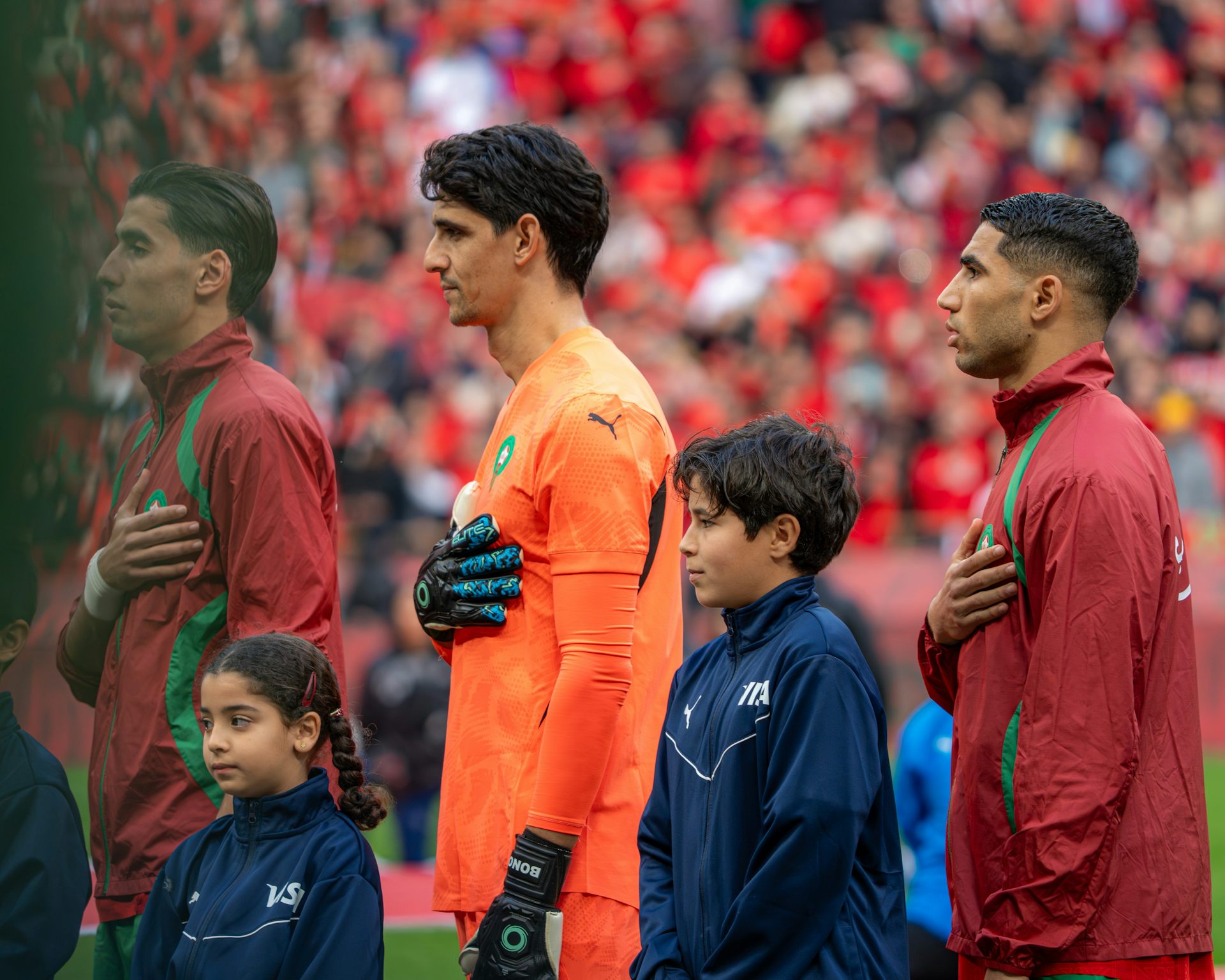
Few would have predicted Morocco’s success at the 2022 Fifa World Cup. Heading into the tournament, they were ranked 22nd in the world and had never progressed beyond the round of 16.
很少有人能预料到摩洛哥在2022年世界杯上的成功。进入本次赛事前,他们在世界排名第22位,并且从未晋级过十六强。
Yet they beat Belgium, Spain and Portugal – countries that both then and now rank inside the world’s top ten – on their way to becoming the first African nation ever to reach the semi-final.
然而,他们击败了比利时、西班牙和葡萄牙——这两个国家无论当时还是现在都位列世界前十——一路走到了半决赛,成为了有史以来第一个达到半决赛的非洲国家。
Morocco’s run was not only remarkable (and thoroughly deserved) . It also sparked debate beyond football because 14 of the players in their 26-man squad were foreign-born, more than any other nation in the tournament.
摩洛哥的征程不仅令人瞩目(而且实至名归)。它还引发了超越足球领域的讨论,因为他们在26人阵容中有14名球员是海外出生,超过了本次赛事任何其他国家。
The 2026 World Cup will feature more foreign-born players than any previous edition. Nearly a quarter of the 1,248 players selected for national teams were born in a different country from the one they will represent.
2026年世界杯将拥有比以往任何届赛事更多的外籍出生球员。在为国家队选出的1,248名球员中,近四分之一是在与他们代表的国家不同的国家出生的。
In some squads, the proportions are far higher than this – 96% of Curaçao’s players were born abroad, as were 85% of the Democratic Republic of the Congo’s and 73% of Morocco’s. Overall, foreign-born players make up the majority of footballers in eight of the tournament’s 48 squads.
在一些阵容中,比例更高——库拉索的球员中有96%是海外出生,刚果民主共和国有85%,摩洛哥有73%。总的来说,外籍出生球员构成了本次赛事48个队伍中的多数足球运动员。
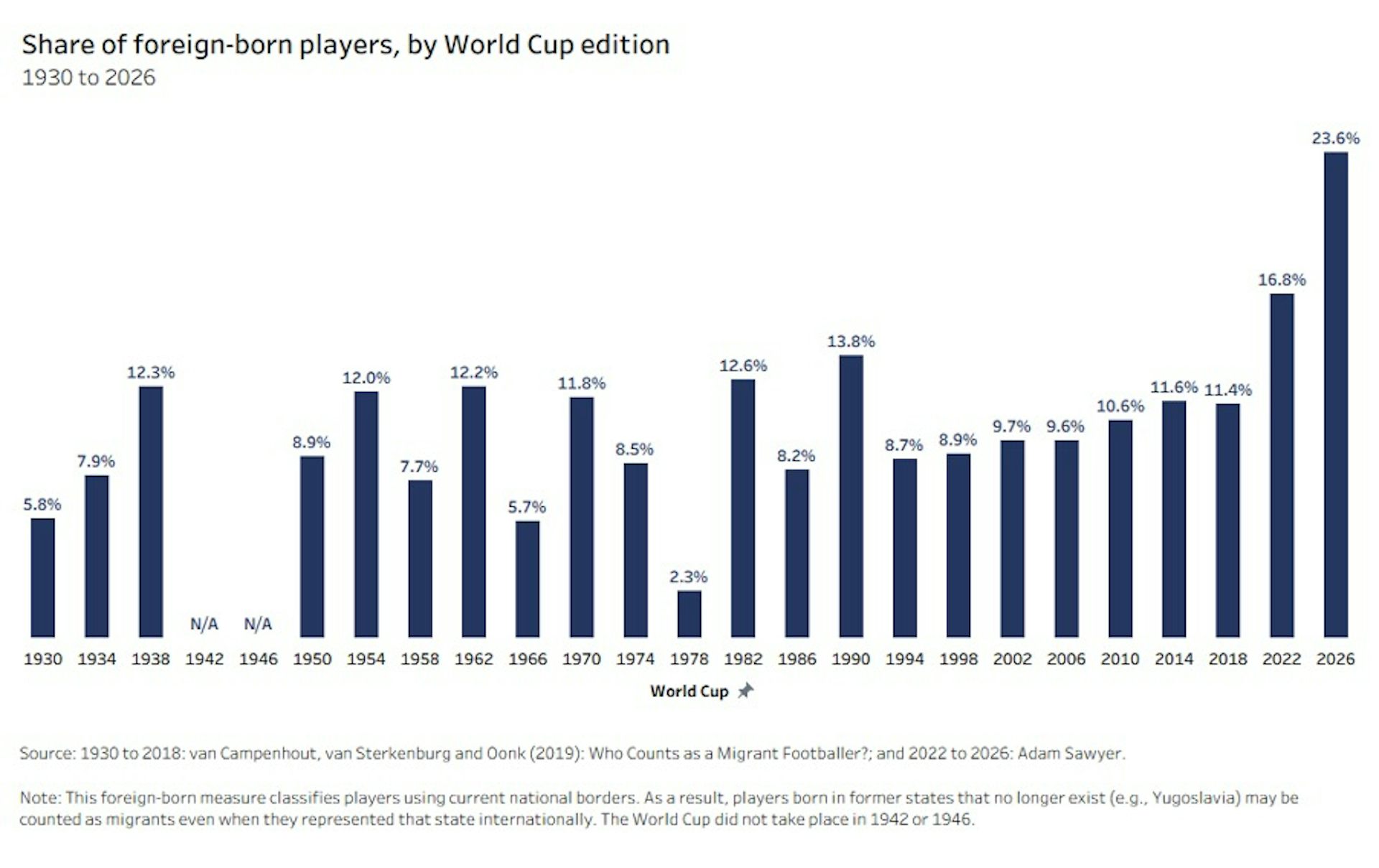
Migration has been part of the World Cup story since its inception. At the tournament’s third edition in 1938, for example, 12% of players represented a country other than the one in which they were born.
移民一直是世界杯故事的一部分。例如,在1938年第三届世界杯上,有12%的球员代表的国家并非其出生国。
This was in part because Fifa didn’t introduce regulations governing football players’ eligibility for national teams until 1962, meaning it was not uncommon for players to represent multiple countries throughout their careers.
部分原因是国际足联直到1962年才引入了管理国家队球员资格的规定,这意味着球员在其职业生涯中代表多个国家并不罕见。
Some players represent countries other than those in which they were born because they are eligible through a parent or grandparent. These players often emerge from diaspora communities created by earlier waves of migration.
有些球员代表的国家并非其出生国,是因为他们通过父母或祖父母具有参赛资格。这些球员通常来自早期移民浪潮所形成的侨民社区。
One example is 2018 World Cup finalist Ivan Rakitić, who was born and raised in Switzerland but chose to represent Croatia. In a 2025 interview, Rakitić explained that when he had to choose between the two countries, his heart told him he should play for Croatia.
一个例子是2018年世界杯决赛选手伊万·拉基蒂奇(Ivan Rakitić),他出生和成长于瑞士,但选择代表克罗地亚出战。在2025年的采访中,拉基蒂奇解释说,当他必须在这两个国家之间做出选择时,他的心告诉他应该为克罗地亚效力。
Other players qualify through residency requirements. Pepe, for example, was born in Brazil but played in four World Cups for Portugal between 2010 and 2022 after becoming a Portuguese citizen at the age of 24.
其他球员是通过居住要求获得资格的。例如,佩佩(Pepe)出生于巴西,但在24岁成为葡萄牙公民后,代表葡萄牙参加了2010年至2022年间的四届世界杯。
Yet foreign-born players are only part of the story. World Cup squads also contain many second-generation migrants. France’s 2018 World Cup-winning squad is perhaps the best-known example: 12 of their 23 players had African parents.
然而,外籍出生球员只是故事的一部分。世界杯阵容还包含许多第二代移民。法国2018年夺冠的阵容可能是最著名的例子:他们23名球员中有12名拥有非洲父母。
Such patterns are not random. France’s squad reflected the country’s colonial and postcolonial links with north and west Africa. Similarly, since the mid-2000s, Switzerland’s national team has increasingly been shaped by migration from the former Yugoslavia following the conflicts and displacement that accompanied its breakup in the 1990s.
这种模式并非偶然。法国的阵容反映了该国与北非和西非的殖民和后殖民联系。同样,自21世纪初以来,瑞士国家队也日益受到来自前南斯拉夫移民的影响,这些影响源于90年代随其解体而来的冲突和流离失所。
England’s 2026 squad also tells a story about the country’s migration history. Alongside Marc Guéhi, who was born in Ivory Coast, at least nine players had a parent born overseas. Most have family roots in former British colonies in Africa and the Caribbean, reflecting patterns of post-second world war migration to the UK.
英格兰2026年的阵容也讲述了该国的移民历史故事。除了出生于科特迪瓦的马克·盖希(Marc Guéhi)之外,至少有九名球员拥有海外出生的父母。大多数人的家族根源可以追溯到前英国殖民地非洲和加勒比地区,反映了二战后向英国迁移的模式。
At the same time, 24 players born in England have been selected by other World Cup teams. This includes five representing Scotland and 19 playing for countries beyond the British Isles (including the US, New Zealand and Ghana) .
与此同时,24名出生在英格兰的球员被其他世界杯队伍选中。这包括五名代表苏格兰出战,以及19名效力于不属于不列颠群岛的国家(包括美国、新西兰和加纳)。
Does this matter on the pitch?
这在球场上重要吗?
Relatively little research has examined whether national teams with more migrant players perform better on the pitch. But the available evidence suggests they do.
关于拥有更多外籍球员的国家队是否在球场上表现更好的研究相对较少。但现有证据表明它们确实如此。
One study from 2022 analysed every World Cup between 1970 and 2018 and found that teams with more foreign-born players generally progressed further in the tournament. On average, each additional foreign-born player was associated with roughly 0.15 additional matches played.
2022年的一项研究分析了1970年至2018年间的每一届世界杯,发现拥有更多外籍球员的球队在锦标赛中普遍能取得更远的进展。平均而言,每增加一名外籍球员,与大约0.15场额外的比赛机会相关联。
The relationship remained even after accounting for broader differences between countries, suggesting that migration may provide advantages beyond those associated with wealth or footballing tradition alone.
即使考虑到各国之间的更广泛差异,这种关系仍然存在,这表明移民可能提供的优势不仅仅与财富或足球传统相关。
Another study from 2023 examined European national teams competing in World Cups and European Championships between 1970 and 2018. Using players’ surnames to estimate their ancestral origins, it measured the diversity of backgrounds within each squad and found that more diverse teams tended to perform better on average.
另一项来自2023年的研究考察了1970年至2018年间参加世界杯和欧洲锦标赛的欧洲国家队。该研究利用球员的姓氏来估计他们的祖源,测量了每个阵容背景的多样性,并发现背景越多元化的队伍,平均表现往往越好。
Specifically, the research found that a one standard deviation increase in diversity led to an increase in goal difference (the number of goals a team scores minus the number of goals they concede) of around 1.3 per match on average.
具体来说,研究发现,多样性增加一个标准差,平均导致净胜球(即球队进球数减去失球数)增加了约1.3分。
There are at least two factors that might explain these results. First, migration can expand the pool of players available to a national team. Ghana’s squad for the 2026 tournament draws heavily on diaspora communities in western Europe. This allows it to recruit players developed in some of the world’s strongest football systems.
可能至少有两个因素可以解释这些结果。首先,移民可以扩大国家队可用的球员资源。加纳参加2026年锦标赛的阵容大量依赖西欧的侨民社区。这使其能够招募在世界上一些最强大的足球体系中接受训练的球员。
Second, migration may increase the diversity of skills available within a squad. Football players need specific physical traits and technical skills to succeed on the pitch. Central defenders, for example, are usually tall and physically strong. More attacking players, on the other hand, often require speed.
其次,迁移可能会增加一个队伍可用的技能多样性。足球运动员需要在球场上取得成功,需要特定的体能特征和技术技能。例如,中后卫通常身材高大、体格强壮。另一方面,进攻型球员往往需要速度。
A more diverse population will probably provide a larger pool of potential players for each position, resulting in better complementarity at the team level.
人口结构越多元化,每个位置的潜在球员库可能就越大,从而在团队层面实现更好的互补性。
This does not mean that migration wins World Cups. Argentina won the 2022 World Cup without a single foreign-born player in their squad. Success also depends on population size, economic wealth and coaching. Lionel Messi playing for your team helps, too.
这并不意味着移民能赢得世界杯。 阿根廷在2022年世界杯上赢得冠军时,队里没有一名外籍球员。成功还取决于人口规模、经济财富和教练水平。梅西效力于你的球队也会有所帮助。
Nonetheless, the limited evidence available indicates that migration may influence international football beyond simply changing the make-up of the teams competing.
不过,现有有限的证据表明,移民可能的影响力超越了仅仅改变参赛队伍构成。
If Morocco’s 2022 squad had been limited to players born and raised in Morocco, would they still have reached the semi-finals? We’ll never know for sure. But if Curaçao do so this time around, the role of migration in footballing success may become harder to ignore.
如果摩洛哥2022年的队仅限于在摩洛哥出生和成长的球员,他们是否还能进入半决赛?我们永远无法确定。但如果库拉索这次能做到这一点,移民在足球成功中的作用可能会变得越来越难以忽视。
The 2022 and 2026 data on the share of foreign-born players selected in World Cup squads was compiled and analysed by Adam Sawyer, co-founder and director of research at Relevant Research, which provides technical and logistical support to immigration researchers.
关于2022年和2026年世界杯阵容中外籍出生球员比例的数据,由亚当·索耶(Adam Sawyer)整理和分析。索耶是Relevant Research的联合创始人兼研究总监,该机构为移民研究人员提供技术和后勤支持。