关于教宗利奥关于人工智能技术的“里程碑式”文本的故事——作者是其发布小组的成员
The story of Pope Leo’s ‘landmark’ text on AI technolog…
I knew this text would not be welcomed by all. And that’s OK.
我知道这份文本不会受到所有人的欢迎。但这没关系。
For the last few years, I’ve been seconded to assist the Catholic Church’s unprecedented global grassroots listening initiative. Just as that process drew to a close, I received a surprise request: would I help Pope Leo XIV launch his first social encyclical, focused on what it means to be human in a time of artificial intelligence?
在过去的几年里,我被借调协助天主教会开展了一项前所未有的全球基层倾听倡议。就在这项进程即将结束时,我收到了一项意外的请求:是否能帮助利奥十四世教宗发布他的第一部社会神学全书,重点探讨在人工智能时代,何为“人性”?
It is difficult to think of a more important theme right now than the impact of digital technologies, AI and robotics on every level of our social interactions and structures.
现在,没有什么主题比数字技术、人工智能和机器人技术对我们社会互动和结构各个层面的影响更重要了。
The Vatican has addressed technological questions before. My research includes the social teaching of popes since 1891, starting with Pope Leo XIII’s influential text Rerum Novarum (Of New Things) , which addressed the impact of the industrial revolution on working people (and which this new text commemorates) . A range of previous letters have addressed both the opportunities and dangers of technology.
梵蒂冈以前也曾关注过技术问题。我的研究涵盖了自1891年以来教宗们的社会教导,从利奥十三世教宗影响深远的著作《人类的福音》(Rerum Novarum)开始,该著作探讨了工业革命对工人的影响(而这部新全书也纪念了这一点)。一系列先前的信件都讨论了技术的机遇与危险。
Of course, the Vatican does have a chequered history with regard to theological reflection on scientific and medical developments. Over the past decade, it has been pursuing focused and, in my view, productive conversations with the AI tech sector through initiatives such as the Minerva Dialogues – a series of closed-door conferences with leading figures from both worlds. In this sense, the concern with AI does not spring from nowhere.
当然,在科学和医学发展方面的神学反思上,梵蒂冈的历史是复杂的。在过去十年里,梵蒂冈通过“米涅瓦对话”(Minerva Dialogues)等倡议,与人工智能技术领域进行了深入且在我看来富有成效的对话,这是一系列与来自这两个领域顶尖人物的闭门会议。从这个意义上说,对人工智能的关注并非凭空而来。
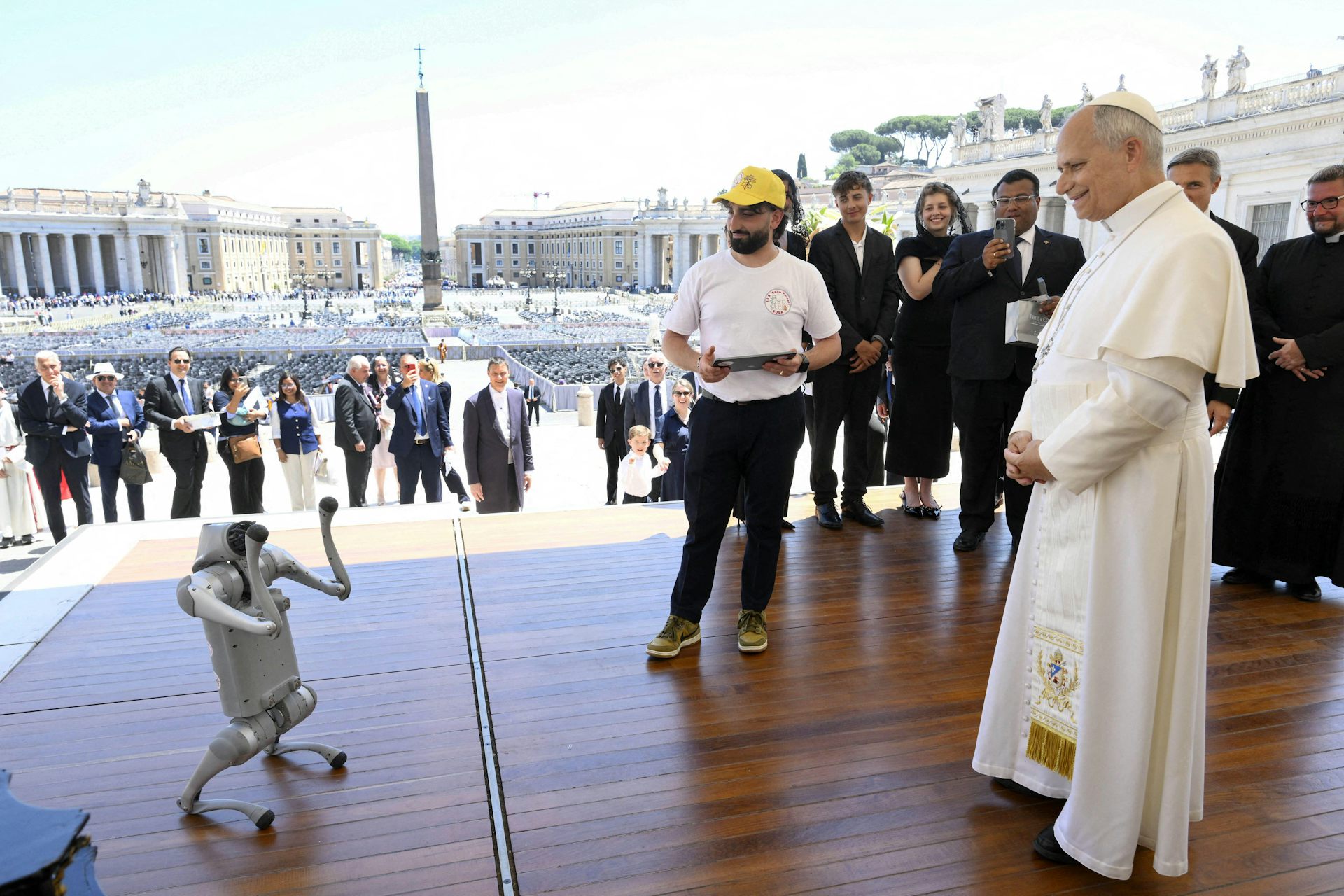
Nonetheless, Magnifica Humanitas (Magnificent Humanity) was a landmark moment: a papal text addressing AI as its central focus for the first time, launched by a pope in person – this does not usually happen – in the presence of the very industry it sought to critique. The encyclical panel on which I sat also included Chris Olah, co-founder of the AI tech firm Anthropic.
尽管如此,《宏伟的人性》(Magnifica Humanitas)是一个里程碑式的时刻:这是教宗首次将人工智能作为核心焦点进行论述的教宗文本,而且是由教宗亲自发布的——这种情况通常不会发生——并且是在其试图批判的行业面前发布的。我所在的全书小组还包括人工智能技术公司Anthropic的联合创始人克里斯·奥拉(Chris Olah)。
All of this meant a much higher level of media and public interest. In the run-up to launch, questions about the make-up of the panel and how equipped a pope is to comment on AI showed me this text would be controversial. And that’s OK.
这一切意味着媒体和公众的兴趣达到了前所未有的高度。在发布前夕,关于小组构成以及教宗在评论人工智能方面准备程度的疑问,让我意识到这部文本必然会引起争议。但这没关系。
The job of the text is both to offer the stimulus of a particular tradition – Catholic social teaching – and to encourage debate among people with a variety of views about what makes for a common good use of AI technologies. Our task as a panel was to explore both of these realities.
这部文本的任务既是提供一种特定的传统——天主教社会教导的启发——也是鼓励人们就如何实现人工智能技术的共同福祉进行辩论。我们小组的任务就是探索这两种现实。
Not anti-technology but pro-human
非反技术,而是亲人道
The Vatican was unconcerned about the encyclical’s lack of neutrality because it declares its hand transparently – and does not believe the tech sector operates with a neutral mindset either.
梵蒂冈不担心该《神学圆周书》缺乏中立性,因为它透明地表明了立场——而且它也不相信科技行业能保持中立心态。
The inclusion of Anthropic on the panel was welcomed by some as a sign of serious engagement with the sector on these issues. For others, it showed a risk of naïvety about the Vatican’s corporate capture, or of privileging the voices of capital.
有人欢迎将Anthropic纳入小组,认为这是认真参与该领域问题的标志。但对其他人来说,这显示出对梵蒂冈企业捕获的天真,或偏爱资本声音的风险。
The document calls for a movement out of the silos of private boardrooms where the morality (and profits) of new technologies is decided by the few, into a public space of transparency, participation, common benefit and shared power – if that is possible.
该文件呼吁,将新的技术道德(和利润)不再由少数人决定于私人董事会的筒仓中,而是进入一个透明、参与、共同利益和共享权力的公共空间——如果这是可能的。
Olah did at least note that the tech sector requires exactly the kind of conversation this text promotes: a public, shared conversation in which the shape of our working, educational, political and social lives are not determined by a few wealthy individuals.
奥拉至少指出,科技行业恰恰需要这种文本所倡导的对话:一场公开的、共享的对话,其中我们工作、教育、政治和社会生活的形态不应由少数富人决定。
The text is neither anti-technology nor anti-industry. It is pro-human, pro-social and resistant to false religious claims that AI will, in itself, save us. It resists the idea that human limits are things to be despised and overcome with models of perfected or eternal bodies or minds.
这份文本既非反技术,也非反产业。它是亲人道、亲社会的,并抵制了人工智能本身就能拯救我们的虚假宗教说法。它抵制了将人类局限性视为应被鄙视并用完美或永恒的身体或心智模型克服的想法。
It stresses that AI should enhance the human capacity for finite, embodied relationships, for meaningful work as part of a dignified life, and for the human person to be recognised as an end – not a tool of utility, power or profit.
它强调,人工智能应该增强人类进行有限、具身化关系的能力,增强作为有尊严生活一部分的有意义的工作能力,并使人被视为目的本身——而非效用、权力或利润的工具。
Technology is as old as humanity. It is part of how we shape and steward our world. It preserves and fosters our survival, and the social lives that give us meaning. Pope Leo was clear: what matters are the ends to which these new AI technologies are set, and their relationship with the Earth’s natural resources.
技术和人类一样古老。它是我们塑造和管理世界的一部分。它维护和促进我们的生存,以及赋予我们意义的社会生活。教宗利奥很清楚:重要的是这些新的人工智能技术所指向的最终目的,以及它们与地球自然资源的关系。
Reshaping the idea of being human
重塑“人性”的观念
The Vatican has issued previous texts comparing human and artificial intelligence, as well as a separate text critiquing trans- and post-humanisms. The added dimension in Leo’s first social encyclical is to ask questions about how technologies are reshaping the very idea of being human – rescripting work, education, politics and warfare – and how they are enacting and enmeshed in new cultures of dominating power.
梵蒂冈此前发布过比较人类和人工智能的文本,以及一篇单独批判跨人类主义和后人类主义的文本。利奥的首部社会教宗干纪事增加了一个维度,即探讨技术如何重塑“人性”的根本概念——重写工作、教育、政治和战争——以及它们如何参与并纠缠于新的支配权力文化之中。
The text interrogates freedom and flourishing – two categories central to Enlightenment thought.
该文本探讨了自由和繁荣——这是启蒙思想中的两个核心范畴。
Within the church, there are theologians who are engaged optimists regarding the possibility of AI technologies, and those who are more guarded. There are also some who might be characterised as “radical pessimists” – an honourable tradition to be distinguished from the merely cynical.
在教会内部,有神学家对人工智能技术的发展抱持乐观态度,也有人更为谨慎。此外,还有一些人可以被描述为“激进的悲观主义者”——这是一个值得与单纯的愤世嫉俗区分的崇高传统。
The new text draws from each of these perspectives, while remaining closest to a prudential middle. It names the risk of new dependencies, exclusions, manipulations and inequalities. Any positive and hopeful account of such new tech must be able to face and respond to these realities.
新文本借鉴了这些不同的视角,同时仍倾向于审慎的中间立场。它指出了新的依赖性、排斥性、操纵性和不平等带来的风险。任何关于此类新技术的积极和乐观的论述,都必须能够直面并回应这些现实。
Above all, this text marks a new phase in the papacy’s public (rather than closed-door) involvement in debates about AI technology. Its invitation is for a social dialogue on many levels across many groups, sectors and stakeholders.
最重要的是,这篇文本标志着教宗厅在公开(而非闭门)参与人工智能技术辩论的一个新阶段。它的邀请是进行一个跨越多个层面、多个群体、多个部门和利益相关者的社会对话。
My experience is that views on these matters are lively and fiercely contested. But above all, they are urgent.
我的经验是,关于这些问题(的观点)讨论非常热烈,且竞争激烈。但最重要的是,它们具有紧迫性。
Anna Rowlands is a member of the Dicastery for Integral Human Development at the Vatican. This is a governance role. She has also served as an advisor to the Vatican in various capacities for the last five years.
安娜·罗兰兹是梵蒂冈整体人类发展部的一名成员。这是一个治理职务。在过去的五年里,她还以各种身份为梵蒂冈担任过顾问。