世界杯球员的纹身揭示了他们对爱情、生活和宗教信仰的看法
What the tattoos of World Cup players say about their l…
As millions watch the 2026 FIFA World Cup, players’ tattoos will be on display – offering a glimpse into the inner lives of soccer’s biggest stars.
随着数百万观众观看2026年国际足联世界杯,球员们的纹身将成为焦点——为我们窥探足球界最大明星们内心深处的秘密。
As the 2026 FIFA World Cup starts on June 11, 2026, traditional news and social media channels will be full of pictures of the players. Many of them will be showing their tattoos.
随着2026年FIFA世界杯于6月11日开幕,传统的新闻和社交媒体渠道将充斥着球员的照片。其中许多人会展示他们的纹身。
Body art has become increasingly part of international soccer, although its prevalence can vary across geographical regions. A study of athletes participating in the 2018 World Cup found that Latin American players were the most heavily tattooed, followed by those from Oceania and Europe. African and Asian players are the least tattooed.
虽然纹身在不同地理区域的普及程度有所不同,但它已日益成为国际足球的一部分。一项对2018年世界杯参赛运动员的研究发现,拉丁美洲球员的纹身最多,其次是来自大洋洲和欧洲的球员。非洲和亚洲球员的纹身最少。
I have been studying tattoos and their spiritual and religious roles since 2018. Tattoos are an investment of time and money; they tend to symbolize something important in the person’s life. For professional athletes, however, they take on another level of meaning.
我自2018年以来一直在研究纹身及其精神和宗教作用。纹身是对时间和金钱的投入;它们往往象征着个人生活中重要的事物。然而,对于职业运动员来说,它们的意义又提升到了另一个层次。
These athletes operate in controlled environments in which what they do and say with their bodies is highly regulated. A player cannot freely ski, ride, work out or take vacations without considering contractual obligations to companies and other investors. Most of the professionals playing in the World Cup have also signed sponsorship agreements that regulate what they can display on their social media.
这些运动员在一个受控的环境中活动,他们身体上所做和说的一切都受到严格的监管。一名球员不能在不考虑对公司和其他投资方的合同义务的情况下自由滑雪、骑行、锻炼或度假。大多数参加世界杯的专业人士还签署了赞助协议,这些协议规定了他们在社交媒体上可以展示的内容。
Against this backdrop, tattoos remain one of the few spaces of personal freedom. As my colleagues and I found in our research, those who get them are choosing to reveal what is important and sacred to them.
在这种背景下,纹身仍然是个人自由的少数空间之一。正如我和我的同事们在研究中发现的,选择纹身的人正在选择展示对他们来说重要和神圣的东西。
Breaking the code
打破密码
Sociologists Sam Belkin and Dale Sheptak argue that tattoos are often a way for athletes to express their humanity in environments where they may be subjects of unreal expectations or treated as an asset. Belkin and Sheptak write that visible tattoos are a type of “nonverbal communication” that enables players to be honest about their personal feelings and what matters to them.
社会学家萨姆·贝尔金和戴尔·谢普塔克认为,纹身通常是运动员在可能面临不切实际的期望或被视为资产的环境中表达人性的一种方式。贝尔金和谢普塔克写道,可见的纹身是一种“非语言交流”,它使球员能够诚实地表达他们的个人感受和对他们重要的事物。
My colleagues and I analyzed the tattoos of the Argentine men’s national team that won the last World Cup in Qatar in 2022. We looked at about 200 pictures and found that 20 of the 26 players on the roster had a total of 226 tattoos.
我的同事们和我分析了赢得2022年卡塔尔世界杯的阿根廷男国家队的纹身。我们查看了大约200张照片,发现这支阵容中26名球员有20人身上总共有226个纹身。
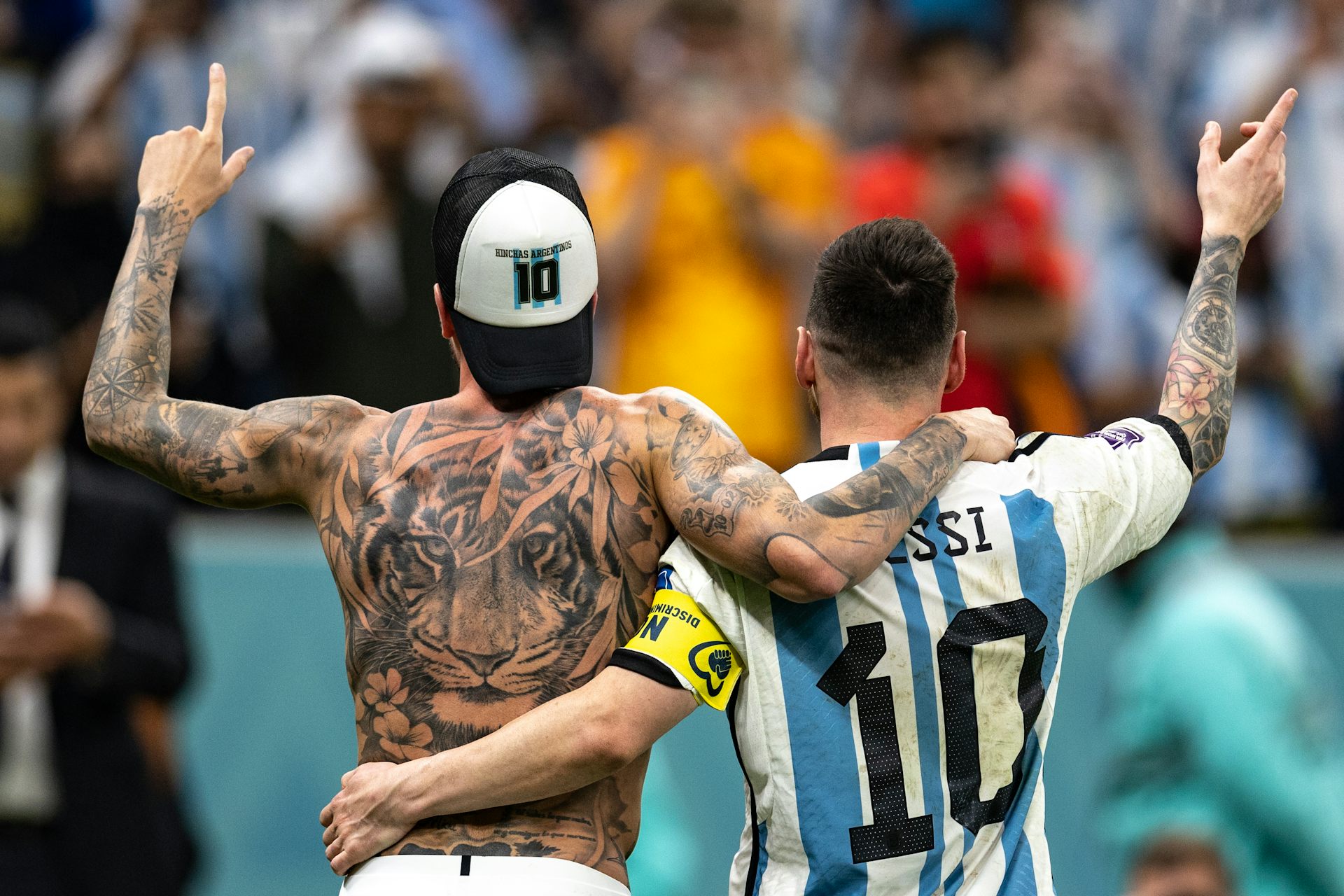
We analyzed the team’s demographics and the tattoo designs and placement on the players’ bodies. We also analyzed interviews where some of them had talked about their lives and, in some cases, the stories behind their tattoos. By placing these tattoos in the broader context of their professional paths and religious and popular culture, we were able to better understand what the body art meant to them.
我们分析了球队的人口统计数据以及球员身上的纹身设计和位置。我们还分析了采访记录,其中一些球员谈论了自己的生活,在某些情况下,也讲述了他们纹身的背后的故事。通过将这些纹身置于其职业生涯、宗教和流行文化的更广阔背景中,我们能够更好地理解这些身体艺术对他们的意义。
A majority of players expressed their religious beliefs through their tattoos: 75% of them – 15 out of 20 – featured body art of religious figures connected to Catholicism, like the Virgin Mary, Jesus and saints; some also had tattoos of doves associated with the holy spirit, and churches.
大多数球员通过纹身表达了他们的宗教信仰:其中75%(20人中的15人)的纹身图案与天主教相关的宗教人物,如圣母玛利亚、耶稣和圣徒;一些人还纹有与圣灵相关的鸽子和教堂的图案。
We also saw religious diversity. There were tattoos of the Buddha, folk saints and spiritual objects. One player had a tattoo of a dream catcher – a handcrafted willow hoop with a woven net that resembles a spider’s web, typically hung above a bed to offer protection; another had the word “energía” – energy – inked on his body.
我们还看到了宗教多样性。有佛像、民间圣人和精神物品的纹身。一名球员纹了捕梦网——一种手工编织柳圈,带有类似蜘蛛网的编织网,通常悬挂在床上方以提供保护;另一名球员则将“energía”(能量)一词刻在了身上。
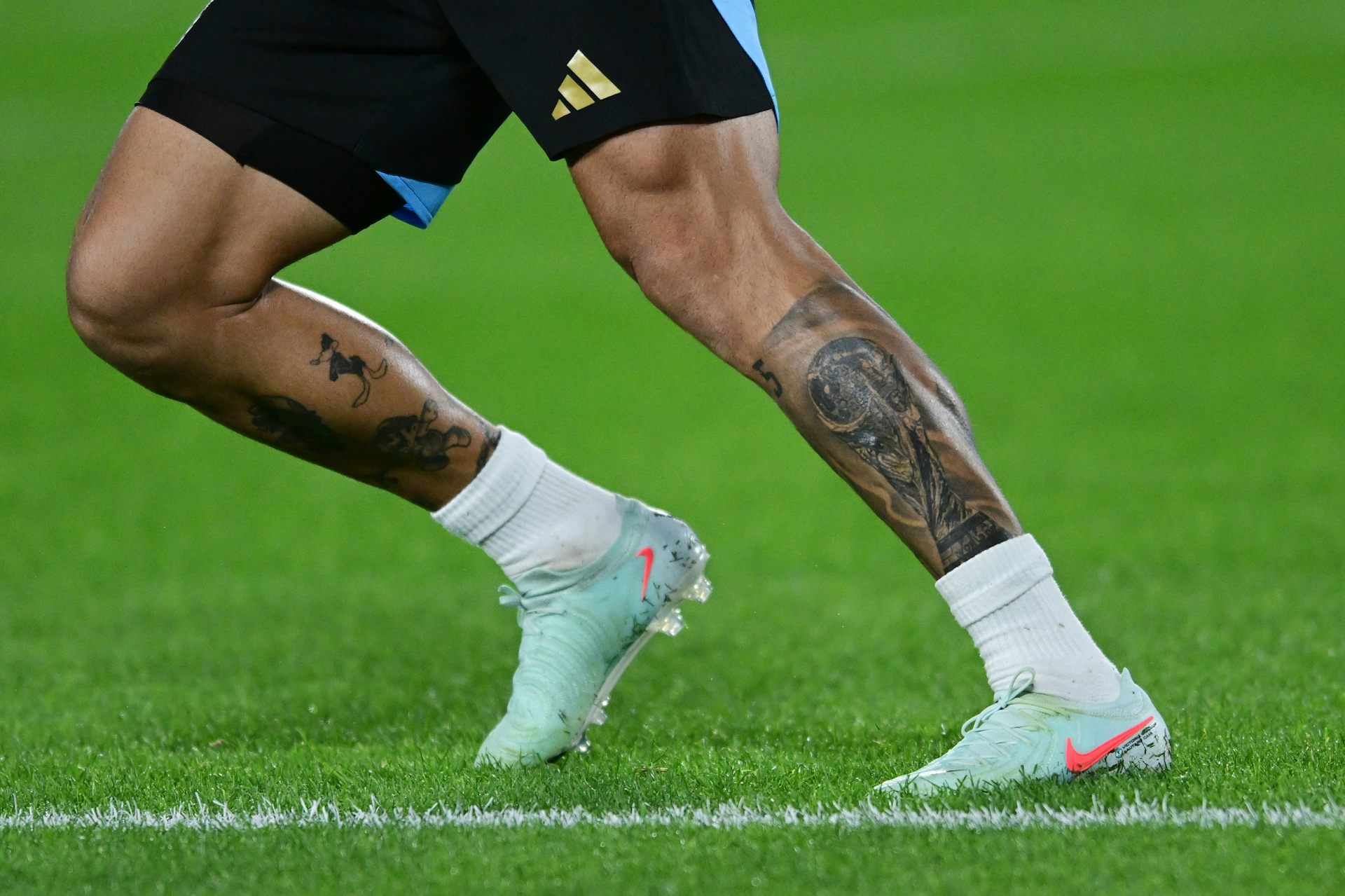
Seventy-five percent of the players had tattoos depicting what they achieved in their careers. Some of the symbols they used were trophies, jerseys and numbers. Usually the numbers they got corresponded to the jersey numbers they wear.
75%的球员的纹身描绘了他们在职业生涯中取得的成就。他们使用的符号包括奖杯、球衣和数字。通常他们获得的数字与他们穿着的球衣号码相对应。
Eighty percent – 16 players – had tattoos that portrayed what they loved. These tattoos include designs of numbers – usually dates of their children’s births – names of beloved ones or their partner’s eyes or lips.
80%——16名球员——的纹身描绘了他们所爱的一切。这些纹身包括数字设计——通常是孩子出生的日期——心爱之人的名字,或伴侣的眼睛和嘴唇。
Some tattoos expressed their extended family, including parents, grandparents, people who helped raise them, and even pets.
一些纹身表达了他们的大家庭,包括父母、祖父母、帮助抚养他们的人,甚至宠物。
Placement was also important. About 60% of the tattoos were on the arms and head, locations that were easily visible when they are performing on the field.
位置也很重要。大约60%的纹身位于手臂和头部,这些部位在他们在球场上表现时很容易被看到。
But the design of the tattoo also decided its placement: Religious symbols were usually placed on the entire shoulder or biceps, or on the upper or lower leg. Tattoos related to professional careers were usually located on the player’s dominant leg. Animal tattoos were usually placed on backs, and not visible during games.
但纹身的图案也决定了它的位置:宗教符号通常放置在整个肩膀或二头肌,或者在上肢或下腿。与职业生涯相关的纹身通常位于球员的主用腿部。动物纹身通常放在背部,在比赛中不易被看到。
Not all tattoos are the same
并非所有纹身都一样
Many scholars who study soccer have examined its relationships with politics and explored how the sport has been a venue for politics. Diego Maradona, for example, got the Argentine Marxist revolutionary and guerrilla leader Che Guevara tattoo on his right arm and Cuban revolutionary Fidel Castro on his calf, expressing his revolutionary political view. Our research team did not find political tattoos among current players.
许多研究足球的学者都考察过其与政治的关系,并探讨了这项运动如何成为一个政治场域。例如,迭戈·马拉多纳在他的右臂纹了阿根廷马克思主义革命家和游击队领袖切·格瓦拉的纹身,并在小腿上纹了古巴革命家菲德尔·卡斯特罗的纹身,以此表达了他的革命政治观点。然而,我们的研究团队在现役球员中没有发现任何政治纹身。
Gender is also important when looking at tattoos. Female players are often subjected to greater scrutiny than their male counterparts. When Argentina’s national women’s team captain Yamila Rodriguez revealed tattoos of Cristiano Ronaldo, she faced intense criticism from fans and media for having the Portuguese superstar and not Argentinean Lionel Messi depicted in tattoo. Rodriguez’s experience highlights that women’s bodies are subjected to personal judgment in a way that men’s are not.
性别在看待纹身时也很重要。女性运动员经常比男性同行受到更严格的审视。当阿根廷国家女子队队长亚米拉·罗德里格斯展示了克里斯蒂亚诺·罗纳尔多的纹身时,她因将这位葡萄牙超级巨星而非阿根廷人利奥内尔·梅西描绘在纹身上而面临来自粉丝和媒体的强烈批评。罗德里格斯的经历凸显了女性身体受到个人评判的方式与男性不同。
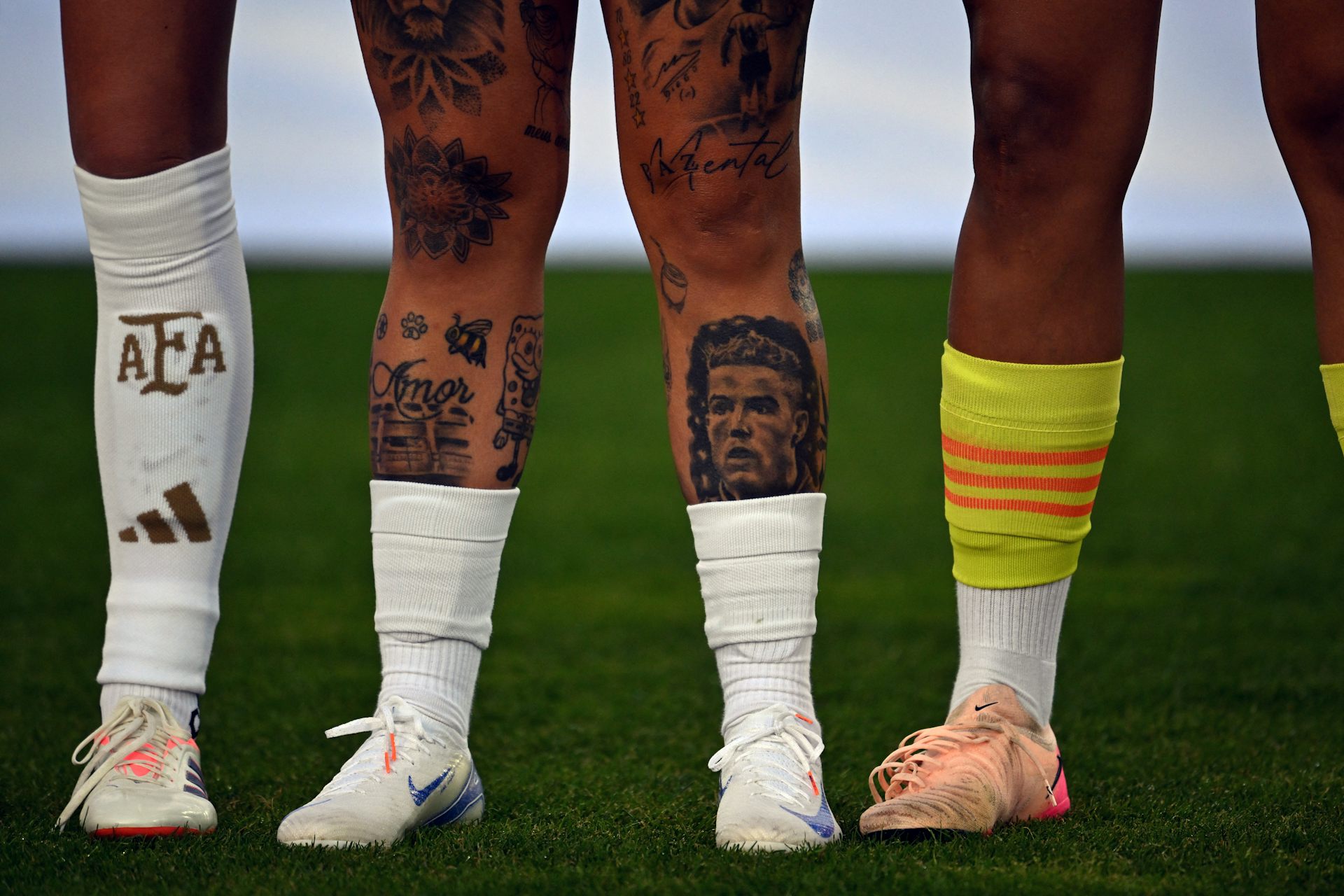
This World Cup, with its unprecedented global outreach, offers a unique opportunity to observe the values, beliefs and relationships that players choose to display on their bodies. In some ways, tattoos can be seen as a small window into the players’ souls.
凭借其前所未有的全球影响力,本届世界杯提供了一个观察球员选择在身上展示的价值观、信仰和人际关系的独特机会。从某种意义上说,纹身可以被视为窥视球员灵魂的一扇小窗口。
Gustavo Morello does not work for, consult, own shares in or receive funding from any company or organization that would benefit from this article, and has disclosed no relevant affiliations beyond their academic appointment.
Gustavo Morello 不受任何从本文受益的公司或组织雇佣、咨询、拥有股份或获得资金支持,并且除了其学术任命之外没有披露任何相关的关联。