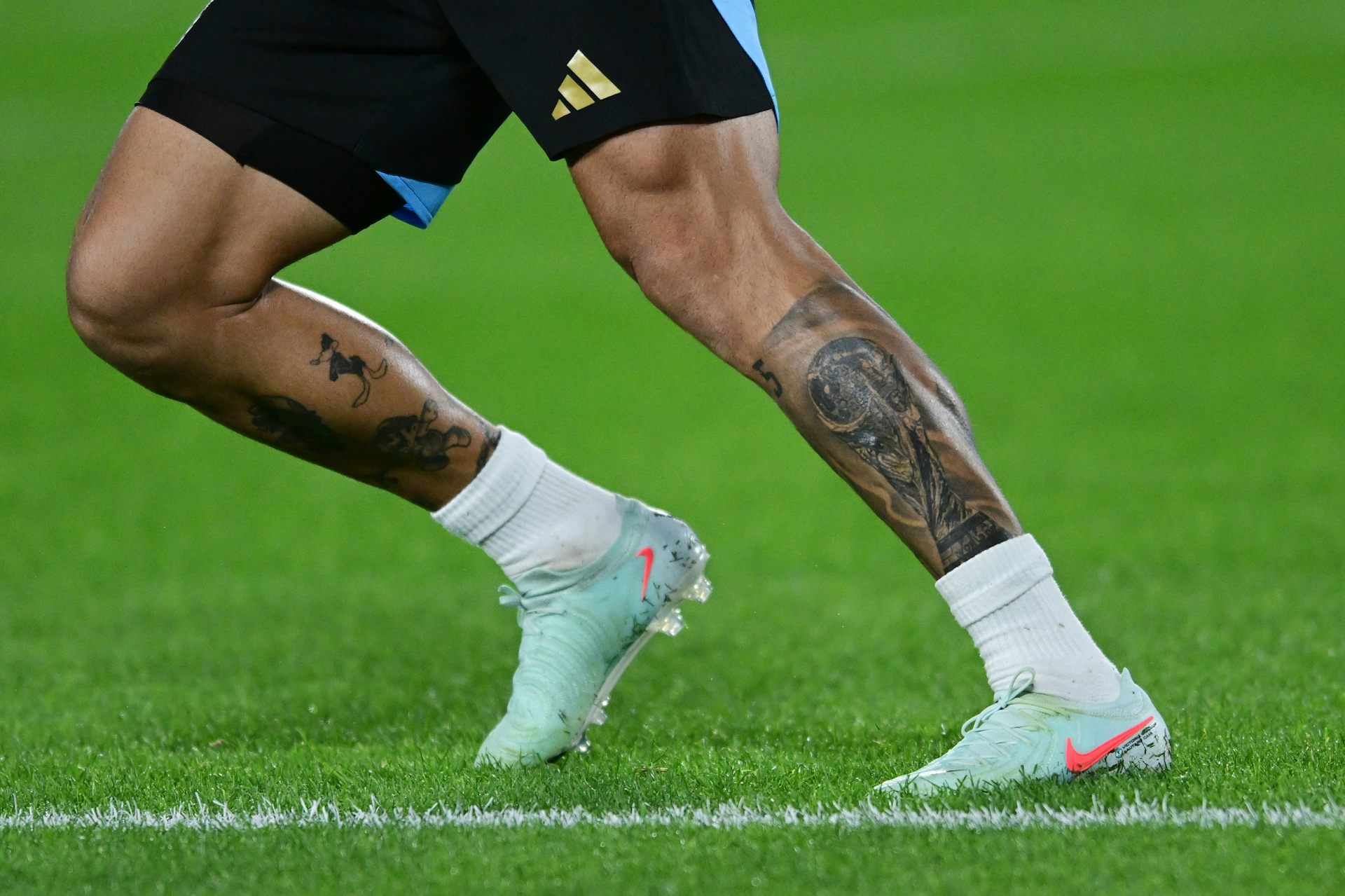
ماذا تخبرنا وشوم لاعبي كأس العالم عن حبهم وحياتهم ومعتقداتهم الدينية؟
What the tattoos of World Cup players say about their love, life and religious beliefs
As millions watch the 2026 FIFA World Cup, players’ tattoos will be on display – offering a glimpse into the inner lives of soccer’s biggest stars.
بينما يشاهد الملايين كأس العالم FIFA 2026، ستكون وشوم اللاعبين في الواجهة – مقدمةً لمحة عن الحياة الداخلية لأكبر نجوم كرة القدم.
As the 2026 FIFA World Cup starts on June 11, 2026, traditional news and social media channels will be full of pictures of the players. Many of them will be showing their tattoos.
مع بدء كأس العالم لكرة القدم 2026 في 11 يونيو 2026، ستكون القنوات الإخبارية ووسائل التواصل الاجتماعي التقليدية مليئة بصور اللاعبين. وسيعرض الكثير منهم وشومهم.
Body art has become increasingly part of international soccer, although its prevalence can vary across geographical regions. A study of athletes participating in the 2018 World Cup found that Latin American players were the most heavily tattooed, followed by those from Oceania and Europe. African and Asian players are the least tattooed.
لقد أصبح فن الجسد جزءاً متزايداً من كرة القدم الدولية، على الرغم من أن انتشاره قد يختلف عبر المناطق الجغرافية. فقد وجدت دراسة أجريت على الرياضيين المشاركين في كأس العالم 2018 أن اللاعبين أمريكا اللاتينية هم الأكثر وشمًا، يليهم أولئك القادمون من أوقيانوسيا وأوروبا. أما اللاعبون الأفارقة والآسيويون فهم الأقل وشمًا.
I have been studying tattoos and their spiritual and religious roles since 2018. Tattoos are an investment of time and money; they tend to symbolize something important in the person’s life. For professional athletes, however, they take on another level of meaning.
أقوم بدراسة الوشوم وأدوارها الروحية والدينية منذ عام 2018. إن الوشوم هي استثمار للوقت والمال؛ وتميل إلى أن ترمز لشيء مهم في حياة الشخص. ولكن بالنسبة للرياضيين المحترفين، فإنها تكتسب مستوى آخر من المعنى.
These athletes operate in controlled environments in which what they do and say with their bodies is highly regulated. A player cannot freely ski, ride, work out or take vacations without considering contractual obligations to companies and other investors. Most of the professionals playing in the World Cup have also signed sponsorship agreements that regulate what they can display on their social media.
يعمل هؤلاء الرياضيون في بيئات خاضعة للرقابة حيث يتم تنظيم ما يفعلونه ويقولونه بأجسادهم بدرجة عالية. لا يمكن للاعب أن يتزلج أو يمارس الرياضة أو يأخذ إجازات بحرية دون الأخذ في الاعتبار الالتزامات التعاقدية تجاه الشركات والمستثمرين الآخرين. كما قام معظم المحترفين الذين يلعبون في كأس العالم بتوقيع اتفاقيات رعاية تنظم ما يمكنهم عرضه على وسائل التواصل الاجتماعي الخاصة بهم.
Against this backdrop, tattoos remain one of the few spaces of personal freedom. As my colleagues and I found in our research, those who get them are choosing to reveal what is important and sacred to them.
على خلفية ذلك، تظل الوشوم واحدة من المساحات القليلة للحرية الشخصية. وكما وجدنا أنا وزملائي في بحثنا، فإن أولئك الذين يطلقونها يختارون الكشف عما هو مهم ومقدس بالنسبة لهم.
Breaking the code
كسر الشفرة
Sociologists Sam Belkin and Dale Sheptak argue that tattoos are often a way for athletes to express their humanity in environments where they may be subjects of unreal expectations or treated as an asset. Belkin and Sheptak write that visible tattoos are a type of “nonverbal communication” that enables players to be honest about their personal feelings and what matters to them.
يجادل علماء الاجتماع سام بيلكين وديل شيپتاك بأن الوشوم غالبًا ما تكون وسيلة للرياضيين للتعبير عن إنسانيتهم في بيئات قد يكونون فيها عرضة لتوقعات غير واقعية أو يُعاملون كأصل مادي. يكتب بيلكين وشيپتاك أن الوشوم الظاهرة هي نوع من “التواصل غير اللفظي” الذي يمكّن اللاعبين من أن يكونوا صادقين بشأن مشاعرهم الشخصية وما يهمهم.
My colleagues and I analyzed the tattoos of the Argentine men’s national team that won the last World Cup in Qatar in 2022. We looked at about 200 pictures and found that 20 of the 26 players on the roster had a total of 226 tattoos.
حللتُ أنا وزملائي وشم لاعبي المنتخب الأرجنتيني لكرة القدم للرجال الذي فاز بكأس العالم الأخيرة في قطر عام 2022. لقد نظرنا إلى حوالي 200 صورة ووجدنا أن 20 من أصل 26 لاعبًا في التشكيلة كان لديهم ما مجموعه 226 وشمًا.
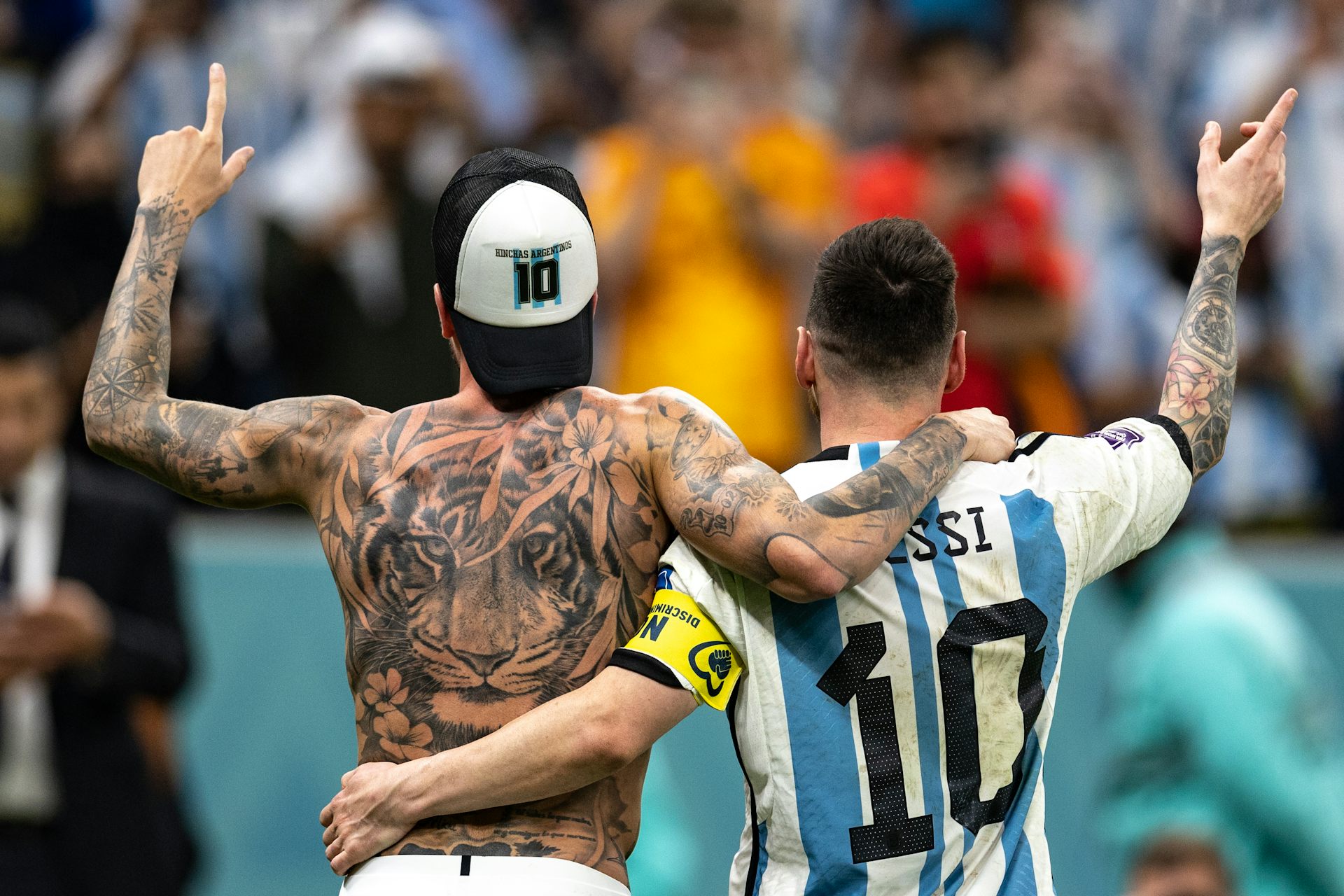
We analyzed the team’s demographics and the tattoo designs and placement on the players’ bodies. We also analyzed interviews where some of them had talked about their lives and, in some cases, the stories behind their tattoos. By placing these tattoos in the broader context of their professional paths and religious and popular culture, we were able to better understand what the body art meant to them.
حللنا التركيبة السكانية للفريق وتصاميم الوشوم ومواقعها على أجساد اللاعبين. كما قمنا بتحليل مقابلات تحدث فيها بعضهم عن حياتهم، وفي بعض الحالات، القصص وراء وشومهم. ومن خلال وضع هذه الوشوم في السياق الأوسع لمساراتهم المهنية وثقافتهم الدينية والشعبية، تمكّنا من فهم المعنى الذي تحمله فنون الجسد بالنسبة لهم بشكل أفضل.
A majority of players expressed their religious beliefs through their tattoos: 75% of them – 15 out of 20 – featured body art of religious figures connected to Catholicism, like the Virgin Mary, Jesus and saints; some also had tattoos of doves associated with the holy spirit, and churches.
عبرت غالبية اللاعبين عن معتقداتهم الدينية من خلال وشومهم: حيث احتوى 75% منهم – أي 15 من أصل 20 لاعبًا – على فنون جسدية لشخصيات دينية مرتبطة بالكاثوليكية، مثل السيدة مريم العذراء وعيسى والقديسين؛ كما كان لدى البعض وشمات للحمام المرتبطة بالروح القدس والكنائس.
We also saw religious diversity. There were tattoos of the Buddha, folk saints and spiritual objects. One player had a tattoo of a dream catcher – a handcrafted willow hoop with a woven net that resembles a spider’s web, typically hung above a bed to offer protection; another had the word “energía” – energy – inked on his body.
شاهدنا أيضًا تنوعًا دينيًا. كانت هناك وشوم للبوذا والقديسين الشعبيين والأشياء الروحية. وكان لدى لاعب واحد وشم لـ “صائد الأحلام” – وهو طوق خشب الصفصاف المصنوع يدويًا بشبكة منسوجة تشبه شبكة العنكبوت، يُعلق عادة فوق السرير لتوفير الحماية؛ بينما كان لدى آخر كلمة “energía” (طاقة) محفورة على جسده.
Seventy-five percent of the players had tattoos depicting what they achieved in their careers. Some of the symbols they used were trophies, jerseys and numbers. Usually the numbers they got corresponded to the jersey numbers they wear.
كان لدى خمسة وسبعين بالمائة من اللاعبين وشوم تصور ما حققوه في مسيراتهم المهنية. وكانت بعض الرموز التي استخدموها هي الكؤوس والقمصان والأرقام. وعادةً ما كانت الأرقام التي حصلوا عليها تتطابق مع أرقام القمصان التي يرتدونها.
Eighty percent – 16 players – had tattoos that portrayed what they loved. These tattoos include designs of numbers – usually dates of their children’s births – names of beloved ones or their partner’s eyes or lips.
كان لدى ثمانين بالمائة – أي 16 لاعبًا – وشوم تصور ما أحبوه. وتشمل هذه الوشوم تصاميم للأرقام – وعادةً ما تكون تواريخ ميلاد أطفالهم – أو أسماء الأحبة أو عيون شريك حياتهم أو شفاههم.
Some tattoos expressed their extended family, including parents, grandparents, people who helped raise them, and even pets.
عبرت بعض الوشوم عن عائلاتهم الممتدة، بما في ذلك الآباء والأجداد والأشخاص الذين ساعدوا في تربيتهم، وحتى الحيوانات الأليفة.
Placement was also important. About 60% of the tattoos were on the arms and head, locations that were easily visible when they are performing on the field.
كان الموقع مهمًا أيضًا. وكانت حوالي 60% من الوشوم على الذراعين والرأس، وهي مواقع يسهل رؤيتها عندما يؤدون أدائهم في الملعب.
But the design of the tattoo also decided its placement: Religious symbols were usually placed on the entire shoulder or biceps, or on the upper or lower leg. Tattoos related to professional careers were usually located on the player’s dominant leg. Animal tattoos were usually placed on backs, and not visible during games.
لكن تصميم الوشم حدد أيضًا موقعه: فغالبًا ما كانت الرموز الدينية توضع على الكتف بالكامل أو العضلة ذات الرأسين، أو على الساق العلوية أو السفلية. وكانت الوشوم المتعلقة بالمسيرات المهنية تقع عادةً على ساق اللاعب المسيطرة. أما وشوم الحيوانات فكانت توضع عادةً على الظهر، ولا تكون مرئية أثناء المباريات.
Not all tattoos are the same
ليست كل الوشوم متشابهة
Many scholars who study soccer have examined its relationships with politics and explored how the sport has been a venue for politics. Diego Maradona, for example, got the Argentine Marxist revolutionary and guerrilla leader Che Guevara tattoo on his right arm and Cuban revolutionary Fidel Castro on his calf, expressing his revolutionary political view. Our research team did not find political tattoos among current players.
لقد فحص العديد من الباحثين الذين يدرسون كرة القدم علاقتها بالسياسة واستكشفوا كيف كانت الرياضة بمثابة مسرح للسياسات. على سبيل المثال، أخذ دييغو مارادونا وشم تشي جيفارا، الثوري الماركسي وزعيم حرب العصابات الأرجنتيني، على ذراعه اليمنى، وفيديل كاسترو، الثوري الكوبي، على ساقه، معرباً عن رؤيته السياسية الثورية. لم يجد فريق البحث لدينا أي وشوم سياسية بين اللاعبين الحاليين.
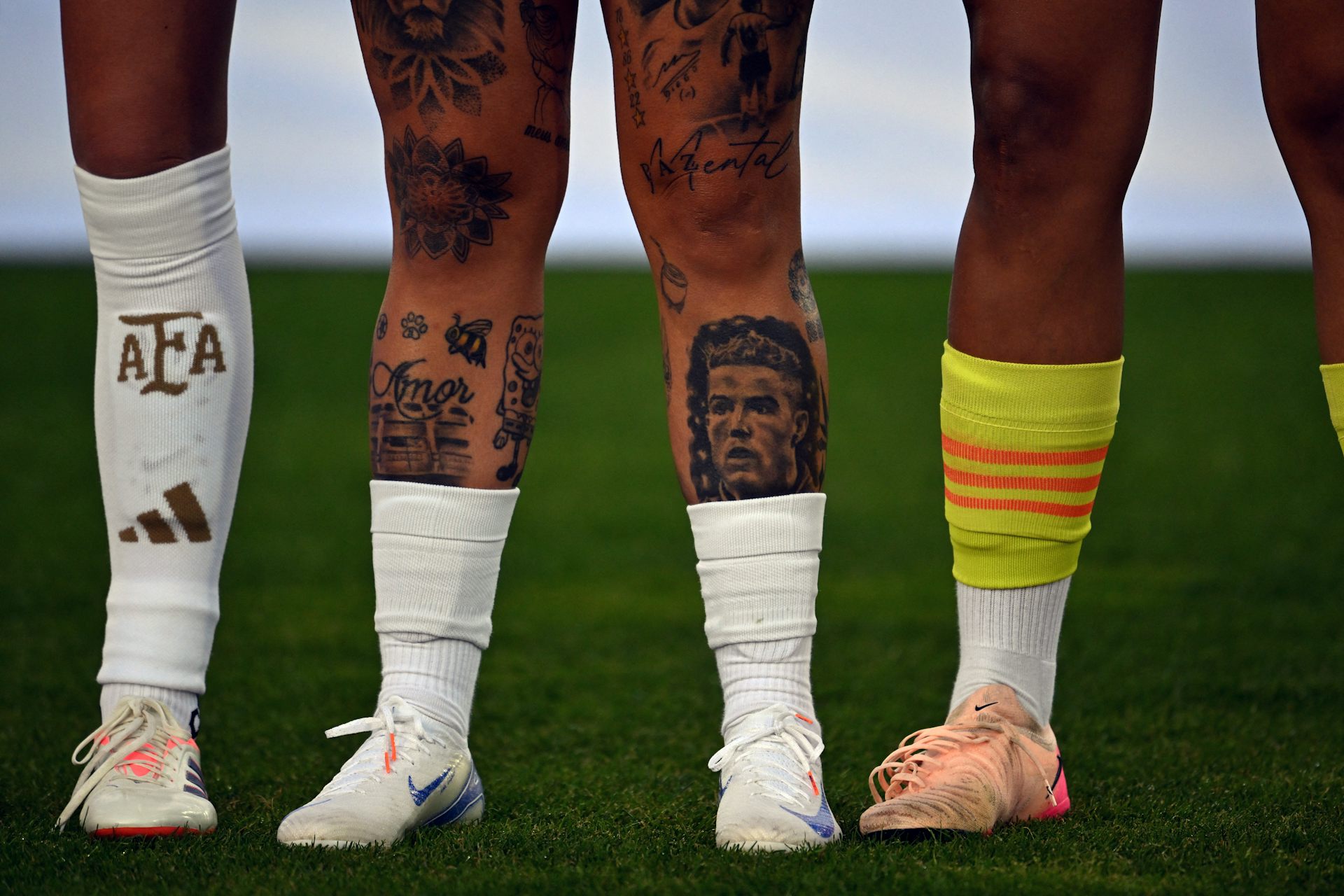
Gender is also important when looking at tattoos. Female players are often subjected to greater scrutiny than their male counterparts. When Argentina’s national women’s team captain Yamila Rodriguez revealed tattoos of Cristiano Ronaldo, she faced intense criticism from fans and media for having the Portuguese superstar and not Argentinean Lionel Messi depicted in tattoo. Rodriguez’s experience highlights that women’s bodies are subjected to personal judgment in a way that men’s are not.
يُعدّ النوع الاجتماعي عاملاً مهماً أيضاً عند النظر إلى الوشوم. غالباً ما تخضع اللاعبات لتدقيق أكبر مما يخضع له زملاؤهن الذكور. عندما كشفت قائدة المنتخب الوطني الإسباني للسيدات، ياميلا رودريغيز، عن وشوم تحمل صورة كريستيانو رونالدو، واجهت انتقادات حادة من الجماهير ووسائل الإعلام بسبب تصوير النجم البرتغالي بدلاً من ليونيل ميسي الأرجنتيني. يُسلط تعرّف رودريغيز الضوء على أن أجساد النساء تخضع للحكم الشخصي بطريقة لا تخضع لها أجساد الرجال.
This World Cup, with its unprecedented global outreach, offers a unique opportunity to observe the values, beliefs and relationships that players choose to display on their bodies. In some ways, tattoos can be seen as a small window into the players’ souls.
يقدم كأس العالم، بانتشاره العالمي غير المسبوق، فرصة فريدة لملاحظة القيم والمعتقدات والعلاقات التي يختار اللاعبون عرضها على أجسادهم. بطرق ما، يمكن النظر إلى الوشوم كنافذة صغيرة على أرواح اللاعبين.
Gustavo Morello does not work for, consult, own shares in or receive funding from any company or organization that would benefit from this article, and has disclosed no relevant affiliations beyond their academic appointment.
غوستافو موريللو لا يعمل لدى، ولا يقدم استشارات لـ، ولا يمتلك حصصاً في، أو يتلقى تمويلاً من أي شركة أو منظمة قد تستفيد من هذه المقالة، ولم يفصح عن أية انتماءات ذات صلة تتجاوز منصبه الأكاديمي.
Read more
-
كان خروج الإمارات من أوبك قيد العمل منذ فترة طويلة – وقد يمثل بداية لإعادة تنظيم في الخليج.
UAE’s OPEC exit has been long in the works – and may mark the beginning of a Gulf realignment
-
لا يمكننا معرفة ما إذا كان دونالد ترامب مصابًا بالخرف. وحتى لو كان كذلك، فلن يعفي ذلك من أفعاله.
We can’t know if Donald Trump has dementia. Even if he did, it wouldn’t excuse his actions