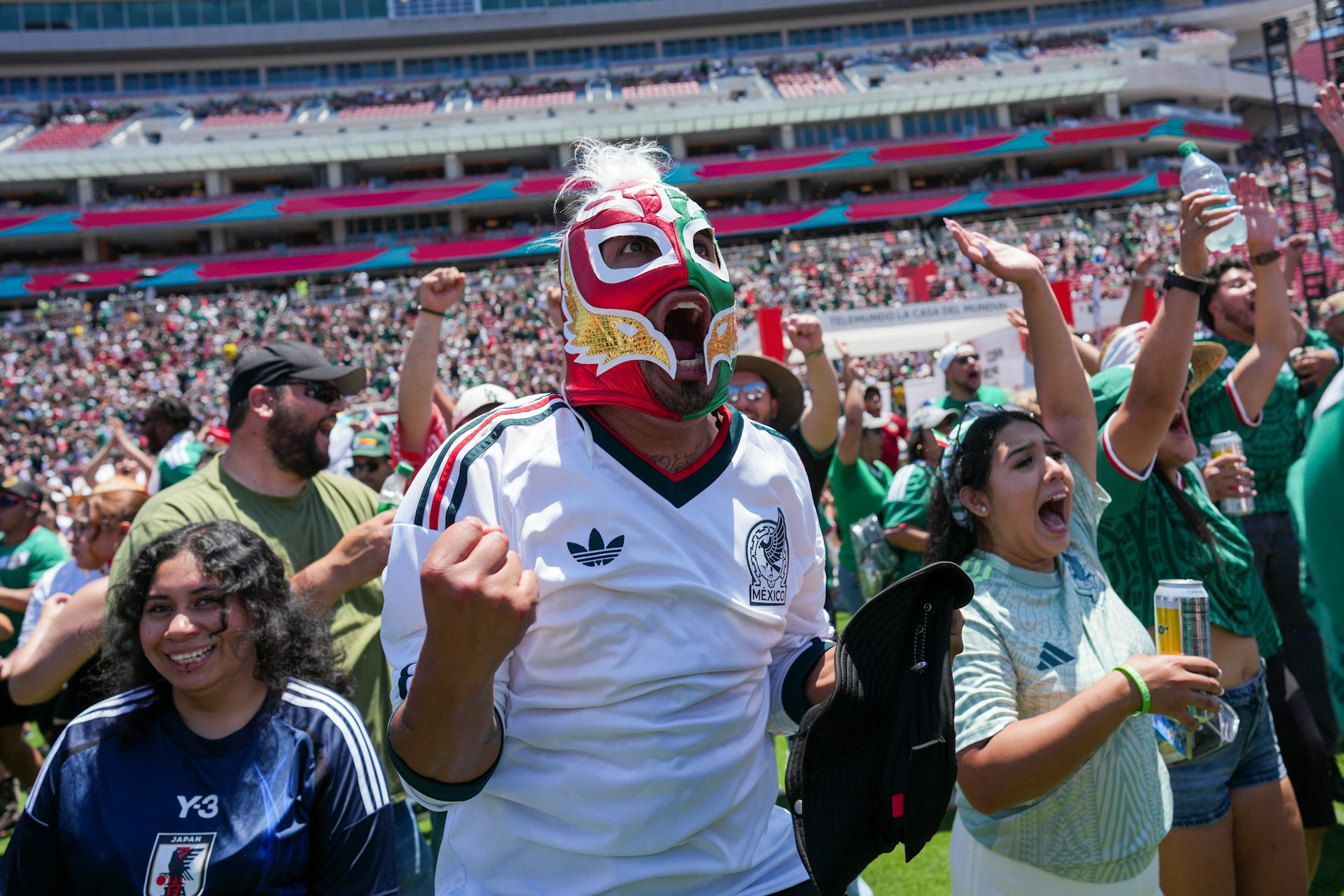
Por que os cânticos da Copa do Mundo dos EUA estão sendo ridicularizados – e o que faz um ótimo canto
Why the US World Cup chants are being mocked – and what makes a great one
From the cringey ‘U-S-A!’ to the iconic ‘You’ll Never Walk Alone’, the battle for soccer’s top prize starts in the stands.
Do constrangedor ‘U-S-A!’ ao icônico ‘You’ll Never Walk Alone’, a batalha pelo prêmio máximo do futebol começa nas arquibancadas.
As the 2026 FIFA World Cup arrives in Canada, Mexico and the United States, one contest has already begun online: the fight over who sounds like a “real” soccer fan.
Com a Copa do Mundo FIFA de 2026 chegando ao Canadá, México e Estados Unidos, um concurso já começou online: a luta sobre quem soa como um torcedor de futebol “de verdade.”
Fans in the US have been mocked on social media for chants such as “I believe that we will win” and “U-S-A! U-S-A!”
Torcedores nos EUA foram ridicularizados nas redes sociais por cânticos como “I believe that we will win” e “U-S-A! U-S-A!”.
To some, they sound joyful. To others, especially those raised on older soccer traditions, they sound awkward, rehearsed or painfully unoriginal.
Para alguns, eles soam alegres. Para outros, especialmente aqueles criados em tradições de futebol mais antigas, soam desajeitados, ensaiados ou dolorosamente pouco originais.
But this debate is about much more than whether one chant is better than another. Sports chants are cultural passports. They teach people how to belong – who counts as an insider – and whose version of soccer is “legitimate”.
Mas este debate é sobre muito mais do que saber se um cântico é melhor que outro. Os cânticos esportivos são passaportes culturais. Eles ensinam às pessoas como pertencer – quem conta como um “insider” – e qual versão de futebol é “legítima”.
Chants are older than TikTok
Cânticos são mais antigos que o TikTok
Soccer fans have been shouting, singing and chanting for well over a century. Early records of soccer cries and songs date back to the 1880s, while some club songs still used today emerged in the 1890s.
Torcedores de futebol têm gritado, cantando e entoando hinos há mais de um século. Os primeiros registros de gritos e canções de futebol datam dos anos 1880, enquanto algumas músicas de clubes ainda usadas hoje surgiram nos anos 1890.
By the 1960s, modern soccer chanting had become deeply tied to terrace culture, the supporter culture that grew from the sport’s standing sections. Fans borrowed tunes from pop music, hymns, folk songs and local jokes, then rewrote them for players, rival clubs and match-day drama.
Na década de 1960, os cânticos modernos de futebol estavam profundamente ligados à cultura das arquibancadas, a cultura dos torcedores que surgiu nas áreas em pé do esporte. Os fãs adaptaram melodias de música pop, hinos, canções folclóricas e piadas locais, reescrevendo-as para jogadores, clubes rivais e o drama do dia do jogo.
This is why the best chants often feel half familiar and half new. The tune may come from somewhere else, but the words belong to the crowd.
É por isso que os melhores cânticos muitas vezes parecem meio familiares e meio novos. A melodia pode vir de outro lugar, mas as palavras pertencem à multidão.
Team Brazil Chant
Canto do Time Brasil
So what makes a good chant?
Então, o que faz um bom cântico?
While there are numerous factors that contribute to the success of a soccer chant, a great chant will usually have five key ingredients.
Embora haja inúmeros fatores que contribuem para o sucesso de um cântico de futebol, um ótimo cântico geralmente terá cinco ingredientes principais.
It is simple. People must be able to learn it in seconds.
É simples. As pessoas devem ser capazes de aprendê-lo em segundos.
It is repeatable. It needs to survive noise, nerves, bad singing and thousands of people joining at slightly different times.
É repetível. Precisa sobreviver ao barulho, aos nervos, ao canto ruim e a milhares de pessoas se juntando em momentos ligeiramente diferentes.
It is shared. A chant only works when it stops being owned by one person and becomes the crowd’s voice.
É compartilhado. Um cântico só funciona quando para de pertencer a uma pessoa e se torna a voz da multidão.
It is emotionally timed. It needs to land after a goal, during a tense defensive stand, when a rival is rattled, or when hope is fading.
É cronometrado emocionalmente. Precisa ser lançado após um gol, durante uma defesa tensa, quando um rival está abalado ou quando a esperança está diminuindo.
It is tied to identity. It says “this is who we are, this is where we are from, and this is who we are not”.
Está ligado à identidade. Diz: “este é quem somos, de onde viemos e quem não somos.”
Think of Iceland’s “thunderclap” at Euro 2016. It was not lyrically complex. Its power came from timing, rhythm and unity.
Pense no “thunderclap” da Islândia na Euro 2016. Não era líricamente complexo. Seu poder veio do ritmo, do tempo e da unidade.
Then there’s “Will Grigg’s on fire”, which took a dance track and used it to turn a squad player into a tournament folk hero.
Há também “Will Grigg’s on fire”, que pegou uma música de dança e usou para transformar um jogador do elenco em um herói folclórico do torneio.
Liverpool’s “You’ll Never Walk Alone”, which derives from 1963 song by Gerry and the Pacemakers, works less as a chant and more as a shared emotional ritual.
O “You’ll Never Walk Alone” do Liverpool, que deriva de uma música de 1963 de Gerry and the Pacemakers, funciona menos como um cântico e mais como um ritual emocional compartilhado.
Great chants are not always beautiful. Many are blunt, funny, silly or rude. But they usually feel like they have come from the crowd – not been handed to the crowd.
Ótimos cânticos nem sempre são bonitos. Muitos são grosseiros, engraçados, bobos ou ofensivos. Mas geralmente parecem ter vindo da multidão – e não terem sido entregues à multidão.
Critics are calling US chants “cringe”, arguing that they tend to rely on simplistic American sports cheers recycled from other sports instead of authentic soccer traditions.
Críticos estão chamando os cânticos dos EUA de “vergonha alheia”, argumentando que eles tendem a depender de gritos esportivos americanos simplistas reciclados de outros esportes em vez de tradições autênticas do futebol.
European and South American fans in particular have said the US chants show a lack of depth, originality and creativity, and sound more like corporate promotions than passionate rally cries.
Torcedores europeus e sul-americanos em particular disseram que os cânticos dos EUA mostram falta de profundidade, originalidade e criatividade, soando mais como promoções corporativas do que gritos apaixonados.
Chants turn spectators into participants
Cânticos transformam espectadores em participantes
Chanting can become the mechanism that moves individuals from the role of a passive observer to a collective “off-field team”.
O canto pode se tornar o mecanismo que move os indivíduos do papel de observador passivo para um coletivo “time fora de campo”.
Research has shown crowd behaviour can influence team performance by either boosting motivation through support, or undermining it through pressure, anxiety and distraction.
Pesquisas mostraram que o comportamento da multidão pode influenciar o desempenho do time ao aumentar a motivação através do apoio ou miná-la por meio de pressão, ansiedade e distração.
Team US chant
Canto do Time EUA
By chanting non-stop throughout the match, a collective fan base can narrate the game, further contributing to the “us against them” mentality that defines the stadium experience.
Ao cantar sem parar durante o jogo, uma base de fãs coletiva pode narrar a partida, contribuindo ainda mais para a mentalidade “nós contra eles” que define a experiência no estádio.
Loud crowd chants and cheers can also bias referee decision-making by acting as an auditory cue.
Cânticos e gritos altos da multidão também podem enviesar a tomada de decisão dos árbitros ao atuar como um sinal auditivo.
A 2002 study found referees who watched game play footage with audible crowd noise were less confident in their judgements, and called 15.5% fewer fouls against the home team compared to those who watched in silence.
Um estudo de 2002 descobriu que árbitros que assistiram a filmagens do jogo com ruído audível da multidão estavam menos confiantes em seus julgamentos e marcaram 15,5% menos faltas contra o time da casa em comparação com aqueles que assistiram em silêncio.
The line between banter and harm
A linha entre piada e dano
Soccer chants also have a darker side.
Os cânticos de futebol também têm um lado mais sombrio.
Because they mark “us” and “them”, they can slide from humour into racism, homophobia, misogyny or tragedy abuse, where rival fans mock deaths, disasters or traumatic events connected to another club or community.
Porque eles marcam o “nós” e o “eles”, podem passar do humor para o racismo, a homofobia, a misoginia ou abuso de tragédia, onde torcedores rivais zombam de mortes, desastres ou eventos traumáticos ligados a outro clube ou comunidade.
FIFA and other soccer authorities have repeatedly punished federations and clubs over discriminatory chants.
A FIFA e outras autoridades do futebol puniram repetidamente federações e clubes por cânticos discriminatórios.
A prominent example is a long-running homophobic chant associated with some Mexico fans. Once dismissed by some as banter, it has brought repeated FIFA sanctions and stadium restrictions.
Um exemplo proeminente é um canto homofóbico de longa data associado a alguns torcedores do México. Antes descartado por alguns como piada, ele trouxe sanções repetidas da FIFA e restrições ao estádio.
This matters because chanting is never just background noise. It tells us what a fan base is willing to celebrate, tolerate or challenge.
Isso é importante porque cantar nunca é apenas ruído de fundo. Ele nos diz o que uma torcida está disposta a celebrar, tolerar ou desafiar.
The best soccer cultures are not the ones with the loudest fans. They are the ones where fans create atmosphere without making other people feel unsafe.
As melhores culturas de futebol não são aquelas com os torcedores mais barulhentos. São aquelas onde os fãs criam atmosfera sem fazer outras pessoas se sentirem inseguras.
Melbourne Victory chant
Canto do Melbourne Victory
A lesson for World Cup fans
Uma lição para os fãs da Copa do Mundo
So, should US fans throw out “I believe that we will win”?
Então, os fãs dos EUA devem abandonar “Eu acredito que vamos vencer”?
Not necessarily. Every soccer culture starts somewhere. A chant that sounds awkward today can become meaningful if people attach memories and emotions to it.
Não necessariamente. Toda cultura de futebol começa em algum lugar. Um canto que soa estranho hoje pode se tornar significativo se as pessoas anexarem memórias e emoções a ele.
But the online mockery does point to something real. The strongest chants do not just declare support. They reveal a story. They carry place, humour, history and timing.
Mas a zombaria online aponta para algo real. Os cantos mais fortes não apenas declaram apoio. Eles revelam uma história. Eles carregam lugar, humor, história e momento.
That is the challenge for every nation at this World Cup. Not just to copy the sound of other soccer cultures, but to create one.
Esse é o desafio para cada nação nesta Copa do Mundo. Não apenas copiar o som de outras culturas de futebol, mas criar a sua própria.
The chant that lasts will not be the most polished. It will be the one that thousands of people make their own.
O canto que perdura não será o mais polido. Será aquele que milhares de pessoas farão seu próprio.
The authors do not work for, consult, own shares in or receive funding from any company or organisation that would benefit from this article, and have disclosed no relevant affiliations beyond their academic appointment.
Os autores não trabalham para, não são consultores de, nem possuem ações em nenhuma empresa ou organização que se beneficiaria deste artigo, e não divulgaram afiliações relevantes além do seu cargo acadêmico.
Read more
-
Ebola, hantavírus, difteria: como a desconfiança nos cuidados de saúde está alimentando múltiplos surtos em todo o mundo
Ebola, hantavirus, diphtheria: how distrust in health care is fuelling multiple outbreaks across the globe
-
A minoria Dong da China: por que estamos digitalizando e preservando seu patrimônio arquitetônico indígena
China’s Dong minority: why we’re digitally recording and preserving their Indigenous architectural heritage