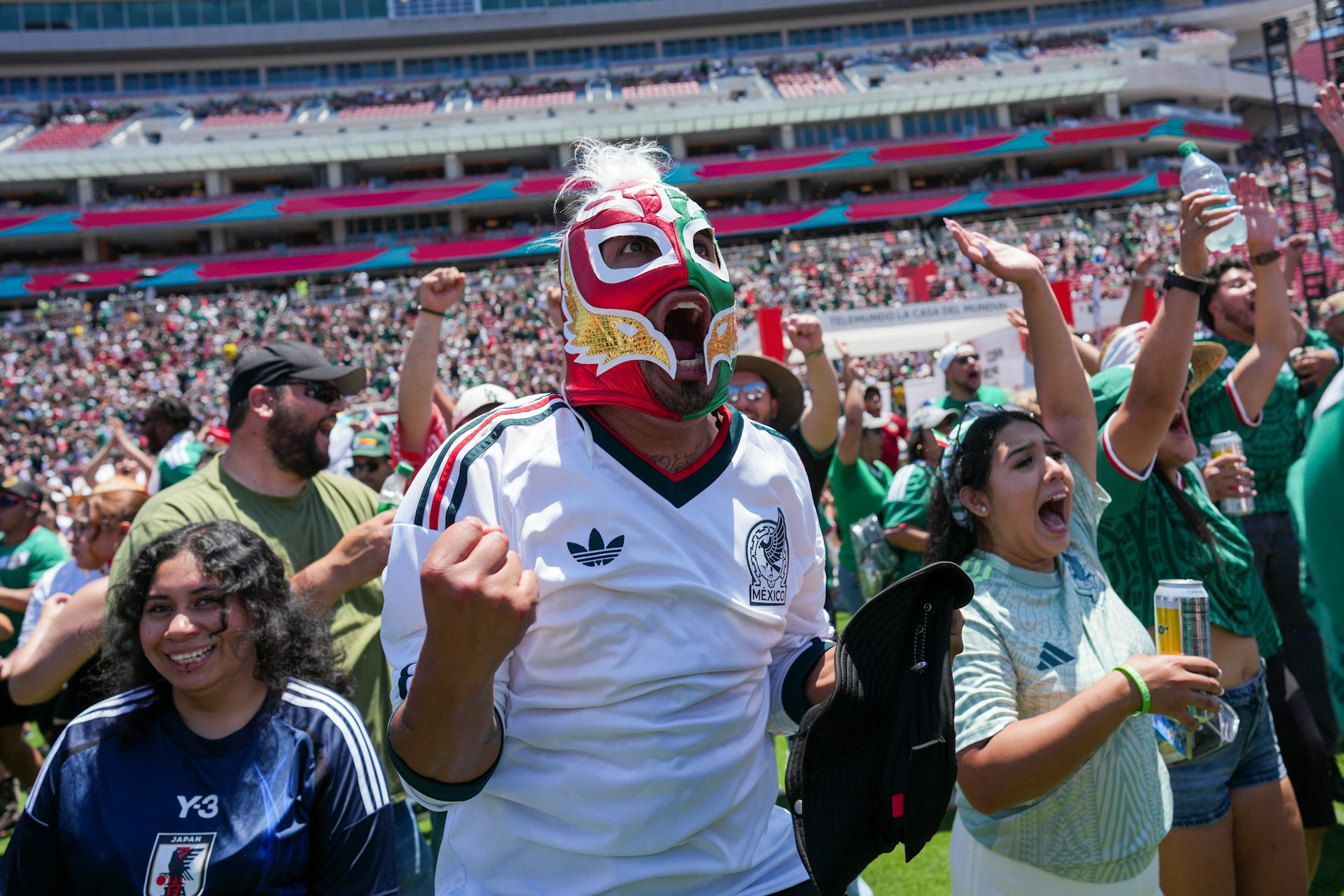
Por qué se burlan los cánticos de la Copa Mundial de EE. UU. – y qué hace que uno sea genial
Why the US World Cup chants are being mocked – and what makes a great one
From the cringey ‘U-S-A!’ to the iconic ‘You’ll Never Walk Alone’, the battle for soccer’s top prize starts in the stands.
Desde el vergonzoso ‘U-S-A!’ hasta el icónico ‘You’ll Never Walk Alone’, la batalla por el premio máximo del fútbol comienza en las gradas.
As the 2026 FIFA World Cup arrives in Canada, Mexico and the United States, one contest has already begun online: the fight over who sounds like a “real” soccer fan.
A medida que llega la Copa Mundial de la FIFA 2026 a Canadá, México y Estados Unidos, ya ha comenzado una disputa en línea: la lucha por saber quién suena como un aficionado «real» al fútbol.
Fans in the US have been mocked on social media for chants such as “I believe that we will win” and “U-S-A! U-S-A!”
Los aficionados de EE. UU. se han burlado en las redes sociales por cánticos como “I believe that we will win” y “U-S-A! U-S-A!”.
To some, they sound joyful. To others, especially those raised on older soccer traditions, they sound awkward, rehearsed or painfully unoriginal.
Para algunos, suenan alegres. Para otros, especialmente aquellos criados en tradiciones futbolísticas más antiguas, suenan incómodos, ensayados o dolorosamente poco originales.
But this debate is about much more than whether one chant is better than another. Sports chants are cultural passports. They teach people how to belong – who counts as an insider – and whose version of soccer is “legitimate”.
Pero este debate trata de mucho más que si un cántico es mejor que otro. Los cánticos deportivos son pasaportes culturales. Enseñan a las personas cómo pertenecer –quién cuenta como alguien interno– y qué versión del fútbol es «legítima.»
Chants are older than TikTok
Los cánticos son más antiguos que TikTok
Soccer fans have been shouting, singing and chanting for well over a century. Early records of soccer cries and songs date back to the 1880s, while some club songs still used today emerged in the 1890s.
Los aficionados al fútbol han estado gritando, cantando y coreando por más de un siglo. Los primeros registros de gritos y canciones de fútbol se remontan a la década de 1880, mientras que algunas canciones de clubes aún utilizadas hoy en día surgieron en la década de 1890.
By the 1960s, modern soccer chanting had become deeply tied to terrace culture, the supporter culture that grew from the sport’s standing sections. Fans borrowed tunes from pop music, hymns, folk songs and local jokes, then rewrote them for players, rival clubs and match-day drama.
Para la década de 1960, el cántico moderno en el fútbol se había ligado profundamente a la cultura de las gradas (terrace culture) , la cultura de los aficionados que creció en las secciones de pie del deporte. Los fans tomaron melodías de la música pop, himnos, canciones folclóricas y chistes locales, para luego reescribirlas para jugadores, clubes rivales y el drama del día del partido.
This is why the best chants often feel half familiar and half new. The tune may come from somewhere else, but the words belong to the crowd.
Por eso los mejores cánticos a menudo se sienten medio familiares y medio nuevos. La melodía puede provenir de otro lugar, pero las palabras pertenecen a la multitud.
Team Brazil Chant
Cántico del equipo Brasil
So what makes a good chant?
¿Qué hace que un cántico sea bueno?
While there are numerous factors that contribute to the success of a soccer chant, a great chant will usually have five key ingredients.
Aunque hay numerosos factores que contribuyen al éxito de un cántico de fútbol, un gran cántico generalmente tendrá cinco ingredientes clave.
It is simple. People must be able to learn it in seconds.
Es simple. La gente debe poder aprenderlo en segundos.
It is repeatable. It needs to survive noise, nerves, bad singing and thousands of people joining at slightly different times.
Es repetible. Debe sobrevivir al ruido, a los nervios, al mal canto y a miles de personas uniéndose en momentos ligeramente diferentes.
It is shared. A chant only works when it stops being owned by one person and becomes the crowd’s voice.
Es compartido. Un cántico solo funciona cuando deja de pertenecer a una persona y se convierte en la voz de la multitud.
It is emotionally timed. It needs to land after a goal, during a tense defensive stand, when a rival is rattled, or when hope is fading.
Está ligado al sentimiento emocional. Debe resonar después de un gol, durante una tensa defensa, cuando un rival está nervioso o cuando la esperanza se desvanece.
It is tied to identity. It says “this is who we are, this is where we are from, and this is who we are not”.
Está atado a la identidad. Dice: “este es quiénes somos, de dónde venimos y quiénes no somos”.
Think of Iceland’s “thunderclap” at Euro 2016. It was not lyrically complex. Its power came from timing, rhythm and unity.
Piensen en el «thunderclap» (estallido) de Islandia en Euro 2016. No era líricamente complejo. Su poder provino del ritmo, el timing y la unidad.
Then there’s “Will Grigg’s on fire”, which took a dance track and used it to turn a squad player into a tournament folk hero.
Luego está “Will Grigg’s on fire”, que tomó una canción de baile y la usó para convertir a un jugador del equipo en un héroe folclórico del torneo.
Liverpool’s “You’ll Never Walk Alone”, which derives from 1963 song by Gerry and the Pacemakers, works less as a chant and more as a shared emotional ritual.
El «You’ll Never Walk Alone» del Liverpool, que deriva de una canción de 1963 de Gerry and the Pacemakers, funciona menos como un cántico y más como un ritual emocional compartido.
Great chants are not always beautiful. Many are blunt, funny, silly or rude. But they usually feel like they have come from the crowd – not been handed to the crowd.
Los grandes cánticos no siempre son hermosos. Muchos son directos, graciosos, tontos o groseros. Pero generalmente se sienten como si hubieran salido de la multitud, no que les hubieran sido entregados por ella.
Critics are calling US chants “cringe”, arguing that they tend to rely on simplistic American sports cheers recycled from other sports instead of authentic soccer traditions.
Los críticos están llamando a los cánticos estadounidenses «vergonzosos» (cringe) , argumentando que tienden a basarse en vítores deportivos americanos simplistas reciclados de otros deportes en lugar de tradiciones auténticas del fútbol.
European and South American fans in particular have said the US chants show a lack of depth, originality and creativity, and sound more like corporate promotions than passionate rally cries.
Los aficionados europeos y sudamericanos, en particular, han dicho que los cánticos estadounidenses muestran una falta de profundidad, originalidad y creatividad, y suenan más como promociones corporativas que como gritos apasionados.
Chants turn spectators into participants
Los cánticos convierten a los espectadores en participantes
Chanting can become the mechanism that moves individuals from the role of a passive observer to a collective “off-field team”.
Cantar puede convertirse en el mecanismo que mueve a los individuos del rol de observador pasivo a un colectivo «equipo fuera del campo.»
Research has shown crowd behaviour can influence team performance by either boosting motivation through support, or undermining it through pressure, anxiety and distraction.
La investigación ha demostrado que el comportamiento de la multitud puede influir en el rendimiento del equipo ya sea aumentando la motivación mediante el apoyo o socavándola a través de la presión, la ansiedad y la distracción.
Team US chant
Cántico del equipo EE. UU.
By chanting non-stop throughout the match, a collective fan base can narrate the game, further contributing to the “us against them” mentality that defines the stadium experience.
Al cantar sin parar durante el partido, una base de aficionados colectiva puede narrar el juego, contribuyendo además a la mentalidad de «nosotros contra ellos» que define la experiencia en el estadio.
Loud crowd chants and cheers can also bias referee decision-making by acting as an auditory cue.
Los cánticos y vítores fuertes de la multitud también pueden sesgar la toma de decisiones de los árbitros al actuar como una señal auditiva.
A 2002 study found referees who watched game play footage with audible crowd noise were less confident in their judgements, and called 15.5% fewer fouls against the home team compared to those who watched in silence.
Un estudio de 2002 encontró que los árbitros que vieron grabaciones del juego con ruido audible de la multitud eran menos seguros en sus juicios, y sancionaron un 15.5% menos faltas contra el equipo local en comparación con aquellos que observaron en silencio.
The line between banter and harm
La línea entre el juego y el daño
Soccer chants also have a darker side.
Los cánticos de fútbol también tienen un lado más oscuro.
Because they mark “us” and “them”, they can slide from humour into racism, homophobia, misogyny or tragedy abuse, where rival fans mock deaths, disasters or traumatic events connected to another club or community.
Porque marcan la división entre “nosotros” y “ellos”, pueden pasar del humor al racismo, la homofobia, la misoginia o el abuso trágico, donde aficionados rivales se burlan de muertes, desastres o eventos traumáticos relacionados con otro club o comunidad.
FIFA and other soccer authorities have repeatedly punished federations and clubs over discriminatory chants.
FIFA y otras autoridades futbolísticas han castigado repetidamente a federaciones y clubes por cánticos discriminatorios.
A prominent example is a long-running homophobic chant associated with some Mexico fans. Once dismissed by some as banter, it has brought repeated FIFA sanctions and stadium restrictions.
Un ejemplo destacado es un cántico homófobo de larga duración asociado con algunos aficionados mexicanos. Lo que alguna vez fue descartado como broma, ha provocado sanciones repetidas de la FIFA y restricciones de estadio.
This matters because chanting is never just background noise. It tells us what a fan base is willing to celebrate, tolerate or challenge.
Esto importa porque cantar nunca es solo ruido de fondo. Nos dice lo que una base de aficionados está dispuesta a celebrar, tolerar o desafiar.
The best soccer cultures are not the ones with the loudest fans. They are the ones where fans create atmosphere without making other people feel unsafe.
Las mejores culturas futbolísticas no son las de los fans más ruidosos. Son aquellas donde los aficionados crean ambiente sin hacer sentir inseguras a otras personas.
Melbourne Victory chant
Cántico del Melbourne Victory
A lesson for World Cup fans
Una lección para los aficionados del Mundial
So, should US fans throw out “I believe that we will win”?
Entonces, ¿deberían los aficionados estadounidenses tirar el eslogan “creemos que ganaremos”?
Not necessarily. Every soccer culture starts somewhere. A chant that sounds awkward today can become meaningful if people attach memories and emotions to it.
No necesariamente. Toda cultura futbolística comienza en algún lugar. Un cántico que suena incómodo hoy puede volverse significativo si la gente le adjunta recuerdos y emociones.
But the online mockery does point to something real. The strongest chants do not just declare support. They reveal a story. They carry place, humour, history and timing.
Pero la burla en línea sí apunta a algo real. Los cánticos más fuertes no solo declaran apoyo. Revelan una historia. Llevan consigo un lugar, humor, historia y momento oportuno.
That is the challenge for every nation at this World Cup. Not just to copy the sound of other soccer cultures, but to create one.
Ese es el desafío para cada nación en este Mundial. No solo copiar el sonido de otras culturas futbolísticas, sino crear uno propio.
The chant that lasts will not be the most polished. It will be the one that thousands of people make their own.
El cántico que perdure no será el más pulido. Será aquel que miles de personas hagan suyo.
The authors do not work for, consult, own shares in or receive funding from any company or organisation that would benefit from this article, and have disclosed no relevant affiliations beyond their academic appointment.
Los autores no trabajan ni asesoran, ni poseen acciones ni reciben financiación de ninguna empresa u organización que se beneficie de este artículo, y no han revelado afiliaciones relevantes más allá de su nombramiento académico.
Read more
-
¿Por qué el Reino Unido está cambiando de primer ministro cada pocos años?
Why is the UK now changing prime minister every few years?
-
Analizamos 14 millones de publicaciones de Reddit para revelar un cambio sorprendente en cómo hablamos de la salud mental
We analysed 14 million Reddit posts to reveal a striking shift in how we talk about mental health