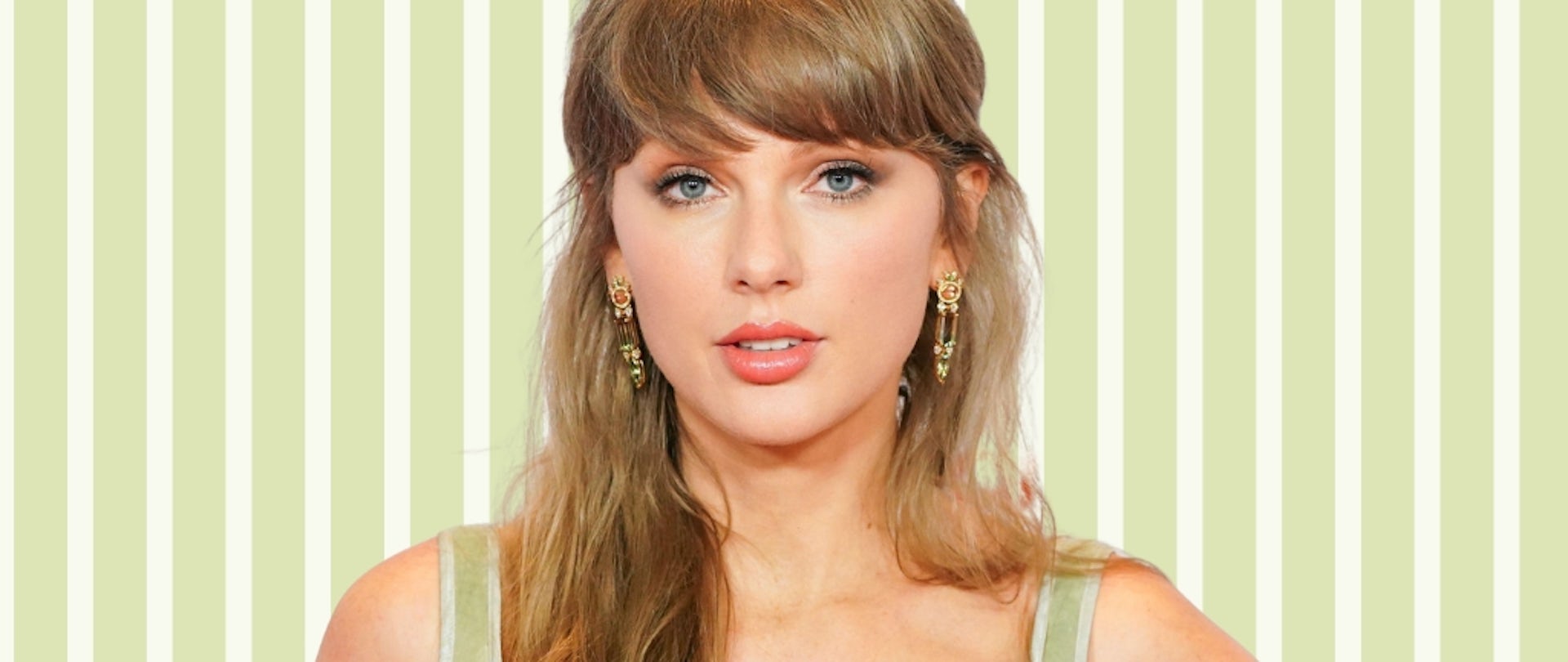
¿Se puede poseer una voz? El último movimiento legal de Taylor Swift plantea grandes preguntas para la IA y los derechos de autor
Can you own a voice? Taylor Swift’s latest legal move raises big questions for AI and copyright
Swift appears to be the first musician to take this step.
Swift parece ser la primera artista en dar este paso.
Taylor Swift has filed a trademark application covering her voice and stage image. It includes a photo of her performing in her distinctive bejewelled Eras Tour bodysuit and two voice recordings: “Hey, it’s Taylor” and “Hey, it’s Taylor Swift.”
Taylor Swift ha presentado una solicitud de registro de marca que cubre su voz e imagen escénica. Incluye una foto de ella actuando con su distintivo traje de cuerpo bordado para la gira Eras Tour y dos grabaciones de voz: “Hey, it’s Taylor” y “Hey, it’s Taylor Swift.”
It’s the latest example of the singer using her status and power to challenge industry norms and assert the rights of artists.
Es el último ejemplo de la cantante utilizando su estatus y poder para desafiar las normas de la industria y afirmar los derechos de los artistas.
In 2014, Swift removed her entire catalogue from Spotify in protest at the low level of artist remuneration generated by the platform (later relenting in 2017) . In 2019, she began rerecording her previous albums in protest at the acquisition of her back catalogue by alleged industry foe Scooter Braun’s Ithaca Holdings, giving her back control over masters of her songs. The new “Taylor’s Versions” outperformed the original versions on streaming services.
En 2014, Swift retiró todo su catálogo de Spotify en protesta por el bajo nivel de remuneración de los artistas generado por la plataforma (cediendo más tarde en 2017) . En 2019, comenzó a regrabar sus álbumes anteriores en protesta por la adquisición de su catálogo pasado por Ithaca Holdings, propiedad del supuesto enemigo de la industria, Scooter Braun, lo que le devolvió el control de las masterizaciones de sus canciones. Las nuevas “Taylor’s Versions” superaron a las versiones originales en los servicios de streaming.
Although the actor Matthew McConaughey beat Swift to the punch by successfully trademarking some of his famous spoken lines of movie dialogue earlier this year, she appears to be the first music artist of note to take the step. The move raises some interesting issues in terms of copyright law and the rights of music artists.
Aunque el actor Matthew McConaughey se adelantó a Swift al registrar con éxito algunas de sus famosas líneas de diálogo de películas a principios de este año, ella parece ser la primera artista musical destacada en dar este paso. La medida plantea algunas cuestiones interesantes en términos de derecho de autor y los derechos de los artistas musicales.
‘Passing off’ and deepfaking
‘Passing off’ y deepfaking
In music, both sound recordings and the songs which they embody are protected by copyright law. Much of the income generated by the music industry is based on the commercial exclusivity to exploit these forms of intellectual property (IP) , which that law ensures.
En la música, tanto las grabaciones sonoras como las canciones que contienen están protegidas por la ley de derechos de autor. Gran parte de los ingresos generados por la industria musical se basa en la exclusividad comercial para explotar estas formas de propiedad intelectual (PI) , lo que garantiza dicha ley.
All of Swift’s vocals are protected from copying in terms of being sampled without permission. But the question of whether or not a vocal being performed (or manufactured in the case of AI) to sound like Swift is a copyright infringement is less clear.
Todas las voces de Swift están protegidas contra la copia en términos de ser muestreadas sin permiso. Pero la cuestión de si una voz interpretada (o manufacturada en el caso de la IA) para sonar como Swift constituye una infracción de derechos de autor es menos clara.
In 1988, Bette Midler successfully sued Ford Motor Company for using an impersonator to perform her songs in TV adverts. This case suggests that deliberately copying a singer’s voice, style and tone can amount to passing off. In UK law, passing off is a common law tort involving misrepresentation that causes reputational or financial damage. In the US, similar protection is provided under the Lanham Act, which also guards against misleading imitation.
En 1988, Bette Midler demandó con éxito a Ford Motor Company por usar un imitador para interpretar sus canciones en anuncios de televisión. Este caso sugiere que copiar deliberadamente la voz, el estilo y el tono de una cantante puede constituir un ‘passing off’ (suplantación de identidad) . En la ley del Reino Unido, el ‘passing off’ es un agravio de derecho consuetudinario que implica una tergiversación que causa daños reputacionales o financieros. En EE. UU., una protección similar se proporciona bajo la Ley Lanham, que también protege contra imitaciones engañosas.
This article is part of our State of the Arts series. These articles tackle the challenges of the arts and heritage industry – and celebrate the wins, too.
Este artículo forma parte de nuestra serie «Estado del Arte.» Estos artículos abordan los desafíos de la industria del arte y el patrimonio cultural, y también celebran los logros.
Swift has also experienced the darker side of deepfakes, including fake pornographic images and AI-generated photos showing her wearing a “Swifties for Trump” T-shirt ahead of the last US presidential election.
Swift también ha experimentado el lado más oscuro de los deepfakes, incluidas imágenes pornográficas falsas y fotos generadas por IA que la muestran usando una camiseta de «Swifties for Trump» antes de las últimas elecciones presidenciales de EE. UU.
The US Take It Down Act, covering explicit deepfake content was passed into law in 2025. Similar protection is possible in the UK via the Data (Use and Access) Act 2025.
La Ley Take It Down de EE. UU., que cubre contenido deepfake explícito, se aprobó como ley en 2025. Una protección similar es posible en el Reino Unido a través de la Ley de Datos (Uso y Acceso) de 2025.
While further legislation is being developed in the US to address AI-generated impersonation more broadly, Swift’s move to trademark both her voice and visual likeness suggests a desire to retain stronger legal control over her identity. This may give her a basis for pursuing civil action under common law or intellectual property rights when objectionable AI-generated content appears. Given her significant wealth and influence, such legal routes may also allow for faster enforcement than relying solely on the criminal justice system.
Si bien se está desarrollando más legislación en EE. UU. para abordar la suplantación de identidad generada por IA de manera más amplia, la decisión de Swift de registrar marcas tanto de su voz como de su imagen visual sugiere un deseo de mantener un control legal más fuerte sobre su identidad. Esto puede darle una base para emprender acciones civiles bajo el derecho consuetudinario o derechos de propiedad intelectual cuando aparezca contenido generado por IA objetable. Dada su considerable riqueza e influencia, tales vías legales también pueden permitir una aplicación más rápida que depender únicamente del sistema de justicia penal.
The trademarks registered both by McConaughey and Swift arguably only offer protection for exactly what has been registered on the basis of the scope of a trademark being “what you see is what you get”.
Las marcas registradas tanto por McConaughey como por Swift, se podría argumentar que solo ofrecen protección para exactamente lo que ha sido registrado, basándose en que el alcance de una marca es «lo que ves es lo que obtienes.»
However, the fact that many platforms require proof of IP registration before taking down potentially infringing content suggests that having these trademarks in place will act as a powerful deterrent against future fakes at the very least.
Sin embargo, el hecho de que muchas plataformas exijan prueba de registro de PI antes de eliminar contenido potencialmente infractor sugiere que tener estas marcas registradas actuará como un poderoso disuasivo contra futuros falsificaciones, como mínimo.
Training data
Datos de entrenamiento
A more complex issue for Swift and artists in general is the use of their existing works as data by AIs to create new works. For example, I could prompt an AI to write a song for me in the style of Fearless-era Swift but performed by a voice that is a cross between Norah Jones and Diana Krall. It would be very hard to prove that any particular piece of IP had been infringed, as the AI would be synthesising dozens of songs and performances to achieve its creation.
Un problema más complejo para Swift y los artistas en general es el uso de sus obras existentes como datos por parte de las IA para crear nuevas obras. Por ejemplo, podría pedirle a una IA que me escriba una canción al estilo de la época de Fearless, pero interpretada por una voz que es una mezcla entre Norah Jones y Diana Krall. Sería muy difícil demostrar que cualquier pieza de propiedad intelectual había sido infringida, ya que la IA estaría sintetizando docenas de canciones y actuaciones para lograr su creación.
However, new content would have been created via the mining of existing IP; a songwriter’s moral right of integrity protects against adaptation of their works without permission, and musicians and songwriters have become increasingly concerned that they are not being recompensed sufficiently, or indeed even consulted about AI using their work.
Sin embargo, el contenido nuevo se habría creado mediante la minería de propiedad intelectual existente; el derecho moral de integridad de un compositor protege contra la adaptación de sus obras sin permiso, y músicos y compositores están cada vez más preocupados de que no se les esté compensando lo suficiente, o incluso que no se les consulte sobre el uso de su trabajo por parte de la IA.
In the UK, the Musicians Union has launched an initiative demanding consent and remuneration for AI training and AI-generated music. The UK government has pulled back from its previous line of allowing an exemption for AI training on copyrighted works in favour of more creator control after strong opposition to this stance from the creative industries.
En el Reino Unido, el Sindicato de Músicos ha lanzado una iniciativa exigiendo consentimiento y remuneración para el entrenamiento con IA y la música generada por IA. El gobierno del Reino Unido ha revertido su postura anterior de permitir una exención para el entrenamiento con IA en obras con derechos de autor, a favor de un mayor control por parte de los creadores, tras una fuerte oposición de las industrias creativas a esta postura.
The UK Performing Rights Society, which collects royalties from around the globe for its songwriter and composer members (and their publishing companies) when their work is performed live, broadcast or streamed, has declared that it will not register AI-generated works. However, it will register works which it classes as AI-assisted. This leads to the question of how much human input needs to be evidenced for a piece of music to be copyright-able.
La Sociedad de Derechos de Ejecución del Reino Unido (Performing Rights Society) , que recopila regalías de todo el mundo para sus miembros compositores y letristas (y sus editoriales) cuando su obra se interpreta en directo, se transmite o se reproduce, ha declarado que no registrará obras generadas por IA. Sin embargo, sí registrará las obras que clasifica como asistidas por IA. Esto plantea la pregunta de cuánto aporte humano debe estar evidenciado para que una pieza musical pueda tener derechos de autor.
In UK copyright law, the Copyright, Design and Patents Act allows for recordings “generated by computer” but a song or composition needs to display originality to acquire the law’s protection – a product of skill, judgement and labour which should arguably involve significant human involvement, but how much?
En la legislación de derechos de autor del Reino Unido, la Ley de Derechos de Autor, Diseño y Patentes permite los grabaciones «generadas por ordenador», pero una canción o composición debe mostrar originalidad para obtener la protección de la ley, un producto de habilidad, juicio y trabajo que debería implicar, argumentablemente, una participación humana significativa, ¿pero cuánto?
There have been some positive developments for artists’ earnings, with certain AI companies recently reaching settlements with major music rights holders over the use of training data in music generation. However, artists such as Swift may still need stronger protection to prevent the unauthorised use, imitation and commercial exploitation of their distinctive vocal styles.
Ha habido algunos desarrollos positivos para las ganancias de los artistas, con ciertas empresas de IA que recientemente llegaron a acuerdos con importantes titulares de derechos musicales sobre el uso de datos de entrenamiento en la generación de música. Sin embargo, artistas como Swift aún pueden necesitar una protección más sólida para evitar el uso no autorizado, la imitación y la explotación comercial de sus distintivos estilos vocales.
The current regulatory grey areas around AI’s use of IP have been likened to the wild west. With her trademarking initiative, Swift has donned her Stetson, pinned on her five-point star badge and declared herself the new sheriff in town.
Las actuales zonas grises regulatorias en torno al uso de la propiedad intelectual por parte de la IA han sido comparadas con el salvaje oeste. Con su iniciativa de marca, Swift se ha puesto su Stetson, se ha prendido su placa de estrella de cinco puntas y se ha declarado la nueva sheriff del pueblo.
Justin Morey does not work for, consult, own shares in or receive funding from any company or organisation that would benefit from this article, and has disclosed no relevant affiliations beyond their academic appointment.
Justin Morey no trabaja para, asesora, posee acciones de, ni recibe financiación de ninguna empresa u organización que se beneficie de este artículo, y no ha revelado ninguna afiliación relevante más allá de su cargo académico.
Read more
-

¿Los recortes de ayuda alimentan el conflicto violento en África? Cómo promover la paz
Do aid cuts fuel violent conflict in Africa? How to promote peace
-
¿Absorbemos mejor la información en papel que en pantallas? Depende de la pantalla
Do we absorb information better on paper, rather than screens? It depends on the screen