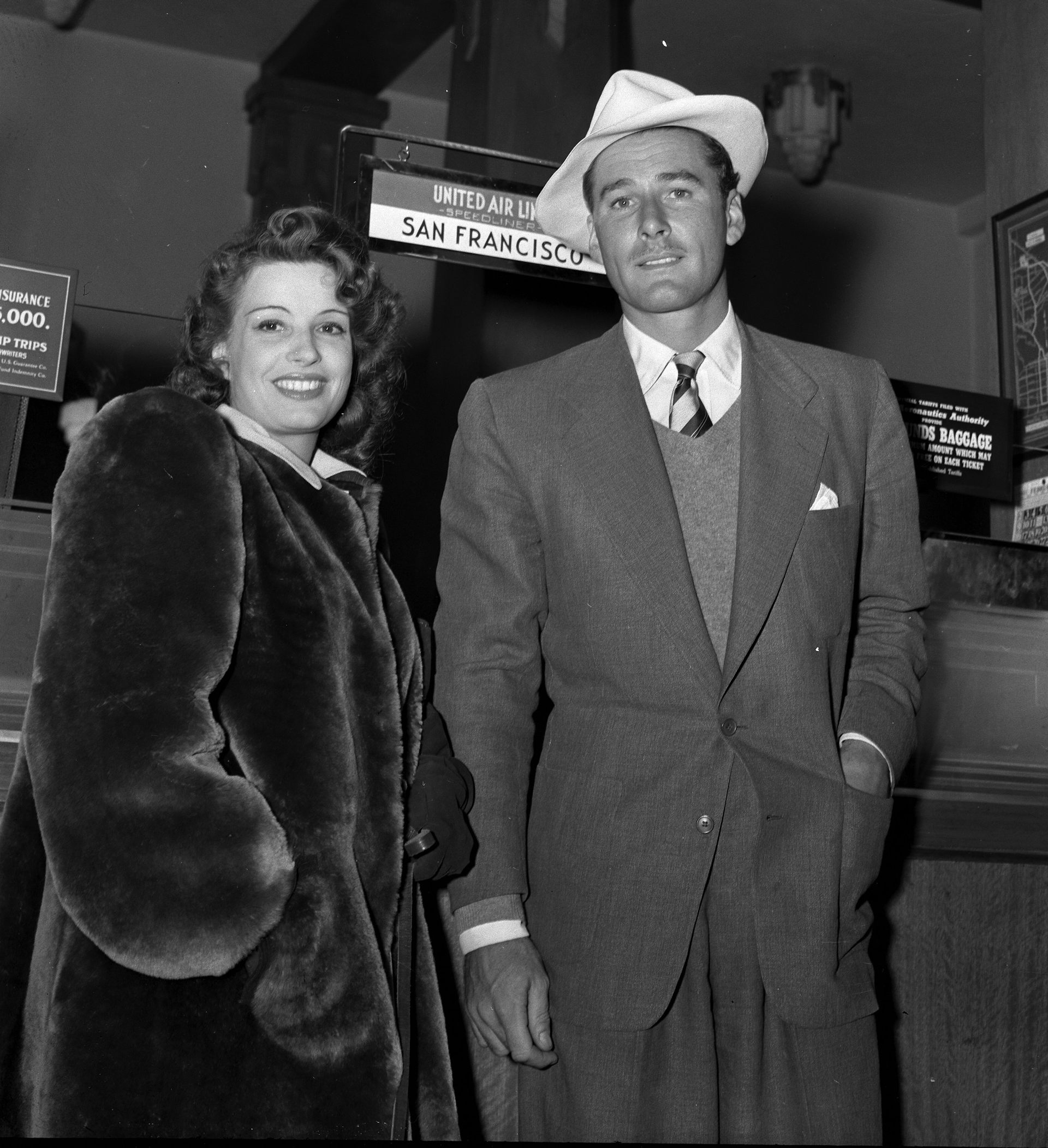
La biógrafa de Errol Flynn lo llama el mayor galán de su época, pero también racista y violador.
Errol Flynn’s biographer calls him the greatest heartthrob of his time – but racist and a rapist too
Most of Errol Flynn’s films now seem B-grade at best – but Patricia O’Brien’s biography of this Tasmanian devil is compulsive reading.
La mayoría de las películas de Errol Flynn ahora parecen, en el mejor de los casos, de serie B, pero la biografía de Patricia O’Brien sobre este diablo de Tasmania es una lectura adictiva.
Before Rupert Murdoch, there was Errol Flynn. The Tasmanian born Hollywood actor was arguably our most famous export to the United States until Murdoch moved in to control much of its media.
Antes de Rupert Murdoch, estuvo Errol Flynn. El actor de Hollywood nacido en Tasmania fue posiblemente nuestra exportación más famosa a Estados Unidos hasta que Murdoch se involucró para controlar gran parte de sus medios.
Between 1934 and his final film in 1959, Flynn was one of the stars of the “golden age” of Hollywood, known for his swashbuckling roles in films such as The Adventures of Robin Hood and Captain Blood.
Entre 1934 y su película final en 1959, Flynn fue una de las estrellas de la «edad de oro» de Hollywood, conocido por sus papeles de espadachín en películas como Las aventuras de Robin Hood y Captain Blood.
There is already a considerable literature on Errol Flynn, including his own autobiography, My Wicked, Wicked Ways, but Patricia O’Brien has taken his life as a way of exploring the intertwined assumptions around race and sex that make Flynn a remarkable epitome of his time.
Ya existe una literatura considerable sobre Errol Flynn, incluida su propia autobiografía, My Wicked, Wicked Ways, pero Patricia O’Brien ha tomado su vida como una forma de explorar las suposiciones entrelazadas sobre raza y sexo que hacen de Flynn un notable epítome de su época.
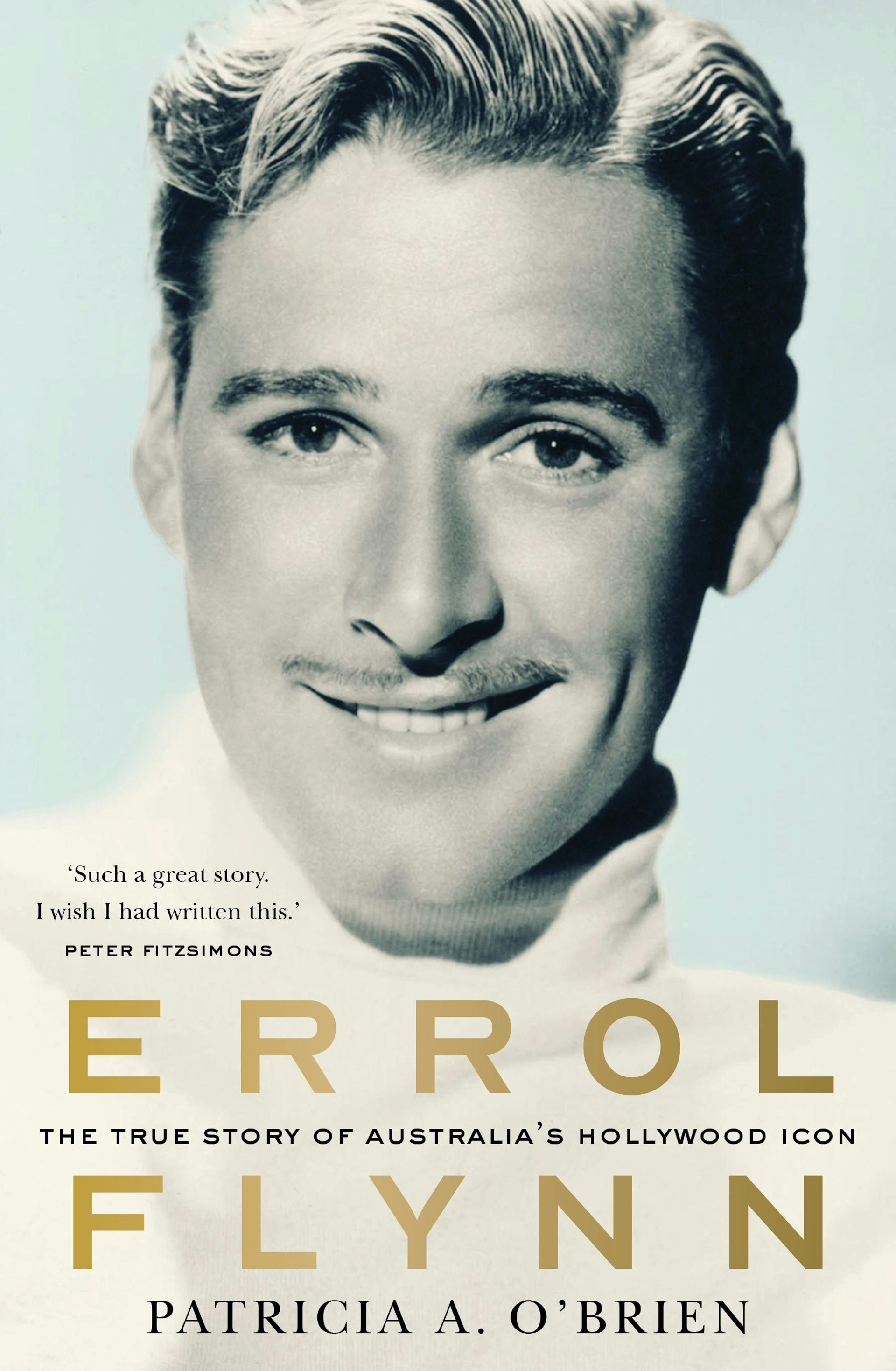
Errol Flynn: The true story of Australia’s Hollywood Icon – Patricia O’Brien (Allen & Unwin)
Errol Flynn: La verdadera historia del ícono de Hollywood de Australia – Patricia O’Brien (Allen & Unwin)
Flynn died in 1959, after appearing in 57 films, listed in an appendix. He was subsequently portrayed on film by Guy Pearce, Jude Law and Kevin Kline. His fame lives on in the expression “in like Flynn”, though the phrase was in use long before it became associated with him. There is even an Australian film of that name, about Flynn’s time in New Guinea, which has, deservedly, been largely forgotten.
Flynn murió en 1959, después de aparecer en 57 películas, enumeradas en un apéndice. Posteriormente fue interpretado en el cine por Guy Pearce, Jude Law y Kevin Kline. Su fama perdura en la expresión «in like Flynn», aunque la frase se usaba mucho antes de asociarse con él. Incluso hay una película australiana con ese nombre, sobre el tiempo de Flynn en Nueva Guinea, que ha sido, merecidamente, en gran parte olvidada.
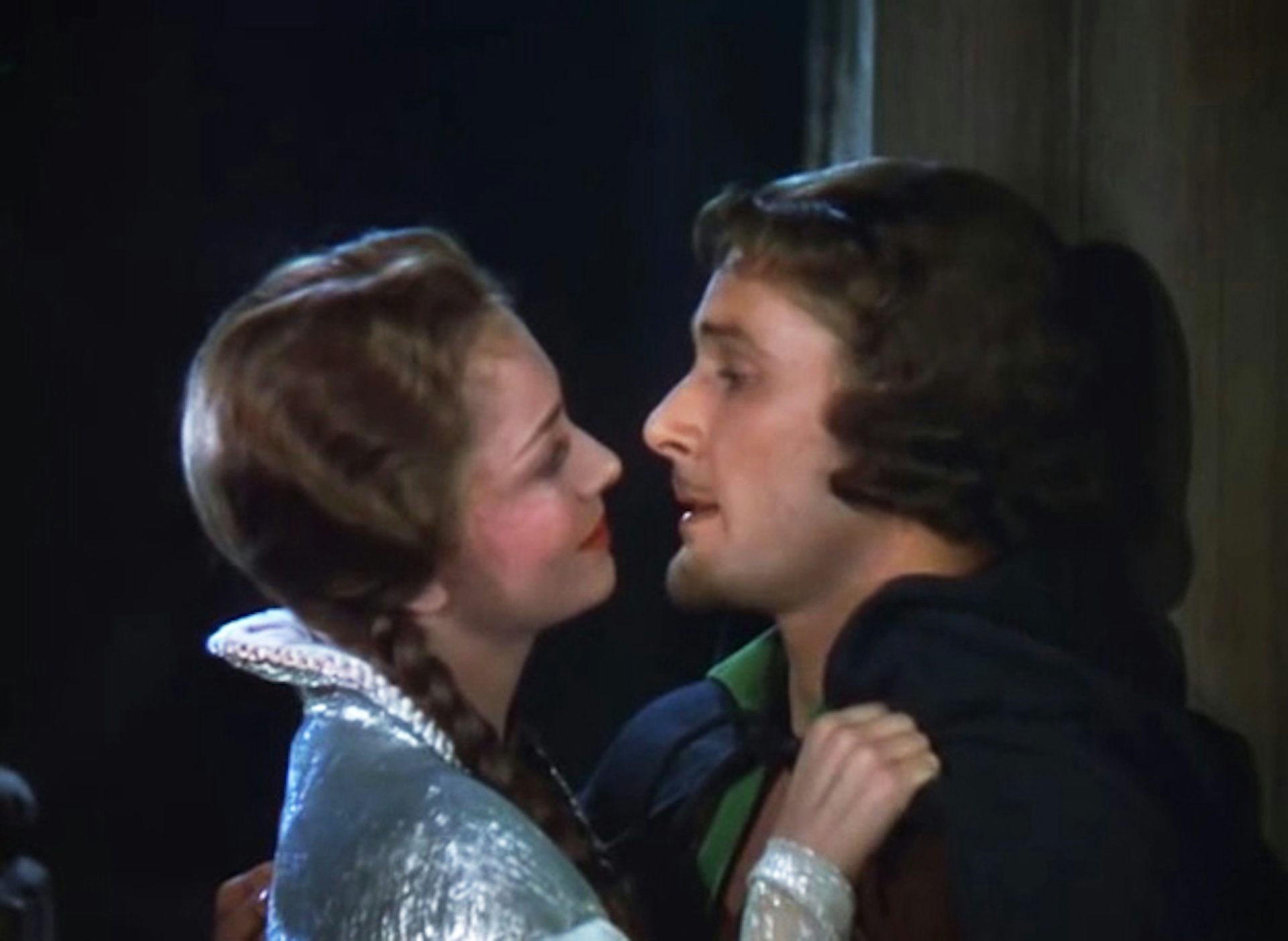
Times have changed, and most of Flynn’s films now seem at best B-grade, replete with assumptions of white male privilege. In the interest of research, I subjected myself to several of his lesser-known films, Gentleman Jim and The Adventures of Don Juan. Sadly, I remained impervious to his charm.
Los tiempos han cambiado, y la mayoría de las películas de Flynn ahora parecen, en el mejor de los casos, de categoría B, repletas de suposiciones de privilegio masculino blanco. Por interés de investigación, me sometí a varias de sus películas menos conocidas, Gentleman Jim y The Adventures of Don Juan. Lamentablemente, me mantuve impermeable a su encanto.
Whether cast as a boxer in 19th-century San Francisco or a Casanova in 16th-century Spain, he seemed to be playing the same role: smooth, charming and the inevitable winner against impossible odds.
Ya fuera interpretado como boxeador en la San Francisco del siglo XIX o como Casanova en la España del siglo XVI, parecía estar desempeñando el mismo papel: suave, encantador y el ganador inevitable contra probabilidades imposibles.
Bodies have changed over the past 80 years; once regarded as a perfect male, Flynn would hardly measure up against the gym-toned buffness of today’s Hollywood actors.
Los cuerpos han cambiado en los últimos 80 años; una vez considerado un macho perfecto, Flynn apenas se compararía con la musculatura tonificada de los actores de Hollywood de hoy.
During his career, Flynn was often described as Irish, but he grew up in Hobart, where he attended all the best schools, and was expelled by most. His parents had a tumultuous marriage, and his mother soon moved to Sydney. Flynn followed, to attend Shore Grammar, from which he was also expelled.
Durante su carrera, Flynn fue a menudo descrito como irlandés, pero creció en Hobart, donde asistió a las mejores escuelas, y fue expulsado de la mayoría. Sus padres tuvieron un matrimonio tumultuoso, y su madre pronto se mudó a Sídney. Flynn lo siguió, para asistir a Shore Grammar, de donde también fue expulsado.
Do we need yet another biography?
¿Necesitamos otra biografía más?
A wealth of unnecessary vulgarity?
¿Una riqueza de vulgaridad innecesaria?
Much of what O’Brien writes repeats the basic story Michael Freedland recounted in The Two Lives of Errol Flynn, though without the overwhelming emphasis on Flynn’s reputation as “a man’s man whose principal hobby was women”. While Freedland revelled in sexual gossip, O’Brien approaches Flynn as emblematic of a larger culture than the Hollywood world.
Gran parte de lo que escribe O’Brien repite la historia básica que Michael Freedland relató en The Two Lives of Errol Flynn, aunque sin el abrumador énfasis en la reputación de Flynn como “el hombre de los hombres cuyo pasatiempo principal eran las mujeres”. Mientras Freedland se deleitaba con el chismorreo sexual, O’Brien aborda a Flynn como emblemático de una cultura más amplia que el mundo de Hollywood.
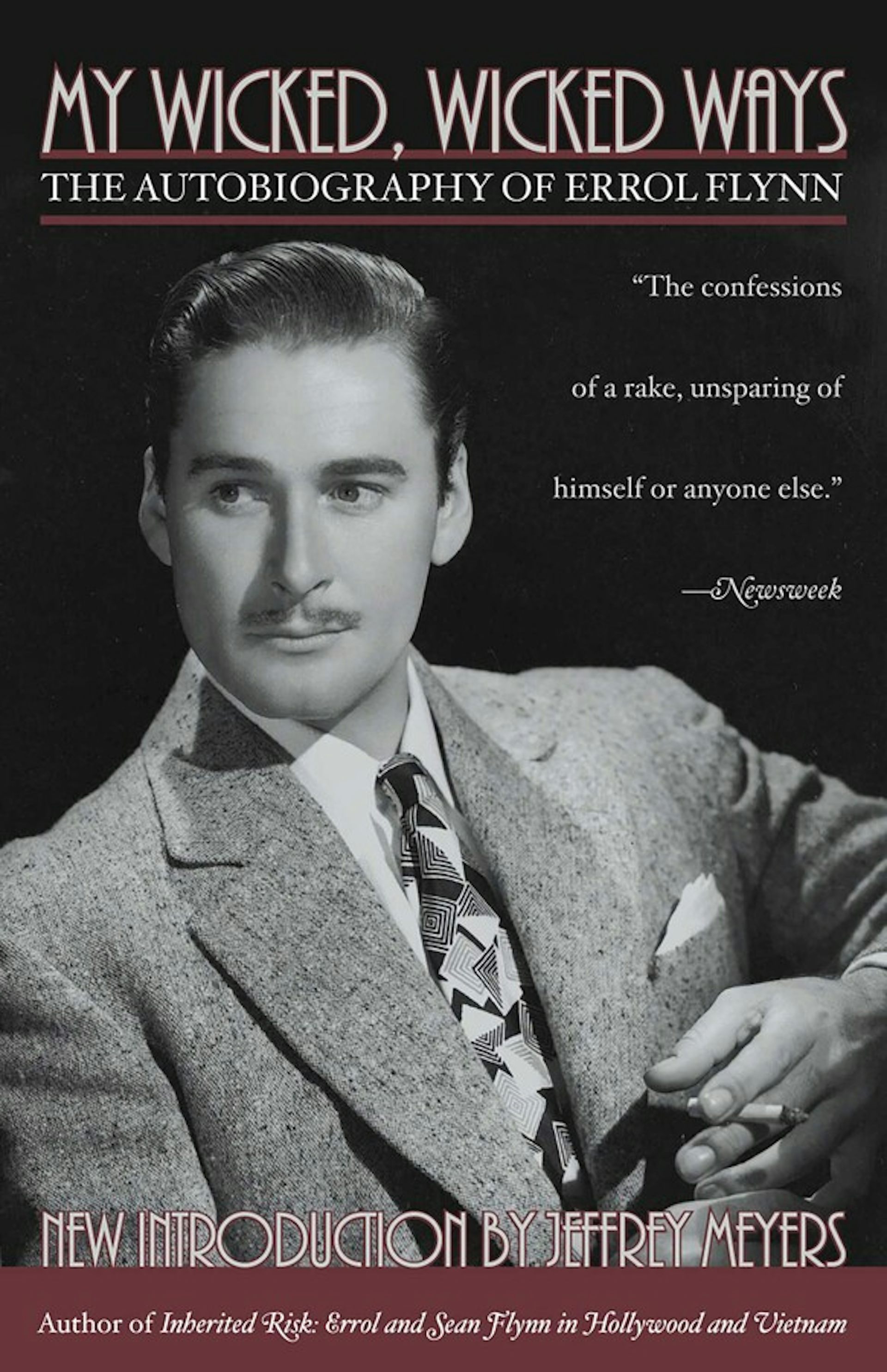
The year before his death Flynn hired a ghost writer, Earl Conrad, to help produce his own autobiography, My Wicked, Wicked Ways, which had mixed reviews. It is, as one might expect, self-serving but entertaining, in the way bad reality shows are when one is tired, stressed and willing to suspend judgement.
El año antes de su muerte, Flynn contrató a un escritor fantasma, Earl Conrad, para ayudar a producir su propia autobiografía, My Wicked, Wicked Ways, que recibió críticas mixtas. Es, como uno podría esperar, servicial pero entretenida, de la misma manera que los malos reality shows cuando uno está cansado, estresado y dispuesto a suspender el juicio.
In the conclusion to his autobiography, Flynn claimed: “few others alive in the present century have taken into their maw more of the world than I have”. Contemporary readers might agree with Noel Coward’s judgment: “Such a wealth of unnecessary vulgarity”.
En la conclusión de su autobiografía, Flynn afirmó: “pocos otros vivos en el presente siglo han tomado en su boca más del mundo que yo”. Los lectores contemporáneos podrían estar de acuerdo con el juicio de Noel Coward: “Tal riqueza de vulgaridad innecesaria”.
O’Brien approaches Flynn’s life in her capacity as a Pacific historian, based both in Australia and the United States. Her contribution is to situate Flynn within the racist culture of British imperialism, most notably in the discussion of his time as a young man in New Guinea.
O’Brien aborda la vida de Flynn en su capacidad de historiadora del Pacífico, con base tanto en Australia como en Estados Unidos. Su contribución es situar a Flynn dentro de la cultura racista del imperialismo británico, sobre todo en la discusión de su tiempo como joven en Nueva Guinea.
After World War I, the former German colony of New Guinea was added to Australia’s control of Papua and remained under Australian rule until Whitlam declared independence for the colony in 1975.
Después de la Primera Guerra Mundial, la antigua colonia alemana de Nueva Guinea fue añadida al control de Australia sobre Papúa y permaneció bajo el dominio australiano hasta que Whitlam declaró la independencia de la colonia en 1975.
The 18-year-old Flynn was lured to New Guinea by the gold rush of 1927, and remained there for six years, seeking his fortune in mining and tobacco. In ways that are rather unusual for the biography of a movie star, O’Brien dissects the appalling racism of Australian rule, which reinforced the sense of racial superiority Flynn had learnt from his father back in Tasmania.
El Flynn de 18 años fue atraído a Nueva Guinea por la fiebre del oro de 1927, y permaneció allí durante seis años, buscando su fortuna en la minería y el tabaco. De maneras bastante inusuales para la biografía de una estrella de cine, O’Brien disecciona el espantoso racismo del dominio australiano, que reforzó el sentido de superioridad racial que Flynn había aprendido de su padre en Tasmania.
Theodore Flynn, who was the first professor of biology in Tasmania, had strong views about the superiority of the white race and the undesirability of interracial sex, but his son’s sexual appetite meant he was soon taking advantage of his colonial privilege to bed local women.
Theodore Flynn, quien fue el primer profesor de biología en Tasmania, tenía fuertes opiniones sobre la superioridad de la raza blanca y la indeseabilidad del sexo interracial, pero el apetito sexual de su hijo significó que pronto se aprovechó de su privilegio colonial para acostarse con mujeres locales.
From his teenage years, Flynn seems to have regarded any woman he found attractive as fair game. He continued to bed a large number of young women, despite his three unsuccessful marriages.
Desde su adolescencia, Flynn pareció considerar cualquier mujer que le resultara atractiva como un objetivo. Continuó acostándose con un gran número de mujeres jóvenes, a pesar de sus tres matrimonios fallidos.
O’Brien calls him “the greatest heartthrob of his time”, which ignores actors such as Humphrey Bogart and Clark Gable, neither of whom are acknowledged in this book.
O’Brien lo llama “el mayor galán de su época”, lo que ignora a actores como Humphrey Bogart y Clark Gable, ninguno de los cuales es reconocido en este libro.
But his reputation as a great lover was established from his first days in Hollywood, through three marriages, countless affairs and several accusations of rape.
Pero su reputación como gran amante se estableció desde sus primeros días en Hollywood, a través de tres matrimonios, incontables aventuras y varias acusaciones de violación.
A sexual culture like Epstein
Una cultura sexual como Epstein
O’Brien devotes a chapter to the major rape trial in Los Angeles in 1943, where the judge appears to have shown extraordinary sympathy to Flynn, who was eventually acquitted. O’Brien is right to point to the ways Flynn represented a sexual culture we associate with Jeffrey Epstein today.
O’Brien dedica un capítulo al importante juicio por violación en Los Ángeles en 1943, donde el juez pareció mostrar una simpatía extraordinaria por Flynn, quien finalmente fue absuelto. O’Brien tiene razón al señalar las formas en que Flynn representó una cultura sexual que asociamos con Jeffrey Epstein hoy en día.
There are echoes of Ernest Hemingway in Flynn’s life; he also spent time as a sporadic war correspondent in Spain during the Civil War, where he sympathised with the Republicans. More interesting was his time in Cuba in 1959, where he spent five days alongside Fidel Castro.
Hay ecos de Ernest Hemingway en la vida de Flynn; también pasó tiempo como corresponsal de guerra esporádico en España durante la Guerra Civil, donde simpatizó con los republicanos. Más interesante fue su tiempo en Cuba en 1959, donde pasó cinco días junto a Fidel Castro.
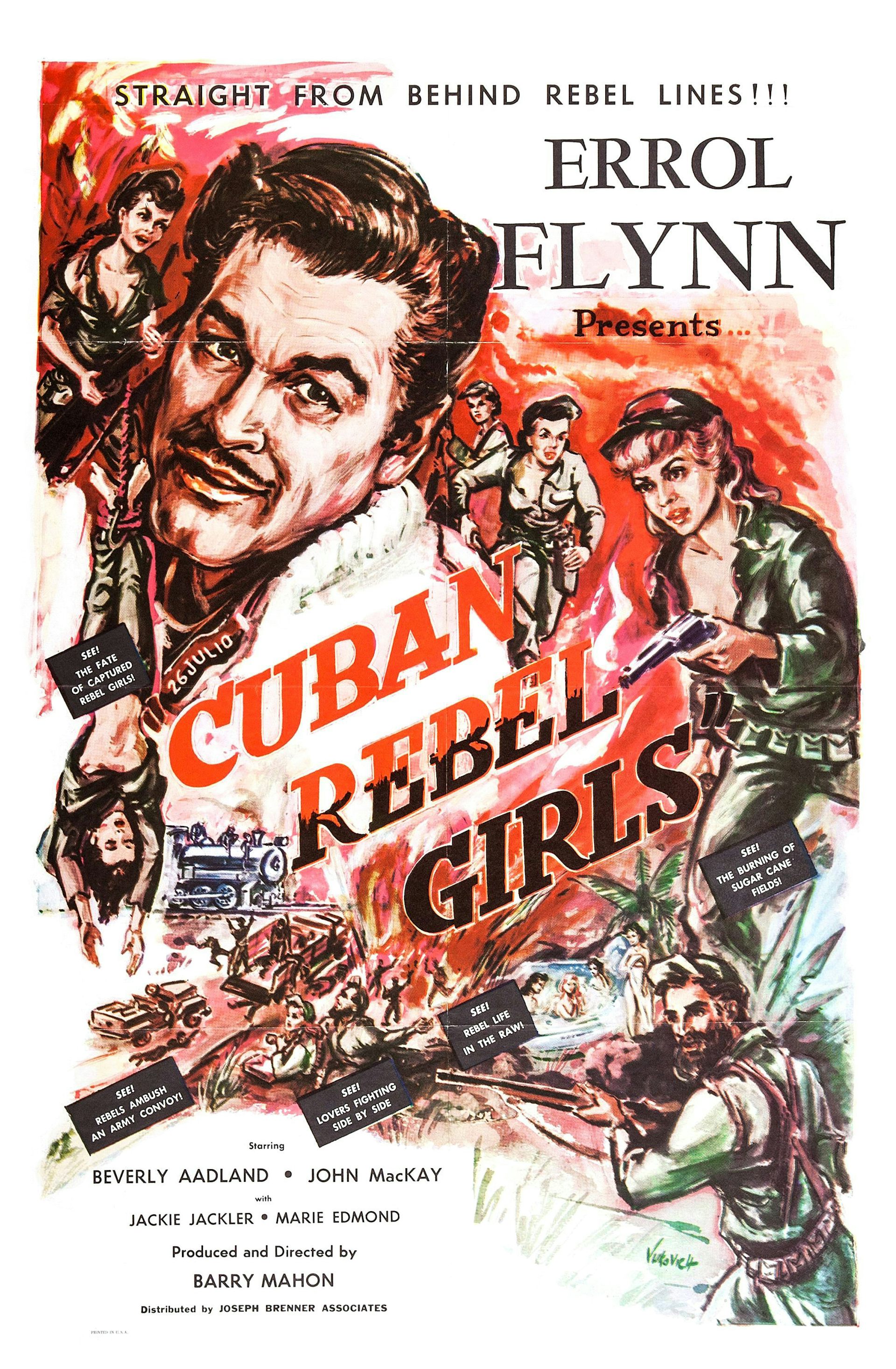
His final film, Cuban Rebel Girls, is a mixture of support for Castro and heterosexual titillation. This provided the basis of a novel by Boyd Anderson (Errol, Fidel and the Cuban Rebel Girls) that even my duties as a reviewer could not persuade me to pursue.
Su última película, Cuban Rebel Girls, es una mezcla de apoyo a Castro y titilación heterosexual. Esto proporcionó la base de una novela de Boyd Anderson (Errol, Fidel and the Cuban Rebel Girls) que ni siquiera mis deberes como crítica pudieron persuadirme de seguir.
Most of us will share a dislike of the racism and sexism central to Flynn’s life and career – but at times O’Brien’s judgements grate, as when she refers to Nabokov’s Lolita as “a tawdry tale of abuse and ‘perversion’”.
La mayoría de nosotros compartiremos un desagrado por el racismo y el sexismo centrales en la vida y carrera de Flynn, pero en ocasiones los juicios de O’Brien resultan irritantes, como cuando se refiere a Lolita de Nabokov como “un cuento vulgar de abuso y ‘perversión’”.
Claims of a liaison with Tyrone Powell – and a rebuff from David Niven – are dismissed by O’Brien as “preposterous”. Without accepting the gossip relayed in Charles Higham’s Errol Flynn: The Untold Story, I would have liked more willingness to explore the persistent rumours of Flynn’s possible bisexual side.
Las afirmaciones de una relación con Tyrone Powell – y un rechazo de David Niven – son desestimadas por O’Brien como “preposteras”. Sin aceptar los chismes transmitidos en Errol Flynn: The Untold Story de Charles Higham, me hubiera gustado más disposición para explorar los persistentes rumores sobre el posible lado bisexual de Flynn.
Occasionally, O’Brien lapses into the sort of exaggeration common to movie star biographies, as when she writes: “he was about to conquer the vast land that lay ahead of him in ways no man had done before”. (Maybe she intended irony?)
Ocasionalmente, O’Brien se desliza en el tipo de exageración común en las biografías de estrellas de cine, como cuando escribe: “estaba a punto de conquistar la vasta tierra que se extendía ante él de maneras que ningún hombre había hecho antes”. (¿Quizás quiso decir ironía?)
But Errol Flynn is compulsive reading – even if few of his films deserve re-screening.
Pero Errol Flynn es una lectura compulsiva, incluso si pocas de sus películas merecen ser vueltas a proyectar.
Dennis Altman does not work for, consult, own shares in or receive funding from any company or organisation that would benefit from this article, and has disclosed no relevant affiliations beyond their academic appointment.
Dennis Altman no trabaja, asesora, posee acciones ni recibe financiación de ninguna empresa u organización que se beneficiaría de este artículo, y no ha revelado afiliaciones relevantes más allá de su nombramiento académico.
Read more
-

Las conversaciones de Islamabad estaban condenadas al fracaso, y el bloqueo de Ormuz ha presentado otro obstáculo para cualquier acuerdo entre Irán y EE. UU.
The Islamabad talks were doomed to failure – and Hormuz blockade has thrown another obstacle to any Iran-US deal
-

Cómo la historia de Israel ha moldeado la forma en que libra la guerra
How Israel’s history has shaped the way it wages war