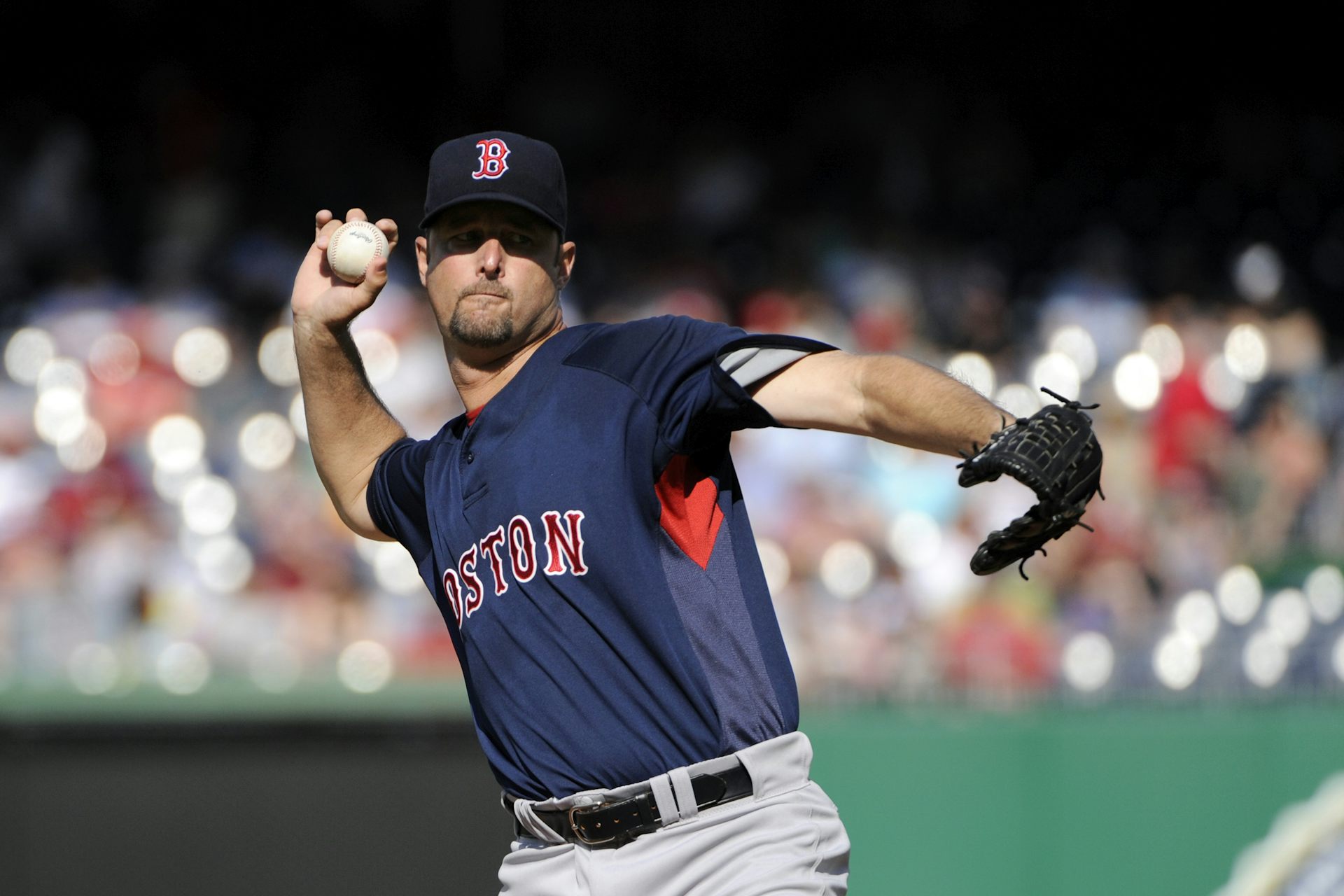
Bingles, knuckleballs y ‘Beer Barrel Polka’ – cientos de obras olvidadas muestran el ecléctico mundo de la erudición sobre béisbol
Bingles, knuckleballs and ‘Beer Barrel Polka’ – hundreds of forgotten works showcase the eclectic world of baseball scholarship
A new database includes more than 850 dissertations and theses, spanning everything from baseball slang and cigarette smoking to postage stamps and ballpark organs.
Una nueva base de datos incluye más de 850 disertaciones y tesis, que abarcan desde jerga de béisbol y tabaquismo hasta sellos postales y órganos del estadio.
Today’s fans may associate baseball research with cutting edge analytics. But long before data-driven tools like Statcast and FanGraphs, university students were conducting research about baseball.
Los aficionados de hoy pueden asociar la investigación sobre béisbol con análisis de vanguardia. Pero mucho antes de herramientas impulsadas por datos como Statcast y FanGraphs, los estudiantes universitarios realizaban investigaciones sobre el béisbol.
About three years ago, I came across a 1988 article published by the Society for American Baseball Research. Written by a historian of Cuban baseball named Peter C. Bjarkman, it highlighted several academic dissertations, noting that they “provide a fruitful scholarly resource … yet at the same time represent one of the least explored sources.”
Hace unos tres años, me encontré con un artículo de 1988 publicado por la Sociedad para la Investigación Estadounidense del Béisbol (Society for American Baseball Research) . Escrito por Peter C. Bjarkman, historiador del béisbol cubano, destacaba varias disertaciones académicas, señalando que “proporcionan un recurso académico fructífero… pero al mismo tiempo representan una de las fuentes menos exploradas”.
The baseball fan in me immediately wanted to know how many other dissertations existed, and which topics they covered. But after digging around, I realized that no such list existed. So the academic librarian in me decided to compile it for future researchers.
El aficionado al béisbol en mí quiso saber inmediatamente cuántas otras disertaciones existían y qué temas cubrían. Pero después de investigar, me di cuenta de que no existía tal lista. Así que la bibliotecaria académica en mí decidió compilarla para futuros investigadores.
I ended up locating more than 850 dissertations and theses written by students between 1908 and 2024 from nearly 300 universities, and compiled the data, which appears in a recent issue of the Baseball Research Journal.
Terminé localizando más de 850 disertaciones y tesis escritas por estudiantes entre 1908 y 2024 de casi 300 universidades, y compilé los datos, que aparecen en un número reciente del Baseball Research Journal.
I was impressed by how many students across so many disciplines found a way to connect their area of study to baseball. It has been eye-opening to read about the game from the perspectives of business, communication, history, music, physics, psychology and more.
Me impresionó cuántos estudiantes de tantas disciplinas encontraron una manera de conectar su área de estudio con el béisbol. Ha sido revelador leer sobre el juego desde las perspectivas de negocios, comunicación, historia, música, física, psicología y más.
The new catalog is full of curiosities, but here’s a sampling of five that showcase the range and creativity of baseball scholarship:
El nuevo catálogo está lleno de curiosidades, pero aquí hay una muestra de cinco que muestran el alcance y la creatividad de los estudios académicos sobre béisbol:
1. “Smoking and Its Effects Upon Base Ball Pitching”
1. “Smoking and Its Effects Upon Base Ball Pitching” (Fumar y sus efectos en el lanzamiento de béisbol)
Hughie Jennings, manager of the Detroit Tigers from 1907 to 1920, once observed that “the use of tobacco in any form … has a very bad effect upon athletes.”
Hughie Jennings, mánager de los Detroit Tigers de 1907 a 1920, observó una vez que “el uso del tabaco en cualquier forma… tiene un efecto muy malo en los atletas”.
In 1916, William A. Lang, a student at the International Young Men’s Christian Association Training School – now Springfield College in Massachusetts – attempted to provide some scientific evidence, though his methods lacked the rigor of today’s scientific research.
En 1916, William A. Lang, estudiante de la Asociación Cristiana Juvenil Internacional Training School – ahora Springfield College en Massachusetts – intentó proporcionar alguna evidencia científica, aunque sus métodos carecían del rigor de la investigación científica actual.
He had 12 players perform a series of pitching activities. During a break between round one and round two, they smoked either one cigar, two cigars or no cigars. Pitching accuracy decreased noticeably after smoking, while accuracy increased after a break with no smoking.
Hizo que 12 jugadores realizar una serie de actividades de lanzamiento. Durante un descanso entre la primera y la segunda ronda, fumaron ya sea un puro, dos puros o ningún puro. La precisión de los lanzamientos disminuyó notablemente después de fumar, mientras que la precisión aumentó después de un descanso sin fumar.
Several participants, especially those who were not smokers before, dropped out of the study after becoming sick. Even so, many professional baseball players smoked cigarettes into the 1970s, while the more discreet practice of chewing tobacco persisted longer.
Varios participantes, especialmente aquellos que no eran fumadores antes, abandonaron el estudio tras enfermarse. Aun así, muchos jugadores profesionales de béisbol fumaban cigarrillos hasta la década de 1970, mientras que la práctica más discreta de masticar tabaco persistió por más tiempo.
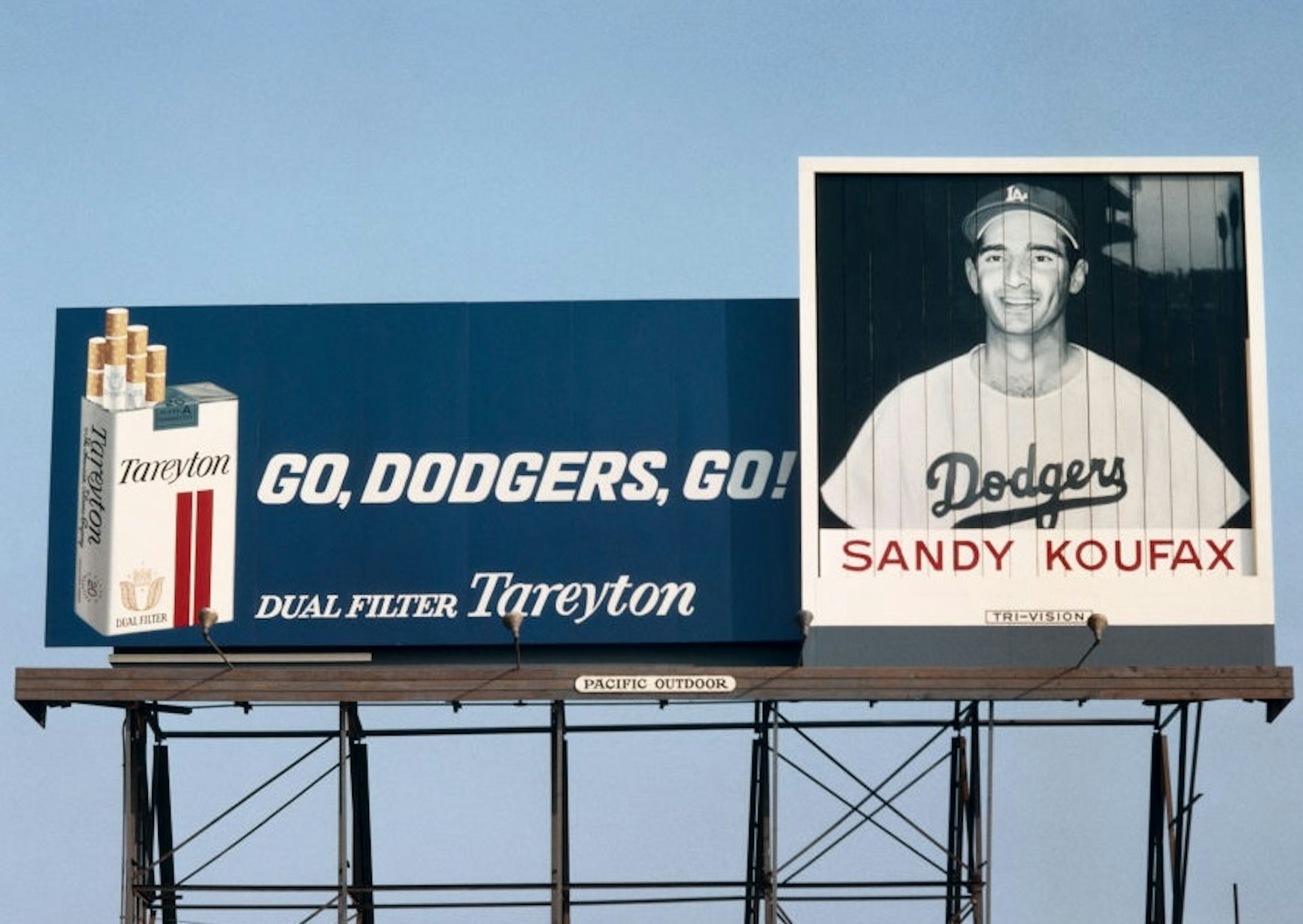
2. “An Historical Dictionary of Baseball Terminology”
2. “An Historical Dictionary of Baseball Terminology” (Un diccionario histórico de terminología de béisbol)
As baseball writing expanded in the 1890s, newspaper reporters tried to come up with creative ways to avoid repeating common words.
A medida que la escritura sobre béisbol se expandía en la década de 1890, los reporteros de periódicos intentaron encontrar formas creativas de evitar repetir palabras comunes.
In 1939, Edward J. Nichols, an English student at Penn State, noticed how many terms had carried over into everyday speech, many of which are still in use today: There are “hit-and-run” accidents, “pinch hitters” who swoop in to offer a helping hand, and big successes are described as “home runs.”
En 1939, Edward J. Nichols, estudiante de inglés en Penn State, notó cuántos términos se habían trasladado al habla cotidiana, muchos de los cuales todavía están en uso hoy: Hay accidentes de “hit-and-run” (golpear y correr) , “pinch hitters” (bateadores sustitutos) que llegan para ofrecer una mano amiga, y los grandes éxitos se describen como “home runs” (jonrones) .
Nichols compiled a list of well over 1,000 baseball-related terms and definitions, and the dates of earliest known use.
Nichols compiló una lista de más de 1,000 términos y definiciones relacionados con el béisbol, y las fechas de uso conocido más temprano.
Many are still used today:
Muchos todavía se usan hoy:
At Bat (1861)
At Bat (1861) [En turno al bate]
Backstop (1887)
Backstop (1887) [Detrás del plato]
Bean Ball (1912)
Bean Ball (1912) [Bola de frijol]
Clean up Hitter (1907)
Clean up Hitter (1907) [Bateador de cierre]
In the Hole (1937)
In the Hole (1937) [Atrapado/En apuros]
Whiff (1881)
Whiff (1881) [Fallar el bate]
Other words and phrases are no longer commonly used:
Otras palabras y frases ya no se usan comúnmente:
Balldom (1905) was used to describe the world of baseball
Balldom (1905) se usaba para describir el mundo del béisbol
Bingle (1902) was a term for a safely batted ball
Bingle (1902) era un término para una bola bateada de forma segura
Bird Cage (1906) was slang for a catcher’s mask
Bird Cage (1906) era jerga para la máscara del receptor
Egg Feast (1891) described a scoreless game
Egg Feast (1891) describía un partido sin anotaciones
Ice Wagon (1908) was an exceedingly slow runner
Ice Wagon (1908) era un corredor extremadamente lento
Pill (1906) was simple slang for the baseball itself
Pill (1906) era jerga simple para la pelota de béisbol misma
Tissue Paper Tom (1937) for a player who is easily injured
Tissue Paper Tom (1937) para un jugador que se lesiona fácilmente
Unbutton the Shirt (1937) meant preparing to take a big swing
Unbutton the Shirt (1937) significaba prepararse para dar un gran swing
3. “The Sporting Spirit: Perceptions in Philatelic Art Iconography and Sports Philately, 1896–1974”
3. “The Sporting Spirit: Perceptions in Philatelic Art Iconography and Sports Philately, 1896–1974”
In 1991, an Ohio State University physical education student named Myrtis Herndon compiled a comprehensive catalog of international sports-related postage stamps.
Texto a traducir al español (Español Neutro / Español Latinoamericano): El texto que se va a traducir al español (Español Neutro / Español Latinoamericano):
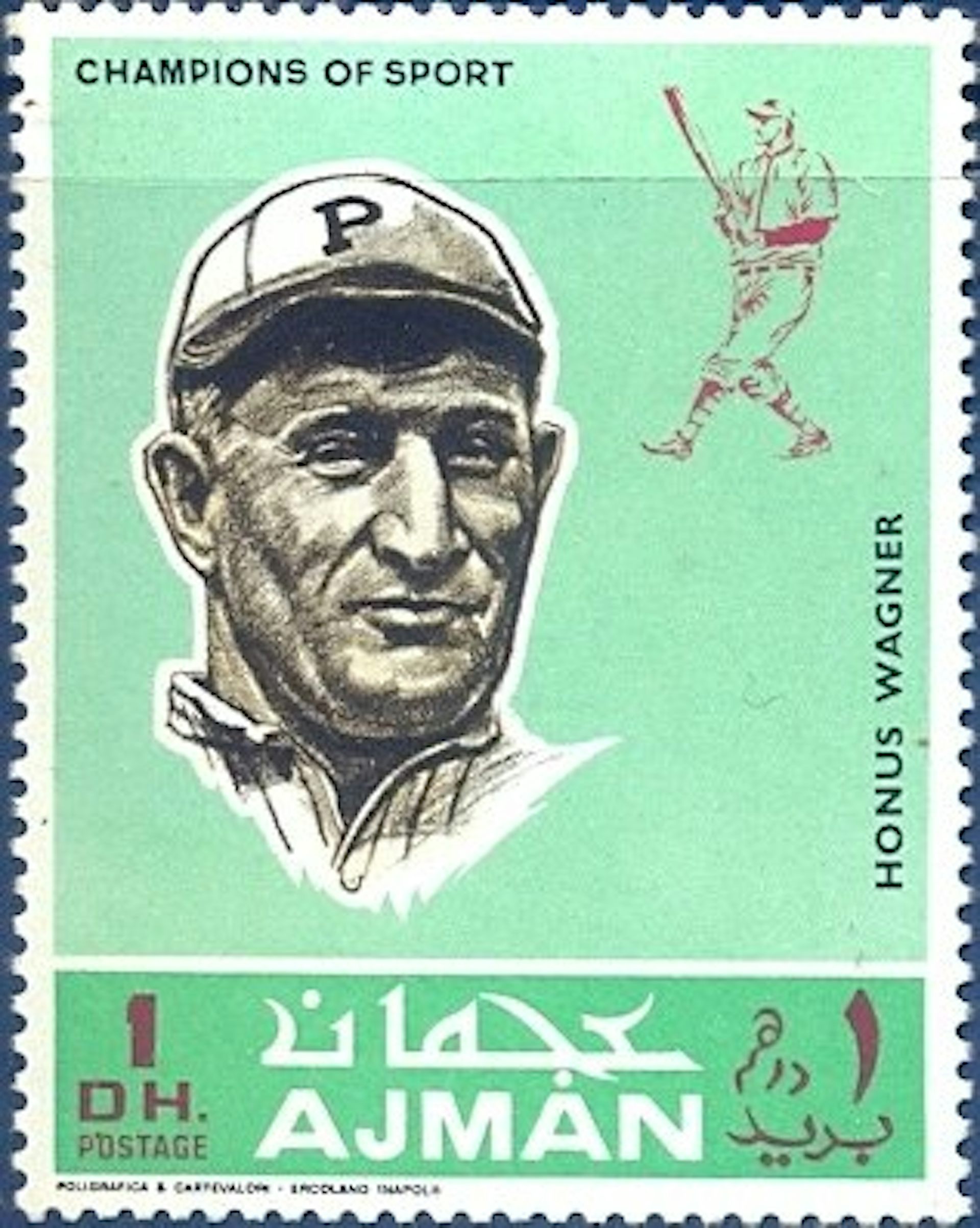
The first to feature baseball appeared in 1934 and was issued in the Philippines, where the sport had been introduced under American colonial rule.
El primero que presentó el béisbol fue en 1934 y se emitió en Filipinas, donde el deporte había sido introducido bajo el dominio colonial estadounidense.
In 1969, the United Arab Emirates – then known as the Trucial States – produced a series of stamps, aimed primarily at global collectors, of iconic artists, musicians and athletes, including six Major League Baseball Hall of Famers. A 1971 set, which appears to have been produced by the kingdom of Ras Al Khaimah, highlighted the baseball diplomacy between the U.S. and Japan.
En 1969, los Emiratos Árabes Unidos – entonces conocidos como los Estados Truciales – produjeron una serie de sellos, destinados principalmente a coleccionistas globales, de artistas, músicos y atletas icónicos, incluidos seis miembros del Salón de la Fama de las Grandes Ligas de Béisbol. Un set de 1971, que parece haber sido producido por el reino de Ras Al Khaimah, destacó la diplomacia del béisbol entre EE. UU. y Japón.
Taiwan issued several stamps in the early 1970s to celebrate the country’s string of Little League World Series championships. Costa Rica, the Dominican Republic, Nicaragua, San Marino and Venezuela also produced baseball-themed stamps at various points.
Taiwán emitió varios sellos a principios de la década de 1970 para celebrar la serie de campeonatos mundiales de Little League del país. Costa Rica, República Dominicana, Nicaragua, San Marino y Venezuela también produjeron sellos con temática de béisbol en diferentes momentos.
4. “The Aerodynamics of the Knuckleball Pitch”
4. “La Aerodinámica del Pitcheo Knuckleball”
Michael Morrissey, a mechanical engineering student at Marquette University in 2009, noticed that while others had written about the movement of pitches like curveballs, research was lacking when it came to knuckleballs.
Michael Morrissey, estudiante de ingeniería mecánica en la Universidad Marquette en 2009, notó que mientras otros habían escrito sobre el movimiento de pitcheos como las curvas, faltaba investigación cuando se trataba de los knuckleballs.
Very few pitchers can successfully throw this pitch, which requires a special grip that significantly reduces the spin of the ball, making it difficult to hit.
Muy pocos lanzadores pueden lanzar este pitcheo con éxito, ya que requiere un agarre especial que reduce significativamente el giro de la pelota, lo que dificulta golpearla.
Morrissey’s thesis includes a history of the knuckleball, an interview with All-Star knuckleballer R.A. Dickey and experiments to better understand the pitch’s strange, unpredictable movement. He used a series of sophisticated techniques and instruments – including a wind tunnel, a helium bubble generator and high-speed camera – to observe its lift, rotation and velocity, among other forces.
La tesis de Morrissey incluye una historia del knuckleball, una entrevista con el All-Star knuckleballer R.A. Dickey y experimentos para comprender mejor el movimiento extraño e impredecible del pitcheo. Utilizó una serie de técnicas e instrumentos sofisticados – incluido un túnel de viento, un generador de burbujas de helio y una cámara de alta velocidad – para observar su sustentación, rotación y velocidad, entre otras fuerzas.
5. “From the Hammond Organ to ‘Sweet Caroline’: The Historical Evolution of Baseball’s Sonic Environment”
5. “Del Órgano Hammond a ‘Sweet Caroline’: La Evolución Histórica del Entorno Sonoro del Béisbol”
In his 2012 dissertation, Matthew Mihalka, a music student at the University of Minnesota, described the sounds of the ballpark from the game’s earliest days to the modern era.
En su disertación de 2012, Matthew Mihalka, estudiante de música en la Universidad de Minnesota, describió los sonidos del estadio desde los primeros días del juego hasta la era moderna.
Before loudspeakers, fans could see live musicians, military bands and even Broadway acts at the ballpark.
Antes de los altavoces, los aficionados podían ver músicos en vivo, bandas militares e incluso actos de Broadway en el estadio.
Organ music became one of the sport’s defining sounds in the 20th century. The first organ appeared in 1941 at Wrigley Field. More stadiums added the instrument after the invention of the Hammond electric organ and following improvements to stadium public address systems.
La música de órgano se convirtió en uno de los sonidos definitorios del deporte en el siglo XX. El primer órgano apareció en 1941 en Wrigley Field. Más estadios añadieron el instrumento después de la invención del órgano eléctrico Hammond y tras mejoras en los sistemas de megafonía pública de los estadios.
Organs reached their peak in the 1960s, but some live organists still carry on this baseball tradition. While the organists usually remain in the background, at least one was ejected from a game for playing “Three Blind Mice” in response to an umpire’s call.
Los órganos alcanzaron su apogeo en la década de 1960, pero algunos organistas en vivo aún mantienen viva esta tradición del béisbol. Aunque los organistas suelen permanecer en segundo plano, al menos uno fue expulsado de un juego por tocar “Three Blind Mice” en respuesta a una llamada del árbitro.
Mihalka profiles several of baseball’s most prominent ballpark organists, including Gladys Goodding, who worked the keys and pedals for the Brooklyn Dodgers from 1942 to 1957, and Nancy Faust, who was the organist for the Chicago White Sox from 1970 to 2010.
Mihalka presenta varios de los más destacados organistas de estadios de béisbol, incluida Gladys Goodding, quien tocó teclas y pedales para los Brooklyn Dodgers desde 1942 hasta 1957, y Nancy Faust, quien fue la organista de los Chicago White Sox desde 1970 hasta 2010.
While recorded music largely dominates the ballpark soundscape today, audience participation and communal singing have long made up another important element of the baseball experience, with fans regularly belting out “Sweet Caroline” in Boston, “Here Comes the King” in St. Louis and the “Beer Barrel Polka” in Milwaukee.
Aunque la música grabada domina en gran medida el paisaje sonoro del estadio hoy en día, la participación del público y el canto comunitario han constituido durante mucho tiempo otro elemento importante de la experiencia del béisbol, con aficionados cantando regularmente “Sweet Caroline” en Boston, “Here Comes the King” en St. Louis y la “Beer Barrel Polka” en Milwaukee.
The full list of dissertations and theses is free to access – a resource for casual fans and researchers alike who want to learn more about the game.
La lista completa de disertaciones y tesis es de acceso libre: un recurso tanto para aficionados casuales como para investigadores que desean aprender más sobre el juego.
Tom Reinsfelder is a member of the Society for American Baseball Research.
Tom Reinsfelder es miembro de la Sociedad para la Investigación Estadounidense de Béisbol.
Read more
-

¿Qué es la ‘sincronización con el ciclo’ y cómo podría afectar la menstruación?
What is ‘cycle syncing’, and how might it affect menstruation?
-
Por qué a los impresionistas les encantaba pintar jardines
Why impressionists loved to paint gardens