Bingles, bolas de osso e ‘Beer Barrel Polka’ – centenas de obras esquecidas mostram o mundo eclético dos estudos sobre beisebol
Bingles, knuckleballs and ‘Beer Barrel Polka’ – hundreds of forgotten works showcase the eclectic world of baseball scholarship
A new database includes more than 850 dissertations and theses, spanning everything from baseball slang and cigarette smoking to postage stamps and ballpark organs.
Um novo banco de dados inclui mais de 850 dissertações e teses, abrangendo tudo, desde gírias de beisebol e fumar cigarros até selos postais e órgãos de campo de beisebol.
Today’s fans may associate baseball research with cutting edge analytics. But long before data-driven tools like Statcast and FanGraphs, university students were conducting research about baseball.
Os fãs de hoje podem associar a pesquisa sobre beisebol à análise de ponta. Mas muito antes das ferramentas orientadas por dados como Statcast e FanGraphs, estudantes universitários já realizavam pesquisas sobre o esporte.
About three years ago, I came across a 1988 article published by the Society for American Baseball Research. Written by a historian of Cuban baseball named Peter C. Bjarkman, it highlighted several academic dissertations, noting that they “provide a fruitful scholarly resource … yet at the same time represent one of the least explored sources.”
Há cerca de três anos, deparei-me com um artigo de 1988 publicado pela Society for American Baseball Research. Escrito por Peter C. Bjarkman, historiador do beisebol cubano, ele destacava várias dissertações acadêmicas, observando que elas “fornecem um recurso acadêmico frutífero… mas ao mesmo tempo representam uma das fontes menos exploradas.”
The baseball fan in me immediately wanted to know how many other dissertations existed, and which topics they covered. But after digging around, I realized that no such list existed. So the academic librarian in me decided to compile it for future researchers.
O fã de beisebol em mim imediatamente quis saber quantas outras dissertações existiam e quais tópicos elas cobriam. Mas depois de pesquisar, percebi que tal lista não existia. Então, o bibliotecário acadêmico em mim decidiu compilá-la para futuros pesquisadores.
I ended up locating more than 850 dissertations and theses written by students between 1908 and 2024 from nearly 300 universities, and compiled the data, which appears in a recent issue of the Baseball Research Journal.
Acabei localizando mais de 850 dissertações e teses escritas por estudantes entre 1908 e 2024, provenientes de quase 300 universidades, e compilei os dados, que aparecem em uma edição recente do Baseball Research Journal.
I was impressed by how many students across so many disciplines found a way to connect their area of study to baseball. It has been eye-opening to read about the game from the perspectives of business, communication, history, music, physics, psychology and more.
Fiquei impressionado com o número de estudantes de tantas disciplinas que encontraram uma maneira de conectar sua área de estudo ao beisebol. Foi esclarecedor ler sobre o jogo sob as perspectivas dos negócios, comunicação, história, música, física, psicologia e muito mais.
The new catalog is full of curiosities, but here’s a sampling of five that showcase the range and creativity of baseball scholarship:
O novo catálogo está cheio de curiosidades, mas aqui está um exemplo de cinco que mostram a amplitude e a criatividade da pesquisa acadêmica em beisebol:
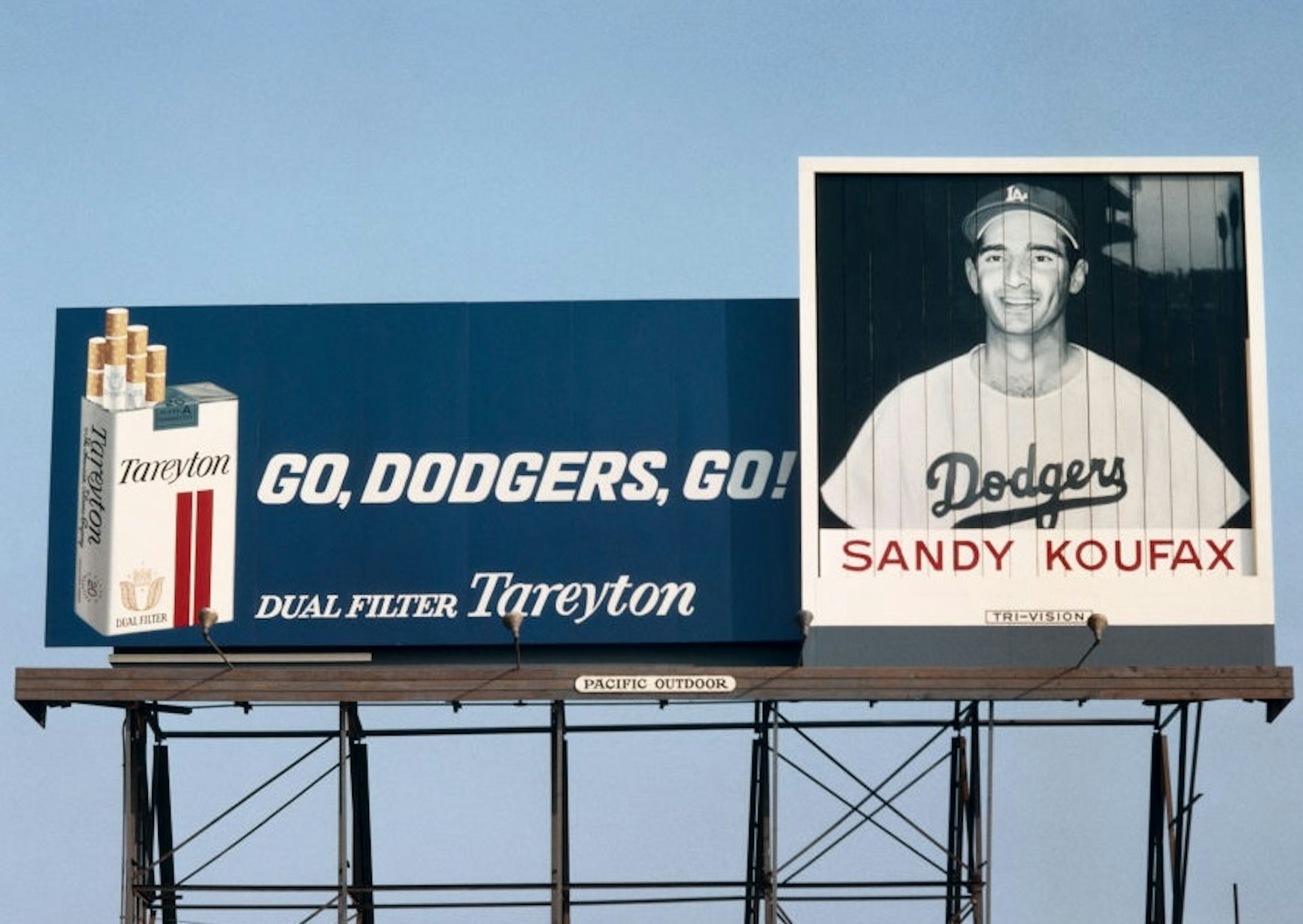
1. “Smoking and Its Effects Upon Base Ball Pitching”
1. “Smoking and Its Effects Upon Base Ball Pitching” (Fumar e Seus Efeitos no Arremesso de Beisebol)
Hughie Jennings, manager of the Detroit Tigers from 1907 to 1920, once observed that “the use of tobacco in any form … has a very bad effect upon athletes.”
Hughie Jennings, gerente dos Detroit Tigers de 1907 a 1920, observou certa vez que “o uso de tabaco em qualquer forma… tem um efeito muito ruim sobre os atletas.”
In 1916, William A. Lang, a student at the International Young Men’s Christian Association Training School – now Springfield College in Massachusetts – attempted to provide some scientific evidence, though his methods lacked the rigor of today’s scientific research.
Em 1916, William A. Lang, estudante da International Young Men’s Christian Association Training School – hoje Springfield College, Massachusetts – tentou fornecer alguma evidência científica, embora seus métodos carecessem do rigor da pesquisa científica atual.
He had 12 players perform a series of pitching activities. During a break between round one and round two, they smoked either one cigar, two cigars or no cigars. Pitching accuracy decreased noticeably after smoking, while accuracy increased after a break with no smoking.
Ele fez com que 12 jogadores realizassem uma série de atividades de arremesso. Durante um intervalo entre a primeira e a segunda rodada, eles fumaram um charuto, dois charutos ou nenhum charuto. A precisão no arremesso diminuiu perceptivelmente após fumar, enquanto a precisão aumentou após um intervalo sem fumo.
Several participants, especially those who were not smokers before, dropped out of the study after becoming sick. Even so, many professional baseball players smoked cigarettes into the 1970s, while the more discreet practice of chewing tobacco persisted longer.
Vários participantes, especialmente aqueles que não eram fumantes antes, abandonaram o estudo depois de ficarem doentes. Mesmo assim, muitos jogadores profissionais de beisebol fumavam cigarros até os anos 1970, enquanto a prática mais discreta de mascar tabaco persistiu por mais tempo.
2. “An Historical Dictionary of Baseball Terminology”
2. “An Historical Dictionary of Baseball Terminology” (Um Dicionário Histórico de Terminologia de Beisebol)
As baseball writing expanded in the 1890s, newspaper reporters tried to come up with creative ways to avoid repeating common words.
À medida que a escrita sobre beisebol se expandia na década de 1890, repórteres de jornais tentavam encontrar maneiras criativas de evitar repetir palavras comuns.
In 1939, Edward J. Nichols, an English student at Penn State, noticed how many terms had carried over into everyday speech, many of which are still in use today: There are “hit-and-run” accidents, “pinch hitters” who swoop in to offer a helping hand, and big successes are described as “home runs.”
Em 1939, Edward J. Nichols, estudante de inglês em Penn State, notou quantas terminologias haviam sido incorporadas à fala cotidiana, muitas das quais ainda estão em uso hoje: Existem acidentes de “hit-and-run” (golpe e fuga) , “pinch hitters” (batedores substitutos) que aparecem para ajudar, e grandes sucessos são descritos como “home runs”.
Nichols compiled a list of well over 1,000 baseball-related terms and definitions, and the dates of earliest known use.
Nichols compilou uma lista com mais de 1.000 termos e definições relacionados ao beisebol, e as datas do uso conhecido mais antigo.
Many are still used today:
Muitos ainda são usados hoje:
At Bat (1861)
At Bat (1861) [No turno]
Backstop (1887)
Backstop (1887) [Defesa atrás do home plate]
Bean Ball (1912)
Bean Ball (1912) [Bola de feijão]
Clean up Hitter (1907)
Clean up Hitter (1907) [Batedor de encerramento]
In the Hole (1937)
In the Hole (1937) [No buraco]
Whiff (1881)
Whiff (1881) [Perder o arremesso]
Other words and phrases are no longer commonly used:
Outras palavras e frases não são mais usadas com frequência:
Balldom (1905) was used to describe the world of baseball
Balldom (1905) era usado para descrever o mundo do beisebol
Bingle (1902) was a term for a safely batted ball
Bingle (1902) era um termo para uma bola rebatida com segurança
Bird Cage (1906) was slang for a catcher’s mask
Bird Cage (1906) era gíria para a máscara de um receptor
Egg Feast (1891) described a scoreless game
Egg Feast (1891) descrevia um jogo sem pontos
Ice Wagon (1908) was an exceedingly slow runner
Ice Wagon (1908) era um corredor extremamente lento
Pill (1906) was simple slang for the baseball itself
Pill (1906) era gíria simples para a própria bola de beisebol
Tissue Paper Tom (1937) for a player who is easily injured
Tissue Paper Tom (1937) para um jogador que é facilmente ferido
Unbutton the Shirt (1937) meant preparing to take a big swing
Unbutton the Shirt (1937) significava preparar-se para dar um grande arremesso
3. “The Sporting Spirit: Perceptions in Philatelic Art Iconography and Sports Philately, 1896–1974”
3. “The Sporting Spirit: Perceptions in Philatelic Art Iconography and Sports Philately, 1896–1974” (O Espírito Esportivo: Percepções na Iconografia da Arte Filatélica e Filatelia Esportiva, 1896–1974)
In 1991, an Ohio State University physical education student named Myrtis Herndon compiled a comprehensive catalog of international sports-related postage stamps.
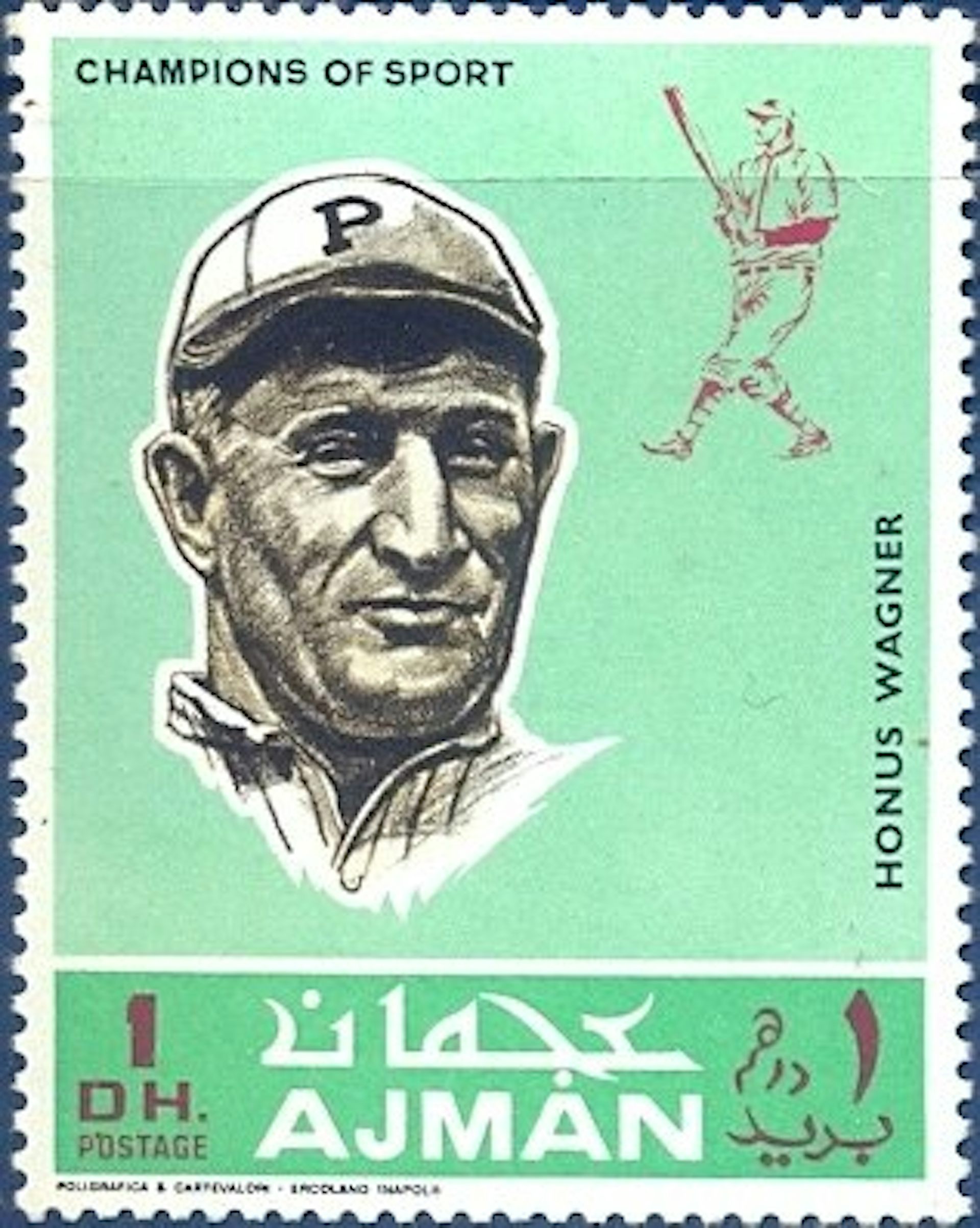
Hall of Fame shortstop Honus Wagner apareceu em um conjunto de selos emitidos pelos Emirados Árabes Unidos, então conhecidos como os Estados Trucial, em 1969. Myrtis Herndon, estudante de educação física da Ohio State University, compilou um catálogo abrangente de selos filatélicos relacionados a esportes internacionais.
The first to feature baseball appeared in 1934 and was issued in the Philippines, where the sport had been introduced under American colonial rule.
Os primeiros selos com baseball apareceram em 1934 e foram emitidos nas Filipinas, onde o esporte havia sido introduzido sob domínio colonial americano.
In 1969, the United Arab Emirates – then known as the Trucial States – produced a series of stamps, aimed primarily at global collectors, of iconic artists, musicians and athletes, including six Major League Baseball Hall of Famers. A 1971 set, which appears to have been produced by the kingdom of Ras Al Khaimah, highlighted the baseball diplomacy between the U.S. and Japan.
Em 1969, os Emirados Árabes Unidos – então conhecidos como os Estados Trucial – produziram uma série de selos destinados principalmente a colecionadores globais, apresentando artistas, músicos e atletas icônicos, incluindo seis membros do Hall da Fama da Major League Baseball. Um conjunto de 1971, que parece ter sido produzido pelo reino de Ras Al Khaimah, destacou a diplomacia do baseball entre os EUA e o Japão.
Taiwan issued several stamps in the early 1970s to celebrate the country’s string of Little League World Series championships. Costa Rica, the Dominican Republic, Nicaragua, San Marino and Venezuela also produced baseball-themed stamps at various points.
Taiwan emitiu vários selos no início dos anos 1970 para celebrar a série de campeonatos da Little League World Series do país. Costa Rica, República Dominicana, Nicarágua, San Marino e Venezuela também produziram selos com tema de baseball em diferentes momentos.
4. “The Aerodynamics of the Knuckleball Pitch”
4. “A Aerodinâmica do Arremesso Knuckleball”
Michael Morrissey, a mechanical engineering student at Marquette University in 2009, noticed that while others had written about the movement of pitches like curveballs, research was lacking when it came to knuckleballs.
Michael Morrissey, estudante de engenharia mecânica na Marquette University em 2009, notou que enquanto outros haviam escrito sobre o movimento de arremessos como curveballs, havia pouca pesquisa quando se tratava de knuckleballs.
Very few pitchers can successfully throw this pitch, which requires a special grip that significantly reduces the spin of the ball, making it difficult to hit.
Muito poucos arremessadores conseguem lançar este arremesso com sucesso, pois ele exige um tipo especial de pegada que reduz significativamente a rotação da bola, tornando-a difícil de ser rebatida.
Morrissey’s thesis includes a history of the knuckleball, an interview with All-Star knuckleballer R.A. Dickey and experiments to better understand the pitch’s strange, unpredictable movement. He used a series of sophisticated techniques and instruments – including a wind tunnel, a helium bubble generator and high-speed camera – to observe its lift, rotation and velocity, among other forces.
A tese de Morrissey inclui um histórico do knuckleball, uma entrevista com o All-Star knuckleballer R.A. Dickey e experimentos para melhor entender o movimento estranho e imprevisível do arremesso. Ele usou uma série de técnicas e instrumentos sofisticados – incluindo um túnel de vento, um gerador de bolhas de hélio e uma câmera de alta velocidade – para observar sua sustentação, rotação e velocidade, entre outras forças.
5. “From the Hammond Organ to ‘Sweet Caroline’: The Historical Evolution of Baseball’s Sonic Environment”
5. “Do Órgão Hammond a ‘Sweet Caroline’: A Evolução Histórica do Ambiente Sonoro do Baseball”
In his 2012 dissertation, Matthew Mihalka, a music student at the University of Minnesota, described the sounds of the ballpark from the game’s earliest days to the modern era.
Em sua dissertação de 2012, Matthew Mihalka, estudante de música na University of Minnesota, descreveu os sons do campo de beisebol desde os primeiros dias do jogo até a era moderna.
Before loudspeakers, fans could see live musicians, military bands and even Broadway acts at the ballpark.
Antes dos alto-falantes, os fãs podiam ver músicos ao vivo, bandas militares e até números da Broadway no estádio.
Organ music became one of the sport’s defining sounds in the 20th century. The first organ appeared in 1941 at Wrigley Field. More stadiums added the instrument after the invention of the Hammond electric organ and following improvements to stadium public address systems.
A música de órgão tornou-se um dos sons definidores do esporte no século XX. O primeiro órgão apareceu em 1941 no Wrigley Field. Mais estádios adicionaram o instrumento após a invenção do órgão elétrico Hammond e seguindo melhorias nos sistemas de sonorização pública dos estádios.
Organs reached their peak in the 1960s, but some live organists still carry on this baseball tradition. While the organists usually remain in the background, at least one was ejected from a game for playing “Three Blind Mice” in response to an umpire’s call.
Os órgãos atingiram seu auge na década de 1960, mas alguns organistas ao vivo ainda mantêm essa tradição do baseball. Embora os organistas geralmente permaneçam em segundo plano, pelo menos um foi expulso de um jogo por tocar “Three Blind Mice” em resposta a uma chamada do árbitro.
Mihalka profiles several of baseball’s most prominent ballpark organists, including Gladys Goodding, who worked the keys and pedals for the Brooklyn Dodgers from 1942 to 1957, and Nancy Faust, who was the organist for the Chicago White Sox from 1970 to 2010.
Mihalka perfila vários dos mais proeminentes organistas de beisebol, incluindo Gladys Goodding, que tocava teclas e pedais para os Brooklyn Dodgers de 1942 a 1957, e Nancy Faust, que foi a organista dos Chicago White Sox de 1970 a 2010.
While recorded music largely dominates the ballpark soundscape today, audience participation and communal singing have long made up another important element of the baseball experience, with fans regularly belting out “Sweet Caroline” in Boston, “Here Comes the King” in St. Louis and the “Beer Barrel Polka” in Milwaukee.
Embora a música gravada domine amplamente o ambiente sonoro do estádio hoje, a participação do público e o canto comunitário sempre constituíram outro elemento importante da experiência do baseball, com os fãs cantando regularmente “Sweet Caroline” em Boston, “Here Comes the King” em St. Louis e a “Beer Barrel Polka” em Milwaukee.
The full list of dissertations and theses is free to access – a resource for casual fans and researchers alike who want to learn more about the game.
A lista completa de dissertações e teses está livre para acesso – um recurso tanto para fãs casuais quanto para pesquisadores que desejam saber mais sobre o jogo.
Tom Reinsfelder is a member of the Society for American Baseball Research.
Tom Reinsfelder é membro da Society for American Baseball Research.
Read more
-
A reforma da Piscina de Reflexão do Memorial Lincoln por Trump virou um desastre. Por que isso está causando tanta indignação?
Trump’s upgrade of the Lincoln Memorial Reflecting Pool has become a disaster. Why is it causing so much outrage?
-
Ler a Ilíada de Homero parece rolar o feed do TikTok
Reading Homer’s Iliad feels like scrolling through TikTok