树木和绿色植被可以将城市降温高达18摄氏度——但这仅限于它们是正确的类型
Trees and greenery can cool cities by as much as 18°C –…
A new study has shown that more vegetation is not automatically better.
一项新的研究表明,更多的植被并不一定更好。
Cities around the world are planting more trees to cope with rising urban heat. But our research shows trees alone are often not enough. In some cases, the wrong kind of greening can even make streets feel less comfortable on a hot day.
世界各地的城市都在种植更多树木来应对日益增长的城市热岛效应。但我们的研究表明,仅靠树木往往是不够的。在某些情况下,错误的绿化设计甚至会让街道在炎热的日子里感觉更不舒适。
We compared field measurements from Melbourne, Munich and Hong Kong to test how different kinds of urban planting changed the heat people experience outdoors.
我们比较了来自墨尔本、慕尼黑和香港的实地测量数据,以测试不同类型的城市植被如何改变人们在户外感受到的热度。
The results showed layered vegetation – where trees are combined with shrubs and ground cover – often cooled cities more effectively than trees alone. We also found local climate and street design strongly shaped whether greening worked well.
结果显示,分层植被(即树木与灌木和地被植物结合)通常比仅靠树木更有效地冷却城市。我们还发现,当地气候和街道设计极大地影响了绿化效果的好坏。
These findings matter because urban greening is no longer just about aesthetics. As cities spend billions adapting to extreme heat, planting design may matter as much as planting quantity.
这些发现很重要,因为城市绿化不再仅仅关乎美观。随着城市投入数十亿美元来适应极端高温,种植设计可能和种植数量一样重要。
Cities are getting hotter
城市越来越热
Cities trap heat. Roads, buildings and asphalt absorb solar energy during the day and slowly release it back into the air, especially at night.
城市会积聚热量。道路、建筑物和沥青白天吸收太阳能,并在夜间缓慢地将其释放回空气中。
This “urban heat island” effect, combined with climate change, is making heatwaves more intense and more dangerous in our cities.
这种“城市热岛效应”与气候变化相结合,正使我们城市的热浪变得更强烈、更危险。
Trees are one of the most popular responses because they provide shade and reduce the amount of heat absorbed by surrounding surfaces. But outdoor comfort depends on more than air temperature alone.
树木是最受欢迎的应对措施之一,因为它们提供阴凉并减少周围表面吸收的热量。但户外舒适度不仅仅取决于空气温度。
People experience heat through sunlight, reflected heat, humidity and airflow. A shaded street can still feel uncomfortable if humidity is high or if wind cannot move through the space.
人们感受到的热量来自阳光、反射热、湿度和气流。如果湿度很高或风无法穿过空间,即使是阴凉的街道也会让人感到不适。
That is why a “one-size fits all” greening strategy can fail. A planting design that works well in Melbourne may behave very differently in Hong Kong or Munich.
这就是为什么“一刀切”的绿化策略可能会失败。在墨尔本效果良好的种植设计,在香港或慕尼黑可能会表现出非常不同的效果。
What we found
我们的发现
To better understand how urban vegetation affects heat stress, we did field measurements in three cities with different climates: temperate Melbourne, cooler Munich and humid subtropical Hong Kong.
为了更好地了解城市植被如何影响热应激,我们在三个气候不同的城市进行了实地测量:温带的墨尔本、气候较凉爽的慕尼黑和湿润的亚热带香港。
Rather than relying only on computer models, we measured real conditions in streets and green spaces during summer.
我们没有仅仅依赖计算机模型,而是测量了夏季街道和绿地中的真实状况。
We compared open urban spaces (with no plantings) , sites with trees only, and layered planting (which means trees, shrubs and ground cover together) .
我们比较了开放的城市空间(无植被)、仅有树木的区域,以及分层植被(即树木、灌木和地被植物的组合)。
Importantly, we did not just measure air temperature. We also measured “mean radiant temperature”, which captures the heat radiating from roads, walls and other surfaces onto the human body.
重要的是,我们不仅仅测量了气温。我们还测量了“平均辐射温度”,它捕捉了从道路、墙壁和其他表面辐射到人体上的热量。
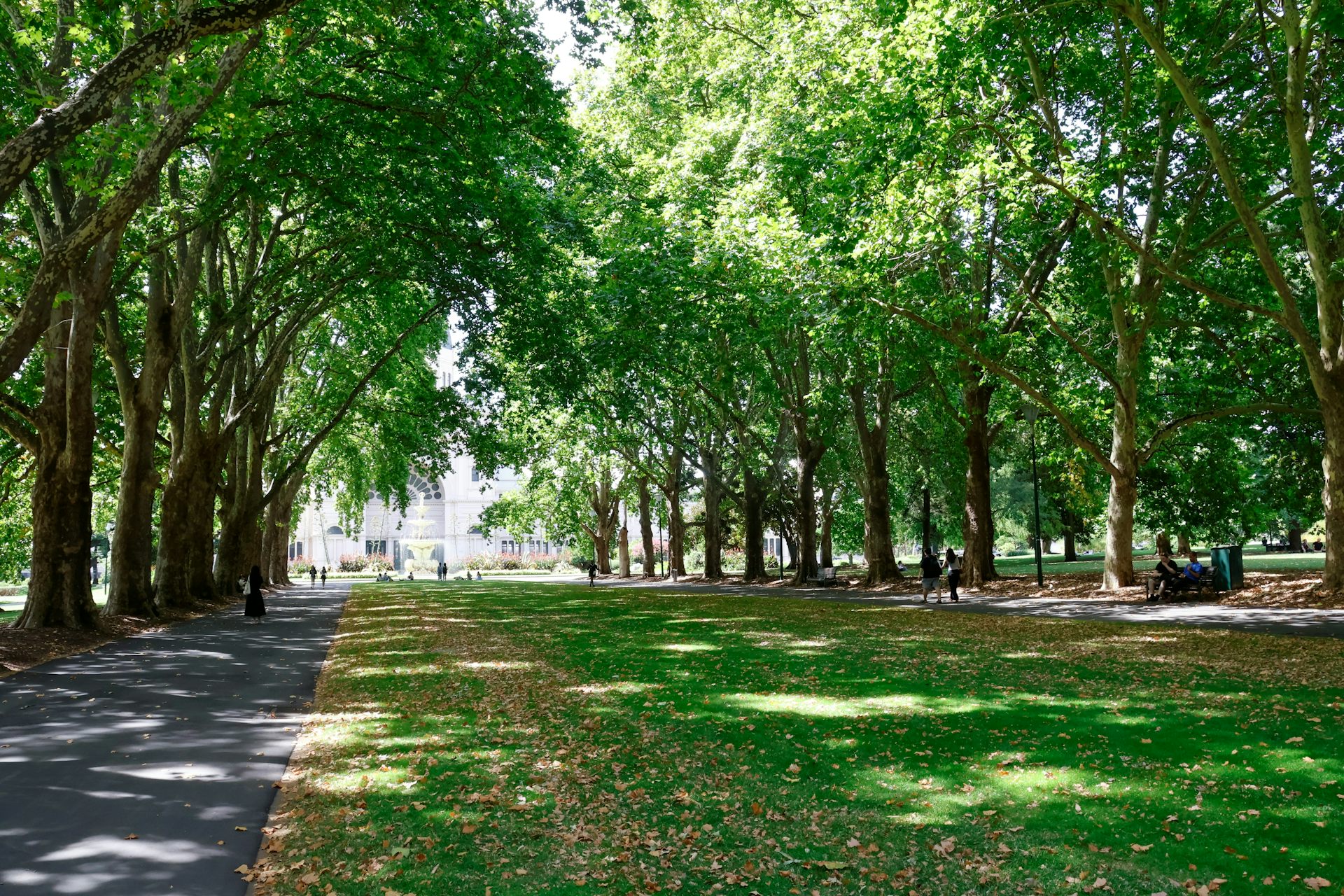
In Melbourne, street trees reduced radiant heat absorbed by pedestrians by more than 18°C, compared with open streets. Even where air temperatures changed only slightly, shaded streets felt substantially cooler.
在墨尔本,与开放街道相比,街道树木减少了行人吸收的辐射热量超过18°C。即使气温变化很小,阴凉的街道也感觉凉爽得多。
Munich showed the strongest benefits from layered planting. There, streets and green spaces containing trees, shrubs and ground cover reduced afternoon heat stress by almost 8°C compared with more open spaces.
慕尼黑显示出分层植被带来的最强益处。在那里,包含树木、灌木和地被植物的街道和绿地,与更开放的空间相比,降低了近8°C的午后热应激。
Hong Kong also benefited from vegetation, especially through shade created by overlapping tree canopies. But the results there were more mixed because the humid climate changed how cooling worked (more on that later) .
香港也受益于植被,特别是通过重叠的树冠形成的阴凉。但那里的结果更为复杂,因为潮湿的气候改变了降温的方式(更多内容稍后讨论)。
Across all three cities, one finding stood out: vegetation structure matters.
在这三个城市中,有一个发现尤为突出:植被结构很重要。
Combining trees with shrubs and ground cover often performed better than trees alone, but the benefits depended on how the planting interacted with the local environment.
将树木与灌木和地被植物结合通常比单独使用树木效果更好,但其益处取决于植被如何与当地环境相互作用。
Why some greening can fail
为什么一些绿化会失败
The study showed that more vegetation is not automatically better.
研究表明,植被越茂密不一定越好。
In Hong Kong, dense vegetation sometimes increased humidity enough to reduce some of the cooling benefit. Plants release water vapour into the air through transpiration, which can help to cool dry climates. But in already humid cities, extra moisture can make outdoor spaces feel sticky and uncomfortable because sweat evaporates less efficiently.
在香港,茂密的植被有时会增加足够的湿度,从而降低一些降温效果。植物通过蒸腾作用向空气释放水蒸气,这有助于冷却干燥的气候。但在本已潮湿的城市,额外的水分会使户外空间感觉黏腻和不适,因为汗液蒸发效率降低了。
In some Munich streets, dense vegetation reduced airflow through narrow urban corridors, trapping warm air and slowing the movement of vehicle pollution away from pedestrians.
在慕尼黑的一些街道,茂密的植被减少了狭窄的城市走廊的空气流通,困住了暖气,并减缓了汽车污染物远离行人移动的速度。
These findings highlight why cities cannot rely on generic canopy targets copied from elsewhere. Climate, street width and airflow all shape whether vegetation improves comfort or creates unintended side effects.
这些发现强调了为什么城市不能依赖从其他地方复制的通用冠层目标。气候、街道宽度和气流都会影响植被是改善舒适度还是造成了意想不到的副作用。
Designing cooler cities
设计更凉爽的城市
The solution is not to stop planting trees. It is to design urban greening more carefully.
解决方案不是停止种树。而是更精心设计城市绿化。
Cities need planting strategies tailored to local conditions rather than universal greening formulas. In parks and open green spaces, layered vegetation can provide strong cooling while also supporting biodiversity. In dense streets, planners may need to balance shade with ventilation.
城市需要根据当地条件定制的种植策略,而不是采用普遍的绿化公式。在公园和开阔的绿地中,分层的植被可以提供强力的降温效果,同时也能支持生物多样性。在密集的街道上,规划者可能需要平衡遮荫和通风。
The findings also suggest cities should move beyond measuring success through tree numbers alone. The arrangement, density and type of vegetation matter just as much as canopy cover.
研究结果还表明,城市不应仅通过树木数量来衡量成功。植被的布局、密度和类型与冠层覆盖率同样重要。
Designing for local conditions
为当地条件设计
Our research shows urban vegetation can reduce heat stress, but the benefits depend on how and where cities plant it.
我们的研究表明,城市植被可以减轻热应激,但其效益取决于城市种植的方式和地点。
Melbourne demonstrated the strong cooling effect of street trees on radiant heat, Munich showed the added value of layered vegetation, and Hong Kong revealed how dense planting can sometimes backfire in humid conditions.
墨尔本展示了街道树对辐射热的强降温效果,慕尼黑展示了分层植被的附加价值,而香港则揭示了在潮湿条件下,密集种植有时可能会适得其反。
Cities need climate-smart green spaces designed for local conditions, airflow and human comfort to remain liveable as temperatures rise.
随着气温升高,城市需要设计适应当地条件、气流和人类舒适度的气候智能型绿地,才能保持宜居性。
Mohammad A Rahman receives funding from the German Research Foundation (DFG) , TREE Fund, Humboldt Foundation, Bavarian State Ministry of the Environment and Consumer Protection, German Academic Exchange Service (DAAD) , Sustainable Consumption Institute (SCI) , University of Manchester and the European Union.
Mohammad A Rahman 获得了德国研究基金会(DFG)、TREE基金、洪堡基金会、巴伐利亚州环境与消费者保护部、德国学术交流服务中心(DAAD)、可持续消费研究所(SCI)、曼彻斯特大学和欧盟的资助。
Read more
-

“Bingles、指球和‘啤酒桶波尔卡’——数百部被遗忘的著作展示了棒球学术研究的多元世界”
Bingles, knuckleballs and ‘Beer Barrel Polka’ – hundred…