普京想让俄罗斯再次伟大。然而,乌克兰才是欧洲新的崛起大国。
Putin wanted to make Russia great again. Instead, Ukrai…
Russia is losing on the battlefield – and on the global stage, as the US and China distance themselves from the war.
俄罗斯在战场上正在失利——在全球舞台上也一样,因为美国和中国正逐渐与这场战争保持距离。
Russia’s ongoing war against Ukraine is often, and misleadingly, characterised as a great power conflict.
俄罗斯对乌克兰持续的战争经常被误导性地描述为一场大国冲突。
The narrative goes like this: Russia went to war against Ukraine because it felt threatened by NATO’s enlargement into eastern Europe after 1991. The real enemy is the United States, which is, at the very least, “principally responsible” for the war.
这种叙事是这样的:俄罗斯在1991年后,因为感觉受到北约向东欧扩张的威胁,才与乌克兰开战。真正的敌人是美国,而美国至少“负有主要责任”引发了这场战争。
This interpretation follows Kremlin talking points. It takes the logic of the Cold War and drops it into a fundamentally different present-day world. It has been debunked both by political scientists and historians.
这种解读遵循着克里姆林宫的说辞。它将冷战时期的逻辑带入了一个根本不同的当代世界。政治学家和历史学家都已驳斥了这一观点。
In reality, Russia’s war is the opposite of a great power conflict. It is a confrontation between middle powers. The great powers – the United States and China – are acting from the sidelines.
事实上,俄罗斯的战争与大国冲突恰恰相反。这是一场中等强国之间的对抗。而大国——美国和中国——则处于旁观者的位置。
A great power no more
昔日强国,不再是
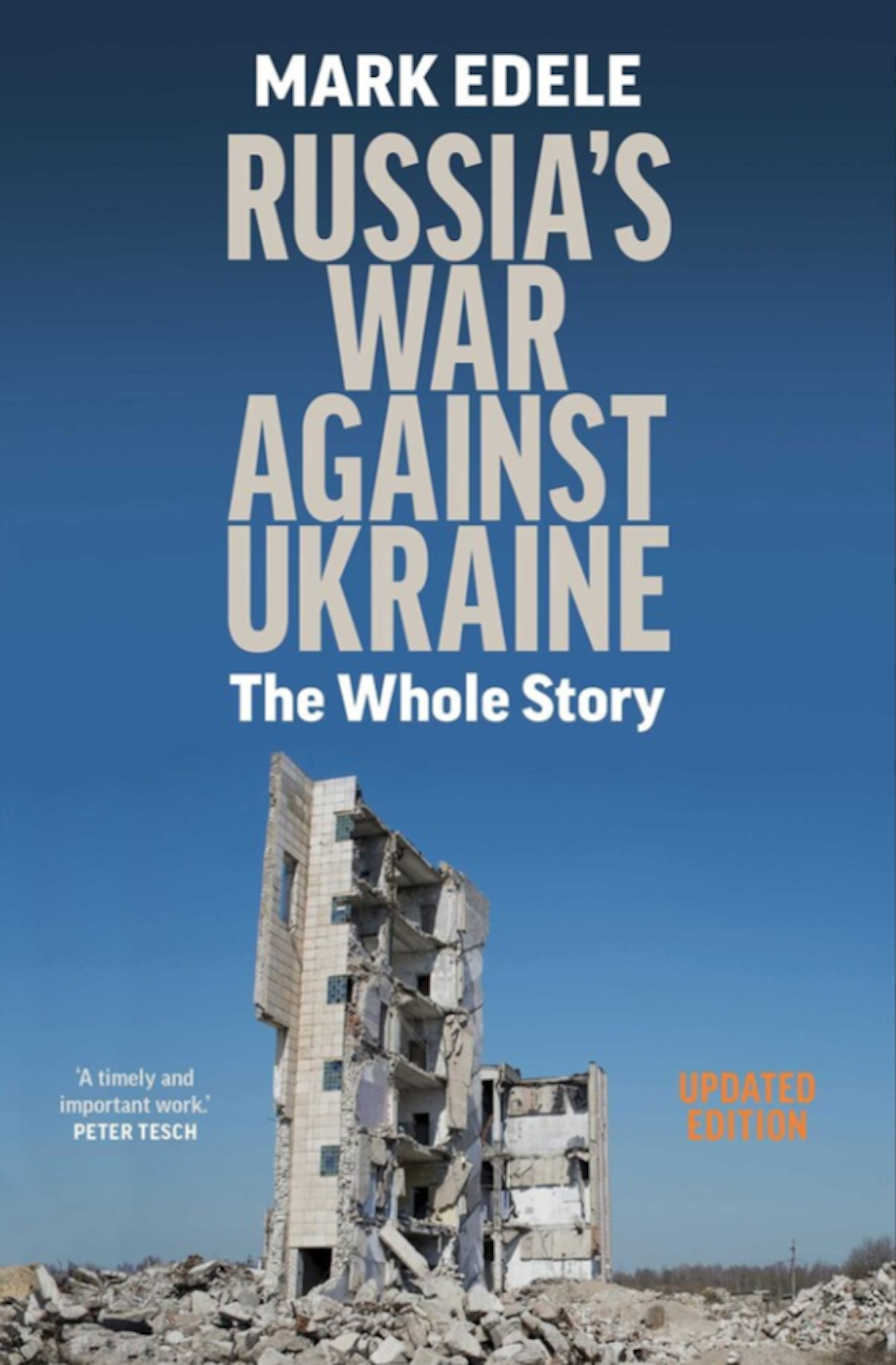
Russia has not been a great power since the implosion of the Soviet Union in 1989–1991. As I discuss in my newly updated book, Russia’s War Against Ukraine, Russia is a middle power with a great power complex.
自苏联于1989年至1991年解体以来,俄罗斯就从未是一个大国。正如我在新修订的著作《俄罗斯对乌克兰的战争》中所讨论的,俄罗斯是一个拥有“大国情结”的中等强国。
It has successfully usurped Soviet great-power legacies, including its permanent seat on the UN Security Council and one of the world’s largest nuclear arsenals. It has also projected a vision of itself as a world leader, which has gained some traction with conservatives in the global north and critics of US hegemony in the global south.
它成功地继承了苏联的大国遗产,包括其在联合国安理会的常任理事国席位以及世界上最大的核武库之一。它还推行了一种自身作为世界领导者的愿景,这在全球北方的一些保守派和全球南方对美国霸权批评者中获得了一定的支持。
But it can no longer back up these claims. Russia’s gross domestic product (GDP) is only slightly bigger than South Korea’s, and smaller than Canada’s or Brazil’s.
但它已无法支撑这些主张。俄罗斯的国内生产总值(GDP)仅略高于韩国,低于加拿大或巴西。
It still has one of the world’s largest militaries, with an estimated 1.1 million active-duty personnel. But in order to maintain it, Russia had to devote 7.5% of its economy – or US$190 billion – to military spending in 2025.
它仍然拥有世界上规模最大的军队之一,估计有110万名现役人员。但为了维持这个庞大的军事力量,俄罗斯必须在2025年将其经济的7.5%——即1900亿美元——投入到军事开支上。
Meanwhile, the oft-decried underspending of Europe’s NATO members, none of whom spend more than 4.5% of GDP, added up to nearly three times as much: US$559 billion.
与此同时,欧洲北约成员国长期以来被诟病支出不足,没有一个国家将军费开支超过GDP的4.5%,但这些总和却达到了近三倍:5590亿美元。
Russian President Vladimir Putin went to war to reverse this reality and make Russia great again. But Russia’s army failed to overwhelm Ukraine’s army in the war, even though Kyiv has just 880,000 active-duty personnel (other estimates vary) .
俄罗斯总统弗拉基米尔·普京发动战争就是为了扭转这一现实,让俄罗斯再次伟大。但俄军在战争中未能压倒乌克兰军队,尽管基辅仅有88万名现役人员(其他估计有所不同)。
Four and a half years after the full-scale invasion, Russia has suffered a functional defeat in Ukraine. About 80% of Ukraine remains in Ukrainian hands behind a largely static front line. Moscow has now been reduced to conducting an air assault against civilians, a criminal strategy of desperation with few historical examples of success.
全面入侵四年半后,俄罗斯在乌克兰遭受了功能性的失败。约80%的乌克兰仍掌握在乌克兰人手中,防线大致处于静态状态。莫斯科现在被迫进行针对平民的空袭,这是一种缺乏历史成功先例的绝望犯罪策略。
Its international influence is also waning. Since 2022, Russia has lost carefully cultivated allies in Syria, Venezuela and Hungary. Europe, once a lucrative market for Russian hydrocarbons, has turned hostile for the long term.
其国际影响力也在减弱。自2022年以来,俄罗斯失去了在叙利亚、委内瑞拉和匈牙利等国精心培养的盟友。欧洲曾是俄罗斯碳氢化合物利润丰厚的市场,但现在却长期敌对。
Meanwhile, Ukraine has risen from a minor power on the outskirts of Europe to a diplomatic and military middle power at the continent’s heart.
与此同时,乌克兰已从欧洲边缘的一个小国,崛起为一个位于大陆核心地带的外交和军事中等强国。
While still financially dependent on Europe, it is now a world leader in the production of drones. President Volodymyr Zelensky’s recent “drone diplomacy” in the Middle East – which culminated in ten-year deals with three countries – further demonstrated a country punching well above its weight.
虽然在经济上仍依赖欧洲,但它现在是无人机生产领域的全球领导者。总统弗拉基米尔·泽连斯基最近在中东推行的“无人机外交”,最终与三个国家签订了十年协议,进一步展示了这个国家远超其自身实力的能力。
Ukraine is also playing a central role in Europe’s ongoing self-assertion – and this week, took an important step forward in joining the European Union.
乌克兰也在发挥着在欧洲持续自我确立中的核心作用——本周,它迈出了加入欧盟的重要一步。
Why the great powers have distanced themselves
为什么大国们开始疏远彼此
This war, then, is a war between middle powers, not a proxy conflict between great powers. It cannot be construed as some great game over “Eurasia”.
那么,这场战争是中等强国之间的战争,而不是大国之间的代理冲突。它不能被解读为关于“欧亚大陆”的某种大博弈。
Neither China nor the US wanted a war in Europe this century. China remains focused on Taiwan, while the US has been trying to come to terms with a disastrous withdrawal from Afghanistan and its concerns over China’s rise in the Indo-Pacific. Throughout the escalating crisis Russia manufactured in the second half of 2021, the Biden administration tried to deescalate, create diplomatic off-ramps, and spoil Russian war plans by making them public.
中国和美国都没有想要在本世纪爆发欧洲战争。中国仍然专注于台湾问题,而美国则一直在努力应对阿富汗灾难性撤退带来的困境,以及对中国在印太地区崛起的担忧。在俄罗斯于2021年下半年制造的升级危机期间,拜登政府试图降级冲突、创造外交退路,并通过公开这些计划来破坏俄罗斯的战争部署。
After the full-scale invasion in early 2022, China and the US remained wary of elevating Putin’s war to a great power conflict.
在2022年初全面入侵之后,中国和美国仍然警惕将普京的战争升级为大国冲突。
China took advantage of incredibly cheap Russian energy supplies and markets now deserted by European or US exports. It became “the decisive enabler” of Russia’s war, hoping to distract the US from Asia.
中国利用了极其廉价的俄罗斯能源供应,以及目前被欧洲或美国出口所抛弃的市场。它成为了俄罗斯战争的“决定性促成方”,希望分散美国的注意力使其无法关注亚洲。
But Beijing was careful not to deliver weapons to Russia. It also took a public stance against nuclear escalation and affirmed “the sovereignty and territorial integrity” of all countries involved.
但北京小心翼翼地没有向俄罗斯交付武器。它还公开反对核升级,并重申了所有相关国家的“主权和领土完整”。
More importantly, China never sanctioned Ukraine, which is dependent on Chinese-produced parts and materials for its growing drone industry.
更重要的是,中国从未制裁过乌克兰,而乌克兰的无人机产业发展依赖于中国的零部件和材料。
The United States, meanwhile, has hesitated in its support of Ukraine.
另一方面,美国在支持乌克兰方面却有所犹豫。
Originally, US intelligence officials assumed Russia would win the war within days. As Ukraine survived, mostly because of its own arsenals, the Biden administration began supporting it, albeit with caveats. The weapons it sent came with strings attached and deliveries were often delayed for fear of crossing some Russian red line or other.
最初,美国情报官员曾认为俄罗斯会在几天内赢得战争。随着乌克兰幸存下来(主要归功于其自身的军备),拜登政府开始支持它,尽管带有保留意见。它发送的武器附带了附加条件,而且交付经常被推迟,以担心触犯俄罗斯的红线或其他限制。
This war was even more inconvenient for the United States than it was for China. This sentiment has only intensified under the Trump administration. As the US has pulled back, a flexible coalition of democratic middle powers has stepped up to help Ukraine.
这场战争对美国来说,比对中国来说更不利。 这种情绪在特朗普政府执政期间只会更加强烈。 随着美国后撤,一个由民主中等强国组成的灵活联盟已站出来帮助了乌克兰。
What we see happening in Ukraine, then, is the realignment of the world system from a US-dominated global order after 1991 to a multi-polar world. In this world, middle powers are playing a much larger role than during either the Cold War or its aftermath.
我们在乌克兰看到的是,世界体系正在从1991年以来由美国主导的全球秩序,重组为一个多极世界。 在这个世界里,中间力量扮演的角色比在冷战时期或其后更加巨大。
The leaders of middle powers like Australia and Canada are in the process of waking up to this reality.
像澳大利亚和加拿大这样的中等强国领导人正在逐渐意识到这一现实。
US President Donald Trump, by contrast, has not yet understood this state of affairs. Even if he might now return his attention to this war, he will find he has fewer cards to play than he thought.
相比之下,美国总统唐纳德·特朗普尚未理解这种局势。即使他现在将注意力重新投向这场战争,他也会发现自己可用的筹码比他想象的要少。
Mark Edele receives funding from the Australian Research Council.
马克·埃德尔从澳大利亚研究理事会获得资金。