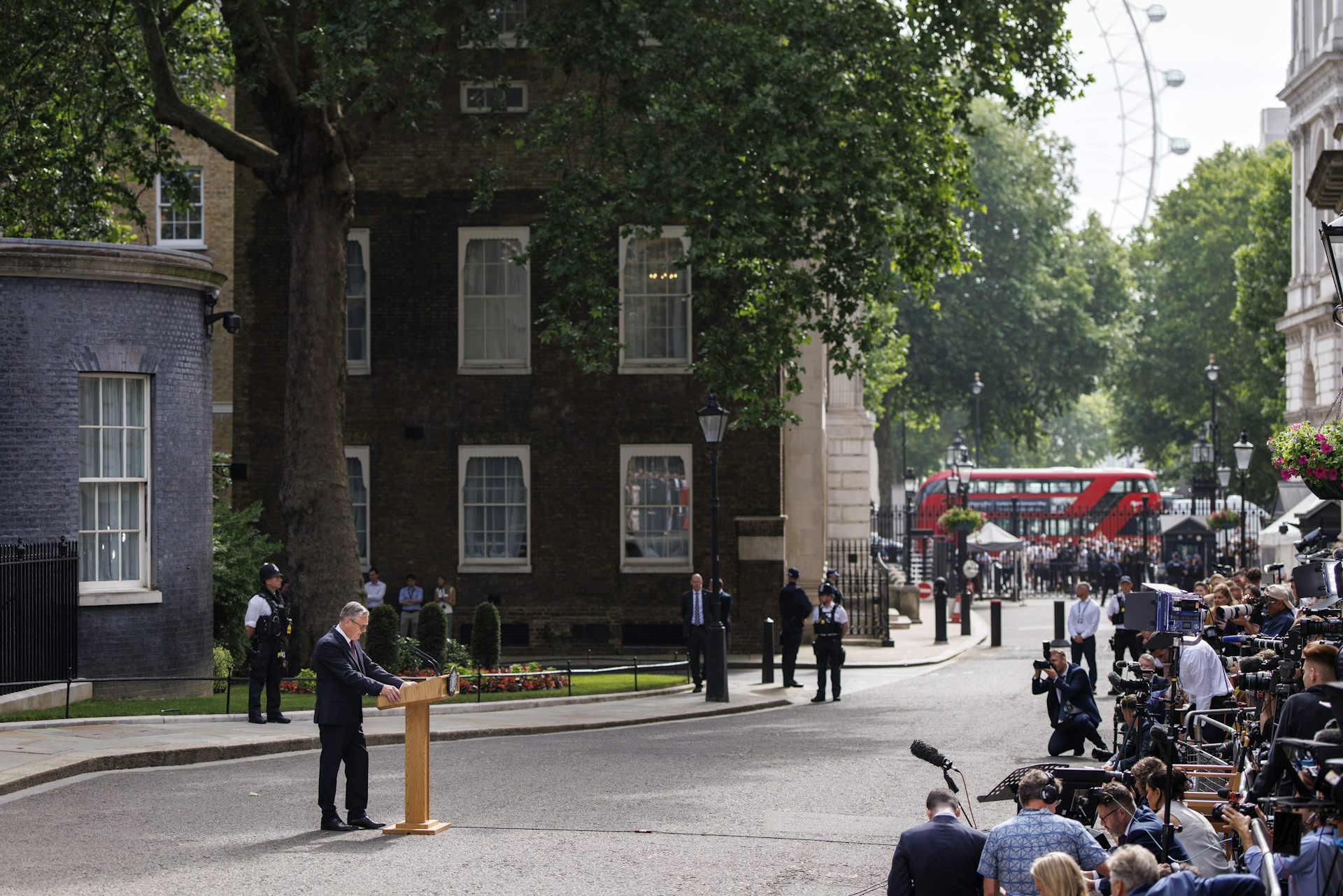
Por que o Reino Unido está mudando de primeiro-ministro a cada poucos anos?
Why is the UK now changing prime minister every few years?
The UK system used to be held up as a model of stable government.
O sistema do Reino Unido costumava ser apresentado como um modelo de governo estável.
This is not the UK’s first leadership transition in government, and it is unlikely to be the last. These events have, however, been rare until recently. In the 80 years since the end of the second world war, there have only been 18 prime ministers. The nineteenth, likely to be Andy Burnham, will become the seventh premier since 2010. So that makes 12 prime ministers over 65 years – and then seven in the last 16 years.
Este não é o primeiro processo de transição de liderança do Reino Unido em governo, e é improvável que seja o último. Tais eventos foram raros até recentemente. Nos 80 anos desde o fim da segunda guerra mundial, houve apenas 18 primeiros-ministros. O décimo nono, provavelmente Andy Burnham, será o sétimo premier desde 2010. Isso totaliza 12 primeiros-ministros em mais de 65 anos – e então sete nos últimos 16 anos.
This is a problem, one that is compounded by the reasons for the departure. Six of the 12 PMs until 2010 simply lost an election – Attlee, Home, Heath, Callaghan, Major and Brown. A further three resigned through ill health – Churchill, Macmillan and Wilson. And two resigned because of scandals – Suez and “partygate”.
Este é um problema, agravado pelos motivos das saídas. Seis dos 12 PMs até 2010 simplesmente perderam uma eleição – Attlee, Home, Heath, Callaghan, Major e Brown. Mais três renunciaram devido a problemas de saúde – Churchill, Macmillan e Wilson. E dois renunciaram por causa de escândalos – Suez e “partygate”.
As such, of the 12 prime ministers from 1945 until 2010, only Margaret Thatcher was dismissed by her party for overtly political reasons. Her backbenchers and her cabinet no longer believed she was an election winner, and she was unceremoniously dumped in 1990. She described it as “treachery with a smile on its face”.
Dessa forma, dos 12 primeiros-ministros de 1945 até 2010, apenas Margaret Thatcher foi demitida pelo seu próprio partido por razões abertamente políticas. Seus membros da bancada e seu gabinete não acreditavam mais que ela era uma vencedora eleitoral, e ela foi expulsa sem cerimônia em 1990. Ela descreveu o evento como “traição com um sorriso no rosto”.
The period since 2010 has been very different. The UK system that was famed for having the stability of government at its core suddenly started shedding prime ministers like winter coats in the height of summer. Only one – David Cameron – left voluntarily after defeat in the Brexit referendum. Sunak lost an election, while the rest were dispatched either because of scandal (Johnson and “partygate”) or party politics (May, Truss and now Starmer) .
O período desde 2010 tem sido muito diferente. O sistema do Reino Unido, famoso por ter a estabilidade governamental como seu núcleo, de repente começou a descartar primeiros-ministros como casacos de inverno no auge do verão. Apenas um – David Cameron – saiu voluntariamente após a derrota no referendo do Brexit. Sunak perdeu uma eleição, enquanto os demais foram dispensados seja por causa de escândalo (Johnson e “partygate”) ou política partidária (May, Truss e agora Starmer) .
Starmer is the first Labour prime minister to be cut down midstream – not even halfway through the parliamentary term. Watching events unfold in Westminster, the overwhelming emotion for someone not schooled in the machinations of the UK government would be bewilderment. Starmer was elected less than two years ago with a historic majority and is well regarded on the international stage. He is not departing on the back of a scandal, rather his power has simply evaporated.
Starmer é o primeiro primeiro-ministro trabalhista a ser derrubado no meio do caminho – nem mesmo na metade do mandato parlamentar. Observar os eventos se desenrolarem em Westminster, a emoção avassaladora para alguém não familiarizado com as intrigas do governo do Reino Unido seria de perplexidade. Starmer foi eleito há menos de dois anos com uma maioria histórica e é muito respeitado no cenário internacional. Ele não está partindo após um escândalo; seu poder simplesmente evaporou.
Starmer’s defenestration is probably closest to those of Margaret Thatcher or Tony Blair – with one crucial difference. The revolt against Thatcher seemed to be generated from below. Tories were increasingly worried about their own survival and the government’s policy direction – particularly on the much-hated poll tax.
A queda de Starmer é provavelmente mais próxima das de Margaret Thatcher ou Tony Blair – com uma diferença crucial. A revolta contra Thatcher parecia ter sido gerada de baixo para cima. Os conservadores estavam cada vez mais preocupados com sua própria sobrevivência e a direção da política governamental – particularmente sobre o muito odiado imposto poll tax.
Blair’s dénouement was different in the sense that it came from the top and was the culmination of Gordon Brown’s decade-long campaign to secure the premiership. Blair announced the date of his departure following an orchestrated “curry house plot”, when some in Labour’s junior ranks reportedly planned a coup in a Wolverhampton restaurant, which was obviously inspired from above.
O desfecho de Blair foi diferente no sentido de que veio de cima e foi a culminação da campanha de Gordon Brown, que durou uma década para garantir o cargo de primeiro-ministro. Blair anunciou a data de sua saída após um “plano em casa indiana” orquestrado, quando alguns membros juniores do Trabalhista supostamente planejaram um golpe em um restaurante de Wolverhampton, o que foi obviamente inspirado por cima.
When the Burnham threat became real
Quando a ameaça de Burnham se tornou real
The defenestration of Starmer seems to sit between those of Thatcher and Blair. It was complicated by the fact that its main protagonist, Andy Burnham, was a significant Labour figure – the mayor of Greater Manchester – but not an MP or from the party elite.
A queda de Starmer parece situar-se entre as quedas de Thatcher e Blair. Foi complicado pelo fato de seu principal protagonista, Andy Burnham, ser uma figura significativa do Partido Trabalhista – o prefeito de Greater Manchester – mas não um deputado ou da elite partidária.
Until Burnham became the MP for Makerfield, he was only a limited threat. But he managed to tap into some of the key concerns of the parliamentary Labour party (PLP) before he even got to parliament. These broad concerns were dressed up in a range of ways but essentially boiled down to the same fears that the Tory MPs had in 1990. Fear of failure – that is, a failure to get re-elected. There was also a loss of both trust and competence.
Até que Burnham se tornasse o deputado por Makerfield, ele era apenas uma ameaça limitada. Mas ele conseguiu explorar algumas das principais preocupações do Partido Trabalhista parlamentar (PLP) antes mesmo de chegar ao parlamento. Essas preocupações amplas foram disfarçadas de várias maneiras, mas essencialmente se resumiam aos mesmos medos que os deputados conservadores tinham em 1990. Medo do fracasso – ou seja, o fracasso em ser reeleito. Houve também uma perda tanto de confiança quanto de competência.
The PLP now felt that there had been a string of policy missteps rather than failures, as well as the incompetence and lack of vision that had consolidated the loss of trust and confidence. Crucially, there had also been a run of very poor opinion polls culminating in the disastrous local election results in May. Given all of this – and the enormous success of Makerfield – Starmer’s time was up and Burnham’s time had come.
O PLP agora sentia que houve uma série de desvios políticos em vez de fracassos, bem como a incompetência e falta de visão que consolidaram a perda de confiança e credibilidade. Crucialmente, também houve uma sequência de pesquisas de opinião muito ruins, culminando nos desastrosos resultados das eleições locais em maio. Dado tudo isso – e o enorme sucesso de Makerfield – o tempo de Starmer havia acabado e era hora do Burnham.
It remains to be seen whether the change of leader will mark a shift in policy direction or whether it will be more about tone than substance. Policy on its own might not change much, but the language accompanying it may well do. It may be that Burnham is able to connect with the hearts of his backbenchers, and so win their backing for the unpopular choices that are inevitably coming, in a way that Starmer frequently has not.
Ainda resta saber se a mudança de líder marcará uma mudança na direção da política ou se será mais sobre o tom do que sobre a substância. A política em si pode não mudar muito, mas a linguagem que a acompanha pode fazer bastante. Pode ser que Burnham consiga se conectar com os corações de seus membros do partido, e assim ganhar o apoio deles para as escolhas impopulares que estão inevitavelmente chegando, de uma forma que Starmer frequentemente não conseguiu.
Burnham will need to decide quickly how to deal with a PLP that will initially be enthusiastic about the leadership transition because they think it spells hope, success and longevity for them as well as for the country. The same PLP might be less united about the hard decisions. He faces a PLP that has already tasted victory by enforcing U-turns on policies such as the winter fuel allowance and a reversal on benefit cuts. As a former whip I know that backbenchers who have tasted blood against their own government are difficult to control.
Burnham precisará decidir rapidamente como lidar com um PLP que inicialmente estará entusiasmado com a transição de liderança porque acreditam que isso significa esperança, sucesso e longevidade para eles, bem como para o país. O mesmo PLP pode estar menos unido em relação às decisões difíceis. Ele enfrenta um PLP que já provou a vitória ao impor reversões em políticas como o subsídio de combustível no inverno e uma revogação dos cortes de benefícios. Como ex-porteiro, sei que os deputados de bancada que já provaram o gosto da vitória contra seu próprio governo são difíceis de controlar.
The patience of today’s backbenchers is thin and limited. Crucially, the one virtue in really short supply on the backbenches is gratitude – especially to the leader. Former Conservative minister Chris Patten’s passing comment on Thatcher’s demise could apply equally to Starmer’s. Patten said: “I think we all know that quite a lot of crocodiles keep a handkerchief handy.” Maybe the crocodiles are the ones cheering Burnham today while getting ready for tomorrow. Perhaps it was ever thus.
A paciência dos parlamentares de bancada hoje está escassa e limitada. Crucialmente, a única virtude em grande falta nos bancos é a gratidão – especialmente pelo líder. O comentário casual do ex-ministro Conservador Chris Patten sobre o fim de Thatcher poderia se aplicar igualmente ao de Starmer. Patten disse: “Acho que todos nós sabemos que muitos crocodilos mantêm um lenço por perto.” Talvez os crocodilos sejam aqueles que estão torcendo por Burnham hoje enquanto se preparam para amanhã. Talvez nunca tenha sido assim.
Tony McNulty is a membert of the Labour Party
Tony McNulty é membro do Partido Trabalhista
Read more
-
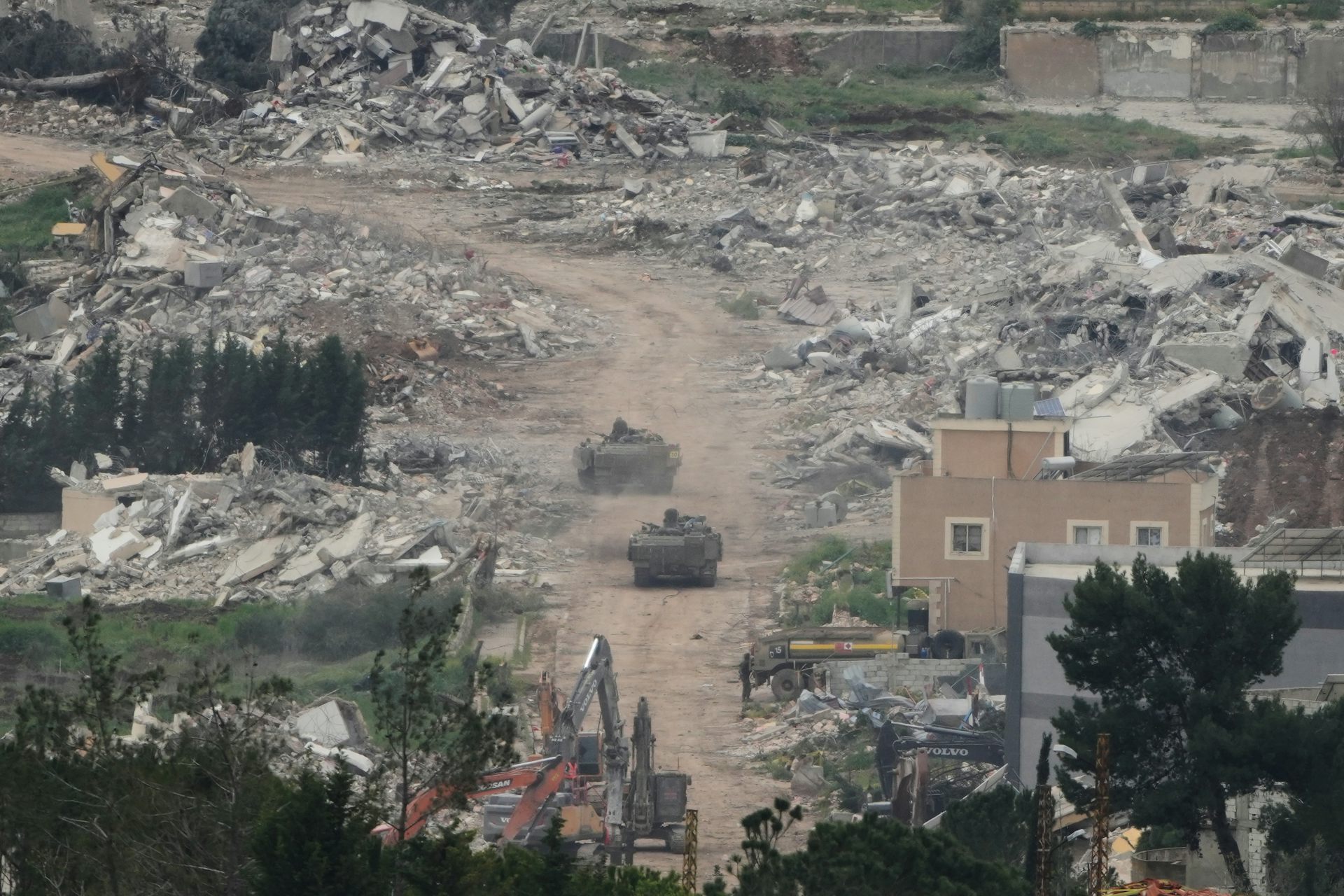
Israel e Líbano assinaram um cessar-fogo. Mas este não é um final limpo para uma guerra e a atenção muda rapidamente
Israel and Lebanon have signed a ceasefire. But this isn’t a tidy end to a war and attention moves on quickly
-
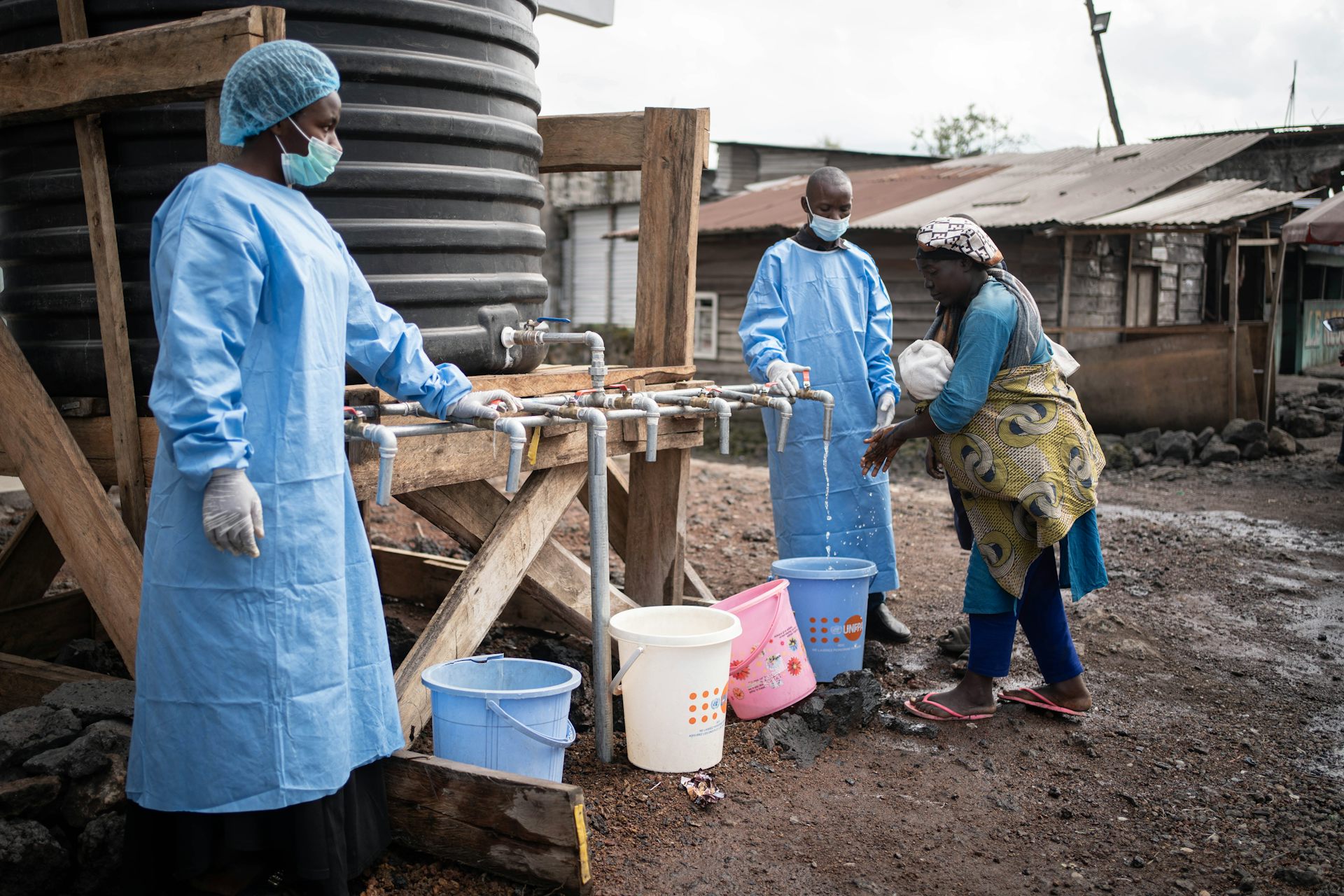
O Ebola pode ter se espalhado para além da África. Como as autoridades de saúde estão respondendo?
Ebola may have spread beyond Africa. How are health authorities responding?