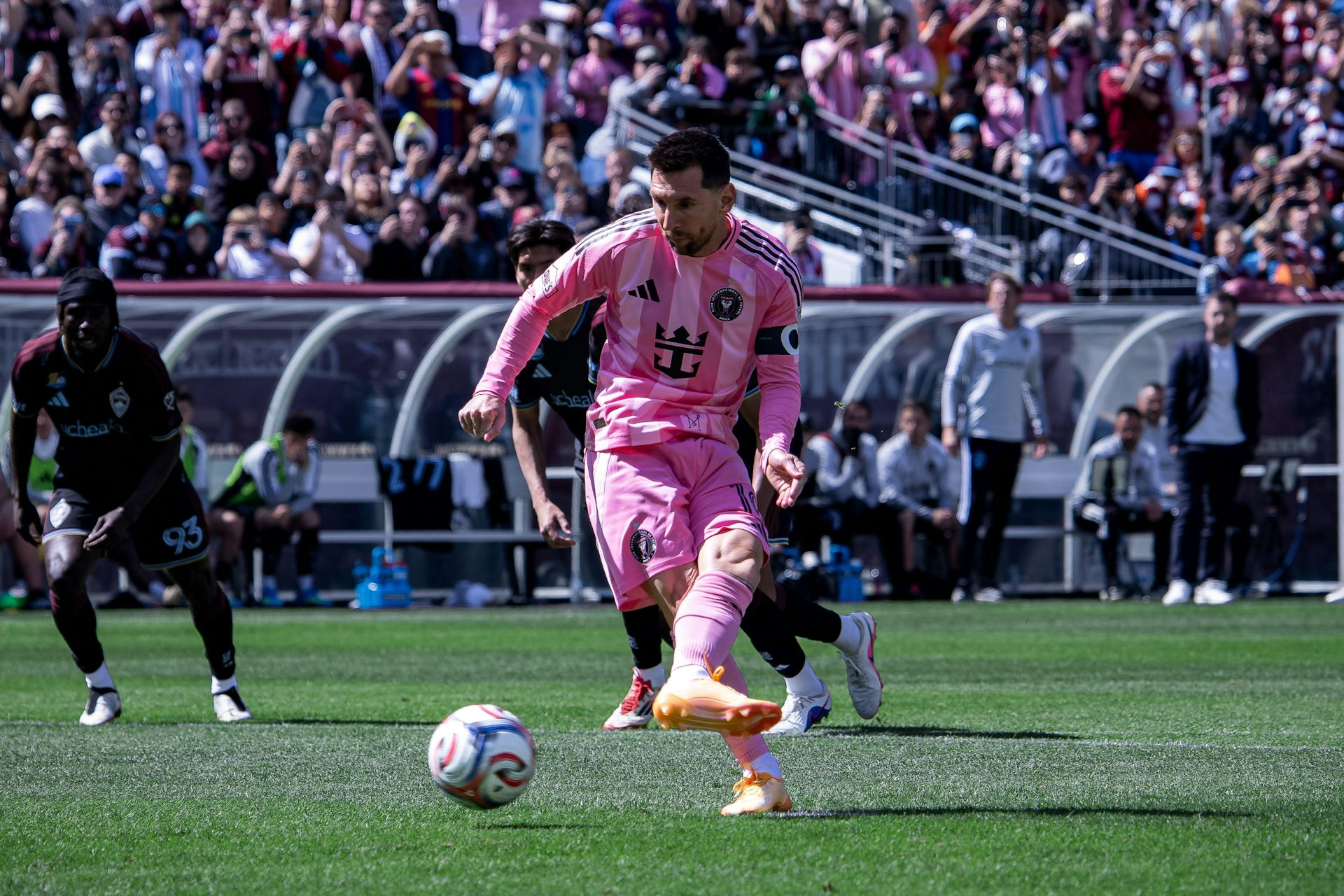
Como os EUA finalmente se apaixonaram por futebol
How the US finally fell in love with soccer
Listen to football historian John Sloop trace the history of soccer in the US on The Conversation Weekly podcast.
Ouça o historiador do futebol John Sloop traçar a história do futebol nos EUA no podcast The Conversation Weekly.
When Roberto Baggio missed a penalty in the 1994 Fifa World Cup final at the Rose Bowl in Pasadena, California, more than 94,000 people were there to watch Italian heartbreak and Brazilian ecstasy.
Quando Roberto Baggio errou um pênalti na final da Copa do Mundo FIFA de 1994 no Rose Bowl em Pasadena, Califórnia, mais de 94.000 pessoas estavam lá para assistir ao coração partido italiano e ao êxtase brasileiro.
To this day, no other World Cup has been as well attended as the 1994 tournament. Tickets were cheap and abundant, and despite the relatively low profile of the game in the US compared to sports like baseball or basketball, people went along to see what it was all about.
Até hoje, nenhuma outra Copa do Mundo teve um público tão grande quanto o torneio de 1994. Os ingressos eram baratos e abundantes, e apesar do perfil relativamente baixo do jogo nos EUA em comparação com esportes como beisebol ou basquete, as pessoas foram ver do que se tratava.
Now, three decades later, as the 2026 World Cup returns to North America with games across Mexico, Canada and the US, soccer has grown a much larger and more dedicated fan base in America.
Agora, três décadas depois, com a Copa do Mundo de 2026 retornando à América do Norte com jogos no México, Canadá e EUA, o futebol cresceu uma base de fãs muito maior e mais dedicada na América.
In this episode of The Conversation Weekly podcast, we speak to John Sloop, a professor of communication studies at Vanderbilt University in Nashville, Tennessee, and historian of soccer and its fans in the United States, about what’s changed for the men’s game in the US and whether the popularity has staying power.
Neste episódio do podcast The Conversation Weekly, conversamos com John Sloop, professor de estudos de comunicação na Vanderbilt University em Nashville, Tennessee, e historiador do futebol e de seus fãs nos Estados Unidos, sobre o que mudou para o jogo masculino nos EUA e se a popularidade tem permanência.
From Pelé to Messi
De Pelé a Messi
Part of the deal for Fifa choosing the US to host the 1994 World Cup was for the country to set up is own professional soccer league, Major League Soccer, which is now home to global football stars including Argentina’s Lionel Messi and Uruguay’s Luis Suárez.
Parte do acordo para a Fifa escolher os EUA como sede da Copa do Mundo de 1994 foi que o país estabelecesse sua própria liga profissional de futebol, Major League Soccer, que hoje é lar de estrelas globais do futebol, incluindo Lionel Messi, do Argentina, e Luis Suárez, do Uruguai.
But it wasn’t the first American professional league. In the 1960s, investors looking around for a new venture launched the North American Soccer League, which ran from 1968 to 1984. It originally struggled to get off the ground, but then in 1975, the New York Cosmos managed to lure Brazilian great Pelé out of retirement, reportedly for US$4 million. Other players followed, including Germany’s Franz Beckenbauer, Dutchman Johan Cruyff and England’s Bobby Moore.
Mas não foi a primeira liga profissional americana. Na década de 1960, investidores procurando um novo empreendimento lançaram a North American Soccer League, que funcionou de 1968 a 1984. Originalmente, teve dificuldades para se estabelecer, mas então, em 1975, o New York Cosmos conseguiu atrair o grande brasileiro Pelé do retiro, supostamente por US$ 4 milhões. Outros jogadores seguiram, incluindo Franz Beckenbauer, da Alemanha; Johan Cruyff, holandês; e Bobby Moore, da Inglaterra.
“The league takes off in a very flashy way, starts getting very large viewership, not necessarily on TV, but they were selling out stadiums of 60-something thousand when Pelé shows up,” explains Sloop. But eventually the teams went bankrupt and the NASL began to fall apart. Sloop says that collapse was “somewhat heartbreaking for real international soccer fans”, who began to ask what kind of model could work in the US.
“A liga decola de uma maneira muito chamativa, começa a ter um público enorme, não necessariamente na TV, mas eles lotavam estádios com mais de 60 mil pessoas quando Pelé apareceu”, explica Sloop. Mas eventualmente os times faliram e a NASL começou a desmoronar. Sloop diz que o colapso foi “um pouco doloroso para os verdadeiros fãs internacionais de futebol”, que começaram a perguntar que tipo de modelo poderia funcionar nos EUA.
Listen to Sloop on The Conversation Weekly podcast to understand how the launch of MLS, the success of the US women’s team, and the greater availability of soccer on television, has changed views of the game in the US.
Ouça Sloop no podcast The Conversation Weekly para entender como o lançamento da MLS, o sucesso da seleção feminina dos EUA e a maior disponibilidade de futebol na televisão mudaram as visões sobre o esporte nos EUA.
This episode of The Conversation Weekly was written and produced by Gemma Ware, Katie Flood and Mend Mariwany. Mixing by Eleanor Brezzi and theme music by Neeta Sarl.
Este episódio do The Conversation Weekly foi escrito e produzido por Gemma Ware, Katie Flood e Mend Mariwany. Edição por Eleanor Brezzi e música tema por Neeta Sarl.
Newsclips in this episode from FIFA, NASL 1968-1984 Soccer History, AP Archive, TODAY and Olympics.
Clipes de notícias neste episódio da FIFA, NASL 1968-1984 História do Futebol, AP Archive, TODAY e Olimpíadas.
Listen to The Conversation Weekly via any of the apps listed above, download it directly via our RSS feed or find out how else to listen here. A transcript of this episode is available via the Apple Podcasts or Spotify apps.
Ouça The Conversation Weekly por qualquer um dos aplicativos listados acima, baixe diretamente pelo nosso feed RSS ou descubra outras formas de ouvir aqui. Uma transcrição deste episódio está disponível nos aplicativos Apple Podcasts ou Spotify.
John M Sloop does not work for, consult, own shares in or receive funding from any company or organisation that would benefit from this article, and has disclosed no relevant affiliations beyond their academic appointment.
John M Sloop não trabalha para, consulta, possui ações em ou recebe financiamento de nenhuma empresa ou organização que se beneficiaria deste artigo, e não divulgou afiliações relevantes além de seu cargo acadêmico.
Read more
-
Messi é velho, baixo e lento. Como ele ainda está dominando na Copa do Mundo?
Messi is old, short and slow. How is he still dominating at the World Cup?
-

Rocha vulcânica flutuante está perturbando a vida em Papua Nova Guiné – e o problema vai durar muito tempo
Floating volcanic rock is disrupting life in Papua New Guinea – and the problem will last a long time