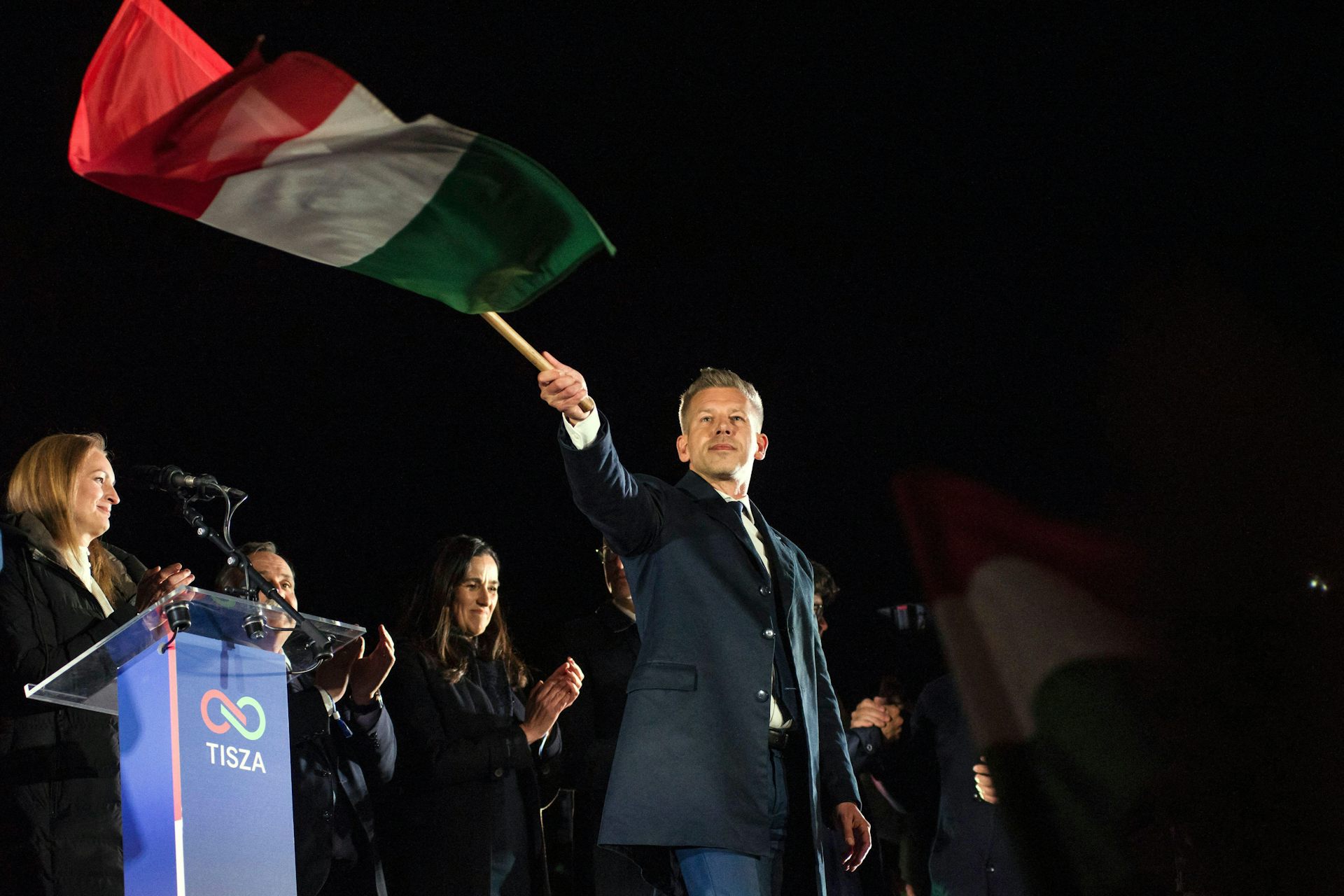
Siapakah Péter Magyar dari Hungaria dan bagaimana ia menggulingkan demokrasi illiberal Viktor Orbán
Who is Hungary’s Péter Magyar and how he overturned Viktor Orbán’s illiberal democracy
Hungarian political scientist Zsolt Enyedi speaks to The Conversation Weekly podcast about how Viktor Orbán lost power to Péter Magyar and what the result means for the European Union.
Ilmuwan politik Hungaria, Zsolt Enyedi, berbicara di podcast The Conversation Weekly tentang bagaimana Viktor Orbán kehilangan kekuasaan kepada Péter Magyar dan apa artinya hasil itu bagi Uni Eropa.
The day after Péter Magyar ousted Victor Orbán as prime minister of Hungary, he gave a combative press conference. He spoke in Hungarian, but was talking to the world – and particularly to Europe.
Sehari setelah Péter Magyar menggulingkan Victor Orbán sebagai perdana menteri Hungaria, dia memberikan konferensi pers yang konfrontatif. Dia berbicara dalam bahasa Hungaria, tetapi berbicara kepada dunia – dan khususnya kepada Eropa.
“We will do everything to restore the rule of law, plural democracy, and the system of checks and balances,” Magyar said, calling his election a historic moment for Hungary.
“Kami akan melakukan segalanya untuk memulihkan supremasi hukum, demokrasi pluralistik, dan sistem checks and balances,” kata Magyar, menyebut pemilihannya sebagai momen bersejarah bagi Hungaria.
During 16 years in power, Orbán and his Fidesz party managed to take control of many of Hungary’s levers of power, from the judiciary to state-owned media, and weakened the institutions that could keep them accountable. Orbán liked to call it an illiberal democracy.
Sehari setelah Péter Magyar menggulingkan Victor Orbán sebagai perdana menteri Hungaria, dia mengadakan konferensi pers yang konfrontatif. Dia berbicara dalam bahasa Hungaria, tetapi berbicara kepada dunia – dan khususnya kepada Eropa.
Magyar also urged the Hungarian president to move swiftly to install him as prime minister, before any more damage could be done by Orbán’s loyalists. “We know that people have been destroying documents, just like in the old communist age, that shredders are working full time,” he said.
“Kami akan melakukan segalanya untuk memulihkan supremasi hukum, demokrasi pluralistik, dan sistem checks and balances,” kata Magyar, menyebut pemilihannya sebagai momen bersejarah bagi Hungaria.
In this episode of The Conversation Weekly podcast, Zsolt Enyedi, professor of political science at the Central European University and an expert in Hungarian politics, explains how Magyar, a former member of Fidesz, manage to beat Orbán, his former boss.
Selama 16 tahun berkuasa, Orbán dan partai Fidesz-nya berhasil mengambil kendali atas banyak pengungkit kekuasaan Hungaria, mulai dari yudikatif hingga media milik negara, dan melemahkan institusi-institusi yang dapat meminta pertanggungjawaban mereka. Orbán suka menyebutnya sebagai demokrasi illiberal.
Magyar’s moment
Magyar juga mendesak presiden Hungaria untuk bertindak cepat menunjuknya sebagai perdana menteri, sebelum kerusakan lebih lanjut dapat ditimbulkan oleh loyalis Orbán. “Kami tahu bahwa orang-orang telah menghancurkan dokumen, seperti di zaman komunis dulu, bahwa mesin penghancur kertas bekerja sepanjang waktu,” katanya.
Enyedi describes Magyar as a centre-right figure with some nationalistic attributes, who is a bit eurosceptic with “some reservations against progressive way of speaking”. However, Enyedi says Magyar changed since first entering politics in 2024, when he gave an explosive interview criticising Orbán’s regime.
Dalam episode The Conversation Weekly podcast ini, Zsolt Enyedi, profesor ilmu politik di Central European University dan pakar politik Hungaria, menjelaskan bagaimana Magyar, mantan anggota Fidesz, berhasil mengalahkan Orbán, mantan atasannya.
Back then he was “clearly someone who reproduced many of the ideological panels of this Orbánist regime, but he was very critical of the corruption that exists in the regime”. He was likened to a clean, young version of Orbán himself.
Momen Magyar
Since then, Magyar has spent two years travelling around Hungary speaking to people across the country on the campaign trail. “He started to understand better the enormous harm done by the Fidesz regime, and he also became more pro-European in his rhetoric, embracing the democratisation agenda,” says Enyedi.
Enyedi menggambarkan Magyar sebagai tokoh sayap kanan tengah dengan beberapa atribut nasionalistik, yang sedikit euroskeptis dengan “beberapa keberatan terhadap cara bicara progresif”. Namun, Enyedi mengatakan Magyar telah berubah sejak pertama kali terjun ke politik pada tahun 2024, ketika ia memberikan wawancara eksplosif yang mengkritik rezim Orbán.
Magyar is now able to “provide the lowest common denominator for all pro-democratic forces,” says Enyedi. “In that sense, he’s more than simply representative of one political ideological current.”
Saat itu ia “jelas adalah seseorang yang mereproduksi banyak panel ideologis dari rezim Orbánis ini, tetapi ia sangat kritis terhadap korupsi yang ada dalam rezim tersebut”. Ia disamakan dengan versi Orbán sendiri yang bersih dan muda.
As European leaders breathe a sign of relief at Magyar’s victory, Enyedi says although Europe has not gained an “enthusiastic partner”, he will be a much more constructive one. “Partly out of conviction, partly because he needs EU money and he needs that money soon. So he cannot play games. He has to make a deal with the EU leadership.”
Sejak saat itu, Magyar telah menghabiskan dua tahun berkeliling Hongaria berbicara dengan masyarakat di seluruh negeri dalam jalur kampanye. “Dia mulai memahami dengan lebih baik kerugian besar yang ditimbulkan oleh rezim Fidesz, dan ia juga menjadi lebih pro-Eropa dalam retorikanya, merangkul agenda demokratisasi,” kata Enyedi.
Listen to the interview with Zsolt Enyedi on The Conversation Weekly podcast. This episode was written and produced by Gemma Ware, Mend Mariwany and Katie Flood. Mixing by Eleanor Brezzi and theme music by Neeta Sarl.
Magyar kini mampu “menyediakan titik temu paling umum untuk semua kekuatan pro-demokrasi,” kata Enyedi. “Dalam hal itu, dia lebih dari sekadar perwakilan dari satu arus ideologi politik.”
Newsclips in this episode from CNN, CRM News, euro news and Partizán.
Saat para pemimpin Eropa menghela napas lega atas kemenangan Magyar, Enyedi mengatakan meskipun Eropa belum mendapatkan “mitra yang antusias”, ia akan menjadi mitra yang jauh lebih konstruktif. “Sebagian karena keyakinan, sebagian karena dia membutuhkan uang Uni Eropa dan dia membutuhkan uang itu segera. Jadi dia tidak bisa bermain-main. Dia harus membuat kesepakatan dengan kepemimpinan UE.”
Listen to The Conversation Weekly via any of the apps listed above, download it directly via our RSS feed or find out how else to listen here. A transcript of this episode is available via the Apple Podcasts or Spotify apps.
Dengarkan wawancara dengan Zsolt Enyedi di podcast The Conversation Weekly. Episode ini ditulis dan diproduksi oleh Gemma Ware, Mend Mariwany, dan Katie Flood. Mixing oleh Eleanor Brezzi dan musik tema oleh Neeta Sarl.
Zsolt Enyedi has received EU Horizon funding.
Klip berita dalam episode ini dari CNN, CRM News, euro news, dan Partizán.
Listen to The Conversation Weekly via any of the apps listed above, download it directly via our RSS feed or find out how else to listen here. A transcript of this episode is available via the Apple Podcasts or Spotify apps.
Dengarkan The Conversation Weekly melalui aplikasi apa pun yang terdaftar di atas, unduh langsung melalui RSS feed kami, atau cari tahu cara mendengarkan dengan cara lain di sini. Transkrip episode ini tersedia melalui aplikasi Apple Podcasts atau Spotify.
Zsolt Enyedi has received EU Horizon funding.
Zsolt Enyedi telah menerima pendanaan Horizon UE.
Read more
-
Mengapa proyek pembangunan yang terkait dengan menantu Donald Trump mengguncang Albania
Why a development project linked to Donald Trump’s son-in-law has rocked Albania
-

Bagaimana Taiwan menyeimbangkan antara visi Amerika dan Tiongkok tentang dominasi energi
How Taiwan is balancing between American and Chinese visions of energy dominance