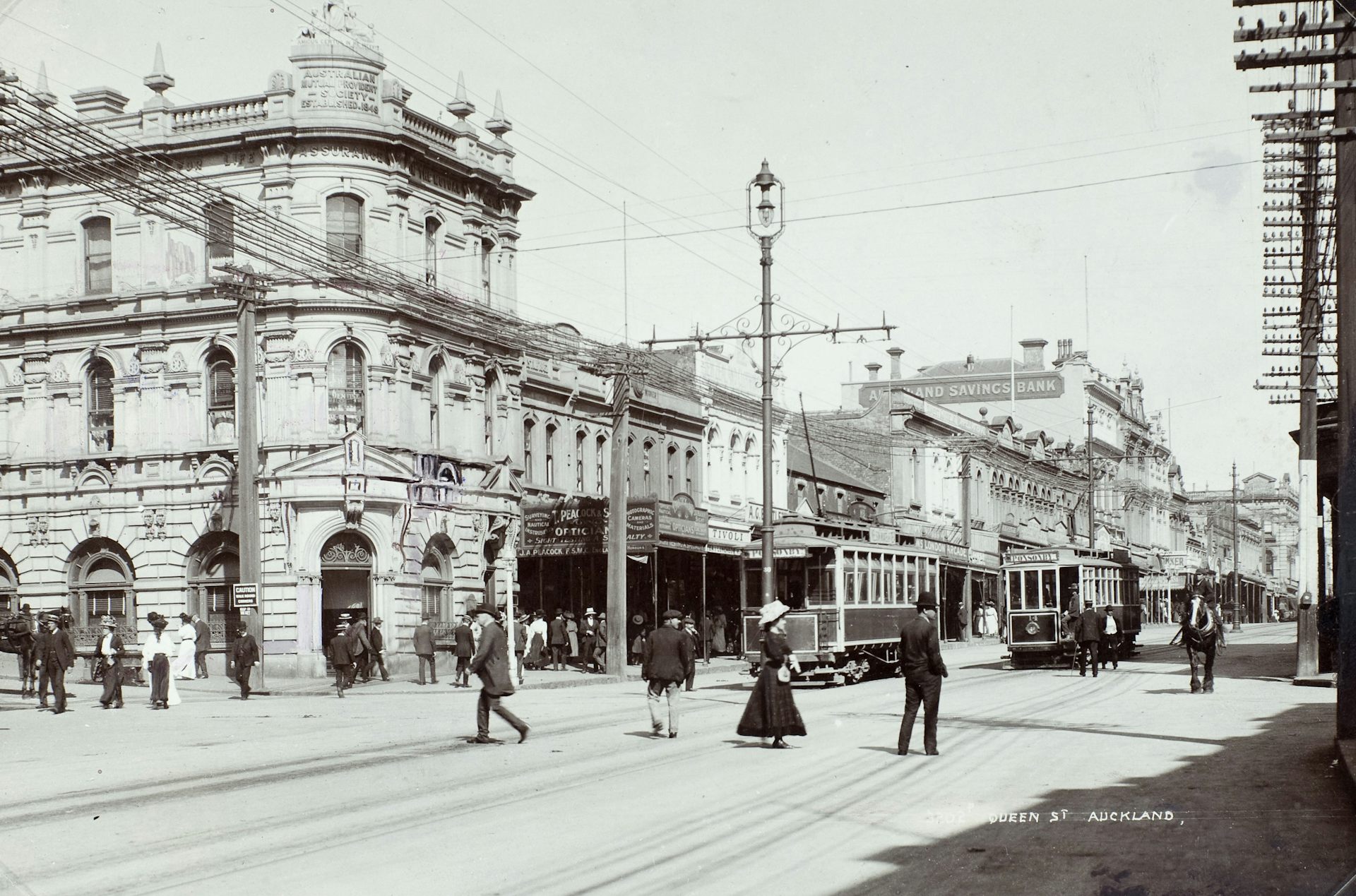
Apakah Auckland adalah tempat lahir aksen Kiwi? Teori lama mendapatkan perhatian baru
Was Auckland the cradle of the Kiwi accent? An old theory gets a new hearing
A rediscovered academic paper from 1921 suggests New Zealand’s classic ‘fush and chups’ vowel sounds may have emerged fastest in Auckland’s colonial melting pot.
Sebuah makalah akademis yang ditemukan kembali dari tahun 1921 menunjukkan bahwa bunyi vokal klasik Selandia Baru ‘fush and chups’ mungkin muncul paling cepat di pusat percampuran kolonial Auckland.
If you’re a New Zealander who has spent time overseas, you’ve probably had someone comment on the way you speak: that swallowed e and flat i, the whole fush and chups thing … the rest of the world thinks we pronounce our vowels a bit funny.
Jika Anda adalah orang Selandia Baru yang pernah menghabiskan waktu di luar negeri, Anda mungkin pernah mendengar seseorang berkomentar tentang cara Anda berbicara: bunyi ‘e’ yang tertelan dan ‘i’ yang datar, seluruh hal ‘fush’ dan ‘chups’ itu… seluruh dunia berpikir kita mengucapkan vokal kita agak aneh.
Even as a researcher of the Kiwi accent, it took me a while to wrap my head around the fact that “here” and “hair” aren’t supposed to rhyme.
Bahkan sebagai peneliti aksen Kiwi, butuh waktu bagi saya untuk memahami fakta bahwa “here” dan “hair” seharusnya tidak berima.
So where did this local form of spoken English originate, and how did we come to pronounce our vowels in such a unique way?
Jadi, dari mana asal bentuk bahasa Inggris lisan lokal ini, dan bagaimana kami sampai mengucapkan vokal kami dengan cara yang begitu unik?
It’s clearly a question many people have asked, given the interest in my public talk on the subject in Auckland this week, part of a project using oral history recordings of Aucklanders born around the turn of the 20th century.
Ini jelas merupakan pertanyaan yang diajukan banyak orang, mengingat minat pada ceramah publik saya tentang subjek ini di Auckland minggu ini, sebagai bagian dari proyek yang menggunakan rekaman sejarah lisan penduduk Auckland yang lahir sekitar pergantian abad ke-20.
These recordings, now housed in the Auckland Libraries sound archives, let us listen back in time. When we compare them with modern recordings, we can trace how our accent has developed across generations.
Rekaman-rekaman ini, yang kini disimpan di arsip suara Auckland Libraries, memungkinkan kita untuk mendengarkan kembali ke masa lalu. Ketika kita membandingkannya dengan rekaman modern, kita dapat melacak bagaimana aksen kita telah berkembang lintas generasi.
This means going back to when large numbers of English-speaking settlers arrived in Aotearoa New Zealand from the mid-19th century. Because they came from different parts of Britain – largely the South of England, Scotland and Ireland – they didn’t all speak the same kind of English and brought their regional accents with them.
Ini berarti kembali ke masa ketika sejumlah besar pemukim berbahasa Inggris tiba di Aotearoa Selandia Baru sejak pertengahan abad ke-19. Karena mereka berasal dari berbagai bagian Inggris – terutama Inggris Selatan, Skotlandia, dan Irlandia – mereka tidak semuanya berbicara bahasa Inggris jenis yang sama dan membawa aksen regional mereka.
Despite the protests of educational authorities and elocution teachers of the time, what followed wasn’t the adoption of a single “correct” way of speaking the “Queen’s English”.
Meskipun ada protes dari otoritas pendidikan dan guru elokusi pada masa itu, yang terjadi bukanlah adopsi satu cara bicara “benar” dari “Queen’s English.”
Instead, these various accents came into contact, mixed together and gradually levelled out to something new – not quite British, not quite anything else. New Zealand linguists have known this part of the story for a while. What we don’t know are some of the specifics.
Sebaliknya, berbagai aksen ini bersentuhan, bercampur, dan secara bertahap merata menjadi sesuatu yang baru – tidak sepenuhnya Inggris, tidak sepenuhnya apa pun. Linguis Selandia Baru telah mengetahui bagian cerita ini sejak lama. Yang belum kita ketahui adalah beberapa detailnya.
Why, for example, does our accent have relatively little regional variation (other than Southlanders and their rolled Rs) , despite many early centres such as Christchurch and Dunedin having distinct cultural identities?
Mengapa, misalnya, aksen kita memiliki variasi regional yang relatif sedikit (selain orang Selatan dan bunyi ‘R’ yang digulirkan) , meskipun banyak pusat awal seperti Christchurch dan Dunedin memiliki identitas budaya yang berbeda?
We also don’t know if the accent developed fastest in certain places. Often, accents change quickly in cities and then spread. But so far, most of our historical research comes from recordings of speakers born in small towns.
Kami juga tidak tahu apakah aksen itu berkembang paling cepat di tempat-tempat tertentu. Seringkali, aksen berubah dengan cepat di kota-kota dan kemudian menyebar. Namun, sejauh ini, sebagian besar penelitian sejarah kami berasal dari rekaman pembicara yang lahir di kota-kota kecil.
A former professor of linguistics discusses the origins of the New Zealand accent. RNZ 6.11 MB (download)
Seorang mantan profesor linguistik membahas asal-usul aksen Selandia Baru. RNZ 6.11 MB (unduh)
A rediscovered theory
Teori yang Ditemukan Kembali
This is where a piece of information that was almost lost provided some surprising inspiration.
Di sinilah sepotong informasi yang hampir hilang memberikan inspirasi yang mengejutkan.
In 1921, a professor at Otago University, George Edward Thompson, completed a thesis on the emerging New Zealand accent. This work was only rediscovered in the Hocken Collections by one of our team members in 2022.
Pada tahun 1921, seorang profesor di Universitas Otago, George Edward Thompson, menyelesaikan tesis tentang aksen Selandia Baru yang sedang berkembang. Karya ini baru ditemukan kembali di Hocken Collections oleh salah satu anggota tim kami pada tahun 2022.
Thompson’s work provides one of the earliest and most comprehensive first hand descriptions of how early New Zealanders spoke. One of the things that stood out was a suggestion the accent was developing most strongly in the North Island, particularly in Auckland.
Karya Thompson memberikan salah satu deskripsi langsung paling awal dan paling komprehensif tentang cara penutur Selandia Baru awal berbicara. Salah satu hal yang menonjol adalah saran bahwa aksen tersebut berkembang paling kuat di Pulau Utara, khususnya di Auckland.
This got us thinking, because Auckland’s history looks quite different to many of New Zealand’s early districts.
Ini membuat kami berpikir, karena sejarah Auckland terlihat cukup berbeda dari banyak distrik awal Selandia Baru.
For one, the city has always been comparatively cosmopolitan, with people arriving from all over Britain rather than one dominant region. Secondly, its population grew steadily over time, unlike many other districts which saw booms and stagnation. Both these factors make a good environment for an accent to develop.
Pertama, kota ini selalu bersifat kosmopolitan secara relatif, dengan orang-orang tiba dari seluruh Inggris daripada satu wilayah dominan. Kedua, populasinya tumbuh secara stabil seiring waktu, tidak seperti banyak distrik lain yang mengalami ledakan dan stagnasi. Kedua faktor ini menciptakan lingkungan yang baik bagi perkembangan aksen.
We still need to do the proper technical analysis to test whether Thompson was right, which is where the Auckland Libraries recordings are useful. They come from Aucklanders who would have been teenagers and young adults around the time Thompson was writing.
Kami masih perlu melakukan analisis teknis yang tepat untuk menguji apakah Thompson benar, di sinilah rekaman Perpustakaan Auckland berguna. Rekaman tersebut berasal dari penduduk Auckland yang saat itu mungkin berusia remaja dan dewasa muda sekitar waktu Thompson menulis.
When you listen to these recordings, the voices sound familiar – recognisably New Zealand but not quite how we speak today. Sometimes there’s a slight British or Australian quality, and speakers often shift between pronunciations.
Ketika Anda mendengarkan rekaman ini, suara-suaranya terdengar akrab – dapat dikenali sebagai Selandia Baru tetapi tidak persis seperti cara kita berbicara hari ini. Terkadang ada sedikit kualitas Inggris atau Australia, dan para pembicara sering berpindah antara pengucapan.
But the features of the New Zealand accent we know are all there – maybe more than we expected.
Tetapi ciri-ciri aksen Selandia Baru yang kita ketahui semuanya ada di sana – mungkin lebih dari yang kita harapkan.
Auckland English
Bahasa Inggris Auckland
If our hunch is correct, we may not only solve some mysteries about the accent, but also challenge ideas about how it was formed and who contributed.
Jika firasat kami benar, kami mungkin tidak hanya memecahkan beberapa misteri tentang aksen tersebut, tetapi juga menantang gagasan tentang bagaimana aksen itu terbentuk dan siapa yang berkontribusi.
For example, past research has often treated similarities between the Australian and New Zealand accents as coincidental, and assumed Māori had little influence on vowel pronunciation. This was largely because the research focused on the South Island where contact with Māori and Australia was more limited.
Misalnya, penelitian sebelumnya sering memperlakukan kesamaan antara aksen Australia dan Selandia Baru sebagai kebetulan, dan berasumsi bahwa Māori memiliki sedikit pengaruh pada pengucapan vokal. Hal ini sebagian besar karena penelitian tersebut berfokus pada Pulau Selatan di mana kontak dengan Māori dan Australia lebih terbatas.
But that’s not necessarily true for Auckland, which had close trade connections with both Australia and local Māori from its inception. If Auckland was integral to the formation of our accent, those influences may need to be reconsidered.
Namun, itu tidak selalu benar untuk Auckland, yang memiliki hubungan perdagangan erat dengan Australia dan Māori lokal sejak awal berdirinya. Jika Auckland integral dalam pembentukan aksen kami, pengaruh-pengaruh itu mungkin perlu dipertimbangkan kembali.
Like all accents, New Zealand English continues to evolve, and Auckland is at the forefront of changes to the modern accent. Young Aucklanders are keeping their iconic “fush and chups” vowels, but may have an easier time buying “seven eggs” as they aim to be better understood in an increasingly linguistically diverse city.
Seperti semua aksen, Bahasa Inggris Selandia Baru terus berkembang, dan Auckland berada di garis depan perubahan aksen modern. Kaum muda Auckland mempertahankan vokal ikonik mereka “fush and chups”, tetapi mungkin akan lebih mudah membeli “seven eggs” karena mereka bertujuan agar lebih dipahami di kota yang semakin beragam secara linguistik.
Combined with Thompson’s historical commentary, this raises a big question: how long has Auckland been shaping the way New Zealanders sound? If Thompson was right, it might have been longer than we thought.
Dikombinasikan dengan komentar sejarah Thompson, ini menimbulkan pertanyaan besar: sejak kapan Auckland membentuk cara bicara orang Selandia Baru? Jika Thompson benar, mungkin sudah lebih lama dari yang kita kira.
Dr Brooke Ross works for the University of Auckland. This project is funded by the Marsden Fund Council, managed by Royal Society Te Apārangi.
Dr Brooke Ross bekerja untuk University of Auckland. Proyek ini didanai oleh Marsden Fund Council, yang dikelola oleh Royal Society Te Apārangi.
Read more
-

Misteri besar arkeologi: dunia Amazon kuno terungkap dari langit
Great mysteries of archaeology: an ancient Amazonian world revealed from the sky
-

Akankah harga minyak benar-benar kembali ke ‘normal’?
Will oil prices ever truly go back to ‘normal’?