奥克兰是“基维口音”的发源地吗?一个旧理论获得了新的关注
Was Auckland the cradle of the Kiwi accent? An old theo…
A rediscovered academic paper from 1921 suggests New Zealand’s classic ‘fush and chups’ vowel sounds may have emerged fastest in Auckland’s colonial melting pot.
一篇重新发现的1921年学术论文指出,新西兰经典的“fush and chups”元音发音可能是在奥克兰这个殖民熔炉中最快形成的。
If you’re a New Zealander who has spent time overseas, you’ve probably had someone comment on the way you speak: that swallowed e and flat i, the whole fush and chups thing … the rest of the world thinks we pronounce our vowels a bit funny.
如果你是新西兰人,并且曾在海外生活过,你可能听过别人评论你的口音:那种吞掉的e和平直的i,整个“fush and chups”的说法……全世界的人都觉得我们发元音有点奇怪。
Even as a researcher of the Kiwi accent, it took me a while to wrap my head around the fact that “here” and “hair” aren’t supposed to rhyme.
即使作为研究新西兰口音的学者,我花了一段时间才理解“here”和“hair”不应该押韵这个事实。
So where did this local form of spoken English originate, and how did we come to pronounce our vowels in such a unique way?
那么,这种本地的英语口音是从哪里起源的?我们又是如何将元音发音得如此独特的呢?
It’s clearly a question many people have asked, given the interest in my public talk on the subject in Auckland this week, part of a project using oral history recordings of Aucklanders born around the turn of the 20th century.
鉴于本周我在奥克兰就此主题发表了公开演讲,该演讲是利用记录了20世纪初奥克兰人口述历史录音项目的一部分,这显然是一个许多人提出的问题。
These recordings, now housed in the Auckland Libraries sound archives, let us listen back in time. When we compare them with modern recordings, we can trace how our accent has developed across generations.
这些录音现在保存在奥克兰图书馆的声学档案中,让我们得以回溯时间。当我们将其与现代录音进行比较时,就可以追踪到我们的口音是如何代代发展变化的。
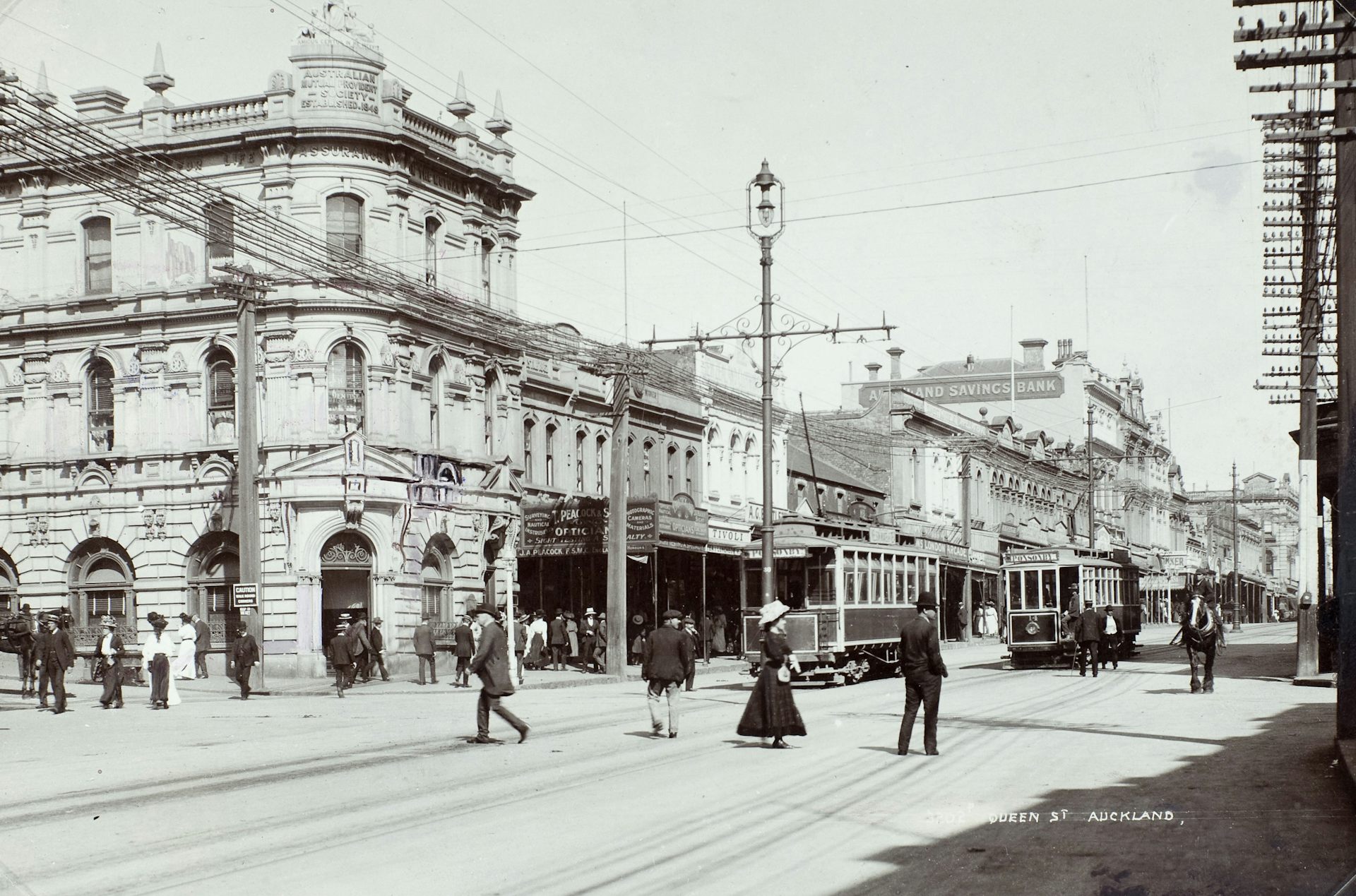
This means going back to when large numbers of English-speaking settlers arrived in Aotearoa New Zealand from the mid-19th century. Because they came from different parts of Britain – largely the South of England, Scotland and Ireland – they didn’t all speak the same kind of English and brought their regional accents with them.
这意味着要追溯到19世纪中叶,大量说英语的定居者抵达奥特亚罗瓦新西兰的时候。因为他们来自英国的不同地区——主要是英格兰南部、苏格兰和爱尔兰——他们说的英语并非都是一种,并带回了各自的地域口音。
Despite the protests of educational authorities and elocution teachers of the time, what followed wasn’t the adoption of a single “correct” way of speaking the “Queen’s English”.
尽管当时教育当局和发音老师提出了反对意见,但随之而来的并非采纳单一的“正确”的“女王英语”发音方式。
Instead, these various accents came into contact, mixed together and gradually levelled out to something new – not quite British, not quite anything else. New Zealand linguists have known this part of the story for a while. What we don’t know are some of the specifics.
相反,这些各种口音相互接触、混合,并逐渐发展成了一种新的东西——既不完全是英式的,也不完全是其他任何东西。新西兰的语言学家早就知道这部分历史。但我们不知道的是一些具体细节。
Why, for example, does our accent have relatively little regional variation (other than Southlanders and their rolled Rs) , despite many early centres such as Christchurch and Dunedin having distinct cultural identities?
例如,为什么我们的口音具有相对较少的地域差异(除了南地人及其卷舌r音),尽管像基督城和但尼丁这样的早期中心拥有独特的文化身份?
We also don’t know if the accent developed fastest in certain places. Often, accents change quickly in cities and then spread. But so far, most of our historical research comes from recordings of speakers born in small towns.
我们也不知道这种口音是否在某些地方发展得最快。口音通常在城市里快速变化,然后扩散。但到目前为止,我们的大部分历史研究都来自记录了在小城镇出生的人的讲话。
A former professor of linguistics discusses the origins of the New Zealand accent. RNZ 6.11 MB (download)
一位前语言学教授讨论了新西兰口音的起源。RNZ 6.11 MB(下载)
A rediscovered theory
一项重现的理论
This is where a piece of information that was almost lost provided some surprising inspiration.
正是这样一份几乎失传的信息,提供了令人惊喜的灵感。
In 1921, a professor at Otago University, George Edward Thompson, completed a thesis on the emerging New Zealand accent. This work was only rediscovered in the Hocken Collections by one of our team members in 2022.
1921年,奥塔哥大学的一位教授乔治·爱德华·汤普森(George Edward Thompson)完成了一篇关于新兴新西兰口音的论文。这项工作直到2022年才被我们团队的一名成员在霍肯馆藏(Hocken Collections)中重新发现。
Thompson’s work provides one of the earliest and most comprehensive first hand descriptions of how early New Zealanders spoke. One of the things that stood out was a suggestion the accent was developing most strongly in the North Island, particularly in Auckland.
汤普森的作品提供了最早、最全面、第一手的描述之一,记录了早期新西兰人是如何说话的。其中一个引人注目之处是,他提出这种口音在北岛,特别是在奥克兰,发展得最为强烈。
This got us thinking, because Auckland’s history looks quite different to many of New Zealand’s early districts.
这让我们开始思考,因为奥克兰的历史与新西兰许多早期地区的情况看起来相当不同。
For one, the city has always been comparatively cosmopolitan, with people arriving from all over Britain rather than one dominant region. Secondly, its population grew steadily over time, unlike many other districts which saw booms and stagnation. Both these factors make a good environment for an accent to develop.
首先,这座城市一直具有相对的国际化特征,人们来自英国各地,而非某个单一的主导地区。其次,它的人口随着时间稳步增长,不像许多其他地区经历过繁荣和停滞。这两个因素都为口音的发展创造了良好的环境。
We still need to do the proper technical analysis to test whether Thompson was right, which is where the Auckland Libraries recordings are useful. They come from Aucklanders who would have been teenagers and young adults around the time Thompson was writing.
我们仍然需要进行适当的技术分析来检验汤普森的说法是否正确,而奥克兰图书馆的录音资料就为此提供了帮助。这些录音来自那些在汤普森撰写论文时,处于青少年和年轻成年阶段的奥克兰人。
When you listen to these recordings, the voices sound familiar – recognisably New Zealand but not quite how we speak today. Sometimes there’s a slight British or Australian quality, and speakers often shift between pronunciations.
当你收听这些录音时,这些声音听起来很熟悉——可以辨认出是新西兰的口音,但与我们今天的发音略有不同。有时会带有一点英国或澳大利亚的腔调,说话者也经常在不同发音之间切换。
But the features of the New Zealand accent we know are all there – maybe more than we expected.
但我们所知的这些新西兰口音的特征都存在于其中——甚至可能比我们预期的更多。
Auckland English
奥克兰英语
If our hunch is correct, we may not only solve some mysteries about the accent, but also challenge ideas about how it was formed and who contributed.
如果我们的直觉是正确的,我们不仅可能会解开关于这种口音的一些谜团,还可能挑战关于其形成方式和贡献者的现有观点。
For example, past research has often treated similarities between the Australian and New Zealand accents as coincidental, and assumed Māori had little influence on vowel pronunciation. This was largely because the research focused on the South Island where contact with Māori and Australia was more limited.
例如,过去的研究经常将澳大利亚和新西兰口音之间的相似性视为巧合,并假设毛利语对元音发音影响甚微。这主要是因为研究集中在南岛,而南岛与毛利人和澳大利亚的接触相对有限。
But that’s not necessarily true for Auckland, which had close trade connections with both Australia and local Māori from its inception. If Auckland was integral to the formation of our accent, those influences may need to be reconsidered.
但对于奥克兰来说,情况并非如此,自其创立之初,它就与澳大利亚和当地毛利人有着密切的贸易联系。如果奥克兰对我们口音的形成至关重要,那么这些影响可能需要重新考虑。
Like all accents, New Zealand English continues to evolve, and Auckland is at the forefront of changes to the modern accent. Young Aucklanders are keeping their iconic “fush and chups” vowels, but may have an easier time buying “seven eggs” as they aim to be better understood in an increasingly linguistically diverse city.
与所有口音一样,新西兰英语仍在不断发展,而奥克兰正处于现代口音变化的前沿。年轻的奥克兰人保留着标志性的“fush and chups”元音,但随着他们在一个语言日益多元化的城市中力求被更好地理解,购买“seven eggs”时可能会更容易。
Combined with Thompson’s historical commentary, this raises a big question: how long has Auckland been shaping the way New Zealanders sound? If Thompson was right, it might have been longer than we thought.
结合汤普森的历史评论,这提出了一个大问题:奥克兰塑造新西兰人发音的方式已经持续了多久?如果汤普森说的是对的,那可能比我们想象的更久。
Dr Brooke Ross works for the University of Auckland. This project is funded by the Marsden Fund Council, managed by Royal Society Te Apārangi.
布鲁克·罗斯博士在奥克兰大学工作。本项目由马斯登基金理事会资助,并由皇家学会Te Apārangi管理。