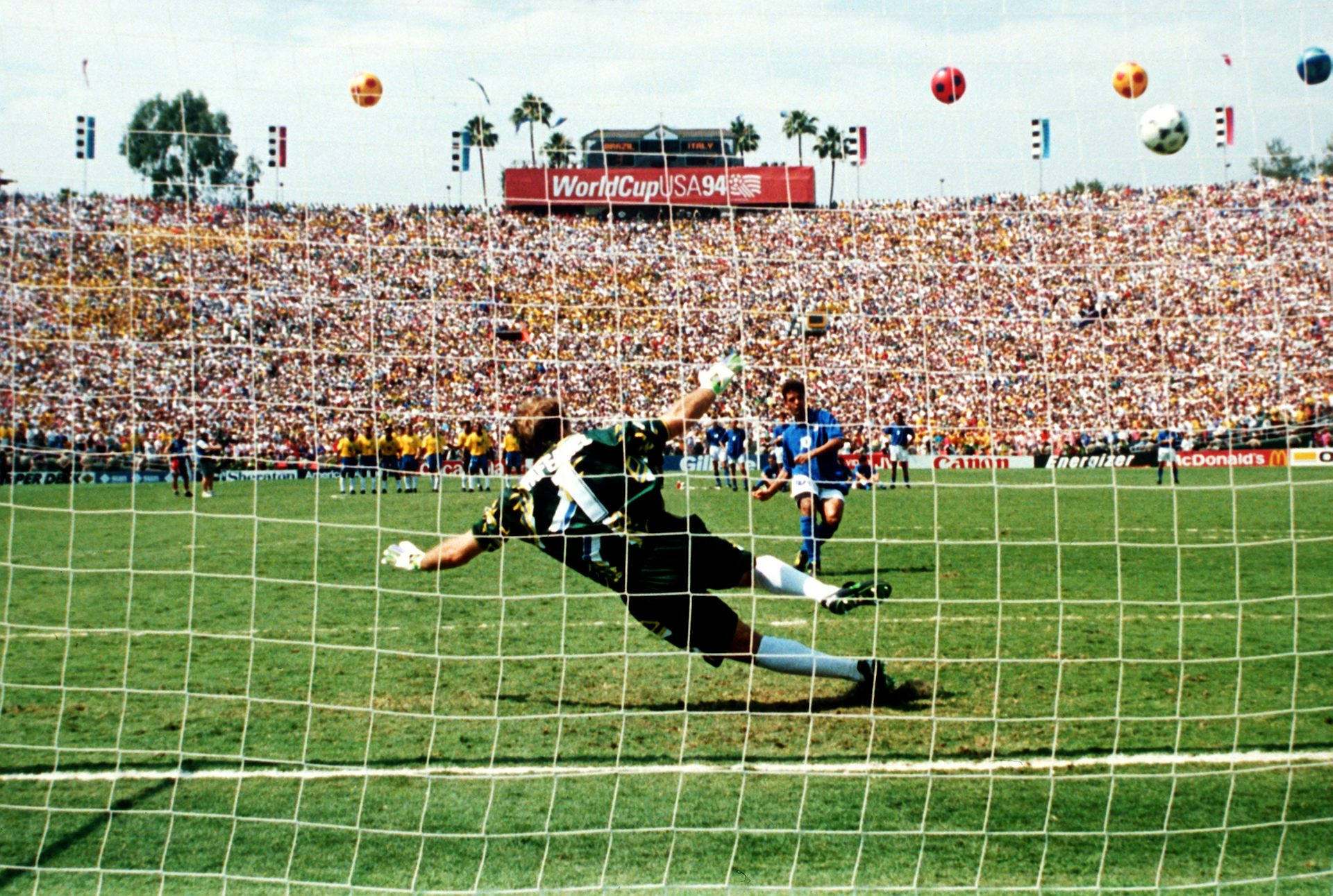
La Copa Mundial de 1994 ayudó a rescatar ‘el hermoso juego’ de la mediocridad. Al regresar a EE. UU., espera más de esa belleza.
The 1994 World Cup helped rescue ‘the beautiful game’ from mediocrity. On its return to the US, expect more of that beauty
Global soccer was in the doldrums in the early 1990s – with poor ethics and boring defensive tactics. Then FIFA set about changing the game.
El fútbol mundial estaba en un mal momento a principios de los años 90, con poca ética y tácticas defensivas aburridas. Entonces, la FIFA se dedicó a cambiar el juego.
Ahead of the 1994 World Cup – the first staged in the United States – players were asked to do something they never had before: sign a fair play declaration. The document, in which the soccer stars of the day pledged to respect the rules and opponents, was part of a plan by governing body FIFA to restore soccer’s reputation as “the beautiful game.” And expectations ran high before kickoff.
Antes de la Copa Mundial de 1994 – la primera celebrada en Estados Unidos – se pidió a los jugadores que hicieran algo que nunca antes habían hecho: firmar una declaración de juego limpio. El documento, en el que las estrellas del fútbol del día prometieron respetar las reglas y a los oponentes, fue parte de un plan de la FIFA, el organismo rector, para restaurar la reputación del fútbol como «el hermoso juego». Y las expectativas eran altísimas antes del inicio.
After all, it could not be as bad as the previous edition of the tournament, held in Italy four years earlier. That dour affair left a sour taste in the soccer world. Noting that it had the lowest goals per game in World Cup history, Eduardo Galeano, known as the game’s global poet laureate, wrote that Italia’90 consisted of “boring soccer without a drop of audacity or beauty.”
Después de todo, no podía ser tan malo como la edición anterior del torneo, celebrada en Italia cuatro años antes. Ese evento sombrío dejó un sabor amargo en el mundo del fútbol. Señalando que tuvo el menor número de goles por partido en la historia de la Copa Mundial, Eduardo Galeano, conocido como el poeta laureado del juego, escribió que Italia’90 consistió de «fútbol aburrido sin una gota de audacia ni de belleza.»
The remarks not only referred to the aesthetics of the game – tedious matches devoid of skillful merit that were unpleasing to watch. They also pointed to its ethics – questionable behaviors and strategies that belittled soccer and its practitioners. This was an era in which wasting time, intentional fouling, theatrics and defensive schemes predominated.
Los comentarios no solo se referían a la estética del juego – partidos tediosos desprovistos de mérito hábil que eran desagradables de ver. También señalaban su ética – comportamientos y estrategias cuestionables que restaban valor al fútbol y a sus practicantes. Fue una era en la que predominaban el desperdicio de tiempo, las faltas intencionales, el teatro y los esquemas defensivos.
The state of soccer after Italia’90 required a holistic approach to understanding and improving the game.
El estado del fútbol después de Italia’90 requería un enfoque holístico para comprender y mejorar el juego.
For almost 30 years, I have been studying the ethics and aesthetics of soccer as both a philosopher of sport and an aficionado of the beautiful game. In that time I have seen how thoughtful changes to the rules shaped the game for the better. It has left me hopeful that, borrowing from Galeano, soccer is not “condemned to mediocrity.”
Durante casi 30 años, he estado estudiando la ética y la estética del fútbol como filósofo del deporte y aficionado al hermoso juego. En ese tiempo he visto cómo cambios reflexivos en las reglas moldearon el juego para mejor. Me ha dejado esperanzado en que, tomando prestado de Galeano, el fútbol no está «condenado a la mediocridad.»
FIFA’s response to an ugly tournament
La respuesta de la FIFA a un torneo feo
Reviewing Italia’90, Los Angeles Times sportswriter Grahame Jones urged that something had to be done to increase goal-scoring and put an end to “the cynical, don’t-lose-at-any-cost approach” that dominated the game.
Al revisar Italia’90, el escritor deportivo de Los Angeles Times, Grahame Jones, urgió que era necesario hacer algo para aumentar la cantidad de goles y poner fin al “enfoque cínico de no perder a ningún costo” que dominó el juego.
FIFA was not oblivious to such criticism. This was strikingly evident in the governing body’s technical report of the tournament, which described the final between Argentina and West Germany – an ugly 1-0 victory for the latter – as “a dreadful advertisement for the game of football.”
La FIFA no era ajena a tales críticas. Esto fue notablemente evidente en el informe técnico del organismo rector sobre el torneo, el cual describió la final entre Argentina y Alemania Occidental —una fea victoria de 1-0 para esta última— como “un anuncio terrible del juego de fútbol”.
The report was not wrong. Looking back, the final is marked out by intentional fouling, the first red card in a World Cup final and plenty of simulation, including diving – a ploy players use to deceive referees and get a favorable call. Indeed, the incident resulting in the penalty from which West Germany scored is widely seen as a case of diving. That match illustrated the unimaginative and negative soccer played throughout the tournament.
El informe no se equivocaba. Mirando hacia atrás, la final está marcada por faltas intencionales, la primera tarjeta roja en una final de Mundial y mucha simulación, incluido el caerse (diving) , una táctica que los jugadores usan para engañar a los árbitros y conseguir una decisión favorable. De hecho, el incidente que resultó en el penal de donde Alemania Occidental marcó es ampliamente visto como un caso de simulación. Ese partido ilustró el fútbol poco imaginativo y negativo que se jugó durante todo el torneo.
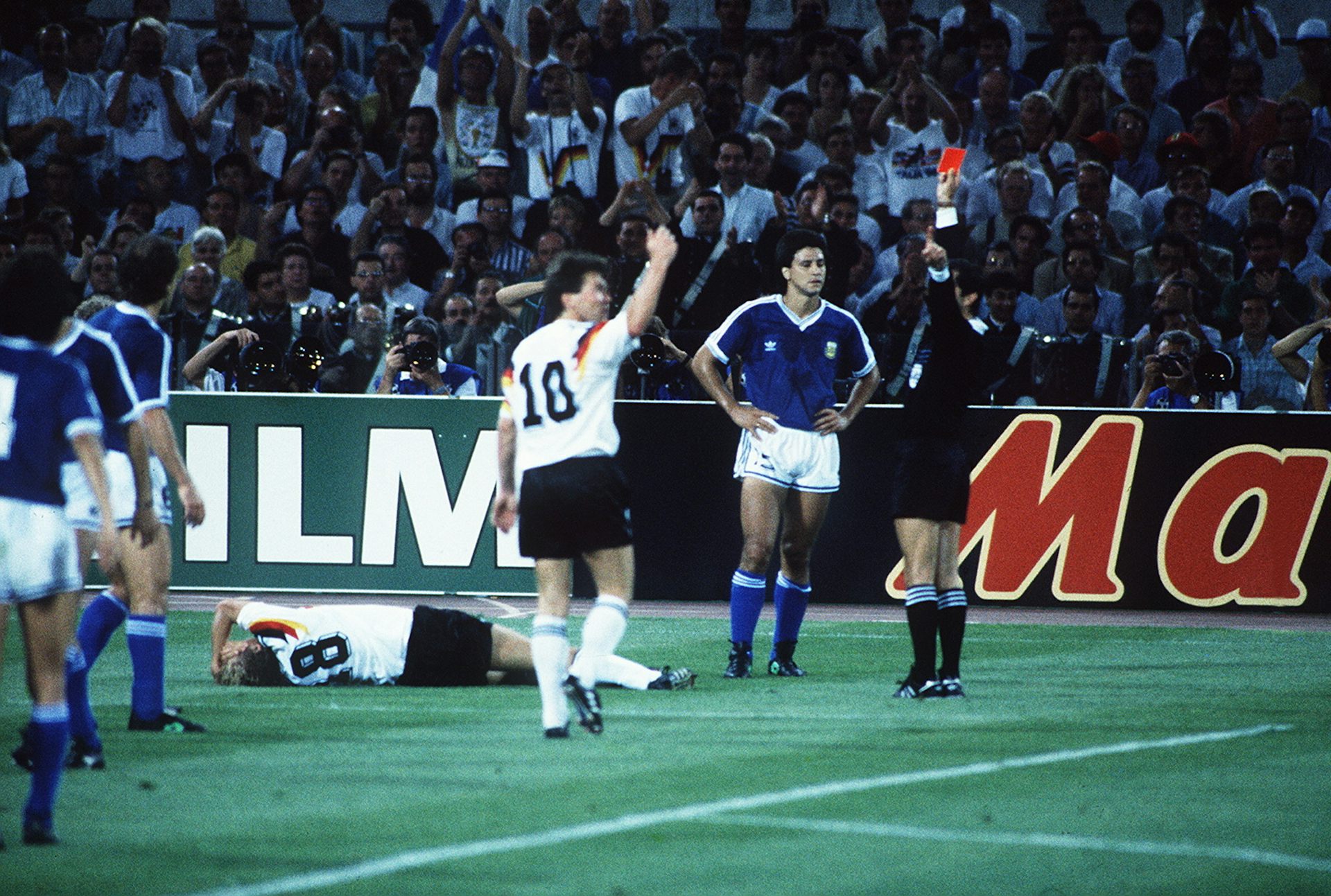
Sepp Blatter, then FIFA’s general secretary and later its reproved president, concluded that “something is wrong with this game.” His main concerns, shared with many within the soccer community, were the time-wasting, intentional fouling and theatrics that were extensive in Italia’90.
Sepp Blatter, entonces secretario general de la FIFA y más tarde su presidente reprobado, concluyó que “algo anda mal con este juego”. Sus principales preocupaciones, compartidas por muchos dentro de la comunidad futbolística, fueron el desperdicio de tiempo, las faltas intencionales y el teatro que fueron extensos en Italia’90.
To address these concerns and improve the game, FIFA established a commission composed mainly of former players and coaches. Largely based on the observations of this group shortly after the 1990 World Cup, FIFA and the International Football Association Board, the body that oversees the game’s rules, decided to implement changes.
Para abordar estas preocupaciones y mejorar el juego, la FIFA estableció una comisión compuesta principalmente por exjugadores y entrenadores. Basándose en gran medida en las observaciones de este grupo poco después del Mundial de 1990, la FIFA y la Junta Internacional de Fútbol (International Football Association Board) , el organismo que supervisa las reglas del juego, decidieron implementar cambios.
One key change was the adoption of a three-point system for wins during the group phase of the 1994 World Cup instead of two. This meant that teams were rewarded more for winning, encouraging imaginative and positive play over unimaginative and negative play aimed at sneaking a win or grinding out a draw.
Un cambio clave fue la adopción de un sistema de tres puntos por victoria durante la fase de grupos del Mundial de 1994 en lugar de dos. Esto significó que los equipos eran recompensados más por ganar, fomentando un juego imaginativo y positivo sobre un juego poco imaginativo y negativo destinado a conseguir una victoria por poco o un empate.
Another change was the refinement of the offside rule to make it less restrictive for forwards trying to score. In addition, referees were instructed to apply the rules regarding fouls and misconducts more strictly – a move meant to protect players and their inventiveness.
Otro cambio fue el perfeccionamiento de la regla del fuera de juego para hacerla menos restrictiva para los delanteros que intentan marcar. Además, se instruyó a los árbitros para que aplicaran las reglas sobre faltas y conductas indebidas de manera más estricta, una medida destinada a proteger a los jugadores y su inventiva.
However, the most momentous change was the introduction of the backpass rule, which would eventually revolutionize the game. This rule prohibited goalkeepers from receiving the ball with their hands if a teammate deliberately kicked it to them. It was planned to curb typical time-wasting that was orchestrated by goalkeepers and defenders and was painful to watch.
Sin embargo, el cambio más trascendental fue la introducción de la regla del pase atrás, que eventualmente revolucionaría el juego. Esta regla prohibía a los porteros recibir el balón con las manos si un compañero de equipo lo pateaba deliberadamente hacia ellos. Se planeó para frenar el típico desperdicio de tiempo orquestado por porteros y defensores, lo cual era doloroso de ver.
As a whole, the aspirations of these changes were to improve the aesthetics of the game, by promoting matches with plenty of forward-looking and creative play that was pleasurable to watch, as well as its ethics, by discouraging and sanctioning behaviors and strategies that disrespected soccer’s defining skills and opponents.
En general, las aspiraciones de estos cambios eran mejorar la estética del juego, promoviendo partidos con mucho juego creativo y con visión de ataque que fuera placentero de ver, así como su ética, desincentivando y sancionando comportamientos y estrategias que faltaban al respeto a las habilidades y a los oponentes definitorios del fútbol.
All four of these changes were in place by the time 24 nations competed in the nine U.S. venues during the 1994 World Cup.
Los cuatro cambios estaban implementados cuando 24 naciones compitieron en los nueve recintos de EE. UU. durante el Mundial de 1994.
So, too, was FIFA’s requirement that players sign its fair play declaration. Although the latter was largely a symbolic gesture intended to emphasize desired behaviors and strategies and minimize skulduggery, the tournament was nonetheless an improved spectacle.
Así también fue el requisito de la FIFA de que los jugadores firmaran su declaración de juego limpio. Aunque esta última fue en gran medida un gesto simbólico destinado a enfatizar los comportamientos y estrategias deseadas y minimizar las trampas, el torneo fue no obstante un espectáculo mejorado.
In its technical report of the tournament, FIFA proclaimed that “USA’94 was much better than Italia’90,” with “more goals, fewer fouls, more attacking play and almost no ugly incidents between players.”
En su informe técnico del torneo, la FIFA proclamó que “EE. UU.’94 fue mucho mejor que Italia’90”, con “más goles, menos faltas, más juego ofensivo y casi ningún incidente feo entre los jugadores”.
While for FIFA it was “most encouraging to see that the new measures … were so successful,” it admitted that the final between Brazil and Italy, won by the former in a penalty kick shootout, “did not live up to expectations,” with “few highlights in terms of pure skills.”
Si bien para la FIFA fue “muy alentador ver que las nuevas medidas… fueron tan exitosas”, admitió que la final entre Brasil e Italia, ganada por el primero en una tanda de penaltis, “no estuvo a la altura de las expectativas”, con “pocos momentos destacados en términos de pura habilidad”.
A mediocre final aside, USA’94 was seen favorably. George Vecsey, reporting for The New York Times, spoke for many when he said, “It was a very good World Cup.”
Aparte de una final mediocre, USA ’94 fue visto favorablemente. George Vecsey, reportando para The New York Times, habló por muchos cuando dijo: «Fue una Copa del Mundo muy buena.»
What to expect in Canada/Mexico/USA’26?
¿Qué esperar en Canadá/México/EE. UU. ’26?
Much has shifted in soccer since USA’94. But the game has definitely benefited from the changes introduced ahead of that tournament and some that came after.
Mucho ha cambiado el fútbol desde el Mundial de EE. UU. del 94. Pero el juego se ha beneficiado definitivamente de los cambios introducidos antes de ese torneo y de algunos que vinieron después.
In 1998, for instance, FIFA introduced the six-second rule, which prohibits goalkeepers from controlling the ball with their hands for more than six seconds. Eventually, new sanctions for actions such as diving along with the use of video assistance for referees were also brought in. Other developments have helped advance the game, from better training methods and medical care to innovative tactics and skill improvement, expanded youth talent identification and development, and data-driven match plans.
En 1998, por ejemplo, la FIFA introdujo la regla de los seis segundos, que prohíbe a los porteros controlar el balón con las manos por más de seis segundos. Finalmente, también se implementaron nuevas sanciones por acciones como el regateo junto con el uso de asistencia de video para los árbitros. Otros desarrollos han ayudado a avanzar al juego, desde mejores métodos de entrenamiento y atención médica hasta tácticas innovadoras y mejora de habilidades, identificación y desarrollo ampliados de talentos juveniles, y planes de partido basados en datos.
Clearly, the level of the game has been elevated. FIFA considered the last World Cup, held in Qatar in 2022, to have “produced arguably some of the most intricate and entertaining technical and tactical football that the World Cup has ever seen,” culminating in “a scintillating game” that many consider as “one of the best FIFA World Cup final matches ever witnessed.”
Está claro que el nivel del juego se ha elevado. La FIFA consideró que la última Copa del Mundo, celebrada en Qatar en 2022, había “producido posiblemente uno de los futbolos técnico y táctico más intrincados y entretenidos que la Copa del Mundo haya visto”, culminando en “un partido deslumbrante” que muchos consideran “uno de los mejores partidos de la final de la Copa del Mundo de la FIFA jamás presenciados”.
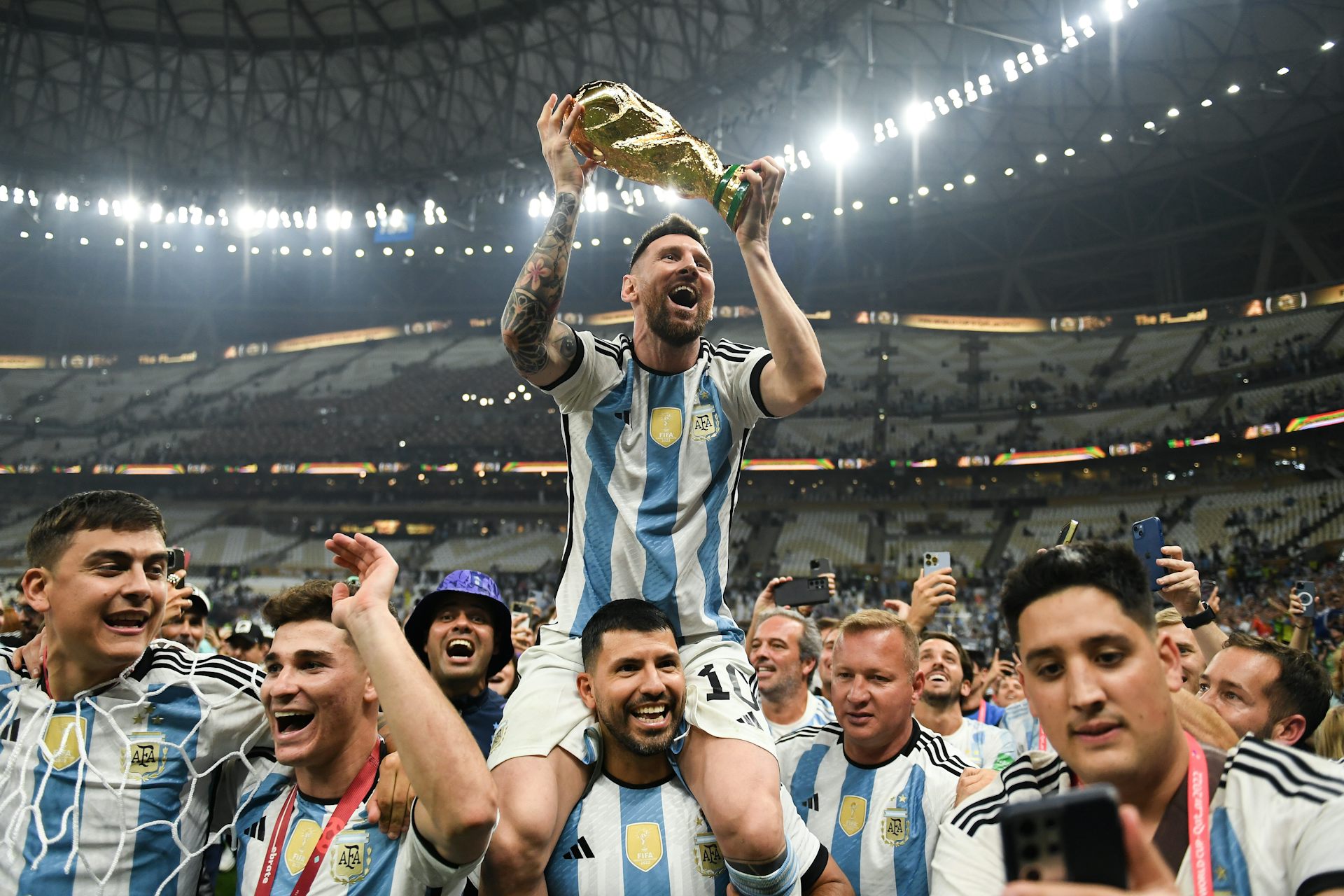
Given the current state of the game, it is reasonable to expect exciting, enjoyable-to-watch soccer at the upcoming World Cup, co-hosted by Canada, Mexico and the United States. This does not mean that time-wasting, intentional fouling and theatrics – as well as occasionally prosaic play – will not rear their ugly heads. Such tactics have not been, and probably will never be, eradicated from the game. Consider, too, relatively new forms of trickery, such as manipulating substitution procedures or spying on rivals.
Dado el estado actual del juego, es razonable esperar un fútbol emocionante y agradable de ver en la próxima Copa del Mundo, copresentada por Canadá, México y Estados Unidos. Esto no significa que el desperdicio de tiempo, las faltas intencionales y el teatro —así como el juego ocasionalmente prosaico— no volverán a aparecer. Tales tácticas no han sido, y probablemente nunca serán, erradicadas del juego. También hay que considerar formas relativamente nuevas de engaño, como manipular los procedimientos de sustitución o espiar a los rivales.
Yet, while there are still some who embrace the “dark arts” of soccer, such practices do not seem to have the favor they once had. Indeed, there is a widespread belief that soccer is experiencing another golden age. And even though soccer has many ethical and aesthetic flaws, both on and off the pitch, the beautiful game seems to have been largely restored.
Sin embargo, aunque todavía hay algunos que abrazan las “artes oscuras” del fútbol, tales prácticas no parecen tener el favor que alguna vez tuvieron. De hecho, existe una creencia generalizada de que el fútbol está experimentando otra edad de oro. Y aunque el fútbol tiene muchos defectos éticos y estéticos, tanto dentro como fuera del campo, el hermoso juego parece haber sido en gran medida restaurado.
Cesar R. Torres is also Distinguished Professor Emeritus of Kinesiology, Sport Studies, and Physical Education, The College at Brockport, State University of New York
Cesar R. Torres es también Profesor Emérito Distinguido de Kinesiología, Estudios Deportivos y Educación Física, The College at Brockport, State University of New York
Read more
-

‘Desprecio total por el riesgo para la vida humana’: Florida demanda a OpenAI y Sam Altman por seguridad de IA
‘Utter disregard for the risk to human life’: Florida sues OpenAI and Sam Altman over AI safety