Dos científicos en su carrera por crear una nueva vacuna contra el Ébola
Two scientists on their race to make a new Ebola vaccine
The Bundibugyo strain of Ebola causing the ongoing outbreak in the Democratic Republic of Congo currently has no vaccine. The Conversation Weekly podcast speaks to two researchers working to develop one.
La cepa de Ébola de Bundibugyo, que está causando el brote actual en la República Democrática del Congo, actualmente no tiene vacuna. El pódcast The Conversation Weekly habla con dos investigadores que trabajan para desarrollarla.
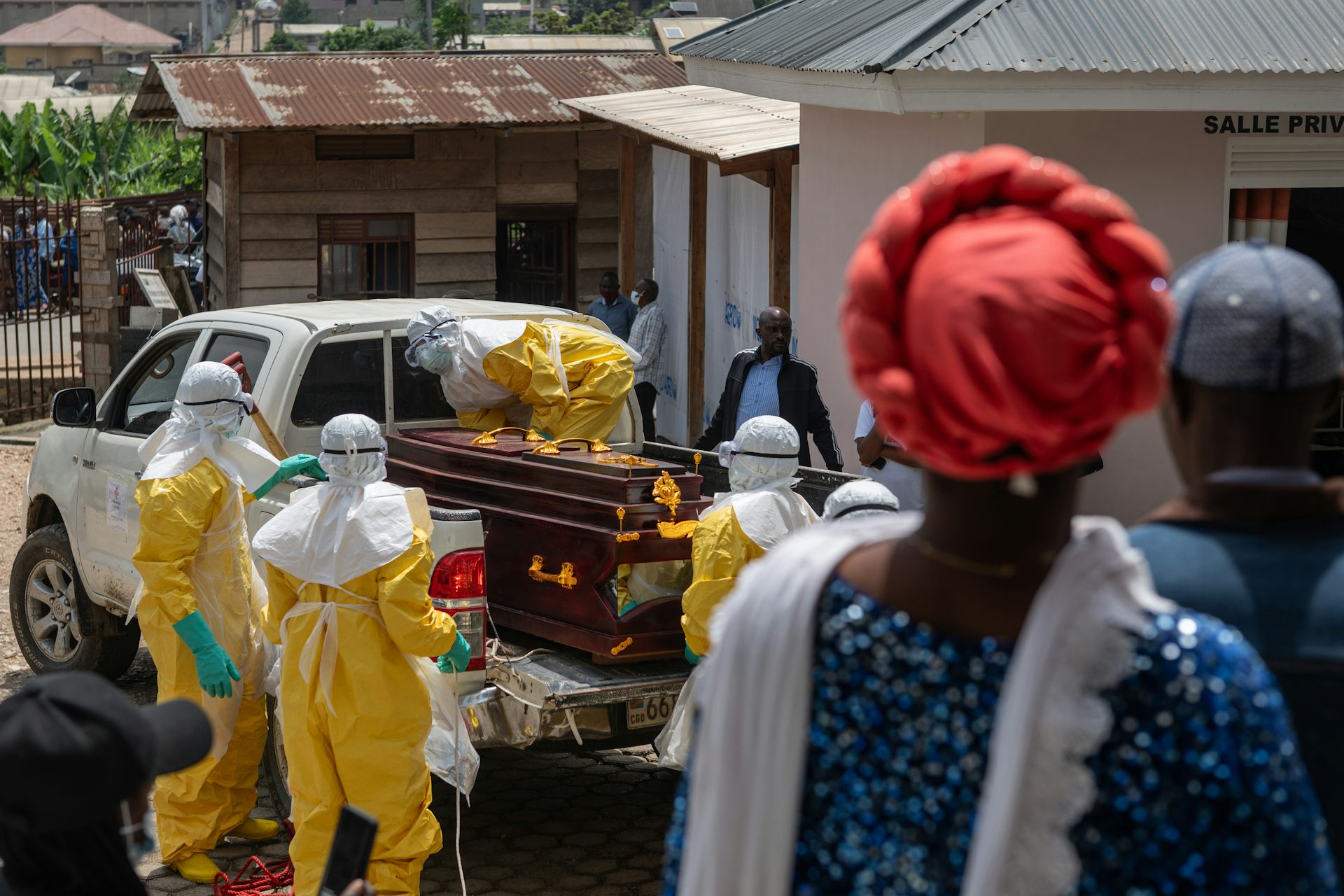
As health workers in the Democratic Republic of Congo (DRC) continue to battle an ongoing Ebola outbreak, scientists around the world are racing to develop a vaccine against the strain of the virus that’s causing it.
Mientras los trabajadores de la salud en la República Democrática del Congo (RDC) continúan luchando contra un brote de Ébola en curso, científicos de todo el mundo se apresuran a desarrollar una vacuna contra la cepa del virus que lo está causando.
Two approved vaccines exist for Ebola, but they target the Zaire strain of the virus, not the Bundibugyo strain causing the 2026 outbreak – which has so far killed 61 people, with 359 confirmed cases in the DRC and neighbouring Uganda.
Existen dos vacunas aprobadas para el Ébola, pero apuntan a la cepa de Zaire del virus, no a la cepa de Bundibugyo que está causando el brote de 2026, el cual hasta ahora ha matado a 61 personas, con 359 casos confirmados en la RDC y en la vecina Uganda.
The outbreak is centred in the Ituri province of northeastern DRC, where conflict, displaced people, a large migrant community and poorly resourced health facilities make stopping the spread particularly challenging.
El brote se centra en la provincia de Ituri, en el noreste de la RDC, donde el conflicto, las personas desplazadas, una gran comunidad migrante y las instalaciones de salud con recursos limitados hacen que detener la propagación sea particularmente desafiante.
In this episode of The Conversation Weekly podcast, we speak to two scientists from the Oxford Vaccine Group at the University of Oxford, Teresa Lambe and Rebecca Makinson, who are developing a vaccine candidate for Bundibugyo virus. On June 1, they were among three research groups to receive fast-track funding from the Coalition for Epidemic Preparedness Innovations, alongside Moderna and IAVI.
En este episodio del pódcast The Conversation Weekly, hablamos con dos científicas del Grupo de Vacunas de Oxford, de la Universidad de Oxford, Teresa Lambe y Rebecca Makinson, quienes están desarrollando un candidato a vacuna para el virus Bundibugyo. El 1 de junio, formaron parte de tres grupos de investigación que recibieron financiación acelerada de la Coalición para las Innovaciones de Preparación ante Epidemias, junto con Moderna e IAVI.
The Oxford group are using ChADOx1, a viral-vector platform that formed the basis of the Oxford-AstraZeneca COVID-19 vaccine, and adapting it for use against the Bundibugyo strain of Ebola. This builds on previous work developing a vaccine against another strain of Ebola in 2022.
El grupo de Oxford está utilizando ChADOx1, una plataforma de vector viral que sirvió de base para la vacuna COVID-19 Oxford-AstraZeneca, y la están adaptando para su uso contra la cepa de Bundibugyo del Ébola. Esto se basa en trabajos anteriores que desarrollaron una vacuna contra otra cepa de Ébola en 2022.
Development of a vaccine typically involves three stages: pre-clinical trials, tests in animals, and manufacture of batches of the vaccine for use in clinical trials in humans, explains Lambe. “Because we are using a platform technology where we have amassed a lot of knowledge around how to make these types of vaccines, we’re trying to run each of those different streams at the same time.”
El desarrollo de una vacuna generalmente implica tres etapas: ensayos preclínicos, pruebas en animales y la fabricación de lotes de la vacuna para su uso en ensayos clínicos en humanos, explica Lambe. «Debido a que estamos utilizando una tecnología de plataforma donde hemos acumulado mucho conocimiento sobre cómo hacer este tipo de vacunas, estamos tratando de ejecutar cada uno de esos diferentes flujos al mismo tiempo.»
Lambe says they have already begun testing the vaccine on small animals while manufacturing batches of it for trials, adding that they hope to do a phase one clinical trial “relatively soon, and certainly faster than you would routinely do”.
Lambe dice que ya han comenzado a probar la vacuna en animales pequeños mientras fabrican lotes para los ensayos, y añade que esperan realizar un ensayo clínico de fase uno «relativamente pronto, y ciertamente más rápido de lo que se haría de forma rutinaria.»
“The question isn’t really whether we can make an Ebola vaccine because it’s very clear that’s possible,” explains Makinson, a postdoctoral researcher in Lambe’s group. “The big challenge is being able to develop these vaccines … when there’s not an outbreak happening, and then making sure that they’re available as and when and where the outbreaks occur.”
«La pregunta realmente no es si podemos hacer una vacuna contra el Ébola porque es muy claro que es posible», explica Makinson, investigadora postdoctoral en el grupo de Lambe. «El gran desafío es poder desarrollar estas vacunas… cuando no hay un brote ocurriendo, y luego asegurarse de que estén disponibles cuando y donde ocurran los brotes».
Listen to the interview with Lambe and Makinson on The Conversation Weekly podcast.
Escuche la entrevista con Lambe y Makinson en el pódcast The Conversation Weekly.
This episode of The Conversation Weekly was written and produced by Gemma Ware, Katie Flood and Mend Mariwany. Mixing by Eleanor Brezzi and theme music by Neeta Sarl.
Este episodio de The Conversation Weekly fue escrito y producido por Gemma Ware, Katie Flood y Mend Mariwany. Mezcla por Eleanor Brezzi y música temática por Neeta Sarl.
Newsclips in this video from France 24 English and CBS News.
Clips de noticias en este video de France 24 English y CBS News.
Listen to The Conversation Weekly via any of the apps listed above, download it directly via our RSS feed or find out how else to listen here. A transcript of this episode is available via the Apple Podcasts or Spotify apps.
Escuche The Conversation Weekly a través de cualquiera de las aplicaciones mencionadas anteriormente, descárguelo directamente a través de nuestro feed RSS o averigüe cómo escucharlo de otra manera aquí. Una transcripción de este episodio está disponible a través de las aplicaciones Apple Podcasts o Spotify.
Teresa Lambe and Rebecca Makinson are investigators based at the University of Oxford, as part of this research portfolio, have received funds from DHSC and CEPI related to filovirus vaccine research. Teresa Lambe was one of the Principal Investigators overseeing the Oxford/AstraZeneca vaccine programme and is named as an inventor on a patent application for a vaccine against SARS CoV-2.
Teresa Lambe y Rebecca Makinson son investigadoras adscritas a la Universidad de Oxford, y como parte de esta cartera de investigación, han recibido fondos de DHSC y CEPI relacionados con la investigación de vacunas filovirus. Teresa Lambe fue una de las Investigadoras Principales que supervisó el programa de vacunas Oxford/AstraZeneca y figura como inventora en una solicitud de patente para una vacuna contra el SARS CoV-2.
Read more
-

Tres maneras de evitar ser engañado por el contenido basura de IA
Three ways to avoid being fooled by AI slop
-
Encontramos cientos de enormes fosas antiguas escondidas en el desierto del Sahara
We found hundreds of huge ancient mass graves hidden in the Sahara desert