Deux scientifiques dans leur course pour créer un nouveau vaccin contre Ebola
Two scientists on their race to make a new Ebola vaccine
The Bundibugyo strain of Ebola causing the ongoing outbreak in the Democratic Republic of Congo currently has no vaccine. The Conversation Weekly podcast speaks to two researchers working to develop one.
La souche d’Ebola de Bundibugyo, responsable de l’épidémie actuelle en République démocratique du Congo, ne dispose actuellement d’aucun vaccin. Le podcast The Conversation Weekly donne la parole à deux chercheurs qui travaillent au développement d’un tel vaccin.
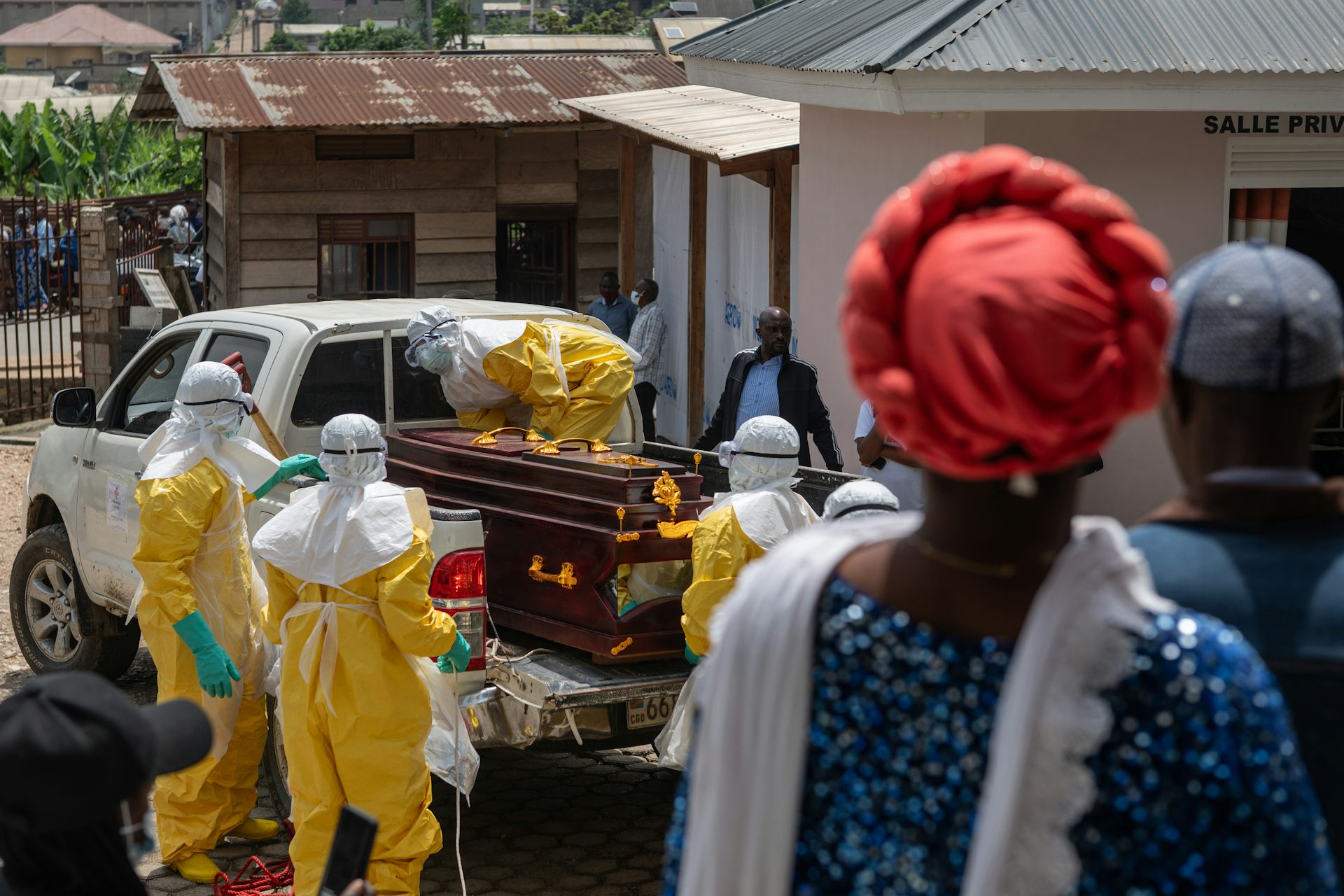
As health workers in the Democratic Republic of Congo (DRC) continue to battle an ongoing Ebola outbreak, scientists around the world are racing to develop a vaccine against the strain of the virus that’s causing it.
Alors que les travailleurs de la santé en République Démocratique du Congo (RDC) continuent de lutter contre une épidémie d’Ebola en cours, des scientifiques du monde entier s’empressent de développer un vaccin contre la souche du virus qui la cause.
Two approved vaccines exist for Ebola, but they target the Zaire strain of the virus, not the Bundibugyo strain causing the 2026 outbreak – which has so far killed 61 people, with 359 confirmed cases in the DRC and neighbouring Uganda.
Deux vaccins sont approuvés pour Ebola, mais ils ciblent la souche de Zaire du virus, et non la souche de Bundibugyo responsable de l’épidémie de 2026 – qui a jusqu’à présent tué 61 personnes, avec 359 cas confirmés en RDC et au voisin ougandais.
The outbreak is centred in the Ituri province of northeastern DRC, where conflict, displaced people, a large migrant community and poorly resourced health facilities make stopping the spread particularly challenging.
L’épidémie est centrée dans la province de l’Ituri, au nord-est de la RDC, où le conflit, les personnes déplacées, une grande communauté migrante et des installations de santé mal dotées rendent particulièrement difficile l’arrêt de la propagation.
In this episode of The Conversation Weekly podcast, we speak to two scientists from the Oxford Vaccine Group at the University of Oxford, Teresa Lambe and Rebecca Makinson, who are developing a vaccine candidate for Bundibugyo virus. On June 1, they were among three research groups to receive fast-track funding from the Coalition for Epidemic Preparedness Innovations, alongside Moderna and IAVI.
Dans cet épisode du podcast The Conversation Weekly, nous parlons à deux scientifiques du Oxford Vaccine Group de l’Université d’Oxford, Teresa Lambe et Rebecca Makinson, qui développent un candidat vaccinal contre le virus de Bundibugyo. Le 1er juin, elles faisaient partie des trois groupes de recherche à recevoir un financement accéléré de la Coalition for Epidemic Preparedness Innovations, aux côtés de Moderna et IAVI.
The Oxford group are using ChADOx1, a viral-vector platform that formed the basis of the Oxford-AstraZeneca COVID-19 vaccine, and adapting it for use against the Bundibugyo strain of Ebola. This builds on previous work developing a vaccine against another strain of Ebola in 2022.
Le groupe d’Oxford utilise ChADOx1, une plateforme à vecteur viral qui a servi de base au vaccin Oxford-AstraZeneca contre la COVID-19, et l’adapte pour être utilisé contre la souche de Bundibugyo d’Ebola. Cela s’appuie sur des travaux antérieurs de développement d’un vaccin contre une autre souche d’Ebola en 2022.
Development of a vaccine typically involves three stages: pre-clinical trials, tests in animals, and manufacture of batches of the vaccine for use in clinical trials in humans, explains Lambe. “Because we are using a platform technology where we have amassed a lot of knowledge around how to make these types of vaccines, we’re trying to run each of those different streams at the same time.”
Le développement d’un vaccin implique généralement trois étapes: les essais précliniques, les tests sur animaux et la fabrication de lots de vaccins pour utilisation dans des essais cliniques sur l’homme, explique Lambe. « Parce que nous utilisons une technologie de plateforme où nous avons accumulé beaucoup de connaissances sur la manière de fabriquer ce type de vaccins, nous essayons de faire fonctionner chacun de ces différents flux en même temps. »
Lambe says they have already begun testing the vaccine on small animals while manufacturing batches of it for trials, adding that they hope to do a phase one clinical trial “relatively soon, and certainly faster than you would routinely do”.
Lambe affirme qu’elles ont déjà commencé à tester le vaccin sur de petits animaux tout en fabriquant des lots pour les essais, ajoutant qu’elles espèrent réaliser un essai clinique de phase un « relativement bientôt, et certainement plus rapidement que ce que l’on ferait habituellement ».
“The question isn’t really whether we can make an Ebola vaccine because it’s very clear that’s possible,” explains Makinson, a postdoctoral researcher in Lambe’s group. “The big challenge is being able to develop these vaccines … when there’s not an outbreak happening, and then making sure that they’re available as and when and where the outbreaks occur.”
« La question n’est pas vraiment de savoir si nous pouvons fabriquer un vaccin contre Ebola, car il est très clair que c’est possible », explique Makinson, chercheuse postdoctorale dans le groupe de Lambe. « Le grand défi est de pouvoir développer ces vaccins… lorsqu’il n’y a pas d’épidémie, et ensuite de s’assurer qu’ils sont disponibles au moment et là où les épidémies se produisent. »
Listen to the interview with Lambe and Makinson on The Conversation Weekly podcast.
Écoutez l’interview avec Lambe et Makinson sur le podcast The Conversation Weekly.
This episode of The Conversation Weekly was written and produced by Gemma Ware, Katie Flood and Mend Mariwany. Mixing by Eleanor Brezzi and theme music by Neeta Sarl.
Cet épisode de The Conversation Weekly a été écrit et produit par Gemma Ware, Katie Flood et Mend Mariwany. Mixage par Eleanor Brezzi et musique thématique par Neeta Sarl.
Newsclips in this video from France 24 English and CBS News.
Des reportages de ce reportage proviennent de France 24 English et CBS News.
Listen to The Conversation Weekly via any of the apps listed above, download it directly via our RSS feed or find out how else to listen here. A transcript of this episode is available via the Apple Podcasts or Spotify apps.
Écoutez The Conversation Weekly via l’une des applications listées ci-dessus, téléchargez-le directement via notre flux RSS ou découvrez comment l’écouter autrement ici. Une transcription de cet épisode est disponible via les applications Apple Podcasts ou Spotify.
Teresa Lambe and Rebecca Makinson are investigators based at the University of Oxford, as part of this research portfolio, have received funds from DHSC and CEPI related to filovirus vaccine research. Teresa Lambe was one of the Principal Investigators overseeing the Oxford/AstraZeneca vaccine programme and is named as an inventor on a patent application for a vaccine against SARS CoV-2.
Teresa Lambe et Rebecca Makinson sont des chercheuses basées à l’Université d’Oxford, et dans le cadre de ce portefeuille de recherche, elles ont reçu des fonds du DHSC et du CEPI relatifs à la recherche sur les vaccins filovirus. Teresa Lambe a été l’une des chercheuses principales supervisant le programme de vaccin Oxford/AstraZeneca et est nommée inventrice sur un dépôt de brevet pour un vaccin contre le SARS CoV-2.
Read more
-

Ce que révèlent les pauses d’hydratation de la Coupe du Monde quant à qui gouverne le football masculin
What the World Cup hydration breaks reveal about who governs men’s football
-
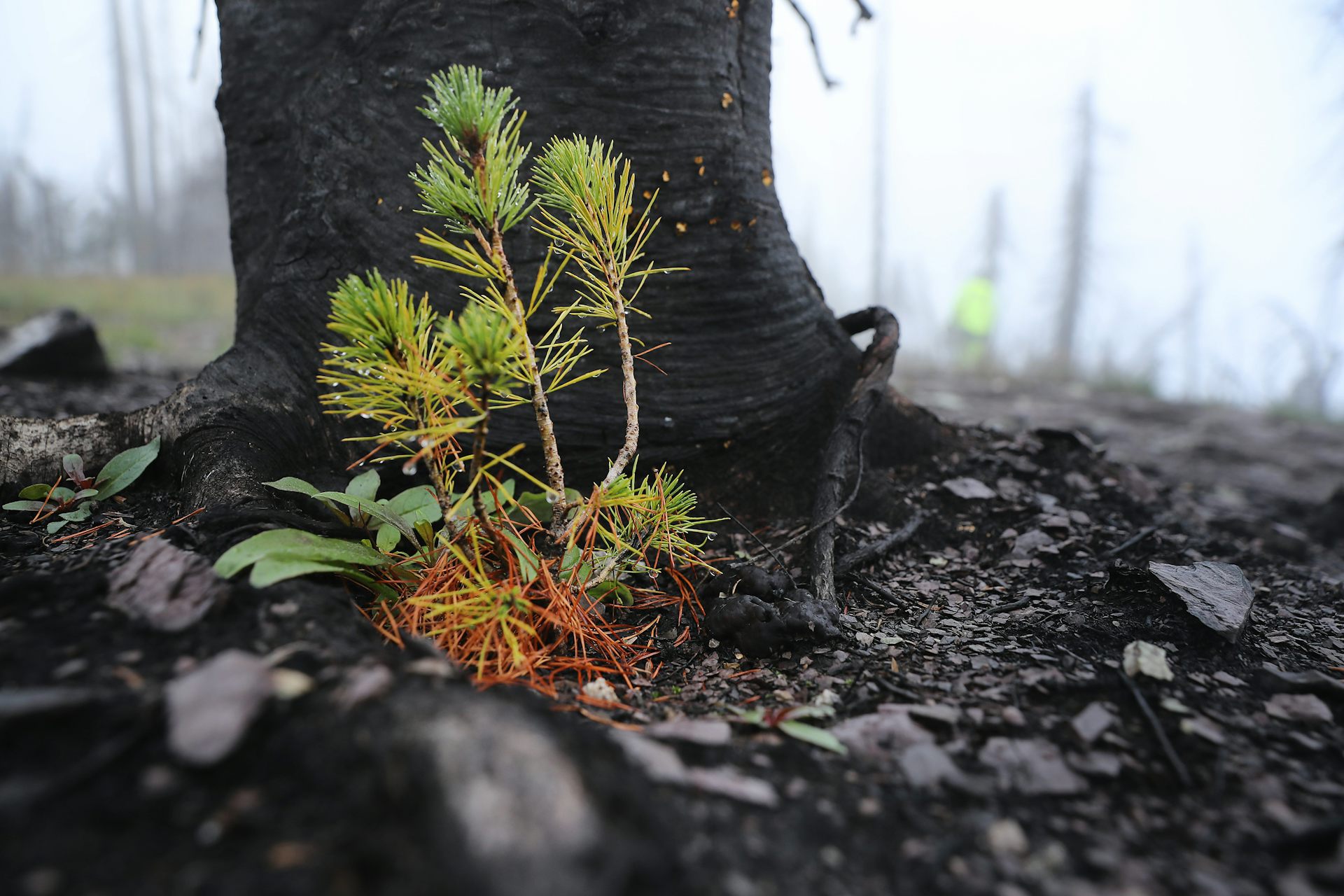
La vie après la mort : Des arbres brûlés aux coraux blanchis, comment les organismes morts servent de matériaux de construction à une nouvelle vie
Life after death: From burned trees to bleached corals, how dead organisms live on as the building blocks of new life