De Brexit a ‘Bregret’: diez años después, la amargura aún domina el voto del Reino Unido por dejar la UE
From Brexit to ‘Bregret’: ten years later, bitterness still prevails over the UK’s vote to leave the EU
On June 23 2016, a slight majority of Britons voted to leave the European Union. Today surveys show that more people are regretting the EU divorce deal rather than celebrating it.
El 23 de junio de 2016, una ligera mayoría de británicos votó por abandonar la Unión Europea. Hoy, las encuestas muestran que más personas lamentan el acuerdo del divorcio de la UE en lugar de celebrarlo.
On June 23 2016, a majority of Britons chose to leave the European Union after a referendum campaign driven by the promises of supporters of the “Leave” camp, spearheaded by Nigel Farage and Boris Johnson. Built around the slogan “Take Back Control”, the pro-Brexit campaign promised to restore the country’s sovereignty, regain control over migration flows, and boost economic prosperity. Ten years on, hopes have given way to a bitter sense of disillusion that the British refer to as “Bregret”, and it is a divided, weakened, disenchanted country who is about to commemorate the tenth anniversary of the referendum.
El 23 de junio de 2016, la mayoría de los británicos eligió abandonar la Unión Europea después de una campaña referendaria impulsada por las promesas de los partidarios del bando «Salir», encabezado por Nigel Farage y Boris Johnson. Construida en torno al eslogan «Recuperar el control» (Take Back Control) , la campaña pro-Brexit prometió restaurar la soberanía del país, recuperar el control sobre los flujos migratorios e impulsar la prosperidad económica. Diez años después, las esperanzas han dado paso a un amargo sentimiento de desilusión que los británicos llaman «Bregret», y es un país dividido, debilitado y desencantado que está a punto de conmemorar el décimo aniversario del referéndum.
The Brexit shock
El impacto del Brexit
There are few events in a country’s national history that constitute such an immense and profound shock as Brexit. The announcement of the results, that indicated a 51.9% victory for the “Leave” camp, sent shockwaves across the world. After 43 years of a relationship that was often turbulent and confrontational, the United Kingdom decided to leave the European Union and open a new chapter in its history.
Hay pocos eventos en la historia nacional de un país que constituyan un choque tan inmenso y profundo como el Brexit. El anuncio de los resultados, que indicaron una victoria del 51.9% para el campamento «Salir», envió ondas de choque por todo el mundo. Después de 43 años de una relación a menudo turbulenta y confrontacional, el Reino Unido decidió abandonar la Unión Europea y abrir un nuevo capítulo en su historia.
The reasons for the shock were manifold: first, it was an unprecedented event that raised many uncertainties and fears about the future of the United Kingdom and the European Union alike; the shock was also explained by the completely unexpected nature of the victory, given that the main polling institutes were predicting a close election, giving the “Remain” camp a slight edge; finally, the vote in favour of Brexit represented a political and ideological victory for Nigel Farage, the then leader of the far right populist United Kingdom Independence Party (UKIP) which was fiercely hostile to the European Union, immigration and multiculturalism.
Las razones del impacto fueron múltiples: primero, fue un evento sin precedentes que suscitó muchas incertidumbres y temores sobre el futuro tanto del Reino Unido como de la Unión Europea; el choque también se explicó por la naturaleza completamente inesperada de la victoria, dado que los principales institutos de encuestas predijeron unas elecciones reñidas, dando una ligera ventaja al campamento «Permanecer»; finalmente, el voto a favor del Brexit representó una victoria política e ideológica para Nigel Farage, entonces líder del Partido de Independencia del Reino Unido (UKIP) , un partido populista de extrema derecha ferozmente hostil hacia la Unión Europea, la inmigración y el multiculturalismo.
Previously considered more of an outsider, Nigel Farage then went on to become a central figure in the British political landscape, unanimously recognised as the main architect of Brexit. His campaign themes – which revolved primarily around the fight against immigration, restoring national sovereignty, and defending British national identity – emerged as the dominant themes in the national debate. Boris Johnson, another central figure in the “Leave” campaign and future prime minister (2019-2022) , also contributed to the rise of populist ideas by placing them at the very heart of the Conservative Party.
Anteriormente considerado más bien un forastero, Nigel Farage llegó a convertirse en una figura central del panorama político británico, reconocido por unanimidad como el principal arquitecto del Brexit. Sus temas de campaña —que giraron principalmente en torno a la lucha contra la inmigración, la restauración de la soberanía nacional y la defensa de la identidad nacional británica— emergieron como los temas dominantes del debate nacional. Boris Johnson, otra figura central de la campaña «Salir» y futuro primer ministro (2019-2022) , también contribuyó al auge de las ideas populistas al situarlas en el corazón mismo del Partido Conservador.
Brexit thus normalised and mainstreamed populist discourse, which had long remained on the fringes of the public sphere, contributing to an unprecedented dynamic for the far right and a major recomposition in British political life. This is the great irony of this referendum: originally put forward by David Cameron in 2013 when he was prime minister to strengthen his authority over the Conservative Party and stem the rise of UKIP, the referendum had the exact opposite effect.
Así, el Brexit normalizó e integró el discurso populista, que durante mucho tiempo se había mantenido en los márgenes de la esfera pública, lo que contribuyó a una dinámica sin precedentes para la extrema derecha y a una gran recomposición en la vida política británica. Esta es la gran ironía de este referéndum: originalmente propuesto por David Cameron en 2013 cuando era primer ministro para fortalecer su autoridad sobre el Partido Conservador y frenar el ascenso del UKIP, el referéndum tuvo exactamente el efecto contrario.
Not only did the Leave vote precipitate Cameron’s downfall, but, above all, it contributed to major political upheavals characterised by the erosion of the two traditional parties, the overwhelming rise of the far right and the polarisation of public debate around questions of immigration and national identity. The referendum was supposed to appease and unify the country; on the contrary, it deeply destabilised and divided it.
No solo el voto «Salir» precipitó la caída de Cameron, sino que, sobre todo, contribuyó a grandes convulsiones políticas caracterizadas por la erosión de los dos partidos tradicionales, el aumento abrumador de la extrema derecha y la polarización del debate público en torno a cuestiones de inmigración e identidad nacional. Se suponía que el referéndum debía apaciguar y unificar al país; por el contrario, lo desestabilizó y lo dividió profundamente.
Bitter tomorrows: the disillusions of Brexit
Mañanas amargas: las desilusiones del Brexit
A few hours after the announcement of the results and while euphoria was still strong among the supporters of the “Leave” camp, a first interview with Nigel Farage on the ITV Good Morning Britain program caused general astonishment. He told the two journalists that the promise to pay the amount of the contribution to the European budget to the budget of the National Health Service (NHS) – the British public health service – will “probably not be delivered”.
Unas horas después del anuncio de los resultados y mientras la euforia seguía siendo fuerte entre los partidarios del campamento «Leave» (Salir) , una primera entrevista con Nigel Farage en el programa ITV Good Morning Britain causó un asombro general. A los dos periodistas les dijo que la promesa de destinar la cantidad de la contribución al presupuesto europeo al presupuesto del Servicio Nacional de Salud (NHS) —el servicio público de salud británico— «probablemente no se cumplirá.»
By reneging on his campaign’s key promise, Farage was betraying a commitment that weighed heavily in many voters’ decision to vote for the “Leave” camp. The NHS, set up after World War II to ensure that all Britons would have universal access to health care “from the cradle to the grave”, is an iconic pillar of the welfare state. However, multiple reforms to make it less expensive and more effective have seriously weakened it and it is now facing many problems, including chronic underfunding, a shortage of staff, or excessively long waiting delays.
Al retractarse de la promesa clave de su campaña, Farage estaba traicionando un compromiso que pesaba mucho en la decisión de muchos votantes de votar por el campamento «Leave». El NHS, establecido después de la Segunda Guerra Mundial para garantizar que todos los británicos tuvieran acceso universal a la atención médica «desde la cuna hasta la tumba», es un pilar icónico del estado de bienestar. Sin embargo, múltiples reformas para hacerlo menos costoso y más efectivo lo han debilitado seriamente y ahora se enfrenta a muchos problemas, incluido el subfinanciamiento crónico, la escasez de personal o los retrasos excesivamente largos en las listas de espera.
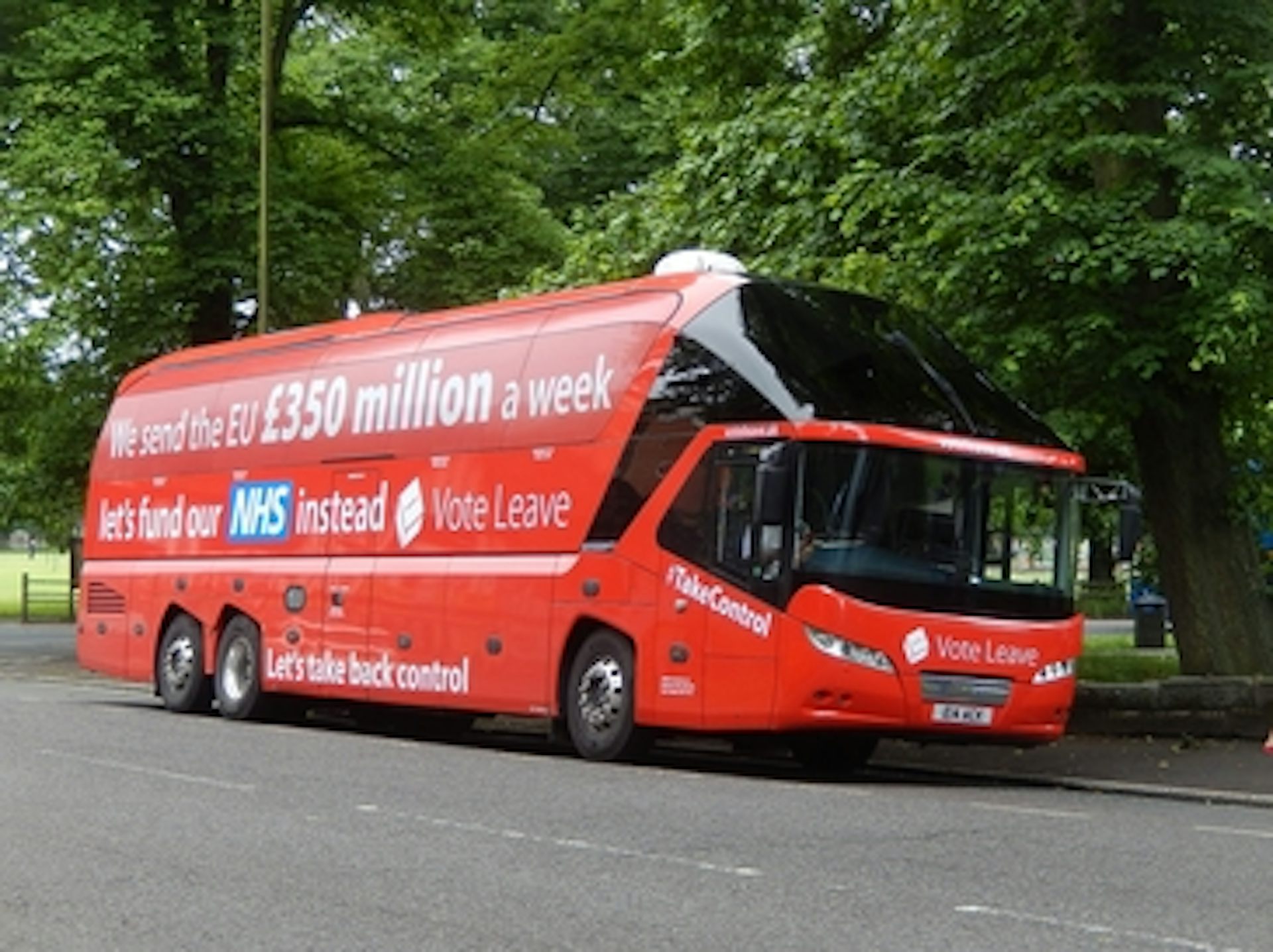
Aware of the NHS’s place in the hearts of the British people, the pro-Leave campaigners heavily promoted the argument that, in the event of an exit from the EU, the money previously allocated to the EU budget would be channelled directly into funding the NHS. Boris Johnson criss-crossing the country in his red bus bearing the slogan “We send the EU £350 million a week, let’s fund our NHS instead” was one of the campaign’s most emblematic images.
Conscientes del lugar que ocupa el NHS en los corazones del pueblo británico, los activistas pro-Leave promovieron intensamente el argumento de que, en caso de salida de la UE, el dinero previamente asignado al presupuesto de la UE se canalizaría directamente para financiar el NHS. Boris Johnson recorriendo el país en su autobús rojo con el eslogan «Le enviamos a la UE 350 millones de libras por semana, financiemos nuestro NHS en su lugar» fue una de las imágenes más emblemáticas de la campaña.
Inevitably, this argument struck a chord with a large section of the British electorate, who were concerned about the decline of such a national institution. Nigel Farage’s sudden U-turn felt like a massive betrayal and highlighted, from the very first hours following the vote, the gap between promises and reality.
Ineludiblemente, este argumento tocó una fibra sensible en un gran sector del electorado británico, preocupado por el declive de tal institución nacional. El repentino giro de Nigel Farage se sintió como una traición masiva y resaltó, desde las primeras horas posteriores al voto, la brecha entre promesas y realidad.
The other major theme of the pro-Leave campaign was the fight against immigration. On this point, too, the gap between promises and reality led to a deep resentment among voters.
El otro tema principal de la campaña pro-Leave fue la lucha contra la inmigración. En este punto también, la brecha entre promesas y realidad llevó a un profundo resentimiento entre los votantes.
For years, Nigel Farage had been repeating that because of its membership of the European Union, which advocates the principle of open borders and free movement of people, the UK lacked the capacity to control its borders or to prevent mass immigration. A few days before the referendum, Farage unveiled a campaign poster called ‘Breaking Point’ which showed a crowd of migrants from the Middle East – exclusively men – gathered at the Croatian-Serbian border like ready to “invade” Europe. The caption on the poster read, “The EU has failed us all.”
Durante años, Nigel Farage había estado repitiendo que debido a su membresía en la Unión Europea, que defiende el principio de fronteras abiertas y libre circulación de personas, el Reino Unido carecía de capacidad para controlar sus fronteras o prevenir la inmigración masiva. Unos días antes del referéndum, Farage desveló un cartel de campaña llamado ‘Breaking Point’ (Punto de quiebre) que mostraba a una multitud de migrantes de Oriente Medio —exclusivamente hombres— reunidos en la frontera croata-serbia como si estuvieran listos para «invadir» Europa. El pie de foto del cartel decía: «La UE nos ha fallado a todos.»
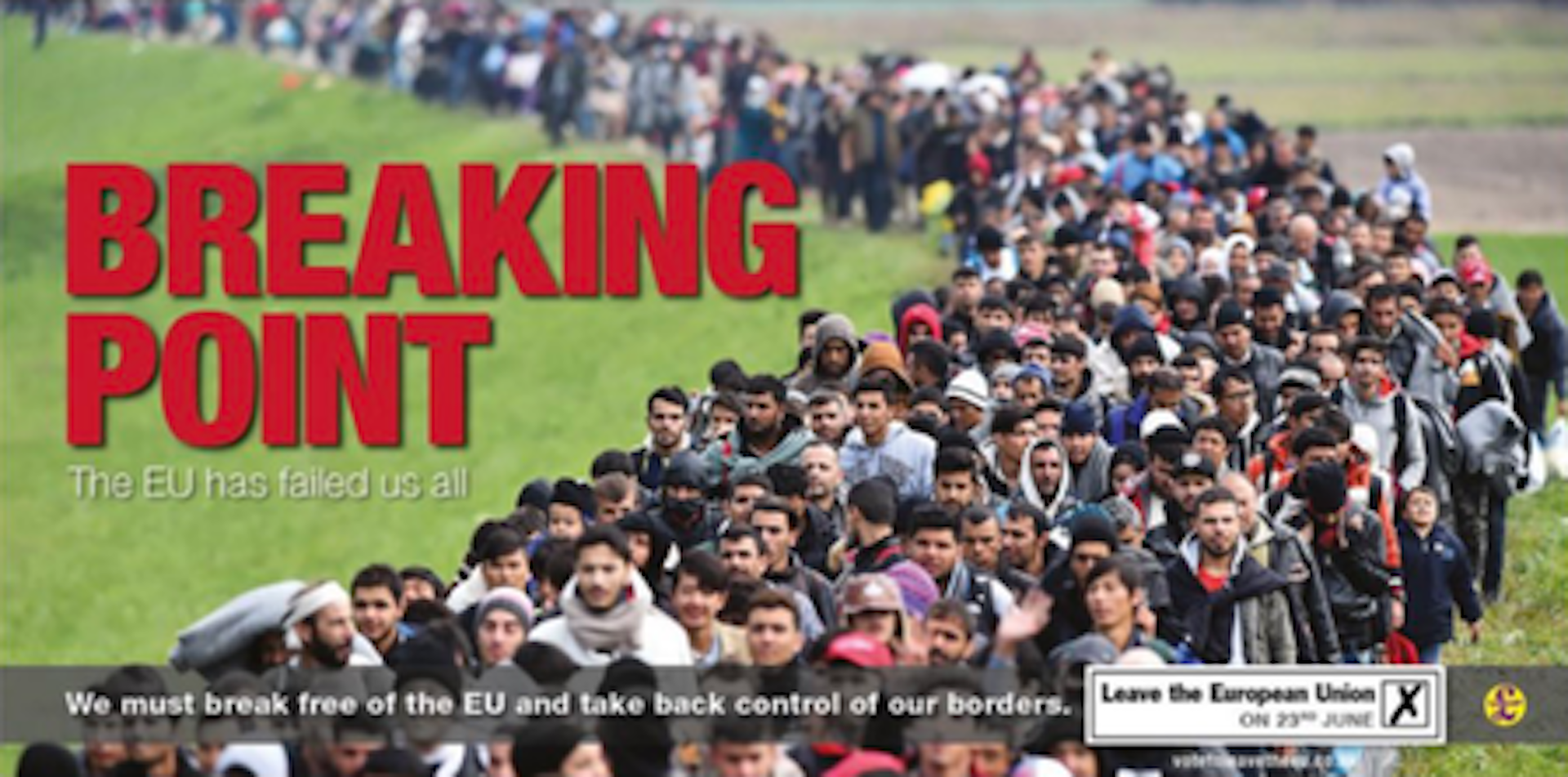
Following the outcry caused by the poster, UKIP was forced to remove it immediately. But the argument had a major impact in a country where immigration – especially from Muslim countries – topped British concerns. Farage’s campaign strategy also consisted in presenting the vote for Brexit as an identity and civilisational issue by presenting immigration – encouraged according to him by the European elites – as an existential threat to British identity and the nation’s future.
Tras la indignación causada por el cartel, UKIP se vio obligado a retirarlo inmediatamente. Pero el argumento tuvo un gran impacto en un país donde la inmigración —especialmente de países musulmanes— encabezaba las preocupaciones británicas. La estrategia de campaña de Farage también consistió en presentar el voto por el Brexit como una cuestión de identidad y civilizatoria, presentando la inmigración —según él, alentada por las élites europeas— como una amenaza existencial para la identidad británica y el futuro de la nación.
The victory of Brexit has been partly analysed as the victory of gloomy passions – fear of others, hostility toward foreigners, resentment against multiculturalism – and interpreted as a sign of a growingly inward-looking country. But while the wish of much of the pro-Brexit electorate was to see the country being totally closed to foreigners, that was far from the case. Indeed, even after the United Kingdom officially left the European Union on January 31 2020, immigration figures continued to rise, reaching an absolute record in March 2023, with net migration approaching one million. For a large part of the public opinion hostile to immigration, these figures gave the impression that immigration was out-of-control and that governments were powerless in the face of migration flows, reinforcing anger and resentment toward political elites.
La victoria del Brexit ha sido analizada en parte como la victoria de pasiones sombrías —el miedo a los demás, la hostilidad hacia los extranjeros, el resentimiento contra el multiculturalismo— e interpretada como un signo de un país cada vez más introspectivo. Pero si bien el deseo de gran parte del electorado pro-Brexit era ver al país totalmente cerrado a los extranjeros, esto estaba lejos de ser cierto. De hecho, incluso después de que el Reino Unido dejara oficialmente la Unión Europea el 31 de enero de 2020, las cifras de inmigración continuaron en aumento, alcanzando un récord absoluto en marzo de 2023, con una migración neta acercándose a un millón. Para gran parte de la opinión pública hostil a la inmigración, estas cifras dieron la impresión de que la inmigración estaba fuera de control y que los gobiernos eran impotentes ante los flujos migratorios, reforzando el enfado y el resentimiento hacia las élites políticas.
The movie tag contains https://www.arte.tv/fr/videos/111777-006-A/arte-regards/, which is an unsupported URL, in the src attribute. Please try again with youtube or vimeo.
La etiqueta del video contiene https://www.arte.tv/fr/videos/111777-006-A/arte-regards/, que es una URL no compatible en el atributo src. Por favor, inténtelo de nuevo con youtube o vimeo.
Another main promise of the pro-Leave campaign turned out to be a failure. In this context, and if you add to that sluggish economic growth and rampant inflation, it is not surprising that the latest polls indicate that a majority of Britons – about 56% – say they regret leaving the European Union.
Otra promesa principal de la campaña pro-salida resultó ser un fracaso. En este contexto, y si a eso se le añade un crecimiento económico lento y una inflación rampante, no es sorprendente que las últimas encuestas indiquen que la mayoría de los británicos —alrededor del 56%— dicen que lamentan haber salido de la Unión Europea.
A broken society
Una sociedad fracturada
At a time when the British are about to commemorate the ten years of the vote in favour of Brexit, feelings of regret, bitterness and betrayal prevail among the public. These sentiments fuel immense anger against political elites, resulting in a loss of confidence in both traditional parties and an unprecedented rise for the far right party Reform UK, led by Nigel Farage.
En un momento en que los británicos están a punto de conmemorar los diez años del voto a favor del Brexit, predominan entre el público sentimientos de arrepentimiento, amargura y traición. Estos sentimientos alimentan una ira inmensa contra las élites políticas, lo que resulta en una pérdida de confianza tanto en los partidos tradicionales como en un aumento sin precedentes para el partido de extrema derecha Reform UK, liderado por Nigel Farage.
Brexit alone is not to blame for all of the UK’s woes: the health crisis linked to the Covid-19 pandemic and the war in Ukraine also partly explain the economic problems the country is facing. However, it is Brexit that has split the population into two opposing – even hostile – camps, which clash over issues ranging from immigration and ethnic and cultural diversity to the definition of national identity. These divisions have created the conditions for the emergence of genuine culture wars, which, a decade after the referendum, continue to tear British society apart.
El Brexit no es el único culpable de todos los problemas del Reino Unido: la crisis sanitaria vinculada a la pandemia de Covid-19 y la guerra en Ucrania también explican parcialmente los problemas económicos que enfrenta el país. Sin embargo, es el Brexit lo que ha dividido a la población en dos campos opuestos —e incluso hostiles—, que chocan por temas que van desde la inmigración y la diversidad étnica y cultural hasta la definición de identidad nacional. Estas divisiones han creado las condiciones para la aparición de verdaderas guerras culturales, que, una década después del referéndum, continúan desgarrando a la sociedad británica.

A weekly e-mail in English featuring expertise from scholars and researchers. It provides an introduction to the diversity of research coming out of the continent and considers some of the key issues facing European countries. Get the newsletter!
Un correo electrónico semanal en inglés con la experiencia de académicos e investigadores. Ofrece una introducción a la diversidad de investigaciones procedentes del continente y considera algunos de los problemas clave que enfrentan los países europeos. ¡Recibe el boletín!
Laëtitia Langlois ne travaille pas, ne conseille pas, ne possède pas de parts, ne reçoit pas de fonds d’une organisation qui pourrait tirer profit de cet article, et n’a déclaré aucune autre affiliation que son organisme de recherche.
Laëtitia Langlois no trabaja, no asesora, no posee acciones, ni recibe fondos de ninguna organización que pueda sacar provecho de este artículo, y no ha declarado ninguna otra afiliación aparte de su organismo de investigación.
Read more
-

Dentro de los complejos de estafas del sudeste asiático: Una trabajadora traficada habla de fraude, coerción y tortura
Inside Southeast Asia’s scam compounds: A trafficked worker tells of fraud, coercion and torture
-

El director ejecutivo de Apple, Tim Cook, renuncia después de 15 años. ¿Qué sigue para el gigante tecnológico?
Apple chief executive Tim Cook resigns after 15 years. What’s next for the tech giant?