De Brexit a ‘Bregret’: dez anos depois, amargura ainda domina o voto do Reino Unido para sair da UE
From Brexit to ‘Bregret’: ten years later, bitterness still prevails over the UK’s vote to leave the EU
On June 23 2016, a slight majority of Britons voted to leave the European Union. Today surveys show that more people are regretting the EU divorce deal rather than celebrating it.
Em 23 de junho de 2016, uma pequena maioria de britânicos votou pela saída da União Europeia. Hoje, pesquisas mostram que mais pessoas estão se arrependendo do acordo de divórcio da UE do que celebrando-o.
On June 23 2016, a majority of Britons chose to leave the European Union after a referendum campaign driven by the promises of supporters of the “Leave” camp, spearheaded by Nigel Farage and Boris Johnson. Built around the slogan “Take Back Control”, the pro-Brexit campaign promised to restore the country’s sovereignty, regain control over migration flows, and boost economic prosperity. Ten years on, hopes have given way to a bitter sense of disillusion that the British refer to as “Bregret”, and it is a divided, weakened, disenchanted country who is about to commemorate the tenth anniversary of the referendum.
Em 23 de junho de 2016, a maioria dos britânicos optou por deixar a União Europeia após uma campanha de referendo impulsionada pelas promessas dos apoiadores do acampamento “Leave” (Sair) , liderado por Nigel Farage e Boris Johnson. Construída em torno do slogan “Take Back Control” (Recuperar o Controle) , a campanha pró-Brexit prometeu restaurar a soberania do país, recuperar o controle sobre os fluxos migratórios e impulsionar a prosperidade econômica. Dez anos depois, as esperanças deram lugar a um amargo sentimento de desilusão que os britânicos chamam de “Bregret”, e é um país dividido, enfraquecido e desiludido que está prestes a comemorar o décimo aniversário do referendo.
The Brexit shock
O choque do Brexit
There are few events in a country’s national history that constitute such an immense and profound shock as Brexit. The announcement of the results, that indicated a 51.9% victory for the “Leave” camp, sent shockwaves across the world. After 43 years of a relationship that was often turbulent and confrontational, the United Kingdom decided to leave the European Union and open a new chapter in its history.
Há poucos eventos na história nacional de um país que constituam um choque tão imenso e profundo quanto o Brexit. O anúncio dos resultados, que indicaram uma vitória de 51,9% para o acampamento “Leave” (Sair) , enviou ondas de choque por todo o mundo. Após 43 anos de um relacionamento frequentemente turbulento e confrontacional, o Reino Unido decidiu deixar a União Europeia e abrir um novo capítulo em sua história.
The reasons for the shock were manifold: first, it was an unprecedented event that raised many uncertainties and fears about the future of the United Kingdom and the European Union alike; the shock was also explained by the completely unexpected nature of the victory, given that the main polling institutes were predicting a close election, giving the “Remain” camp a slight edge; finally, the vote in favour of Brexit represented a political and ideological victory for Nigel Farage, the then leader of the far right populist United Kingdom Independence Party (UKIP) which was fiercely hostile to the European Union, immigration and multiculturalism.
Os motivos do choque foram múltiplos: primeiro, foi um evento sem precedentes que levantou muitas incertezas e medos sobre o futuro tanto do Reino Unido quanto da União Europeia; o choque também foi explicado pela natureza completamente inesperada da vitória, dado que os principais institutos de pesquisa estavam prevendo uma eleição apertada, dando ao acampamento “Remain” (Permanecer) uma ligeira vantagem; finalmente, o voto a favor do Brexit representou uma vitória política e ideológica para Nigel Farage, então líder do Partido Independente do Reino Unido (UKIP) , um partido populista de extrema-direita ferozmente hostil à União Europeia, à imigração e ao multiculturalismo.
Previously considered more of an outsider, Nigel Farage then went on to become a central figure in the British political landscape, unanimously recognised as the main architect of Brexit. His campaign themes – which revolved primarily around the fight against immigration, restoring national sovereignty, and defending British national identity – emerged as the dominant themes in the national debate. Boris Johnson, another central figure in the “Leave” campaign and future prime minister (2019-2022) , also contributed to the rise of populist ideas by placing them at the very heart of the Conservative Party.
Anteriormente considerado mais um marginal, Nigel Farage acabou por se tornar uma figura central no cenário político britânico, reconhecido unanimemente como o principal arquiteto do Brexit. Seus temas de campanha – que giravam principalmente em torno da luta contra a imigração, da restauração da soberania nacional e da defesa da identidade nacional britânica – emergiram como os temas dominantes no debate nacional. Boris Johnson, outra figura central na campanha “Leave” e futuro primeiro-ministro (2019-2022) , também contribuiu para o aumento das ideias populistas ao colocá-las no cerne do Partido Conservador.
Brexit thus normalised and mainstreamed populist discourse, which had long remained on the fringes of the public sphere, contributing to an unprecedented dynamic for the far right and a major recomposition in British political life. This is the great irony of this referendum: originally put forward by David Cameron in 2013 when he was prime minister to strengthen his authority over the Conservative Party and stem the rise of UKIP, the referendum had the exact opposite effect.
O Brexit normalizou e levou ao mainstream o discurso populista, que há muito tempo permanecia nas margens da esfera pública, contribuindo para uma dinâmica sem precedentes para a extrema-direita e uma grande recomposição na vida política britânica. Esta é a grande ironia deste referendo: originalmente proposto por David Cameron em 2013, quando era primeiro-ministro, para fortalecer sua autoridade sobre o Partido Conservador e conter o crescimento do UKIP, o referendo teve exatamente o efeito oposto.
Not only did the Leave vote precipitate Cameron’s downfall, but, above all, it contributed to major political upheavals characterised by the erosion of the two traditional parties, the overwhelming rise of the far right and the polarisation of public debate around questions of immigration and national identity. The referendum was supposed to appease and unify the country; on the contrary, it deeply destabilised and divided it.
Não apenas o voto Leave precipitou a queda de Cameron, mas, acima de tudo, contribuiu para grandes convulsões políticas caracterizadas pela erosão dos dois partidos tradicionais, o aumento avassalador da extrema-direita e a polarização do debate público em torno das questões de imigração e identidade nacional. O referendo deveria apaziguar e unificar o país; pelo contrário, ele o desestabilizou e dividiu profundamente.
Bitter tomorrows: the disillusions of Brexit
Amanhãs amargas: as desilusões do Brexit
A few hours after the announcement of the results and while euphoria was still strong among the supporters of the “Leave” camp, a first interview with Nigel Farage on the ITV Good Morning Britain program caused general astonishment. He told the two journalists that the promise to pay the amount of the contribution to the European budget to the budget of the National Health Service (NHS) – the British public health service – will “probably not be delivered”.
Algumas horas após o anúncio dos resultados e enquanto a euforia ainda era forte entre os apoiadores do acampamento “Leave”, uma primeira entrevista com Nigel Farage no programa ITV Good Morning Britain causou espanto geral. Ele disse aos dois jornalistas que a promessa de pagar o valor da contribuição para o orçamento europeu ao orçamento do Serviço Nacional de Saúde (NHS) – o serviço público de saúde britânico – “provavelmente não será cumprida”.
By reneging on his campaign’s key promise, Farage was betraying a commitment that weighed heavily in many voters’ decision to vote for the “Leave” camp. The NHS, set up after World War II to ensure that all Britons would have universal access to health care “from the cradle to the grave”, is an iconic pillar of the welfare state. However, multiple reforms to make it less expensive and more effective have seriously weakened it and it is now facing many problems, including chronic underfunding, a shortage of staff, or excessively long waiting delays.
Ao desistir da promessa central de sua campanha, Farage estava traindo um compromisso que pesava muito na decisão de muitos eleitores de votar pelo acampamento “Leave”. O NHS, criado após a Segunda Guerra Mundial para garantir que todos os britânicos tivessem acesso universal à saúde “do berço ao túmulo”, é um pilar icônico do estado de bem-estar social. No entanto, múltiplas reformas para torná-lo menos caro e mais eficaz o enfraqueceram seriamente e ele agora enfrenta muitos problemas, incluindo subfinanciamento crônico, escassez de pessoal ou atrasos excessivamente longos na espera.
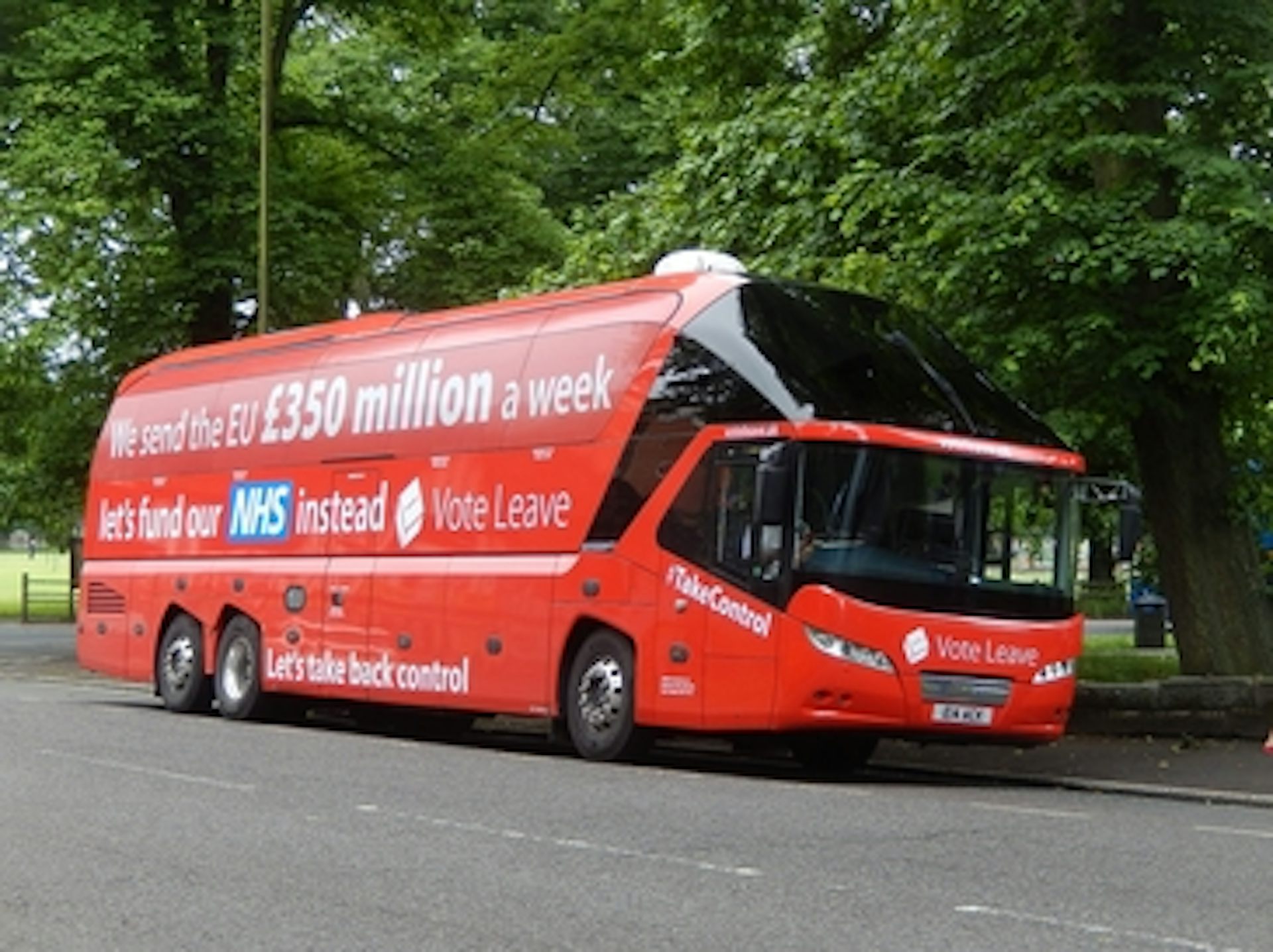
Aware of the NHS’s place in the hearts of the British people, the pro-Leave campaigners heavily promoted the argument that, in the event of an exit from the EU, the money previously allocated to the EU budget would be channelled directly into funding the NHS. Boris Johnson criss-crossing the country in his red bus bearing the slogan “We send the EU £350 million a week, let’s fund our NHS instead” was one of the campaign’s most emblematic images.
Cientes do lugar do NHS nos corações do povo britânico, os ativistas pró-Leave promoveram intensamente o argumento de que, em caso de saída da UE, o dinheiro anteriormente alocado ao orçamento da UE seria canalizado diretamente para financiar o NHS. Boris Johnson percorrendo o país em seu ônibus vermelho com o slogan “Enviamos £350 milhões por semana para a UE, vamos financiar nosso NHS em vez disso” foi uma das imagens mais emblemáticas da campanha.
Inevitably, this argument struck a chord with a large section of the British electorate, who were concerned about the decline of such a national institution. Nigel Farage’s sudden U-turn felt like a massive betrayal and highlighted, from the very first hours following the vote, the gap between promises and reality.
Inevitavelmente, este argumento ressoou em grande parte do eleitorado britânico, que estava preocupado com o declínio de tal instituição nacional. A repentina reviravolta de Nigel Farage pareceu uma traição maciça e destacou, desde as primeiras horas após a votação, a lacuna entre promessas e realidade.
The other major theme of the pro-Leave campaign was the fight against immigration. On this point, too, the gap between promises and reality led to a deep resentment among voters.
Outro grande tema da campanha pró-Leave foi a luta contra a imigração. Neste ponto também, a lacuna entre promessas e realidade levou a um profundo ressentimento entre os eleitores.
For years, Nigel Farage had been repeating that because of its membership of the European Union, which advocates the principle of open borders and free movement of people, the UK lacked the capacity to control its borders or to prevent mass immigration. A few days before the referendum, Farage unveiled a campaign poster called ‘Breaking Point’ which showed a crowd of migrants from the Middle East – exclusively men – gathered at the Croatian-Serbian border like ready to “invade” Europe. The caption on the poster read, “The EU has failed us all.”
Por anos, Nigel Farage repetia que, devido à sua adesão à União Europeia, que defende o princípio das fronteiras abertas e da livre circulação de pessoas, o Reino Unido carecia da capacidade de controlar suas fronteiras ou de impedir a imigração em massa. Alguns dias antes do referendo, Farage revelou um cartaz de campanha chamado ‘Breaking Point’ (Ponto de Ruptura) que mostrava uma multidão de migrantes do Oriente Médio – exclusivamente homens – reunidos na fronteira croata-sérvia como se estivessem prontos para “invadir” a Europa. A legenda no cartaz dizia: “A UE falhou conosco todos.”
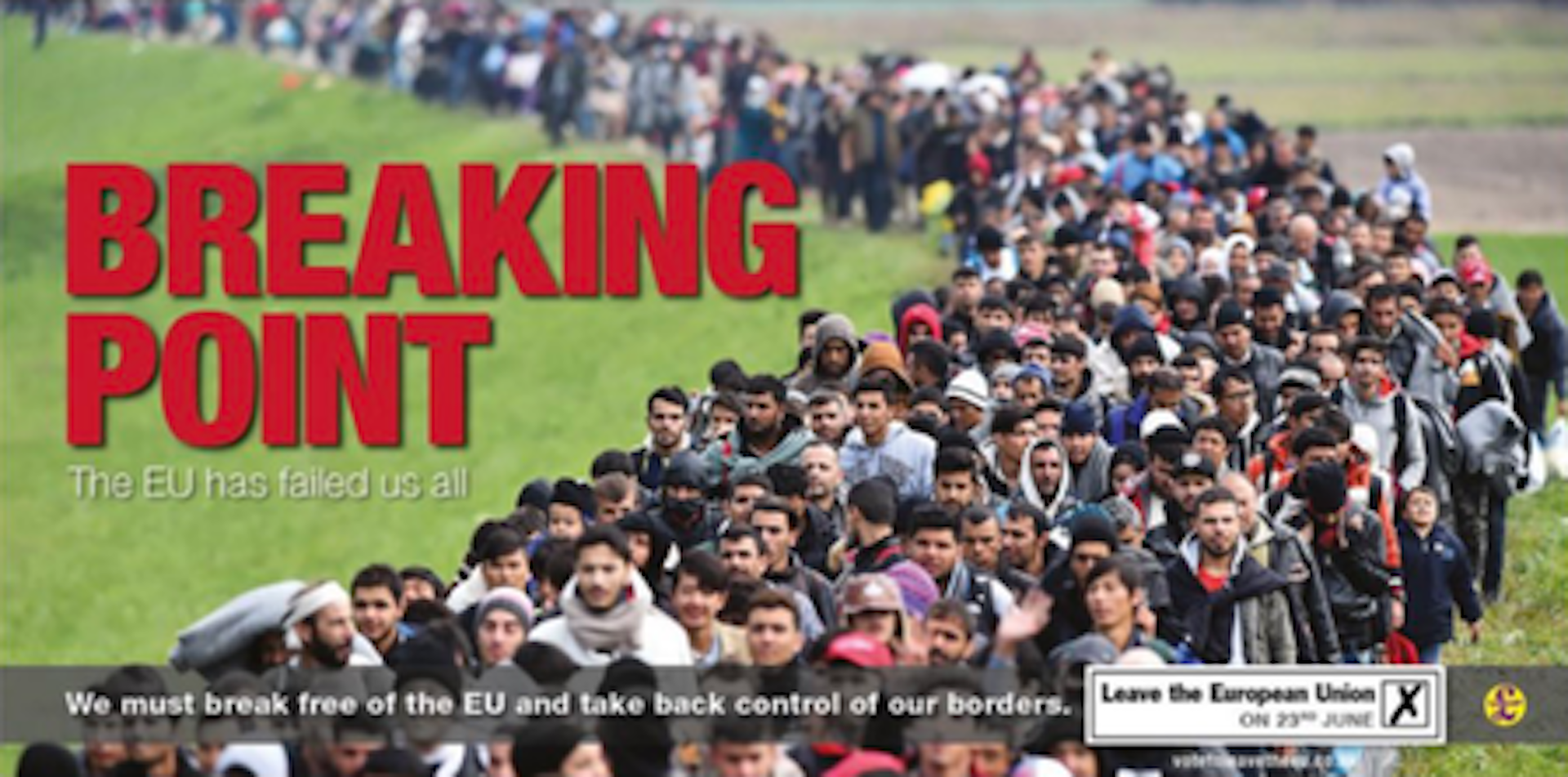
Following the outcry caused by the poster, UKIP was forced to remove it immediately. But the argument had a major impact in a country where immigration – especially from Muslim countries – topped British concerns. Farage’s campaign strategy also consisted in presenting the vote for Brexit as an identity and civilisational issue by presenting immigration – encouraged according to him by the European elites – as an existential threat to British identity and the nation’s future.
Após o clamor causado pelo cartaz, o UKIP foi forçado a removê-lo imediatamente. Mas o argumento teve um grande impacto em um país onde a imigração – especialmente de países muçulmanos – era a principal preocupação britânica. A estratégia de campanha de Farage também consistiu em apresentar o voto pelo Brexit como uma questão de identidade e civilização, apresentando a imigração – segundo ele incentivada pelas elites europeias – como uma ameaça existencial à identidade britânica e ao futuro da nação.
The victory of Brexit has been partly analysed as the victory of gloomy passions – fear of others, hostility toward foreigners, resentment against multiculturalism – and interpreted as a sign of a growingly inward-looking country. But while the wish of much of the pro-Brexit electorate was to see the country being totally closed to foreigners, that was far from the case. Indeed, even after the United Kingdom officially left the European Union on January 31 2020, immigration figures continued to rise, reaching an absolute record in March 2023, with net migration approaching one million. For a large part of the public opinion hostile to immigration, these figures gave the impression that immigration was out-of-control and that governments were powerless in the face of migration flows, reinforcing anger and resentment toward political elites.
A vitória do Brexit foi parcialmente analisada como a vitória de paixões sombrias – medo dos outros, hostilidade para com estrangeiros, ressentimento contra o multiculturalismo – e interpretada como um sinal de um país cada vez mais voltado para si mesmo. Mas, embora o desejo de grande parte do eleitorado pró-Brexit fosse ver o país totalmente fechado a estrangeiros, isso estava longe de ser verdade. De fato, mesmo depois que o Reino Unido deixou oficialmente a União Europeia em 31 de janeiro de 2020, os números de imigração continuaram a subir, atingindo um recorde absoluto em março de 2023, com a migração líquida se aproximando de um milhão. Para grande parte da opinião pública hostil à imigração, esses números deram a impressão de que a imigração estava fora de controle e que os governos eram impotentes diante dos fluxos migratórios, reforçando raiva e ressentimento em relação às elites políticas.
The movie tag contains https://www.arte.tv/fr/videos/111777-006-A/arte-regards/, which is an unsupported URL, in the src attribute. Please try again with youtube or vimeo.
A tag do filme contém https://www.arte.tv/fr/videos/111777-006-A/arte-regards/, que é uma URL não suportada, no atributo src. Por favor, tente novamente com youtube ou vimeo.
Another main promise of the pro-Leave campaign turned out to be a failure. In this context, and if you add to that sluggish economic growth and rampant inflation, it is not surprising that the latest polls indicate that a majority of Britons – about 56% – say they regret leaving the European Union.
Outra promessa principal da campanha pró-saída mostrou ser um fracasso. Neste contexto, e se você adicionar a isso o crescimento econômico lento e a inflação galopante, não é surpreendente que as últimas pesquisas indiquem que a maioria dos britânicos – cerca de 56% – diz que lamenta ter saído da União Europeia.
A broken society
Uma sociedade em frangalhos
At a time when the British are about to commemorate the ten years of the vote in favour of Brexit, feelings of regret, bitterness and betrayal prevail among the public. These sentiments fuel immense anger against political elites, resulting in a loss of confidence in both traditional parties and an unprecedented rise for the far right party Reform UK, led by Nigel Farage.
Em um momento em que os britânicos estão prestes a comemorar os dez anos do voto favorável ao Brexit, sentimentos de arrependimento, amargura e traição prevalecem entre o público. Esses sentimentos alimentam uma imensa raiva contra as elites políticas, resultando na perda de confiança tanto nos partidos tradicionais quanto em um aumento sem precedentes para o partido de extrema-direita Reform UK, liderado por Nigel Farage.
Brexit alone is not to blame for all of the UK’s woes: the health crisis linked to the Covid-19 pandemic and the war in Ukraine also partly explain the economic problems the country is facing. However, it is Brexit that has split the population into two opposing – even hostile – camps, which clash over issues ranging from immigration and ethnic and cultural diversity to the definition of national identity. These divisions have created the conditions for the emergence of genuine culture wars, which, a decade after the referendum, continue to tear British society apart.
O Brexit sozinho não é culpado por todos os problemas do Reino Unido: a crise de saúde ligada à pandemia de Covid-19 e a guerra na Ucrânia também explicam parcialmente os problemas econômicos que o país enfrenta. No entanto, é o Brexit que dividiu a população em dois acampamentos opostos – até hostis –, que colidem sobre questões que vão desde imigração e diversidade étnica e cultural até a definição de identidade nacional. Essas divisões criaram as condições para o surgimento de verdadeiras guerras culturais, que, uma década após o referendo, continuam a despedaçar a sociedade britânica.

A weekly e-mail in English featuring expertise from scholars and researchers. It provides an introduction to the diversity of research coming out of the continent and considers some of the key issues facing European countries. Get the newsletter!
Um e-mail semanal em inglês com expertise de acadêmicos e pesquisadores. Ele oferece uma introdução à diversidade de pesquisas vindas do continente e considera algumas das principais questões enfrentadas pelos países europeus. Receba a newsletter!
Laëtitia Langlois ne travaille pas, ne conseille pas, ne possède pas de parts, ne reçoit pas de fonds d’une organisation qui pourrait tirer profit de cet article, et n’a déclaré aucune autre affiliation que son organisme de recherche.
Laëtitia Langlois não trabalha, não aconselha, não possui ações, nem recebe financiamento de nenhuma organização que possa se beneficiar deste artigo, e não declarou nenhuma outra afiliação além de sua instituição de pesquisa.
Read more
-

Como a história de Israel moldou a maneira como ele faz guerra
How Israel’s history has shaped the way it wages war
-

Apesar de seus melhores esforços, o Irã não conseguirá controlar o Estreito de Ormuz. Veja por quê.
Despite its best efforts, Iran won’t be able to toll the Strait of Hormuz. Here’s why