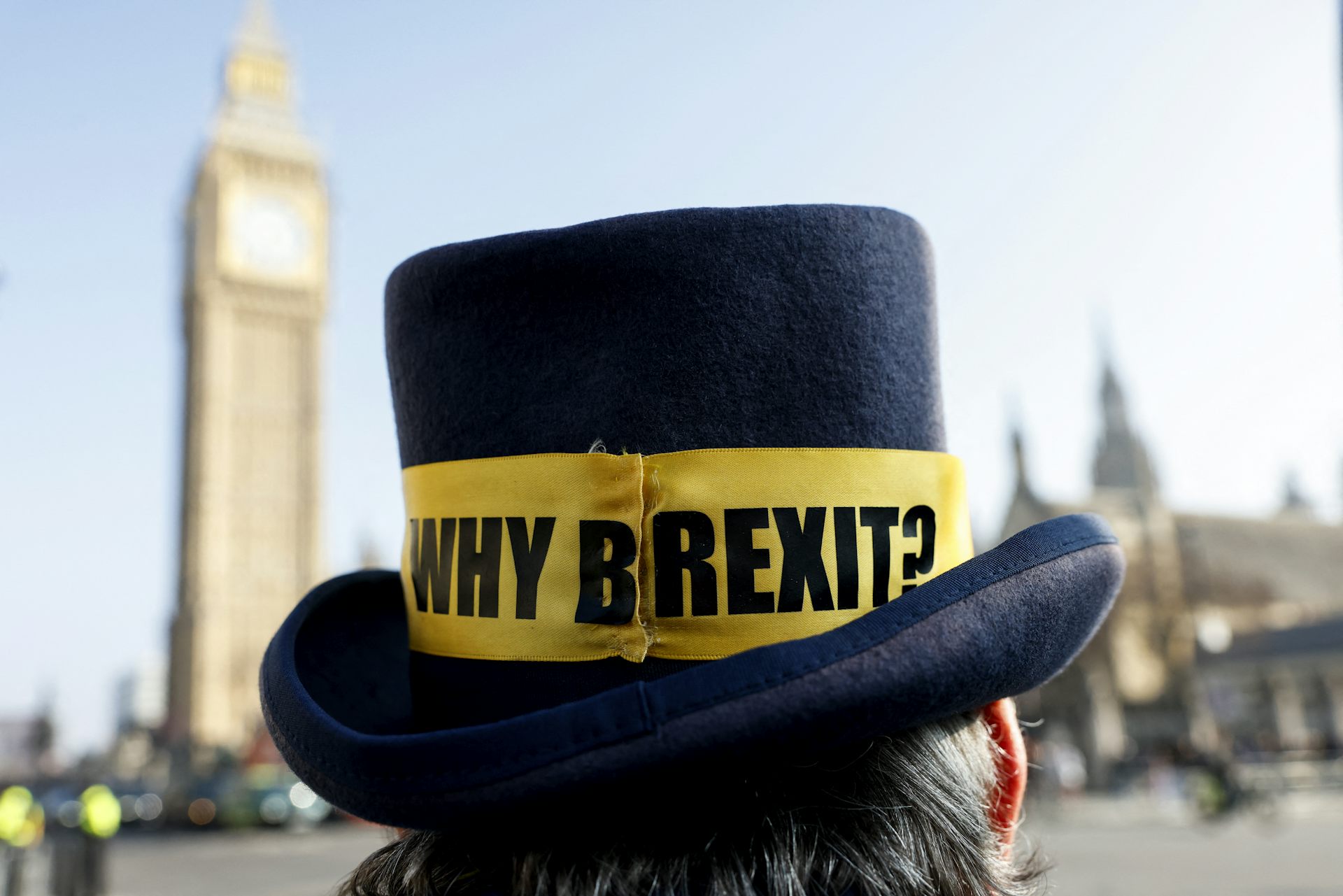
Dari Brexit ke ‘Bregret’: sepuluh tahun kemudian, kepahitan masih membayangi suara Inggris untuk keluar dari UE
From Brexit to ‘Bregret’: ten years later, bitterness still prevails over the UK’s vote to leave the EU
On June 23 2016, a slight majority of Britons voted to leave the European Union. Today surveys show that more people are regretting the EU divorce deal rather than celebrating it.
Pada 23 Juni 2016, mayoritas tipis warga Inggris memilih untuk meninggalkan Uni Eropa. Survei hari ini menunjukkan bahwa lebih banyak orang menyesali kesepakatan perceraian UE daripada merayakannya.
On June 23 2016, a majority of Britons chose to leave the European Union after a referendum campaign driven by the promises of supporters of the “Leave” camp, spearheaded by Nigel Farage and Boris Johnson. Built around the slogan “Take Back Control”, the pro-Brexit campaign promised to restore the country’s sovereignty, regain control over migration flows, and boost economic prosperity. Ten years on, hopes have given way to a bitter sense of disillusion that the British refer to as “Bregret”, and it is a divided, weakened, disenchanted country who is about to commemorate the tenth anniversary of the referendum.
Pada 23 Juni 2016, mayoritas warga Inggris memilih untuk meninggalkan Uni Eropa setelah kampanye referendum yang didorong oleh janji-janji pendukung kubu “Keluar”, yang dipimpin oleh Nigel Farage dan Boris Johnson. Dibangun di sekitar slogan “Take Back Control” (Ambil Kembali Kendali) , kampanye pro-Brexit menjanjikan untuk memulihkan kedaulatan negara, mendapatkan kembali kendali atas arus migrasi, dan meningkatkan kemakmuran ekonomi. Sepuluh tahun kemudian, harapan telah digantikan oleh rasa kecewa yang pahit yang disebut Inggris sebagai “Bregret”, dan kini mereka adalah negara yang terpecah belah, melemah, dan kehilangan semangat yang akan memperingati ulang tahun kesepuluh referendum tersebut.
The Brexit shock
Guncangan Brexit
There are few events in a country’s national history that constitute such an immense and profound shock as Brexit. The announcement of the results, that indicated a 51.9% victory for the “Leave” camp, sent shockwaves across the world. After 43 years of a relationship that was often turbulent and confrontational, the United Kingdom decided to leave the European Union and open a new chapter in its history.
Jarang ada peristiwa dalam sejarah nasional suatu negara yang menimbulkan guncangan sedahsyat dan sedalam Brexit. Pengumuman hasil pemungutan suara, yang menunjukkan kemenangan 51,9% bagi kubu “Leave” (Keluar) , mengirimkan gelombang kejut ke seluruh dunia. Setelah 43 tahun hubungan yang sering kali bergejolak dan konfrontatif, Britania Raya memutuskan untuk meninggalkan Uni Eropa dan membuka babak baru dalam sejarahnya.
The reasons for the shock were manifold: first, it was an unprecedented event that raised many uncertainties and fears about the future of the United Kingdom and the European Union alike; the shock was also explained by the completely unexpected nature of the victory, given that the main polling institutes were predicting a close election, giving the “Remain” camp a slight edge; finally, the vote in favour of Brexit represented a political and ideological victory for Nigel Farage, the then leader of the far right populist United Kingdom Independence Party (UKIP) which was fiercely hostile to the European Union, immigration and multiculturalism.
Alasan di balik guncangan ini sangat beragam: pertama, ini adalah peristiwa yang belum pernah terjadi sebelumnya yang menimbulkan banyak ketidakpastian dan kekhawatiran tentang masa depan Britania Raya maupun Uni Eropa; guncangan itu juga dijelaskan oleh sifat kemenangan yang sama sekali tidak terduga, mengingat bahwa lembaga jajak pendapat utama memprediksi pemilihan yang ketat, memberikan keunggulan tipis kepada kubu “Remain” (Tetap) ; terakhir, suara yang mendukung Brexit mewakili kemenangan politik dan ideologis bagi Nigel Farage, pemimpin saat itu dari Partai Independensi Britania Raya (UKIP) populis sayap kanan jauh yang sangat anti-Uni Eropa, imigrasi, dan multikulturalisme.
Previously considered more of an outsider, Nigel Farage then went on to become a central figure in the British political landscape, unanimously recognised as the main architect of Brexit. His campaign themes – which revolved primarily around the fight against immigration, restoring national sovereignty, and defending British national identity – emerged as the dominant themes in the national debate. Boris Johnson, another central figure in the “Leave” campaign and future prime minister (2019-2022) , also contributed to the rise of populist ideas by placing them at the very heart of the Conservative Party.
Sebelumnya dianggap sebagai pihak luar, Nigel Farage kemudian menjadi tokoh sentral dalam lanskap politik Inggris, diakui secara universal sebagai arsitek utama Brexit. Tema kampanye-nya – yang terutama berkisar pada perjuangan melawan imigrasi, pemulihan kedaulatan nasional, dan pembelaan identitas nasional Inggris – muncul sebagai tema dominan dalam perdebatan nasional. Boris Johnson, tokoh sentral lain dalam kampanye “Leave” dan calon perdana menteri (2019-2022) , juga berkontribusi pada bangkitnya ide-ide populis dengan menempatkannya di jantung Partai Konservatif.
Brexit thus normalised and mainstreamed populist discourse, which had long remained on the fringes of the public sphere, contributing to an unprecedented dynamic for the far right and a major recomposition in British political life. This is the great irony of this referendum: originally put forward by David Cameron in 2013 when he was prime minister to strengthen his authority over the Conservative Party and stem the rise of UKIP, the referendum had the exact opposite effect.
Dengan demikian, Brexit menormalisasi dan menjadikan wacana populis sebagai arus utama, yang selama ini masih berada di pinggiran ruang publik, berkontribusi pada dinamika yang belum pernah terjadi sebelumnya bagi sayap kanan jauh dan komposisi ulang besar dalam kehidupan politik Inggris. Inilah ironi terbesar dari referendum ini: awalnya diajukan oleh David Cameron pada tahun 2013 ketika ia menjabat sebagai perdana menteri untuk memperkuat otoritasnya atas Partai Konservatif dan meredam kebangkitan UKIP, referendum tersebut justru memiliki efek yang sangat berlawanan.
Not only did the Leave vote precipitate Cameron’s downfall, but, above all, it contributed to major political upheavals characterised by the erosion of the two traditional parties, the overwhelming rise of the far right and the polarisation of public debate around questions of immigration and national identity. The referendum was supposed to appease and unify the country; on the contrary, it deeply destabilised and divided it.
Tidak hanya suara Leave yang memicu kejatuhan Cameron, tetapi yang terpenting, hal itu berkontribusi pada gejolak politik besar yang ditandai oleh erosi dua partai tradisional, bangkitnya sayap kanan jauh secara masif, dan polarisasi perdebatan publik seputar isu imigrasi dan identitas nasional. Referendum tersebut seharusnya menenangkan dan menyatukan negara; sebaliknya, hal itu justru mendestabilisasi dan memecah belah negara secara mendalam.
Bitter tomorrows: the disillusions of Brexit
Hari esok yang pahit: kekecewaan pasca-Brexit
A few hours after the announcement of the results and while euphoria was still strong among the supporters of the “Leave” camp, a first interview with Nigel Farage on the ITV Good Morning Britain program caused general astonishment. He told the two journalists that the promise to pay the amount of the contribution to the European budget to the budget of the National Health Service (NHS) – the British public health service – will “probably not be delivered”.
Beberapa jam setelah pengumuman hasil dan saat euforia masih kuat di kalangan pendukung kampanye “Leave”, wawancara pertama dengan Nigel Farage di program ITV Good Morning Britain menyebabkan keheranan umum. Dia mengatakan kepada kedua jurnalis bahwa janji untuk membayar jumlah kontribusi ke anggaran Uni Eropa ke anggaran Layanan Kesehatan Nasional (NHS) – layanan kesehatan publik Inggris – “mungkin tidak akan terpenuhi.”
By reneging on his campaign’s key promise, Farage was betraying a commitment that weighed heavily in many voters’ decision to vote for the “Leave” camp. The NHS, set up after World War II to ensure that all Britons would have universal access to health care “from the cradle to the grave”, is an iconic pillar of the welfare state. However, multiple reforms to make it less expensive and more effective have seriously weakened it and it is now facing many problems, including chronic underfunding, a shortage of staff, or excessively long waiting delays.
Dengan mengingkari janji utama kampanyenya, Farage telah mengkhianati komitmen yang sangat memengaruhi keputusan banyak pemilih untuk memilih kampanye “Leave”. NHS, didirikan setelah Perang Dunia II untuk memastikan bahwa semua warga Inggris memiliki akses universal terhadap layanan kesehatan “dari buaian hingga liang lahat”, adalah pilar ikonik negara kesejahteraan. Namun, berbagai reformasi untuk membuatnya kurang mahal dan lebih efektif telah melemahkannya secara serius dan kini menghadapi banyak masalah, termasuk kekurangan dana kronis, kekurangan staf, atau penundaan tunggu yang terlalu lama.
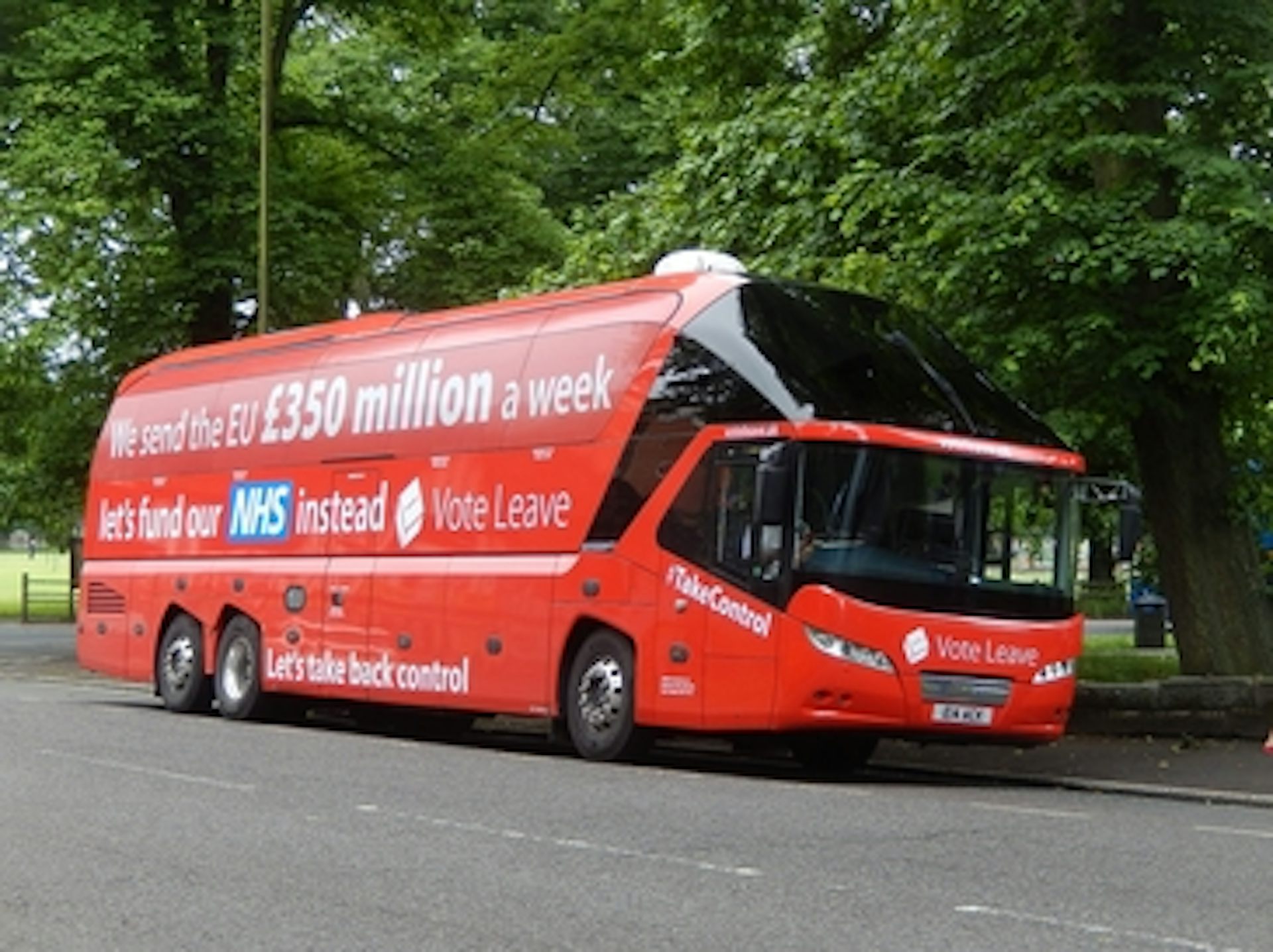
Aware of the NHS’s place in the hearts of the British people, the pro-Leave campaigners heavily promoted the argument that, in the event of an exit from the EU, the money previously allocated to the EU budget would be channelled directly into funding the NHS. Boris Johnson criss-crossing the country in his red bus bearing the slogan “We send the EU £350 million a week, let’s fund our NHS instead” was one of the campaign’s most emblematic images.
Menyadari tempat NHS di hati rakyat Inggris, para pendukung pro-Leave gencar mempromosikan argumen bahwa, jika keluar dari Uni Eropa, uang yang sebelumnya dialokasikan untuk anggaran UE akan disalurkan langsung untuk mendanai NHS. Boris Johnson melintasi negara dengan bus merahnya membawa slogan “Kami mengirim £350 juta ke UE setiap minggu, mari kita danai NHS kita sebagai gantinya” adalah salah satu gambar paling ikonik dari kampanye tersebut.
Inevitably, this argument struck a chord with a large section of the British electorate, who were concerned about the decline of such a national institution. Nigel Farage’s sudden U-turn felt like a massive betrayal and highlighted, from the very first hours following the vote, the gap between promises and reality.
Tak terhindarkan, argumen ini menyentuh hati sebagian besar pemilih Inggris, yang khawatir tentang kemunduran institusi nasional semacam itu. Perubahan arah mendadak Nigel Farage terasa seperti pengkhianatan besar dan menyoroti, sejak jam-jam pertama setelah pemungutan suara, kesenjangan antara janji dan kenyataan.
The other major theme of the pro-Leave campaign was the fight against immigration. On this point, too, the gap between promises and reality led to a deep resentment among voters.
Tema utama lain dari kampanye pro-Leave adalah perjuangan melawan imigrasi. Pada poin ini juga, kesenjangan antara janji dan kenyataan menyebabkan kebencian mendalam di kalangan pemilih.
For years, Nigel Farage had been repeating that because of its membership of the European Union, which advocates the principle of open borders and free movement of people, the UK lacked the capacity to control its borders or to prevent mass immigration. A few days before the referendum, Farage unveiled a campaign poster called ‘Breaking Point’ which showed a crowd of migrants from the Middle East – exclusively men – gathered at the Croatian-Serbian border like ready to “invade” Europe. The caption on the poster read, “The EU has failed us all.”
Selama bertahun-tahun, Nigel Farage telah mengulangi bahwa karena keanggotaannya dalam Uni Eropa, yang menganjurkan prinsip perbatasan terbuka dan pergerakan orang bebas, Inggris kekurangan kapasitas untuk mengendalikan perbatasannya atau mencegah imigrasi massal. Beberapa hari sebelum referendum, Farage meluncurkan poster kampanye bernama ‘Breaking Point’ yang menunjukkan kerumunan migran dari Timur Tengah – hanya laki-laki – berkumpul di perbatasan Kroasia-Serbia seolah siap “menginvasi” Eropa. Keterangan pada poster itu berbunyi, “UE telah mengecewakan kita semua.”
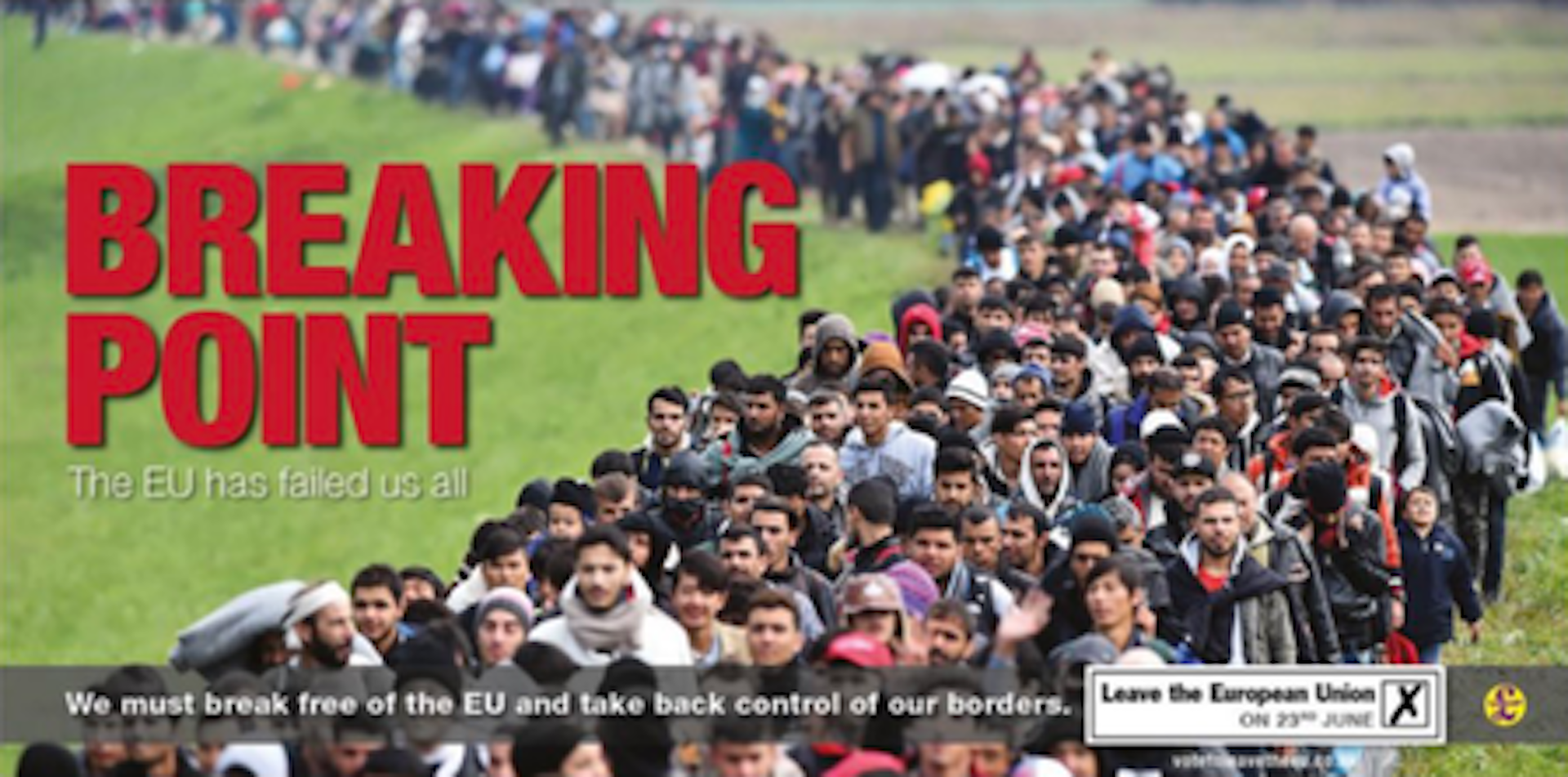
Following the outcry caused by the poster, UKIP was forced to remove it immediately. But the argument had a major impact in a country where immigration – especially from Muslim countries – topped British concerns. Farage’s campaign strategy also consisted in presenting the vote for Brexit as an identity and civilisational issue by presenting immigration – encouraged according to him by the European elites – as an existential threat to British identity and the nation’s future.
Menyusul protes yang ditimbulkan oleh poster tersebut, UKIP terpaksa segera menghapusnya. Tetapi argumen itu berdampak besar di negara tempat imigrasi – terutama dari negara-negara Muslim – menjadi perhatian utama Inggris. Strategi kampanye Farage juga terdiri dari menyajikan pemungutan suara untuk Brexit sebagai masalah identitas dan peradaban dengan menampilkan imigrasi – yang menurutnya didorong oleh elit Eropa – sebagai ancaman eksistensial bagi identitas Inggris dan masa depan bangsa.
The victory of Brexit has been partly analysed as the victory of gloomy passions – fear of others, hostility toward foreigners, resentment against multiculturalism – and interpreted as a sign of a growingly inward-looking country. But while the wish of much of the pro-Brexit electorate was to see the country being totally closed to foreigners, that was far from the case. Indeed, even after the United Kingdom officially left the European Union on January 31 2020, immigration figures continued to rise, reaching an absolute record in March 2023, with net migration approaching one million. For a large part of the public opinion hostile to immigration, these figures gave the impression that immigration was out-of-control and that governments were powerless in the face of migration flows, reinforcing anger and resentment toward political elites.
Kemenangan Brexit sebagian dianalisis sebagai kemenangan emosi suram – ketakutan terhadap orang lain, permusuhan terhadap orang asing, kebencian terhadap multikulturalisme – dan ditafsirkan sebagai tanda negara yang semakin tertutup ke dalam. Namun, meskipun keinginan banyak pemilih pro-Brexit adalah melihat negara benar-benar tertutup bagi orang asing, kenyataannya jauh dari itu. Bahkan setelah Britania Raya secara resmi meninggalkan Uni Eropa pada 31 Januari 2020, angka imigrasi terus meningkat, mencapai rekor absolut pada Maret 2023, dengan migrasi bersih mendekati satu juta. Bagi sebagian besar opini publik yang memusuhi imigrasi, angka-angka ini memberikan kesan bahwa imigrasi di luar kendali dan bahwa pemerintah tidak berdaya menghadapi arus migrasi, memperkuat kemarahan dan kebencian terhadap elit politik.
The movie tag contains https://www.arte.tv/fr/videos/111777-006-A/arte-regards/, which is an unsupported URL, in the src attribute. Please try again with youtube or vimeo.
Tag film berisi https://www.arte.tv/fr/videos/111777-006-A/arte-regards/, yang merupakan URL tidak didukung, di atribut src. Mohon coba lagi dengan youtube atau vimeo.
Another main promise of the pro-Leave campaign turned out to be a failure. In this context, and if you add to that sluggish economic growth and rampant inflation, it is not surprising that the latest polls indicate that a majority of Britons – about 56% – say they regret leaving the European Union.
Janji utama lain dari kampanye pro-Keluar ternyata gagal. Dalam konteks ini, dan jika ditambahkan dengan pertumbuhan ekonomi yang lambat serta inflasi yang merajalela, tidak mengherankan bahwa jajak pendapat terbaru menunjukkan bahwa mayoritas warga Inggris – sekitar 56% – mengatakan mereka menyesal meninggalkan Uni Eropa.
A broken society
Masyarakat yang Hancur
At a time when the British are about to commemorate the ten years of the vote in favour of Brexit, feelings of regret, bitterness and betrayal prevail among the public. These sentiments fuel immense anger against political elites, resulting in a loss of confidence in both traditional parties and an unprecedented rise for the far right party Reform UK, led by Nigel Farage.
Pada saat Inggris akan memperingati sepuluh tahun pemungutan suara yang mendukung Brexit, perasaan penyesalan, kepahitan, dan pengkhianatan merajalela di kalangan publik. Sentimen ini memicu kemarahan besar terhadap kaum elit politik, mengakibatkan hilangnya kepercayaan pada partai-partai tradisional maupun kenaikan yang belum pernah terjadi sebelumnya bagi partai sayap kanan Reform UK, yang dipimpin oleh Nigel Farage.
Brexit alone is not to blame for all of the UK’s woes: the health crisis linked to the Covid-19 pandemic and the war in Ukraine also partly explain the economic problems the country is facing. However, it is Brexit that has split the population into two opposing – even hostile – camps, which clash over issues ranging from immigration and ethnic and cultural diversity to the definition of national identity. These divisions have created the conditions for the emergence of genuine culture wars, which, a decade after the referendum, continue to tear British society apart.
Brexit saja tidak bertanggung jawab atas semua masalah Inggris: krisis kesehatan terkait pandemi Covid-19 dan perang di Ukraina juga sebagian menjelaskan masalah ekonomi yang dihadapi negara tersebut. Namun, Brexit-lah yang telah membelah populasi menjadi dua kubu yang berlawanan – bahkan bermusuhan – yang saling bertabrakan mengenai isu-isu mulai dari imigrasi dan keberagaman etnis serta budaya hingga definisi identitas nasional. Perpecahan ini telah menciptakan kondisi bagi munculnya perang budaya sejati, yang, satu dekade setelah referendum, terus merobek masyarakat Inggris.

A weekly e-mail in English featuring expertise from scholars and researchers. It provides an introduction to the diversity of research coming out of the continent and considers some of the key issues facing European countries. Get the newsletter!
Email mingguan dalam bahasa Inggris menampilkan keahlian dari para akademisi dan peneliti. Ini memberikan pengantar tentang keberagaman penelitian yang berasal dari benua tersebut dan mempertimbangkan beberapa isu utama yang dihadapi negara-negara Eropa. Dapatkan buletinnya!
Laëtitia Langlois ne travaille pas, ne conseille pas, ne possède pas de parts, ne reçoit pas de fonds d’une organisation qui pourrait tirer profit de cet article, et n’a déclaré aucune autre affiliation que son organisme de recherche.
Laëtitia Langlois tidak bekerja, tidak memberi nasihat, tidak memiliki saham, dan tidak menerima dana dari organisasi yang dapat memperoleh keuntungan dari artikel ini, dan dia tidak menyatakan afiliasi lain selain lembaga penelitiannya.
Read more
-

Cadangan emas bank sentral berada di level tertinggi dalam 50 tahun. Apa yang menyebabkan lonjakan cadangan tersebut?
Central bank gold holdings are at a 50-year high. What’s behind the jump in reserves?
-

‘Kontak pertama’ yang mungkin mengarah pada kehidupan kompleks di Bumi akhirnya disaksikan oleh para ilmuwan
‘First contact’ that may have led to complex life on Earth finally witnessed by scientists