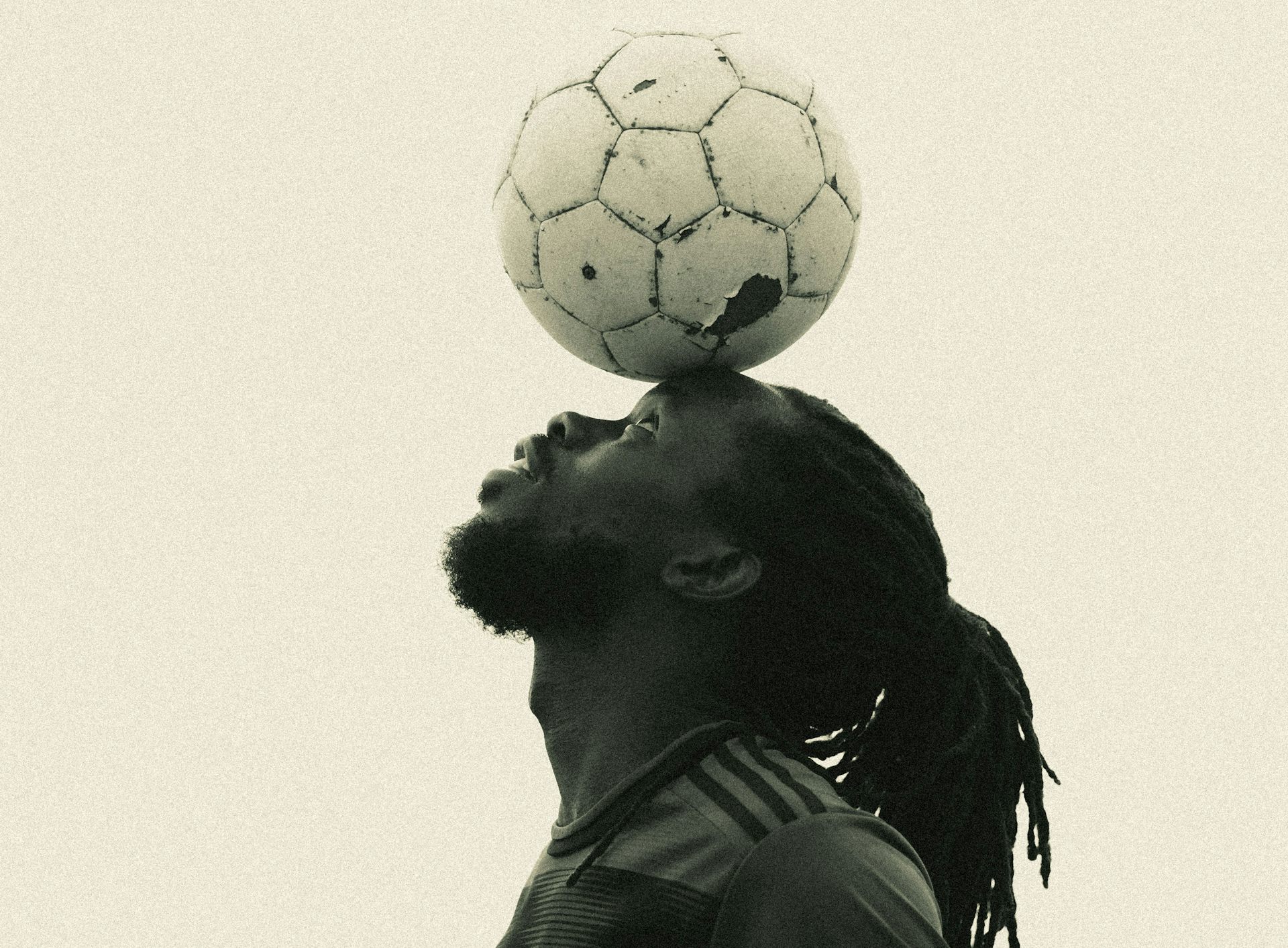
Copa Mundial 2026: la verdadera historia de los migrantes africanos resilientes que están remodelando el fútbol mundial
World Cup 2026: the real story of the resilient African migrants reshaping global football
The World Cup is selling football as inclusive and diverse. It’s not so for the African players migrating to play overseas.
La Copa Mundial vende el fútbol como inclusivo y diverso. No lo es para los jugadores africanos que migran a jugar en el extranjero.
Global football body Fifa is branding the World Cup 2026 – and global football in general – as a celebration of inclusivity and diversity. It’s presented as a harbinger of peace and hope, and even somehow a saviour of African migrants who drown while attempting to cross the Mediterranean Sea.
El organismo de fútbol mundial Fifa está presentando a la Copa Mundial 2026 —y al fútbol global en general— como una celebración de la inclusión y la diversidad. Se presenta como un precursor de paz y esperanza, e incluso de alguna manera como el salvador de los migrantes africanos que se ahogan mientras intentan cruzar el Mar Mediterráneo.
The humanitarian posturing should not distract us from the existence of a precarious global class of migrants. They have travelled (especially from west Africa) to Europe (and elsewhere) by various means, with dreams of playing football for a living. As plenty of research has shown, many become stranded as unauthorised migrants, manipulated by deceitful agents, or exploited by football clubs.
La postura humanitaria no debe distraernos de la existencia de una precaria clase global de migrantes. Han viajado (especialmente desde África Occidental) a Europa (y otros lugares) por diversos medios, con sueños de jugar al fútbol para ganarse la vida. Como ha demostrado mucha investigación, muchos quedan varados como migrantes no autorizados, manipulados por agentes engañosos o explotados por clubes de fútbol.
Despite nuanced and long-standing research on this topic, west African football migrants are still routinely in the headlines for more sensational reasons. They are being reported on as either victims of human trafficking or as stellar performers in elite football.
A pesar de la investigación matizada y de larga data sobre este tema, los migrantes futbolísticos de África Occidental siguen apareciendo habitualmente en los titulares por razones más sensacionalistas. Se reporta sobre ellos ya sea como víctimas de trata de personas o como atletas estelares del fútbol de élite.
Human trafficking in and through football certainly exists. It’s been thoroughly explained by scholars and investigative journalists. But focusing only on victimhood or elite stars does no justice to the more common realities, aspirations and challenges of migrants who are reshaping today’s Europe and its football.
La trata de personas dentro y a través del fútbol ciertamente existe. Ha sido explicada exhaustivamente por académicos y periodistas de investigación. Pero centrarse solo en la victimización o en las estrellas de élite no hace justicia a las realidades, aspiraciones y desafíos más comunes de los migrantes que están remodelando la Europa y su fútbol actuales.
I’ve spent more than a decade conducting anthropological research on football-related migrations from west Africa to Europe. Most recently, I interviewed migrants in Belgium and eastern Europe, building on my previous work with aspiring players in western Cameroon.
He pasado más de una década realizando investigaciones antropológicas sobre las migraciones relacionadas con el fútbol desde África Occidental hacia Europa. Más recientemente, entrevisté a migrantes en Bélgica y Europa del Este, basándome en mi trabajo anterior con aspirantes a jugadores en el oeste de Camerún.
I found that, between the alarmist headlines and saviour narratives, the actual story is one of a highly precarious class of ambitious and resilient migrants navigating a treacherous profit-driven industry and violent border regimes.
Descubrí que, entre los titulares alarmistas y las narrativas de salvación, la historia real es la de una clase altamente precaria de migrantes ambiciosos y resilientes navegando por una industria traicionera impulsada por el lucro y regímenes fronterizos violentos.
Football dreams
Sueños de fútbol
A recent survey by migration scholars in west Africa asked young people (18-39) what their most important dream in life was. In Ghana, 13% of young men said it was to become a professional footballer. In The Gambia, it was 10%.
Una encuesta reciente realizada por académicos de migración en África Occidental preguntó a jóvenes (de 18 a 39 años) cuál era su sueño más importante en la vida. En Ghana, el 13% de los hombres jóvenes dijo que era convertirse en futbolista profesional. En Gambia, fue del 10%.
These are very high percentages, and would likely be much higher if the survey was among a younger population (like 15-30) . They’re especially striking when you consider that only very few aspirants have a realistic chance of “making it” as professionals.
Estos son porcentajes muy altos y probablemente serían mucho mayores si la encuesta se hubiera realizado entre una población más joven (como de 15 a 30 años) . Son especialmente llamativos cuando se considera que muy pocos aspirantes tienen una oportunidad realista de «triunfar» como profesionales.
Football opportunities in west African domestic leagues are limited, uncertain, and often not very well paid. Dreaming of professional football almost always means dreaming of migrating overseas.
Las oportunidades futbolísticas en las ligas nacionales de África Occidental son limitadas, inciertas y a menudo no están bien remuneradas. Soñar con el fútbol profesional casi siempre significa soñar con migrar al extranjero.
Playing and training for football has become one of the most desirable ways for young men to attempt to migrate, earn a living, and start providing for their families. The aspiring west African footballers attempt to travel everywhere, though Europe remains the most preferred destination.
Jugar y entrenar para el fútbol se ha convertido en una de las formas más deseables para que los hombres jóvenes intenten migrar, ganarse la vida y empezar a proveer para sus familias. Los futbolistas aspirantes de África Occidental intentan viajar por todas partes, aunque Europa sigue siendo el destino más preferido.
Migration as hustle
Migración como artimaña
Young men from countries like Ghana, The Gambia, Côte d’Ivoire and Nigeria travel to Europe by whatever route is available. Many of these routes have little to do with official transfers of players between clubs.
Jóvenes de países como Ghana, Gambia, Costa de Marfil y Nigeria viajan a Europa por cualquier ruta disponible. Muchas de estas rutas tienen poco que ver con las transferencias oficiales de jugadores entre clubes.
One aspiring Ghanaian footballer I met in 2024 in Belgium, for example, arrived in Europe by boat. This was through a clandestine route, via Libya and Italy, that some of his Gambian friends called “the backway”. Only after arriving to Europe did he start looking for football opportunities in lower division clubs. He lived with his father and brother in Belgium while applying for a residence permit based on family reunification.
Un futbolista ghanés aspirante que conocí en 2024 en Bélgica, por ejemplo, llegó a Europa en barco. Esto fue a través de una ruta clandestina, vía Libia e Italia, que algunos de sus amigos gambianos llamaron «el camino de vuelta.» Solo después de llegar a Europa comenzó a buscar oportunidades futbolísticas en clubes de divisiones inferiores. Vivió con su padre y hermano en Bélgica mientras solicitaba un permiso de residencia basado en la reunificación familiar.
Not all take a dangerous route. But much of the football-inspired migration takes place on an informal level, through informal intermediaries and family members already living abroad. Officially sanctioned transfers are limited to those most talented – and most lucky.
No todos toman una ruta peligrosa. Pero gran parte de la migración inspirada en el fútbol tiene lugar a nivel informal, a través de intermediarios informales y familiares que ya viven en el extranjero. Las transferencias oficialmente sancionadas se limitan a los más talentosos —y los más afortunados—.
The footballers I worked with sometimes call this a “hustle”. The term is also used more generally in west Africa for finding a way of getting a livelihood, usually by negotiating an uncertain but flexible informal economy.
Los futbolistas con los que trabajé a veces llaman a esto un «hustle.» El término también se usa de manera más general en África Occidental para encontrar una forma de ganarse la vida, generalmente negociando una economía informal incierta pero flexible.
For aspiring migrants, it means finding ways to become mobile and navigate transnational waters in a context in which visa applications are consistently rejected and regular migration routes are difficult to come by.
Para los migrantes aspirantes, significa encontrar formas de ser móviles y navegar aguas transnacionales en un contexto en el que las solicitudes de visado son rechazadas constantemente y las rutas migratorias regulares son difíciles de conseguir.
A golden prison
Una prisión dorada
The hustle can be exciting, rewarding, but also incredibly tough and full of suffering. One of my research participants was an Ivorian who became stranded in Belgium as an unauthorised migrant after having been mismanaged by a greedy agent. He described his situation as a “golden prison”. Golden because of the opportunity for a shining career in Europe, and a prison because of an unauthorised status that left him fearful and confined to a small bedroom.
La agitación puede ser emocionante, gratificante, pero también increíblemente dura y llena de sufrimiento. Uno de mis participantes en la investigación era un ciudadano de Costa de Marfil que quedó varado en Bélgica como migrante no autorizado después de haber sido mal manejado por un agente codicioso. Describió su situación como una “prisión dorada”. Dorada debido a la oportunidad de una brillante carrera en Europa, y prisión debido al estatus no autorizado que lo dejó temeroso y confinado a un pequeño dormitorio.
When I asked young men like him why they stayed in Europe after not signing football contracts, they would reply that they had to keep fighting. That they were aware they might never get another opportunity to leave Africa again, for football or otherwise. In other words, stringent border regimes prevented them from moving more freely. They pushed them towards unauthorised routes and societal margins.
Cuando les pregunté a jóvenes como él por qué se quedaban en Europa sin haber firmado contratos de fútbol, respondían que tenían que seguir luchando. Que eran conscientes de que quizás nunca tendrían otra oportunidad de dejar África, ya fuera por el fútbol o por cualquier otro motivo. En otras palabras, los regímenes fronterizos estrictos les impedían moverse con más libertad. Los empujaban hacia rutas no autorizadas y márgenes sociales.
Authorities often single out rogue agents and traffickers in order to combat the problem. But these individuals are only part of a set of larger issues.
Las autoridades a menudo señalan a agentes corruptos y traficantes para combatir el problema. Pero estos individuos son solo parte de un conjunto de problemas más grandes.
I also followed and interviewed football intermediaries – agents, coaches, and club owners who seek to arrange and control the footballers’ mobility. I found that they were driven both by profit and by a genuine desire to help young men achieve their dreams. When I asked them why they pursued uncertain (and sometimes shady) deals and frequently changed their plans, they explained that they had to respond to ever-changing demands of the global market. The brokers were entrepreneurs busy with a “hustle” of their own: the speculative and fickle global business of football transfers.
También seguí e entrevisté a intermediarios del fútbol: agentes, entrenadores y dueños de clubes que buscan organizar y controlar la movilidad de los futbolistas. Descubrí que estaban impulsados tanto por el beneficio como por un deseo genuino de ayudar a los jóvenes a alcanzar sus sueños. Cuando les pregunté por qué perseguían acuerdos inciertos (y a veces turbios) y cambiaban con frecuencia sus planes, explicaron que tenían que responder a las demandas en constante cambio del mercado global. Los corredores eran emprendedores ocupados con su propia “faena”: el negocio especulativo e inestable de los traspasos de fútbol.
Finally, when I asked the footballers why they travelled in the first place, they would reply that economic opportunities for young people in west Africa cannot compare to those available overseas, in football and otherwise. A key reason young men are driven to search for “greener pastures” is the glaring economic inequality between the global north and the global south.
Finalmente, cuando les pregunté a los futbolistas por qué viajaban en primer lugar, respondían que las oportunidades económicas para los jóvenes en África Occidental no se comparan con las disponibles en el extranjero, ya sea en el fútbol o en cualquier otro ámbito. Una razón clave por la que los hombres buscan “praderas más verdes” es la flagrante desigualdad económica entre el norte global y el sur global.
Systemic inequalities
Desigualdades sistémicas
Issues like these – speculative capitalism, violent borders, global inequalities, and a racism that is both obvious and covert – are structural and deeply rooted. They’re not exclusive to football migrations.
Problemas como estos —el capitalismo especulativo, las fronteras violentas, las desigualdades globales y un racismo que es tanto obvio como encubierto— son estructurales y están profundamente arraigados. No son exclusivos de las migraciones futbolísticas.
These issues will not be resolved by simply hunting down rogue agents. Indiscriminate labels of “trafficking” and “slave trade” can effectively conceal common problems experienced by the majority of migrants. They obscure underlying inequalities that make their paths precarious.
Estos problemas no se resolverán simplemente cazando agentes renegados. Las etiquetas indiscriminadas de «tráfico» y «comercio de esclavos» pueden ocultar eficazmente los problemas comunes experimentados por la mayoría de los migrantes. Oscurecen las desigualdades subyacentes que hacen precarios sus caminos.
The stories of football migrants in my study do not so much capture headline-grabbing instances of a modern slave trade, and certainly not the self-congratulatory narratives of diversity and inclusion. They reveal a much more common story – of ambition and resilience in an unequal and unjust world.
Las historias de los migrantes futbolísticos en mi estudio no capturan tanto casos llamativos de un moderno comercio de esclavos, ni ciertamente las narrativas autocomplacientes de diversidad e inclusión. Revelan una historia mucho más común: la de la ambición y la resiliencia en un mundo desigual e injusto.
Uroš Kovač receives funding from the European Research Executive Agency under Grant Agreement 101106831 for a project entitled’Two-Faced Hopes: Football, Migration, and Religion Between West Africa and Europe (JANUSHOPE) ’.
Uroš Kovač recibe financiación de la Agencia Ejecutiva de Investigación Europea bajo el Acuerdo de Subvención 101106831 para un proyecto titulado ‘Dos Caras de Esperanza: Fútbol, Migración y Religión entre África Occidental y Europa (JANUSHOPE) ‘.
Read more
-
La historia del texto ‘hito’ del Papa León sobre tecnología de IA – por un miembro de su panel de lanzamiento
The story of Pope Leo’s ‘landmark’ text on AI technology – by a member of its launch panel
-

Este exitoso tratado de pesca ártica ha mantenido a Rusia, China, EE. UU. y otros trabajando juntos durante 5 años; podría ser un modelo para la diplomacia futura.
This successful Arctic fishing treaty has kept Russia, China, the US and others working together for 5 years – it could be a model for future diplomacy