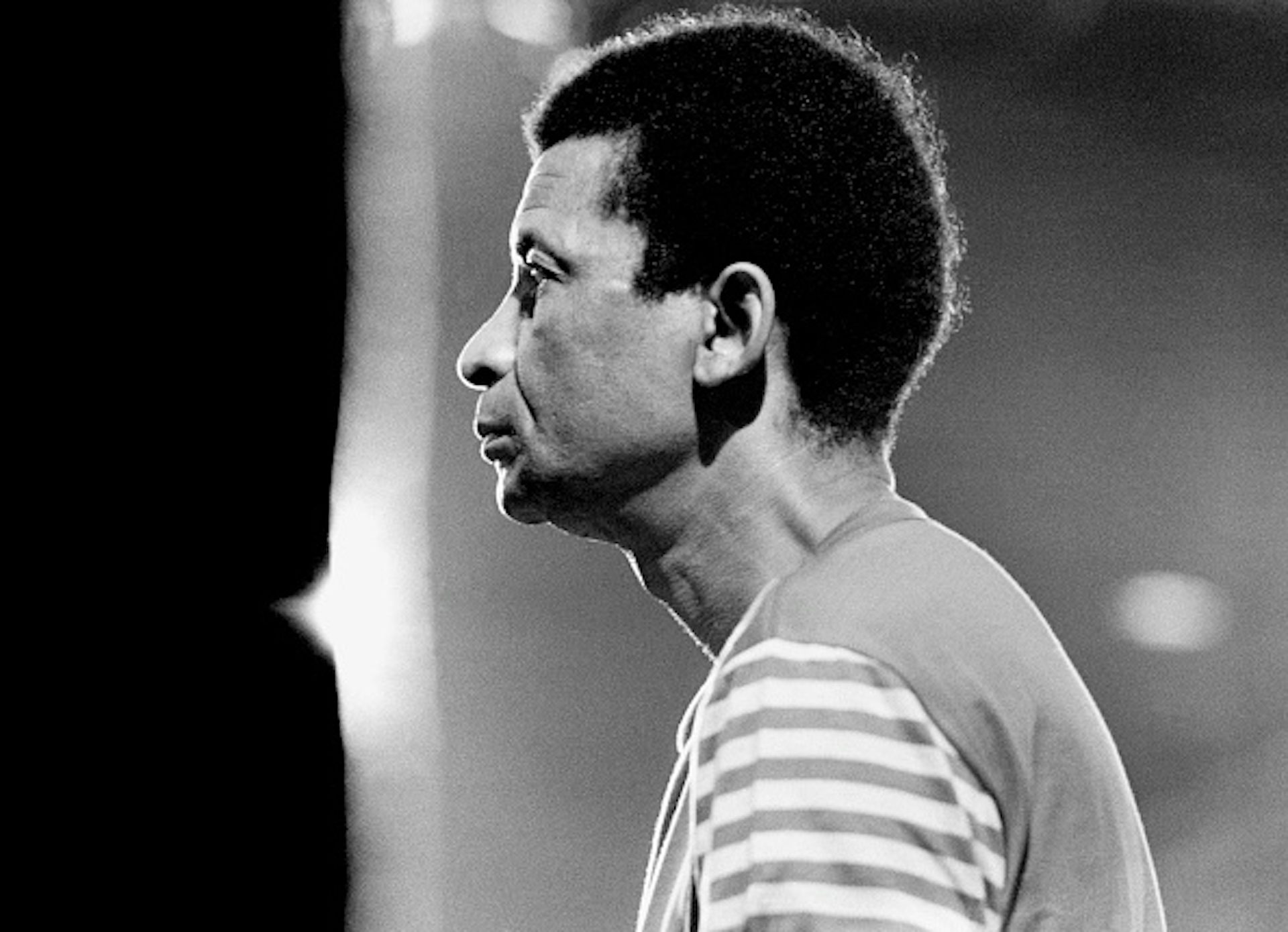
钢琴家阿卜杜拉·易卜拉欣为南非打造了一种宏伟的新文化
Pianist Abdullah Ibrahim crafted a magnificent new cult…
He embodied a special brand of multiple identities and belief systems, and took them to the world.
他体现了特殊的多重身份和信仰体系,并将它们带到了世界。
Adolph Johannes Brand was born on 9 October 1934 in Cape Town. He would become better known as Dollar Brand and then Abdullah Ibrahim, an artist of mixed ethnic descent who personified the city’s multiculturalism and represented it on the world’s stages.
阿道夫·约翰尼斯·布兰德(Adolph Johannes Brand)于1934年10月9日出生在开普敦。他后来更广为人知为Dollar Brand,再是Abdullah Ibrahim,一位具有混血背景的艺术家,他将这座城市的多元文化精神具象化并将其展示在全球舞台上。
He went to school in District Six, a municipal inner city area with residents of diverse backgrounds. Due to the enforcement of apartheid it was declared a “white area” in 1966 and the community was removed by force in 1982. It was the creative ambience in which he started to play piano aged seven.
他在一个居民来自不同背景的市政市中心区域——六区(District Six)接受教育。由于种族隔离制度的执行,该地区于1966年被宣布为“白人区”,并在1982年遭到强制清退。正是在这里,他从七岁开始学习演奏钢琴,并培养了艺术氛围。
A bebop-inspired jazz musician performing as Dollar Brand, he had his first musical successes in the mid-1950s. He became Abdullah Ibrahim when converting to Islam in 1968, and his deep religious spirituality was an essential ingredient to his music.
作为一位受Bebop启发的爵士音乐家,以Dollar Brand的名义演出,他在二十世纪五十年代中期取得了最初的成功。1968年皈依伊斯兰教后,他成为了Abdullah Ibrahim,而他深厚的宗教精神性成了其音乐不可或缺的元素。
Ibrahim’s more than 70 records received numerous prestigious awards. His deep spirituality, solemn dignity and soul has also been captured in the documentary films A Brother with Perfect Timing in 1987 and A Struggle for Love in 2005.
伊布拉欣(Ibrahim)超过70张的唱片获得了许多享有盛誉的奖项。他在纪录片《完美时机下的兄弟》(A Brother with Perfect Timing,1987年)和《为爱而战》(A Struggle for Love,2005年)中展现的深层精神、庄严的尊贵气质和灵魂也得到了捕捉。
As a political scientist of southern Africa, I have written about Ibrahim as a defiant public intellectual, placing his work within his unique worldviews.
作为南非南部的一位政治科学家,我曾撰文论述伊布拉欣是一位反抗性的公共知识分子,并将他的作品置于他独特的世界观之中。
He personified the special brand of multiple identities and belief systems, consolidated and transmitted over generations among a variety of descendants in the urban settings at the Cape. His spirituality was not only a source of resilience but also defiance, his humanity political without any need for ideology.
他将多重身份和信仰体系这种特殊的品牌具象化了,并在开普敦的城市环境中,在不同代际、各种后裔之间得以巩固和传承。他的精神性不仅是韧性的源泉,也是一种反抗,其人性是政治性的,却无需任何意识形态的支撑。
In search of genuine expressions through music, he became an icon of a counter-world to the apartheid regime, taking sides by being and living up to what he was.
为了通过音乐寻求真正的表达,他成为了一个反对种族隔离政权的“反世界”的象征,他选择以自身的存在和生活来表明立场。
The early years
早年岁月
In 1959 he began to play in the Sophiatown-based band Jazz Epistles with other South African legends Kippie Moeketsi, Hugh Masekela, Jonas Gwangwa, Johnny Gertze and Makaya Ntshoko. They recorded Jazz Epistle Verse One as the first black South African jazz LP record.
1959年,他开始在以索菲亚敦为基地的乐队“爵士传福音者”(Jazz Epistles)中与南非传奇人物Kippie Moeketsi、Hugh Masekela、Jonas Gwangwa、Johnny Gertze和Makaya Ntshoko等人一起演出。他们录制了《爵士传福音者第一乐章》(Jazz Epistle Verse One),这成为首张黑人南非爵士LP唱片。
In 1962 Ibrahim left for Europe, touring (with Gertze and Ntshoko) as The Dollar Brand Trio. In Switzerland the South African jazz vocalist Sathima Bea Benjamin put them in contact with Duke Ellington. Together Ellington and the Trio made two recordings (including Benjamin on the second one) .
1962年,伊布拉欣前往欧洲,以“美元品牌三重奏”(The Dollar Brand Trio)的身份巡演(与Gertze和Ntshoko)。在瑞士,南非爵士歌手Sathima Bea Benjamin将他们引荐给了杜克·艾灵顿(Duke Ellington)。随后,艾灵顿和该三重奏一起录制了两张唱片(第二张专辑中包括Benjamin的演唱)。
The Trio entered the circuit of international jazz festivals and toured Europe. In 1965 Ibrahim and Benjamin married and moved to New York, where he played at the Newport Jazz Festival. He continued close collaboration with Duke Ellington and interacted with some most renowned jazz musicians of the time.
该三重奏进入了国际爵士节庆巡演วง路。1965年,伊布拉欣和Benjamin结婚并搬到纽约,他在那里参加了纽波特爵士音乐节。他继续与杜克·艾灵顿保持密切合作,并与当时一些最著名的爵士乐手们进行了交流。
Despite his international fame, he never forgot where he came from. Mandla Langa, a writer who was the African National Congress-in-exile’s cultural attaché in Europe, has observed:
尽管拥有国际名声,但他从未忘记自己的来处。曼德拉·兰加(Mandla Langa)是一位作家,曾担任非洲国民大会流亡政府在欧洲的文化参赞,他观察到:
He could have lost all connection with South Africa, but he chose not to.
他本可以与南非彻底断绝联系,但他选择了不这样做。
A personal experience illustrates the point: when performing in West Berlin in the mid-1970s, a few exiled Namibians living there visited him backstage before the concert. When on stage to play before a packed auditorium, he stopped after intonating a few notes on the piano. Turning around, he looked at the group and declared, “Ek speel net vir julle.” (I only play for you) .
一次个人经历印证了这一点:在七十年代中期于西柏林演出时,几位居住在那里的纳米比亚流亡人士在他开演前拜访了他。当他在舞台上为座无虚席的观众演奏时,他停了下来,只弹奏了几音符。他转身看着那群人,宣布道:“Ek speel net vir julle。”(我只是为了你们而演奏)。
Mannenberg and Cape jazz
曼内堡与开普爵士乐
A turning point in Ibrahim’s career (then still mainly known as Dollar Brand) – and a watershed for South African musical history – was his short return to South Africa during the mid-1970s.
伊布拉欣(当时仍主要被称为 Dollar Brand)职业生涯的一个转折点,也是南非音乐史上的一个分水岭,是他于 20 世纪 70 年代中期短暂返回南非。
Mannenberg, a 14-minute track capturing the atmosphere of the Cape Flats, was recorded in June 1974 in one take as an act of collective improvisation. It was released on the album Mannenberg – Is Where It’s Happening.
《曼内堡》(Mannenberg)是一首长达 14 分钟的曲目,捕捉了开普平原的气氛,它于 1974 年 6 月以一次即兴表演的形式录制而成。该曲收录在专辑《曼内堡——正在发生的地方》(Mannenberg – Is Where It’s Happening)中发行。
As historian John Edwin Mason observed, its unique combination of musical vocabularies and idioms, rooted in South Africa, yet aware of international trends, helped to make it “the most iconic” composition in South African jazz history.
历史学家约翰·埃德温·梅森(John Edwin Mason)观察到,其独特的音乐词汇和习语组合,根植于南非,却又了解国际潮流,帮助它成为南非爵士乐史上“最具标志性”的作品。
Within a year it sold more copies than any other South African jazz album. Being subsequently performed by some of the band’s members at political protest gatherings, it became a song of resistance and resilience. A fellow jazz musician from District Six declared it “the most powerful anthem of the struggle in the 1980s … which had no words, it simply referred to a series of styles of music that was influenced by black culture”.
在一年内,它的销量超过了任何其他南非爵士专辑。由于后来被乐队的几名成员在政治抗议集会上表演,它成了一首抵抗和韧性的歌曲。一位来自六区(District Six)的爵士音乐家称赞说:“这是 20 世纪 80 年代斗争中最有力的战歌……它没有歌词,它只是指代了一系列受黑人文化影响的音乐风格。”
These were automatically associated with being free, to have an identity. Ibrahim’s fusion of melodies in his improvisations resembled a mixture of American jazz with local genres such as marabi and mbaqanga, but also langarm, vastrap and ticky draai. This blend is known as Cape jazz. More recordings followed with African Herbs (1975) , Banyana – Children of Africa and Black Lightning (both 1976) .
这些风格自动与自由、拥有身份认同联系在一起。伊布拉欣在即兴演奏中融合了旋律,类似于美式爵士乐与当地流派如马拉比(marabi)和姆巴坎加(mbaqanga)的混合,同时也包含了朗阿姆(langarm)、瓦斯特拉普(vastrap)和蒂基德莱(ticky draai)。这种融合被称为开普爵士乐。随后发行了更多录音,包括《非洲草药》(African Herbs)(1975)、《班亚纳——非洲之子》(Banyana – Children of Africa)和《黑闪电》(Black Lightning)(均于 1976 年)。
Triggered by the Soweto uprising of 16 June 16 1976, Ibrahim declared his support for the African National Congress and returned to New York. In 1978 he released Anthem for the New Nation. Another milestone became African Marketplace, recorded in 1979 with a 12-piece-band – ranked as number 70 in a list of The 100 Jazz Albums that Shook the World.
受 1976 年 6 月 16 日索韦托起义的刺激,伊布拉欣宣布支持非洲国民大会,并返回纽约。1978 年他发行了专辑《献给新国家颂歌》(Anthem for the New Nation)。另一个里程碑是《非洲市场》(African Marketplace),该专辑于 1979 年与一个 12 人乐队录制而成,在《震撼世界的百大爵士专辑》榜单中排名第 70 位。
Returning home
归家
A legend in his own lifetime, Ibrahim returned to South Africa after he met the newly-released Nelson Mandela 1990 in Germany, who told him to come home. In 1994 he performed with a symphony orchestra on occasion of Mandela’s inauguration as president. Mandela reportedly referred to him as “our Mozart”.
伊布拉欣(Ibrahim)是一位活着的传奇人物。在1990年于德国遇到刚获释的纳尔逊·曼德拉后,他被告知要回家乡南非。1994年,他在曼德拉当选总统的场合与交响乐团进行了演出。据报道,曼德拉曾称赞他为“我们的莫扎特”。
In 1999 Ibrahim founded an academy for South African musicians in Cape Town, where he also initiated the Cape Town Jazz Orchestra, launched in 2006. In 2016 he performed with Hugh Masekela for the first time since 1960, reuniting the legendary Jazz Epistles to commemorate the 40th anniversary of the Soweto uprising.
1999年,伊布拉欣在开普敦创立了一所南非音乐学院,并于2006年启动了开普敦爵士乐队(Cape Town Jazz Orchestra)。2016年,他与休·马塞凯拉(Hugh Masekela)进行了自1960年以来的首次合作,重聚了传奇的“爵士先知们”(Jazz Epistles),纪念索韦托起义40周年。
A solo piano recording was released in 2008 as Senzo (meaning ancestor in Chinese and Japanese, and a nod to his father’s name, Senzo, which also means creation in South Africa’s Nguni languages) . As a review in All About Jazz ended:
2008年发行了一张独奏钢琴录音《Senzo》(在中文和日语中意为祖先,也呼应了他父亲的名字——同样在南非的恩古尼语言中意指“创造”)。《All About Jazz》杂志对此评论道:
Abdullah Ibrahim is a true inheritor of the ancestral name.
阿卜杜拉·伊布拉欣是一位真正的家族传承者。
Upon release of The Balance in 2019, his first album after five years, The Wall Street Journal titled: A Jazz Master Continues to Grow.
2019年,《The Balance》发行后,这是他五年来的首张专辑。《华尔街日报》刊登了文章,标题为:《一位爵士大师持续成长》。
In 2024 he released his final recording, an expansive and critically acclaimed double album called 3.
2024年,他发布了其最后的录音作品——一张宏大且备受好评的双碟专辑《3》。
A legacy beyond music
超越音乐的遗产
Ibrahim has been a midwife to musical expressions under apartheid, which were a form of resistance based on one’s own human dignity, self-respect and confidence as protest against oppression and discrimination. He did this without noise, rather – like his personal habitus – calm, steadfast and determined, resting in himself.
伊布拉欣在种族隔离制度时期,为音乐表达提供了“助产”,这些表达是一种基于个人人类尊严、自尊和自信的抵抗形式,用以抗议压迫和歧视。他做这一切没有喧嚣——相反,就像他的个人习性一样——平静、坚定而果断,源于自我。
He contributed to a new culture under – and after – apartheid. Abdullah Ibrahim played a significant role in the creation of something new. There will be no other like him.
他为种族隔离时期和之后的新文化做出了贡献。阿卜杜拉·伊布拉欣在创造新事物方面发挥了重要作用。再不会有第二个像他的人。
Henning Melber does not work for, consult, own shares in or receive funding from any company or organisation that would benefit from this article, and has disclosed no relevant affiliations beyond their academic appointment.
Henning Melber 不受任何从本文中受益的公司或组织的雇佣、咨询、拥有股份或资金支持,并且除了其学术任命之外,没有披露任何相关的隶属关系。
Read more
-
票价飙升可能帮助国际足联在本届世界杯周期内筹集150亿美元——这些钱从何而来,又将流向何方?
Soaring ticket prices could help FIFA pull in $15B this…