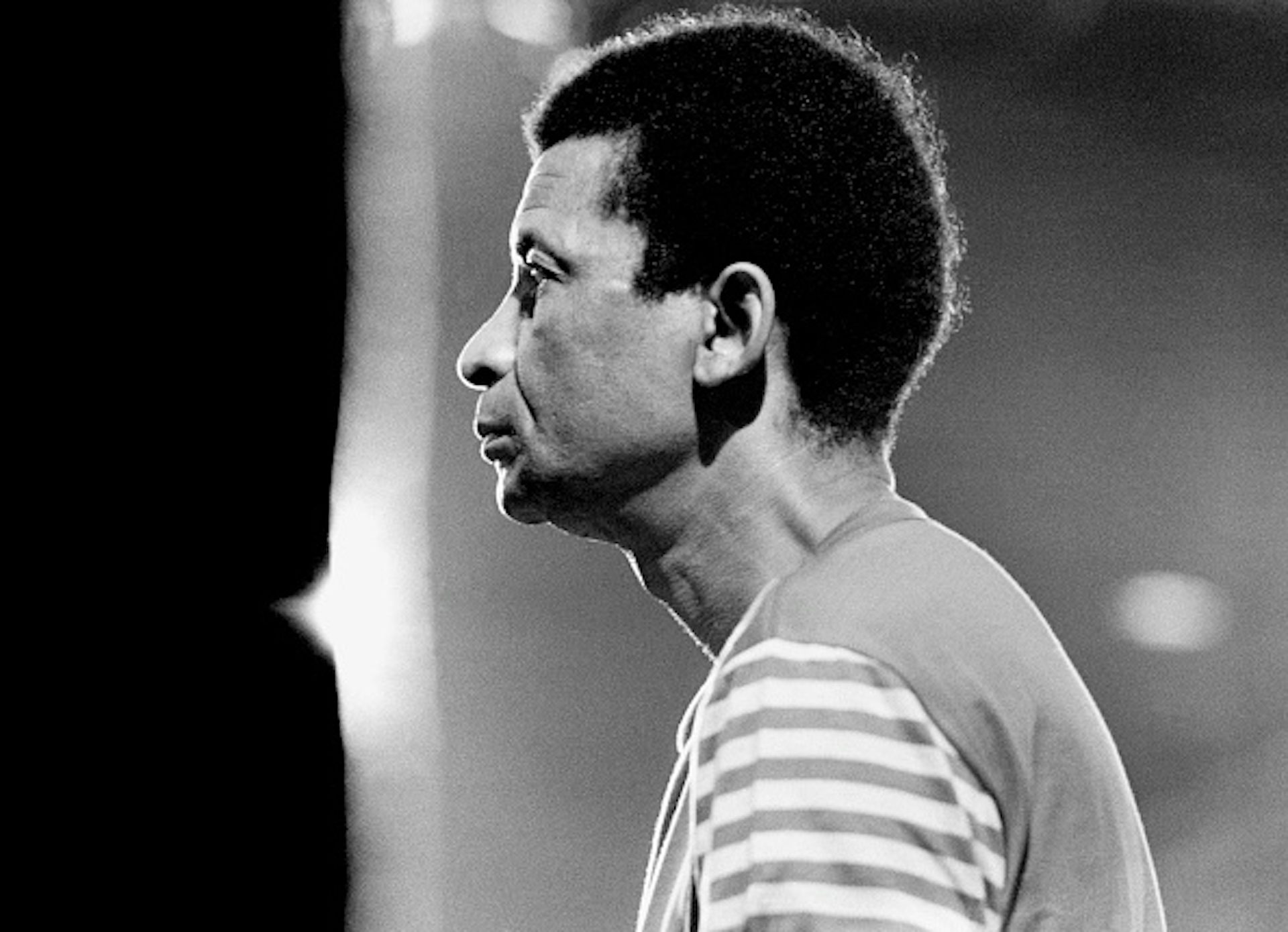
O pianista Abdullah Ibrahim criou uma cultura magnífica e nova para a África do Sul
Pianist Abdullah Ibrahim crafted a magnificent new culture for South Africa
He embodied a special brand of multiple identities and belief systems, and took them to the world.
Ele incorporou um tipo especial de múltiplas identidades e sistemas de crenças, levando-os ao mundo.
Adolph Johannes Brand was born on 9 October 1934 in Cape Town. He would become better known as Dollar Brand and then Abdullah Ibrahim, an artist of mixed ethnic descent who personified the city’s multiculturalism and represented it on the world’s stages.
Adolph Johannes Brand nasceu em 9 de outubro de 1934, na Cidade do Cabo. Ele seria mais conhecido como Dollar Brand e depois Abdullah Ibrahim, um artista de descendência étnica mista que personificou o multiculturalismo da cidade e o representou nos palcos mundiais.
He went to school in District Six, a municipal inner city area with residents of diverse backgrounds. Due to the enforcement of apartheid it was declared a “white area” in 1966 and the community was removed by force in 1982. It was the creative ambience in which he started to play piano aged seven.
Ele estudou no District Six, uma área central municipal com moradores de diversas origens. Devido à aplicação do apartheid, foi declarada uma “área branca” em 1966 e a comunidade foi removida à força em 1982. Foi o ambiente criativo onde ele começou a tocar piano aos sete anos de idade.
A bebop-inspired jazz musician performing as Dollar Brand, he had his first musical successes in the mid-1950s. He became Abdullah Ibrahim when converting to Islam in 1968, and his deep religious spirituality was an essential ingredient to his music.
Músico de jazz inspirado no bebop, atuando como Dollar Brand, ele teve seus primeiros sucessos musicais em meados da década de 1950. Tornou-se Abdullah Ibrahim após se converter ao Islã em 1968, e sua profunda espiritualidade religiosa foi um ingrediente essencial para sua música.
Ibrahim’s more than 70 records received numerous prestigious awards. His deep spirituality, solemn dignity and soul has also been captured in the documentary films A Brother with Perfect Timing in 1987 and A Struggle for Love in 2005.
Mais de 70 discos de Ibrahim receberam inúmeros prêmios prestigiados. Sua profunda espiritualidade, dignidade solene e alma também foram capturadas nos documentários A Brother with Perfect Timing em 1987 e A Struggle for Love em 2005.
As a political scientist of southern Africa, I have written about Ibrahim as a defiant public intellectual, placing his work within his unique worldviews.
Como cientista político do sul da África, escrevi sobre Ibrahim como um intelectual público desafiador, situando seu trabalho dentro de suas visões de mundo únicas.
He personified the special brand of multiple identities and belief systems, consolidated and transmitted over generations among a variety of descendants in the urban settings at the Cape. His spirituality was not only a source of resilience but also defiance, his humanity political without any need for ideology.
Ele personificou o tipo especial de múltiplas identidades e sistemas de crenças, consolidados e transmitidos por gerações entre uma variedade de descendentes nos ambientes urbanos da Cidade do Cabo. Sua espiritualidade foi não apenas uma fonte de resiliência, mas também de desafio; sua humanidade era política sem necessidade de ideologia.
In search of genuine expressions through music, he became an icon of a counter-world to the apartheid regime, taking sides by being and living up to what he was.
Em busca de expressões genuínas através da música, ele se tornou um ícone de um mundo alternativo ao regime do apartheid, tomando partido por ser e viver aquilo que era.
The early years
Os primeiros anos
In 1959 he began to play in the Sophiatown-based band Jazz Epistles with other South African legends Kippie Moeketsi, Hugh Masekela, Jonas Gwangwa, Johnny Gertze and Makaya Ntshoko. They recorded Jazz Epistle Verse One as the first black South African jazz LP record.
Em 1959 ele começou a tocar na banda Jazz Epistles, sediada em Sophiatown, com outras lendas sul-africanas como Kippie Moeketsi, Hugh Masekela, Jonas Gwangwa, Johnny Gertze e Makaya Ntshoko. Eles gravaram o álbum Jazz Epistle Verse One, que foi o primeiro LP de jazz negro sul-africano.
In 1962 Ibrahim left for Europe, touring (with Gertze and Ntshoko) as The Dollar Brand Trio. In Switzerland the South African jazz vocalist Sathima Bea Benjamin put them in contact with Duke Ellington. Together Ellington and the Trio made two recordings (including Benjamin on the second one) .
Em 1962, Ibrahim partiu para a Europa, fazendo turnês (com Gertze e Ntshoko) como The Dollar Brand Trio. Na Suíça, a vocalista de jazz sul-africana Sathima Bea Benjamin fez com que eles entrassem em contato com Duke Ellington. Juntos, Ellington e o Trio fizeram dois registros (incluindo Benjamin no segundo) .
The Trio entered the circuit of international jazz festivals and toured Europe. In 1965 Ibrahim and Benjamin married and moved to New York, where he played at the Newport Jazz Festival. He continued close collaboration with Duke Ellington and interacted with some most renowned jazz musicians of the time.
O Trio entrou no circuito dos festivais internacionais de jazz e viajou pela Europa. Em 1965, Ibrahim e Benjamin casaram-se e mudaram-se para Nova York, onde ele se apresentou no Newport Jazz Festival. Ele manteve uma colaboração próxima com Duke Ellington e interagiu com alguns dos músicos de jazz mais renomados da época.
Despite his international fame, he never forgot where he came from. Mandla Langa, a writer who was the African National Congress-in-exile’s cultural attaché in Europe, has observed:
Apesar de sua fama internacional, ele nunca esqueceu suas origens. Mandla Langa, escritor que foi o attaché cultural do Congresso Nacional Africano no exílio na Europa, observou:
He could have lost all connection with South Africa, but he chose not to.
Ele poderia ter perdido toda conexão com a África do Sul, mas escolheu não perder.
A personal experience illustrates the point: when performing in West Berlin in the mid-1970s, a few exiled Namibians living there visited him backstage before the concert. When on stage to play before a packed auditorium, he stopped after intonating a few notes on the piano. Turning around, he looked at the group and declared, “Ek speel net vir julle.” (I only play for you) .
Uma experiência pessoal ilustra o ponto: ao se apresentar em Berlim Ocidental em meados dos anos 70, alguns namíbias exilados que viviam lá visitaram-no nos bastidores antes do show. Quando estava no palco para tocar diante de um auditório lotado, ele parou depois de entoar algumas notas no piano. Virando-se, olhou para o grupo e declarou: “Ek speel net vir julle.” (Eu só toco para vocês) .
Mannenberg and Cape jazz
Mannenberg e Jazz do Cabo
A turning point in Ibrahim’s career (then still mainly known as Dollar Brand) – and a watershed for South African musical history – was his short return to South Africa during the mid-1970s.
Um ponto de virada na carreira de Ibrahim (então ainda conhecido principalmente como Dollar Brand) – e um marco para a história musical sul-africana – foi seu breve retorno à África do Sul durante meados da década de 1970.
Mannenberg, a 14-minute track capturing the atmosphere of the Cape Flats, was recorded in June 1974 in one take as an act of collective improvisation. It was released on the album Mannenberg – Is Where It’s Happening.
Mannenberg, uma faixa de 14 minutos que captura a atmosfera dos Cape Flats, foi gravada em junho de 1974 em uma única tomada como um ato de improvisação coletiva. Foi lançada no álbum Mannenberg – Is Where It’s Happening.
As historian John Edwin Mason observed, its unique combination of musical vocabularies and idioms, rooted in South Africa, yet aware of international trends, helped to make it “the most iconic” composition in South African jazz history.
Como observou o historiador John Edwin Mason, sua combinação única de vocabulários e idiomatismos musicais, enraizada na África do Sul, mas consciente das tendências internacionais, ajudou a torná-la a composição “mais icônica” da história do jazz sul-africano.
Within a year it sold more copies than any other South African jazz album. Being subsequently performed by some of the band’s members at political protest gatherings, it became a song of resistance and resilience. A fellow jazz musician from District Six declared it “the most powerful anthem of the struggle in the 1980s … which had no words, it simply referred to a series of styles of music that was influenced by black culture”.
Em um ano, vendeu mais cópias do que qualquer outro álbum de jazz sul-africano. Por ser subsequentemente executada por alguns membros da banda em reuniões de protesto político, tornou-se uma canção de resistência e resiliência. Um colega músico de jazz de District Six declarou-a “o hino mais poderoso da luta na década de 1980… que não tinha palavras, simplesmente se referia a uma série de estilos musicais influenciados pela cultura negra.”
These were automatically associated with being free, to have an identity. Ibrahim’s fusion of melodies in his improvisations resembled a mixture of American jazz with local genres such as marabi and mbaqanga, but also langarm, vastrap and ticky draai. This blend is known as Cape jazz. More recordings followed with African Herbs (1975) , Banyana – Children of Africa and Black Lightning (both 1976) .
Estes estavam automaticamente associados ao ser livre, ter uma identidade. A fusão de melodias em suas improvisações por Ibrahim lembrava uma mistura de jazz americano com gêneros locais como marabi e mbaqanga, mas também langarm, vastrap e ticky draai. Essa mistura é conhecida como Cape jazz. Mais gravações se seguiram com African Herbs (1975) , Banyana – Children of Africa e Black Lightning (ambos em 1976) .
Triggered by the Soweto uprising of 16 June 16 1976, Ibrahim declared his support for the African National Congress and returned to New York. In 1978 he released Anthem for the New Nation. Another milestone became African Marketplace, recorded in 1979 with a 12-piece-band – ranked as number 70 in a list of The 100 Jazz Albums that Shook the World.
Impulsionado pelo levante de Soweto em 16 de junho de 1976, Ibrahim declarou seu apoio ao Congresso Nacional Africano e retornou a Nova York. Em 1978, ele lançou Anthem for the New Nation. Outro marco foi African Marketplace, gravado em 1979 com uma banda de 12 peças – classificado como número 70 em uma lista dos 100 Álbuns de Jazz que Abalaram o Mundo.
Returning home
Retorno ao Lar
A legend in his own lifetime, Ibrahim returned to South Africa after he met the newly-released Nelson Mandela 1990 in Germany, who told him to come home. In 1994 he performed with a symphony orchestra on occasion of Mandela’s inauguration as president. Mandela reportedly referred to him as “our Mozart”.
Uma lenda em vida própria, Ibrahim retornou à África do Sul depois de encontrar Nelson Mandela, recém-libertado em 1990 na Alemanha, que lhe disse para voltar para casa. Em 1994, ele se apresentou com uma orquestra sinfônica por ocasião da posse de Mandela como presidente. Dizem que Mandela o chamou de “nosso Mozart”.
In 1999 Ibrahim founded an academy for South African musicians in Cape Town, where he also initiated the Cape Town Jazz Orchestra, launched in 2006. In 2016 he performed with Hugh Masekela for the first time since 1960, reuniting the legendary Jazz Epistles to commemorate the 40th anniversary of the Soweto uprising.
Em 1999, Ibrahim fundou uma academia para músicos sul-africanos em Cape Town, onde também iniciou a Cape Town Jazz Orchestra, lançada em 2006. Em 2016, ele se apresentou com Hugh Masekela pela primeira vez desde 1960, reunindo os lendários Jazz Epistles para comemorar o 40º aniversário da revolta de Soweto.
A solo piano recording was released in 2008 as Senzo (meaning ancestor in Chinese and Japanese, and a nod to his father’s name, Senzo, which also means creation in South Africa’s Nguni languages) . As a review in All About Jazz ended:
Um álbum solo de piano foi lançado em 2008 como Senzo (significando ancestral em chinês e japonês, e uma homenagem ao nome de seu pai, Senzo, que também significa criação nas línguas Nguni da África do Sul) . Uma crítica no All About Jazz terminou dizendo:
Abdullah Ibrahim is a true inheritor of the ancestral name.
Abdullah Ibrahim é um verdadeiro herdeiro do nome ancestral.
Upon release of The Balance in 2019, his first album after five years, The Wall Street Journal titled: A Jazz Master Continues to Grow.
Com o lançamento de The Balance em 2019, seu primeiro álbum após cinco anos, o Wall Street Journal intitulou: Um Mestre do Jazz Continua a Crescer.
In 2024 he released his final recording, an expansive and critically acclaimed double album called 3.
Em 2024, ele lançou sua gravação final, um extenso e aclamado álbum duplo chamado 3.
A legacy beyond music
Um legado além da música
Ibrahim has been a midwife to musical expressions under apartheid, which were a form of resistance based on one’s own human dignity, self-respect and confidence as protest against oppression and discrimination. He did this without noise, rather – like his personal habitus – calm, steadfast and determined, resting in himself.
Ibrahim foi um facilitador de expressões musicais sob o apartheid, que foram uma forma de resistência baseada na própria dignidade humana, autoestima e confiança como protesto contra a opressão e discriminação. Ele fez isso sem barulho, mas sim – como seu habitus pessoal – calmo, firme e determinado, encontrando repouso em si mesmo.
He contributed to a new culture under – and after – apartheid. Abdullah Ibrahim played a significant role in the creation of something new. There will be no other like him.
Ele contribuiu para uma nova cultura durante e após o apartheid. Abdullah Ibrahim desempenhou um papel significativo na criação de algo novo. Não haverá outro como ele.
Henning Melber does not work for, consult, own shares in or receive funding from any company or organisation that would benefit from this article, and has disclosed no relevant affiliations beyond their academic appointment.
Henning Melber não trabalha para, não é consultor de, não possui ações em ou recebe financiamento de nenhuma empresa ou organização que se beneficie deste artigo, e não divulgou afiliações relevantes além do seu cargo acadêmico.
Read more
-
Andy Burnham está de volta em Westminster: o que isso diz sobre o sistema político em mudança da Grã-Bretanha
Andy Burnham is back at Westminster: what this says about Britain’s changing political system
-

Terremotos podem ser destrutivos para cidades distantes construídas sobre bacias – agora sabemos por quê
Earthquakes can be destructive for distant cities built on top of basins – now we know why