美国和乌干达计划如何阻止埃博拉传播出了什么问题
What’s wrong with how US and Uganda plan to stop Ebola …
Geography may not provide meaningful protection once an outbreak is already underway.
一旦疫情爆发,地理位置可能无法提供有意义的保护。
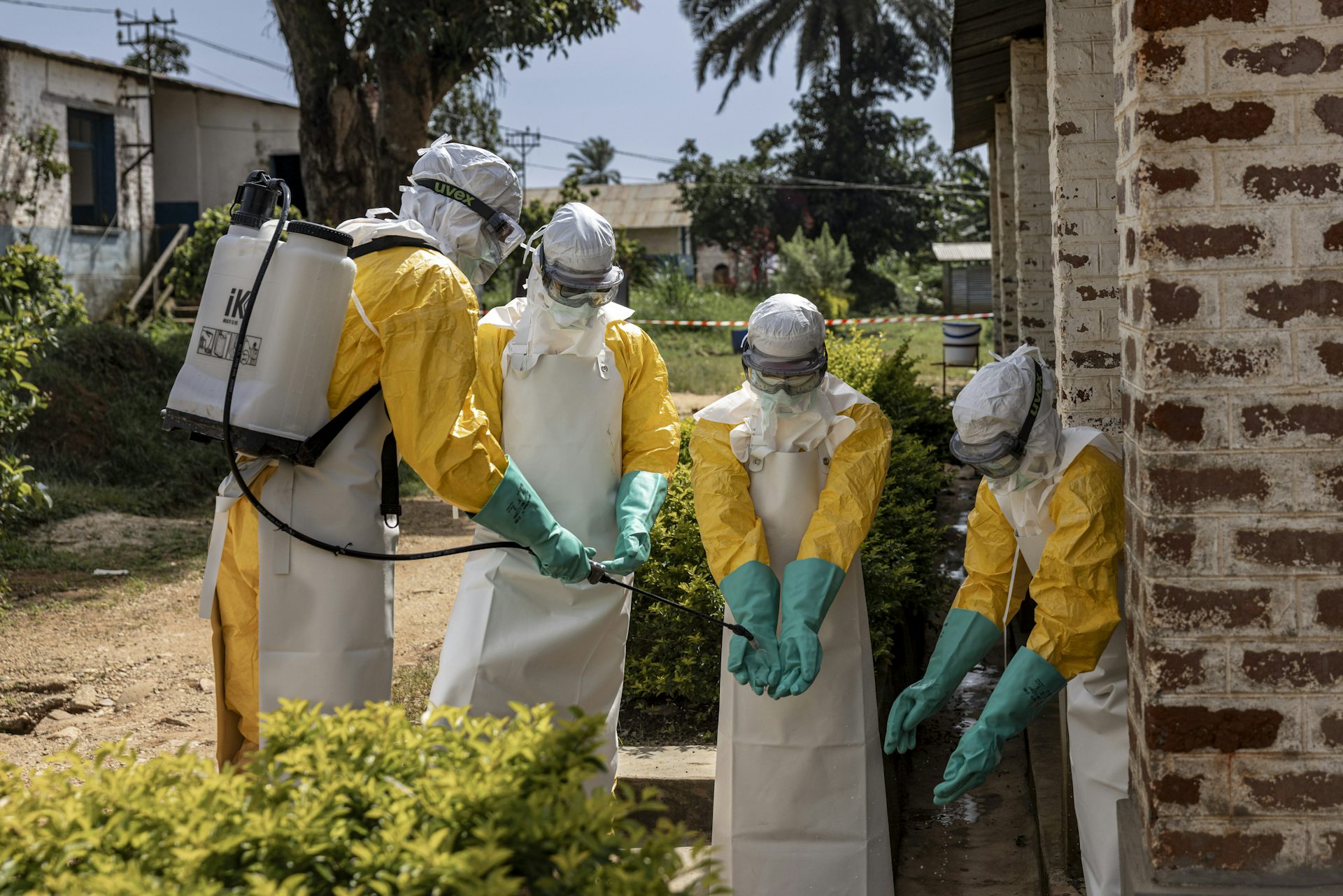
As public health workers in the Democratic Republic of Congo work to rein in a growing outbreak of a rare Ebola virus, other countries are establishing protocols for keeping their own populations safe.
作为一名研究传染病爆发的流行病学家,我认为回顾疫情期间边境限制和关闭的历史,有助于解释为什么科学共识通常不推荐采取这些措施。
As of May 27, 2026, Congo has reported more than 1,000 suspected and confirmed cases, and more than 250 deaths, according to the U.S. Centers for Disease Control and Prevention. Neighboring Uganda has also reported seven cases and one death. Several Americans who were in the region have been exposed.
随着刚果民主共和国的公共卫生工作者努力遏制罕见埃博拉病毒不断爆发的疫情,其他国家也在制定协议以保护本国人口的安全。
Measures such as screening incoming travelers and isolating those who have been exposed, announced by the U.S., Canada and other countries, are scientifically proven ways to effectively address outbreaks.
根据美国疾病控制与预防中心的数据,截至2026年5月27日,刚果报告了超过1000例疑似和确诊病例,以及超过250例死亡病例。邻国乌干达也报告了七例病例和一例死亡。该地区有数名美国人曾暴露于病毒。
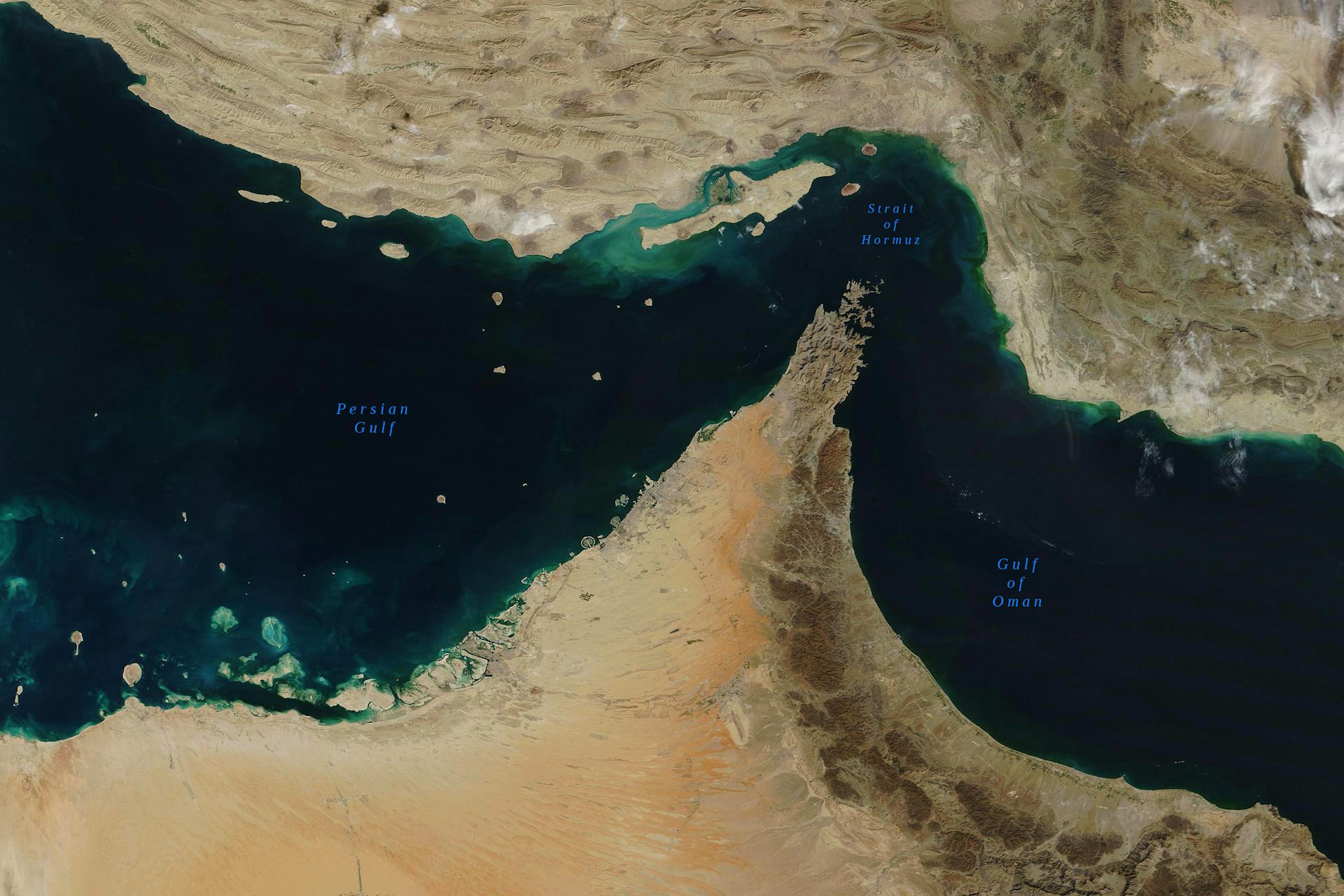
But recent decisions by two countries stand out because they are not supported by epidemiological evidence – and because they reflect a surprisingly similar way of thinking about outbreak control: On May 27, Uganda closed its border with Congo. Only a narrow set of exceptions apply, mostly for emergency aid workers, and those who cross the border will be subject to health screening and supervised isolation. The following day, the United States announced plans to send exposed Americans from affected countries to a quarantine facility in Kenya, a country with no Ebola cases – though as of May 29, a Kenyan court has blocked the move.
美国、加拿大和其他国家宣布的筛查入境旅客和隔离暴露人员等措施,已被科学证明是有效应对疫情的方法。
These are very different policies, but both rely on a common assumption: that creating geographic distance from a threat provides protection. However, surveillance, isolation and response capacity are often more important. And both the Ugandan and U.S. moves have drawn criticism from public health and medical experts who argue that managing outbreaks depends more on detection and monitoring than distance alone.
乌干达关闭与刚果的边境是为了阻止埃博拉病毒传播,但公共卫生历史表明,这并非一个好主意。
And both decisions emerge from a long-running debate in public health: whether controlling where people are located is more effective than investing in the systems that identify, monitor and treat disease.
这些政策非常不同,但都依赖于一个共同的假设:即与威胁创造地理距离可以提供保护。然而,监测、隔离和应对能力往往更为重要。乌干达和美国采取的措施都受到了公共卫生和医学专家的批评,他们认为,控制疫情更多地取决于检测和监测,而不仅仅是距离。
As an epidemiologist studying infectious disease outbreaks, I think a look at the history of border restrictions and closures during epidemics helps explain why scientific consensus usually recommends against them.
此外,这两个决定源于公共卫生领域的一个长期争论:控制人们的地理位置是否比投资于识别、监测和治疗疾病的系统更有效。
Land borders are challenging to ‘close’
陆地边境难以“关闭”
The instinct to seal borders during outbreaks goes back centuries. Venice’s 14th-century “quarantino” was one of the earliest organized attempts by a state to regulate movement in the name of collective health. It worked because the unit of control was a ship: a discrete location that could be anchored offshore for a period of time.
在疫情期间封锁边境的本能可以追溯到几个世纪前。威尼斯在14世纪的“隔离制度”(quarantino)是国家最早有组织的、以维护集体健康名义来规范人员流动的方法之一。它之所以奏效,是因为控制单位是一艘船:一个可以在外海锚定一段时间的离散地点。
A land border is a fundamentally different problem. As trade networks crossed continents, epidemic control encountered something maritime quarantine never had to solve. You cannot easily anchor people at a land border.
陆地边境是一个根本不同的问题。随着贸易网络跨越大陆,疫情控制遇到了海事检疫从未需要解决的问题。你无法在陆地边境轻易地“锚定”人员。
By the 19th century, repeated cholera outbreaks had made the problem international. European powers responded with waves of uncoordinated border closures and trade restrictions that caused enormous economic damage without reliably stopping transmission.
到19世纪,反复的霍乱爆发使这个问题具有了国际性。欧洲列强对此做出了反应,采取了波浪式的、缺乏协调的边境关闭和贸易限制,造成了巨大的经济损失,但却无法可靠地阻止疫情传播。
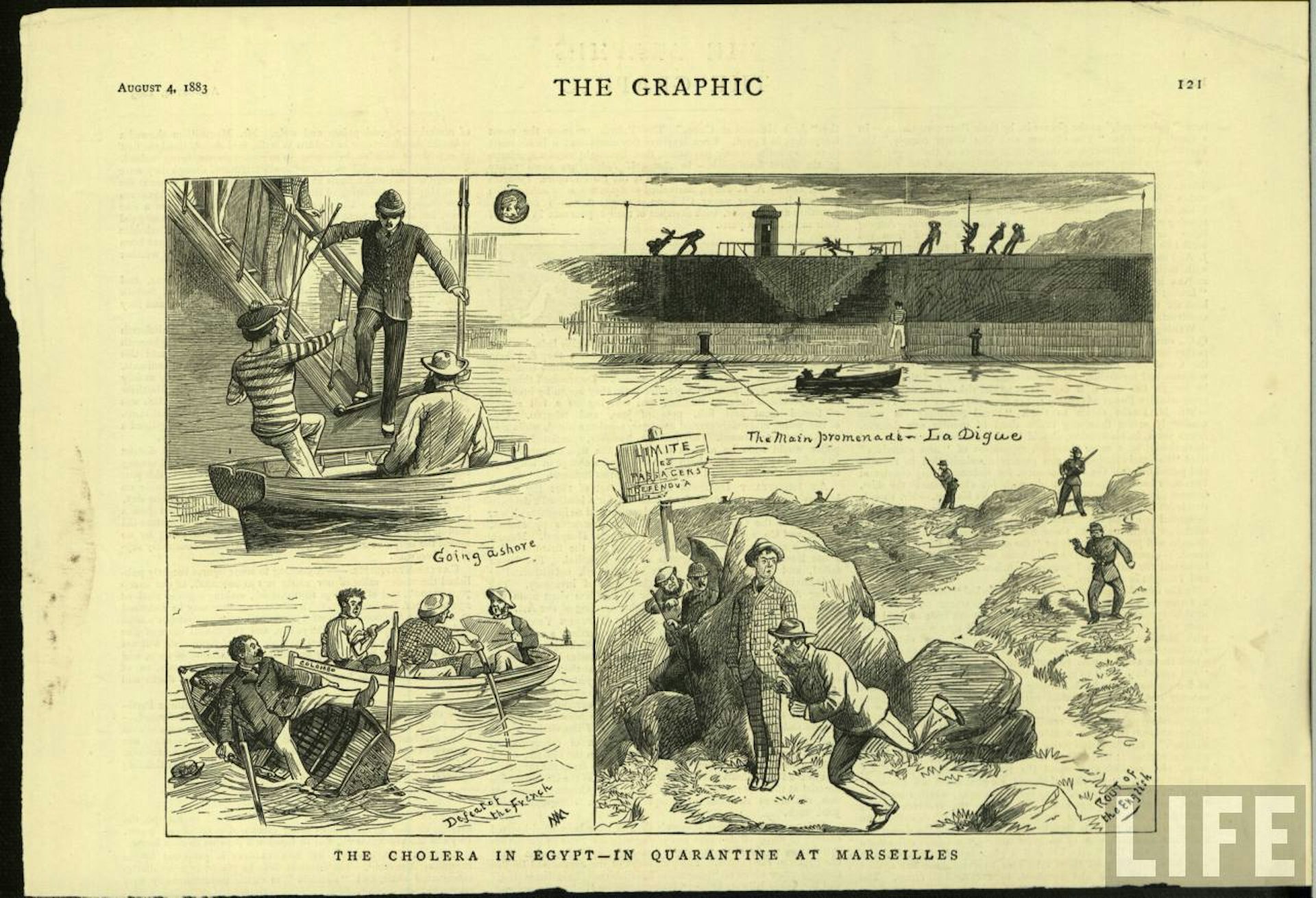
In 1874, governments from around the world met in Vienna for the Fourth International Sanitary Conference to address a problem that sounds remarkably modern: how to control infectious diseases crossing borders without crippling trade and travel. Delegates explicitly rejected border closures and land quarantine as “unworkable and consequently useless.”
1874年,来自世界各地的政府在维也纳召开了第四次国际卫生大会,旨在解决一个听起来非常现代的问题:如何在不损害贸易和旅行的情况下控制跨越国界的传染病。代表们明确拒绝了边境关闭和陆地检疫,认为其“不可行,因此毫无用处”。
The modern descendant of those 19th-century conferences is a set of global laws called the International Health Regulations. Their core purpose is straightforward: Make it safe for countries to report outbreaks honestly, without fear that doing so will trigger economic punishment or travel bans.
那些19世纪会议的现代继承者是一套名为《国际卫生条例》的全球法律。其核心目的很简单:让各国能够诚实地报告疫情,而不必担心这样做会引发经济惩罚或旅行禁令。
Incentive problem at the heart of global health
全球卫生领域的核心激励问题
The entire modern global health surveillance system rests on a single premise: Countries need to report outbreaks quickly, without fear of automatic economic punishment for doing so. If declaring an outbreak triggers immediate border closures and travel bans, governments have a powerful incentive to delay reporting.
整个现代全球卫生监测系统建立在一个前提之上:各国需要快速报告疫情,而无需担心因此受到自动的经济惩罚。如果宣布疫情会立即触发边境关闭和旅行禁令,那么政府就有强大的动机拖延报告。
This concern is not hypothetical. During the first SARS outbreak in 2003, China’s delays in official reporting, driven in part by concern about economic fallout, contributed directly to the global spread of the disease. This prompted the World Health Organization to publicly accuse a member state of placing the world at risk. The International Health Regulations were most recently revised in 2005 in direct response to that failure.
这种担忧并非假设。在2003年首次爆发的SARS期间,中国因担心经济后果而延迟官方报告,直接加剧了疾病的全球传播。这促使世界卫生组织公开指责一个成员国将世界置于风险之中。《国际卫生条例》最近一次修订就是为了直接应对这一失败。
When the WHO declared the current Ebola outbreak a public health emergency of international concern on May 17, it explicitly warned against border closures and travel restrictions, saying that these moves “have no basis in science.” That’s because such actions push movement to informal border crossings that are not monitored and “can also compromise local economies and negatively affect response operations from a security and logistics perspective.”
当世卫组织于5月17日宣布当前的埃博拉疫情构成国际关注的突发公共卫生事件时,它明确警告不要实施边境关闭和旅行限制,称这些措施“缺乏科学依据”。因为此类行动会将人员流动推向未经监测的非正式边境口岸,这“也可能损害当地经济,并从安全和后勤角度对应对行动产生负面影响。”
For example, a mother trying to get a sick child to a clinic just across the border may not stop because the formal crossing is shut. The Uganda-Congo border is several hundred miles long and crossed by numerous footpaths beyond formal border posts, which many people use daily to visit family or to trade.
例如,一位母亲带着生病的孩子试图前往边境对面的诊所,可能不会停下脚步,因为正式口岸已经关闭。乌干达和刚果的边境绵延数百英里,除了正式边境检查站外,还有许多小径,许多人每天都使用这些小径探亲或贸易。
The public health system loses the ability to test, isolate or trace those interactions. This matters especially for Ebola, which transmits only after symptoms begin – meaning a person who can actually spread the virus is already identifiable through symptom screening, making case detection and isolation far more effective than geographic restriction.
公共卫生系统因此失去了检测、隔离或追踪这些互动的能力。这对埃博拉尤其重要,因为该病毒只有在症状出现后才会传播——这意味着真正传播病毒的人已经可以通过症状筛查被识别,这使得病例检测和隔离比地理限制更有效。
The U.S. decision to send exposed Americans to a quarantine facility in Kenya reflects a related instinct – to keep the virus off native soil. But exposure has already occurred, so the public health question is no longer how to prevent entry but how to monitor potentially exposed people safely and effectively. The plan is particularly controversial because it would transfer potentially exposed individuals to a country with no Ebola cases of its own, despite the U.S. already possessing specialized facilities designed for exactly this purpose.
美国决定将接触过埃博拉的美国人送往肯尼亚的隔离设施,反映了一种相关的本能——将病毒排除在本土之外。但暴露已经发生,因此公共卫生问题不再是如何阻止进入,而是如何安全有效地监测潜在暴露人员。该计划尤其具有争议性,因为它会将潜在暴露的个人转移到一个本身没有埃博拉病例的国家,尽管美国已经拥有专门为这一目的设计的设施。
The Infectious Diseases Society of America criticized the plan, noting that the United States has already invested heavily in specialized Ebola treatment centers specifically designed to care for patients with highly dangerous infectious diseases. It warned that building and staffing a new unit in Kenya during an active outbreak raises questions about resources, timing and quality of care.
美国传染病学会批评了该计划,指出美国已经在专门设计用于护理患有高度危险传染病的患者的埃博拉治疗中心上投入了巨额资金。它警告说,在疫情期间在肯尼亚建立和配备一个新的单元,引发了关于资源、时机和护理质量的疑问。
Border restrictions do not work alone
边境限制不能单独奏效
Some countries did use border closures effectively during COVID-19 – New Zealand, Australia and Taiwan sharply restricted international travel while pairing those measures with intensive testing, quarantine and contact tracing. But specific circumstances made those cases work: restrictions before the virus began spreading widely in the community, island geography that naturally limited informal crossings, and aggressive internal measures running in parallel.
一些国家在新冠疫情期间确实有效地使用了边境关闭措施——新西兰、澳大利亚和台湾严格限制了国际旅行,并将这些措施与密集的检测、隔离和接触者追踪相结合。但这些案例之所以奏效,是因为特定的环境因素:限制措施是在病毒开始在社区广泛传播之前实施的;岛屿地理自然限制了非正式的跨境流动;以及并行实施了积极的内部措施。
Remove any of those elements and the effectiveness drops sharply. In these examples, the act of closing the border did not work alone. It bought time for setting up the infrastructure for testing and contact tracing.
移除其中任何一个要素,其有效性就会急剧下降。在这些例子中,关闭边境的行为本身并不能单独奏效。它为建立检测和接触者追踪的基础设施争取了时间。
These circumstances don’t apply to Uganda’s border closing. Researchers estimate the virus had been transmitting for approximately six weeks, and Uganda already has seven confirmed cases. A closure here is not a moat.
这些情况不适用于乌干达的边境关闭。研究人员估计,该病毒已经传播了大约六周,而乌干达已经有七例确诊病例。在这里,关闭边境并不能起到护城河的作用。
Governments face real pressure to act visibly during outbreaks, and border restrictions are easier to communicate to a worried public than investments in surveillance infrastructure. Those incentives are understandable.
在疫情爆发期间,各国政府面临着公开行动的巨大压力,而边境限制比投资于监测基础设施更容易向担忧的公众传达。这些动机是可以理解的。
But history suggests that outbreaks are controlled less by where people are located than by whether governments can identify cases quickly, trace contacts, isolate infections and maintain public trust. In other words, borders alone do not stop outbreaks. The real work happens inside them.
但历史表明,疫情的控制程度,更多地取决于政府能否快速识别病例、追踪接触者、隔离感染和维护公众信任,而不是取决于人们身处何地。换句话说,边境本身无法阻止疫情爆发。真正的努力发生在边境内部。
Katrine L. Wallace does not work for, consult, own shares in or receive funding from any company or organization that would benefit from this article, and has disclosed no relevant affiliations beyond their academic appointment.
Katrine L. Wallace 不受任何从本文中受益的公司或组织的雇佣、咨询、持有股份或获得资金支持,并且除了其学术任职之外,未披露任何相关隶属关系。