美国即将迎来250周年——而特朗普却让这一切都与他有关。
The US is turning 250 – and Trump is making it all abou…
Trump is not the first president to lean into an exaggerated patriotism at a time of crisis. But the vanity of his actions signals something perhaps unique.
特朗普并非第一个在危机时刻利用夸大爱国情绪的总统。但其行为中的这种虚荣心,却暗示着某种或许独一无二的东西。
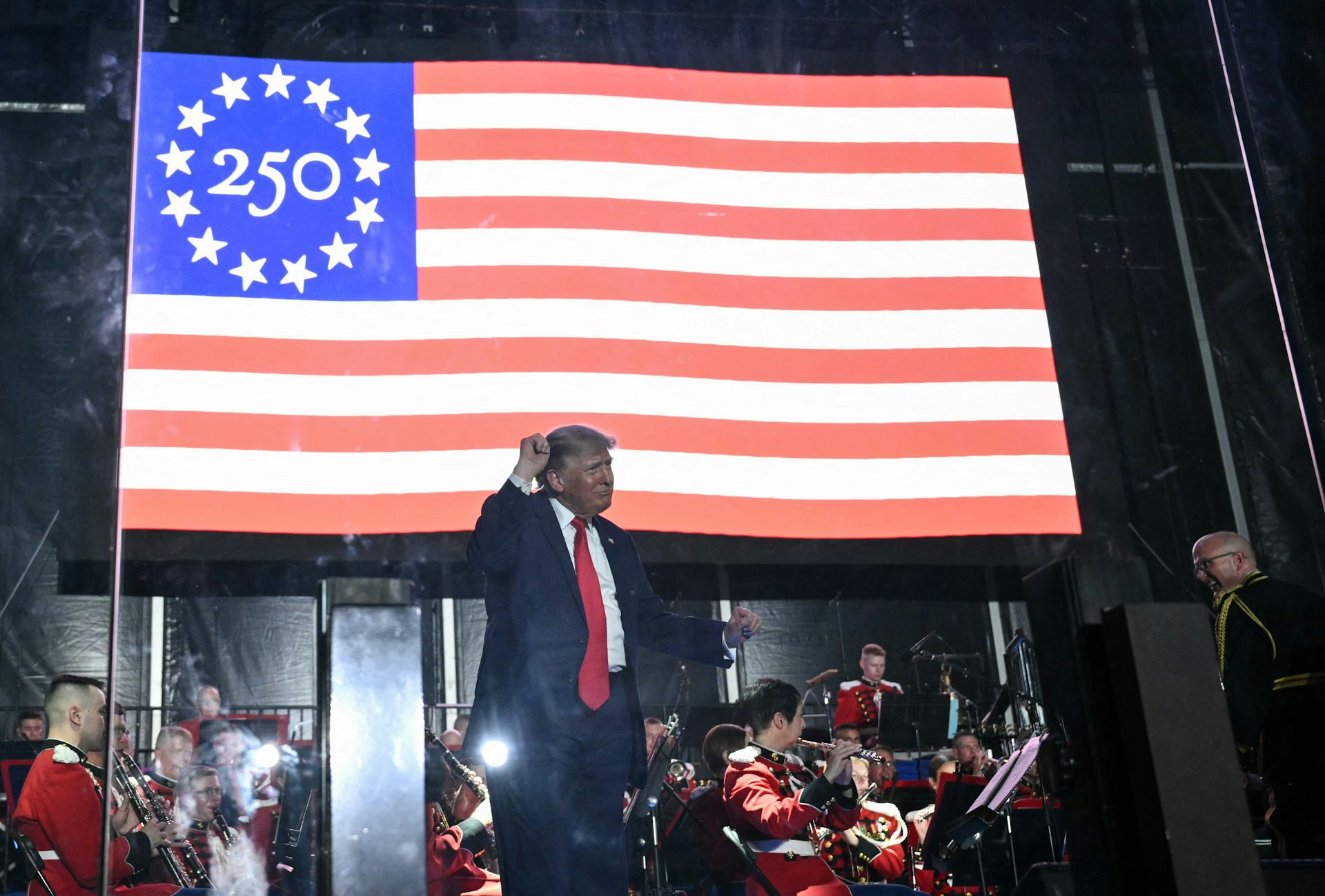
It’s almost the Fourth of July and Donald Trump is making the most of the 250th anniversary of American independence. He has all but declared himself Patriot-in-Chief.
七月四日快到了,唐纳德·特朗普正充分利用美国独立250周年纪念日。他几乎把自己宣布为“首席爱国者”。
He’s putting his face on commemorative $250 bills and passports. A giant structure on the White House’s South Lawn, built for a pay-per-view UFC bout on Trump’s 80th birthday, was nicknamed the Arc de Trump. Perhaps Trump would have put his name on that, too, but as it was being built a court ordered his name be removed from another federal building.
他将自己的肖像印在了纪念版250美元钞票和护照上。白宫南草坪上一个为特朗普80岁生日的付费观看UFC比赛而建的巨大结构,被昵称为“特朗普拱门”。也许特朗普也会想把名字刻在上面,但在它建造期间,法院下令从另一座联邦建筑上移除了他的名字。
Trump is not the first president to lean into an exaggerated patriotism at a time of crisis, attempting to direct or reorient Americans’ sense of national purpose.
特朗普并非第一个在危机时期利用夸张爱国主义的总统,试图引导或重新定位美国人的国家使命感。
But the vanity of Trump’s actions signals something perhaps unique or at least singularly intense, as he attempts to fuse patriotism with personal loyalty so that love of country is the same as loving him.
但特朗普行为的虚荣心却暗示着某种可能独特或至少是极其强烈的信号,因为他试图将爱国主义与个人忠诚度融合在一起,使得热爱国家等同于爱他本人。
Other presidents have used patriotism to narrate the character of the nation, or to emphasise some change they felt necessary.
其他总统曾利用爱国主义来描绘国家的特征,或强调一些他们认为必要的变革。
Patriotism as service and the presidency as stewardship
爱国主义作为服务,总统任期作为管理责任
For George Washington, patriotism took the form of stepping down from the role as the nation’s first president.
对乔治·华盛顿而言,爱国主义的表现是主动放弃美国第一位总统的职位。
In doing so, he showed the new republic was serious about its claim that it would be governed by popular sovereignty rather than by an inherited monarchy.
通过这样做,他表明了新共和国认真对待其主权来源来自人民而非世袭君主的宣称。
Washington’s actions showed that keeping the balance of the three branches of government – executive, legislative and judicial – required good-faith actors and restraint.
华盛顿的行为表明,维持政府三个部门——行政、立法和司法——的平衡需要诚信的参与者和克制。
Roughly 200 years later, President Gerald Ford faced a dilemma. Richard Nixon had recently resigned in disgrace, and the oil shocks of the early 1970s meant wages were stagnant and inflation rampant for the first time since the Great Depression.
大约两百年后,杰拉尔德·福特总统面临了一个困境。理查德·尼克松最近因失职而辞职,而20世纪70年代初期的石油冲击意味着工资停滞,通货膨胀在自大萧条以来首次猖獗。
In those circumstances, Ford opted to mark the nation’s 200th birthday with a low-key expression of US patriotism. On July 4, Ford did not appear at an edifice built to honour him. Rather, he presided over a ceremony at Thomas Jefferson’s hallowed home and plantation, Monticello, to naturalise immigrant citizens.
在这种情况下,福特选择以低调的方式庆祝美国的两百周年国庆,表达爱国情怀。在7月4日,福特没有出现在一座为纪念他而建造的建筑里。相反,他在托马斯·杰斐逊神圣的家园和种植园蒙蒂塞洛(Monticello)主持了一场仪式,为移民公民办理入籍手续。
Patriotism as a global mission and a loyalty test
爱国主义作为全球使命和忠诚度的考验
Many American presidents have framed national pride and devotion in terms of the United States’ place in the world. They adopt a tradition captured in revolutionary pamphleteer Thomas Paine’s 1776 work, Common Sense, that
许多美国总统都将民族自豪感和奉献精神与美国在全球的地位联系起来。他们采纳了革命小册子作家托马斯·潘恩(Thomas Paine)1776年著作《常识》(Common Sense)中的传统,即
the cause of America is in a great measure the cause of mankind.
美国的事业在很大程度上就是人类的事业。
With the rise of fascism and Nazism in the 1930s, this sense of the US as having a global mission became acute.
随着20世纪30年代法西斯主义和纳粹主义的兴起,美国具有全球使命感的意识变得尤为强烈。
As Franklin Roosevelt exhorted those he called “my fellow Americans” to step up to join the Allies, he argued their good fortune was also an obligation. His January 1941 Four Freedoms speech said the US must defend the freedom of expression and religion Americans already enjoyed but also “freedom from want” and “freedom from fear” for everyone, worldwide.
当富兰克林·罗斯福(Franklin Roosevelt)敦促他称之为“我的美国同胞”们加入盟军时,他认为他们的好运也是一种义务。他在1941年1月的《四项自由》演讲中说,美国必须捍卫美国人已经享有的言论和宗教自由,同时也为全世界所有人争取“免于匮乏的自由”和“免于恐惧的自由”。
This strain of internationally-focused patriotism remained the hallmark of presidential rhetoric all the way through the Cold War and its immediate aftermath.
这种国际化视野的爱国主义一直贯穿了冷战及其直接后果,成为总统修辞的标志。
Then, in 2000, George W. Bush entered office with a promise to curb the US’s international entanglements. The 9/11 attacks ended that ambition, and from there Bush trumpeted a patriotism that foreshadowed what is happening today in its emphasis on loyalty. “Either you are with us, or you are with the terrorists,” Bush told other nations.
然后,2000年,乔治·W·布什(George W. Bush)上任时承诺收缩美国的国际牵涉。9/11事件终结了这一雄心,从那时起,布什宣扬了一种爱国主义,其强调忠诚度的特点预示了今天正在发生的事情。“要么你和我们在一起,要么你和恐怖分子在一起,”布什对其他国家说。
American citizens were also subject to new laws (one literally known as The Patriot Act) , institutions and norms to intensify domestic surveillance and stifle dissent.
美国公民也面临着新的法律(其中一项被称为《爱国者法案》),制度和规范,以加强国内监控并压制异议。
Freedom for some Americans, unfreedom for others
一些美国人享有自由,另一些人则不享有自由
Even presidents with the grandest ideas of patriotism have not escaped the contradiction at the core of America’s self-image as a nation uniquely devoted to freedom. Because while in theory all people may be born equal, the US has never treated all of them that way.
即使是拥有最宏大爱国理念的总统们,也未能逃脱美国作为一个独特奉献给自由的国家自画像核心矛盾。因为理论上所有人都可能生而平等,但美国从未真正如此对待所有人。
American freedom has always come by excluding some from its bounty. George Washington himself enslaved hundreds of people and ferociously pursued those who escaped to freedom. President Woodrow Wilson, who wanted the US to make the world safe for democracy, segregated a previously integrated federal public service and promoted racist myths about America’s history. Franklin Roosevelt’s much-lauded New Deal and GI Bill, which did so much to redistribute wealth and build America’s middle class, excluded African Americans, Native Americans and many other people of colour.
美国的自由一直是以排除某些群体为代价获得的。乔治·华盛顿本人曾奴役数百人,并残酷追捕那些逃往自由的人们。伍德罗·威尔逊总统为了让美国成为民主安全的世界,拆分了一个原本整合的联邦公共服务部门,并宣扬了关于美国历史的种族主义神话。富兰克林·罗斯福备受赞誉的新政和退伍军人法案,虽然在重新分配财富和建立美国中产阶级方面做出了巨大贡献,但却排除了非裔美国人、美洲原住民以及许多其他有色人种。
In this regard, Trump’s inward-looking patriotism is familiar, although it is much more explicit about who it excludes than most presidents have been for some time.
在这方面,特朗普的内向型爱国主义是熟悉的,尽管它比大多数总统们过去所做的更明确地指出了其排除的对象。
What is new, however, is Trump’s fusion of patriotism, personal loyalty and an idea that he – as president but also because of his self-proclaimed sense of superiority in all aspects of life – somehow embodies the nation itself.
然而,新颖之处在于特朗普将爱国主义、个人忠诚和一种“他——作为总统,也因为他在生活各个方面的自诩优越感”某种程度上体现了国家本身这三种理念融合在一起。
This is the patriotism of the corporate raider: acquire the institution, put your name on the façade, reward loyalists and above all, extract all the value you can.
这就是企业掠夺者的爱国主义:获取机构,在门面上印上你的名字,奖励追随者,最重要的是,榨取你能提取的所有价值。
The 250th anniversary of independence doesn’t require us to ask if Trump is politicising patriotism. Patriotism is always political. The question is whether and how patriotism can be made to serve the greater good, or whether it is just yet another asset for Trump to own.
纪念独立250周年并不要求我们去质疑特朗普是否将爱国主义政治化了。爱国主义本身就是政治的。问题在于爱国主义能否被用来服务于更大的利益,还是它仅仅是特朗普又一个可以拥有的资产。
Clare Corbould has received funding from the Australian Research Council. She is a member of the Australian Historical Association.
克莱尔·科布尔德(Clare Corbould)获得了澳大利亚研究理事会的资助。她是澳大利亚历史协会的成员。