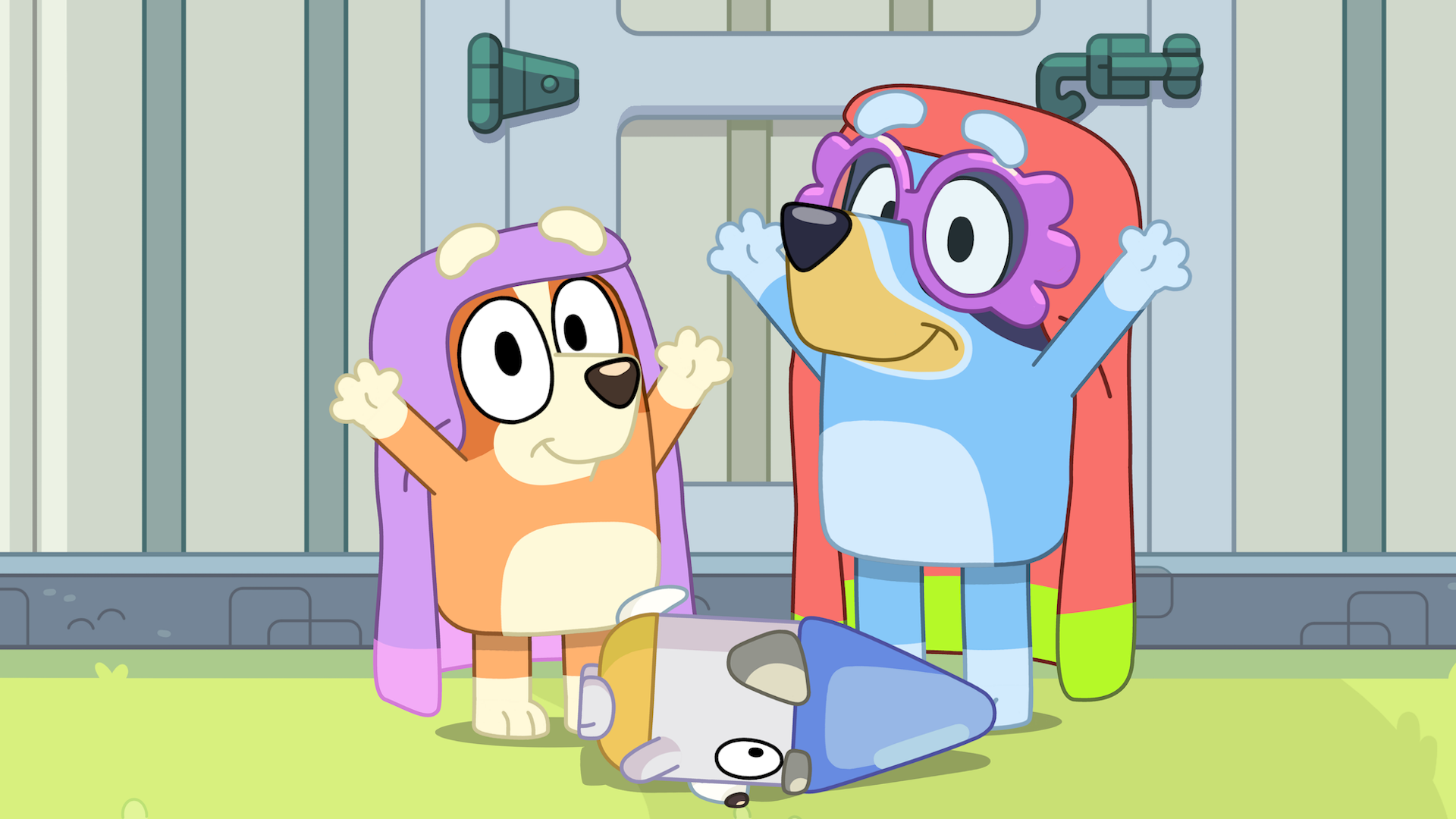
Podemos considerar ‘brincar’ uma religião? Bluey certamente pensa assim.
Can we consider ‘play’ to be a religion? Bluey certainly thinks so
Bluey teaches us valuable life lessons, but what does it say about how we practise real-life religions, the positive and the detrimental?
Bluey nos ensina valiosas lições de vida, mas o que isso diz sobre como praticamos religiões da vida real, o positivo e o prejudicial?
Most of us are used to thinking of “religion” in terms of a belief in God or gods. Perhaps the big hitters of world belief systems come to mind – Judaism, Christianity, Islam, Hinduism, Sikhism, Buddhism or, in Australia, the Dreamtime.
A maioria de nós está acostumada a pensar em “religião” em termos de crença em Deus ou em deuses. Talvez venham à mente os grandes sistemas de crenças mundiais – Judaísmo, Cristianismo, Islamismo, Hinduísmo, Sikhismo, Budismo ou, na Austrália, o Dreamtime.
But philosophers of religion and human belief systems tend to make it a bit more complicated for us. They like to expand what we think of as religious belief.
Mas os filósofos da religião e dos sistemas de crenças humanas tendem a complicar um pouco as coisas para nós. Eles gostam de expandir o que consideramos crença religiosa.
One philosopher, William James, defined religion as “the belief that there is an unseen order, and that our supreme good lies in harmoniously adjusting ourselves [to it]”.
Um filósofo, William James, definiu religião como “a crença de que há uma ordem invisível, e que o nosso bem supremo reside em nos ajustarmos harmoniosamente [a ela]”.
When we think of religion this way, we can conceive of a lot more “unseen orders” or religions in the world than just the big, organised religions and belief in supernatural phenomena.
Quando pensamos em religião dessa forma, podemos conceber muito mais “ordens invisíveis” ou religiões no mundo do que apenas as grandes religiões organizadas e a crença em fenômenos sobrenaturais.
For example, most of us believe in the unseen order of “queuing” and believe that our greater good comes from harmoniously adjusting ourselves to its rules. These might include “first come, first serve,” “no cuts,” “join at the end,” “leaving the queue forfeits your place” and more.
Por exemplo, a maioria de nós acredita na ordem invisível de “fazer fila” e acredita que nosso bem maior vem de nos ajustarmos harmoniosamente às suas regras. Estas podem incluir “quem chega primeiro, é atendido primeiro”, “sem cortes”, “juntar-se no final”, “deixar a fila perde seu lugar” e muito mais.
Other unseen orders we interact with daily might include “manners”, “tall-poppy-ism,” or even “civil law”. James helps us understand how these beliefs function cognitively and emotionally, and how they affect our behaviour just like a traditional religion.
Outras ordens invisíveis com as quais interagimos diariamente podem incluir “bons modos”, “o tall-poppy-ismo” ou até mesmo “direito civil”. James ajuda-nos a entender como essas crenças funcionam cognitiva e emocionalmente, e como afetam nosso comportamento assim como uma religião tradicional.
In Bluey, one of the most interesting religions is “Play”.
Em Bluey, uma das religiões mais interessantes é o “Brincar”.
Play, religion and Bluey
Brincadeira, religião e Bluey
Play functions as a unifying unseen order all the characters align themselves to throughout the show.
A brincadeira funciona como uma ordem invisível unificadora à qual todos os personagens se alinham ao longo do programa.
The cast whole-heartedly believe in this unseen order of Play, with rules which ought to be harmoniously followed in order to reach the supreme good. This unifying belief centres the characters on the good of bonding, love and fun.
O elenco acredita de coração nesta ordem invisível da Brincadeira, com regras que devem ser seguidas harmoniosamente para alcançar o bem supremo. Essa crença unificadora centra os personagens no bem do vínculo, do amor e da diversão.
The pursuit of these ideals is rewarded both within the show by the characters and metatextually as the “gods” of the show (Joe Brumm and the other writers) bend the world towards them.
A busca por esses ideais é recompensada tanto dentro do programa pelos personagens quanto metatextualmente, já que os “deuses” do programa (Joe Brumm e os outros escritores) curvam o mundo em direção a eles.
So, what are the central beliefs of the religion of Play in Bluey? My research found four key rules which the characters consistently adjust themselves to.
Então, quais são as crenças centrais da religião da Brincadeira em Bluey? Minha pesquisa encontrou quatro regras principais às quais os personagens se ajustam consistentemente.
1. Don’t interrupt or stop. No one in the show ever willingly interrupts or stops mid-game, best illustrated by the episode Stumpfest.
1. Não interromper ou parar. Ninguém no programa interrompe ou para por vontade própria no meio de um jogo, o que é melhor ilustrado pelo episódio Stumpfest.
2. Follow the agreed rules. Rules and “playing properly” are very important to the characters, most aptly illustrated by the episodes Shadowlands and Library.
2. Seguir as regras acordadas. Regras e “brincar corretamente” são muito importantes para os personagens, o que é mais adequadamente ilustrado pelos episódios Shadowlands e Library.
3. Be enthusiastic. There are no half-measures or dissent allowed, illustrated by Octopus and Whale Watching.
3. Ser entusiasta. Não são permitidas meias-medidas ou dissidência, ilustrado por Octopus e Whale Watching.
4. Games should have happy endings, because the real world often doesn’t. This is the theme of the 2024 special The Sign.
4. Os jogos devem ter finais felizes, porque o mundo real muitas vezes não tem. Este é o tema do especial de 2024, The Sign.
‘Contextualising’ religions
‘Contextualising’ religions
The religion of Play is not without difficulties. The show spends a surprising amount of time questioning and exploring these rules, especially when they harm or hinder rather than help the characters seek good.
The religion of Play is not without difficulties. The show spends a surprising amount of time questioning and exploring these rules, especially when they harm or hinder rather than help the characters seek good.
This is parallel to the process of “contextualising” real-life organised religions. Contextualising is when the practices or beliefs of religions are explored and changed over time to better suit the time and place the religion finds itself in and allow more people to comfortably and positively engage with the greater good of the religion.
This is parallel to the process of “contextualising” real-life organised religions. Contextualising is when the practices or beliefs of religions are explored and changed over time to better suit the time and place the religion finds itself in and allow more people to comfortably and positively engage with the greater good of the religion.
For example, many houses of worship have adjusted standing and kneeling practices for prayer to accommodate folks with physical disabilities and an ageing population. Likewise, many religious services that were once performed in ceremonial languages (like Latin, Sanskrit or Classical Arabic) are now done in the contemporary language of the community.
For example, many houses of worship have adjusted standing and kneeling practices for prayer to accommodate folks with physical disabilities and an ageing population. Likewise, many religious services that were once performed in ceremonial languages (like Latin, Sanskrit or Classical Arabic) are now done in the contemporary language of the community.
Bluey can offer us some lessons in contextualising our own religions, beliefs or non-religion.
Bluey can offer us some lessons in contextualising our own religions, beliefs or non-religion.
In the episode Shop we see worrying too much about how the unseen order works (the rules of a game) can stop you from engaging in the unseen order (having fun) . Engaging is far more important than rules.
In the episode Shop we see worrying too much about how the unseen order works (the rules of a game) can stop you from engaging in the unseen order (having fun) . Engaging is far more important than rules.
Episodes Charades and Helicopter teach inclusion and flexibility in play. Modifying the rules is acceptable so that more people can join in.
Episodes Charades and Helicopter teach inclusion and flexibility in play. Modifying the rules is acceptable so that more people can join in.
In Copycat we see the benefit of stories and playing out games with sad or unexpected endings. Different practices can illuminate more depth or diversity.
In Copycat we see the benefit of stories and playing out games with sad or unexpected endings. Different practices can illuminate more depth or diversity.
In Driving, Chilli interrupts to understand the game better, and can then better align her enthusiasm to the game. Some rules are less important than others – breaking a minor rule might be necessary to follow a more important rule.
In Driving, Chilli interrupts to understand the game better, and can then better align her enthusiasm to the game. Some rules are less important than others – breaking a minor rule might be necessary to follow a more important rule.
And in Pass the Parcel, a parent changes the practice of the game, back to how he played as a child with only one prize rather than a prize in every layer. This change to the unseen order is at first taken with great difficulty by the children and parents alike, but in the end is appreciated: the reward is greater than the growing pains.
And in Pass the Parcel, a parent changes the practice of the game, back to how he played as a child with only one prize rather than a prize in every layer. This change to the unseen order is at first taken with great difficulty by the children and parents alike, but in the end is appreciated: the reward is greater than the growing pains.
Adjustment and contextualisation can be hard, but also rewarding.
Adjustment and contextualisation can be hard, but also rewarding.
What we can learn about practicing religion
O que podemos aprender sobre praticar religião
The rules of the belief system are only a means to an end. The rules are a way of aligning oneself with the unseen order for the greater good. The rules are not the greater good in and of themselves.
As regras do sistema de crenças são apenas um meio para um fim. As regras são uma forma de se alinhar com a ordem invisível para o bem maior. As regras não são o bem maior em si mesmas.
Bluey teaches us three important lessons about practicing religion through its depiction of the religion of play:
Bluey nos ensina três lições importantes sobre praticar religião através de sua representação da religião do brincar:
participation in the unseen order is more important than the specific rules
* a participação na ordem invisível é mais importante do que as regras específicas
extreme and rigid adherence to the rules can be harmful to those around us and ourselves
* a adesão extrema e rígida às regras pode ser prejudicial para aqueles ao nosso redor e para nós mesmos
there is more than one way to practice an unseen order without giving up the supreme good that we all seek.
* há mais de uma maneira de praticar uma ordem invisível sem abrir mão do bem supremo que todos buscamos.
There is more than one way to play a game, just as there is more than one way to practice a religion.
Há mais de uma maneira de jogar um jogo, assim como há mais de uma maneira de praticar uma religião.
Sarah Lawson does not work for, consult, own shares in or receive funding from any company or organisation that would benefit from this article, and has disclosed no relevant affiliations beyond their academic appointment.
Sarah Lawson não trabalha, não é consultora, não possui ações nem recebe financiamento de nenhuma empresa ou organização que se beneficiaria deste artigo, e não divulgou afiliações relevantes além de seu cargo acadêmico.
Read more
-
A ‘campanha entre as guerras’ de Israel: Como a estratégia para conter Irã e seus aliados corre o risco de tensionar ainda mais os laços com os EUA
Israel’s ‘campaign between the wars’: How strategy to contain Iran and its allies risks further straining ties with US
-
Trump e Lula na Casa Branca: um relacionamento construído sobre pragmatismo e um cálculo regional mais amplo
Trump and Lula at the White House: a relationship built on pragmatism and a broader regional calculus