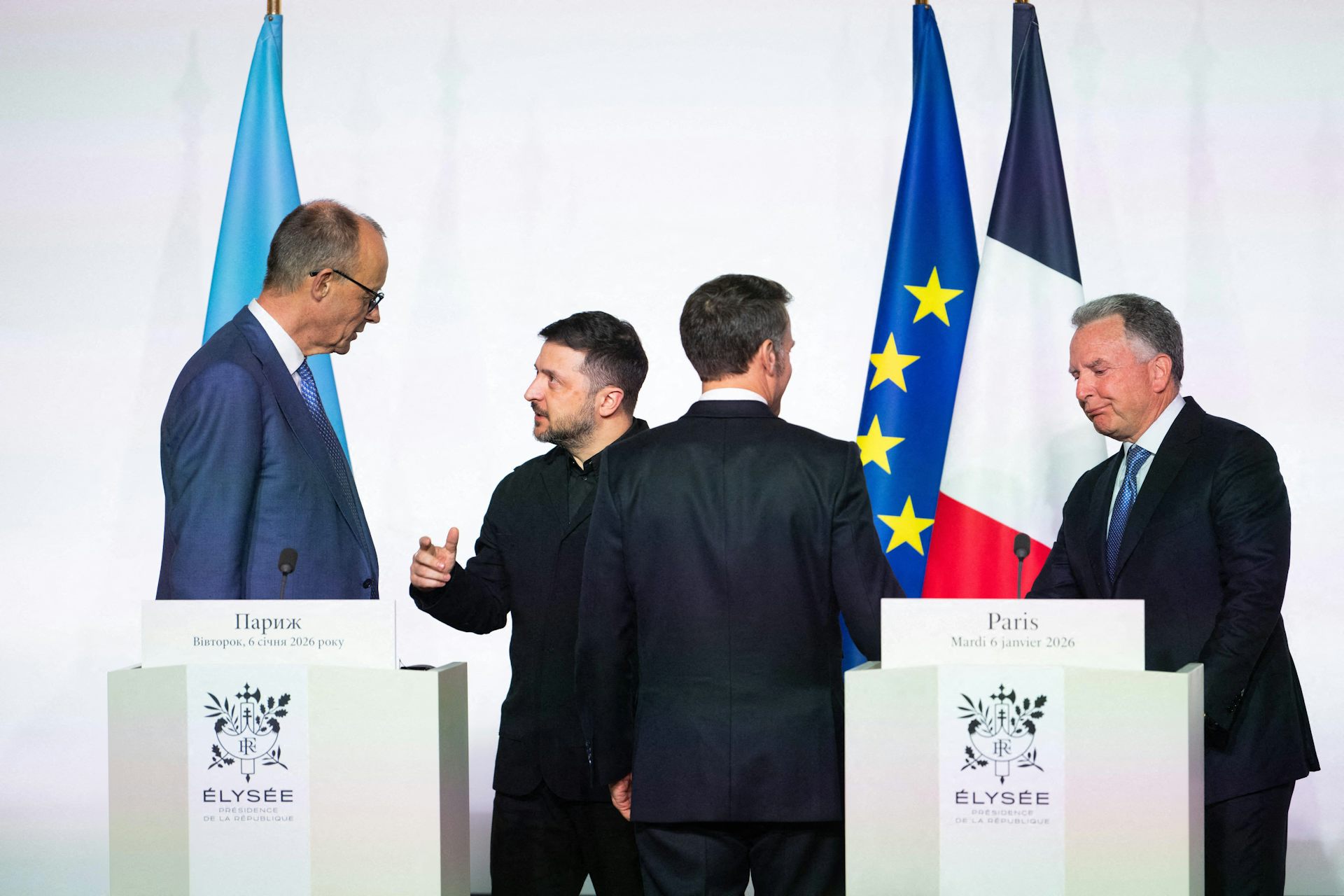
Si Europa quiere ‘actuar por su cuenta’ en materia de seguridad, los países deben aprender a cantar con la misma partitura
If Europe wants to ‘go it alone’ on security, countries need to learn to sing from the same songsheet
Splits are appearing in Europe’s approach to Russia’s aggression just when it needs to present a united front.
Están apareciendo divisiones en el enfoque europeo hacia la agresión rusa justo cuando necesita presentar un frente unido.
The G7 summit at Evian from June 15 to 17 is most revealing not for what was agreed, but for what was exposed about the state of play among Europeans, and their relationship with the US. For all the choreography and displays of unity, the summit was, in large part, theatre. It was an attempt to paper over what is becoming increasingly obvious: many of the most critical international issues are now decided without the EU. Brussels is now, at best, an informed bystander.
La cumbre del G7 en Evian, del 15 al 17 de junio, resulta más reveladora no por lo que se acordó, sino por lo que quedó expuesto sobre el estado de la situación entre los europeos y su relación con EE. UU. Por toda la coreografía y las muestras de unidad, la cumbre fue, en gran parte, un teatro. Fue un intento de encubrir lo que es cada vez más obvio: muchos de los problemas internacionales más críticos ahora se deciden sin la UE. Bruselas es, como mucho, una observadora informada.
This was obvious when the US president, Donald Trump, signed a physical copy of his deal with Iran at a post-G7 dinner at the Palace of Versailles hosted by Emmanuel Macron. It was a diplomatic coup for France, rather than a plan hatched by the EU.
Esto fue evidente cuando el presidente estadounidense, Donald Trump, firmó una copia física de su acuerdo con Irán en una cena posterior al G7 en el Palacio de Versalles, organizada por Emmanuel Macron. Fue un golpe diplomático para Francia, más que un plan ideado por la UE.
The G7 produced nine joint declarations and seemingly reaffirmed more than just the bare minimum of western unity that has been possible of late. The leaders’ statement on geopolitical issues included strong language on Ukraine. The G7 promised “to increase the delivery of air defence capacities, additional systems and interceptors, and long-range capabilities” and “to increase the pressure on the Russian war economy”.
El G7 produjo nueve declaraciones conjuntas y aparentemente reafirmó más que el mínimo esfuerzo de unidad occidental que ha sido posible últimamente. La declaración de los líderes sobre cuestiones geopolíticas incluyó un lenguaje fuerte sobre Ucrania. El G7 prometió “aumentar la entrega de capacidades de defensa aérea, sistemas adicionales e interceptores, y capacidades de largo alcance” y “incrementar la presión sobre la economía de guerra rusa”.
Yet, it fell short on concrete provisions and timelines. And it notably lacked the commitment to the “robust and legally binding security guarantees” and “the deployment of the Multinational Force – Ukraine” that France, Germany and the UK (the “E3”) had emphasised in their joint declaration with Ukraine’s president, Volodymyr Zelensky on June 7.
Sin embargo, se quedó corto en disposiciones concretas y plazos. Y notablemente careció del compromiso con las “garantías de seguridad sólidas y legalmente vinculantes” y “el despliegue de la Fuerza Multinacional – Ucrania”, que Francia, Alemania y el Reino Unido (el “E3”) habían enfatizado en su declaración conjunta con el presidente de Ucrania, Volodímir Zelenski, el 7 de junio.
The E3 and Ukraine mini-summit showed European diplomatic coordination at its most effective. Évian, by contrast, showed how little of that coordination carries into the decisions that ultimately matter.
La mini-cumbre del E3 y Ucrania mostró la coordinación diplomática europea en su estado más efectivo. Evian, por el contrario, demostró cuán poca de esa coordinación se traslada a las decisiones que realmente importan.
Europe’s struggle for relevance is also obvious in relation to Ukraine. The last meaningful – if hardly constructive – negotiations occurred in the so-called “Geneva track” in February. Mediated by Trump’s Witkoff-Kushner team (which was also involved in talks with Iran) , this brought Russia and Ukraine together for talks.
La lucha de Europa por la relevancia también es obvia en relación con Ucrania. Las últimas negociaciones significativas —aunque poco constructivas— tuvieron lugar en la llamada “vía de Ginebra” en febrero. Mediado por el equipo Witkoff-Kushner de Trump (que también estuvo involucrado en conversaciones con Irán) , esto reunió a Rusia y Ucrania para hablar.
But while Washington reported “meaningful progress”, Zelensky commented that “sensitive political matters … have not yet been sufficiently addressed” and called for European to be involved in the next round of talks. This has not happened.
Pero mientras Washington reportó un “progreso significativo”, Zelenski comentó que “asuntos políticos sensibles… aún no han sido abordados suficientemente” y pidió la participación europea en la próxima ronda de conversaciones. Esto no ha sucedido.
Meanwhile, Europe’s own efforts also failed. Putin immediately rejected the call from E3 and Ukraine for direct talks. This was reinforced in a June 19 essay penned by Russia’s foreign minister, Sergey Lavrov, accusing Europe of complicity in the 2014 political crisis in Ukraine which ousted the pro-Russian president, Viktor Yanukovych, and precipitated the conflict. He added they had sabotaged any attempts at peace.
Mientras tanto, los propios esfuerzos europeos también fracasaron. Putin rechazó inmediatamente la petición del E3 y Ucrania de negociaciones directas. Esto se reforzó en un ensayo del 19 de junio redactado por el ministro de Asuntos Exteriores ruso, Serguéi Lavrov, acusando a Europa de complicidad en la crisis política de 2014 en Ucrania que derrocó al presidente pro-ruso, Víktor Yanukóvich, y precipitó el conflicto. Añadió que habían saboteado cualquier intento de paz.
But the EU was already at loggerheads with itself. Earlier that day, EU leaders gathering for a summit in Brussels discovered that António Costa, the European Council president, had instructed his office to reach out to the Kremlin — without consulting member states — to lay the groundwork for potential peace negotiations with Russia over Ukraine. Their reaction ranged from surprise to outrage. Germany’s chancellor, Friedrich Merz, and Macron both publicly pushed back against Costa. Macron stated that “he [Costa] cannot represent [EU states] when security guarantees are at stake”.
Pero la UE ya estaba en desacuerdo consigo misma. El mismo día, líderes de la UE reunidos para una cumbre en Bruselas descubrieron que António Costa, presidente del Consejo Europeo, había instruido a su oficina para que se comunicara con el Kremlin —sin consultar a los estados miembros— para sentar las bases de posibles negociaciones de paz con Rusia sobre Ucrania. Su reacción fue de sorpresa a indignación. El canciller alemán, Friedrich Merz, y Macron se opusieron públicamente a Costa. Macron declaró que “él [Costa] no puede representar [a los estados de la UE] cuando están en juego las garantías de seguridad”.
The episode was damaging for reasons that go well beyond procedural embarrassment. The spectacle of European leaders publicly repudiating their own council president will have given Moscow the satisfaction of knowing that Europe still cannot speak with a single voice.
El episodio fue perjudicial por razones que van mucho más allá del simple embrollo procesal. El espectáculo de líderes europeos repudiando públicamente a su propio presidente del consejo habrá dado a Moscú la satisfacción de saber que Europa todavía no puede hablar con una sola voz.
The European Commission president, Ursula von der Leyen, tried to bring the message under control. At her press conference after the EU leaders’ summit, she noted that “sooner or later Russia will need to come to the negotiating table, and when that comes we need a united European message to President Putin”. That ambition, however, contrasts sharply with the reality of the earlier Costa episode.
La presidenta de la Comisión Europea, Ursula von der Leyen, intentó controlar el mensaje. En su conferencia de prensa después de la cumbre de los líderes de la UE, señaló que “tarde o temprano Rusia tendrá que acudir a la mesa de negociaciones, y cuando eso suceda necesitamos un mensaje europeo unido para el presidente Putin”. Sin embargo, esa ambición contrasta fuertemente con la realidad del anterior episodio de Costa.
A unified approach
Un enfoque unificado
Diplomatic embarrassment is not the only issue when it comes to how quickly Europe will be able to close the persistent gap between ambition and reality.
La vergüenza diplomática no es el único problema cuando se trata de la rapidez con la que Europa podrá cerrar la persistente brecha entre ambición y realidad.
On June 8, the German government formalised its withdrawal from the Future Combat Air System (FCAS) , the €100 billion (£86 billion) joint fighter jet project launched in 2017 as the flagship expression of Franco-German defence ambition. FCAS also included engines, sensors and a digital intelligence network known as “combat cloud”.
El 8 de junio, el gobierno alemán formalizó su retirada del Sistema Aéreo de Combate Futuro (FCAS) , el proyecto conjunto de aviones de combate por valor de 100.000 millones de euros (86.000 millones de libras esterlinas) lanzado en 2017 como la expresión insignia de la ambición de defensa franco-alemana. FCAS también incluía motores, sensores y una red de inteligencia digital conocida como «nube de combate.»
One point of contention was reportedly the leadership role played by French aerospace giant Dassault. Germany wanted more of a leadership role and the partners are reported to have had divergent visions of the end product.
Un punto de controversia fue el papel de liderazgo desempeñado por el gigante aeroespacial francés Dassault. Alemania quería un rol de liderazgo mayor y se reportó que los socios tuvieron visiones divergentes del producto final.
Germany’s aspiration to “lead or substantially shape” future European air combat systems may seem rational given the country’s financial muscle and engineering prowess. With more than €750 billion committed to rebuilding its armed forces by 2030, Germany’s instinct that this investment should produce proportionate industrial and strategic leadership is understandable. But when applied to European defence cooperation, it is counterproductive.
La aspiración de Alemania de «liderar o dar forma sustancial» a futuros sistemas europeos de combate aéreo puede parecer racional dado el músculo financiero y la destreza ingenieril del país. Con más de 750 mil millones de euros comprometidos para reconstruir sus fuerzas armadas para 2030, el instinto alemán de que esta inversión debe producir un liderazgo industrial y estratégico proporcional es comprensible. Pero cuando se aplica a la cooperación de defensa europea, es contraproducente.
While European states, including Germany, have repeatedly stressed the need for collective action on defence, there is a repeated fallback on national initiatives. It’s hard to escape the conclusion that Europe continues to struggle to effectively coordinate efforts.
Si bien los estados europeos, incluyendo Alemania, han enfatizado repetidamente la necesidad de acción colectiva en defensa, existe un recurrir constante a las iniciativas nacionales. Es difícil evitar la conclusión de que Europa sigue teniendo dificultades para coordinar esfuerzos de manera efectiva.
In a development that neatly illustrates this point, on June 20 the UK unveiled three prototype long-range strike missiles built without any US-manufactured components. The product of an 18-month programme known as Project Brakestop, the explicit purpose of developing this capability is to remove Washington’s ability to veto their deployment in Ukraine.
En un desarrollo que ilustra perfectamente este punto, el 20 de junio el Reino Unido desveló tres misiles prototipo de ataque de largo alcance construidos sin componentes fabricados en EE. UU. Producto de un programa de 18 meses conocido como Proyecto Brakestop, el propósito explícito de desarrollar esta capacidad es eliminar la capacidad de Washington para vetar su despliegue en Ucrania.
On the positive side, the UK’s ability to pull this off is commendable. It encapsulates the transformation in European thinking about the transatlantic relationship under Trump – and the capability to follow through on this.
Por el lado positivo, la capacidad del Reino Unido para lograr esto es encomiable. Encapsula la transformación en el pensamiento europeo sobre la relación transatlántica bajo Trump y la capacidad de llevarlo a cabo.
But as an act of strengthening European strategic sovereignty, it falls short. It is British rather than European.
Pero, como un acto de reforzar la soberanía estratégica europea, se queda corto. Es británico más que europeo.
Europe’s ambition to rise to the simultaneous challenges of Trump’s transactionalism and Putin’s adventurism has been stated loudly and clearly on more than one occasion over the past 18 months or so. This ambition is most commonly expressed in the quest for strategic autonomy or “going it alone”. But it is not matched with an ability to act coherently.
La ambición de Europa de afrontar los desafíos simultáneos del transaccionalismo de Trump y el aventurismo de Putin se ha manifestado en voz alta y con claridad en más de una ocasión durante los últimos 18 meses aproximadamente. Esta ambición se expresa más comúnmente en la búsqueda de autonomía estratégica o «actuar por sí misma.» Pero no está acompañada de una capacidad para actuar coherentemente.
Richard Whitman has received funding from the Economic and Research Council of the UK as a Senior Fellow of the UK in a Changing Europe initiative. He is a past recipient of grant funding from the British Academy of the UK, EU Erasmus+ and Jean Monnet Programme. He is a Senior Associate Fellow at the Royal United Services Institute (RUSI) , and an Academic Fellow of the European Policy Centre in Brussels. He is a past Associate Fellow and Head of the Europe Programme of the Royal Institute of International Affairs (Chatham House) .
Richard Whitman ha recibido financiación del Economic and Research Council del Reino Unido como Investigador Sénior de la iniciativa UK in a Changing Europe. Ha sido receptor anterior de subvenciones de la British Academy del Reino Unido, el programa Erasmus+ de la UE y el Programa Jean Monnet. Es Investigador Asociado Sénior en el Royal United Services Institute (RUSI) y Fellow Académico del European Policy Centre en Bruselas. Fue anteriormente Fellow Asociado y Jefe del Programa de Europa del Royal Institute of International Affairs (Chatham House) .
Stefan Wolff is a past recipient of grant funding from the Natural Environment Research Council of the UK, the United States Institute of Peace, the Economic and Social Research Council of the UK, the British Academy, the NATO Science for Peace Programme, the EU Framework Programmes 6 and 7 and Horizon 2020, as well as the EU’s Jean Monnet Programme. He is a Trustee and Honorary Treasurer of the Political Studies Association of the UK and a Senior Research Fellow at the Foreign Policy Centre in London.
Stefan Wolff es un receptor anterior de financiación del Consejo de Investigación del Medio Ambiente Natural del Reino Unido, el Instituto Estadounidense de Paz, el Consejo Británico de Investigación Económica y Social, la Academia Británica, el Programa Ciencia para la Paz de la OTAN, los Programas Marco 6 y 7 de la UE y Horizonte 2020, así como el Programa Jean Monnet de la UE. Es Fideicomisario y Tesorero Honorario de la Asociación de Estudios Políticos del Reino Unido y Investigador Senior en el Centro de Política Exterior de Londres.
Read more
-
Copa Mundial 2026: la verdadera historia de los migrantes africanos resilientes que están remodelando el fútbol mundial
World Cup 2026: the real story of the resilient African migrants reshaping global football
-
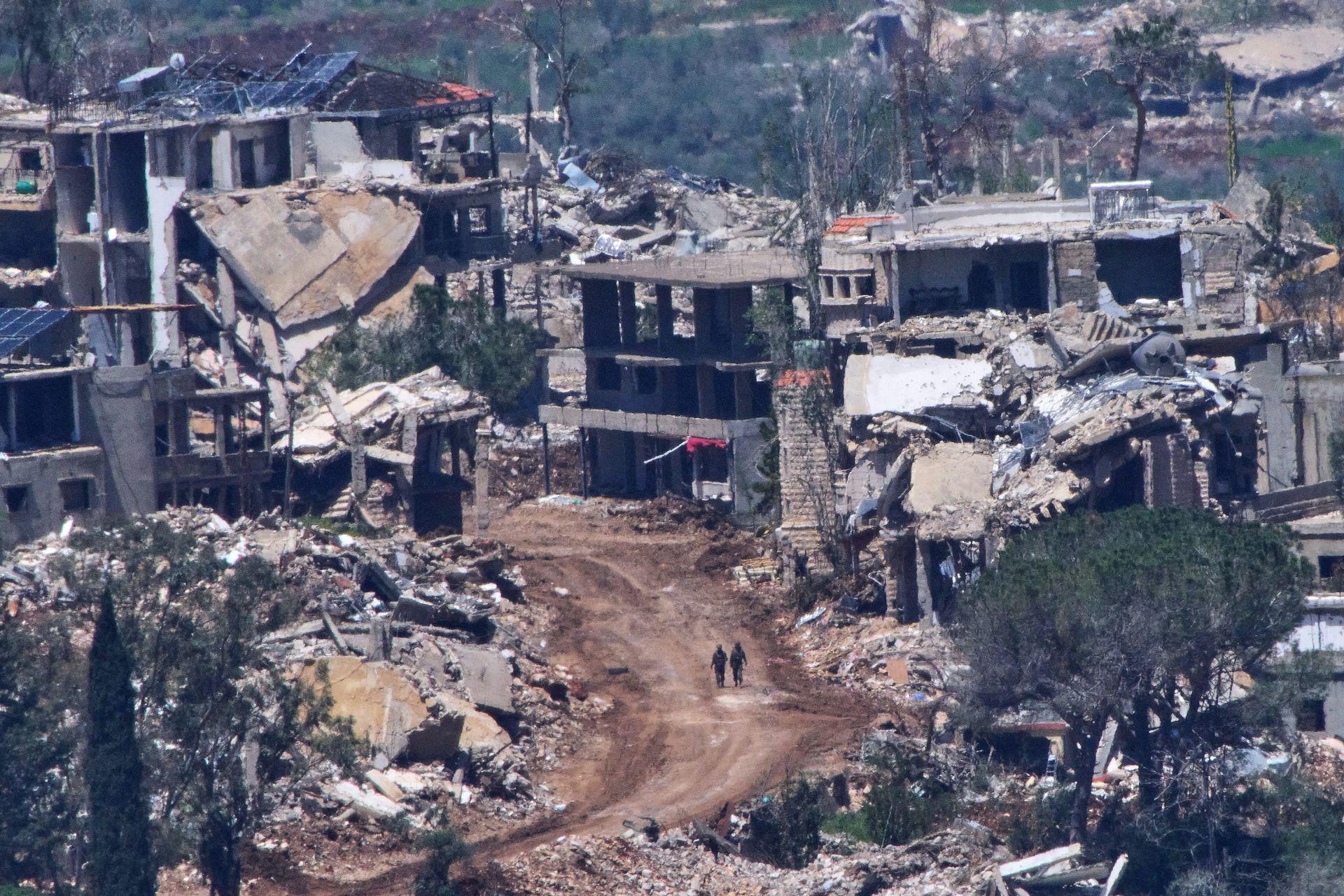
Netanyahu se ha comprometido a ‘terminar el trabajo’ contra Hezbolá. Es una promesa que no puede cumplir.
Netanyahu has pledged to ‘finish the job’ against Hezbollah. It’s a promise he can’t deliver on