
كيف تقود الموسيقى “الجذابة” بالأنماط الإيقاعية
How ‘catchy’ music is driven by rhythmic patterns
Catchy rhythms like the tresillo are examples of how our musical perception and preference negotiate between simplicity and complexity.
تُعدّ الإيقاعات الجذابة مثل التريسيلو أمثلة على كيفية تفاوض إدراكنا وميلنا الموسيقي بين البساطة والتعقيد.
Puerto Rican icon Bad Bunny, a superstar rapper, has recently risen to global prominence as demonstrated by the 2026 Super Bowl halftime show.
أصبح أيقونة بورتوريكو، باد بانني، مغني الراب النجم، ذا شهرة عالمية مؤخراً، كما يتضح من عرض نصف ملعب كرة القدم الكبرى لعام 2026.
Bad Bunny’s success is not only down to his charismatic performances or engagement in social activism for Puerto Rico, but also his catchy use of rhythm.
إن نجاح باد بانني لا يعود فقط إلى عروضه الكاريزمية أو انخراطه في النشاط الاجتماعي لصالح بورتوريكو، بل أيضاً لاستخدامه الجذاب للإيقاع.
He infuses the characteristic rhythms of reggaeton into Latin trap, creating his signature sound.
إنه يدمج الإيقاعات المميزة لموسيقى الريغيتون (reggaeton) في موسيقى التراب اللاتينية (Latin trap) ، خالقاً بذلك صوته المميز.
Rhythm can be defined as the musical duration or timing properties of music. Many rhythms derive from human speech patterns and are also linked to movement, including dance (as suggested by numerous studies on embodiment) .
يمكن تعريف الإيقاع بأنه الخصائص الزمنية أو التوقيتية للموسيقى. وتستمد العديد من الإيقاعات من أنماط الكلام البشري وترتبط أيضاً بالحركة، بما في ذلك الرقص (كما تشير دراسات عديدة حول التجسيد) .
The “catchiness” of a rhythm has the potential to make or break a song. And it’s not just in recent pop songs, but across classical, jazz and throughout global musical styles.
لـ “جذب” الإيقاع القدرة على صنع الأغنية أو تدميرها. وهذا لا يقتصر على أغاني البوب الحديثة فحسب، بل يشمل الكلاسيكية والجاز وعبر جميع الأساليب الموسيقية العالمية.
Rhythm in music
الإيقاع في الموسيقى
Rhythm is one of the key parameters of music alongside pitch and timbre, which is the quality of auditory sensations produced by the tone of a sound wave.
يُعد الإيقاع أحد المعايير الأساسية للموسيقى إلى جانب النغمة واللون الصوتي، الذي هو جودة الأحاسيس السمعية التي ينتجها نغم الموجة الصوتية.
As 20th-century composer Igor Stravinsky scribbled on his sketches of his rhythmic masterpiece, The Rite of Spring: “there is music wherever there is rhythm, as there is life wherever there beats a pulse.”
كما كتب المؤلف الموسيقي إيغور سترافينسكي في رسوماته عن تحفته الإيقاعية “طقوس الربيع”: “توجد الموسيقى حيثما يوجد الإيقاع، وحيثما ينبض النبض توجد الحياة.”
What makes a rhythm distinctive or catchy? The answer lies in the pattern that underlies the structure. Much of human creativity beyond rhythm and music is also shaped by the math underneath the patterns.
ما الذي يجعل الإيقاع مميزًا أو جذابًا؟ تكمن الإجابة في النمط الذي يكمن وراء البنية. ويتم تشكيل الكثير من الإبداع البشري، بخلاف الإيقاع والموسيقى، أيضًا بواسطة الرياضيات الكامنة تحت هذه الأنماط.
The tresillo
التريسيلو
Bad Bunny’s characteristic reggaeton rhythms are derived from what is called the tresillo, a distinctive pattern created by two groups of three beats followed by a group of two beats. It’s especially associated with African and Caribbean music.
تُستمد إيقاعات ريغيتون المميزة لـ “باد باني” من ما يُسمى “التريسيلو”، وهو نمط مميز يتكون من مجموعتين من ثلاث نبضات تليها مجموعة من نبضتين. ويرتبط هذا النمط بشكل خاص بالموسيقى الأفريقية والكاريبية.
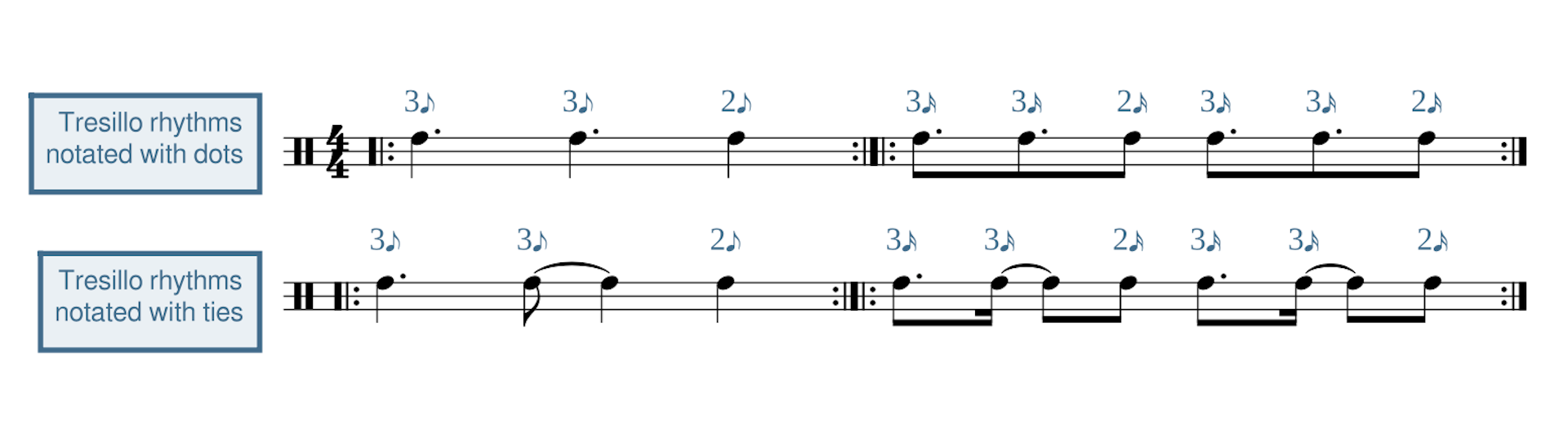
The tresillo is found across an array of music from all over the globe including tango, jazz, reggaeton and bossa nova.
يُعثر على التريسيلو في مجموعة متنوعة من الموسيقى من جميع أنحاء العالم، بما في ذلك التانغو والجاز والريغيتون والبوسا نوفا.
The tresillo was first made famous through the West in a song from an 1875 opera, Georges Bizet’s Carmen, “L’amour est un oiseau rebelle” (“Love is a rebellious bird”) , usually called “The Habanera.” And it has since been widely circulated in varied ways through popular culture.
اشتهر التريسيلو لأول مرة في الغرب عبر أغنية من أوبرا تعود لعام 1875، وهي “كارمن” لجورج بيزيه، وتحمل عنوان “L’amour est un oiseau rebelle” (“الحب طائر متمرد”) ، والتي تُعرف عادةً باسم “الهابانيرّا”. ومنذ ذلك الحين، انتشرت على نطاق واسع بطرق متنوعة عبر الثقافة الشعبية.
Carmen was set in what dominant French society at the time viewed as an “exotic” and culturally distant south of Spain. To emphasize this cultural difference, Bizet was keen to introduce what scholars have termed “local colour” through the use of an apparent folk tune, which became “The Habanera.”
تدور أحداث “كارمن” في جنوب إسبانيا، وهي منطقة كانت تعتبر آنذاك من قبل المجتمع الفرنسي المهيمن “غريبة” وبعيدة ثقافياً. وللتأكيد على هذا الاختلاف الثقافي، حرص بيزيه على تقديم ما وصفه الباحثون بـ “اللون المحلي” من خلال استخدام لحن شعبي ظاهري، والذي أصبح يُعرف باسم “الهابانيرّا.”
However, little did the composer know that “The Habanera” was not a folk tune and was actually a recent popular song by Spanish composer Sebastián Yradier. Certainly, this use of the tresillo was part of what made Bizet’s aria, and Yradier’s song, so catchy.
ومع ذلك، لم يكن المؤلف يعلم أن “الهابانيرّا” لم تكن لحناً شعبياً بل كانت في الواقع أغنية شائعة حديثة للمؤلف الإسباني سيباستيان ياراديير. وبالتأكيد، كان استخدام التريسيلو هذا جزءاً مما جعل أريا بيزيه وأغنية ياراديير جذابة للغاية.
“The Habanera” is not only the name of this composition but also of a genre of a musical dance. It first appeared in 1700s-era Cuba, where it grew out of an English country dance that was then infused with elements from French, Spanish and African traditions, which eventually led to the dance being characterized by the tresillo rhythm.
“الهابانيرّا” ليس فقط اسم هذه المقطوعة بل هو أيضاً اسم لنوع من الرقصات الموسيقية. وقد ظهرت لأول مرة في كوبا خلال فترة القرن الثامن عشر، حيث نشأت من رقصة ريفية إنجليزية تم بعد ذلك بث عناصر من التقاليد الفرنسية والإسبانية والأفريقية، مما أدى في النهاية إلى أن تتميز هذه الرقصة بإيقاع التريسيلو.
This shows how the tresillo is a product of cross-cultural transfer.
ويُظهر هذا كيف أن التريسيلو هو نتاج نقل ثقافي عابر للحدود.
‘Maximal evenness’
‘التساوي الأقصى’
The tresillo consists of a “three-three-two” pattern across eight beats. The three attacks are distributed evenly across those eight beats, but not perfectly so.
يتكون التريسيلو من نمط “ثلاثة-ثلاثة-اثنان” عبر ثماني نبضات. تتوزع الهجمات الثلاث بالتساوي على هذه النبضات الثمانية، ولكن ليس بشكل مثالي تمامًا.
The tresillo is a classic example of a larger class of “maximally even” rhythms. An arrangement is “maximally even” if the elements are spread out as much as possible in a given unit. With the tresillo, the “imperfect” arrangement often makes these “maximally even” rhythms sounds both simple yet catchy.
يمثل التريسيلو مثالاً كلاسيكيًا لفئة أكبر من الإيقاعات “المتساوية أقصى.” يكون الترتيب “متساويًا أقصى” إذا كانت العناصر مبعثرة قدر الإمكان في وحدة معينة. فبالنسبة للتريسيلو، غالبًا ما يجعل هذا الترتيب “غير المثالي” هذه الإيقاعات “المتساوية أقصى” تبدو بسيطة وجذابة في آن واحد.
Many other maximally even rhythms are constructed in similar manner with alternating rhythmic durations that are spread out as much possible in the space that they have.
يتم بناء العديد من الإيقاعات المتساوية أقصى الأخرى بطريقة مماثلة مع مدد إيقاعية متناوبة مبعثرة قدر المستطاع في المساحة المتاحة لها.
This is usually achieved by having two and three beats grouped together that alternate and create a somewhat irregular feel, but is widely popular and found across the globe in many musical genres and cultures including jazz, African drumming patterns, Indian classical music and more recent western classical music.
عادة ما يتحقق ذلك عن طريق تجميع نبضتين وثلاث نبضات بالتناوب وخلق شعور غير منتظم إلى حد ما، ولكنه شائع على نطاق واسع ويوجد في جميع أنحاء العالم في العديد من الأنواع الموسيقية والثقافات بما في ذلك الجاز وأنماط الطبول الأفريقية والموسيقى الكلاسيكية الهندية وموسيقى الغرب الكلاسيكية الأحدث.
In addition to Bad Bunny’s tresillos, another well-known example of maximally even rhythms appears in Radiohead’s “Pyramid Song” from their album Amnesiac (2001) . The title alludes to the ambiguous, much debated yet mesmerizing rhythms created through irregular beats that reference the geometric structure of a pyramid.
بالإضافة إلى تريسيلو باد باني، يظهر مثال آخر معروف للإيقاعات المتساوية أقصى في أغنية “Pyramid Song” لفرقة راديو هيد من ألبومهم Amnesiac (2001) . يشير العنوان إلى الإيقاعات الغامضة والمثيرة للجدل ولكنها ساحرة التي يتم إنشاؤها من خلال نبضات غير منتظمة تشير إلى الهيكل الهندسي للهرم.
Radiohead had already used this rhythm in their earlier 2000 hit “Everything in its right place,” making maximally even rhythms a key part of their signature sound.
كانت فرقة راديو هيد قد استخدمت بالفعل هذا الإيقاع في أغنيتهم الناجحة السابقة عام 2000، “Everything in its right place”، مما جعل الإيقاعات المتساوية أقصى جزءًا رئيسيًا من صوتهم المميز.
Maximally even arrangements also appear in nature — for example in the arrangement of magnetic particles in physics.
تظهر الترتيبات المتساوية أقصى أيضًا في الطبيعة- على سبيل المثال في ترتيب الجسيمات المغناطيسية في الفيزياء.
Perceiving rhythm
إدراك الإيقاع
The concept of maximal evenness also affects how our brains perceive rhythms. When hearing a rhythm, the human mind is sensitive to the relations of time intervals between notes (for example, the hits of a drum) within the rhythm.
يؤثر مفهوم التساوي الأقصى (maximal evenness) أيضاً على كيفية إدراك أدمغتنا للإيقاعات. عند سماع إيقاع، يكون العقل البشري حساساً لعلاقات الفواصل الزمنية بين النوتات (على سبيل المثال، ضربات الطبل) ضمن الإيقاع.
Specifically, our brains try to find a repeating pattern of regularities to organize the rhythm at different time scales. Regular, simple rhythmic patterns are more likely to be remembered.
على وجه التحديد، يحاول دماغنا العثور على نمط متكرر من الانتظام لتنظيم الإيقاع بمقاييس زمنية مختلفة. من المرجح أن يتم تذكر الأنماط الإيقاعية البسيطة والمنتظمة.
Early research on rhythm perception has found that study participants memorized and reproduced rhythms more accurately when the time intervals between notes have simple relations such as two to one, or one to one.
وجدت الأبحاث المبكرة حول إدراك الإيقاع أن المشاركين في الدراسة يتذكرون ويستعيدون الإيقاعات بدقة أكبر عندما تكون الفواصل الزمنية بين النوتات ذات علاقات بسيطة مثل اثنان إلى واحد، أو واحد إلى واحد.
For more complex patterns where the intervals are related by other ratios larger or smaller than two to one, participants often reproduced these patterns as though they were closer to two to one (or one to one) .
بالنسبة للأنماط الأكثر تعقيداً حيث ترتبط الفواصل بنسب أخرى أكبر أو أصغر من اثنين إلى واحد، غالباً ما أعاد المشاركون إنتاج هذه الأنماط كما لو كانت أقرب إلى نسبة اثنين إلى واحد (أو واحد إلى واحد) .
More recent research also found similar advantage for rhythms with simpler ratios of time intervals between notes to be more easily remembered and reproduced by people. Researchers found this “rhythmic bias” for simple ratios exists across different cultures, though the exact ratio people prefer varies across cultural groups.
كما وجدت الأبحاث الأحدث ميزة مماثلة للإيقاعات ذات النسب الأبسط للفواصل الزمنية بين النوتات لتكون أسهل في التذكر وإعادة الإنتاج من قبل الناس. ووجد الباحثون أن “التحيز الإيقاعي” (rhythmic bias) للنسب البسيطة موجود عبر الثقافات المختلفة، على الرغم من أن النسبة الدقيقة التي يفضلها الناس تختلف بين المجموعات الثقافية.
As we have seen, catchy rhythms like the tresillo could be explained by principles such as “maximal evenness” and human perception.
كما رأينا، يمكن تفسير الإيقاعات الجذابة مثل التريسيلو (tresillo) بمبادئ مثل “التساوي الأقصى” والإدراك البشري.
From Bad Bunny to Bizet, Radiohead and far beyond, artists appeal to these shared principles and patterns, and these catchy rhythms connect people across cultures, languages and generations.
من باد باني إلى بيزيه وراديو هيد وما وراءهما، يلجأ الفنانون إلى هذه المبادئ والأنماط المشتركة، وهذه الإيقاعات الجذابة تربط الناس عبر الثقافات واللغات والأجيال.
Catchy rhythms like the tresillo are examples of how our musical perception and preference negotiate between simplicity and complexity, between predictability and unpredictability.
تُعد الإيقاعات الجذابة مثل التريسيلو أمثلة على كيفية تفاوض إدراكنا وتفضيلاتنا الموسيقية بين البساطة والتعقيد، وبين القدرة على التنبؤ وعدم اليقين.
Aidan McGartland receives funding from The Ramsay Centre for Western Civilisation, McGill University and the Fonds de Recherche du Québec.
يتلقى آيدان ماكغارتلاند تمويلاً من مركز رامزي للحضارة الغربية وجامعة مكغيل ومؤسسة أبحاث كيبيك (Fonds de Recherche du Québec) .
Linglan Zhu receives funding from McGill University and Fonds de recherche du Québec (FRQ) .
تتلقى لينجلان تشو تمويلاً من جامعة مكغيل ومؤسسة أبحاث كيبيك (FRQ) .
Matthew Anthony Ludwig receives funding from Boston University.
يتلقى ماثيو أنتوني لودفيغ تمويلاً من جامعة بوسطن.
Read more
-

أراد بوتين أن يجعل روسيا عظيمة مرة أخرى. وبدلاً من ذلك، أصبحت أوكرانيا القوة الصاعدة الجديدة في أوروبا
Putin wanted to make Russia great again. Instead, Ukraine is the new rising power in Europe
-

كشف عن الفساد وسار عبر المجر. الآن هزم بيتر ماغيار آلة دولة قوية
He exposed corruption and walked across Hungary. Now Péter Magyar has defeated a powerful state machine