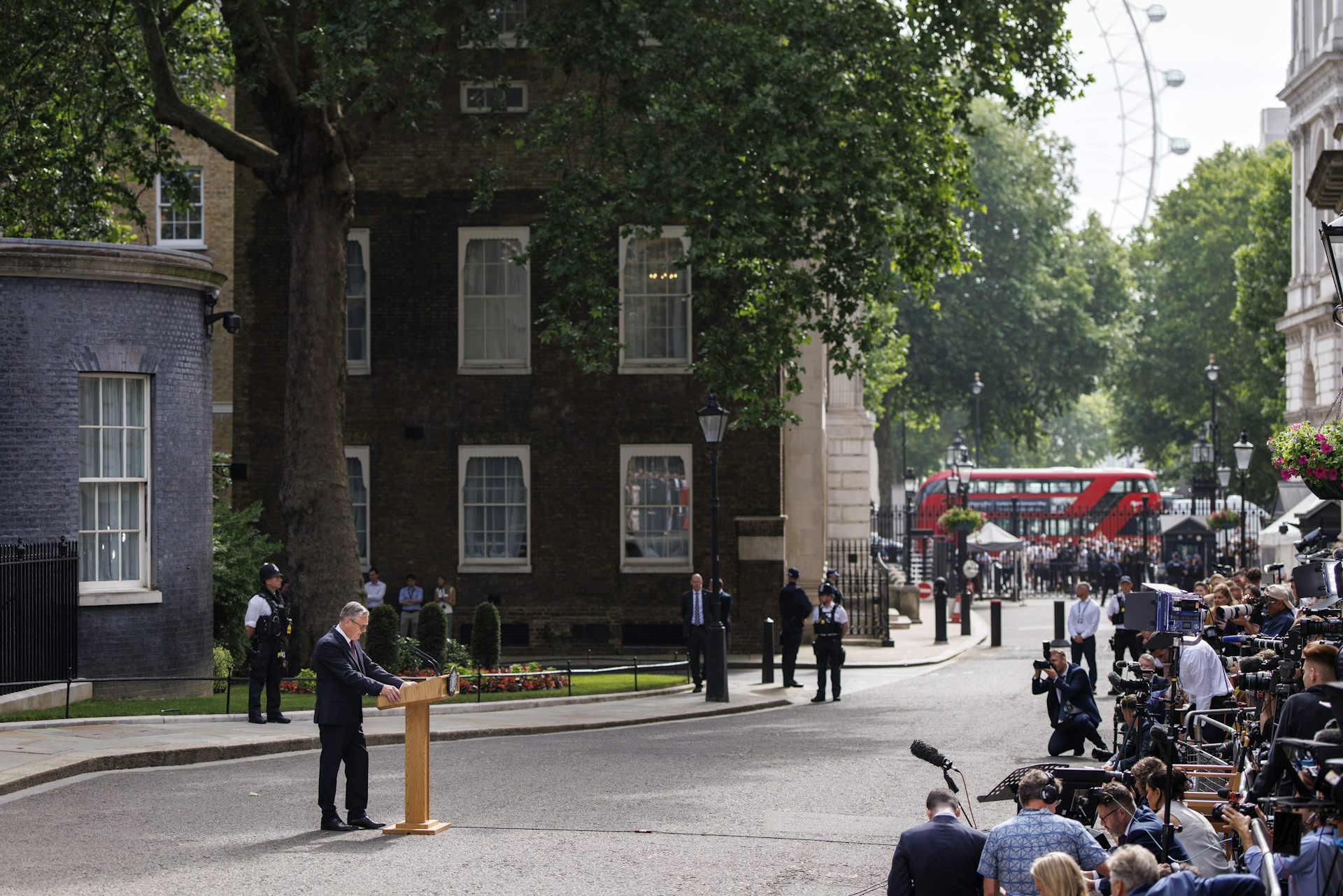
The UK system used to be held up as a model of stable government.
英国的体制过去曾被视为稳定政府的典范。
This is not the UK’s first leadership transition in government, and it is unlikely to be the last. These events have, however, been rare until recently. In the 80 years since the end of the second world war, there have only been 18 prime ministers. The nineteenth, likely to be Andy Burnham, will become the seventh premier since 2010. So that makes 12 prime ministers over 65 years – and then seven in the last 16 years.
这并非英国历史上第一次政府领导层更迭,而且也不太可能是最后一次。然而,直到最近这些事件都非常罕见。在二战结束以来的八十年里,首相只更换了18位。第十九任首相,很可能是安迪·伯纳姆(Andy Burnham),将成为自2010年以来第七任总理。这意味着在65年间有12位首相——而在最近的16年里,更是有七位。
This is a problem, one that is compounded by the reasons for the departure. Six of the 12 PMs until 2010 simply lost an election – Attlee, Home, Heath, Callaghan, Major and Brown. A further three resigned through ill health – Churchill, Macmillan and Wilson. And two resigned because of scandals – Suez and “partygate”.
这是一个问题,而且这个问题还因为离职的原因而加剧了。直到2010年这12位首相中,有六位只是败选了——阿特利(Attlee)、霍姆(Home)、希思(Heath)、卡拉汉(Callaghan)、梅杰(Major)和布朗(Brown)。另外三位是因病辞职的——丘吉尔(Churchill)、麦克米伦(Macmillan)和威尔逊(Wilson)。还有两位是因为丑闻而辞职的——苏伊士危机和“党派门”(partygate)。
As such, of the 12 prime ministers from 1945 until 2010, only Margaret Thatcher was dismissed by her party for overtly political reasons. Her backbenchers and her cabinet no longer believed she was an election winner, and she was unceremoniously dumped in 1990. She described it as “treachery with a smile on its face”.
因此,从1945年到2010年的这12位首相中,只有玛格丽特·撒切尔(Margaret Thatcher)是因公开政治原因被自己党派罢免的。她的普通议员和内阁成员不再相信她能赢得选举,于是她在1990年被不体面地扫地出门。她将此描述为“带着微笑的背叛”。
The period since 2010 has been very different. The UK system that was famed for having the stability of government at its core suddenly started shedding prime ministers like winter coats in the height of summer. Only one – David Cameron – left voluntarily after defeat in the Brexit referendum. Sunak lost an election, while the rest were dispatched either because of scandal (Johnson and “partygate”) or party politics (May, Truss and now Starmer) .
自2010年以来,情况非常不同。英国曾以其政府稳定著称的体制,突然间开始在盛夏时节像脱冬衣一样丢弃首相。只有一位——大卫·卡梅伦(David Cameron)——是在脱欧公投失败后主动离职的。苏纳克(Sunak)是败选了,而其余人则是因为丑闻(约翰逊和“党派门”)或党内政治斗争(梅、特拉斯和现在的斯塔默)而被处理掉的。
Starmer is the first Labour prime minister to be cut down midstream – not even halfway through the parliamentary term. Watching events unfold in Westminster, the overwhelming emotion for someone not schooled in the machinations of the UK government would be bewilderment. Starmer was elected less than two years ago with a historic majority and is well regarded on the international stage. He is not departing on the back of a scandal, rather his power has simply evaporated.
斯塔默(Starmer)是第一位在任期中期被扫地出门的工党首相——甚至还没有走到半程。目睹这些事件在威斯敏斯特发生,对于一个不了解英国政府运作机制的人来说,压倒性的情绪一定是困惑。斯塔默是在不到两年前以历史性多数当选的,并在国际舞台上享有盛誉。他不是因为丑闻而离职,而是他的权力只是单纯地蒸发了。
Starmer’s defenestration is probably closest to those of Margaret Thatcher or Tony Blair – with one crucial difference. The revolt against Thatcher seemed to be generated from below. Tories were increasingly worried about their own survival and the government’s policy direction – particularly on the much-hated poll tax.
斯塔默的失势可能最接近玛格丽特·撒切尔或托尼·布莱尔(Tony Blair)的情况——但有一个关键的区别。反对撒切尔的运动似乎是自下而上产生的。保守党人越来越担心自身的生存以及政府的政策方向——特别是针对备受厌恶的消费税。
Blair’s dénouement was different in the sense that it came from the top and was the culmination of Gordon Brown’s decade-long campaign to secure the premiership. Blair announced the date of his departure following an orchestrated “curry house plot”, when some in Labour’s junior ranks reportedly planned a coup in a Wolverhampton restaurant, which was obviously inspired from above.
布莱尔的结局则不同,因为它来自高层,并且是戈登·布朗(Gordon Brown)多年来争取首相职位的努力的高潮。布莱尔宣布了离职日期,是在一次精心策划的“咖喱屋阴谋”之后,当时据报道工党初级党员计划在伍尔弗汉普顿的一家餐厅发动政变,而这显然是自上而下指使的。
When the Burnham threat became real
“文本翻译成中文(简体,中国大陆)”:
The defenestration of Starmer seems to sit between those of Thatcher and Blair. It was complicated by the fact that its main protagonist, Andy Burnham, was a significant Labour figure – the mayor of Greater Manchester – but not an MP or from the party elite.
斯塔默的垮台似乎介于撒切尔和布莱尔之间。它因一个事实而变得复杂——其主要主角安迪·伯纳姆是一位重要的工党人物——大曼彻斯特市长,但既不是议员也不是来自党的精英阶层。
Until Burnham became the MP for Makerfield, he was only a limited threat. But he managed to tap into some of the key concerns of the parliamentary Labour party (PLP) before he even got to parliament. These broad concerns were dressed up in a range of ways but essentially boiled down to the same fears that the Tory MPs had in 1990. Fear of failure – that is, a failure to get re-elected. There was also a loss of both trust and competence.
在伯纳姆成为麦克菲尔德(Makerfield)的议员之前,他只是一个有限的威胁。但他甚至还没进入议会,就成功地触及了党内工党(PLP)的一些核心关切。这些广泛的关切以各种方式包装起来,但本质上归结为与1990年保守党议员相同的恐惧。害怕失败——也就是说,害怕无法连任。此外,还存在信任和能力的双重丧失。
The PLP now felt that there had been a string of policy missteps rather than failures, as well as the incompetence and lack of vision that had consolidated the loss of trust and confidence. Crucially, there had also been a run of very poor opinion polls culminating in the disastrous local election results in May. Given all of this – and the enormous success of Makerfield – Starmer’s time was up and Burnham’s time had come.
现在,工党认为这经历的是一系列政策失误,而非彻底的失败,这些失误以及缺乏远见的无能表现,加剧了对信任和信心的丧失。至关重要的是,还经历了一系列非常糟糕民意调查,最终导致了五月灾难性的地方选举结果。鉴于所有这一切——以及麦克菲尔德巨大的成功——斯塔默的时代已经结束,伯纳姆的时代到来了。
It remains to be seen whether the change of leader will mark a shift in policy direction or whether it will be more about tone than substance. Policy on its own might not change much, but the language accompanying it may well do. It may be that Burnham is able to connect with the hearts of his backbenchers, and so win their backing for the unpopular choices that are inevitably coming, in a way that Starmer frequently has not.
目前尚不清楚领导人更迭是标志着政策方向的转变,还是仅仅关于语气的改变而非实质内容的改变。政策本身可能不会发生太大变化,但伴随它的语言可能会有所不同。也许伯纳姆能够与他的普通议员们的心灵建立联系,从而赢得他们对那些不可避免的不受欢迎选择的支持,而这是斯塔默经常做不到的。
Burnham will need to decide quickly how to deal with a PLP that will initially be enthusiastic about the leadership transition because they think it spells hope, success and longevity for them as well as for the country. The same PLP might be less united about the hard decisions. He faces a PLP that has already tasted victory by enforcing U-turns on policies such as the winter fuel allowance and a reversal on benefit cuts. As a former whip I know that backbenchers who have tasted blood against their own government are difficult to control.
伯纳姆需要迅速决定如何处理一个工党(PLP)。这个工党最初会对领导层的过渡感到热情,因为他们认为这预示着希望、成功和长久的发展,不仅对国家如此,对他们自身也是如此。但对于艰难的决策,这个工党可能不会那么团结。他面临的是一个已经尝到胜利滋味的工党,他们在冬季燃料津贴等政策上强制进行了“U型转向”,并在福利削减问题上实现了逆转。作为一名前纪律委员,我知道那些尝过自己政府鲜血味道的普通议员很难控制。
The patience of today’s backbenchers is thin and limited. Crucially, the one virtue in really short supply on the backbenches is gratitude – especially to the leader. Former Conservative minister Chris Patten’s passing comment on Thatcher’s demise could apply equally to Starmer’s. Patten said: “I think we all know that quite a lot of crocodiles keep a handkerchief handy.” Maybe the crocodiles are the ones cheering Burnham today while getting ready for tomorrow. Perhaps it was ever thus.
今天普通议员们的耐心是稀薄且有限的。至关重要的是,在普通议员群体中真正缺乏的一种美德是感激——尤其是对领导人。前保守党部长克里斯·帕滕(Chris Patten)关于撒切尔垮台的评论,同样可以适用于斯塔默。帕滕说:“我想我们都知道,很多鳄鱼都随身带着手绢。”也许这些鳄鱼就是今天为伯纳姆欢呼的人,而他们正在为明天做准备。或许一直都是如此。
Tony McNulty is a membert of the Labour Party
托尼·麦克努尔蒂是工党成员。