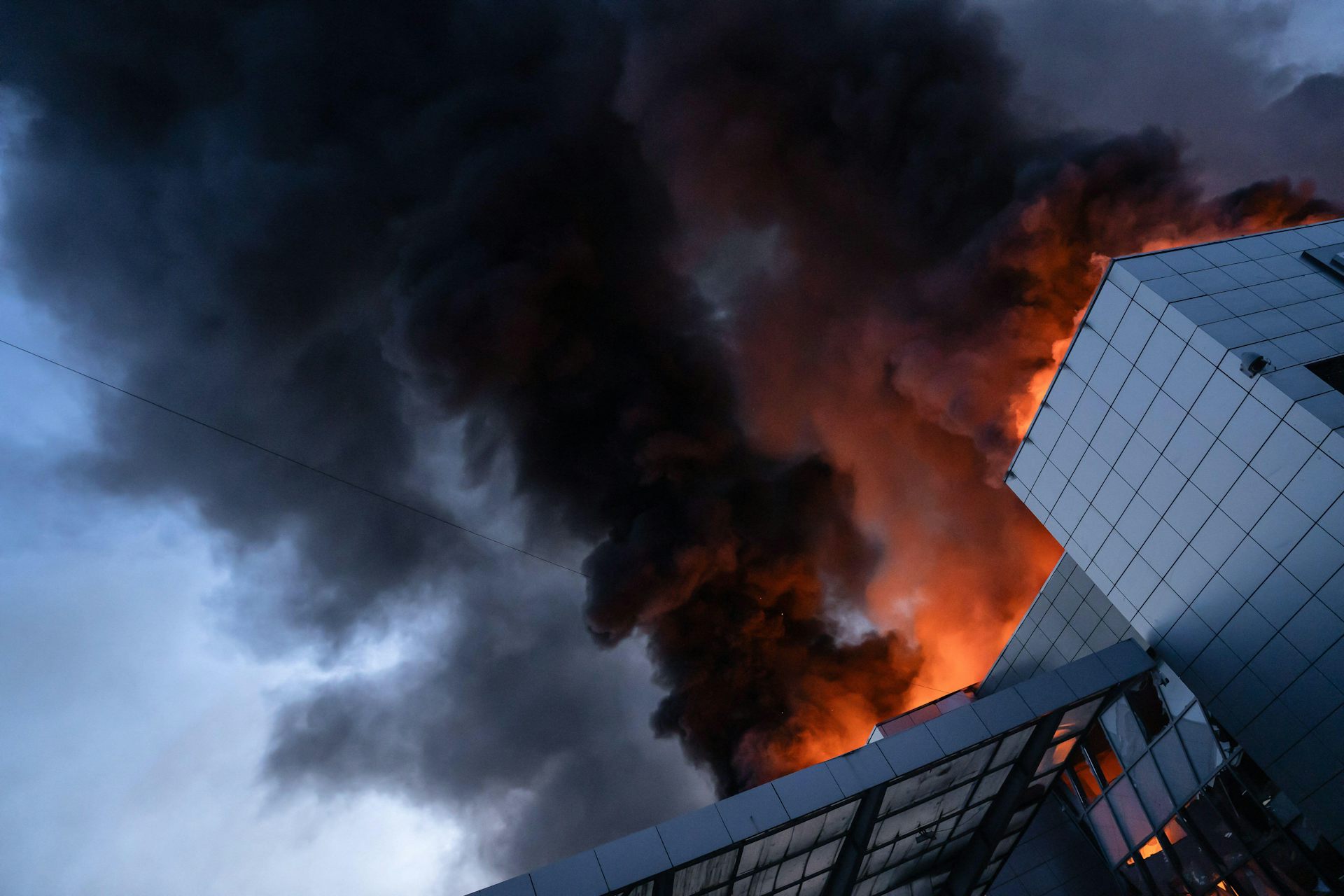
乌克兰战争:俄乌双方进行大规模无人机和导弹攻击,空袭升级
Ukraine war: air campaign intensifies as Russia and Ukr…
Russia has launched its biggest drone and missile strikes of the war to date. But Ukraine has hit back effectively.
俄罗斯迄今为止发动了本战中最猛烈的无人机和导弹袭击。但乌克兰也进行了有效的反击。
Over the past month, there has been a notable increase in the intensity of the air war in Russia’s aggression against Ukraine. Strikes in mid- and late-May and early June have been characterised by significantly larger numbers of drones and missiles deployed by Russia in single attacks, leading to more destruction and more casualties.
过去一个月来,俄军对乌克兰发动的空战强度显著增加。五月中旬至六月上旬的袭击特点是,俄罗斯单次攻击部署了数量显著增加的无人机和导弹,造成了更多破坏和更多伤亡。
At the same time, Russian territorial gains on the ground have slowed significantly, and in some cases have been reversed by successful Ukrainian counter-attacks.
与此同时,俄罗斯在地面上的领土收益已明显放缓,在某些情况下甚至被乌克兰成功的反击所逆转。
The change in intensity in the air war, however, is what generates headlines, and for good reason. Two consecutive Russian attacks on May 13 and 14 were the largest in the war to date.
然而,空战强度的变化才是引发头条新闻的焦点,而且这是有充分理由的。5月13日和14日两次连续的俄罗斯袭击,是迄今为止战争中规模最大的。
Ten days later, a similar strike hit Kyiv and other Ukrainian cities. And a week after that, Russia launched yet another large-scale strike.
十天后,类似的袭击波及了基辅和其他乌克兰城市。一周后,俄罗斯又发动了另一次大规模袭击。
Just focusing on the Russian strikes, however, masks an important pattern of increasingly effective Ukrainian retaliation.
然而,如果只关注俄罗斯的袭击,就掩盖了乌克兰报复日益有效的这一重要模式。
The first Russian attack in May was followed by Ukrainian strikes on the Moscow region. The second one saw Ukrainian strikes on St Petersburg on June 3, just before Vladimir Putin’s St Petersburg International Economic Forum was due to begin there.
五月份的第一次俄罗斯袭击之后,乌克兰对莫斯科地区发动了袭击。第二次袭击则是在6月3日对圣彼得哥罗升级的,时间恰逢弗拉基米尔·普京的圣彼得哥罗国际经济论坛即将开始。
At the same time, Ukraine has also intensified its strikes on Crimea and critical Russian supply lines to the peninsula, which Moscow has illegally occupied since 2014.
与此同时,乌克兰也加大了对克里米亚和通往该半岛的关键俄罗斯供应线的打击力度,该半岛自2014年以来已被莫斯科非法占领。
This series of Russian and Ukrainian airstrikes represents a high-intensity retaliation cycle. Ukraine responds to a Russian strike, which Moscow then uses to justify its massive strike, and so on.
这一系列俄罗斯和乌克兰的空袭,代表着一个高强度的报复循环。乌克兰对一次俄罗斯袭击做出回应,莫斯科随后利用这一点为自己的大规模袭击进行辩护,如此循环往复。
What is new is both the scale of the Russian strikes, with larger numbers of drones and missiles compared even with the peak of attacks in late 2025, and the quickening cycle of these tit-for-tat attacks.
新的变化在于俄罗斯袭击的规模,其无人机和导弹的数量甚至超过了2025年晚些时候攻击的峰值,以及这种你来我往式袭击周期的加快。
Ukrainian attacks deep into Russia are no longer just symbolic but highly effective – prompting Russia to accuse Ukraine of a terror campaign, in an attempt to deflect from its own systematic targeting of civilian infrastructure.
乌克兰深入俄罗斯的攻击不再仅仅是象征性的,而是高度有效的——这促使俄罗斯指责乌克兰进行恐怖活动,试图转移对自身系统性攻击平民基础设施的注意力。
In their levels of destruction and civilian casualties, the Russian strikes also seem more effective than in the past – and Ukraine’s air defences less so. But this is only partially true. Ukraine’s intercept rate of drones remains high. However, the larger number of drones being deployed by Russia means that, in absolute numbers, more drones hit their targets.
在破坏程度和平民伤亡方面,俄罗斯的袭击似乎也比过去更有效——而乌克兰的防空系统则相对不那么有效。但这只是部分事实。乌克兰拦截无人机的效率仍然很高。然而,俄罗斯部署的无人机数量更多,这意味着从绝对数量上看,更多无人机击中了目标。
Russia has also deployed more missiles in recent strikes, which Ukraine finds harder to intercept – not least because its stockpiles of anti-missile defences have been depleted over time, with the decrease in US support since Donald Trump’s return to the White House in January 2025.
俄罗斯最近的袭击也部署了更多导弹,而这些导弹让乌克兰更难拦截——这不仅是因为自2025年1月唐纳德·特朗普重返白宫以来,美国支持的减少,导致其反导弹防御弹药储备逐渐耗尽。
The recent diversion of US interceptors to the American war effort in the Middle East has also run down the stocks of these defence systems that are available to Kyiv.
美国最近将拦截机调往中东的美国战争努力,也耗尽了可供基辅使用的这些防御系统的库存。
Can this intensity be sustained?
这种强度能持续下去吗?
Russia has thus been presented with an opportunity it is ruthlessly exploiting. But how sustainable is the current pattern?
俄罗斯因此获得了一个它正在无情利用的机会。但目前的模式可持续吗?
The scale and frequency of the past four weeks is probably beyond Russia’s capacity to sustain indefinitely. While still large in scale, the strikes in late May and early June did not involve the same number of munitions as the first wave.
过去四周的规模和频率可能超出了俄罗斯无限期维持的能力。虽然规模仍然很大,但五月下旬和六初的袭击所使用的弹药数量不如第一波。
Russia is clearly able to mass-produce cheap attack drones, but less able to do the same for missiles. So, sustaining larger-scale attacks over time is likely to decrease their frequency, while more frequent attacks will mean a more limited scale.
俄罗斯显然能够大规模生产廉价攻击无人机,但对于导弹则不然。因此,随着时间的推移,维持更大规模的攻击可能会降低其频率,而更频繁的攻击则意味着更有限的规模。
A mixture of the two is most likely – a sustained campaign of frequent massed drone strikes, with intermittent spikes of large missile barrages.
最有可能的是两者结合——持续的、频繁的大规模无人机袭击,辅以间歇性的大型导弹齐射。
While this may be a sustainable attack pattern for Russia, it does not mean the current level of effectiveness is equally sustainable. Ukrainian air defences will adapt and become more effective, including against Russian missiles.
尽管这可能是俄罗斯可持续的攻击模式,但这并不意味着目前的有效性水平也同样可持续。乌克兰的防空系统将进行调整,并变得更有效,包括针对俄罗斯导弹。
Its defence cooperation with the EU is simultaneously improving. The lifting of Hungary’s veto on €40 billion (£34.6bn) of EU reimbursements for military support is likely to free additional funds to supply critical air defence systems to Ukraine.
它与欧盟的防务合作也正在同时改善。解除匈牙利对欧盟400亿欧元(346亿英镑)军事援助报销的否决权,可能会为向乌克兰提供关键防空系统释放额外资金。
Even with a sustained Russian air campaign, a manageable equilibrium is likely to set in over time. But critically, this will not merely be characterised by better Ukrainian defences against Russian attacks – but also by more effective Ukrainian strikes at Moscow’s critical war infrastructure.
即使俄罗斯持续进行空袭,随着时间的推移,也可能会达到一个可控的平衡。但关键在于,这不仅体现在乌克兰防御俄罗斯攻击的改善上,还体现在乌克兰对莫斯科关键战争基础设施更有效的打击上。
The Russian air campaign, and the war against Ukraine more generally, will thus become more costly for the Kremlin – and not just on the battlefield inside Ukraine.
因此,俄罗斯的空袭,以及对乌克兰的战争,对克里姆林宫来说将变得成本更高——而不仅仅是在乌克兰境内的战场上。
Whether this simply creates a different stalemate at a more costly level for both sides in their ongoing war of attrition, or prompts them to reassess their exit strategies, remains to be seen.
这究竟是为双方在持续的消耗战中创造了一个成本更高的不同僵局,还是促使它们重新评估退出战略,尚有待观察。
For Moscow, there is a hard choice to be made: towards escalation, including potential nuclear mobilisation, or towards a peace deal. The middle ground of simply continuing is quickly eroding, because none of Putin’s strategic goals in the war can be achieved this way – and the ongoing waste of resources cannot be sustained indefinitely.
对于莫斯科来说,必须做出艰难的选择:是升级,包括潜在的核动员,还是走向和平协议。仅仅继续下去的中间地带正在迅速瓦解,因为普京在战争中的任何战略目标都无法通过这种方式实现——而且持续的资源浪费无法无限期维持。
On the Ukrainian side, the statement by Ukraine’s president, Volodymyr Zelensky, that Ukraine’s recent strikes on Russia put the country on an equal footing with Moscow in negotiations, hints at Kyiv’s willingness to negotiate an end to the war with Moscow. However, it may take several more rounds in the air campaign retaliation cycle before the Kremlin reaches a similar conclusion.
在乌克兰方面,乌克兰总统弗拉基米尔·泽连斯基发表的声明,称乌克兰最近对俄罗斯的袭击使该国在与莫斯科的谈判中处于平等地位,暗示了基辅愿意与莫斯科谈判结束战争。然而,在克里姆林宫得出类似结论之前,可能还需要经历空袭报复周期的数个回合。
Stefan Wolff is a past recipient of grant funding from the Natural Environment Research Council of the UK, the United States Institute of Peace, the Economic and Social Research Council of the UK, the British Academy, the NATO Science for Peace Programme, the EU Framework Programmes 6 and 7 and Horizon 2020, as well as the EU’s Jean Monnet Programme. He is a Trustee and Honorary Treasurer of the Political Studies Association of the UK and a Senior Research Fellow at the Foreign Policy Centre in London.
Stefan Wolff曾获得英国自然环境研究委员会、美国和平研究所、英国经济与社会研究委员会、英国学士会、北约和平科学计划、欧盟框架计划6和7以及“地平线2020”的资助,也曾获得欧盟的让·莫内计划资助。他是英国政治学协会的受托人和荣誉财务总监,也是伦敦外交政策中心的高级研究员。
Tetyana Malyarenko does not work for, consult, own shares in or receive funding from any company or organisation that would benefit from this article, and has disclosed no relevant affiliations beyond their academic appointment.
Tetyana Malyarenko不为任何受益于本文的公司或组织工作、咨询、拥有股份或接受资金,并且除了其学术任命之外,未披露任何相关隶属关系。
Read more
-
身体在经历创伤后是否真的会“记仇”?关于“被压抑记忆”这一已被证伪的理论是如何卷土重来的
Does the body really ‘keep the score’ after trauma? How…