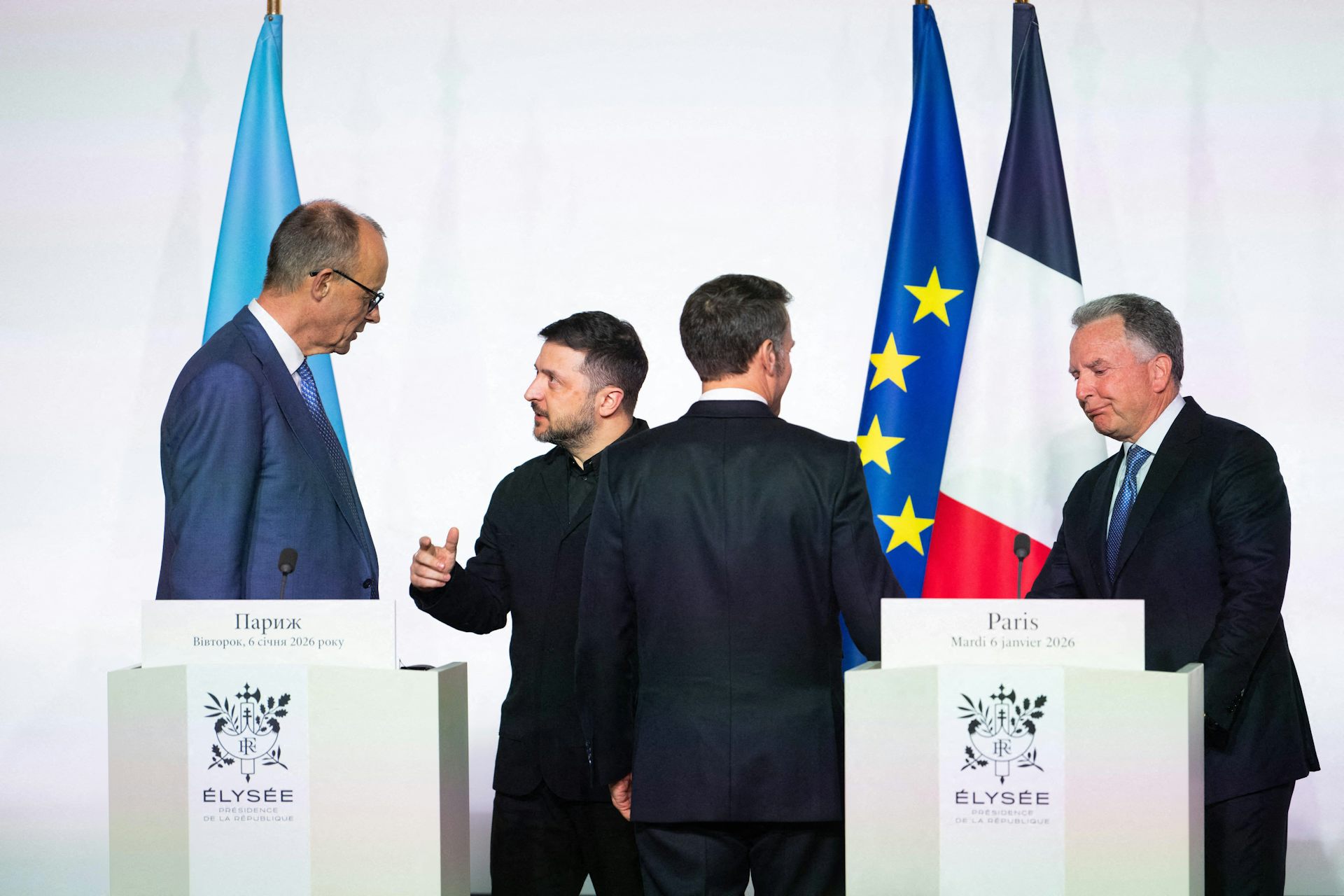
Jika Eropa ingin ‘bertindak sendiri’ dalam masalah keamanan, negara-negara perlu belajar untuk menyanyikan lagu dari lembaran musik yang sama
If Europe wants to ‘go it alone’ on security, countries need to learn to sing from the same songsheet
Splits are appearing in Europe’s approach to Russia’s aggression just when it needs to present a united front.
Perpecahan mulai muncul dalam pendekatan Eropa terhadap agresi Rusia justru pada saat ia perlu menunjukkan front yang bersatu.
The G7 summit at Evian from June 15 to 17 is most revealing not for what was agreed, but for what was exposed about the state of play among Europeans, and their relationship with the US. For all the choreography and displays of unity, the summit was, in large part, theatre. It was an attempt to paper over what is becoming increasingly obvious: many of the most critical international issues are now decided without the EU. Brussels is now, at best, an informed bystander.
KTT G7 di Evian dari 15 hingga 17 Juni paling mengungkap bukan apa yang disepakati, melainkan apa yang terungkap tentang kondisi permainan di antara bangsa Eropa, dan hubungan mereka dengan AS. Meskipun ada banyak koreografi dan tampilan persatuan, KTT tersebut sebagian besar adalah teater. Itu adalah upaya untuk menutupi kenyataan yang semakin jelas: banyak isu internasional paling penting kini diputuskan tanpa Uni Eropa. Brussels sekarang, pada titik terbaiknya, hanyalah penonton yang terinformasi.
This was obvious when the US president, Donald Trump, signed a physical copy of his deal with Iran at a post-G7 dinner at the Palace of Versailles hosted by Emmanuel Macron. It was a diplomatic coup for France, rather than a plan hatched by the EU.
Hal ini sudah jelas ketika presiden AS, Donald Trump, menandatangani salinan fisik kesepakatan dengan Iran dalam acara makan malam pasca-KTT G7 di Istana Versailles yang diselenggarakan oleh Emmanuel Macron. Itu adalah pukulan diplomatik bagi Prancis, bukan rencana yang disusun oleh Uni Eropa.
The G7 produced nine joint declarations and seemingly reaffirmed more than just the bare minimum of western unity that has been possible of late. The leaders’ statement on geopolitical issues included strong language on Ukraine. The G7 promised “to increase the delivery of air defence capacities, additional systems and interceptors, and long-range capabilities” and “to increase the pressure on the Russian war economy”.
G7 menghasilkan sembilan deklarasi bersama dan tampaknya menegaskan kembali lebih dari sekadar tingkat minimum persatuan Barat yang mungkin terjadi belakangan ini. Pernyataan para pemimpin mengenai isu geopolitik mencakup bahasa keras tentang Ukraina. G7 berjanji “untuk meningkatkan pengiriman kapasitas pertahanan udara, sistem tambahan, dan interseptor, serta kemampuan jarak jauh” dan “meningkatkan tekanan pada ekonomi perang Rusia”.
Yet, it fell short on concrete provisions and timelines. And it notably lacked the commitment to the “robust and legally binding security guarantees” and “the deployment of the Multinational Force – Ukraine” that France, Germany and the UK (the “E3”) had emphasised in their joint declaration with Ukraine’s president, Volodymyr Zelensky on June 7.
Namun, itu kurang dalam ketentuan konkret dan garis waktu. Dan yang terpenting adalah tidak adanya komitmen terhadap “jaminan keamanan yang kuat dan mengikat secara hukum” serta “penempatan Pasukan Multinasional – Ukraina” yang telah ditekankan oleh Prancis, Jerman, dan Inggris (atau “E3”) dalam deklarasi bersama mereka dengan presiden Ukraina, Volodymyr Zelensky pada 7 Juni.
The E3 and Ukraine mini-summit showed European diplomatic coordination at its most effective. Évian, by contrast, showed how little of that coordination carries into the decisions that ultimately matter.
Mini-KTT E3 dan Ukraina menunjukkan koordinasi diplomatik Eropa pada tingkat paling efektifnya. Sebaliknya, Évian menunjukkan betapa sedikitnya koordinasi itu yang dibawa ke keputusan-keputusan yang pada akhirnya penting.
Europe’s struggle for relevance is also obvious in relation to Ukraine. The last meaningful – if hardly constructive – negotiations occurred in the so-called “Geneva track” in February. Mediated by Trump’s Witkoff-Kushner team (which was also involved in talks with Iran) , this brought Russia and Ukraine together for talks.
Perjuangan Eropa untuk relevansi juga terlihat jelas dalam kaitannya dengan Ukraina. Negosiasi bermakna terakhir – meskipun sulit dikatakan konstruktif – terjadi di apa yang disebut “jalur Jenewa” pada bulan Februari. Dimediasi oleh tim Witkoff-Kushner milik Trump (yang juga terlibat dalam pembicaraan dengan Iran) , ini mempertemukan Rusia dan Ukraina untuk berdialog.
But while Washington reported “meaningful progress”, Zelensky commented that “sensitive political matters … have not yet been sufficiently addressed” and called for European to be involved in the next round of talks. This has not happened.
Namun, sementara Washington melaporkan “kemajuan bermakna”, Zelensky berkomentar bahwa “masalah politik yang sensitif … belum ditangani secara memadai” dan menyerukan agar Eropa dilibatkan dalam putaran negosiasi berikutnya. Hal itu belum terjadi.
Meanwhile, Europe’s own efforts also failed. Putin immediately rejected the call from E3 and Ukraine for direct talks. This was reinforced in a June 19 essay penned by Russia’s foreign minister, Sergey Lavrov, accusing Europe of complicity in the 2014 political crisis in Ukraine which ousted the pro-Russian president, Viktor Yanukovych, and precipitated the conflict. He added they had sabotaged any attempts at peace.
Sementara itu, upaya Eropa sendiri juga gagal. Putin segera menolak seruan dari E3 dan Ukraina untuk dialog langsung. Ini diperkuat dalam esai 19 Juni yang ditulis oleh menteri luar negeri Rusia, Sergey Lavrov, yang menuduh Eropa terlibat dalam krisis politik tahun 2014 di Ukraina yang menggulingkan presiden pro-Rusia, Viktor Yanukovych, dan memicu konflik tersebut. Dia menambahkan bahwa mereka telah menyabotase setiap upaya perdamaian.
But the EU was already at loggerheads with itself. Earlier that day, EU leaders gathering for a summit in Brussels discovered that António Costa, the European Council president, had instructed his office to reach out to the Kremlin — without consulting member states — to lay the groundwork for potential peace negotiations with Russia over Ukraine. Their reaction ranged from surprise to outrage. Germany’s chancellor, Friedrich Merz, and Macron both publicly pushed back against Costa. Macron stated that “he [Costa] cannot represent [EU states] when security guarantees are at stake”.
Namun, Uni Eropa sudah berkonflik dengan dirinya sendiri. Hari itu sebelumnya, para pemimpin UE yang berkumpul untuk KTT di Brussels menemukan bahwa António Costa, presiden Dewan Eropa, telah menginstruksikan kantornya untuk menghubungi Kremlin — tanpa berkonsultasi dengan negara anggota — untuk meletakkan dasar negosiasi damai potensial dengan Rusia mengenai Ukraina. Reaksi mereka berkisar dari terkejut hingga marah. Kanselir Jerman, Friedrich Merz, dan Macron sama-sama secara terbuka menentang Costa. Macron menyatakan bahwa “dia [Costa] tidak dapat mewakili [negara anggota UE] ketika jaminan keamanan dipertaruhkan”.
The episode was damaging for reasons that go well beyond procedural embarrassment. The spectacle of European leaders publicly repudiating their own council president will have given Moscow the satisfaction of knowing that Europe still cannot speak with a single voice.
Insiden itu merugikan karena alasan yang jauh melampaui rasa malu prosedural. Tontonan para pemimpin Eropa yang secara terbuka mengingkari presiden dewan mereka sendiri akan memberikan kepuasan bagi Moskow bahwa Eropa masih tidak dapat berbicara dengan satu suara.
The European Commission president, Ursula von der Leyen, tried to bring the message under control. At her press conference after the EU leaders’ summit, she noted that “sooner or later Russia will need to come to the negotiating table, and when that comes we need a united European message to President Putin”. That ambition, however, contrasts sharply with the reality of the earlier Costa episode.
Presiden Komisi Eropa, Ursula von der Leyen, mencoba mengendalikan pesan tersebut. Dalam konferensi persnya setelah KTT para pemimpin UE, dia mencatat bahwa “cepat atau lambat Rusia harus datang ke meja perundingan, dan ketika itu terjadi kita membutuhkan pesan Eropa yang bersatu kepada Presiden Putin”. Ambisi itu, bagaimanapun, sangat kontras dengan kenyataan insiden Costa sebelumnya.
A unified approach
Pendekatan terpadu
Diplomatic embarrassment is not the only issue when it comes to how quickly Europe will be able to close the persistent gap between ambition and reality.
Rasa malu diplomatik bukanlah satu-satunya masalah ketika berbicara tentang seberapa cepat Eropa akan mampu menutup kesenjangan yang persisten antara ambisi dan realitas.
On June 8, the German government formalised its withdrawal from the Future Combat Air System (FCAS) , the €100 billion (£86 billion) joint fighter jet project launched in 2017 as the flagship expression of Franco-German defence ambition. FCAS also included engines, sensors and a digital intelligence network known as “combat cloud”.
Pada tanggal 8 Juni, pemerintah Jerman meresmikan penarikannya dari Future Combat Air System (FCAS) , proyek pesawat tempur gabungan senilai €100 miliar (£86 miliar) yang diluncurkan pada tahun 2017 sebagai ekspresi utama ambisi pertahanan Prancis-Jerman. FCAS juga mencakup mesin, sensor, dan jaringan intelijen digital yang dikenal sebagai “combat cloud.”
One point of contention was reportedly the leadership role played by French aerospace giant Dassault. Germany wanted more of a leadership role and the partners are reported to have had divergent visions of the end product.
Salah satu titik perselisihan adalah peran kepemimpinan yang dimainkan oleh raksasa kedirgantaraan Prancis, Dassault. Jerman menginginkan peran kepemimpinan yang lebih besar dan mitra-mitra tersebut dilaporkan memiliki visi yang berbeda mengenai produk akhir.
Germany’s aspiration to “lead or substantially shape” future European air combat systems may seem rational given the country’s financial muscle and engineering prowess. With more than €750 billion committed to rebuilding its armed forces by 2030, Germany’s instinct that this investment should produce proportionate industrial and strategic leadership is understandable. But when applied to European defence cooperation, it is counterproductive.
Aspirasi Jerman untuk “memimpin atau membentuk secara substansial” sistem tempur udara Eropa di masa depan mungkin tampak rasional mengingat kekuatan finansial dan kehebatan teknik negara tersebut. Dengan lebih dari €750 miliar yang diinvestasikan untuk membangun kembali angkatan bersenjata pada tahun 2030, naluri Jerman bahwa investasi ini harus menghasilkan kepemimpinan industri dan strategis yang proporsional adalah dapat dimengerti. Namun, ketika diterapkan pada kerja sama pertahanan Eropa, hal itu kontraproduktif.
While European states, including Germany, have repeatedly stressed the need for collective action on defence, there is a repeated fallback on national initiatives. It’s hard to escape the conclusion that Europe continues to struggle to effectively coordinate efforts.
Sementara negara-negara Eropa, termasuk Jerman, telah berulang kali menekankan perlunya aksi kolektif dalam pertahanan, terdapat kecenderungan kembali pada inisiatif nasional yang terus terulang. Sulit untuk lepas dari kesimpulan bahwa Eropa masih kesulitan mengkoordinasikan upaya secara efektif.
In a development that neatly illustrates this point, on June 20 the UK unveiled three prototype long-range strike missiles built without any US-manufactured components. The product of an 18-month programme known as Project Brakestop, the explicit purpose of developing this capability is to remove Washington’s ability to veto their deployment in Ukraine.
Dalam perkembangan yang dengan apik mengilustrasikan poin ini, pada tanggal 20 Juni Inggris meluncurkan tiga prototipe rudal serangan jarak jauh yang dibangun tanpa komponen buatan AS. Produk dari program selama 18 bulan yang dikenal sebagai Proyek Brakestop, tujuan eksplisit mengembangkan kemampuan ini adalah untuk menghilangkan kemampuan Washington untuk memveto penempatan mereka di Ukraina.
On the positive side, the UK’s ability to pull this off is commendable. It encapsulates the transformation in European thinking about the transatlantic relationship under Trump – and the capability to follow through on this.
Di sisi positifnya, kemampuan Inggris untuk mewujudkan ini patut dipuji. Ini merangkum transformasi dalam pemikiran Eropa tentang hubungan transatlantik di bawah Trump – dan kapabilitas untuk menindaklanjuti hal ini.
But as an act of strengthening European strategic sovereignty, it falls short. It is British rather than European.
Namun sebagai tindakan memperkuat kedaulatan strategis Eropa, itu kurang. Itu lebih bersifat Inggris daripada Eropa.
Europe’s ambition to rise to the simultaneous challenges of Trump’s transactionalism and Putin’s adventurism has been stated loudly and clearly on more than one occasion over the past 18 months or so. This ambition is most commonly expressed in the quest for strategic autonomy or “going it alone”. But it is not matched with an ability to act coherently.
Ambisi Eropa untuk menghadapi tantangan simultan dari transaksionalisme Trump dan petualangannya Putin telah dinyatakan dengan lantang dan jelas lebih dari satu kali selama sekitar 18 bulan terakhir. Ambisi ini paling sering diungkapkan dalam pencarian otonomi strategis atau “bertindak sendiri.” Namun, hal itu tidak disertai dengan kemampuan untuk bertindak secara koheren.
Richard Whitman has received funding from the Economic and Research Council of the UK as a Senior Fellow of the UK in a Changing Europe initiative. He is a past recipient of grant funding from the British Academy of the UK, EU Erasmus+ and Jean Monnet Programme. He is a Senior Associate Fellow at the Royal United Services Institute (RUSI) , and an Academic Fellow of the European Policy Centre in Brussels. He is a past Associate Fellow and Head of the Europe Programme of the Royal Institute of International Affairs (Chatham House) .
Richard Whitman telah menerima pendanaan dari Economic and Research Council of the UK sebagai Senior Fellow inisiatif UK dalam Eropa yang Berubah. Dia adalah penerima pendanaan hibah sebelumnya dari British Academy Inggris, EU Erasmus+ dan Program Jean Monnet. Dia menjabat sebagai Senior Associate Fellow di Royal United Services Institute (RUSI) , dan Academic Fellow di European Policy Centre di Brussel. Sebelumnya, dia pernah menjadi Associate Fellow dan Kepala Program Eropa di Royal Institute of International Affairs (Chatham House) .
Stefan Wolff is a past recipient of grant funding from the Natural Environment Research Council of the UK, the United States Institute of Peace, the Economic and Social Research Council of the UK, the British Academy, the NATO Science for Peace Programme, the EU Framework Programmes 6 and 7 and Horizon 2020, as well as the EU’s Jean Monnet Programme. He is a Trustee and Honorary Treasurer of the Political Studies Association of the UK and a Senior Research Fellow at the Foreign Policy Centre in London.
Stefan Wolff adalah penerima pendanaan hibah sebelumnya dari Natural Environment Research Council Inggris, United States Institute of Peace, Economic and Social Research Council Inggris, British Academy, NATO Science for Peace Programme, EU Framework Programmes 6 dan 7 serta Horizon 2020, serta Jean Monnet Programme Uni Eropa. Beliau menjabat sebagai Wali Amanat dan Bendahara Kehormatan Political Studies Association Inggris dan seorang Peneliti Senior di Foreign Policy Centre London.
Read more
-

129.000 tahun buaya: apa yang kita ketahui tentang predator puncak kuno Australasia
129,000 years of crocodiles: what we know about Australasia’s ancient apex predators
-
Harga tiket yang melonjak dapat membantu FIFA mengumpulkan $15 miliar dalam siklus Piala Dunia ini — dari mana uang itu berasal, dan ke mana perginya?
Soaring ticket prices could help FIFA pull in $15B this World Cup cycle — where does the money come from, where does it go?