
全球海洋在六月份创下了有记录以来最高的温度——而厄尔尼诺现象预计会使其更加炽热。
The world’s oceans are the hottest on record for June –…
More than 90% of the heat trapped by greenhouses goes into the ocean. But what happens in the oceans doesn’t stay there.
大过90%被温室捕获的热量进入了海洋。但发生在海洋的变化并非止步于此。
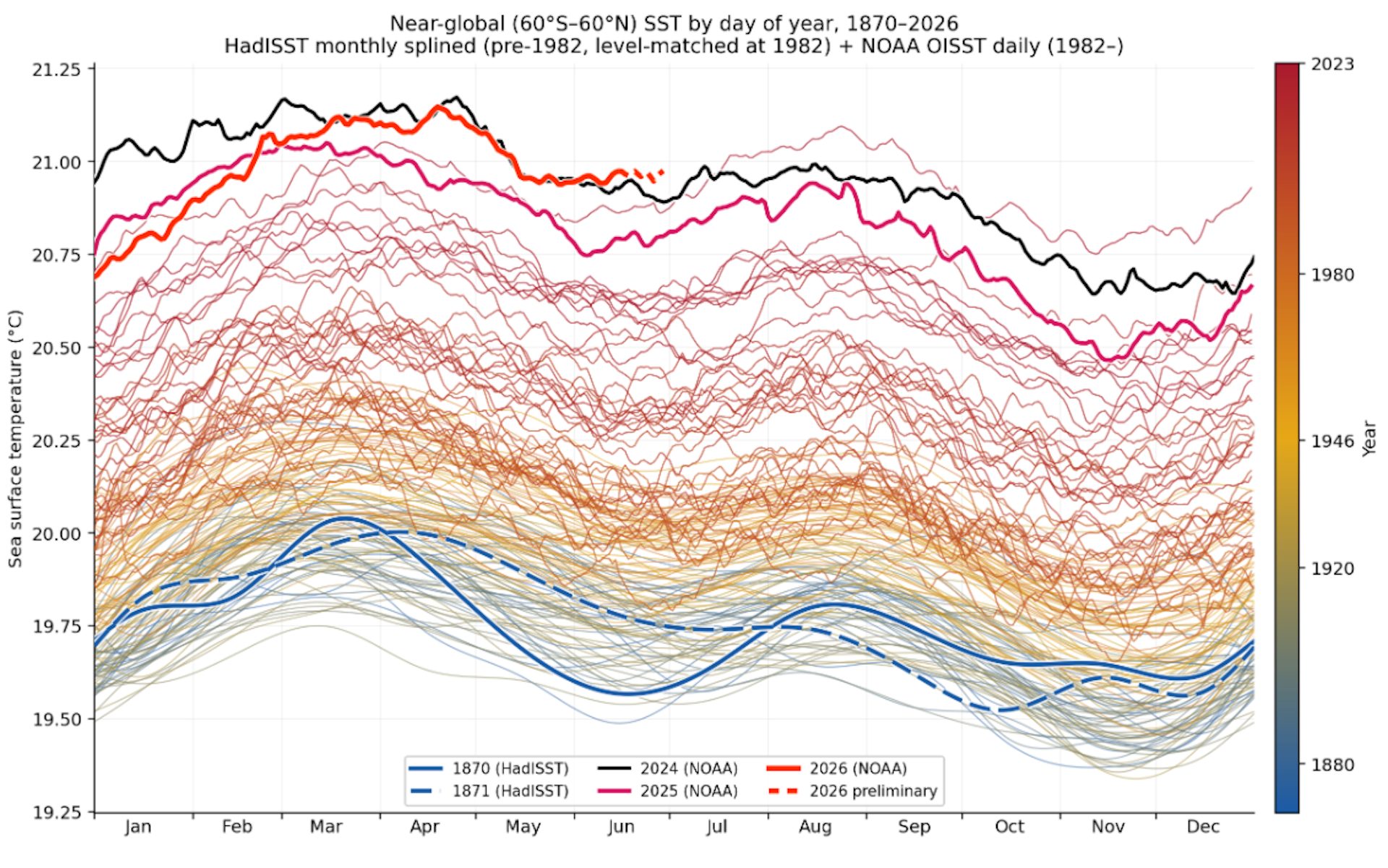
The world’s oceans are the hottest on record for June, pushing past records set during the 2023–24 El Niño years.
全球海洋在记录的六月里达到了最高温度,超过了2023-24年厄尔尼诺年份设定的纪录。
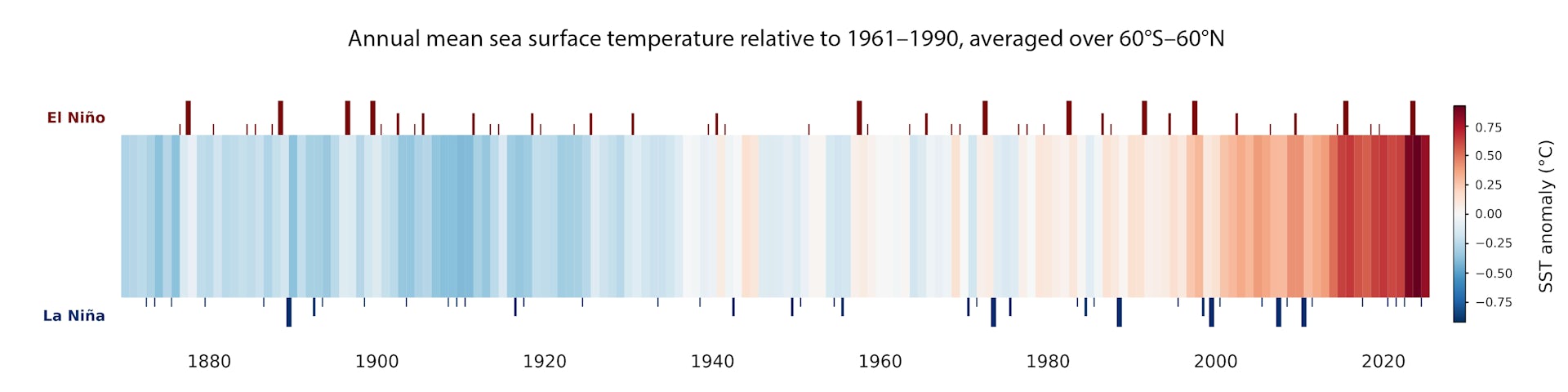
Right now, the average sea surface temperature is just under 21°C across the world’s tropical and temperate oceans. Before widespread industrialisation in 1870, the temperature was about 19.6°C.
目前,全球热带和温带海洋的平均海表温度略低于21摄氏度。在1870年工业化普及之前,该温度约为19.6摄氏度。
That may not sound like a big difference. But heating the world’s oceans this much requires a truly enormous amount of energy. Of all the extra heat trapped by greenhouse gases from burning coal, gas and oil, more than 90% has gone into the world’s oceans.
这听起来可能不是什么大差异。但将全球海洋加热到这个程度,需要消耗巨大的能量。所有由燃烧煤炭、天然气和石油产生的温室气体捕获的额外热量中,超过90%都进入了全球海洋。
As a result, the oceans are getting rapidly warmer. In 2025, the heat added was the equivalent of about 12 Hiroshima-scale nuclear bombs exploding every second of every day.
因此,海洋正在迅速变暖。2025年增加的热量相当于每天每秒爆炸约12颗广岛规模的核弹。
To find a climate analogue comparable to what’s happening now in the oceans, we would have to go back around 120,000 years to before the last ice age. Back then, slow shifts in Earth’s orbit led it to heat up gradually over thousands of years. Humans have accomplished a similar result in a little over a century.
要找到一个与目前海洋变化可比的气候类比,我们必须回溯到大约12万年前,即末次冰期之前。那时,地球轨道缓慢的变化使其在数千年间逐渐升温。人类在一个多世纪的时间内实现了类似的结果。
But the heat in the ocean doesn’t just stay there. Hotter oceans fuel stronger cyclones, a more humid atmosphere, more intense rainfall and more heat in air masses over the seas, which can in turn make heatwaves over land more likely and more intense.
但海洋中的热量并不会只停留在那里。更暖的海洋会助长更强的气旋、更潮湿的大气、更强烈的降雨,以及海面上的空气团体的更多热能,进而可能使陆地上的热浪更常见、更强烈。
The El Niño forming in the tropical Pacific right now is likely to be a big one. As it develops, we can expect to see warmer temperatures and extreme events such as marine heatwaves in the western Indian, tropical Atlantic and eastern Pacific Oceans.
目前在热带太平洋形成的厄尔尼诺现象可能会非常剧烈。随着其发展,我们预计将在印度西部、热带大西洋和东太平洋等海域看到更高的温度以及海洋热浪等极端事件。
Where are the hotspots on land and in the ocean?
陆地和海洋的热点在哪里?
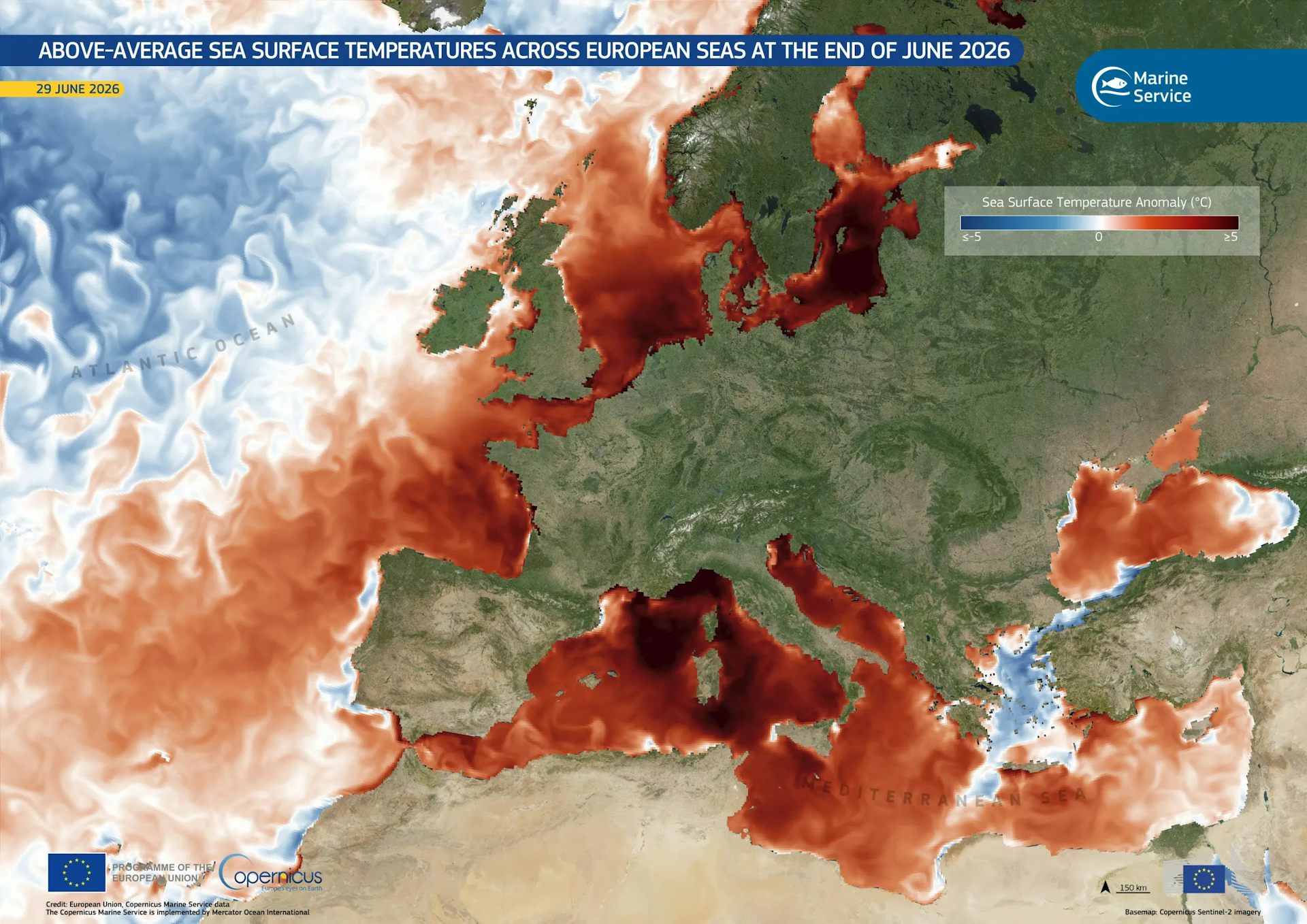
Europe is sweltering through a record-breaking heatwave. The oceans surrounding the region and in enclosed seas are also exceptionally hot.
欧洲正经历创纪录的酷热。该地区周围的海域和封闭海湾也异常炎热。
Parts of the Mediterranean are up to 6°C hotter than the long-term average.
地中海部分地区比长期平均水平高出高达 6°C。
Parts of the North Sea are up to 3°C warmer than average.
北海部分地区比平均水平暖了高达 3°C。
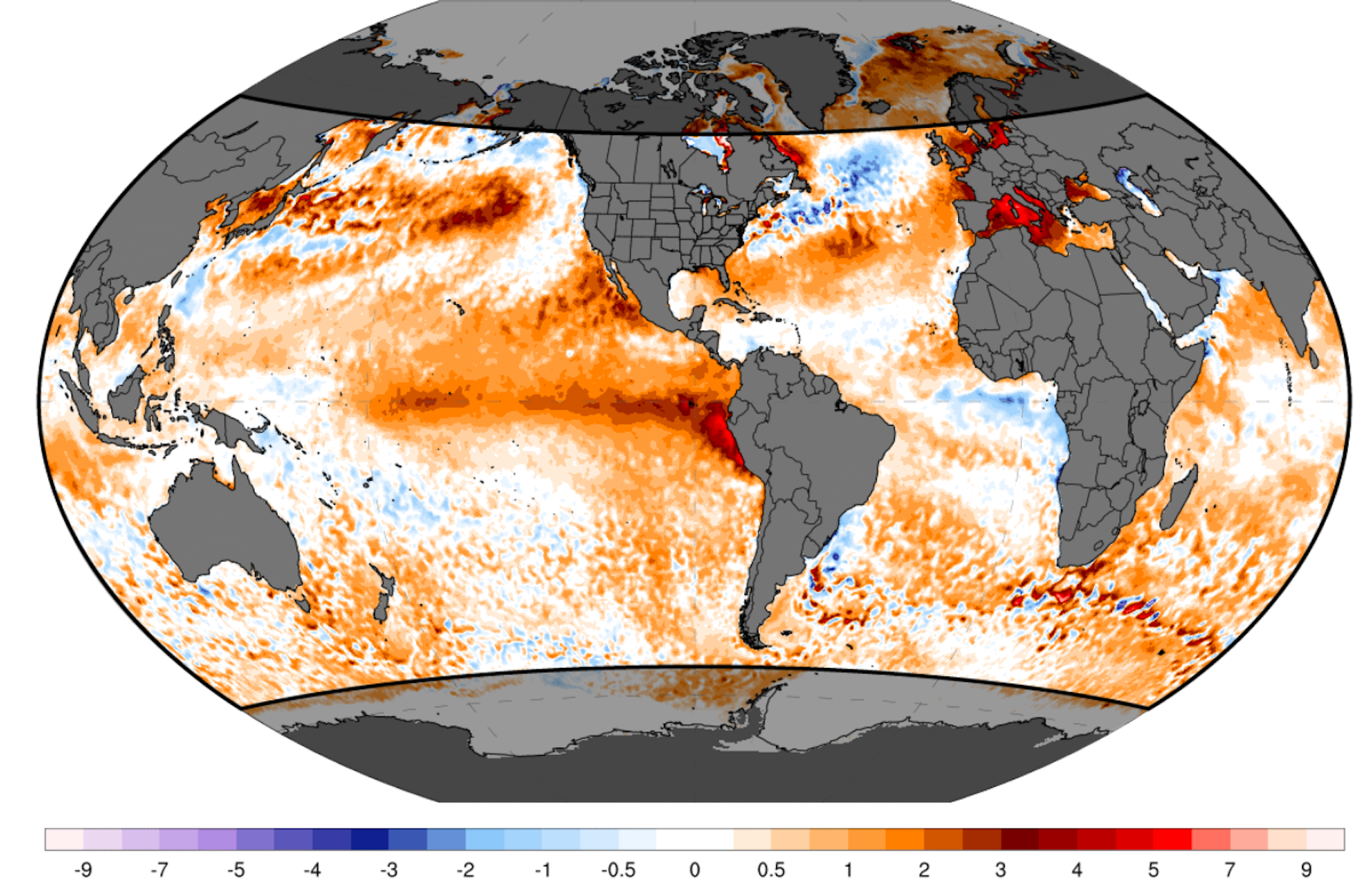
The forming El Niño has led to sea surface temperatures about 1.24°C warmer than average across a large area of the central eastern Pacific.
正在形成的厄尔尼诺现象导致中东太平洋大片区域的海表温度比平均水平高出约 1.24°C。
There’s much more heat below the surface as well. Subsurface conditions in the eastern Pacific are more than 6°C above average.
水下热量也更多。东太平洋的水下条件比平均水平高出超过 6°C。
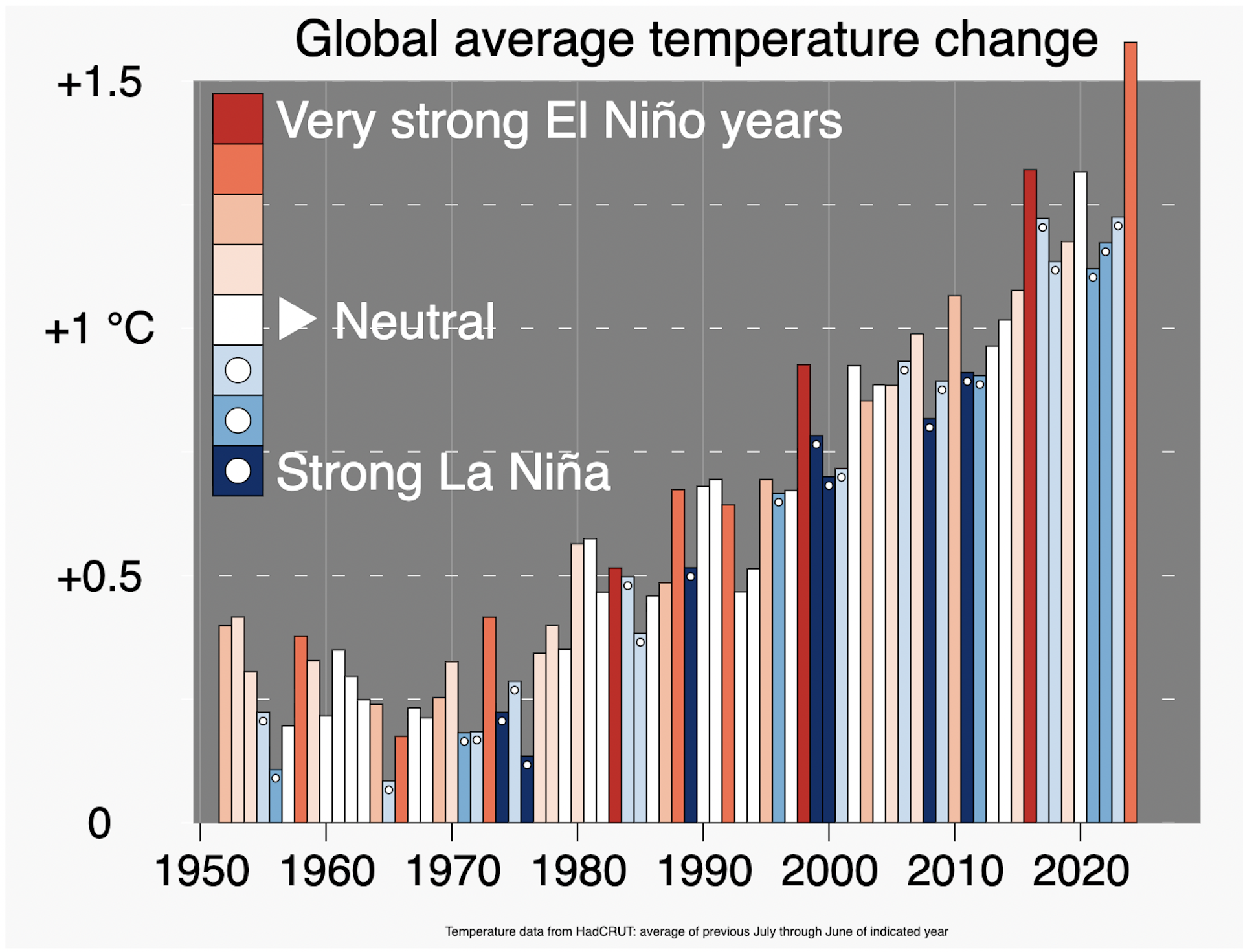
A typical El Niño lasts about a year. The full effect on atmospheric heat becomes clearest towards the end of the cycle. That means while we can expect 2026 to be very hot – perhaps a new record – next year is very likely to be even hotter, as ocean heat is moved back to the surface. We saw this during El Niño events over 2023–24 and 2015–16.
典型的厄尔尼诺持续大约一年。其对大气热量的全部影响在周期末期最为明显。这意味着虽然我们可以预计 2026 年会非常炎热——甚至可能是新的记录——但明年更有可能更热,因为海洋热量会被带回地表。我们在 2023–24 和 2015–16 的厄尔尼诺事件中看到了这一点。
Steady ocean warming coupled with longer-lasting and more intense marine heatwaves pose huge threats to marine ecosystems such as coral reefs, sea grass meadows and coastal reefs. Research on the 2023–24 El Niño and the warm 2024 year showed widespread impacts.
持续的海洋变暖,加上持续时间更长、强度更大的海洋热浪,对珊瑚礁、海草床和沿海礁等海洋生态系统构成了巨大威胁。关于 2023–24 年厄尔尼诺和温暖的 2024 年的研究显示了广泛的影响。
From oceans to land
从海洋到陆地
What happens in the oceans doesn’t stay there.
发生在海洋的事情不会只停留在那里。
In June 2023, a record-breaking marine heatwave broke previous temperature records across the North Atlantic Ocean. Soon afterwards, large areas of Europe were hit by intense heatwaves, while extreme rains triggered deadly floods in Spain and severe bushfires broke out around the Mediterranean.
2023年6月,一次创纪录的海洋热浪打破了北大西洋的先前温度记录。不久之后,欧洲大片地区遭受了强烈的热浪袭击,而极端降雨则在西班牙引发了致命的洪水,地中海周边也爆发了严重的灌木火灾。
Rising ocean temperatures have many consequences.
上升的海洋温度带来了许多后果。
A warmer ocean is less able to cool the land over summer. Warmer oceans also lead to more evaporation, boosting humidity and fuelling more intense and more sudden extreme rain and floods. These can have devastating consequences.
更温暖的海洋在夏季冷却陆地的能力减弱。更温暖的海洋还会导致更多的蒸发,提高湿度,助长更强烈、更突然的极端降雨和洪水。这些可能带来毁灭性的后果。
During El Niño events, there’s a clear geographical pattern. The regions we expect to be warmer or cooler during an El Niño roughly reflect where we are more or less likely to get marine heatwaves and more intense tropical cyclones.
在厄尔尼诺事件期间,存在一个明显的地理模式。我们预计在厄尔尼诺期间会更暖或更冷的地区,大致反映了我们更有可能发生海洋热浪和更强烈的热带气旋的地方。
Typical cyclone areas such as the western Indian Ocean could see stronger cyclones dumping heavier rainfall when they hit land. El Niño tends to bring extreme rain and floods to the western South America and dry conditions over parts of Australia and Southeast Asia.
典型的气旋区域,例如印度洋西部,在登陆时可能会出现更强的气旋和更大量的降雨。厄尔尼诺倾向于给南美洲西部带来极端降雨和洪水,而澳大利亚和东南亚的部分地区则会经历干燥条件。
Can we prepare?
我们能做好准备吗?
We are gaining a better understanding of how big climate drivers like El Niño shape weather and how to use ocean data from around the world to develop better seasonal forecasts authorities can use to prepare.
我们正在更好地了解像厄尔尼诺这样的大气候驱动因素如何影响天气,以及如何利用来自世界各地的海洋数据来开发更好的季节性预报,供相关部门用于准备。
Over the past two years, we have improved our ability to forecast marine heatwaves three to four months ahead in Australia, the United States and other regions. Forecasts give marine authorities a chance to act early by reducing allowable fishery catches and beginning conservation efforts for vulnerable species.
在过去两年里,我们在澳大利亚、美国和其他地区提高了预测海洋热浪的能力,提前三到四个月进行预报。这些预报使海洋管理部门有机会通过减少允许的渔获量和开始保护脆弱物种的努力来尽早采取行动。
This early success in ocean forecasting may be short-lived. The current US administration last year slashed funding for climate data gathering networks and has worked to dismantle the National Center for Atmospheric Research.
海洋预报领域的早期成功可能不会持续。美国现任政府去年削减了气候数据收集网络的资金,并试图拆除国家大气研究中心。
This year, the administration announced it would end funding for a key ocean monitoring network before backing down.
今年,该政府宣布将停止为一项关键的海洋监测网络提供资金,随后才退缩。
Ongoing collection of ocean data is crucial for ocean and land forecasts. If they are weakened or discontinued, we could face the challenge of dealing with worsening climate impacts blind.
持续收集海洋数据对于海洋和陆地预报至关重要。如果这些工作减弱或停止,我们可能会面临在不知情的情况下应对日益恶化的气候影响的挑战。
Ending the measuring of climate change won’t stop it happening. The only way to keep climate change from steadily worsening is to reach net zero as soon as humanly possible. Until then, we must use forecasts to prepare for what we can’t avoid.
停止测量气候变化并不能阻止其发生。唯一能防止气候持续恶化的方法是尽快实现净零排放。在此之前,我们必须利用预报来为无法避免的情况做准备。
Matthew England receives funding from the Australian Research Council.
Matthew England 的资金来自澳大利亚研究理事会。
Alex Sen Gupta receives funding from the Australian Research Council.
Alex Sen Gupta 的资金来自澳大利亚研究理事会。
Alistair Hobday does not work for, consult, own shares in or receive funding from any company or organisation that would benefit from this article, and has disclosed no relevant affiliations beyond their academic appointment.
Alistair Hobday 不受任何从本文中受益的公司或组织的工作、咨询、股票所有权或资金支持,并且除了其学术任命之外,未披露任何相关的隶属关系。
Read more
-

在伊朗战争的阴影下,以色列重启的黎巴嫩行动,有重蹈过去失败的教训——和占领的覆辙的风险。
In Iran war’s shadow, Israel’s renewed Lebanon campaign…