从牛排骨到“天国漫步”:习川峰会的象征意义凸显了美国实力与中国传统
From beef ribs to a ‘heavenly’ walk: Xi-Trump summit sy…
A cultural historian of modern China explains the meaning behind some of the venue choices during President Donald Trump’s visit to Beijing.
一位中国现代文化史学家解释了唐纳德·特朗普总统访问北京期间,一些场地选择背后的含义。
Diplomacy often masquerades as theater. And nearly nine years after his first state visit to China, Donald Trump returned to Beijing with an extended cast of characters.
外交往往伪装成一场戏剧。在首次访问中国近九年后,唐纳德·特朗普带着一支庞大的角色阵容重返北京。
Alongside the U.S. president on his May 2026 visit was a senior delegation of politicians including his secretary of defense, and a phalanx of business leaders and technology executives. It was a traveling display of American political and corporate power.
在他2026年5月访问期间,陪同美国总统的还有包括国防部长在内的高级政客代表团,以及一群商界领袖和科技高管。这是一场美国政治和企业实力的巡回展示。
Not that the hosting Chinese were short of symbolic gestures themselves. Trump’s first China visit in 2017 had already shown how far Beijing was willing to go to turn diplomacy into theater. On that occasion, Chinese President Xi Jinping and his wife Peng Liyuan personally accompanied Donald and Melania Trump through the Forbidden City, Beijing’s former imperial palace, drinking tea inside the palace walls and taking in a Peking opera at the Belvedere of Pleasant Sounds, a Qing imperial theater built for court entertainment.
但这并不意味着东道主中国缺乏象征性的姿态。特朗普2017年首次访华时,就已经展示了北京愿意将外交变成戏剧的程度。那次访问中,中国国家主席习近平和夫人彭丽媛亲自陪同唐纳德和梅拉尼娅·特朗普穿过北京的昔日皇宫——故宫,在宫墙内饮茶,并在为宫廷娱乐而建的清代皇家剧院“愉悦之声观景台”欣赏了京剧。
So what was being conveyed this time around? As a cultural historian of modern China, I took a peek beyond the official statements and trade headlines of the Xi-Trump summit and into the images, gestures and cultural symbolism on display.
那么,这一次又在传达什么?作为一位中国现代文化史学家,我深入探究了习近平和特朗普峰会的官方声明和贸易头条之外,那些展示的图像、姿态和文化象征意义。
The weight of heaven
天命
The formal choreography began at Beijing’s Great Hall of the People, where the two leaders exchanged views on the Iran conflict, the war in Ukraine and the Korean Peninsula, among other items.
正式的议程在北京人民大会堂开始,两位领导人就伊朗冲突、乌克兰战争和朝鲜半岛等问题交换了意见。
But the more interesting story of the visit, to me, was told outside the meeting room.
但对我来说,这次访问更引人入胜的故事,是在会场外讲述的。
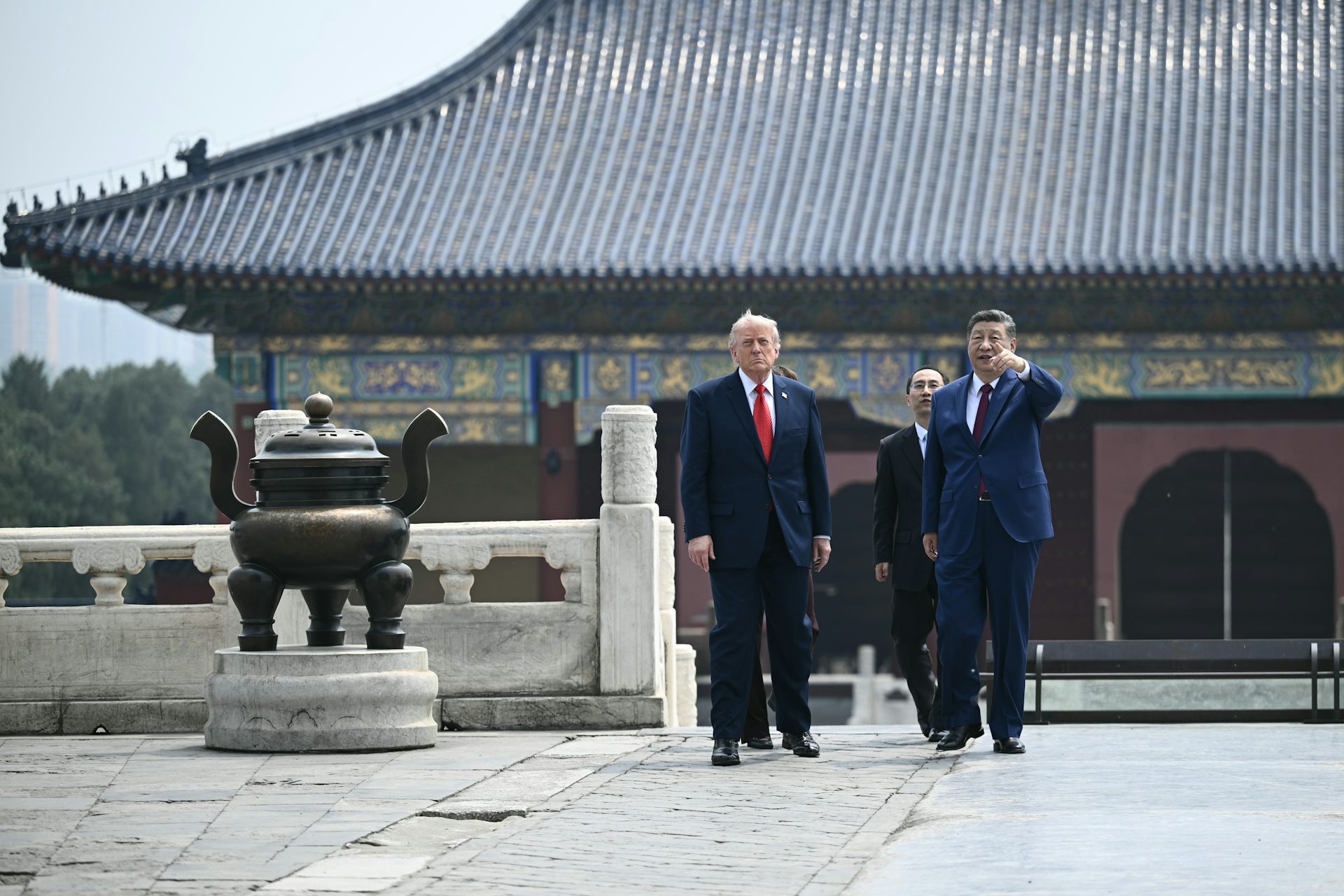
After their two-hour bilateral meeting, Trump and Xi paid a cultural visit to the Temple of Heaven in Southern Beijing. Built in the early 15th century, the temple is China’s most complete surviving imperial religious complex. For nearly five centuries, emperors of the Ming and Qing dynasties came here to worship Heaven and pray for good harvests.
在进行了为时两小时的双边会谈后,特朗普和习近平一同参观了北京南部的天坛。这座寺庙建于十五世纪初,是中国保存最完整的皇家宗教建筑群。近五个世纪以来,明清两代的皇帝们都曾来到这里祭天,祈求丰收。
Its most recognizable structure, the Hall of Prayer for Good Harvests, rises in three tiers of blue-glazed tiles above a marble platform, its circular form and crimson columns translating cosmology into architecture. UNESCO inscribed the site as a World Heritage Site in 1998, recognizing it as “a masterpiece of architecture and landscape design.”
其最著名的建筑——祈年殿,坐落于大理石平台上,三层蓝色琉璃瓦覆盖,其圆形结构和朱红色廊柱将宇宙观转化为建筑艺术。联合国教科文组织于1998年将该遗址列为世界遗产,并认可其为“建筑和景观设计的杰作”。
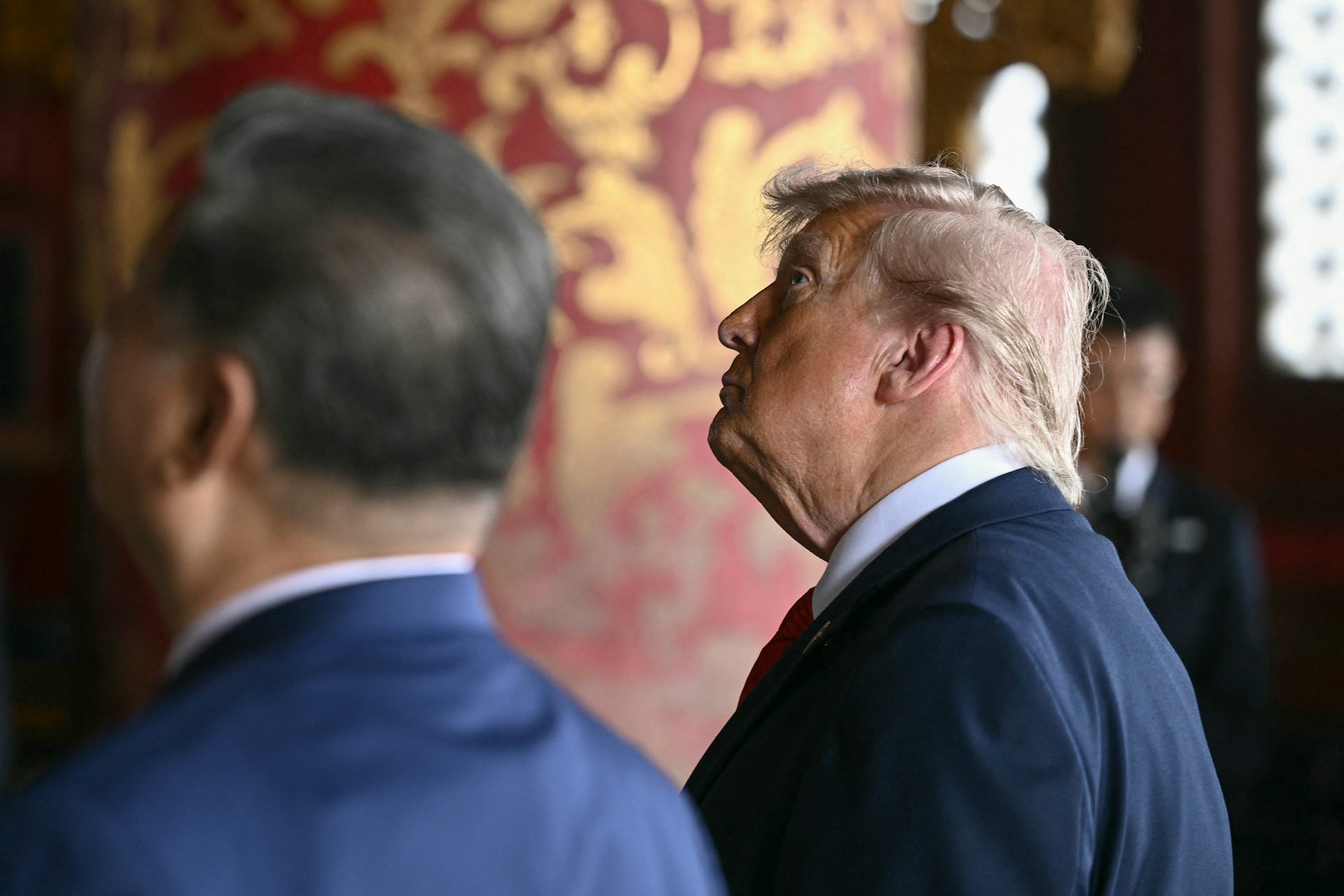
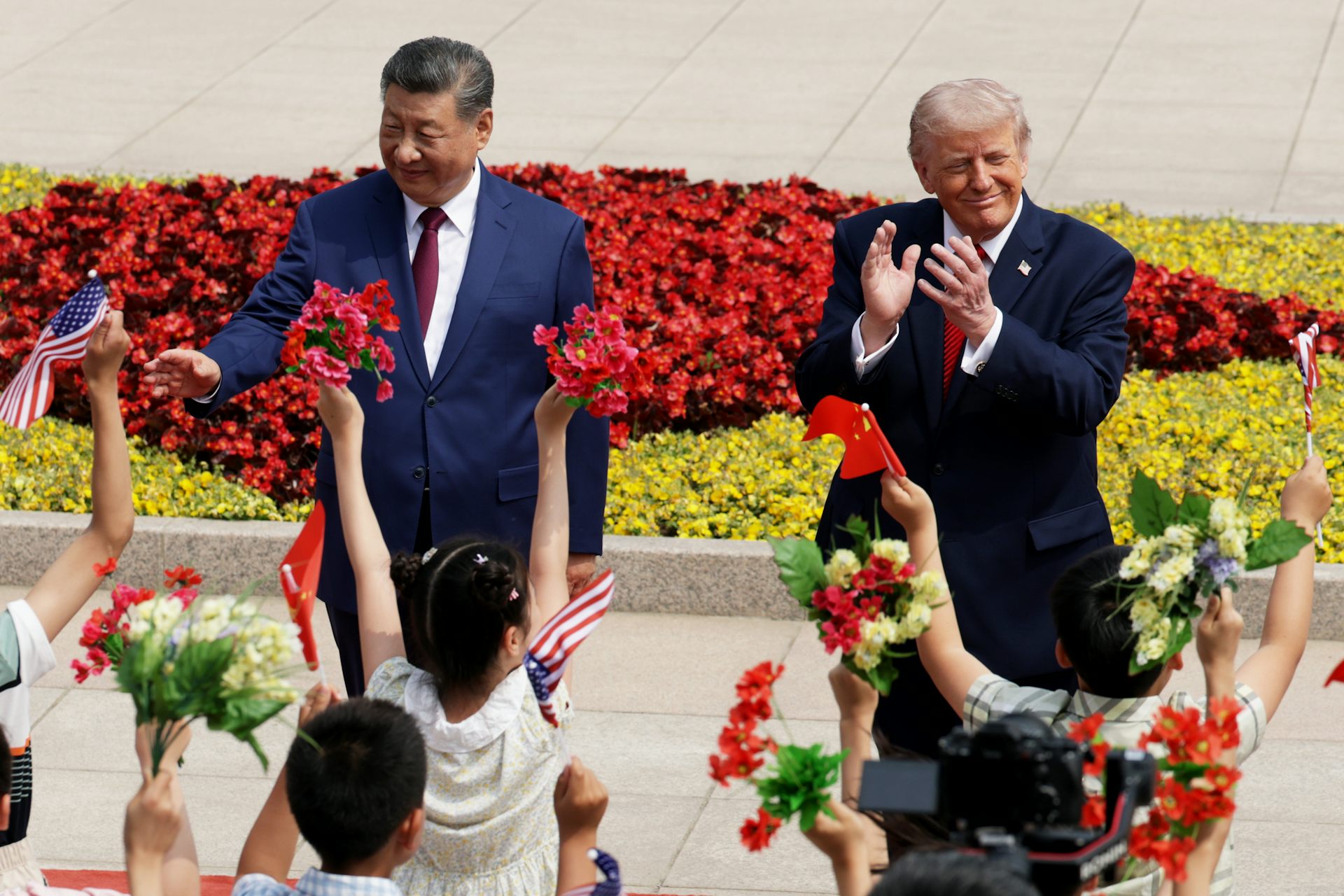
When Trump and Xi posed for photographs, they were standing in a place long associated with cosmic order and the welfare of the people. To bring a foreign leader there is to invite a particular reading of the relationship: not simply as a bargain between states, but as a relationship that Beijing hopes to associate with order, abundance and peace.
当特朗普和习近平摆姿拍照时,他们所站立的地方长期以来与宇宙秩序和民生福祉相关联。邀请一位外国领导人来到这里,就邀请了一种特定的关系解读:这不仅仅是国家间的交易,而是一种北京希望与秩序、富饶和和平联系起来的关系。
There was also a more practical layer to this symbolism. The Temple of Heaven links political authority to agricultural abundance. Emperors came here to pray not for abstract harmony but for grain. That made it a pointed setting for a visit in which American agricultural exports — soybeans, grains and beef among them — were expected to matter.
这种象征意义也存在一个更实际的层面。天坛将政治权威与农业富饶联系起来。皇帝们来这里祈祷的不是抽象的和谐,而是粮食。这使得它成为一次具有指向性的会晤背景,因为美国农产品出口——包括大豆、谷物和牛肉——预计会发挥作用。
For Trump, any Chinese commitment to buy more U.S. farm goods would have clear domestic political value. For Xi, the setting allowed a hard bargaining issue — farm purchases — to be translated into an older symbolic language of harvest that spoke to both domestic and international audiences.
对特朗普而言,任何中国承诺购买更多美国农产品的行为,都具有明确的国内政治价值。而对习近平而言,这个背景使得一个硬性的议题——农产品采购——可以被转化为一种更古老的、关于丰收的象征性语言,从而同时对国内和国际受众产生共鸣。
Before Trump, Kissinger
特朗普之前,是基辛格
Trump was not the first American statesman to be brought to the Temple of Heaven.
特朗普并非第一个被带到天坛的美国政要。
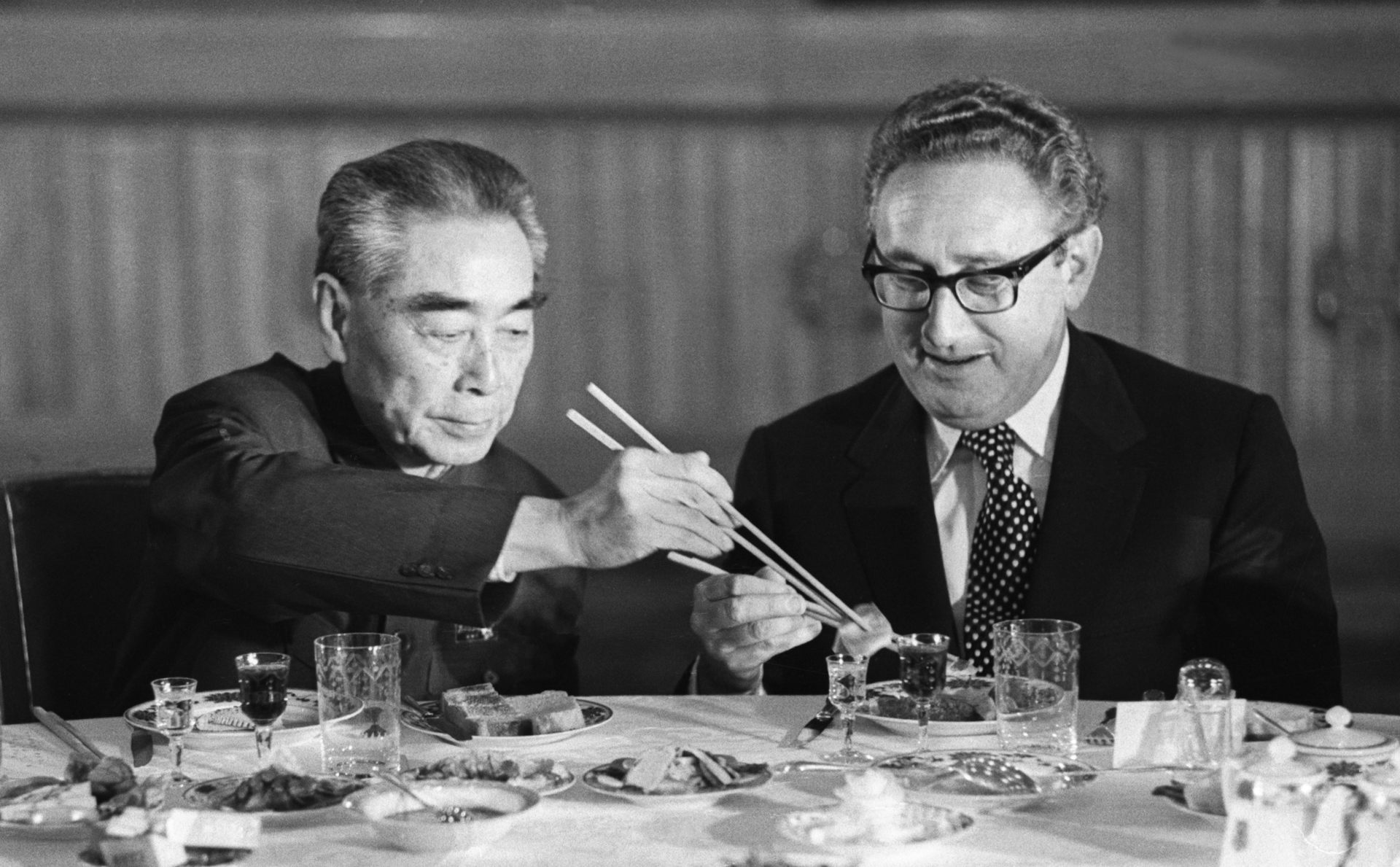
In July 1971, Henry Kissinger, then national security adviser to President Richard Nixon, arrived in Beijing on his famous secret mission — the back-channel visit that helped re-open the door between two countries that had little direct contact for more than two decades. Between tense negotiations with Chinese premier Zhou Enlai, Kissinger made time to visit the temple.
1971年7月,时任尼克松总统国家安全顾问亨利·基辛格来到北京,执行他著名的秘密任务——这次秘密访问帮助重新打开了两个国家在二十多年来几乎没有直接接触的局面。在与中国总理周恩来紧张的谈判之余,基辛格抽出时间参观了这座寺庙。
There, standing amid the old cypress groves, he was said to have been deeply moved by the timeless atmosphere of the hall and its surroundings.
在那里,他站在古柏林荫之中,据说被这座殿堂及其周围环境永恒的氛围深深感动。
The motif of old trees and deep time returned on May 15, when Xi gave Trump a rare walk through Zhongnanhai, the walled compound that now houses the core of China’s party-state leadership. Reuters reported that a hot mic captured Xi drawing Trump’s attention to the age of the trees around them — some centuries old, some said to be more than a thousand years old. When Trump asked whether Xi had taken other presidents on similar walks, Xi replied that he had only rarely.
“古树与深时”的主题在5月15日重现了。那天,习近平带特朗普罕见地游览了中南海,这个如今是中国党政核心领导机构的围墙内院。路透社报道称,一个热麦克风捕捉到习近平将特朗普的注意力引向了他们周围树木的年代——有些有几个世纪的历史,有些据说超过了一千年。当特朗普问及习近平是否曾带其他国家元首进行过类似的游览时,习近平回答说,他只是很少这样做。
Together, the Kissinger anecdote and the Zhongnanhai walk reveal a recurring logic in Chinese-American diplomacy: America’s fast-moving economy is invited to look at China’s sense of tradition. Xi has used this tactic with other leaders, too. When French President Emmanuel Macron visited China in 2023, he attended a guqin performance invoking the classical idea of the zhiyin — the rare listener who truly understands one’s music.
总的来说,基辛格轶事和中南海的游览揭示了中美外交中一种反复出现的逻辑:邀请美国快速发展的经济体去审视中国的传统文化底蕴。习近平也曾用这种策略对待其他领导人。2023年,法国总统马克龙访问中国时,他参加了一场古琴表演,这场表演唤起了“至音”这一古典概念——指真正理解他人音乐的稀有听众。
Basketball and roast duck
篮球和烤鸭
Trump’s visit was not staged only through imperial grandeur, however. It also moved into a more familiar register: food, sports and popular culture.
特朗普的访问并非仅仅通过帝王气派来营造的。它还进入了一个更熟悉的领域:美食、体育和流行文化。
The state dinner on May 14 was another study in careful hospitality. Chefs designed the menu to honor both Chinese culinary prestige and Americans’ — and Trump’s — known preferences: Peking roast duck, crispy beef ribs, pan-fried pork bun, tiramisu and fruit and ice cream.
5月14日的国宴又是精心款待的又一例证。厨师们设计的菜单旨在同时彰显中国烹饪的声望和美国人——以及特朗普本人——的已知偏好:北京烤鸭、脆皮牛肋排、煎猪包、提拉米苏以及水果和冰淇淋。
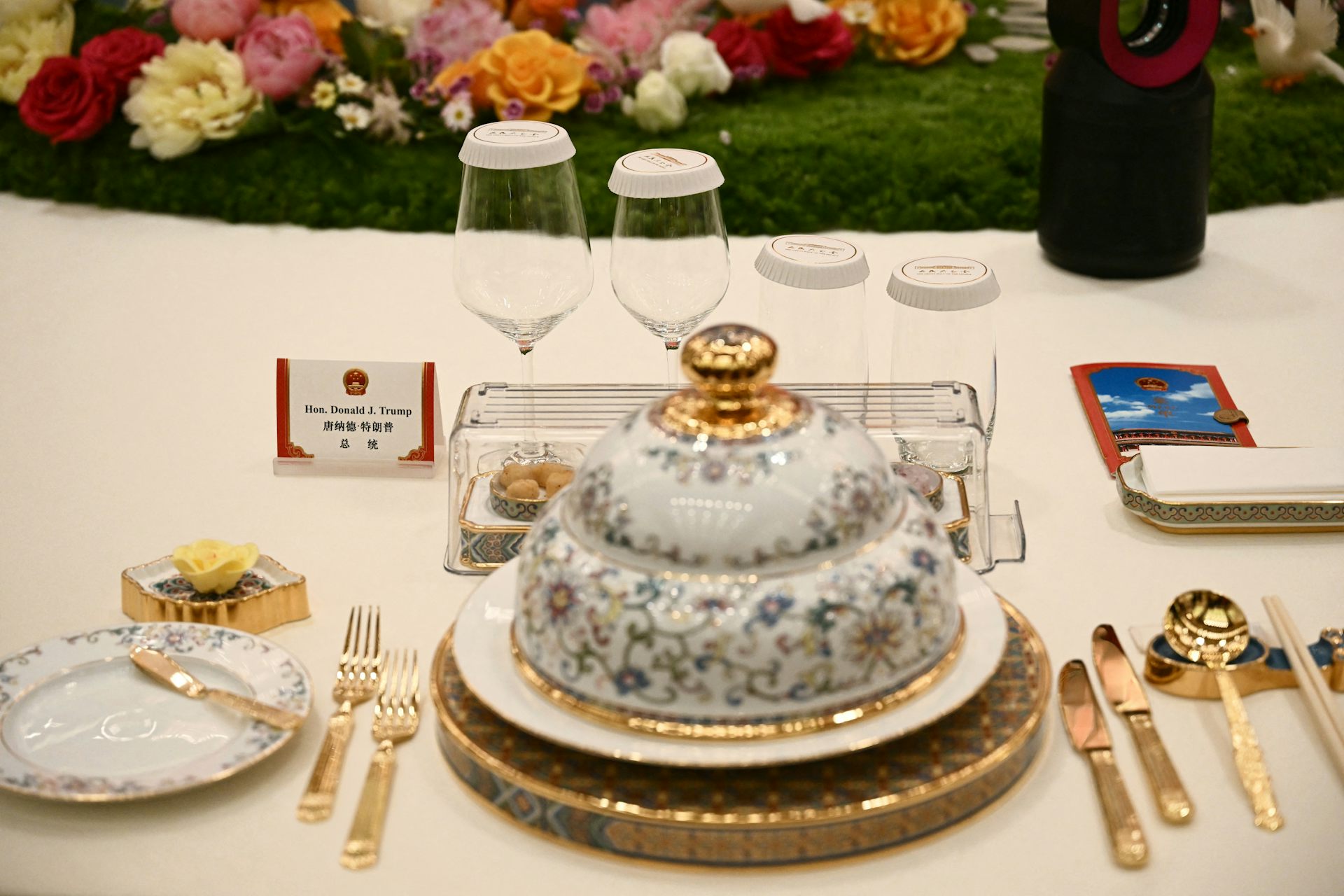
Trump thanked Xi for a “magnificent welcome like none other,” then replied in a language more recognizably his own. He spoke not only of power politics but of people-to-people ties: Chinese workers who helped build America’s railroads, Chinese enthusiasm for basketball and blue jeans and the sheer presence of Chinese restaurants across the U.S.
特朗普感谢了习近平“无与伦比的盛情款待”,随后用一种更具自己风格的语言作回应。他谈论的不仅是权力政治,更是民心相通:帮助建设美国铁路的中国工人、中国对篮球和牛仔裤的热情,以及美国各地中国餐馆的普遍存在。
The examples were characteristically Trumpian — simple, vivid and easy to grasp. But they pointed to something important. U.S.–China relations have never been made only by presidents, diplomats and official communiques. They have also been shaped by athletes, musicians, restaurant owners, students and tourists.
这些例子具有典型的特朗普式风格——简单、生动且易于理解。但它们指向了一些重要的事情。中美关系从来都不是只由总统、外交官和官方公报来塑造的。它们也由运动员、音乐家、餐馆老板、学生和游客塑造。
The basketball reference was especially resonant. Sports have long offered a softer language for U.S.–China relations. In April 2026, just weeks before Trump’s visit, China and the U.S. marked the 55th anniversary of ping-pong diplomacy — the famous 1971 exchange in which a “little ball” helped move the “big ball” of world politics.
提及篮球这一点尤其引起共鸣。体育运动长期以来为中美关系提供了一种更柔和的语言。2026年4月,在特朗普访问前几周,中美两国纪念了乒乓外交55周年——那场著名的1971年交换,让“小球”帮助推动了世界政治的“大球”。
Basketball now plays a similar role. For many Chinese fans, the NBA is a deeply familiar world of players, teams and memories that represents the spirit of America: Michael Jordan, Kobe Bryant, LeBron James and Yao Ming. That reservoir of affection has survived even periods of political tension. Trump, in invoking it, was drawing on something real.
如今,篮球扮演了类似的角色。对于许多中国球迷来说,NBA是一个极其熟悉的世界,它包含了球员、球队和记忆,代表着美国的精神:迈克尔·乔丹、科比·布莱恩特、勒布朗·詹姆斯和姚明。这种情感的储备,甚至在政治紧张的时期也得以存续。特朗普援引这一点,所触及的正是真实的东西。
A second act in the US?
美国的第二幕?
The main lesson of all this symbolism is that, in U.S.–China relations, atmosphere has never been secondary.
所有这些象征意义的主要教训是,在美中关系中,气氛从未是次要的。
Diplomatic theater cannot settle disputes over technology or Taiwan, or determine the future of the global order. But it can shape the mood in which rivalries are managed, and the stories that leaders tell their public about what the relationship means.
外交舞台无法解决技术或台湾的争端,也无法决定全球秩序的未来。但它可以塑造管理竞争的情绪,以及领导人向公众讲述关于这种关系意义的故事。
And on that front, the summit worked on several levels. To the Chinese audience, it presented their leaders as confident and capable of managing a tense relationship with the U.S. on China’s own cultural terms.
在这一点上,这次峰会发挥了多重作用。对于中国观众来说,它展示了中国领导人自信,有能力按照中国自身的文化方式管理与美国的紧张关系。
For Trump and the American delegation, it offered a lesson in Chinese traditions and culture that promotes deeper understanding across political divides. And for both societies, the references for food, sports and popular culture created a more neutral ground on which connection could still be imagined.
对于特朗普和美国代表团来说,它提供了一堂关于中国传统和文化的课程,促进了跨越政治分歧的更深层次的理解。对于两个社会来说,关于食物、体育和流行文化的提及创造了一个更中立的平台,让人们仍然可以想象连接的可能性。
From the 1970s opening to Trump’s 2017 visit to the Forbidden City, and from the Temple of Heaven photo-op to the walk among old trees at Zhongnanhai in 2026, cultural staging remains central to how China presents itself to America — and how America is invited to imagine China. It was announced on May 15 that Xi will pay a state visit to the U.S. in September at the invitation of Trump. If that happens, the theater of diplomacy will move to American soil, and the question will be how Washington chooses to stage China in return.
从20世纪70年代的开幕式到特朗普2017年访问故宫,从天坛的拍照机会到2026年在中南海古树林漫步,文化舞台化仍然是中国向美国展示自身的核心方式——也是美国被邀请想象中国的方式。5月15日宣布,应特朗普邀请,习近平将于九月访问美国。如果发生这种情况,外交舞台将转移到美国本土,而问题将是华盛顿将如何反过来“舞台化”中国。
Xianda Huang does not work for, consult, own shares in or receive funding from any company or organization that would benefit from this article, and has disclosed no relevant affiliations beyond their academic appointment.
黄先达并未受任何受益于本文的公司或组织的雇佣、咨询、拥有股份或获得资金,并且除了其学术任命之外,未披露任何相关隶属关系。