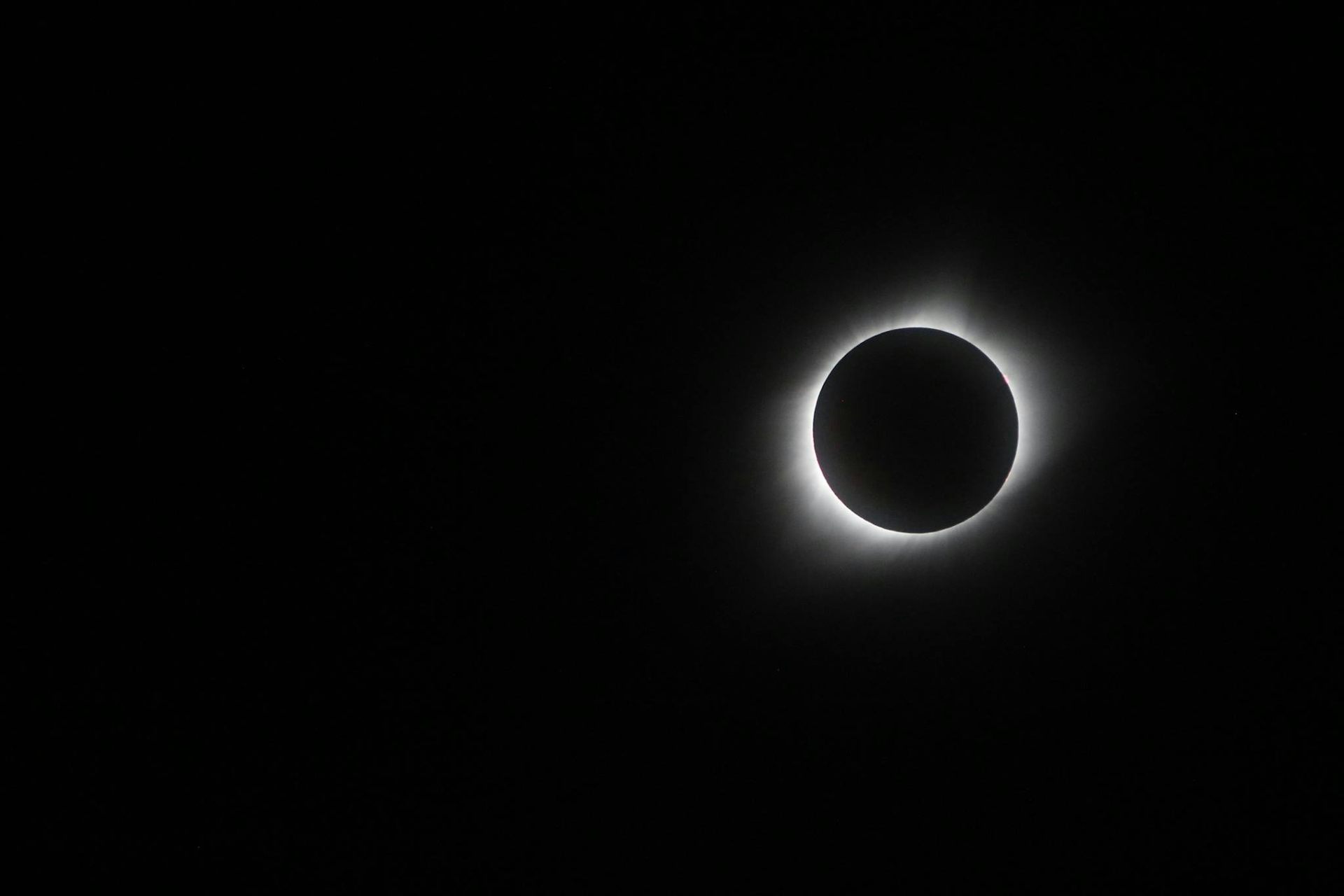
Ver um eclipse da Terra é impressionante – para os astronautas que o veem do espaço, a cena foi ainda mais grandiosa
Seeing an eclipse from Earth is awe-inspiring – for astronauts seeing one from space, the scene was even more grand
Astronauts report feeling profoundly awestruck when they go to space, an anthropologist reports. This experience shapes their perspectives even back on Earth.
Os astronautas relatam sentir-se profundamente maravilhados quando vão para o espaço, relata um antropólogo. Essa experiência molda suas perspectivas mesmo de volta à Terra.
The astronauts on Artemis II’s trip to the Moon in April 2026 didn’t just have an amazing journey through space. They also saw something extraordinary. They were the first humans to see a total solar eclipse from space.
Os astronautas na viagem da Artemis II à Lua em abril de 2026 não tiveram apenas uma jornada incrível pelo espaço. Eles também viram algo extraordinário. Eles foram os primeiros humanos a ver um eclipse solar total do espaço.
A solar eclipse happens when the Moon moves in front of the Sun. In a total eclipse, the Sun’s central disc is covered completely.
Um eclipse solar acontece quando a Lua passa na frente do Sol. Em um eclipse total, o disco central do Sol é completamente coberto.
From Earth, the circle of the Sun is about the same size as the circle of the Moon. With the bright circle blocked, you can see the undulating rays of the Sun’s corona, or outer atmosphere, that are normally too dim to be observed.
Da Terra, o círculo do Sol tem tamanho parecido com o círculo da Lua. Com o círculo brilhante bloqueado, é possível ver os raios ondulantes da coroa solar, ou atmosfera externa, que normalmente são muito fracos para serem observados.

I’m a cultural anthropologist who studies awe-inspiring aspects of space exploration. I have been lucky enough to have seen two total solar eclipses. The first one was in Nebraska in 2017, the second in Indiana in 2024.
Sou um antropólogo cultural que estuda aspectos inspiradores da exploração espacial. Tive a sorte de ver dois eclipses solares totais. O primeiro foi em Nebraska em 2017, o segundo em Indiana em 2024.
During my second total eclipse, the period of totality – that short span when you can remove your protective glasses and look directly at the eclipse – lasted close to 4 minutes. I saw waves of diffuse light snaking around an ink-black hole in the sky. It looked very wrong – almost alien.
Durante meu segundo eclipse total, o período de totalidade – aquele curto intervalo em que você pode remover seus óculos de proteção e olhar diretamente para o eclipse – durou quase 4 minutos. Vi ondas de luz difusa serpenteando em torno de um buraco preto de tinta no céu. Parecia muito errado – quase alienígena.
On Aug. 12, 2026, there will be another total solar eclipse, visible only from Greenland, Iceland, Spain and the Balearic Islands of the Mediterranean. Some fortunate viewers in Spain and nearby islands may see the eclipse just before sunset, low on the horizon. The Moon illusion, a phenomenon where the Moon looks bigger when it’s near the horizon, might make this eclipse look unusually large.
Em 12 de agosto de 2026, haverá outro eclipse solar total, visível apenas da Groenlândia, Islândia, Espanha e das Ilhas Baleares do Mediterrâneo. Alguns espectadores sortudos na Espanha e em ilhas próximas podem ver o eclipse pouco antes do pôr do sol, baixo no horizonte. A ilusão da Lua, um fenômeno em que a Lua parece maior quando está perto do horizonte, pode fazer este eclipse parecer anormalmente grande.
Unusual eclipse perspectives
Perspectivas de eclipse incomuns
Astronauts will occasionally also have less common eclipse experiences. I interviewed one I call by the pseudonym “Jackie” in my research about astronauts’ experiences of awe. She was part of an astronaut training group that did a flight exercise during a total solar eclipse.
Os astronautas ocasionalmente também têm experiências de eclipse menos comuns. Entrevistei uma, que chamo pelo pseudônimo “Jackie”, em minha pesquisa sobre as experiências de admiração dos astronautas. Ela fazia parte de um grupo de treinamento de astronautas que realizou um exercício de voo durante um eclipse solar total.
Jackie and her squad flew their jets in the shadow of the Moon. This lengthened their time in totality because they could follow and stay within the shadow. Jackie was most impressed with how the Sun’s corona seemed to shift and ripple.
Jackie e seu esquadrão voaram seus jatos na sombra da Lua. Isso prolongou o tempo deles em totalidade porque eles puderam seguir e permanecer na sombra. Jackie ficou mais impressionada com a forma como a coroa do Sol parecia mudar e ondular.
“It’s not static … it’s alive,” she told me.
“Não é estático… está vivo”, ela me disse.
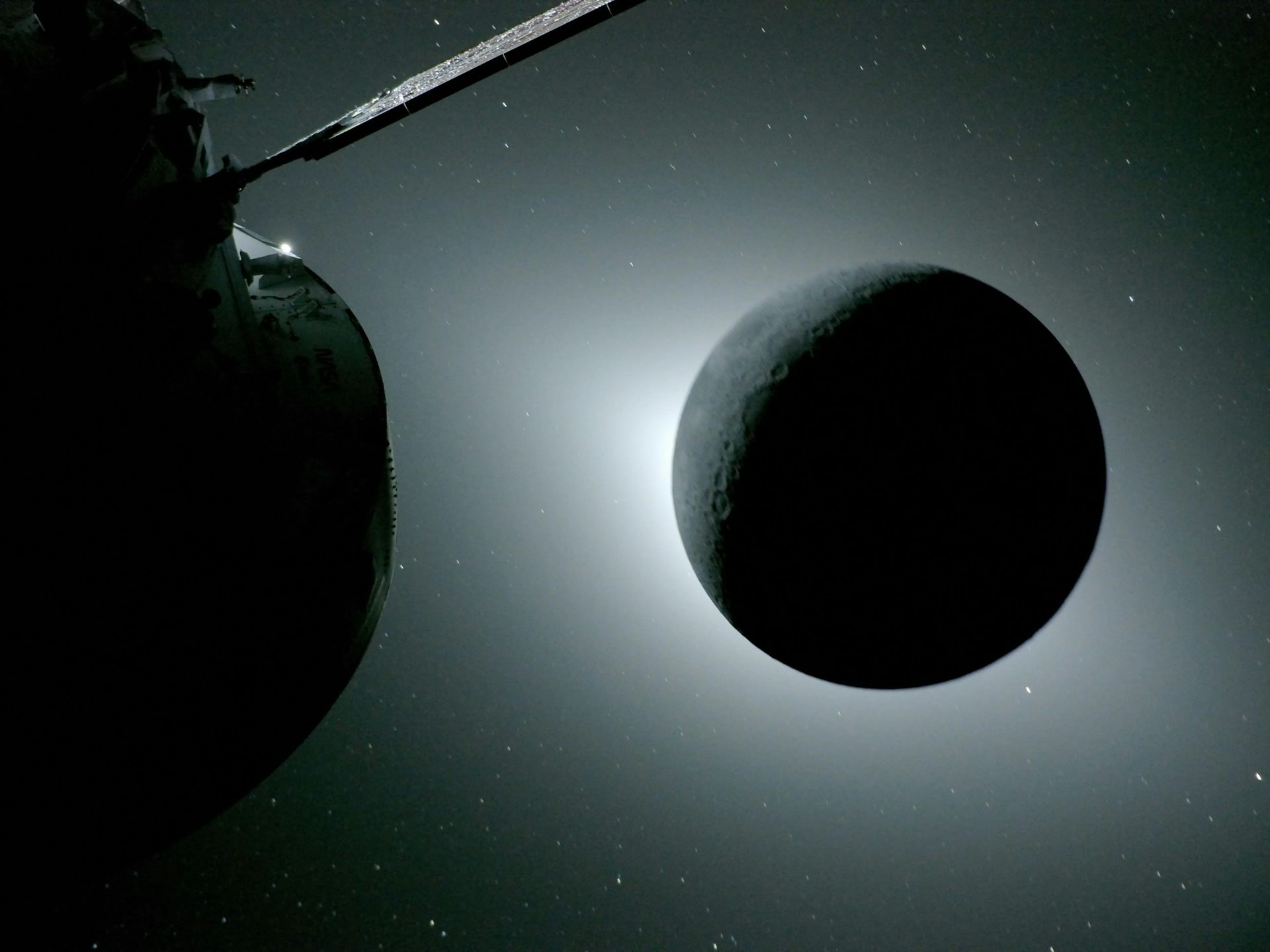
On April 6, 2026, the astronauts of NASA’s Artemis II mission saw another kind of unusual eclipse as they flew around the Moon. At one point during their flight, the Moon and the spacecraft aligned so that the Moon was directly between them and the Sun, blocking the Sun’s disk in a way that looks very different from what we see on Earth.
Em 6 de abril de 2026, os astronautas da missão Artemis II da NASA viram outro tipo de eclipse incomum enquanto voavam ao redor da Lua. Em um momento de seu voo, a Lua e a nave espacial se alinharam de modo que a Lua estivesse diretamente entre eles e o Sol, bloqueando o disco solar de uma maneira muito diferente do que vemos na Terra.
Astronaut Victor Glover said it felt like they “just went sci-fi.”
O astronauta Victor Glover disse que parecia que eles “acabaram de entrar em ficção científica”.
The astronauts were so close to the Moon that the Moon looked bigger than the Sun and hid more of its bright circle. Earth was also in view, and sunlight reflected from the Earth onto the Moon in a phenomenon NASA calls “earthshine.” This dim light is very similar to the moonlight that shines on the Earth at night.
Os astronautas estavam tão perto da Lua que ela parecia maior que o Sol e escondia mais de seu círculo brilhante. A Terra também estava visível, e a luz solar refletida da Terra na Lua em um fenômeno que a NASA chama de “brilho terrestre” (earthshine) . Essa luz fraca é muito semelhante à luz da lua que brilha na Terra à noite.
Imagine the Sun hidden behind the Moon, creating a hazy halo around the Moon’s edges. At the same time, faint light reflected from Earth softly illuminates the Moon, revealing mountains and craters in a dim twilight. Now imagine this striking scene lasting 54 minutes.
Imagine o Sol escondido atrás da Lua, criando um halo nebuloso ao redor das bordas da Lua. Ao mesmo tempo, uma luz fraca refletida da Terra ilumina suavemente a Lua, revelando montanhas e crateras em um crepúsculo tênue. Agora imagine esta cena impressionante durando 54 minutos.
This sight was, without a doubt, one of the most unusual eclipses ever seen by human eyes.
Esta visão foi, sem dúvida, um dos eclipses mais incomuns já vistos pelos olhos humanos.
Although Artemis’ astronauts are trained to think scientifically, this experience propelled them into a state of awe. They talked openly about how their brains were “not processing” what they observed. While NASA kept them busy with a variety of tasks, the sound of emotion and excitement in their voices as they broadcast live from their lunar flyby was unmistakable.
Embora os astronautas da Artemis sejam treinados para pensar cientificamente, essa experiência os levou a um estado de admiração. Eles falaram abertamente sobre como seus cérebros não estavam “processando” o que observavam. Enquanto a NASA os mantinha ocupados com uma variedade de tarefas, o som de emoção e excitação em suas vozes enquanto transmitiam ao vivo de seu sobrevoo lunar foi inconfundível.
The psychology of awe
A psicologia do assombro
Researchers have studied the effects of awe on the human brain, including awe felt during solar eclipses. Moments of wonder like these can transform how you feel and even how you think, making you more thoughtful and open-minded.
Pesquisadores estudaram os efeitos do assombro no cérebro humano, incluindo o assombro sentido durante eclipses solares. Momentos de maravilha como estes podem transformar como você se sente e até como você pensa, tornando você mais reflexivo e de mente aberta.
In my own work I’ve found these experiences can change how astronauts understand their own place in the universe.
Em meu próprio trabalho, descobri que essas experiências podem mudar a forma como os astronautas entendem seu próprio lugar no universo.
One astronaut said she gained an awareness of the fragility of our planet that now shapes everything she does, while another described becoming more curious after returning to Earth. A third said the awe he experienced in lunar orbit changed his understanding of time and infinity.
Uma astronauta disse que ganhou uma consciência da fragilidade do nosso planeta que agora molda tudo o que ela faz, enquanto outra descreveu ter se tornado mais curiosa após retornar à Terra. Um terceiro disse que o assombro que experimentou em órbita lunar mudou sua compreensão de tempo e infinito.
Space travel creates many opportunities for awe, but a solar eclipse from behind the Moon, as Mission Commander Reid Wiseman put it, required “20 new superlatives.”
As viagens espaciais criam muitas oportunidades de assombro, mas um eclipse solar visto por trás da Lua, como o Comandante de Missão Reid Wiseman colocou, exigiu “20 novos superlativos”.
It’s an experience most of the earthbound eclipse-chasers heading to Greenland or Iceland or Spain this summer will only dream about. Whether eclipses happen in space or on Earth, though, close encounters with the grandeur of our universe can make you feel profoundly human.
É uma experiência que a maioria dos caçadores de eclipse na Terra que viajam para a Groenlândia, Islândia ou Espanha neste verão só poderá sonhar. No entanto, seja em espaço ou na Terra, encontros próximos com a grandiosidade do nosso universo podem fazer você se sentir profundamente humano.
Deana L. Weibel is currently working on a project with funding from the National Air and Space Museum’s Aviation Space Writers Foundation Award. She has published a book, The Ultraview Effect: What We Can Learn from Astronauts about Awe, Humility, and Exploring the Unknown, with the University of California Press.
Deana L. Weibel está trabalhando atualmente em um projeto com financiamento do Prêmio Aviation Space Writers Foundation do National Air and Space Museum. Ela publicou um livro, The Ultraview Effect: What We Can Learn from Astronauts about Awe, Humility, and Exploring the Unknown, com a University of California Press.
Read more
-

O ‘Rabo de Cavalo Divino’, escândalos de drogas e a perseguição de O.J. Simpson: olhando para trás na Copa do Mundo dos EUA de 1994
The ‘Divine Ponytail’, drug scandals and the OJ Simpson chase: looking back at the 1994 US World Cup
-

Bingles, bolas de osso e ‘Beer Barrel Polka’ – centenas de obras esquecidas mostram o mundo eclético dos estudos sobre beisebol
Bingles, knuckleballs and ‘Beer Barrel Polka’ – hundreds of forgotten works showcase the eclectic world of baseball scholarship