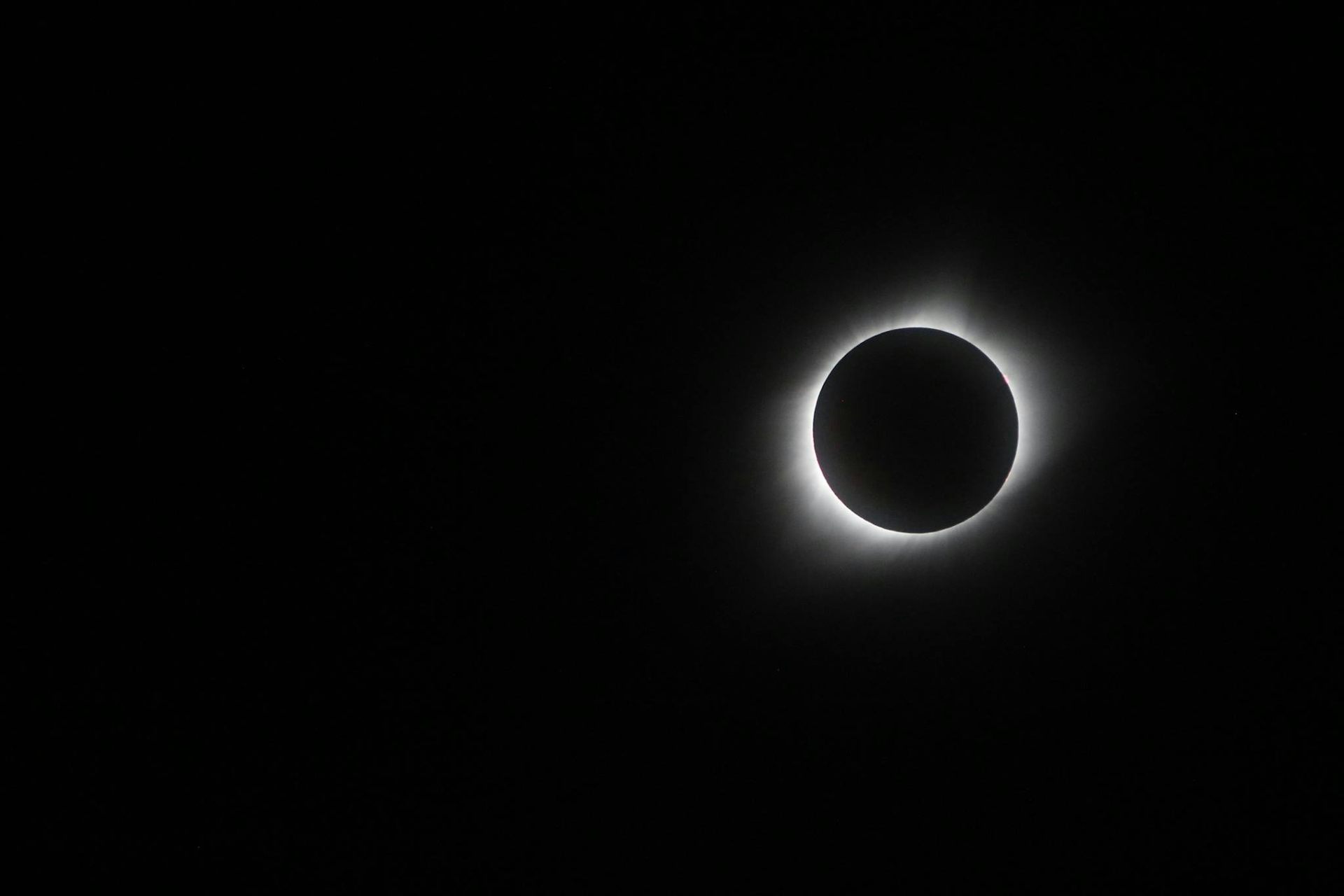
Melihat gerhana dari Bumi sangat mengagumkan – bagi para astronot yang melihatnya dari luar angkasa, pemandangan itu bahkan lebih megah
Seeing an eclipse from Earth is awe-inspiring – for astronauts seeing one from space, the scene was even more grand
Astronauts report feeling profoundly awestruck when they go to space, an anthropologist reports. This experience shapes their perspectives even back on Earth.
Para astronot melaporkan merasa sangat takjub ketika mereka pergi ke luar angkasa, lapor seorang antropolog. Pengalaman ini membentuk perspektif mereka bahkan saat kembali ke Bumi.
The astronauts on Artemis II’s trip to the Moon in April 2026 didn’t just have an amazing journey through space. They also saw something extraordinary. They were the first humans to see a total solar eclipse from space.
Para astronot dalam perjalanan Artemis II ke Bulan pada April 2026 tidak hanya menjalani perjalanan luar angkasa yang menakjubkan. Mereka juga melihat sesuatu yang luar biasa. Mereka adalah manusia pertama yang melihat gerhana matahari total dari luar angkasa.
A solar eclipse happens when the Moon moves in front of the Sun. In a total eclipse, the Sun’s central disc is covered completely.
Gerhana matahari terjadi ketika Bulan bergerak di depan Matahari. Dalam gerhana total, cakram pusat Matahari tertutup sepenuhnya.
From Earth, the circle of the Sun is about the same size as the circle of the Moon. With the bright circle blocked, you can see the undulating rays of the Sun’s corona, or outer atmosphere, that are normally too dim to be observed.
Dari Bumi, lingkaran Matahari berukuran hampir sama dengan lingkaran Bulan. Dengan terhalangnya lingkaran terang itu, Anda dapat melihat sinar-sinar bergelombang dari korona Matahari, atau atmosfer luarnya, yang biasanya terlalu redup untuk diamati.

I’m a cultural anthropologist who studies awe-inspiring aspects of space exploration. I have been lucky enough to have seen two total solar eclipses. The first one was in Nebraska in 2017, the second in Indiana in 2024.
Saya seorang antropolog budaya yang mempelajari aspek-aspek eksplorasi luar angkasa yang menginspirasi kekaguman. Saya cukup beruntung telah melihat dua gerhana matahari total. Yang pertama di Nebraska pada tahun 2017, yang kedua di Indiana pada tahun 2024.
During my second total eclipse, the period of totality – that short span when you can remove your protective glasses and look directly at the eclipse – lasted close to 4 minutes. I saw waves of diffuse light snaking around an ink-black hole in the sky. It looked very wrong – almost alien.
Selama gerhana total kedua saya, periode totalitas – rentang waktu singkat ketika Anda dapat melepas kacamata pelindung Anda dan melihat langsung gerhana – berlangsung hampir 4 menit. Saya melihat gelombang cahaya difus meliuk-liuk di sekitar lubang hitam sehitam tinta di langit. Itu terlihat sangat salah – hampir asing.
On Aug. 12, 2026, there will be another total solar eclipse, visible only from Greenland, Iceland, Spain and the Balearic Islands of the Mediterranean. Some fortunate viewers in Spain and nearby islands may see the eclipse just before sunset, low on the horizon. The Moon illusion, a phenomenon where the Moon looks bigger when it’s near the horizon, might make this eclipse look unusually large.
Pada 12 Agustus 2026, akan ada gerhana matahari total lainnya, yang hanya terlihat dari Greenland, Islandia, Spanyol, dan Kepulauan Balearic di Mediterania. Beberapa pemirsa beruntung di Spanyol dan pulau-pulau terdekat mungkin melihat gerhana itu tepat sebelum matahari terbenam, rendah di cakrawala. Ilusi Bulan, fenomena di mana Bulan terlihat lebih besar ketika berada di dekat cakrawala, mungkin membuat gerhana ini terlihat sangat besar.
Unusual eclipse perspectives
Perspektif gerhana yang tidak biasa
Astronauts will occasionally also have less common eclipse experiences. I interviewed one I call by the pseudonym “Jackie” in my research about astronauts’ experiences of awe. She was part of an astronaut training group that did a flight exercise during a total solar eclipse.
Para astronot kadang-kadang juga mengalami pengalaman gerhana yang kurang umum. Saya mewawancarai salah satu dari mereka, yang saya sebut dengan nama samaran “Jackie,” dalam penelitian saya tentang pengalaman kekaguman para astronot. Dia adalah bagian dari kelompok pelatihan astronot yang melakukan latihan penerbangan selama gerhana matahari total.
Jackie and her squad flew their jets in the shadow of the Moon. This lengthened their time in totality because they could follow and stay within the shadow. Jackie was most impressed with how the Sun’s corona seemed to shift and ripple.
Jackie dan skuadnya menerbangkan jet mereka dalam bayangan Bulan. Hal ini memperpanjang waktu mereka dalam totalitas karena mereka dapat mengikuti dan tetap berada di dalam bayangan. Jackie paling terkesan dengan bagaimana korona Matahari tampak bergeser dan beriak.
“It’s not static … it’s alive,” she told me.
“Ini tidak statis… ini hidup,” katanya kepada saya.
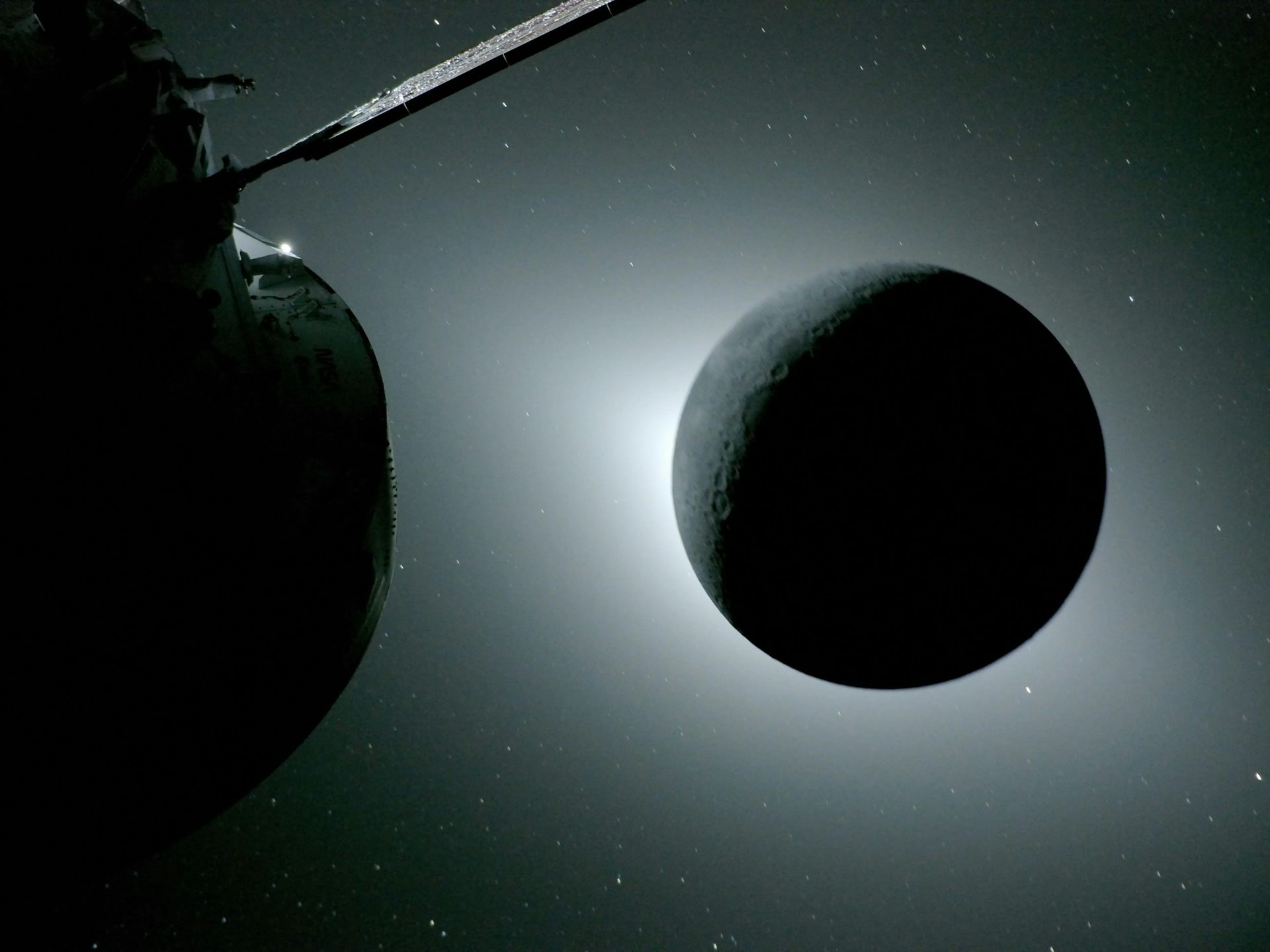
On April 6, 2026, the astronauts of NASA’s Artemis II mission saw another kind of unusual eclipse as they flew around the Moon. At one point during their flight, the Moon and the spacecraft aligned so that the Moon was directly between them and the Sun, blocking the Sun’s disk in a way that looks very different from what we see on Earth.
Pada tanggal 6 April 2026, para astronot misi Artemis II NASA melihat jenis gerhana tidak biasa lainnya saat mereka terbang mengelilingi Bulan. Pada satu titik selama penerbangan mereka, Bulan dan wahana antariksa sejajar sehingga Bulan berada tepat di antara mereka dan Matahari, menghalangi piringan Matahari dengan cara yang sangat berbeda dari apa yang kita lihat di Bumi.
Astronaut Victor Glover said it felt like they “just went sci-fi.”
Astronot Victor Glover mengatakan rasanya seperti mereka “baru saja masuk ke fiksi ilmiah.”
The astronauts were so close to the Moon that the Moon looked bigger than the Sun and hid more of its bright circle. Earth was also in view, and sunlight reflected from the Earth onto the Moon in a phenomenon NASA calls “earthshine.” This dim light is very similar to the moonlight that shines on the Earth at night.
Para astronot begitu dekat dengan Bulan sehingga Bulan tampak lebih besar dari Matahari dan menyembunyikan lebih banyak lingkaran cerahnya. Bumi juga terlihat, dan sinar matahari yang dipantulkan dari Bumi ke Bulan dalam fenomena yang disebut NASA “earthshine” (sinar bumi) . Cahaya redup ini sangat mirip dengan cahaya bulan yang bersinar di Bumi pada malam hari.
Imagine the Sun hidden behind the Moon, creating a hazy halo around the Moon’s edges. At the same time, faint light reflected from Earth softly illuminates the Moon, revealing mountains and craters in a dim twilight. Now imagine this striking scene lasting 54 minutes.
Bayangkan Matahari tersembunyi di balik Bulan, menciptakan halo berkabut di sekitar tepi Bulan. Pada saat yang sama, cahaya samar yang dipantulkan dari Bumi dengan lembut menerangi Bulan, memperlihatkan gunung dan kawah dalam senja yang redup. Sekarang bayangkan pemandangan mencolok ini berlangsung selama 54 menit.
This sight was, without a doubt, one of the most unusual eclipses ever seen by human eyes.
Pemandangan ini, tanpa diragukan lagi, adalah salah satu gerhana paling tidak biasa yang pernah dilihat oleh mata manusia.
Although Artemis’ astronauts are trained to think scientifically, this experience propelled them into a state of awe. They talked openly about how their brains were “not processing” what they observed. While NASA kept them busy with a variety of tasks, the sound of emotion and excitement in their voices as they broadcast live from their lunar flyby was unmistakable.
Meskipun para astronot Artemis dilatih untuk berpikir secara ilmiah, pengalaman ini mendorong mereka ke dalam keadaan kekaguman. Mereka berbicara secara terbuka tentang bagaimana otak mereka “tidak memproses” apa yang mereka amati. Sementara NASA membuat mereka sibuk dengan berbagai tugas, suara emosi dan kegembiraan dalam suara mereka saat mereka menyiarkan langsung dari penerbangan bulan mereka tidak dapat disangkal.
The psychology of awe
Psikologi kekaguman
Researchers have studied the effects of awe on the human brain, including awe felt during solar eclipses. Moments of wonder like these can transform how you feel and even how you think, making you more thoughtful and open-minded.
Para peneliti telah mempelajari efek kekaguman pada otak manusia, termasuk kekaguman yang dirasakan selama gerhana matahari. Momen-momen keajaiban seperti ini dapat mengubah cara Anda merasa dan bahkan cara Anda berpikir, membuat Anda lebih bijaksana dan berpikiran terbuka.
In my own work I’ve found these experiences can change how astronauts understand their own place in the universe.
Dalam pekerjaan saya sendiri, saya menemukan bahwa pengalaman-pengalaman ini dapat mengubah cara para astronot memahami tempat mereka sendiri di alam semesta.
One astronaut said she gained an awareness of the fragility of our planet that now shapes everything she does, while another described becoming more curious after returning to Earth. A third said the awe he experienced in lunar orbit changed his understanding of time and infinity.
Seorang astronot mengatakan bahwa dia memperoleh kesadaran akan kerapuhan planet kita yang kini membentuk segala yang dia lakukan, sementara yang lain menggambarkan menjadi lebih ingin tahu setelah kembali ke Bumi. Yang ketiga mengatakan bahwa kekaguman yang dia alami di orbit bulan mengubah pemahamannya tentang waktu dan tak terhingga.
Space travel creates many opportunities for awe, but a solar eclipse from behind the Moon, as Mission Commander Reid Wiseman put it, required “20 new superlatives.”
Perjalanan antariksa menciptakan banyak peluang untuk kekaguman, tetapi gerhana matahari dari belakang Bulan, seperti yang dikatakan Komandan Misi Reid Wiseman, membutuhkan “20 superlatif baru.”
It’s an experience most of the earthbound eclipse-chasers heading to Greenland or Iceland or Spain this summer will only dream about. Whether eclipses happen in space or on Earth, though, close encounters with the grandeur of our universe can make you feel profoundly human.
Ini adalah pengalaman yang hanya akan diimpikan oleh sebagian besar pemburu gerhana yang berada di Bumi yang menuju Greenland atau Islandia atau Spanyol musim panas ini. Meskipun demikian, apakah gerhana terjadi di luar angkasa atau di Bumi, pertemuan dekat dengan keagungan alam semesta kita dapat membuat Anda merasa sangat manusiawi.
Deana L. Weibel is currently working on a project with funding from the National Air and Space Museum’s Aviation Space Writers Foundation Award. She has published a book, The Ultraview Effect: What We Can Learn from Astronauts about Awe, Humility, and Exploring the Unknown, with the University of California Press.
Deana L. Weibel saat ini mengerjakan sebuah proyek dengan dana dari Penghargaan Yayasan Penulis Antariksa Penerbangan Museum Nasional Udara dan Antariksa. Dia telah menerbitkan sebuah buku, The Ultraview Effect: What We Can Learn from Astronauts about Awe, Humility, and Exploring the Unknown, dengan University of California Press.
Read more
-

Panggilan Trump untuk memperluas perjanjian Abraham ditakdirkan untuk gagal
Trump’s call to expand Abraham accords is destined to fail
-

America di 250: kaum Inggris yang mendukung Perang Kemerdekaan
America at 250: the Britons who supported the War of Independence