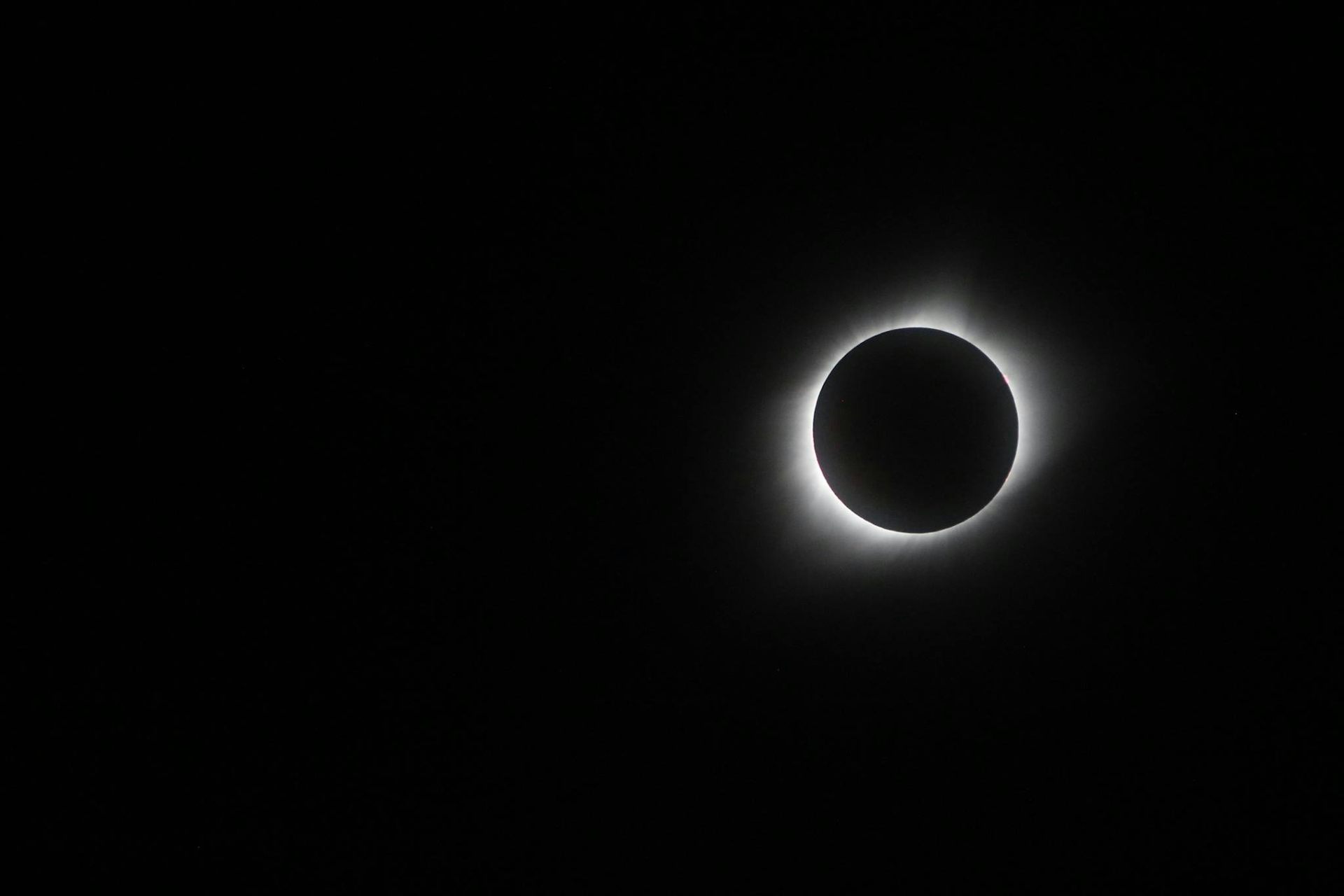
Ver un eclipse desde la Tierra es sobrecogedor; para los astronautas verlo desde el espacio, la escena fue aún más grandiosa.
Seeing an eclipse from Earth is awe-inspiring – for astronauts seeing one from space, the scene was even more grand
Astronauts report feeling profoundly awestruck when they go to space, an anthropologist reports. This experience shapes their perspectives even back on Earth.
Los astronautas reportan sentirse profundamente asombrados cuando van al espacio, informa un antropólogo. Esta experiencia moldea sus perspectivas incluso de vuelta en la Tierra.
The astronauts on Artemis II’s trip to the Moon in April 2026 didn’t just have an amazing journey through space. They also saw something extraordinary. They were the first humans to see a total solar eclipse from space.
Los astronautas en el viaje de Artemis II a la Luna en abril de 2026 no solo tuvieron un viaje increíble por el espacio. También vieron algo extraordinario. Fueron los primeros humanos en ver un eclipse solar total desde el espacio.
A solar eclipse happens when the Moon moves in front of the Sun. In a total eclipse, the Sun’s central disc is covered completely.
Un eclipse solar ocurre cuando la Luna se interpone entre el Sol y la Tierra. En un eclipse total, el disco central del Sol queda cubierto por completo.
From Earth, the circle of the Sun is about the same size as the circle of the Moon. With the bright circle blocked, you can see the undulating rays of the Sun’s corona, or outer atmosphere, that are normally too dim to be observed.
Desde la Tierra, el círculo del Sol es de tamaño similar al círculo de la Luna. Con el círculo brillante bloqueado, se pueden ver los rayos ondulantes de la corona del Sol, o atmósfera exterior, que normalmente son demasiado tenues para ser observados.

I’m a cultural anthropologist who studies awe-inspiring aspects of space exploration. I have been lucky enough to have seen two total solar eclipses. The first one was in Nebraska in 2017, the second in Indiana in 2024.
Soy antropólogo cultural y estudio los aspectos sobrecogedores de la exploración espacial. He tenido la suerte de haber visto dos eclipses solares totales. El primero fue en Nebraska en 2017, el segundo en Indiana en 2024.
During my second total eclipse, the period of totality – that short span when you can remove your protective glasses and look directly at the eclipse – lasted close to 4 minutes. I saw waves of diffuse light snaking around an ink-black hole in the sky. It looked very wrong – almost alien.
Durante mi segundo eclipse total, el período de totalidad – ese breve lapso en el que se pueden quitar las gafas protectoras y mirar directamente al eclipse – duró cerca de 4 minutos. Vi ondas de luz difusa serpenteando alrededor de un agujero de tinta negra en el cielo. Se veía muy extraño, casi alienígena.
On Aug. 12, 2026, there will be another total solar eclipse, visible only from Greenland, Iceland, Spain and the Balearic Islands of the Mediterranean. Some fortunate viewers in Spain and nearby islands may see the eclipse just before sunset, low on the horizon. The Moon illusion, a phenomenon where the Moon looks bigger when it’s near the horizon, might make this eclipse look unusually large.
El 12 de agosto de 2026, habrá otro eclipse solar total, visible solo desde Groenlandia, Islandia, España y las Islas Baleares del Mediterráneo. Algunos espectadores afortunados en España y las islas cercanas podrían ver el eclipse justo antes del atardecer, bajo en el horizonte. La ilusión lunar, un fenómeno por el cual la Luna parece más grande cuando está cerca del horizonte, podría hacer que este eclipse parezca inusualmente grande.
Unusual eclipse perspectives
Perspectivas inusuales de eclipse
Astronauts will occasionally also have less common eclipse experiences. I interviewed one I call by the pseudonym “Jackie” in my research about astronauts’ experiences of awe. She was part of an astronaut training group that did a flight exercise during a total solar eclipse.
Los astronautas ocasionalmente también tienen experiencias de eclipse menos comunes. Entrevisté a una, a quien llamo por el seudónimo de “Jackie”, en mi investigación sobre las experiencias de asombro de los astronautas. Ella formó parte de un grupo de entrenamiento de astronautas que realizó un ejercicio de vuelo durante un eclipse solar total.
Jackie and her squad flew their jets in the shadow of the Moon. This lengthened their time in totality because they could follow and stay within the shadow. Jackie was most impressed with how the Sun’s corona seemed to shift and ripple.
Jackie y su escuadrón volaron sus aviones en la sombra de la Luna. Esto prolongó su tiempo en totalidad porque pudieron seguir y permanecer dentro de la sombra. Jackie quedó más impresionada con cómo parecía moverse y ondular la corona del Sol.
“It’s not static … it’s alive,” she told me.
“No es estático… está vivo”, me dijo.
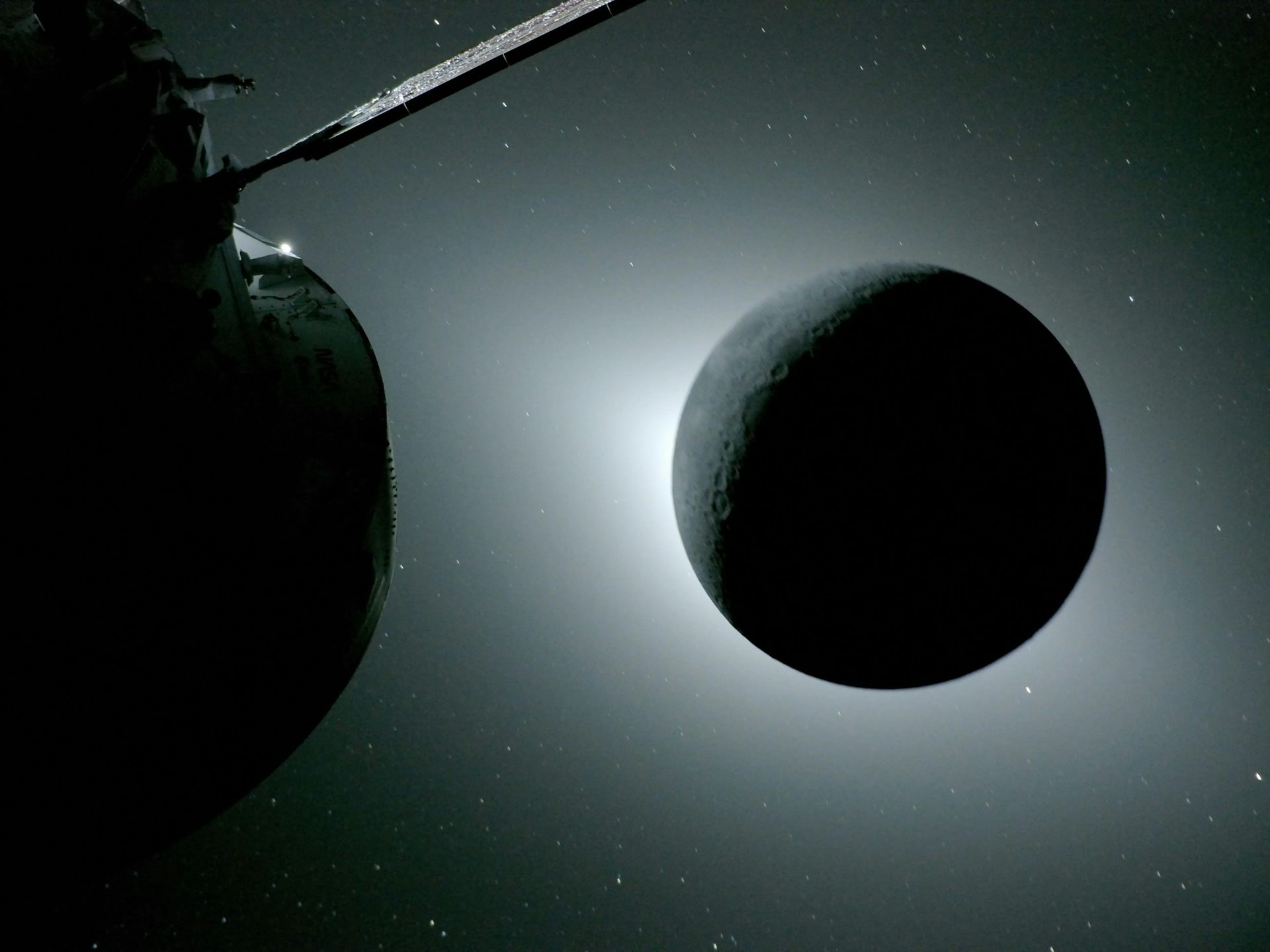
On April 6, 2026, the astronauts of NASA’s Artemis II mission saw another kind of unusual eclipse as they flew around the Moon. At one point during their flight, the Moon and the spacecraft aligned so that the Moon was directly between them and the Sun, blocking the Sun’s disk in a way that looks very different from what we see on Earth.
El 6 de abril de 2026, los astronautas de la misión Artemis II de la NASA vieron otro tipo de eclipse inusual mientras volaban alrededor de la Luna. En un momento de su vuelo, la Luna y la nave espacial se alinearon de manera que la Luna estuvo directamente entre ellos y el Sol, bloqueando el disco solar de una manera muy diferente a lo que vemos en la Tierra.
Astronaut Victor Glover said it felt like they “just went sci-fi.”
El astronauta Victor Glover dijo que se sintió como si “acabaran de entrar en ciencia ficción”.
The astronauts were so close to the Moon that the Moon looked bigger than the Sun and hid more of its bright circle. Earth was also in view, and sunlight reflected from the Earth onto the Moon in a phenomenon NASA calls “earthshine.” This dim light is very similar to the moonlight that shines on the Earth at night.
Los astronautas estuvieron tan cerca de la Luna que esta parecía más grande que el Sol y ocultó más de su brillante círculo. La Tierra también estuvo a la vista, y la luz solar reflejada desde la Tierra sobre la Luna en un fenómeno que la NASA llama “brillo terrestre” (earthshine) . Esta luz tenue es muy similar a la luz de luna que brilla sobre la Tierra por la noche.
Imagine the Sun hidden behind the Moon, creating a hazy halo around the Moon’s edges. At the same time, faint light reflected from Earth softly illuminates the Moon, revealing mountains and craters in a dim twilight. Now imagine this striking scene lasting 54 minutes.
Imagina el Sol oculto detrás de la Luna, creando un halo brumoso alrededor de los bordes lunares. Al mismo tiempo, una luz tenue reflejada desde la Tierra ilumina suavemente la Luna, revelando montañas y cráteres en un crepúsculo tenue. Ahora imagina que esta impactante escena dura 54 minutos.
This sight was, without a doubt, one of the most unusual eclipses ever seen by human eyes.
Esta vista fue, sin duda, uno de los eclipses más inusuales jamás vistos por los ojos humanos.
Although Artemis’ astronauts are trained to think scientifically, this experience propelled them into a state of awe. They talked openly about how their brains were “not processing” what they observed. While NASA kept them busy with a variety of tasks, the sound of emotion and excitement in their voices as they broadcast live from their lunar flyby was unmistakable.
Aunque los astronautas de Artemis están entrenados para pensar científicamente, esta experiencia los llevó a un estado de asombro. Hablaron abiertamente de cómo sus cerebros no estaban “procesando” lo que observaban. Mientras la NASA los mantenía ocupados con una variedad de tareas, el sonido de la emoción y la excitación en sus voces mientras transmitían en vivo desde su sobrevuelo lunar fue inconfundible.
The psychology of awe
La psicología del asombro
Researchers have studied the effects of awe on the human brain, including awe felt during solar eclipses. Moments of wonder like these can transform how you feel and even how you think, making you more thoughtful and open-minded.
Los investigadores han estudiado los efectos del asombro en el cerebro humano, incluido el asombro sentido durante los eclipses solares. Momentos de maravilla como estos pueden transformar cómo te sientes e incluso cómo piensas, haciéndote más reflexivo y de mente abierta.
In my own work I’ve found these experiences can change how astronauts understand their own place in the universe.
En mi propio trabajo he descubierto que estas experiencias pueden cambiar la forma en que los astronautas entienden su propio lugar en el universo.
One astronaut said she gained an awareness of the fragility of our planet that now shapes everything she does, while another described becoming more curious after returning to Earth. A third said the awe he experienced in lunar orbit changed his understanding of time and infinity.
Una astronauta dijo que adquirió una conciencia de la fragilidad de nuestro planeta que ahora moldea todo lo que hace, mientras que otra describió volverse más curiosa después de regresar a la Tierra. Un tercero dijo que el asombro que experimentó en órbita lunar cambió su comprensión del tiempo y el infinito.
Space travel creates many opportunities for awe, but a solar eclipse from behind the Moon, as Mission Commander Reid Wiseman put it, required “20 new superlatives.”
Los viajes espaciales crean muchas oportunidades para el asombro, pero un eclipse solar visto desde detrás de la Luna, como lo expresó el comandante de misión Reid Wiseman, requirió “20 nuevos superlativos”.
It’s an experience most of the earthbound eclipse-chasers heading to Greenland or Iceland or Spain this summer will only dream about. Whether eclipses happen in space or on Earth, though, close encounters with the grandeur of our universe can make you feel profoundly human.
Es una experiencia que la mayoría de los cazadores de eclipses terrestres que viajan a Groenlandia, Islandia o España este verano solo podrán soñar. Sin embargo, ya sea que los eclipses ocurran en el espacio o en la Tierra, los encuentros cercanos con la grandeza de nuestro universo pueden hacerte sentir profundamente humano.
Deana L. Weibel is currently working on a project with funding from the National Air and Space Museum’s Aviation Space Writers Foundation Award. She has published a book, The Ultraview Effect: What We Can Learn from Astronauts about Awe, Humility, and Exploring the Unknown, with the University of California Press.
Deana L. Weibel está trabajando actualmente en un proyecto financiado por el Premio de la Fundación de Escritores de Aviación Espacial del Museo Nacional de Aire y Espacio. Ha publicado un libro, The Ultraview Effect: What We Can Learn from Astronauts about Awe, Humility, and Exploring the Unknown, con la University of California Press.
Read more
-

‘Una civilización entera morirá esta noche’: La amenaza de genocidio de Trump contra Irán fue otro nuevo mínimo para América
‘A whole civilisation will die tonight’: Trump’s genocide threat against Iran was another new low for America
-
Nuestro estudio examinó el comportamiento en redes sociales de los adolescentes en 43 países: aquellos de entornos desfavorecidos enfrentan mayores daños.
Our study looked at teens’ social media behaviour in 43 countries – those from disadvantaged backgrounds face greater harms