Por que os EUA são tão obcecados em controlar Cuba?
Why is the US so obsessed with controlling Cuba?
Nothing angers Cubans more than being told by Americans how to run their country.
Nada enfurece os cubanos mais do que serem informados pelos americanos como administrar seu país.
For months, US President Donald Trump has been fixated on Cuba. He’s issued threats and imposed additional sanctions on the island. The US military has conducted dozens of intelligence-gathering flights off the coast in recent weeks, suggesting a prelude to an invasion.
Por meses, o presidente dos EUA, Donald Trump, tem se fixado em Cuba. Ele emitiu ameaças e impôs sanções adicionais à ilha. O exército dos EUA realizou dezenas de voos de coleta de inteligência ao longo da costa nas últimas semanas, sugerindo um prelúdio a uma invasão.
The Cuban government has indicated a readiness to negotiate with the Trump administration on some issues, such as migration, drug trafficking and investment openings for Cuban-Americans. But Cuba’s sovereignty is not negotiable.
O governo cubano indicou uma disposição para negociar com a administração Trump sobre algumas questões, como migração, tráfico de drogas e aberturas de investimento para cubano-americanos. Mas a soberania de Cuba não é negociável.
After interviewing Cuban President Miguel Díaz-Canel last month, US journalist Kristen Welker seemed to catch on:
Após entrevistar o presidente cubano Miguel Díaz-Canel no mês passado, o jornalista americano Kristen Welker pareceu entender:
Nothing gets under [Cubans’] skin more than the notion that the United States can tell the Cuban government who should lead it or what it should be doing, how it should be governing, because that challenges the very idea of the sovereignty of the country.
Nada incomoda mais os [cubanos] do que a noção de que os Estados Unidos podem dizer ao governo cubano quem deve liderá-lo ou o que ele deve fazer, como ele deve governar, porque isso desafia a própria ideia da soberania do país.
This US obsession with controlling, influencing and coercing Cuba long predates Trump and even the Cold War. This is how President Theodore Roosevelt described the island in 1906:
Essa obsessão dos EUA em controlar, influenciar e coagir Cuba antecede Trump e até mesmo a Guerra Fria. Foi assim que o presidente Theodore Roosevelt descreveu a ilha em 1906:
I am so angry with that infernal little Cuban republic that I would like to wipe its people off the face of the earth. All we have wanted from them was that they would behave themselves and be prosperous and happy so that we would not have to interfere. And now, lo and behold, they have started an utterly unjustifiable and pointless revolution.
Estou tão irritado com aquela pequena e infernal república cubana que gostaria de apagar seu povo do rosto da terra. Tudo o que desejamos deles foi que eles se comportassem e fossem prósperos e felizes para que não tivéssemos que interferir. E agora, eis que eles começaram uma revolução totalmente injustificável e sem sentido.
Understanding the current impasse between the two adversarial neighbours requires looking at this full arc of history. While the 1823 Monroe Doctrine sought to establish US predominance in the entire American continent, Cuba has always been a particular focus of Washington’s attention.
Compreender o impasse atual entre os dois vizinhos adversários exige olhar para todo esse arco da história. Enquanto a Doutrina Monroe de 1823 buscou estabelecer a predominância dos EUA em todo o continente americano, Cuba sempre foi um foco particular da atenção de Washington.
‘Americanisation’ of the island
‘Americanização’ da ilha
From the moment the 13 American colonies declared independence from Britain, Americans assumed Cuba would become part of the union. Successive US administrations sought to purchase, annex or otherwise control Cuba, claiming this was inevitable by virtue of the laws of gravity and geography. It was also seen as part of a self-proclaimed “civilising mission”.
Desde o momento em que as 13 colônias americanas declararam independência da Grã-Bretanha, os americanos presumiram que Cuba faria parte da união. As administrações dos EUA sucessivas buscaram comprar, anexar ou controlar Cuba de alguma forma, alegando que isso era inevitável em virtude das leis da gravidade e da geografia. Também foi visto como parte de uma “missão civilizadora” autoproclamada.
When the Cubans eventually defeated their Spanish colonial masters in 1898, the United States stepped in and occupied the island to thwart its independence.
Quando os cubanos derrotaram seus mestres coloniais espanhóis em 1898, os Estados Unidos intervieram e ocuparam a ilha para frustrar sua independência.
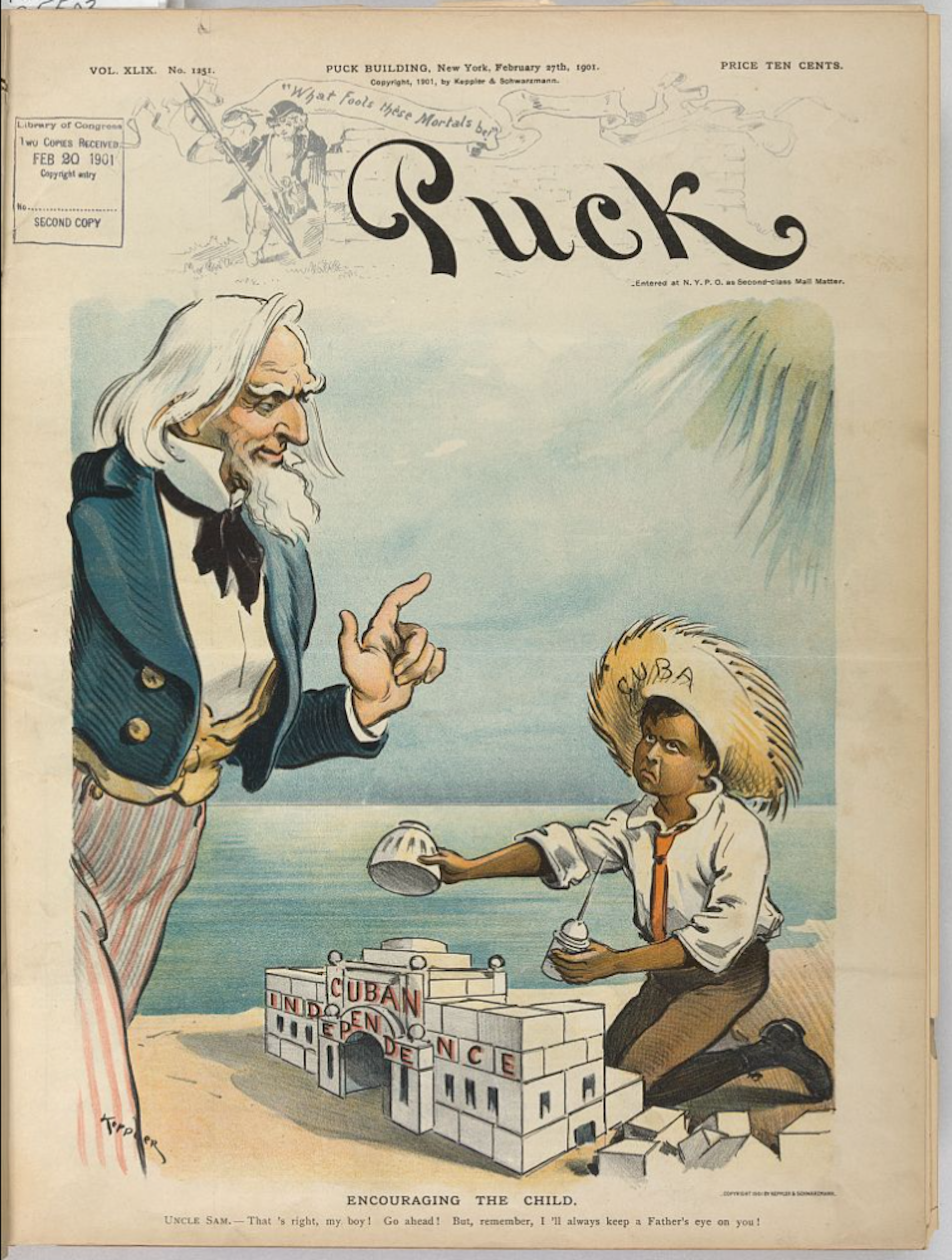
At the time, at least one third of Cubans were former slaves or of mixed race. The US governor of Cuba, Leonard Wood, argued they were not ready for self-government.
Na época, pelo menos um terço dos cubanos eram ex-escravos ou de raça mista. O governador dos EUA em Cuba, Leonard Wood, argumentou que eles não estavam prontos para o autogoverno.
Certainly, the US – especially the Southern former slave holders – didn’t want another Haiti in its neighbourhood. Haitian slaves had seized control of their island nation from the French in a violent rebellion in 1804, echoing the cries of the French revolution for liberty, fraternity and equality.
Certamente, os EUA – especialmente os antigos proprietários de escravos do Sul – não queriam outro Haiti em seu bairro. Os escravos haitianos haviam tomado o controle de sua nação insular dos franceses em uma rebelião violenta em 1804, ecoando os gritos da revolução francesa por liberdade, fraternidade e igualdade.
The US military occupation of Cuba ended in 1902 and Cuba formally declared independence – albeit with provisions. These allowed for future US intervention whenever Washington thought the Cuban people needed a guiding hand (which turned out to be fairly often) .
A ocupação militar dos EUA em Cuba terminou em 1902 e Cuba declarou formalmente sua independência – embora com algumas disposições. Estas permitiram futuras intervenções dos EUA sempre que Washington pensava que o povo cubano precisava de uma mão guia (o que acabou acontecendo com bastante frequência) .
In the decades that followed, US business interests deeply penetrated every sector of Cuba’s economy and had complete sway over Cuban governments.
Nas décadas seguintes, os interesses comerciais dos EUA penetraram profundamente em todos os setores da economia de Cuba e tiveram domínio completo sobre os governos cubanos.
On a cultural level, Cuba rapidly became “Americanised” through a new US-style education system. Travel to the island picked up, too. The popular Terry’s Guide to Cuba reassured US visitors in the 1920s they would feel right at home because “thousands [of Cubans] act, think, talk and look like Americans”.
Em nível cultural, Cuba se tornou rapidamente “americanizada” através de um novo sistema educacional no estilo dos EUA. As viagens para a ilha também aumentaram. O popular Guia de Terry sobre Cuba tranquilizou os visitantes dos EUA na década de 1920 de que eles se sentiriam em casa porque “milhares [de cubanos] agem, pensam, falam e parecem americanos”.
Castro’s mission
A missão de Castro
All of this changed with the rise of Fidel Castro.
Tudo isso mudou com a ascensão de Fidel Castro.
During the Cuban Revolution, Castro announced in April 1959 that the revolutionary government would be “Cubanising Cuba”. This might seem “paradoxical”, he explained, but Cubans “undervalued” everything Cuban. They had become “imbued with a type of complex of self-doubt” in the face of the overwhelming US influence on the island’s culture, politics and economy.
Durante a Revolução Cubana, Castro anunciou em abril de 1959 que o governo revolucionário seria “cubanizar Cuba”. Isso pode parecer “paradoxal”, ele explicou, mas os cubanos “subestimaram” tudo o que era cubano. Eles se tornaram “imbuídos de um tipo de complexo de dúvida” diante da influência avassaladora dos EUA na cultura, política e economia da ilha.
US journalist Elizabeth Sutherland similarly observed at the time that Cubans suffered from a “cultural inferiority complex typical of colonised peoples”.
A jornalista americana Elizabeth Sutherland observou de forma semelhante na época que os cubanos sofriam de um “complexo de inferioridade cultural típico dos povos colonizados”.
For North Americans, however, Castro’s blunt statement seemed at best to reflect ingratitude, and at worst, an insult. As the US broadcaster Walter Cronkite recalled:
Para os norte-americanos, no entanto, a declaração franca de Castro pareceu, na melhor das hipóteses, refletir ingratidão, e na pior, um insulto. Como recordou o locutor americano Walter Cronkite:
The rise of Fidel Castro in Cuba was a terrible shock to the American people. This brought communism practically to our shores. Cuba was a resort land for Americans […] we considered it part of the United States.
A ascensão de Fidel Castro na Cuba foi um choque terrível para o povo americano. Isso trouxe o comunismo praticamente às nossas costas. Cuba era uma terra de resort para os americanos […] nós a considerávamos parte dos Estados Unidos.
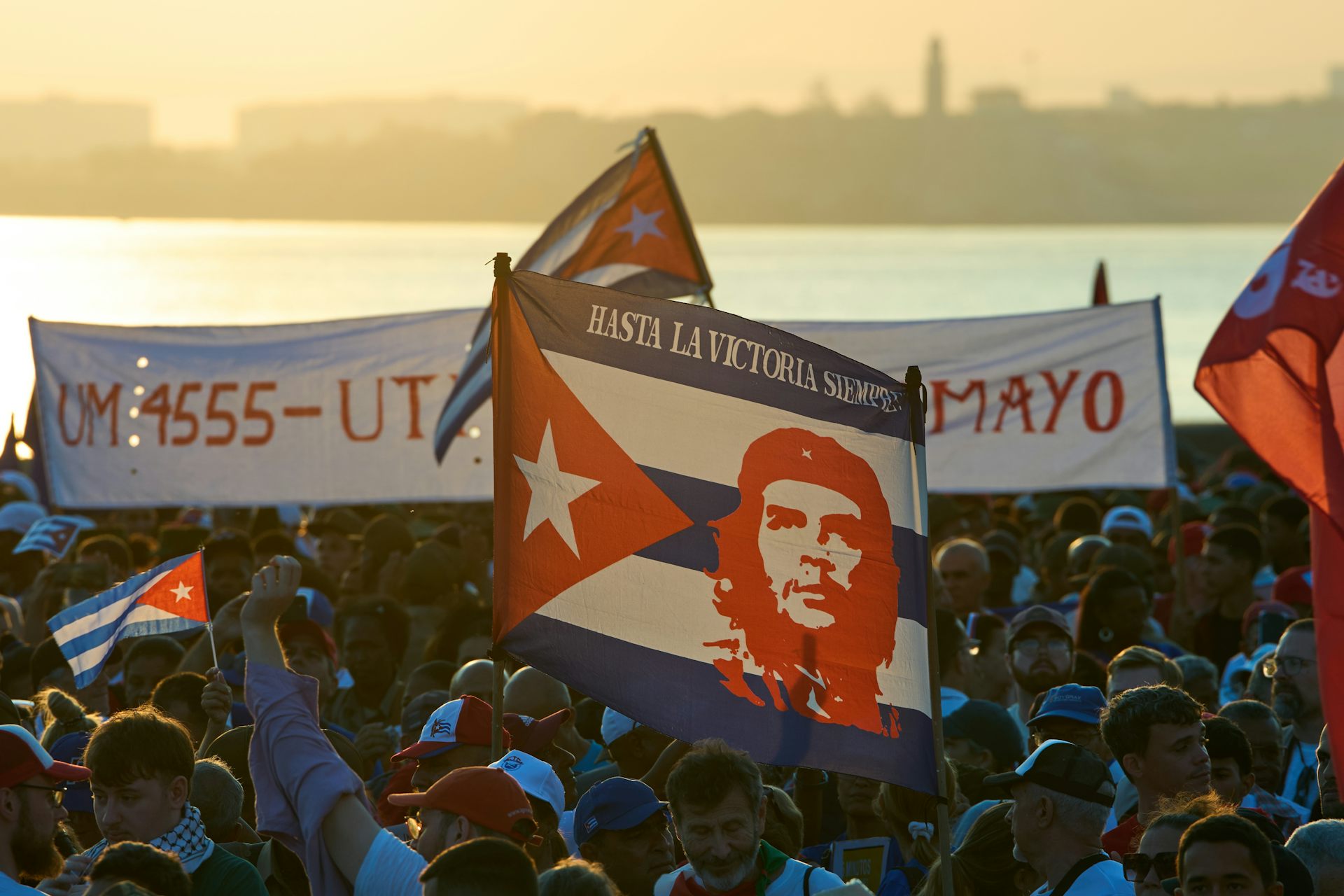
At the heart of Cuba’s revolutionary project has been an assertion of Cuba’s sovereignty, independence and national identity. The drive has been to create a new, united and socially just Cuban nation, as envisioned by its great national hero and poet, José Martí.
No centro do projeto revolucionário da Cuba tem sido uma afirmação da soberania, independência e identidade nacional da Cuba. O impulso tem sido criar uma nova nação cubana unida e socialmente justa, como imaginado por seu grande herói nacional e poeta, José Martí.
So, for Cubans it’s a matter of history. For North Americans, it’s a matter of self-image. They had “convinced themselves,” writes historian Louis A. Pérez, of the “beneficent purpose […] from which [the US] derived the moral authority to presume power over Cuba”.
Portanto, para os cubanos, é uma questão de história. Para os norte-americanos, é uma questão de autoimagem. Eles “se convenceram”, escreve o historiador Louis A. Pérez, do “propósito beneficente […] do qual [os EUA] derivaram a autoridade moral para presumir poder sobre Cuba”.
When the Obama administration finally resumed relations with Cuba in 2014, it felt like a historic shift was taking place. The US might finally respect Cuban sovereignty and engage with Cuba on equal terms.
Quando a administração Obama finalmente retomou as relações com Cuba em 2014, sentiu-se como se uma mudança histórica estivesse ocorrendo. Os EUA poderiam finalmente respeitar a soberania cubana e se engajar com Cuba em pé de igualdade.
As President Barack Obama said at the time:
Como o presidente Barack Obama disse na época:
It does not serve America’s interests, or the Cuban people, to try to push Cuba toward collapse. […] We can never erase the history between us, but we believe that you should be empowered to live with dignity and self-determination.
Não serve aos interesses da América, nem ao povo cubano, tentar empurrar Cuba ao colapso. […] Nunca podemos apagar a história entre nós, mas acreditamos que vocês devem ser capacitados a viver com dignidade e autodeterminação.
Trump has now reverted to Washington’s traditional neo-colonialist view of Cuba, proclaiming he can do what he likes with the island. Perhaps it is time to try a new approach. As the spectacular debacle of the US-backed Bay of Pigs invasion showed 65 years ago, Cubans remain ready to defend their independence and their right to determine their own future.
Trump agora voltou à visão neocolonialista tradicional de Washington sobre Cuba, proclamando que pode fazer o que quiser com a ilha. Talvez seja hora de tentar uma nova abordagem. Como o espetacular desastre da invasão da Baía dos Porcos, apoiada pelos EUA, mostrou há 65 anos, os cubanos permanecem prontos para defender sua independência e seu direito de determinar seu próprio futuro.
Deborah Shnookal does not work for, consult, own shares in or receive funding from any company or organisation that would benefit from this article, and has disclosed no relevant affiliations beyond their academic appointment.
Deborah Shnookal não trabalha para, não consulta, não possui ações em ou não recebe financiamento de qualquer empresa ou organização que se beneficiaria deste artigo, e não divulgou afiliações relevantes além de sua nomeação acadêmica.
Read more
-

Medicamentos para perda de peso, como o Ozempic, podem funcionar também para vícios – e finalmente sabemos como
Weight-loss drugs like Ozempic could work for addiction too – and we finally know how
-
Chifre de rinoceronte: por que a África do Sul quer reviver o comércio internacional e por que os críticos temem as consequências
Rhino horn: why South Africa wants to revive the international trade, and why critics fear the consequences