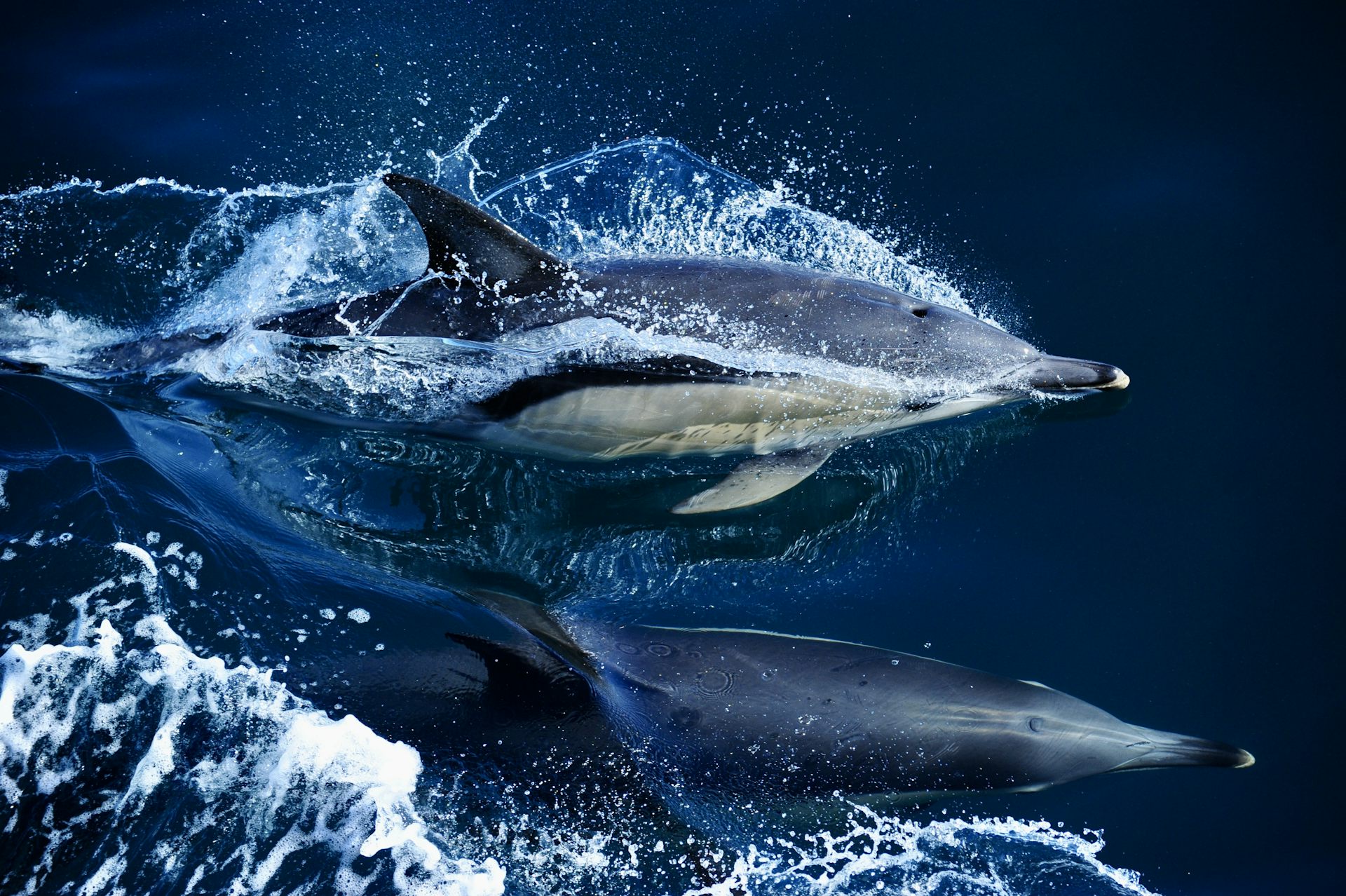
डॉल्फ़िन और व्हेल में ‘हमेशा के लिए रसायनों’ का स्तर वैश्विक स्तर पर बढ़ रहा है।
Levels of ‘forever chemicals’ in dolphins and whales are rising globally
Nowhere is safe from forever chemical pollution – not even the middle of the ocean. PFAS levels are on the rise in the world’s whales and dolphins.
हमेशा के लिए रासायनिक प्रदूषण से कहीं भी सुरक्षित नहीं है – यहाँ तक कि समुद्र का मध्य भाग भी नहीं। दुनिया की व्हेल और डॉल्फ़िन में PFAS का स्तर बढ़ रहा है।
Whales and dolphins inhabit some of the largest and seemingly most pristine environments on Earth, from tropical coastlines to Antarctic waters. Yet even they cannot escape PFAS – persistent “forever chemicals” that leak from our homes, factories and waterways into the sea.
व्हेल और डॉल्फ़िन पृथ्वी पर सबसे बड़े और प्रतीत होने वाले सबसे स्वच्छ वातावरण में निवास करते हैं, जो उष्णकटिबंधीय तटरेखाओं से लेकर अंटार्कटिक जल तक फैले हुए हैं। फिर भी वे भी पीएएफएस (PFAS) से बच नहीं सकते – ये स्थायी “हमेशा के लिए रसायन” हैं जो हमारे घरों, कारखानों और जलमार्गों से समुद्र में रिसते हैं।
Forever chemicals are the secret ingredients in our non-stick pans, waterproof jackets and stain-resistant carpets. These chemicals belong to a group of more than 1,400 compounds known as PFAS (per- and polyfluoroalkyl substances) . They enter the environment through manufacturing waste, industrial runoff, wastewater treatment plants and firefighting foams. But once these chemicals escape our homes and factories, they become almost impossible to get rid of. Washed into waterways, they make their way to the sea.
हमारा नॉन-स्टिक पैन, वाटरप्रूफ जैकेट और दाग प्रतिरोधी कालीन इन हमेशा के लिए रसायनों में गुप्त सामग्री होते हैं। ये रसायन पीएएफएस (पर-एंड पॉलीफ्लोरोअल्काइल सबस्टैंसेज) नामक 1,400 से अधिक यौगिकों के समूह से संबंधित हैं। ये विनिर्माण अपशिष्ट, औद्योगिक बहाव, अपशिष्ट जल उपचार संयंत्रों और अग्निशमन झाग के माध्यम से पर्यावरण में प्रवेश करते हैं। लेकिन एक बार जब ये रसायन हमारे घरों और कारखानों से बाहर निकल जाते हैं, तो इन्हें हटाना लगभग असंभव हो जाता है। जलमार्गों में बहकर, वे समुद्र तक पहुँच जाते हैं।
Small organisms absorb them from the water, fish eat those organisms and larger predators eat the fish. At each step, the chemical load increases. As top predators, whales and dolphins can end up with very high levels in their bodies. Not even deep-diving species living and feeding far from humans are safe.
छोटे जीव इनसे पानी में अवशोषित करते हैं, मछलियाँ उन जीवों को खाती हैं और बड़े शिकारी मछलियों को खाते हैं। हर चरण पर, रासायनिक भार बढ़ता जाता है। शीर्ष शिकारी होने के नाते, व्हेल और डॉल्फ़िन के शरीर में बहुत अधिक स्तर जमा हो सकते हैं। यहाँ तक कि गहरे गोता लगाने वाली प्रजातियाँ भी जो मनुष्यों से दूर रहती हैं और भोजन करती हैं, वे सुरक्षित नहीं हैं।
In our new research, we found PFAS concentrations in cetaceans have increased globally since 2000. Animals in the Pacific Ocean were the most contaminated, with humpback dolphins showing the highest PFAS concentrations.
हमारे नए शोध में, हमें पता चला कि 2000 के बाद से सीटेसियन (समुद्री स्तनधारियों) में पीएएफएस सांद्रता वैश्विक स्तर पर बढ़ी है। प्रशांत महासागर के जानवर सबसे अधिक दूषित थे, जिसमें हंपबैक डॉल्फ़िन ने उच्चतम पीएएफएस सांद्रता दिखाई।
These mammals are sentinels of ocean health. They sit high in the food web, live for many years and are exposed to pollution across large areas of the ocean. When whales and dolphins show signs of chemical exposure, it tells us something is wrong in the wider marine ecosystem.
ये स्तनधारी समुद्री स्वास्थ्य के चौकीदार हैं। ये खाद्य श्रृंखला में उच्च स्थान पर होते हैं, कई वर्षों तक जीवित रहते हैं और समुद्र के बड़े क्षेत्रों में प्रदूषण के संपर्क में आते हैं। जब व्हेल और डॉल्फ़िन रासायनिक संपर्क के लक्षण दिखाते हैं, तो यह हमें बताता है कि व्यापक समुद्री पारिस्थितिकी तंत्र में कुछ गड़बड़ है।
Why are we worried about forever chemicals?
हम स्थायी रसायनों (forever chemicals) के बारे में क्यों चिंतित हैं?
Many of these chemicals have been in use for decades. Their sheer durability and ability to resist heat, oil and water make them very useful.
इनमें से कई रसायन दशकों से उपयोग में हैं। उनकी अत्यधिक टिकाऊपन और गर्मी, तेल तथा पानी का प्रतिरोध करने की क्षमता उन्हें बहुत उपयोगी बनाती है।
Scientists have grown increasingly concerned about them because they persist for decades and build up over time in our own bodies, as well as in wildlife and the broader environment.
वैज्ञानिक इनके बारे में बढ़ती चिंता व्यक्त कर रहे हैं क्योंकि ये दशकों तक बने रहते हैं और समय के साथ हमारे अपने शरीर के साथ-साथ वन्यजीवों और व्यापक पर्यावरण में भी जमा हो जाते हैं।
The key concern is what these chemicals may be doing to the animals that accumulate them.
मुख्य चिंता यह है कि ये रसायन उन जानवरों को क्या नुकसान पहुंचा सकते हैं जो इन्हें जमा करते हैं।
Research in humans and laboratory animals links PFAS to immune suppression, hormonal changes, reproductive problems and developmental effects. But we don’t yet have enough research to understand how different PFAS compounds and levels of exposure affect health.
मनुष्यों और प्रयोगशाला जानवरों पर किए गए शोध PFAS को प्रतिरक्षा दमन (immune suppression) , हार्मोनल परिवर्तनों, प्रजनन संबंधी समस्याओं और विकासात्मक प्रभावों से जोड़ते हैं। लेकिन हम अभी तक पर्याप्त शोध नहीं कर पाए हैं कि विभिन्न PFAS यौगिक और जोखिम के स्तर स्वास्थ्य को कैसे प्रभावित करते हैं।
Understanding these impacts in whales and dolphins is harder still. Marine mammals are long-lived, highly mobile and exposed to many human-made problems at once, from climate change to noise pollution to other contaminants.
व्हेल और डॉल्फ़िन में इन प्रभावों को समझना और भी कठिन है। समुद्री स्तनधारी लंबे समय तक जीवित रहने वाले, अत्यधिक गतिशील होते हैं और एक साथ कई मानव-निर्मित समस्याओं के संपर्क में आते हैं, जिसमें जलवायु परिवर्तन से लेकर ध्वनि प्रदूषण और अन्य संदूषक शामिल हैं।
Even so, there are warning signs. Some dolphin studies have reported changes in immune-related markers associated with PFAS exposure.
फिर भी, चेतावनी के संकेत मौजूद हैं। कुछ डॉल्फ़िन अध्ययनों ने PFAS के संपर्क से जुड़े प्रतिरक्षा संबंधी मार्करों में बदलाव की सूचना दी है।
How do you test a whale for forever chemicals?
व्हेल में ‘फॉरएवर केमिकल्स’ का परीक्षण कैसे किया जाता है?
For humans, testing PFAS levels is usually done with a blood test. It is not as simple for whales and dolphins.
मनुष्यों के लिए, पीएफएएस (PFAS) स्तरों का परीक्षण आमतौर पर रक्त परीक्षण से किया जाता है। व्हेल और डॉल्फ़िन के लिए यह उतना सरल नहीं होता।
It is extremely difficult to take blood samples from large marine mammals in the wild. Scientists often rely on tissue samples from dead animals, particularly from the liver and kidney where many PFAS compounds tend to accumulate. These samples are analysed in specialised laboratories capable of detecting tiny concentrations of individual PFAS compounds.
जंगली बड़े समुद्री स्तनधारियों से रक्त के नमूने लेना अत्यंत कठिन होता है। वैज्ञानिक अक्सर मृत जानवरों से ऊतक (tissue) के नमूनों पर निर्भर रहते हैं, विशेष रूप से यकृत (liver) और गुर्दे (kidney) से, जहाँ कई पीएफएएस यौगिक जमा होने की प्रवृत्ति रखते हैं। इन नमूनों का विश्लेषण विशेष प्रयोगशालाओं में किया जाता है जो व्यक्तिगत पीएफएएस यौगिकों की नगण्य सांद्रता का पता लगाने में सक्षम होती हैं।
This way, scientists have been measuring PFAS in whales and dolphins for decades. Each study added another piece to the puzzle, showing these chemicals were present in different species, populations and oceans.
इस तरह, वैज्ञानिक दशकों से व्हेल और डॉल्फ़िन में पीएफएएस माप रहे हैं। प्रत्येक अध्ययन ने पहेली का एक और टुकड़ा जोड़ा, यह दिखाते हुए कि ये रसायन विभिन्न प्रजातियों, आबादी और महासागरों में मौजूद थे।
Our study took a step back and looked at the global picture.
हमारे अध्ययन ने पीछे मुड़कर वैश्विक तस्वीर को देखा।
We compiled PFAS data from cetaceans worldwide, focusing on liver samples because they are the most commonly available tissue type, allowing us to compare studies across species and regions.
हमने विश्व भर के सीटीसियन्स (cetaceans) से पीएफएएस डेटा संकलित किया, जिसमें यकृत नमूनों पर ध्यान केंद्रित किया क्योंकि वे सबसे अधिक उपलब्ध ऊतक प्रकार हैं, जिससे हमें विभिन्न प्रजातियों और क्षेत्रों में अध्ययनों की तुलना करने की अनुमति मिलती है।
What did we find?
हमें क्या मिला?
We found PFAS contamination differed substantially across species, location, sex, age and time.
हमें पता चला कि पीएफएएस संदूषण प्रजातियों, स्थान, लिंग, आयु और समय के अनुसार काफी भिन्न था।
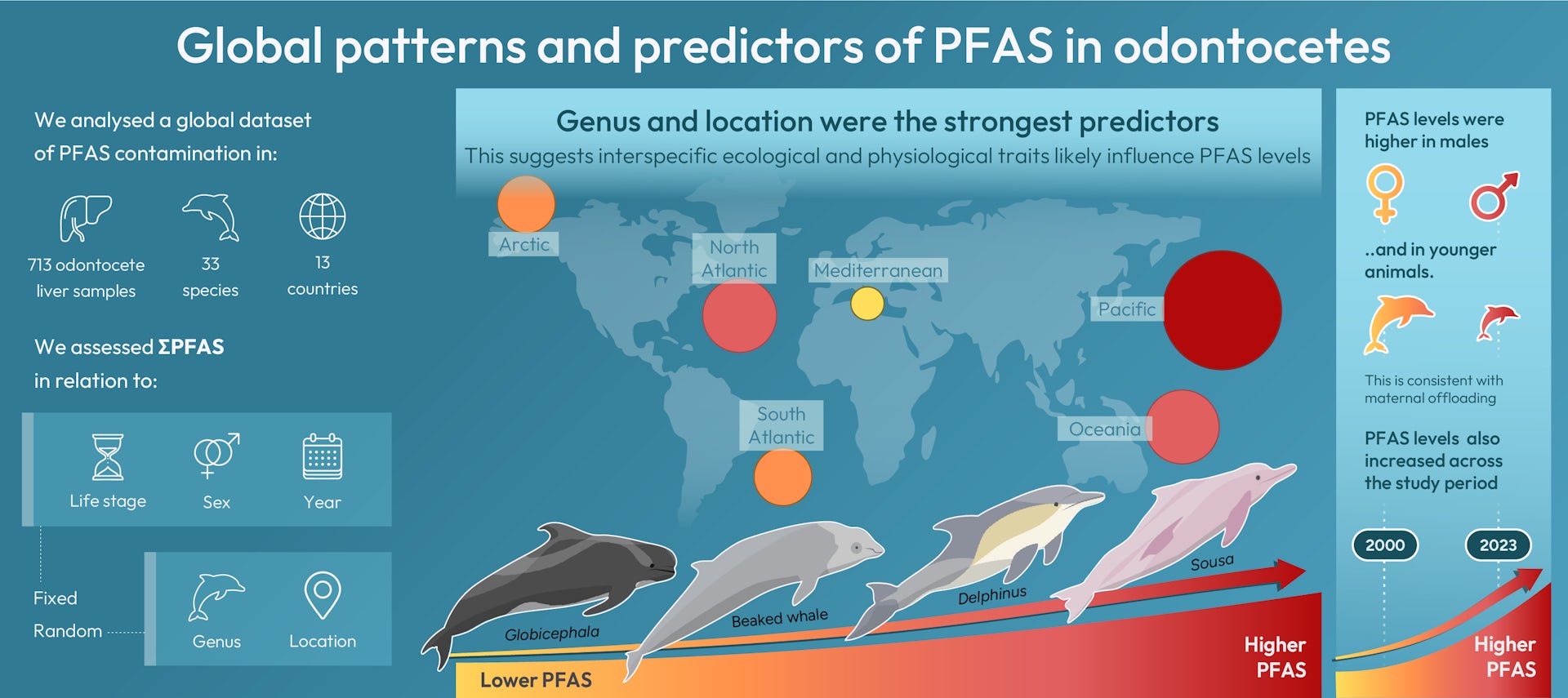
The highest concentrations tended to be found in coastal dolphins and porpoises, suggesting animals living near urban and industrial areas face greater exposure.
सबसे अधिक सांद्रता तटीय डॉल्फ़िन और पोर्पॉइज़ में पाई जाने की प्रवृत्ति थी, जो बताता है कि शहरी और औद्योगिक क्षेत्रों के पास रहने वाले जानवरों को अधिक जोखिम का सामना करना पड़ता है।
Cetaceans in the Pacific had higher levels than other oceans. This is likely due to high industrial activity and the extent of historical PFAS production in coastal regions.
प्रशांत महासागर के सीटीसियन्स में अन्य महासागरों की तुलना में उच्च स्तर था। यह संभवतः उच्च औद्योगिक गतिविधि और तटीय क्षेत्रों में ऐतिहासिक पीएफएएस उत्पादन की सीमा के कारण है।
Female whales and dolphins can transfer forever chemicals during pregnancy and nursing. This means their calves can be exposed to concerning levels of PFAS at a very early age.
मादा व्हेल और डॉल्फ़िन गर्भावस्था और स्तनपान के दौरान ‘हमेशा के लिए रसायन’ स्थानांतरित कर सकती हैं। इसका मतलब है कि उनके शावकों को बहुत कम उम्र में पीएफएएस के चिंताजनक स्तरों के संपर्क में आ सकता है।
Males often end up with higher levels than females overall, as they cannot transfer these chemicals to their young.
कुल मिलाकर, नर अक्सर मादाओं की तुलना में उच्च स्तर के साथ पाए जाते हैं, क्योंकि वे इन रसायनों को अपने बच्चों तक नहीं पहुंचा सकते।
There are some large gaps in the global dataset we collated, which means we don’t fully know the extent of PFAS contamination in cetaceans off India, Indonesia and parts of Africa.
हमने जो वैश्विक डेटासेट संकलित किया है उसमें कुछ बड़े अंतराल हैं, जिसका मतलब है कि हमें भारत, इंडोनेशिया और अफ्रीका के कुछ हिस्सों में सीटीसियन्स में पीएफएएस संदूषण की सीमा पूरी तरह से नहीं पता है।
What should we do?
हम क्या करें?
While important questions remain about the effects of forever chemicals on whales and dolphins, the widespread contamination we observed is a real concern. We need to continue monitoring while strengthening regulations and working to reduce PFAS flows into the environment.
हालांकि व्हेल और डॉल्फ़िन पर “हमेशा के लिए” रसायनों (forever chemicals) के प्रभावों को लेकर महत्वपूर्ण प्रश्न बने हुए हैं, लेकिन हमने जो व्यापक संदूषण देखा है वह एक वास्तविक चिंता का विषय है। हमें निगरानी जारी रखनी होगी, साथ ही नियमों को मजबूत करना होगा और पर्यावरण में PFAS के प्रवाह को कम करने पर काम करना होगा।
History shows global action on harmful chemicals works. After it became clear Earth’s protective ozone layer was being eaten away, nations agreed to phase out the chemicals responsible. The ozone layer is now recovering.
इतिहास दिखाता है कि हानिकारक रसायनों पर वैश्विक कार्रवाई सफल रही है। जब यह स्पष्ट हो गया कि पृथ्वी की सुरक्षात्मक ओजोन परत नष्ट हो रही थी, तो राष्ट्रों ने जिम्मेदार रसायनों को चरणबद्ध तरीके से समाप्त करने पर सहमति व्यक्त की। ओजोन परत अब ठीक हो रही है।
The European Union moved to ban some PFAS compounds 20 years ago. Our study found lower levels of some legacy PFAS compounds in the Mediterranean Sea, a pattern that may reflect the effects of regulation. This is positive, but not sufficient given overall PFAS levels in whales and dolphins have increased globally over time. The EU is now moving to better regulate this class of forever chemicals.
यूरोपीय संघ ने 20 साल पहले कुछ PFAS यौगिकों पर प्रतिबंध लगाने के लिए कदम उठाए थे। हमारे अध्ययन में भूमध्य सागर में कुछ पुराने (legacy) PFAS यौगिकों का निम्न स्तर पाया गया, जो विनियमन के प्रभावों को दर्शाने वाला पैटर्न हो सकता है। यह सकारात्मक है, लेकिन अपर्याप्त है क्योंकि व्हेल और डॉल्फ़िन में समग्र PFAS स्तर समय के साथ वैश्विक रूप से बढ़े हैं। अब यूरोपीय संघ इस प्रकार के “हमेशा के लिए” रसायनों को बेहतर ढंग से विनियमित करने की दिशा में आगे बढ़ रहा है।
Forever chemicals are one of the defining pollution challenges of our time. The more we understand how these chemicals accumulate in whales and dolphins, the better equipped we will be to reduce future contamination and protect marine ecosystems.
“हमेशा के लिए” रसायन हमारे समय की परिभाषित प्रदूषण चुनौतियों में से एक हैं। हम जितना अधिक समझेंगे कि ये रसायन व्हेल और डॉल्फ़िन में कैसे जमा होते हैं, उतना ही बेहतर तरीके से हम भविष्य के संदूषण को कम करने और समुद्री पारिस्थितिक तंत्रों की रक्षा करने के लिए सुसज्जित होंगे।
What ends up in the ocean does not simply disappear. And neither do PFAS.
जो कुछ भी महासागर में जाता है, वह बस गायब नहीं होता। और न ही PFAS।
This article is based on collaborative research that also included Lavinia Stokes (University of Wollongong) , Jesuina de Araujo (National Measurement Institute) and Gavin Stevenson (National Measurement Institute) .
यह लेख सहयोगी शोध पर आधारित है जिसमें लाविनिया स्टोक्स (यूनिवर्सिटी ऑफ वोलोंगोंग) , जेसुइना डी अराउजो (नेशनल मेजरमेंट इंस्टीट्यूट) और गैविन स्टीवenson (नेशनल मेजरमेंट इंस्टीट्यूट) ने भी योगदान दिया है।
Frédérik Saltré receives funding from the Australian Research Council.
फ्रेडेरिक साल्टरे को ऑस्ट्रेलियन रिसर्च काउंसिल से फंडिंग मिलती है।
Karen Stockin and Katharina J. Peters do not work for, consult, own shares in or receive funding from any company or organisation that would benefit from this article, and have disclosed no relevant affiliations beyond their academic appointment.
Karen Stockin और Katharina J. Peters किसी ऐसी कंपनी या संगठन के लिए काम नहीं करती हैं, न ही वे उससे सलाह लेती हैं, उसमें हिस्सेदारी रखती हैं या उसे फंडिंग प्राप्त करती हैं जिससे इस लेख से लाभ होगा, और उन्होंने अपने अकादमिक पद से परे कोई प्रासंगिक जुड़ाव प्रकट नहीं किया है।
Read more
-
ईरान तेल टैरिफ चीनी युआन में भुगतान चाहता है – क्या अमेरिकी पेट्रोडॉलर की शक्ति में गिरावट आ रही है?
Iran wants oil tariffs paid in Chinese yuan – is the power of the US petrodollar in decline?
-

कामासुत्र में सहमति एक मूल सिद्धांत है – आज हम इससे क्या सीख सकते हैं
Consent is a core principle in the Kamasutra – what we can learn from it today