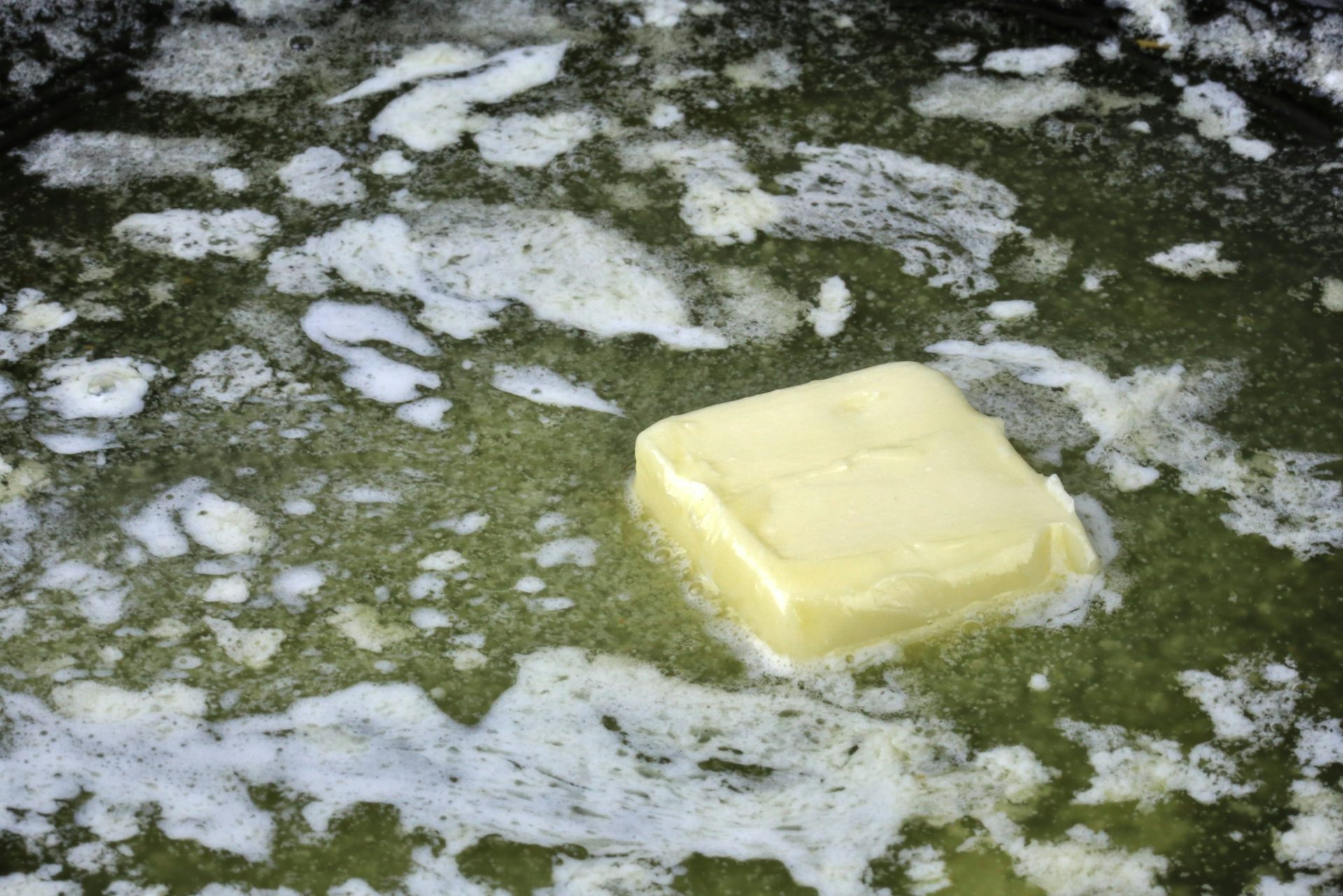
¿Mantequilla o margarina? Un científico de alimentos describe sus sutiles desviaciones químicas y cómo pueden afectar tus productos horneados
Butter or margarine? A food scientist describes their subtle chemical deviations and how they can affect your baked goods
Butter and margarine are both made up of long fatty acid chains, but some slight chemical differences mean differences in how they melt.
La mantequilla y la margarina están compuestas ambas por largas cadenas de ácidos grasos, pero algunas ligeras diferencias químicas significan diferencias en cómo se derriten.
My mother loves butter. It is the primary fat I ate growing up. She smeared it on any kind of bread, potatoes, nut rolls or coffeecake. She baked with it exclusively.
Mi madre ama la mantequilla. Era la grasa principal que comí cuando crecía. Se la untaba en cualquier tipo de pan, papas, rollos de nueces o pastel de café. Cocinaba exclusivamente con ella.
When I was studying nutrition in college, I had a teaching assistant who recommended margarine over butter. I was shocked – and wondered about the difference between the two. It was one of the things that sparked my interest in food science. Today, I am a food scientist and study how foods such as butter and margarine can have subtle chemical differences, with a big impact on how they act in food.
Cuando estudiaba nutrición en la universidad, tuve un asistente de enseñanza que recomendó margarina en lugar de mantequilla. Me sorprendí y me pregunté sobre la diferencia entre ambas. Fue una de las cosas que despertó mi interés por la ciencia alimentaria. Hoy soy científico (a) de alimentos y estudio cómo los alimentos como la mantequilla y la margarina pueden tener sutiles diferencias químicas, con un gran impacto en cómo actúan en la comida.
Chemical structures
Estructuras químicas
Butter and margarine are emulsions, which are mixtures of tiny water droplets spread throughout a continuous fat matrix. This matrix is made mostly of triglycerides, the primary form of fat in our diet.
La mantequilla y la margarina son emulsiones, que son mezclas de diminutas gotas de agua dispersas en una matriz grasa continua. Esta matriz está hecha principalmente de triglicéridos, la forma primaria de grasa en nuestra dieta.
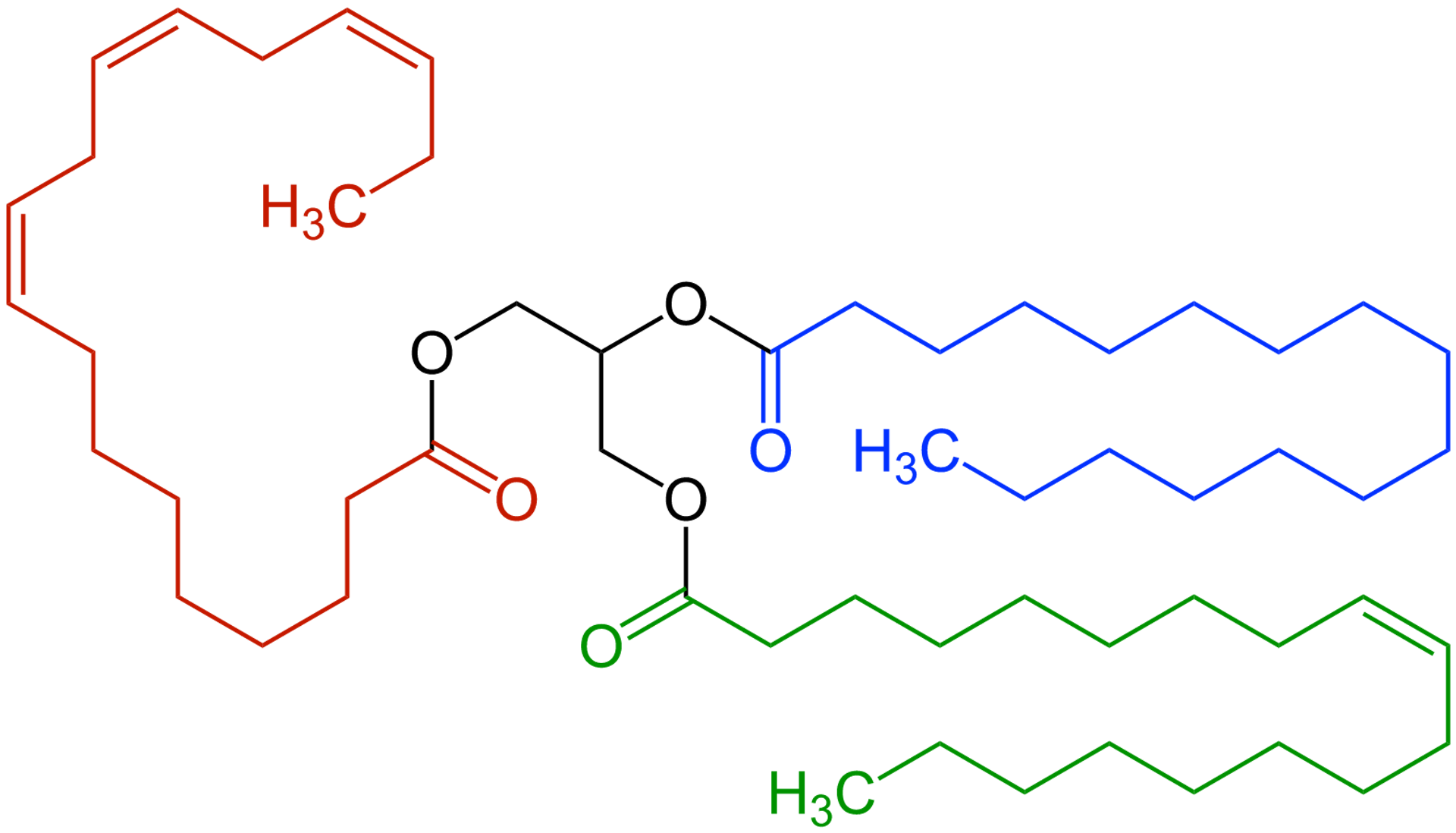
Fatty acids are long chains of carbon surrounded by hydrogen atoms. In a triglyceride, there are three fatty acids, each one connected to the same three-carbon glycerol molecule, which acts as the backbone of the molecule. While the backbone is always the same, the number of carbons in the fatty acids can vary. In cream, triglycerides are packaged into globules or crystals.
Los ácidos grasos son largas cadenas de carbono rodeadas por átomos de hidrógeno. En un triglicérido hay tres ácidos grasos, cada uno conectado a la misma molécula de glicerol de tres carbonos, que actúa como el esqueleto de la molécula. Si bien el esqueleto siempre es el mismo, el número de carbonos en los ácidos grasos puede variar. En la crema, los triglicéridos se empaquetan en glóbulos o cristales.

Both butter and margarine have a combination of saturated and unsaturated fatty acids. However, butter’s are mainly saturated, which makes them fit together and stack compactly to form a nice straight chain, because they have no double bonds between the carbons.
Tanto la mantequilla como la margarina tienen una combinación de ácidos grasos saturados e insaturados. Sin embargo, los de la mantequilla son principalmente saturados, lo que les permite encajar y apilarse compactamente para formar una cadena recta agradable, porque no tienen dobles enlaces entre los carbonos.
Margarine’s fatty acids are mainly unsaturated, from blended plant oils. The unsaturated fats give them an irregular shape on a molecular level. The double bonds between carbons kink the molecule so they cannot be as neatly arranged. This difference affects how they melt.
Los ácidos grasos de la margarina son principalmente insaturados, provenientes de aceites vegetales mezclados. Las grasas insaturadas les dan una forma irregular a nivel molecular. Los dobles enlaces entre los carbonos doblan la molécula para que no puedan estar tan ordenadamente dispuestas. Esta diferencia afecta cómo se derriten.
There are many forms of fat crystals in butter, and they have different melting points. These crystals make butter very firm at cold temperatures and allow it to soften gradually at room or body temperature. They also trap air easily when creamed together with crystalline sugar, which adds lightness and porosity to baked goods.
Hay muchas formas de cristales de grasa en la mantequilla, y tienen diferentes puntos de fusión. Estos cristales hacen que la mantequilla sea muy firme a bajas temperaturas y le permiten ablandarse gradualmente a temperatura ambiente o corporal. También atrapan aire fácilmente cuando se bate con azúcar cristalizada, lo que añade ligereza y porosidad a los productos horneados.
Both butter and margarine are at minimum 80% fat, though some butters are closer to 85% fat. Their water content hovers around 16%, and butter is made up of 1-4% vitamins, minerals, lactose and protein.
Tanto la mantequilla como la margarina tienen un mínimo del 80% de grasa, aunque algunas mantequillas están más cerca del 85% de grasa. Su contenido de agua ronda el 16%, y la mantequilla está compuesta por un 1-4% de vitaminas, minerales, lactosa y proteínas.
Butter has an official standard of identity set forth by the U.S. government, which means manufacturers must meet specific guidelines for their product to be considered butter. This food standard is one of the oldest in the U.S.
La mantequilla tiene un estándar de identidad oficial establecido por el gobierno de EE. UU., lo que significa que los fabricantes deben cumplir con pautas específicas para que su producto sea considerado mantequilla. Este estándar alimentario es uno de los más antiguos de EE. UU.
Making butter
Hacer mantequilla
When you shake or churn cream, fat globules rupture. The fat leaks out and forms semi-solid grains of butter. With more shaking or churning, these grains grow and separate from the watery, naturally low-fat buttermilk.
Cuando agitas o bates la crema, los glóbulos de grasa se rompen. La grasa se filtra y forma granos semisólidos de mantequilla. Con más sacudidas o batido, estos granos crecen y se separan del suero de leche acuoso y naturalmente bajo en grasa.
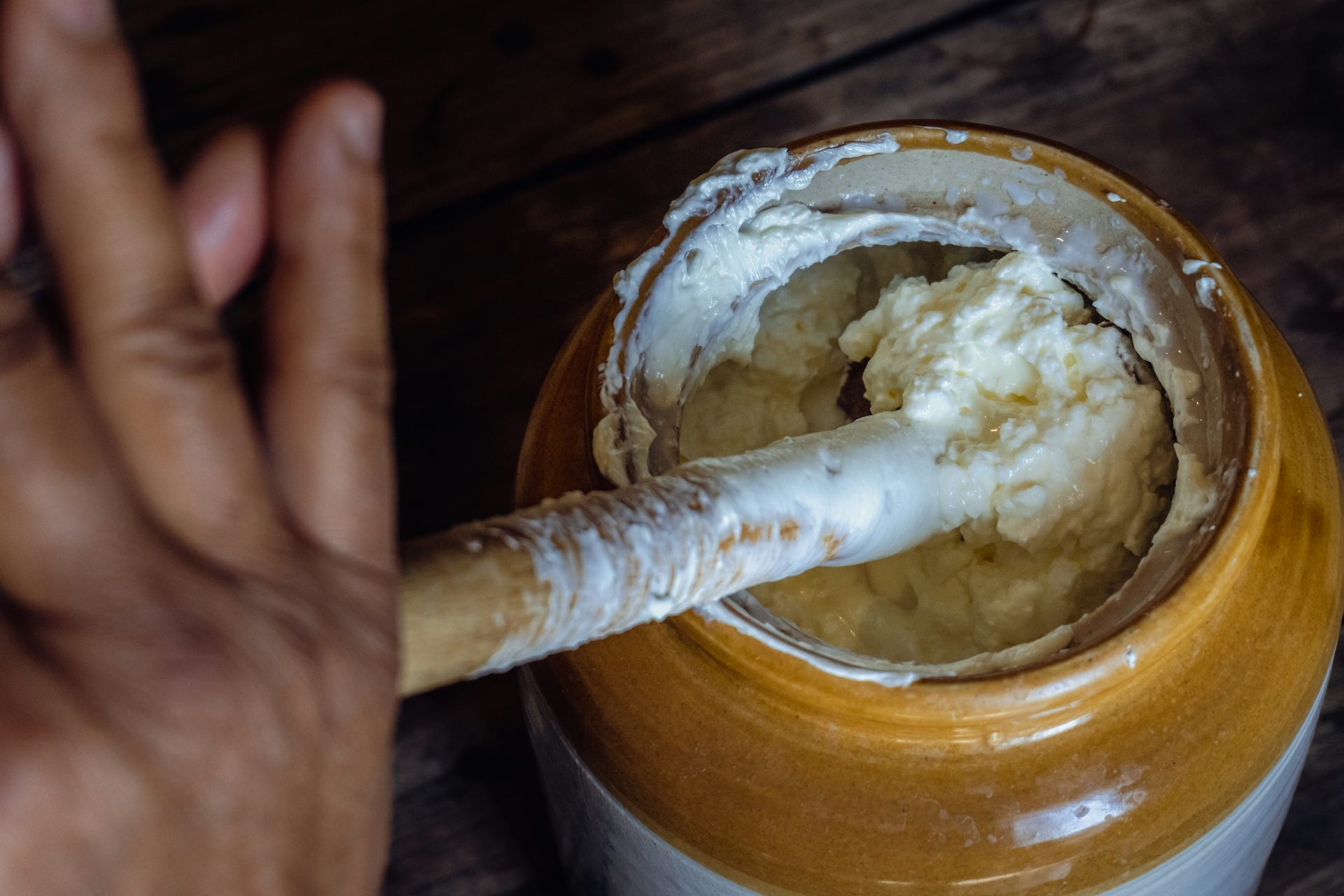
You then collect, knead and press the mass and, voila, you have butter. Some butter is cultured by adding lactic acid bacteria. These bacteria ferment milk sugar, or lactose, into flavor compounds and organic acids, which give the butter a mild tang and complex flavor.
Luego recolectas, amasas y prensas la masa y, ¡voilà!, tienes mantequilla. Algunas mantequillas se cuajan añadiendo bacterias del ácido láctico. Estas bacterias fermentan el azúcar de la leche, o lactosa, en compuestos de sabor y ácidos orgánicos, lo que le da a la mantequilla un toque suave y un sabor complejo.
Sweet butter is easy to make at home if you add cold, heavy cream with a fat content of at least 36% to a standing mixer with a whisk attachment. Turn it on and walk away for a bit, and when you hear the sloshing sound of watery buttermilk, you know you have butter ready for pressing.
Es fácil hacer mantequilla en casa si añades crema espesa y fría con un contenido de grasa de al menos el 36% a una batidora de pie con accesorio de varillas. Enciéndela y aléjate por un rato, y cuando escuches el sonido salpicante del suero de leche acuoso, sabrás que tienes mantequilla lista para prensar.
Making margarine
Elaboración de margarina
Sticks of margarine start as liquid, plant-based oils and are made into a solid. Producers chemically rearrange fatty acids on the glycerol molecule in a modification process called interesterification, which makes the oil solid and the fats more uniformly distributed.
Las barras de margarina comienzan como aceites líquidos de origen vegetal y se convierten en un sólido. Los productores reordenan químicamente los ácidos grasos en la molécula de glicerol en un proceso de modificación llamado interesterificación, lo que solidifica el aceite y distribuye las grasas de manera más uniforme.
This process rearranges the triglycerides in margarine without adding saturated fats or creating trans fats. Trans fats have been banned in many countries because of their association with cardiovascular disease and higher cholesterol.
Este proceso reordena los triglicéridos de la margarina sin añadir grasas saturadas ni crear grasas trans. Las grasas trans han sido prohibidas en muchos países debido a su asociación con enfermedades cardiovasculares y niveles más altos de colesterol.
Interesterification allows margarine to stay solid longer when baking, with a more precise melting point.
La interesterificación permite que la margarina permanezca sólida por más tiempo al hornear, con un punto de fusión más preciso.
Spreads or squeeze-style margarines do not go through this process and instead rely on higher ratios of water and air to solid oils, which keep them soft and spreadable. These spreadable types are lower in fat, so they don’t work well for baking. The higher water content alters the texture, and most baking recipes are formulated assuming a higher percentage of fat.
Las margarinas tipo untable o de exprimir no pasan por este proceso y en su lugar dependen de mayores proporciones de agua y aire respecto a los aceites sólidos, lo que las mantiene suaves y untables. Estos tipos untables tienen menos grasa, por lo que no funcionan bien para hornear. El mayor contenido de agua altera la textura, y la mayoría de las recetas de repostería están formuladas asumiendo un porcentaje más alto de grasa.
Processors are not required to state on the label whether margarine has gone through interesterification.
Los fabricantes no están obligados a indicar en la etiqueta si la margarina ha pasado por interesterificación.
Flavor and color
Sabor y color
Butter gets its golden color from beta-carotene, an orange pigment present in grass. Cows eat the grass but do not metabolize beta-carotene efficiently, so it is expressed in their milk. Margarine is naturally colorless, but producers add synthetic beta-carotene to it to mimic the color of butter.
La mantequilla obtiene su color dorado del betacaroteno, un pigmento naranja presente en el pasto. Las vacas comen este pasto, pero no metabolizan el betacaroteno de manera eficiente, por lo que se expresa en su leche. La margarina es naturalmente incolora, pero los productores le añaden betacaroteno sintético para imitar el color de la mantequilla.
Margarine producers also add flavors such as diacetyl, a distinctive butter-flavor molecule, and blends of whey components and preservatives to replicate the flavor of butter. They may add emulsifiers such as lecithin or monoglycerides to keep the water and fat from separating. The exact ratios of ingredients vary between producers.
Los productores de margarina también añaden sabores como diacetilo, una molécula distintiva con sabor a mantequilla, y mezclas de componentes del suero y conservantes para replicar el sabor de la mantequilla. Pueden añadir emulsionantes como la lecitina o los monoglicéridos para evitar que el agua y la grasa se separen. Las proporciones exactas de ingredientes varían entre productores.
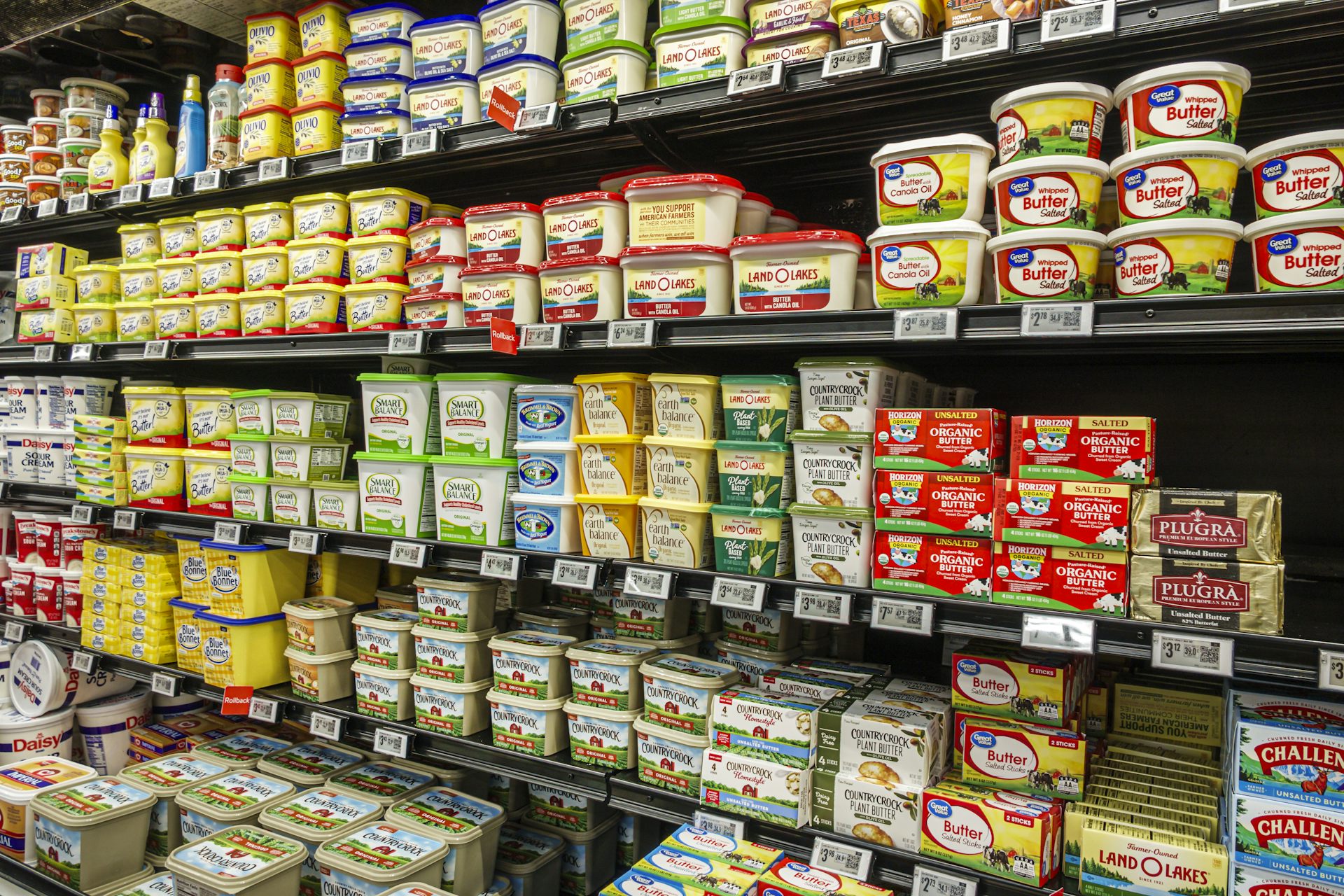
Chemical differences can translate into subtle health differences. While both are mainly made of triglycerides, the fats in butter are naturally occurring, while fats in margarine are industrially modified. This difference makes margarine an ultraprocessed food, but it also means it has fewer saturated fats. While you might have health reasons for choosing one over another, take note that the chemistry behind how these fats are made also can influence how they behave in the kitchen.
Las diferencias químicas pueden traducirse en sutiles diferencias de salud. Aunque ambas están hechas principalmente de triglicéridos, las grasas de la mantequilla son naturales, mientras que las grasas de la margarina son modificadas industrialmente. Esta diferencia hace que la margarina sea un alimento ultraprocesado, pero también significa que contiene menos grasas saturadas. Si bien puede tener razones de salud para elegir una sobre otra, tenga en cuenta que la química detrás de cómo se hacen estas grasas también puede influir en su comportamiento en la cocina.
Baking differences
Diferencias al hornear
When you heat butter, the proteins and lactose in it combine, creating that signature brown color and a delicious nutty, toasty, caramelized flavor. Because margarine doesn’t contain lactose, it won’t brown as well as butter, nor will it impart the same level of aromatics.
Cuando calientas la mantequilla, las proteínas y la lactosa que contiene se combinan, creando ese característico color marrón y un delicioso sabor a nuez, tostado y caramelizado. Dado que la margarina no contiene lactosa, no se dorará tan bien como la mantequilla, ni aportará el mismo nivel de aromas.
When baked in a very hot oven, butter contains enough water to form steam, which separates doughs into layers of flaky pastry. Water content varies in margarine, and while it forms some steam, it will not perform as well as butter.
Cuando se hornea en un horno muy caliente, la mantequilla contiene suficiente agua para formar vapor, lo que separa las masas en capas de hojaldre escamoso. El contenido de agua varía en la margarina y, aunque forma algo de vapor, no tendrá el mismo rendimiento que la mantequilla.
However, margarine has some advantages over butter. It’s very consistent and melts in controlled way. It also has a longer shelf life. Yes, you can use them interchangeably, but knowing functional differences between the two can help you determine when to use which.
Sin embargo, la margarina tiene algunas ventajas sobre la mantequilla. Es muy consistente y se derrite de manera controlada. También tiene una vida útil más larga. Sí, puedes usarlas indistintamente, pero conocer las diferencias funcionales entre ambas puede ayudarte a determinar cuándo usar cada una.
Rosemary Trout does not work for, consult, own shares in or receive funding from any company or organization that would benefit from this article, and has disclosed no relevant affiliations beyond their academic appointment.
Rosemary Trout no trabaja para, asesora, posee acciones en o recibe financiación de ninguna empresa u organización que se beneficie de este artículo, y no ha revelado afiliaciones relevantes más allá de su cargo académico.
Read more
-
Para la diáspora iraní, un difícil dilema en el Mundial: ¿Apoyar al equipo nacional o protestar – o ambas cosas?
For Iran’s diaspora, a tough World Cup call: To support the national team or protest – or both?
-
La historia del texto ‘hito’ del Papa León sobre tecnología de IA – por un miembro de su panel de lanzamiento
The story of Pope Leo’s ‘landmark’ text on AI technology – by a member of its launch panel