
En la era de la IA, la producción creativa humana se está convirtiendo en un lujo
In the age of AI, human creative output is becoming a luxury
People value human-created art not just for its quality, but because it represents effort, intention and lived experience.
La gente valora el arte creado por humanos no solo por su calidad, sino porque representa esfuerzo, intención y experiencia vivida.
Imagine two identical spoons. One is hand-wrought from silver by a skilled metalworker. The other, a base-metal facsimile, was mass-produced by a machine. Which would you value more? Most of us would say the handmade spoon.
Imagina dos cucharas idénticas. Una está forjada a mano en plata por un metalúrgico experto. La otra, un facsímil de metal base, fue producida en masa por una máquina. ¿Cuál valorarías más? La mayoría de nosotros diría la cuchara hecha a mano.
In 1899, more than a century ago, American economist and sociologist Thorstein Veblen used this very example to explain how we assign value, or his theory of conspicuous consumption, in which he contended that bourgeois consumption was driven primarily by a desire to display wealth to others. Even if these spoons were indistinguishable, explained Veblen, the hand-made spoon, once identified, would be more highly valued.
En 1899, hace más de un siglo, el economista y sociólogo estadounidense Thorstein Veblen utilizó este mismo ejemplo para explicar cómo asignamos valor, o su teoría del consumo ostentoso, en la que sostuvo que el consumo burgués estaba impulsado principalmente por el deseo de exhibir riqueza ante los demás. Incluso si estas cucharas fueran indistinguibles, explicó Veblen, la cuchara hecha a mano, una vez identificada, sería más valorada.
This is in part because “the hand-wrought spoon gratifies our taste, our sense of the beautiful, while that made by machinery out of base metal has no useful office beyond a brute efficiency.” But for Veblen there is another factor more important than any aesthetic judgment: costliness.
Esto se debe en parte a que “la cuchara forjada a mano gratifica nuestro gusto, nuestro sentido de lo bello, mientras que la hecha por maquinaria de metal base no tiene utilidad más allá de una eficiencia bruta”. Pero para Veblen hay otro factor más importante que cualquier juicio estético: el costo.
The hand-wrought spoon is preferred above all, Veblen suggested, because it is a means of demonstrating wealth. However, as we enter a world in which almost anything, including art, writing and music, can be machine-wrought, it seems that Veblen may have misjudged his spoons.
La cuchara forjada a mano es preferida por encima de todo, sugirió Veblen, porque es un medio para demostrar riqueza. Sin embargo, a medida que entramos en un mundo en el que casi cualquier cosa, incluido el arte, la escritura y la música, puede ser producida por máquinas, parece que Veblen pudo haber juzgado mal sus cucharas.
We don’t value human creations solely for their beauty or their price tag. We also value them because they embody deliberate labour and expertise.
No valoramos las creaciones humanas únicamente por su belleza o su precio. También las valoramos porque encarnan trabajo y experiencia deliberados.
AI-generated writing is judged differently
La escritura generada por IA se juzga de manera diferente
Our own research has shown that even highly trained writing educators cannot reliably distinguish between AI-generated and human-written essays. In fact, one study has shown that general audiences may actually prefer blander AI-generated poetry over more difficult, human-written poetry.
Nuestra propia investigación ha demostrado que incluso educadores de escritura altamente capacitados no pueden distinguir de manera fiable entre ensayos generados por IA y escritos por humanos. De hecho, un estudio ha demostrado que el público en general puede preferir en realidad una poesía generada por IA más simple que una poesía escrita por humanos más difícil.
But while public taste may favour the simple and formulaic, the disclosure of artificial authorship is enough to make most people recoil.
Pero mientras que el gusto público puede favorecer lo simple y lo formulático, la revelación de una autoría artificial es suficiente para hacer que la mayoría de la gente se retraiga.
In a recent study involving a series of experiments, participants were asked to compare pieces of AI-generated creative writing, including poetry and fiction. In each case, they were told that some passages were human-written and some were AI-generated. Across 16 experiments, respondents consistently devalued the writing labelled as AI-generated.
En un estudio reciente que involucró una serie de experimentos, se pidió a los participantes que compararan piezas de escritura creativa generadas por IA, incluyendo poesía y ficción. En cada caso, se les dijo que algunos pasajes estaban escritos por humanos y otros estaban generados por IA. A lo largo de 16 experimentos, los encuestados desvalorizaron consistentemente la escritura etiquetada como generada por IA.
The authors of the study call this the “AI disclosure penalty.” It is possible to conclude from the study that audiences unfairly judge AI-generated content, but we disagree. This bias towards human creation is inherent to our relationship with art. When people believe something was made by a machine, they like it less.
Los autores del estudio llaman a esto la «penalización por divulgación de IA». Es posible concluir del estudio que el público juzga injustamente el contenido generado por IA, pero no estamos de acuerdo. Este sesgo hacia la creación humana es inherente a nuestra relación con el arte. Cuando la gente cree que algo fue hecho por una máquina, le gusta menos.
Some argue that AI can democratize creativity by lowering barriers to production and enabling more people to participate in cultural expression. But the evidence suggests that when authorship becomes effortless, perceived value declines.
Algunos argumentan que la IA puede democratizar la creatividad al reducir las barreras de producción y permitir que más personas participen en la expresión cultural. Pero la evidencia sugiere que cuando la autoría se vuelve sin esfuerzo, el valor percibido disminuye.
The importance of effort and experience
La importancia del esfuerzo y la experiencia
Art costs something. Both John Milton and James Joyce believed that their writing had cost them their eyesight. John Keats believed that the emotional exertion of writing poetry would worsen his tuberculosis and cost him his life. They kept writing anyway. We resent the machine because its creations cost it nothing.
El arte cuesta algo. Tanto John Milton como James Joyce creyeron que su escritura les había costado la vista. John Keats creyó que el esfuerzo emocional de escribir poesía empeoraría su tuberculosis y le costaría la vida. Aun así, siguieron escribiendo. Resentimos a la máquina porque sus creaciones no le cuestan nada.
When an algorithm generates a story about heartbreak or an essay on human struggle, it is trading in stolen emotions. AI has never felt pain, suffered a loss or wrestled with the frustration of a blank page, so its output, no matter how technically smooth, feels fundamentally deceptive.
Cuando un algoritmo genera una historia sobre desamor o un ensayo sobre la lucha humana, está comerciando con emociones robadas. La IA nunca ha sentido dolor, ha sufrido una pérdida o ha luchado con la frustración de una página en blanco, por lo que su resultado, por muy pulido técnicamente que sea, se siente fundamentalmente engañoso.
People hate the idea of being moved by a parlour trick. In addition, many of us have a deep, instinctive revulsion to the industrialization of our inner lives. As Joanna Maciejewska observed, “I want AI to do my laundry and dishes so that I can do art and writing, not for AI to do my art and writing so that I can do my laundry and dishes.”
A la gente no le gusta la idea de ser conmovida por un truco de salón. Además, muchos de nosotros tenemos una profunda e instintiva repugnancia ante la industrialización de nuestras vidas interiores. Como observó Joanna Maciejewska: “Quiero que la IA haga mi ropa y los platos para que yo pueda hacer arte y escribir, no que la IA haga mi arte y escritura para que yo pueda hacer mi ropa y los platos”.
We happily accept machines stamping out our car parts and toasters because efficiency is the goal, but applying that same cold logic to human expression strips away the vulnerability, risk and stakes that make art mean anything in the first place.
Aceptamos con gusto las máquinas que fabrican nuestras piezas de coche y tostadoras porque la eficiencia es el objetivo, pero aplicar esa misma lógica fría a la expresión humana despoja de la vulnerabilidad, el riesgo y las apuestas que hacen que el arte signifique algo en primer lugar.
This becomes more consequential as AI-generated content floods the digital media landscape.
Esto se vuelve más consecuencial a medida que el contenido generado por IA inunda el panorama de los medios digitales.
Why human work is becoming more valuable
Por qué el trabajo humano está siendo más valioso
Our media ecosystem has evolved so that paying directly for much of the content we consume is optional. In an era of streaming music, television and film, we rarely own the product we consume, and creators receive pennies on the dollar compared to previous economic models.
Nuestro ecosistema mediático ha evolucionado de tal manera que pagar directamente por gran parte del contenido que consumimos es opcional. En una era de transmisión de música, televisión y cine, rara vez somos dueños del producto que consumimos, y los creadores reciben centavos por el dólar en comparación con modelos económicos anteriores.
To make matters worse, media companies are increasingly pushing AI-generated content in the form of tens of thousands of social media posts, books, podcasts and videos every day and encouraging artists and content creators to supercharge the quantity of their output by relying on AI.
Para empeorar las cosas, las empresas de medios están impulsando cada vez más contenido generado por IA en forma de decenas de miles de publicaciones en redes sociales, libros, podcasts y videos cada día, y animando a artistas y creadores de contenido a aumentar la cantidad de su producción al depender de la IA.
Much of this output is highly formulaic — produced at scale and designed for rapid, low-engagement consumption. It is an endless, flavourless paste of clichés and nonsense, meant to be mindlessly consumed by doomscrolling thumbs and immediately forgotten. Despite working in an era in which payment is optional amid a deluge of slop, many artists, journalists and writers are making a living because enough of their audience chooses to support the work of real human creators.
Gran parte de esta producción es altamente formulática, producida a escala y diseñada para un consumo rápido y de bajo compromiso. Es una pasta interminable y sin sabor de clichés y tonterías, destinada a ser consumida sin pensar por los pulgares que hacen doomscrolling y olvidada inmediatamente. A pesar de trabajar en una era en la que el pago es opcional en medio de un diluvio de contenido mediocre, muchos artistas, periodistas y escritores se están ganando la vida porque suficientes miembros de su audiencia eligen apoyar el trabajo de creadores humanos reales.
The “AI disclosure penalty” reminds us that the consumption of art is not tied to purely aesthetic considerations but involves a need to connect with and appreciate the effort and labour of others.
La «penalización por divulgación de IA» nos recuerda que el consumo de arte no está ligado a consideraciones puramente estéticas, sino que implica la necesidad de conectar y apreciar el esfuerzo y el trabajo de los demás.
Consumers have long been willing to pay more for goods labelled “handmade,” “handcrafted,” “artisanal” or “bespoke” on the understanding that those goods were made using traditional techniques that took more effort and human skill.
Los consumidores han estado dispuestos durante mucho tiempo a pagar más por artículos etiquetados como «hecho a mano», «artesanal», «artesano» o «a medida», bajo la comprensión de que dichos artículos fueron hechos utilizando técnicas tradicionales que requerían más esfuerzo y habilidad humana.
As generative AI turns writing, art and digital media into frictionless, infinitely replicable outputs, human cognitive effort is undergoing a profound shift. It is becoming an artisanal good that consumers must choose to support and value.
A medida que la IA generativa convierte la escritura, el arte y los medios digitales en resultados sin fricciones e infinitamente replicables, el esfuerzo cognitivo humano está experimentando un profundo cambio. Se está convirtiendo en un bien artesanal que los consumidores deben elegir apoyar y valorar.
The Industrial Revolution transformed hand-made furniture and hand-woven textiles into premium markers of craftsmanship and authenticity. The AI revolution is doing something similar for intellectual and creative labour — audiences are beginning to place a premium not necessarily on the competent execution of a poem or an essay, which a machine can generate in seconds, but on the invisible friction, the lived experience and the deliberate toil of the human mind behind it.
La Revolución Industrial transformó los muebles hechos a mano y los textiles tejidos a mano en indicadores premium de artesanía y autenticidad. La revolución de la IA está haciendo algo similar para el trabajo intelectual y creativo: las audiencias están empezando a valorar no necesariamente la ejecución competente de un poema o un ensayo, que una máquina puede generar en segundos, sino la fricción invisible, la experiencia vivida y el esfuerzo deliberado de la mente humana detrás de él.
In a landscape increasingly saturated with instant content, the verified effort of a human creator is shifting from a baseline expectation to a highly coveted, bespoke quality. Ultimately, what we value about art is not whether it’s perfect, but its ability to connect us with another human being.
En un panorama cada vez más saturado de contenido instantáneo, el esfuerzo verificado de un creador humano está pasando de ser una expectativa básica a una cualidad altamente codiciada y personalizada. En última instancia, lo que valoramos del arte no es si es perfecto, sino su capacidad para conectarnos con otro ser humano.
Nathan Murray has received funding for his research from the Social Sciences and Humanities Research Council of Canada (SSHRC) .
Nathan Murray ha recibido financiación para su investigación del Consejo de Investigación en Ciencias Sociales y Humanidades de Canadá (SSHRC) .
Elisa Tersigni has received funding from the Social Sciences and Humanities Research Council of Canada (SSHRC) .
Elisa Tersigni ha recibido financiación del Consejo de Investigación en Ciencias Sociales y Humanidades de Canadá (SSHRC) .
Read more
-

El ‘cuero vegano’ no es tan sostenible ni ecológico como las marcas podrían afirmar
‘Vegan leather’ isn’t as sustainable or eco‑friendly as brands might claim
-
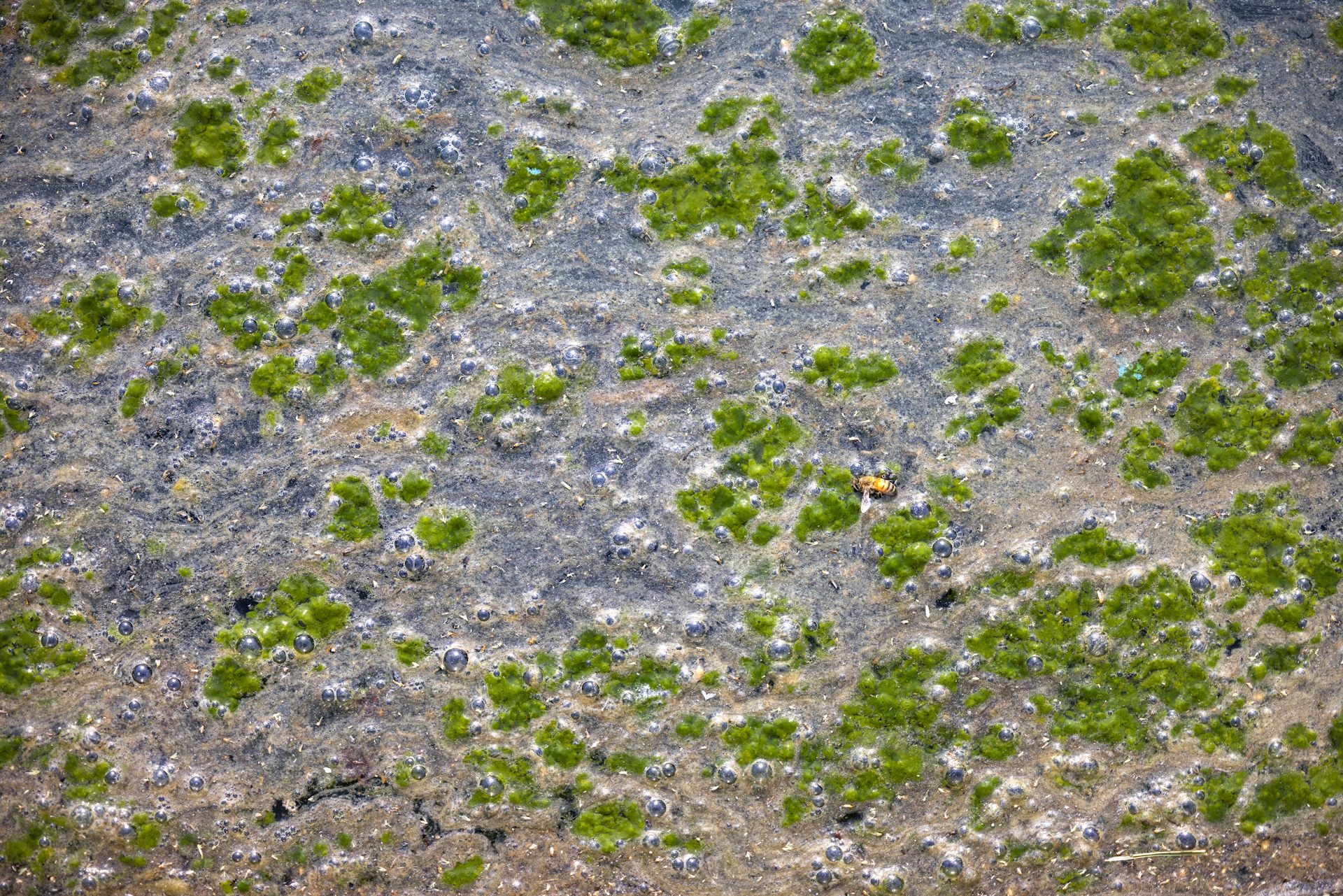
La mejora de Trump del Estanque Reflectante del Monumento a Lincoln se ha convertido en un desastre. ¿Por qué está causando tanta indignación?
Trump’s upgrade of the Lincoln Memorial Reflecting Pool has become a disaster. Why is it causing so much outrage?