
EE. UU. está liderando la nueva carrera espacial, pero otros países lo siguen de cerca.
The US is leading the new space race – but other countries are close behind
It can be easy to lose sight of the fact that the US isn’t the only major actor in space.
Puede ser fácil perder de vista el hecho de que EE. UU. no es el único actor principal en el espacio.
When NASA administrator Jared Isaacman unveiled the crew of the Artemis III mission at Johnson Space Center in Houston earlier this month, he was ebullient.
Cuando el administrador de la NASA, Jared Isaacman, presentó a la tripulación de la misión Artemis III en el Centro Espacial Johnson de Houston a principios de este mes, estaba eufórico.
We wish you godspeed on the journey ahead, you carry the fire of exploration from generations past, the confidence of this agency, and the support of this nation, and the dreams of millions who will be cheering you on.
Te deseamos buen viaje en el camino que tienen por delante; llevan consigo el fuego de la exploración de generaciones pasadas, la confianza de esta agencia y el apoyo de esta nación, además de los sueños de millones de personas que las animarán.
The all-male crew – Italian astronaut Luca Parmitano and US astronauts Andre Douglas, Frank Rubio and Randy Bresnik – will launch into lower Earth orbit next year for a two-week mission to test lunar landers. This will build on the work of the Artemis II astronauts and the Artemis IV mission planned for 2028, which will see humans return to the Moon’s surface for the first time in 56 years.
La tripulación completamente masculina —el astronauta italiano Luca Parmitano y los astronautas estadounidenses Andre Douglas, Frank Rubio y Randy Bresnik— se lanzará a la órbita terrestre baja el próximo año para una misión de dos semanas destinada a probar aterrizadores lunares. Esto se basará en el trabajo de los astronautas de Artemis II y en la misión Artemis IV planificada para 2028, que verá a humanos regresar a la superficie lunar por primera vez en 56 años.
Amid all of these headlines out of the US, it can be easy to lose sight of the fact it isn’t the only major actor in space. While the US might be leading the current space race, other countries are close behind.
En medio de todos estos titulares provenientes de EE. UU., puede ser fácil perder de vista el hecho de que no es el único actor importante en el espacio. Si bien EE. UU. podría estar liderando la actual carrera espacial, otros países están muy cerca.
The race to the Moon and beyond is accelerating. Some say it’s for the benefit of all humanity. But is it really? In this seven-part series, we explore what our future in space will look like, how we might travel and survive out there, and what’s needed to stop a catastrophe from happening.
La carrera hacia la Luna y más allá se está acelerando. Algunos dicen que es en beneficio de toda la humanidad. ¿Pero es realmente así? En esta serie de siete partes, exploramos cómo será nuestro futuro en el espacio, cómo podríamos viajar y sobrevivir allí, y qué se necesita para evitar una catástrofe.
China
China
In May, China successfully launched three taikonauts to its Tiangong space station. One of the taikonauts will remain on the station for a year to “explore human adaptability and performance limits”, according to Chinese state media.
En mayo, China lanzó con éxito tres taikonautas a su estación espacial Tiangong. Uno de los taikonautas permanecerá en la estación durante un año para «explorar la adaptabilidad y los límites del rendimiento humano», según los medios estatales chinos.
This will serve as a precursor to China’s plan to send a crewed mission to the Moon before the end of this decade, and establish a permanent lunar base by 2035.
Esto servirá como precursor del plan de China de enviar una misión tripulada a la Luna antes de que termine esta década y establecer una base lunar permanente para 2035.
China announced its plans for the International Lunar Research Station (originally in partnership with Russia) in 2021. The base will likely be located somewhere near the Moon’s south pole and will be supported by the use of in-situ resources.
China anunció sus planes para la Estación Internacional de Investigación Lunar (originalmente en asociación con Rusia) en 2021. Es probable que la base esté ubicada cerca del polo sur de la Luna y contará con el uso de recursos in situ.
These plans are very similar to those of NASA as part of the Artemis program. As such, they put China in direct opposition to the US.
Estos planes son muy similares a los de la NASA como parte del programa Artemisa. Como tal, ponen a China en oposición directa con EE. UU.
China has actively invited other countries to become involved in the International Lunar Research Station. This is a deliberate attempt to position this opportunity as being more collaborative than the US-led Artemis project. States are actively invited to help set the rules of that collaboration.
China ha invitado activamente a otros países a participar en la Estación Internacional de Investigación Lunar. Este es un intento deliberado de posicionar esta oportunidad como más colaborativa que el proyecto Artemisa liderado por EE. UU. Se invita activamente a los estados a ayudar a establecer las reglas de esa colaboración.
Along with China, current participants include Russia, Azerbaijan, Belarus, Egypt, Nicaragua, Serbia, Pakistan, South Africa, Thailand, Venezuela, Kazakhstan and Senegal.
Junto con China, los participantes actuales incluyen a Rusia, Azerbaiyán, Bielorrusia, Egipto, Nicaragua, Serbia, Pakistán, Sudáfrica, Tailandia, Venezuela, Kazajistán y Senegal.
Although no taikonaut has yet set foot on the Moon, China has had several very successful lunar missions.
Aunque ningún taikonaut ha pisado la Luna todavía, China ha llevado a cabo varias misiones lunares muy exitosas.
These include Chang’e 1 in 2007, a lunar orbiter mission that collected more than 1.3 terabytes of data used to produce a detailed map of the lunar surface. This was followed by Chang’e 2, which was launched in 2010 and captured high-resolution images of the Moon.
Estas incluyen Chang’e 1 en 2007, una misión orbitadora lunar que recopiló más de 1.3 terabytes de datos utilizados para producir un mapa detallado de la superficie lunar. Le siguió Chang’e 2, lanzada en 2010 y que capturó imágenes de alta resolución de la Luna.
Chang’e 3 delivered the Jade Rabbit rover to the lunar surface in 2013. Chang’e 4 completed the first successful landing on the far side of the Moon in 2019. One year later, Chang’e 5 returned a lunar sample to Earth.
Chang’e 3 entregó el rover Jade Rabbit en la superficie lunar en 2013. Chang’e 4 completó el primer aterrizaje exitoso en la cara oculta de la Luna en 2019. Un año después, Chang’e 5 devolvió una muestra lunar a la Tierra.
In 2024, Chang’e 6 returned another lunar sample – this time from the far side of the Moon – which has been studied for its resource potential.
En 2024, Chang’e 6 devolvió otra muestra lunar —esta vez de la cara oculta de la Luna— que ha sido estudiada por su potencial de recursos.
These missions are notable for their diversity, as well as their steady cadence across a relatively short timeframe.
Estas misiones son notables por su diversidad, así como por su ritmo constante en un período de tiempo relativamente corto.
India
India
India has also achieved lunar landing success with Chandrayaan-3 in 2023, becoming the first country to land at the lunar South Pole – the desired destination for most planned crewed missions.
India también logró el éxito del aterrizaje lunar con Chandrayaan-3 en 2023, convirtiéndose en el primer país en aterrizar en el Polo Sur lunar, el destino deseado para la mayoría de las misiones tripuladas planificadas.
Chandrayaan-1, launched in 2008, was India’s first deep space mission. It consisted of a lunar orbiter and lunar probe that provided new insights into water molecules on the Moon. Chandrayaan-2, launched in 2019, consisted of a lunar orbiter, lander and rover. The lander crashed at the lunar South Pole.
Chandrayaan-1, lanzado en 2008, fue la primera misión de espacio profundo de la India. Consistió en un orbitador lunar y una sonda lunar que proporcionaron nuevos conocimientos sobre las moléculas de agua en la Luna. Chandrayaan-2, lanzado en 2019, consistió en un orbitador lunar, un módulo de aterrizaje y un rover. El módulo de aterrizaje se estrelló en el Polo Sur lunar.
India plans to launch Chandrayaan-4 no earlier than 2028 to collect samples from the Moon’s surface. This is set to be followed by Chandrayaan-5 – a planned collaboration between India and Japan – to further explore the lunar South Pole.
India planea lanzar Chandrayaan-4 no antes de 2028 para recolectar muestras de la superficie lunar. A esto le seguirá Chandrayaan-5 – una colaboración planificada entre India y Japón – para explorar aún más el Polo Sur lunar.
Russia
Rusia
Russia’s lunar activities remain focused on uncrewed missions.
Las actividades lunares de Rusia siguen centradas en misiones no tripuladas.
Russia has a long and successful history of lunar orbiters and landers, with its last successful lunar landing in 1976 during the Soviet era. Its lunar program received a setback in 2023, with the crash of Luna25 at the lunar South Pole.
Rusia tiene una larga y exitosa historia de orbitadores y módulos de aterrizaje lunar, con su último alunizaje exitoso en 1976 durante la era soviética. Su programa lunar sufrió un revés en 2023, con el accidente de Luna25 en el Polo Sur lunar.
However, as a partner in the International Lunar Research Station, Russia has announced the intention to build a nuclear power plant on the Moon by 2036.
Sin embargo, como socio de la Estación Internacional de Investigación Lunar, Rusia ha anunciado la intención de construir una central eléctrica nuclear en la Luna para 2036.
The rest of the pack
El resto del grupo
Other countries are also actively involved in lunar missions.
Otros países también están activamente involucrados en misiones lunares.
Japan’s iSpace, for example, has experienced two unsuccessful lunar landing attempts: Hakuto-R in 2023 and Resilience in 2025. This shows lunar landings remain a difficult and challenging exercise.
iSpace de Japón, por ejemplo, ha experimentado dos intentos fallidos de aterrizaje lunar: Hakuto-R en 2023 y Resilience en 2025. Esto demuestra que los alunizajes siguen siendo un ejercicio difícil y desafiante.
The Outer Space Treaty provides that space is “free for exploration and use by all States without discrimination of any kind” and that the Moon (and other celestial bodies) are “not subject to national appropriation” by claim of sovereignty or any other means.
El Tratado del Espacio Exterior establece que el espacio es «libre para la exploración y uso de todos los Estados sin discriminación de ningún tipo» y que la Luna (y otros cuerpos celestes) «no están sujetos a apropiación nacional» por reclamación de soberanía o cualquier otro medio.
This of course means any state is open to establish a base on the Moon. Far more complex will be establishing how these various bases may operate safely on the challenging lunar surface.
Esto, por supuesto, significa que cualquier estado está abierto a establecer una base en la Luna. Mucho más complejo será determinar cómo pueden operar de manera segura estas diversas bases en la desafiante superficie lunar.
Melissa de Zwart receives funding from the ARC. ARC Centre of Excellence in Plants for Space, CE230100015.
Melissa de Zwart recibe financiación del ARC. ARC Centre of Excellence in Plants for Space, CE230100015.
Read more
-
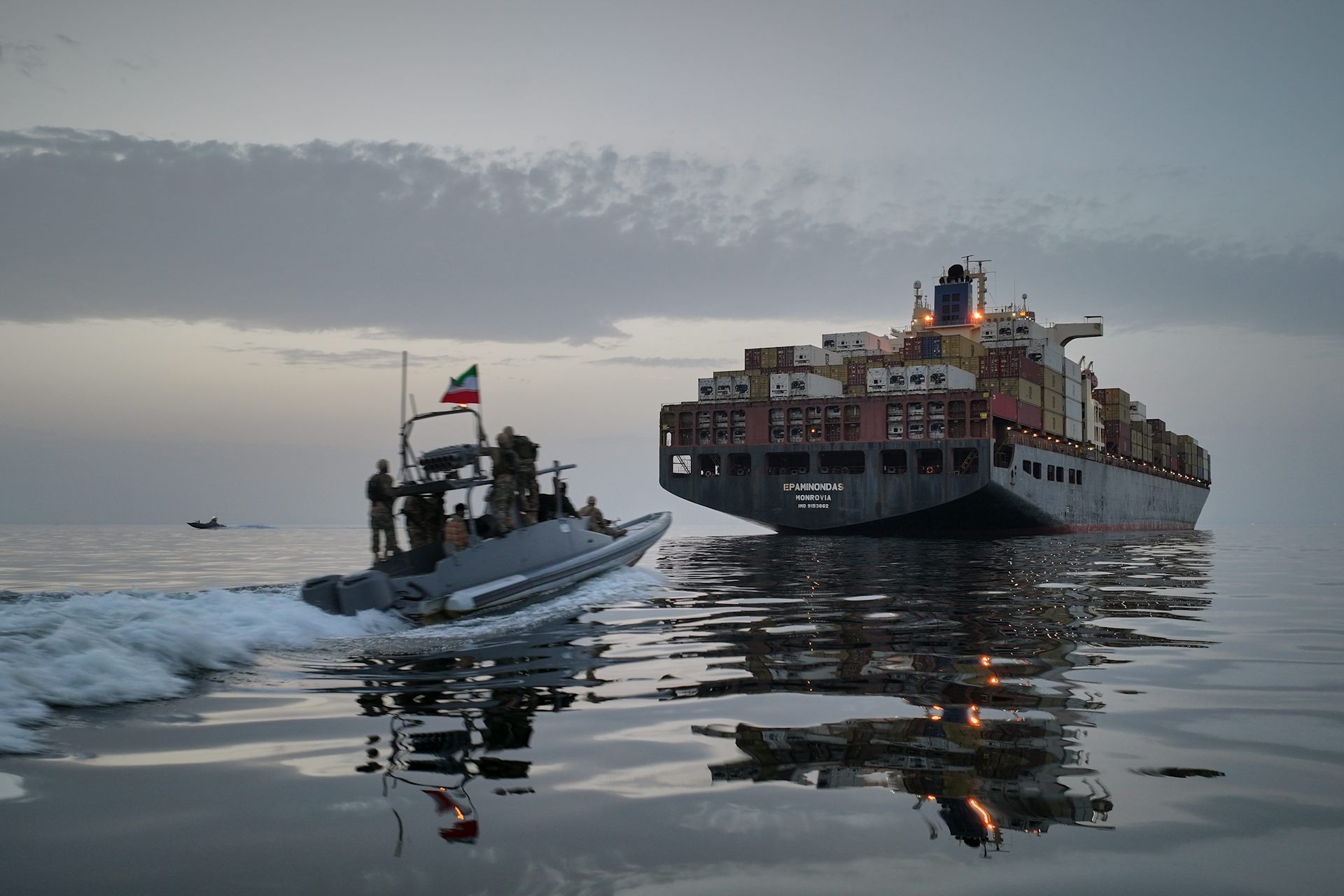
20,000 marineros varados en el Estrecho de Ormuz enfrentan temores de misiles, agotamiento y aislamiento
20,000 stranded seafarers in the Strait of Hormuz face missile fears, exhaustion and isolation
-

La minería ilegal de oro causa aumentos de malaria en la Amazonía, y la asociación es mucho peor de lo que sospechábamos
Illegal gold mining causes surges in malaria in the Amazon, and the association is far worse than we suspected