
Guía de los clásicos: El curso de sueños de Sigmund Freud nos dio el psicoanálisis
Guide to the classics: Sigmund Freud’s The Interpretation of Dreams gave us psychoanalysis
Sigmund Freud’s 800-page book on dreams introduced a new way of thinking about the mind that reverberated through the 20th century.
El libro de 800 páginas de Sigmund Freud sobre los sueños introdujo una nueva forma de pensar la mente que resonó a lo largo del siglo XX.
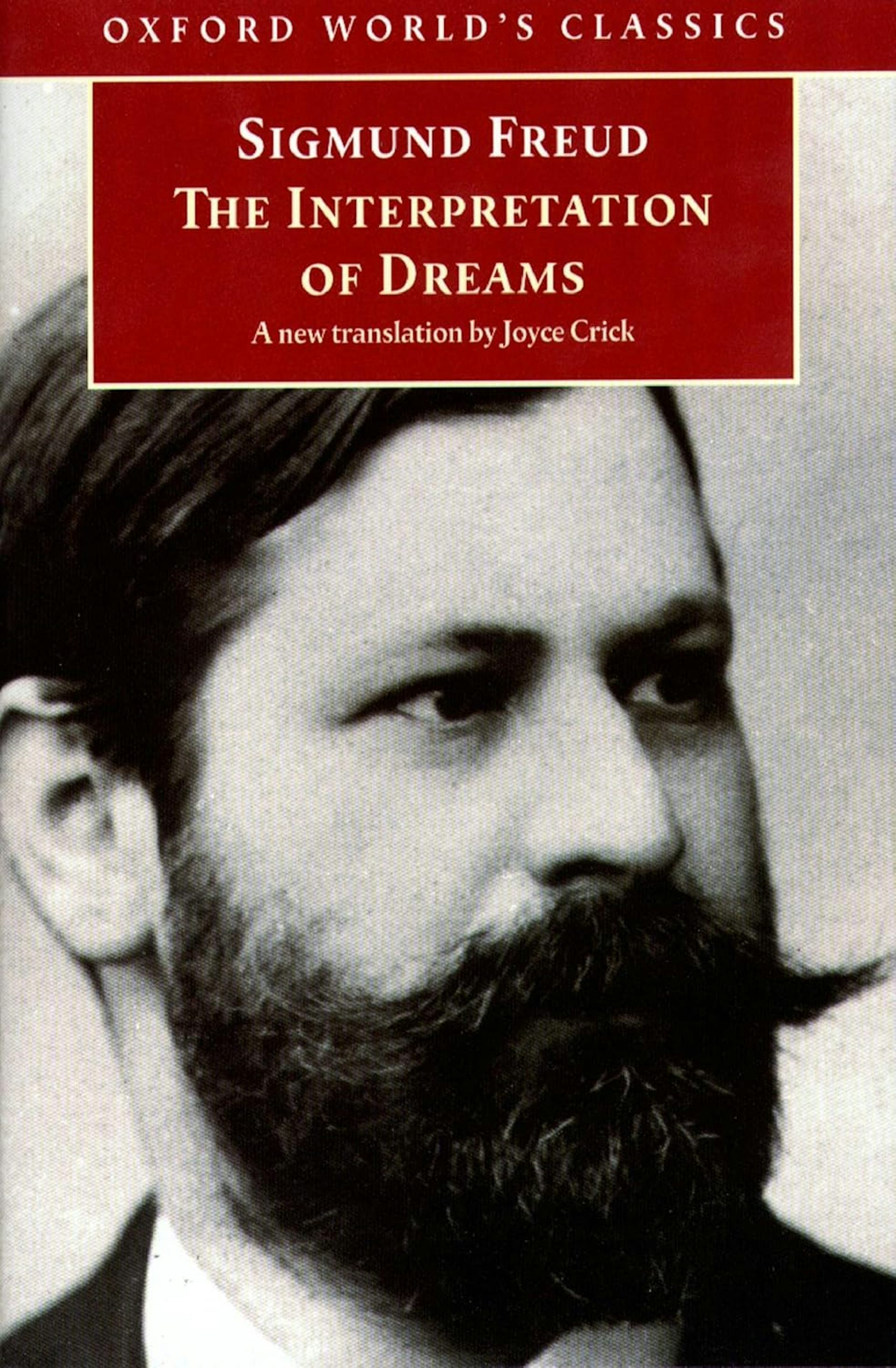
Sigmund Freud published The Interpretation of Dreams late in 1899. It has outsized importance among his writings, as arguably the founding document of psychoanalysis. In his own estimation, the book contains “the most valuable of all the discoveries it has been my good fortune to make”.
Sigmund Freud publicó La interpretación de los sueños a finales de 1899. Tiene una importancia desproporcionada entre sus escritos, ya que es posiblemente el documento fundacional del psicoanálisis. Según su propia estimación, el libro contiene “el descubrimiento más valioso de todos; ha sido mi buena fortuna”.
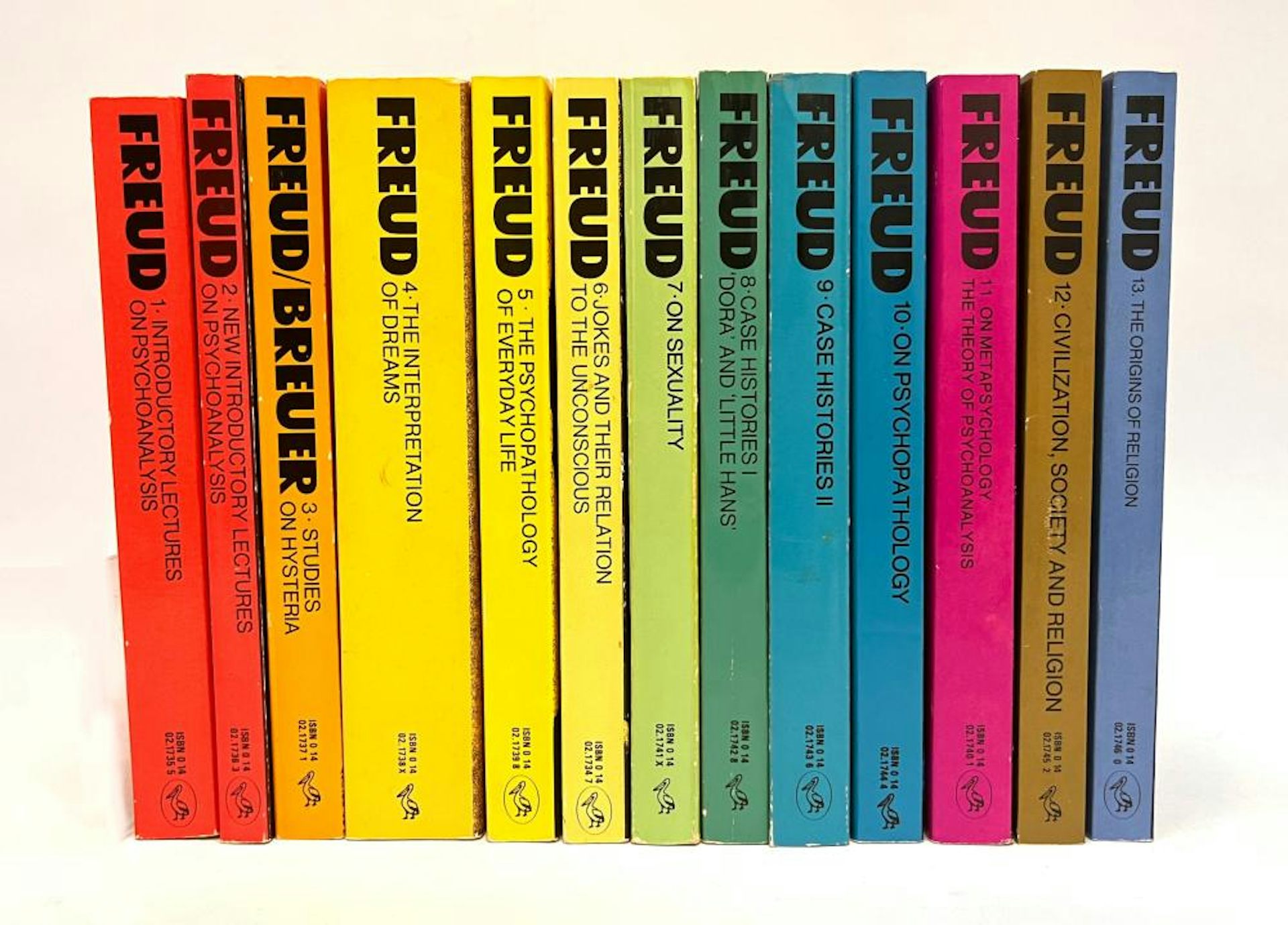
When I first became interested in psychoanalysis, the Pelican Freud Library was the mother lode. Launched in 1973, this first English-language paperback edition of Freud’s major writings was intended for a general readership. Its colourful covers brightened many a student’s bookshelf.
Cuando me interesé por primera vez en el psicoanálisis, la Pelican Freud Library era la mina de oro. Lanzada en 1973, esta primera edición de bolsillo en inglés de los principales escritos de Freud estaba destinada a un público general. Sus coloridas cubiertas alegraron las estanterías de muchos estudiantes.
Psychoanalysts and bookshelves no longer have the same cachet among students, and the general reader has other priorities. But Joyce Crick’s 1999 translation has now been published in the Oxford World Classics series, certifying the book as a literary masterwork – and it deserves that status.
Los psicoanalistas y las estanterías ya no tienen el mismo prestigio entre los estudiantes, y el lector general tiene otras prioridades. Pero la traducción de Joyce Crick de 1999 ha sido publicada ahora en la serie Oxford World Classics, certificando el libro como una obra maestra literaria, y se lo merece.
Though it is a treatise on dreams, Freud’s book introduced a new way of thinking about the mind that reverberated through the 20th century. Although the impact of psychoanalysis has dwindled in the Anglosphere, its ideas continue to shape how we understand mental health, therapy and human nature itself.
Aunque es un tratado sobre los sueños, el libro de Freud introdujo una nueva forma de pensar la mente que resonó a lo largo del siglo XX. Aunque el impacto del psicoanálisis ha disminuido en la Anglosfera, sus ideas continúan moldeando nuestra comprensión de la salud mental, la terapia y la naturaleza humana misma.
Dream theories and ‘psychical strangeness’
Teorías de los sueños y la ‘extrañeza psíquica’
Freud opens his book with an extended review of dream theories, from the ancient Greeks to more recent psychologists and philosophers. These theories speculate on how dreams relate to the preceding day’s experiences, how they respond to the stimuli that impinge on us – from outside and within – while we sleep, and why we struggle to recall them on waking.
Freud abre su libro con una revisión extensa de las teorías de los sueños, desde los antiguos griegos hasta psicólogos y filósofos más recientes. Estas teorías especulan sobre cómo se relacionan los sueños con las experiencias del día anterior, cómo responden a los estímulos que nos afectan —desde fuera y desde dentro— mientras dormimos, y por qué tenemos dificultades para recordarlos al despertar.
These early dream theories offered differing views on the function of dreaming and the sleeping brain’s capacities. Some viewed dreams as works of creative imagination and prophecy, whereas others wrote them off as residues of a weakened mind.
Estas primeras teorías de los sueños ofrecieron diversas perspectivas sobre la función de soñar y las capacidades del cerebro dormido. Algunos veían los sueños como obras de imaginación creativa y profecía, mientras que otros los descartaban como residuos de una mente debilitada.
To Freud, what is fundamental to dreams is their “psychical strangeness”. They appear to take place in a different location from waking consciousness: in a different theatre, not merely under a dimmer light.
Para Freud, lo fundamental de los sueños es su «extrañeza psíquica.» Parecen tener lugar en una ubicación diferente a la conciencia despierta: en un teatro distinto, no simplemente bajo una luz más tenue.
In addition to their enigmatic quality, Freud emphasises how dreams lack sense and logic.
Además de su calidad enigmática, Freud enfatiza cómo los sueños carecen de sentido y lógica.
The dream is incoherent, without compunction it unites the grossest contradictions, permits impossibilities, sets aside the knowledge that influences us by day, and exposes us as ethically and morally obtuse.
El sueño es incoherente; sin pudor une las contradicciones más groseras, permite imposibilidades, ignora el conocimiento que nos influye durante el día y nos expone como éticamente y moralmente obtusos.
Despite their apparent incoherence, dreams should not be denied “the dignity of being a process of the psyche”. They are meaningful products of a sophisticated mental process, rather than the somatic froth of sleep. “The madness of the dream may not be without method,” Freud writes.
A pesar de su aparente incoherencia, no se debe negar a los sueños «la dignidad de ser un proceso psíquico». Son productos significativos de un sofisticado proceso mental, más que la espuma somática del sueño. «La locura del sueño puede no estar exenta de método», escribe Freud.
Dream interpretation and wish fulfilment
Interpretación de los sueños y cumplimiento de deseos
If dreams are intelligently crafted, it should be possible to decode them. Contrary to a common misunderstanding and the enduring popularity of dream dictionaries, Freud argues this should be done without resorting to a collection of fixed symbols.
Si los sueños están elaborados inteligentemente, debería ser posible decodificarlos. Contrariamente a un malentendido común y la popularidad perdurable de los diccionarios de sueños, Freud argumenta que esto debe hacerse sin recurrir a una colección de símbolos fijos.
An old song jokes that “a thing’s a phallic symbol if it’s longer than it’s wide”, but Freud maintained that dreams can only be understood by exploring the dreamer’s personal associations to their content. These associations allow it to be located in an autobiographically meaningful “psychical chain”.
Una vieja canción bromea que “algo es un símbolo fálico si es más largo que ancho”, pero Freud mantuvo que los sueños solo pueden entenderse explorando las asociaciones personales del soñador con su contenido. Estas asociaciones permiten ubicarlo en una “cadena psíquica” de significado autobiográfico.
Freud contended that a wish can always be found at the dream’s core or “navel”, and that the dream represents a fulfilment of that wish. In the first dream he analysed, which featured Irma, a former patient, the motivating wish was Freud’s desire to be exonerated from responsibility for her illness.
Freud sostuvo que un deseo siempre se puede encontrar en el núcleo o “ombligo” del sueño, y que el sueño representa el cumplimiento de ese deseo. En el primer sueño que analizó, que presentaba a Irma, una antigua paciente, el deseo motivador fue el anhelo de Freud de ser exonerado de responsabilidad por su enfermedad.
Sometimes the wish being fulfilled is obvious: hungry people dream of food. At other times, the wish is disguised through a process Freud calls “dream-distortion” and likens to political censorship. The dream’s distorted “manifest content”, the elements experienced by the dreamer, must be distinguished from the “latent content”, the hidden wish fulfilment they express.
A veces el deseo cumplido es obvio: las personas hambrientas sueñan con comida. Otras veces, el deseo está disfrazado mediante un proceso que Freud llama “distorsión onírica” y asemeja a la censura política. El “contenido manifiesto” distorsionado del sueño, los elementos experimentados por el soñador, debe distinguirse del “contenido latente”, el cumplimiento de deseos ocultos que expresan.
Dream distortion and objectionable wishes
Distorsión de sueños y deseos objetables
This formulation raises several questions. Why must certain wishes be disguised, for example? Freud’s answer was that some wishes are objectionable to the person and would wake them if expressed directly. Dreams serve as guardians of sleep by fulfilling these repressed or suppressed wishes in a camouflaged, hallucinatory form that the censor will tolerate.
Esta formulación plantea varias preguntas. ¿Por qué deben disfrazarse ciertos deseos, por ejemplo? La respuesta de Freud fue que algunos deseos son objetables para la persona y la despertarían si se expresaran directamente. Los sueños sirven como guardianes del sueño al cumplir estos deseos reprimidos o suprimidos en una forma camuflada e ilusoria que el censor tolerará.
Who exactly is the censor trying to keep in the dark, if the same person is being guarded and doing the guarding? Here, Freud proposed that there are two distinct systems or agencies in the mind: one urging fulfilment of the wish and the other resisting it.
¿A quién exactamente intenta mantener en la oscuridad el censor, si es la misma persona la que está siendo vigilada y haciendo la vigilancia? Aquí, Freud propuso que hay dos sistemas o agencias distintas en la mente: uno que urge el cumplimiento del deseo y otro que se resiste a él.
That resistance extends to waking life. We tend to forget our dreams not because they are fragmentary or elusive, Freud argued, but because we want to bury their messages.
Esa resistencia se extiende a la vida de vigilia. Tendemos a olvidar nuestros sueños no porque sean fragmentarios o esquivos, argumentó Freud, sino porque queremos enterrar sus mensajes.
And how is the disguise carried out? Here, Freud referred to what he dubbed the “dream-work”. The latent content of a dream is transformed into the experienced manifest dream by condensing multiple dream elements into one, and by substituting elements, as when a latent feeling about one person is represented as directed towards someone else. Dream thoughts are also camouflaged by representing them as visual or auditory images. These transformations account for why dreams seem strange and puzzling.
¿Y cómo se lleva a cabo el disfraz? Aquí, Freud se refirió a lo que denominó el «trabajo del sueño.» El contenido latente de un sueño se transforma en el sueño manifiesto experimentado mediante la condensación de múltiples elementos oníricos en uno, y por la sustitución de elementos, como cuando un sentimiento latente sobre una persona se representa dirigido hacia otra. Los pensamientos oníricos también se camuflan representándolos como imágenes visuales o auditivas. Estas transformaciones explican por qué los sueños parecen extraños y desconcertantes.
Freud as psychological Sherlock
Freud como el Sherlock psicológico
Indeed, to Freud interpreting dreams is like solving a puzzle: he compares it to deciphering the meaning of hieroglyphics or a rebus. His book’s many examples show him to be dogged and clever in unmasking the concealed wishes.
De hecho, para Freud interpretar los sueños es como resolver un rompecabezas: lo compara con descifrar el significado de jeroglíficos o un refrán visual. Los muchos ejemplos de su libro demuestran que es tenaz e ingenioso al desenmascarar los deseos ocultos.
He is especially fond of tracing elaborate verbal associations and allusions. On one occasion, a woman’s name (Pélagie) is linked in an associative chain to plagiarism, to the class of plagiostomes (a class of sharks and rays) , and then to fish’s bladder.
Le encanta rastrear elaboradas asociaciones y alusiones verbales. En una ocasión, el nombre de una mujer (Pélagie) se vinculó en una cadena asociativa con el plagio, con la clase de plagiostomas (una clase de tiburones y rayas) , y luego con la vejiga de los peces.
These interpretations can be read as the virtuoso insights of a psychological Sherlock Holmes. However, the sceptical reader will worry that someone of Freud’s verbal and intellectual dexterity could find meaning where none exists. Dream analysis of this kind is unconstrained by rules of evidence. It’s more like riffing on an inkblot than solving a crime.
Estas interpretaciones pueden leerse como los conocimientos virtuosos de un Sherlock Holmes psicológico. Sin embargo, el lector escéptico se preocupará de que alguien con la destreza verbal e intelectual de Freud pueda encontrar significado donde no existe ninguno. El análisis de sueños de este tipo no está limitado por reglas de evidencia. Es más parecido a improvisar sobre una mancha de tinta que a resolver un crimen.
Critics of psychoanalysis have pointed to this lack of interpretive constraint and the impossibility of knowing confidently whether an interpretation is valid. Faced with the challenges of reliable interpretation, dream analysts need a degree of caution and humility that Freud lacked.
Los críticos del psicoanálisis han señalado esta falta de restricción interpretativa y la imposibilidad de saber con seguridad si una interpretación es válida. Ante los desafíos de una interpretación fiable, los analistas de sueños necesitan un grado de cautela y humildad que Freud carecía.
But successful theories are not built on humility. Towards the end of his book, Freud expands on what he has discovered, to make broader claims. Dreams demonstrate the existence of the unconscious as a mental system, which is “the true reality of the psyche”. For genuine insight into the mind, we must “get away from overestimating the attribute of consciousness”.
Pero las teorías exitosas no se construyen sobre la humildad. Hacia el final de su libro, Freud amplía lo que ha descubierto para hacer afirmaciones más amplias. Los sueños demuestran la existencia del inconsciente como un sistema mental, que es “la verdadera realidad de la psique”. Para una comprensión genuina de la mente, debemos “dejar de sobreestimar el atributo de la conciencia”.
Legacy: the Unconscious to Oedipus
Legado: del Inconsciente a Edipo
The Interpretation of Dreams is often considered to be Freud’s most important work. The first genuinely psychoanalytic book that he published on his own, it introduces several ideas that were to become fundamental to the movement.
La Interpretación de los Sueños es considerada a menudo como la obra más importante de Freud. Es el primer libro genuinamente psicoanalítico que publicó por sí mismo, e introduce varias ideas que llegarían a ser fundamentales para todo el movimiento.
These include the Preconscious (mental content that can be made conscious) and Unconscious (content blocked from consciousness) as separate psychological “systems”. There’s the Oedipus complex: a supposed stage in a boy’s psychosexual development where he sees himself as a romantic rival with his father for his mother’s affections.
Estas incluyen el Preconsciente (contenido mental que puede hacerse consciente) y el Inconsciente (contenido bloqueado de la conciencia) como “sistemas” psicológicos separados. Está también allí el complejo de Edipo: una supuesta etapa en el desarrollo psicosexual de un niño donde se ve a sí mismo como un rival romántico con su padre por los afectos de su madre.
Then, there’s the separation of manifest and latent content, and the distinction between primary and secondary process thinking (the former a mode of dream-like thought that ignores laws of logic, time and space; the latter a coherent and linear mode beloved by essay markers) . They all make their first appearances here.
Luego, está la separación del contenido manifiesto y latente, y la distinción entre pensamiento de proceso primario y secundario (este último un modo de pensamiento onírico que ignora las leyes de lógica, tiempo y espacio; el segundo, un modo coherente y lineal amado por los ensayistas) . Todos ellos hacen sus primeras apariciones aquí.
The idea that psychological phenomena can be interpreted as disguised wish fulfilments was also carried forward into Freud’s subsequent books on parapraxes (so-called “Freudian slips”) and jokes. However, dreams remained the “royal road” to the unconscious, whereas these phenomena were merely side streets.
La idea de que los fenómenos psicológicos pueden interpretarse como cumplimientos disfrazados de deseos también se trasladó a los libros posteriores de Freud sobre parapraxias (los llamados “lapsus freudianos”) y chistes. Sin embargo, los sueños siguieron siendo la “vía regia” hacia el inconsciente, mientras que estos fenómenos fueron meras calles laterales.
Combined with his earlier work on hysteria, which examined the roles of trauma and repressed memory, this series of books established the foundations of a movement that was to become immensely influential in the 20th century, both within psychology and psychiatry, and in the culture at large.
Combinada con su trabajo anterior sobre histeria, que examinó los roles del trauma y la memoria reprimida, esta serie de libros estableció las bases de un movimiento que resultaría inmensamente influyente en el siglo XX, tanto dentro de la psicología y la psiquiatría, como en la cultura en general.
Dream science
Ciencia de los sueños
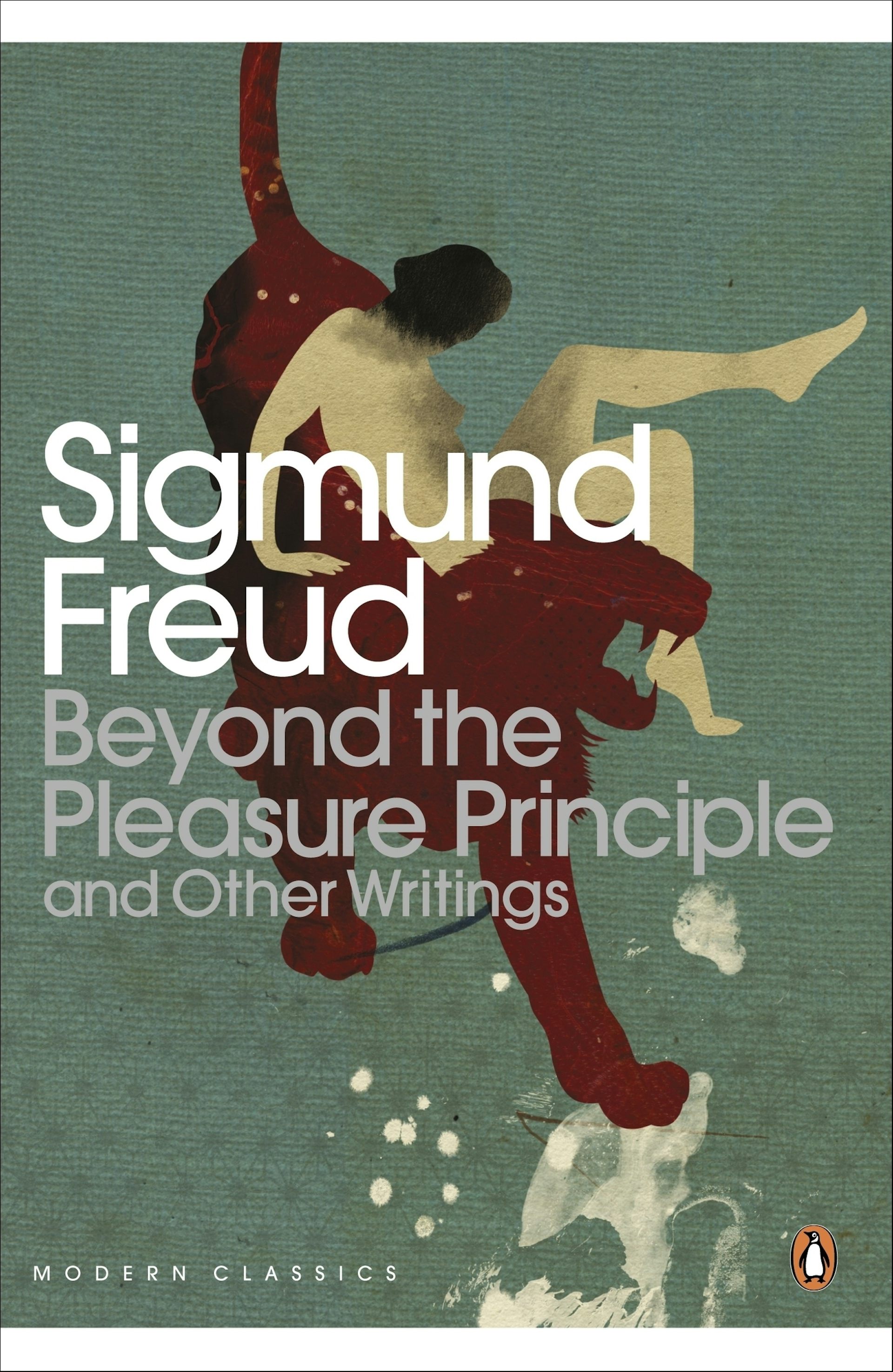
The book’s legacy for the study of dreams is less clear. In Beyond the Pleasure Principle, which he published in 1920, Freud acknowledged that some dreams were not in fact wish fulfilments. The repetitive dreams that woke World War I soldiers in a cold sweat did not express a wish and were clearly not serving as guardians of sleep.
El legado del libro para el estudio de los sueños es menos claro. En Más allá del principio del placer, que publicó en 1920, Freud reconoció que algunos sueños no eran en realidad la realización de deseos. Los sueños repetitivos que despertaron a los soldados de la Primera Guerra Mundial con un sudor frío no expresaban un deseo y claramente no servían como guardianes del sueño.
A different dynamic was at work here, Freud suggested: specifically, a compulsion to repeat. This compulsion could be manifested in many ways, but in traumatic dreams, it represented an attempt to master overwhelming experiences. Dreams that replay scenes from the battlefield reveal undigested horrors, rather than disguised wishes.
Freud sugirió que había una dinámica diferente en juego: específicamente, una compulsión a repetir. Esta compulsión podría manifestarse de muchas maneras, pero en los sueños traumáticos representaba un intento de dominar experiencias abrumadoras. Los sueños que reproducen escenas del campo de batalla revelan horrores no digeridos, más que deseos disfrazados.
The wish fulfilment theory is no longer widely held among those who study dreaming, thanks in part to developments in neuroscience. In 1953, dreaming was found to accompany rapid eye movement (REM) sleep, a newly discovered sleep phase with a distinct neurophysiology. This discovery opened Freud’s theory up to new lines of attack.
La teoría de la realización de deseos ya no es ampliamente aceptada entre quienes estudian el sueño, gracias en parte a los avances en neurociencia. En 1953, se descubrió que soñar acompañaba al sueño de movimiento rápido de ojos (REM) , una fase del sueño recién descubierta con una neurofisiología distinta. Este descubrimiento abrió la teoría de Freud a nuevas líneas de ataque.
In 1977, psychiatrists Allan Hobson and Robert McCarley argued that during REM sleep, the brain stem sends electrical activations upward like a firework. The forebrain then attempts to make narrative sense of these more or less random impulses. Because they are unconnected, the narrative usually lacks coherence.
En 1977, los psiquiatras Allan Hobson y Robert McCarley argumentaron que durante el sueño REM, el tronco encefálico envía activaciones eléctricas hacia arriba como un espectáculo de fuegos artificiales. El cerebro anterior luego intenta darle sentido narrativo a estos impulsos más o menos aleatorios. Debido a que no están conectados, la narrativa suele carecer de coherencia.
What neuroscientific evidence teaches us about dreams is not entirely settled, and Hobson and McCarley’s views have been challenged and updated. However, the neuroscience of sleep does not support the view that most dreams are disguised wish fulfilments.
Lo que la evidencia neurocientífica nos enseña sobre los sueños no está completamente establecido, y las opiniones de Hobson y McCarley han sido desafiadas y actualizadas. Sin embargo, la neurociencia del sueño no apoya la visión de que la mayoría de los sueños son realizaciones de deseos disfrazados.
Even so, no one now argues that dreams are meaningless or that they tell us nothing about the dreamer. We have Freud to thank for persuading us that even ephemeral experiences carry significance.
Aun así, nadie argumenta ahora que los sueños carecen de significado o que no nos dicen nada sobre el soñador. Tenemos que agradecerle a Freud por habernos persuadido de que incluso las experiencias efímeras tienen importancia.
Nick Haslam receives funding from the Australian Research Council.
Nick Haslam recibe financiación del Consejo Australiano de Investigación.
Read more
-

¿Por qué la gente está obsesionada (y robando) con las cartas de Pokémon otra vez?
Why are people obsessed with (and stealing) Pokemon cards again?
-

Keir Starmer renuncia: ¿puede sobrevivir alguien como primer ministro en la Gran Bretaña de hoy?
Keir Starmer resigns: can anyone survive as prime minister in today’s Britain?