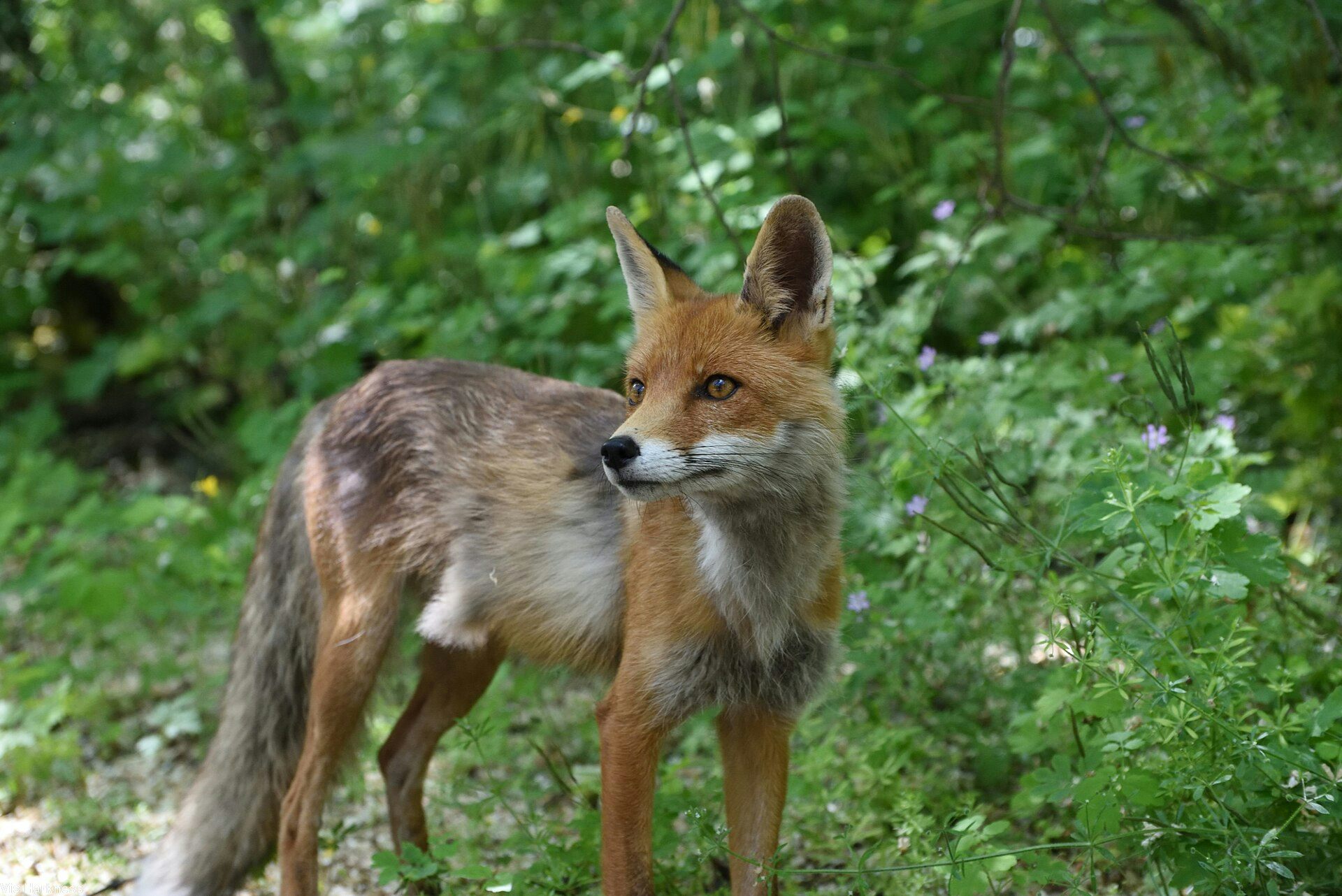
灾难发生40年后,为什么切尔诺贝利周围又出现了狐狸、熊和野牛?
40 years on from the disaster, why there are foxes, bea…
Endangered species are making their home in a massive wild zone around the derelict Chernobyl nuclear plant.
濒危物种正在废弃的切尔诺贝利核电站周围的广阔野生区域筑巢生活。
In the novel When There Are Wolves Again by E.J. Swift, the Chernobyl disaster and its legacy is extrapolated to a near future where natural habitats are depleted and precarious.
在E.J. Swift的小说《当狼再次出现》中,切尔诺贝利核灾难及其遗留问题被推演到一个自然栖息地枯竭且不稳定的近未来。
This work of eco-fiction deftly explores issues of possible paths to a future where animals return to a nature depleted area. In the real world, a parallel version of this story has been unfolding as nature is thriving around former nuclear power plants.
这部生态小说巧妙地探讨了人类如何可能重返自然、让动物回归荒芜地区的未来路径。在现实世界中,随着自然环境在前核电站周围蓬勃发展,一个平行的故事正在上演。
This is especially evident at the former Chernobyl plant in Ukraine, where the absence of human activity has enabled wildlife to flourish despite continuing radiation, 40 years after the nuclear disaster there.
这一点在乌克兰的前切尔诺贝利核电站尤为明显,那里在核灾难发生40年后,尽管辐射持续存在,野生动物依然得以繁衍生息,得益于人类活动的缺席。
A 2,600km² exclusion zone was established following the world’s worst civilian nuclear accident at Chernobyl in 1986, which released a radioactive cloud across Europe and led to the evacuation of around 115,000 people from the surrounding area. Almost immediately, radiation poisoning killed 31 plant workers and firefighters.
1986年,在切尔诺贝利发生的全球最严重的民用核事故后,设立了一个2,600平方公里的禁区,放射性云扩散至欧洲,导致约115,000人从周边地区撤离。几乎是立即,放射性中毒夺走了31名电厂工人和消防员的生命。
It is 40 years since the Chernobyl disaster that led to the creation of the Chernobyl Exclusion Zone (CEZ) . Since 1986, it has turned into a thriving, unintentional wildlife sanctuary and a vast rewilding “laboratory”. The CEZ prohibits people living there, commercial activities, natural resource extraction and public access. Now the area is home to flourishing populations of large mammals.
距离切尔诺贝利核灾难已经过去了40年,这促成了切尔诺贝利禁区(CEZ)的建立。自1986年以来,它已变成了一个蓬勃发展、非人为的野生动物保护区和一个广阔的“重野化实验室”。禁区禁止居住、商业活动、自然资源开采和公众进入。如今,该地区是大型哺乳动物繁衍生息的家园。
Populations of wolves, foxes, Eurasian lynx, elk and wild boar have significantly increased here. Species such as brown bears and European bison, meanwhile, have returned. This is rewilding in its most extreme form, given the inability of humans to intervene and it has resulted in several unexpected effects in the CEZ.
狼、狐狸、欧亚猞猁、驼鹿和野猪等物种的数量在这里显著增加。与此同时,棕熊和欧洲野牛等物种也回归了。鉴于人类无法进行干预,这代表了重野化最极端的形式,并在禁区内产生了许多意想不到的影响。
Studies indicate that the lack of human hunting, agriculture and development has a more positive impact on animal numbers than radiation has a negative one.
研究表明,缺乏人类的狩猎、农业和开发活动,对动物数量的积极影响,超过了辐射带来的负面影响。
Large mammal populations in the Belarusian sector of the zone are comparable to or higher than those in uncontaminated nature reserves. There is no doubt that initial radiation caused major damage to flora and fauna, most notably in the “red forest”, a 10km² area near the nuclear power plant.
该禁区白俄罗斯部分的哺乳动物种群数量,可与未受污染的自然保护区相媲美甚至更高。毫无疑问,最初的辐射对动植物造成了巨大破坏,尤其是在核电站附近的一片10平方公里的“红森林”区域。
This area earned its name after pine trees died and turned red-brown due to high radiation absorption. Yet long-term studies show that biodiversity has increased in the absence of humans.
该地区得名于松树因吸收高辐射而死亡并呈红褐色。然而,长期研究表明,在人类缺席的情况下,生物多样性反而有所增加。
Return of rare species
稀有物种回归
A range of endangered species have returned to the exclusion zone. This includes Przewalski’s horses, reintroduced in 1998 as a conservation experiment. They are now thriving, and the population has grown to over 150 animals within a distinct area of the Ukrainian part of the zone.
一系列濒危物种已返回禁区。其中包括普热尔斯基马,该物种于1998年作为一项保护实验重新引入。它们现在生机勃勃,在禁区乌克兰部分的一个特定区域,种群数量已增长到超过150只。
Both Eurasian lynx and European bison, which had disappeared from the area, have returned and established their populations. Several different bird species have returned, such as black storks, white storks and white-tailed eagles.
欧亚猞猁和欧洲野牛等此前已从该地区消失的物种,已经回归并建立了种群。许多不同的鸟类物种也回归了,例如黑鹳、白鹳和白尾海雕。
Most significant, is the return of the globally endangered greater spotted eagle, which depends on wetland habitats to hunt and is very sensitive to human disturbance. It had vanished from the area at the time of the nuclear accident.
最重要的是,全球濒危的斑鹰(greater spotted eagle)已经回归。该物种以湿地栖息地为捕食场所,对人类干扰非常敏感。它曾在核事故发生时从该地区消失。
In 2019, four pairs were recorded at the study site, and at least 13 pairs were documented nesting in the Belarusian part of the zone. Today, this region is the only place in the world where the population of this rare species is growing.
2019年,研究地点记录到四对,而在禁区白俄罗斯部分记录到至少13对筑巢。如今,该地区是世界上唯一一个该稀有物种种群正在增长的地方。
Frogs change colour
青蛙变色
There is also scientific evidence that some species appear to be adapting to the radioactive environment. For example, tree frogs in the zone are darker, as higher melatonin levels seem to protect against radiation damage.
也有科学证据表明,一些物种似乎正在适应放射性环境。例如,该区域的树蛙颜色更深,因为较高的褪黑素水平似乎可以防止辐射损伤。
There also appears to be resilience evolving in wolves as research on Eurasian wolves indicates potential adaptations to survive chronic radiation and reduce cancer risks.
狼身上也似乎正在演化出抵抗力,因为对欧亚狼的研究表明,它们可能具有适应慢性辐射和降低癌症风险的潜力。
Such adaptation is not limited to animals. A black fungus was first discovered in 1991 using remotely piloted robots growing inside reactor 4 of the former power plant. It appears to use melanin, which can protect against ultra-violet light, to convert gamma radiation into energy to grow faster than normal.
这种适应性不仅限于动物。一种黑真菌于1991年首次被发现,它使用遥控机器人生长在前发电厂的4号反应堆内部。它似乎利用黑色素来将伽马辐射转化为能量,从而以比正常速度更快的速度生长。
In addition, some plants in the nearby zone are demonstrating DNA repair as a response to the high levels of radiation. Such adaptation means the vegetation has evolved to survive, with some plants showing enhanced ability to manage heavy metals and radiation.
此外,附近一些植物正在表现出DNA修复,以应对高水平的辐射。这种适应性意味着植被已经进化出生存的能力,一些植物显示出管理重金属和辐射的增强能力。
It is now one of Europe’s largest nature reserves, providing an important site for ecological research, particularly for how ecosystems recover when undisturbed.
它现在是欧洲最大的自然保护区之一,为生态学研究提供了重要场所,特别是研究生态系统在不受干扰的情况下如何恢复。
The zone has undoubtedly been shaped by radiation but also, crucially, by abandonment and time. As a consequence, the usual ecological rules no longer apply and this has meant Chernobyl now has some remarkable wildlife. For example, the hundreds of pet dogs abandoned in the aftermath of the disaster have become feral dogs that have evolved to be genetically distinct from populations elsewhere in Ukraine.
该区域无疑受到了辐射的影响,但也关键地受到了废弃和时间的影响。其结果是,通常的生态规则不再适用,这使得切尔诺贝利现在拥有了一些非凡的野生动物。例如,灾难发生后遗弃的数百只宠物狗已经变成了野狗,它们已经进化出与乌克兰其他地区的种群在基因上不同的特征。
Despite the evidence supporting rewilding here, it is apparent that not all outcomes of the disaster have been beneficial for flora and fauna. There is evolutionary pressure with some species showing reduced reproductive success and high mutation rates, resulting in some health issues for animals.
尽管有证据支持这里的重新野化,但很明显,灾难的所有后果对动植物来说都不是有益的。一些物种表现出繁殖成功率降低和高突变率的进化压力,导致动物出现一些健康问题。
But it is not only at Chernobyl where these nuclear zones are encouraging animals to return. Around other damaged nuclear reactors, such as Fukushima, mammals, including bears, raccoons and wild boars have now returned in high numbers transforming exclusion zones into unexpected sanctuaries. At some operating nuclear plants, local wildlife has been encouraged through habitat creation and protection of large, undisturbed exclusion areas.
但这些核禁区鼓励动物回归的地方,不只在切尔诺贝利。在其他受损的核反应堆周围,例如福岛,包括熊、浣熊和野猪在内的哺乳动物现在大量回归,将禁区转变成了意想不到的保护区。在一些仍在运行的核电站,当地野生动物通过创造栖息地和保护大片未受干扰的禁区得到了鼓励。
Clearly, the situation is complicated, and it should not take a nuclear accident to stop humans pushing other species towards existential risk, let alone the continuing environmental degradation occurring around the globe. There are lessons to be learned from such catastrophes, and no neat conclusions, even 40 years after the disaster.
显然,情况很复杂,人类不应该需要发生核事故,才会停止推动其他物种走向生存风险,更不用说阻止全球范围内持续的环境退化了。从这样的灾难中可以吸取教训,即使在灾难发生40年后,也无法得出任何简单的结论。
Wildlife has largely returned to the area around Chernobyl due to the absence of people, although not predictably or evenly. It does illustrate, however, how ecosystems can respond and still flourish when the usual rules do not apply.
由于人类的缺席,野生动物大量回到了切尔诺贝利周边的区域,尽管这种回归并非可预测或均匀的。然而,它确实说明了当常规规则不再适用时,生态系统如何做出反应并仍然繁荣。
Nick Dunn receives funding from various UKRI funding councils and UK government bodies. He is a Director of DarkSky UK.
尼克·邓恩(Nick Dunn)接受来自多个英国研究理事会和英国政府机构的资助。他是DarkSky UK的董事。